
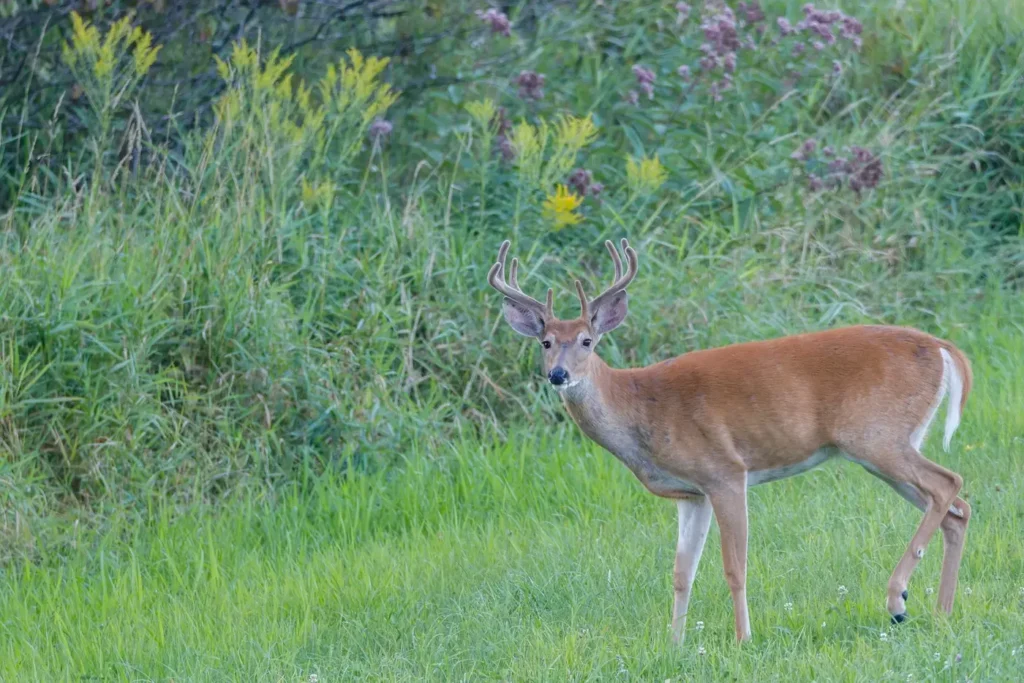
Ask most people to name the types of deer they know, and you will hear two or three: a white-tailed deer, maybe a reindeer from Christmas cards, and something with big antlers. The real list is far longer. The deer family (Cervidae) holds more than 40 living species, from the towering moose to the rabbit-sized pudu. This guide compares 12 of the most widespread and recognizable deer species by size, range, antlers and the details that make each one unmistakable.
The 12 Deer Species at a Glance
If you want the whole picture in one place, this types of deer chart covers the essentials. Scroll past it for photos, field ID notes and the quirks that separate lookalikes.
| Species | Scientific name | Shoulder height | Typical weight | Antlers | Native range |
|---|---|---|---|---|---|
| White-tailed deer | Odocoileus virginianus | 80-100 cm | 40-130 kg | Males only, single beam with upward tines | North America to northern South America |
| Mule deer | Odocoileus hemionus | 80-106 cm | 45-150 kg | Males only, forked (bifurcated) branching | Western North America |
| Red deer | Cervus elaphus | 107-137 cm | 100-240 kg | Males only, long multi-tined | Europe, western Asia, North Africa |
| Elk (wapiti) | Cervus canadensis | 120-150 cm | 230-450 kg | Males only, up to 1.2 m long | North America and eastern Asia |
| Moose | Alces alces | 140-210 cm | 380-700 kg | Males only, broad palmate, up to 1.8 m span | Northern North America, Europe, Asia |
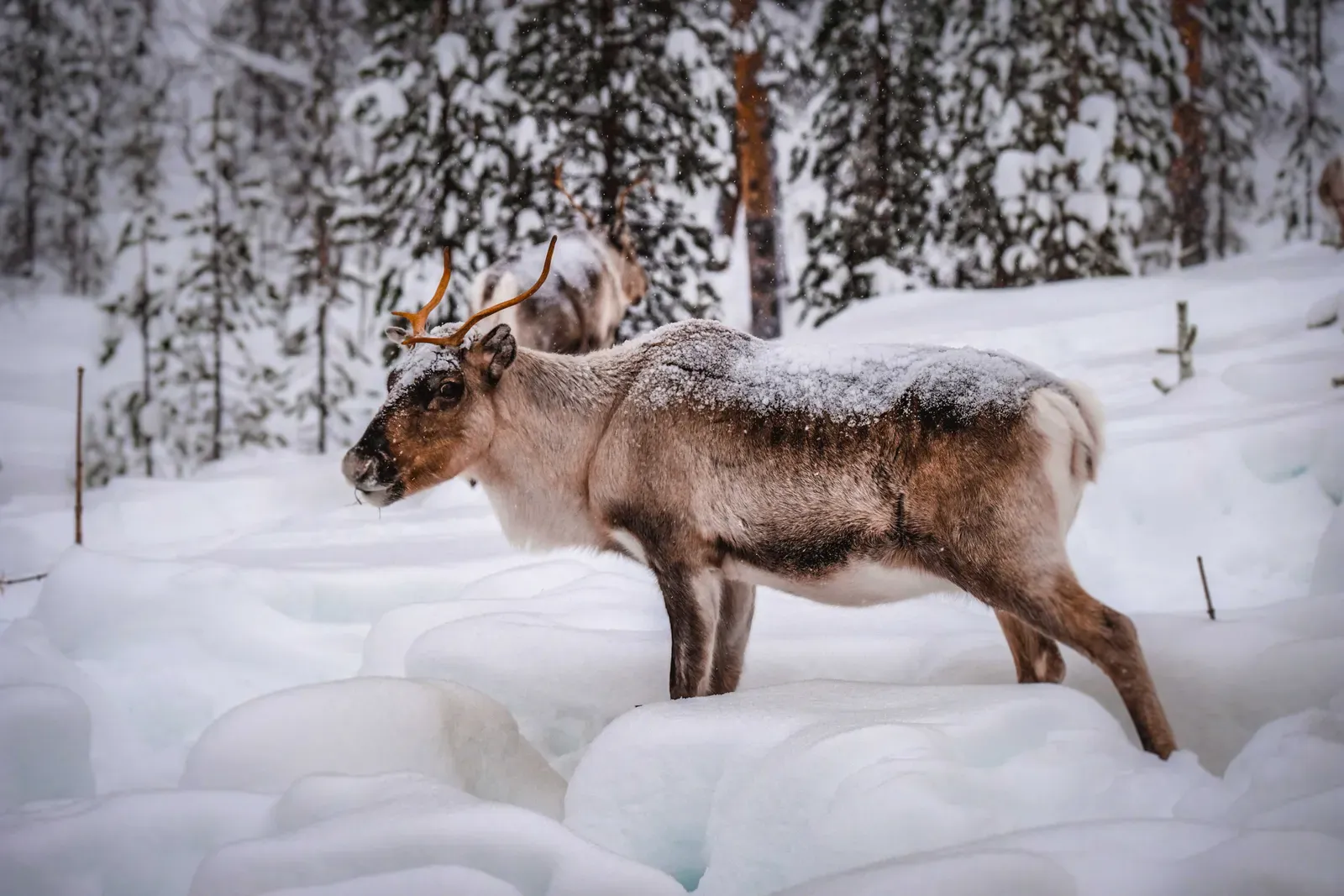
| Reindeer (caribou) | Rangifer tarandus | 85-150 cm | 60-180 kg | Both sexes grow antlers | Arctic and subarctic tundra |
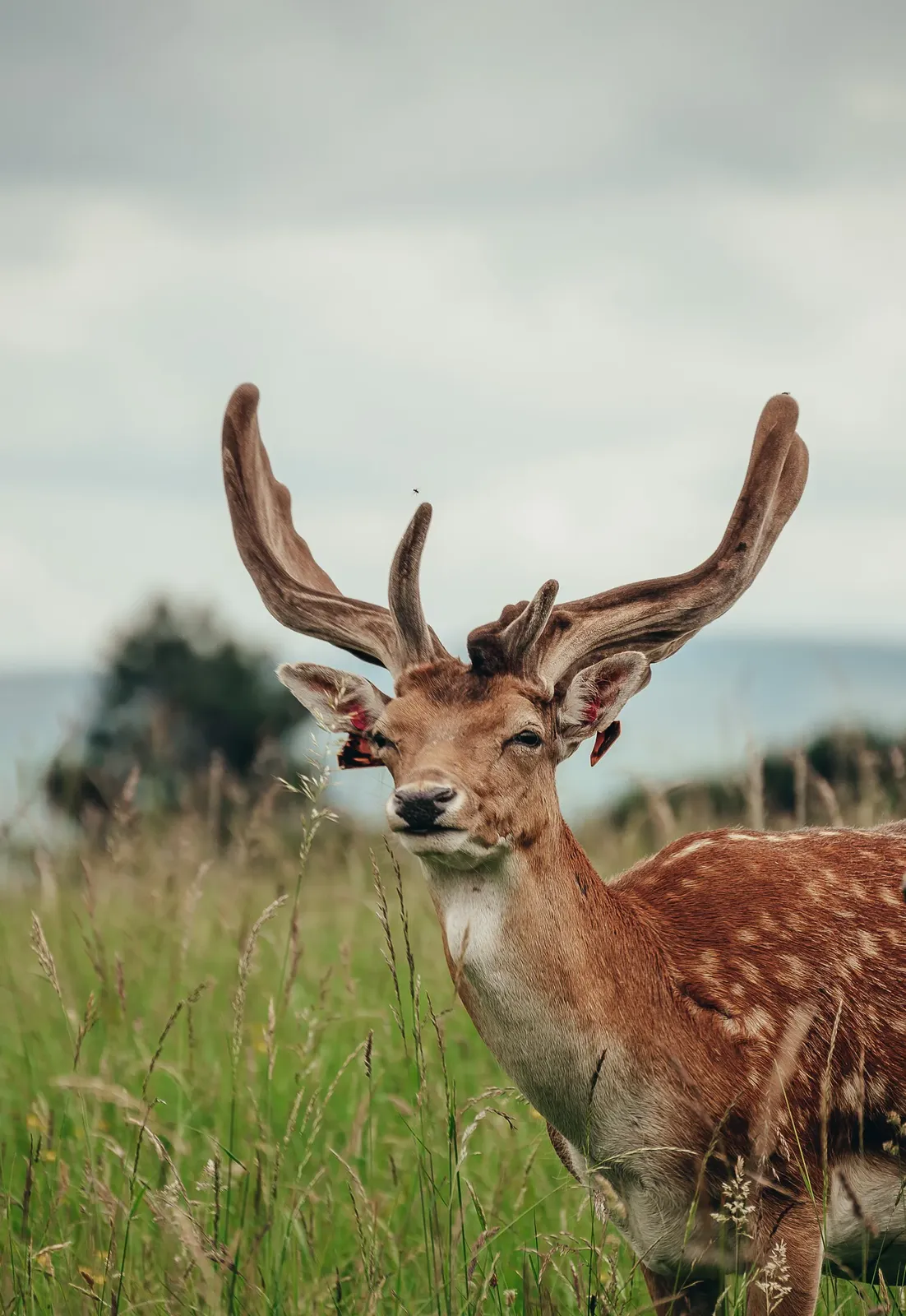
| Fallow deer | Dama dama | 85-110 cm | 35-135 kg | Males only, broad and palmate | Native to the Mediterranean, introduced worldwide |
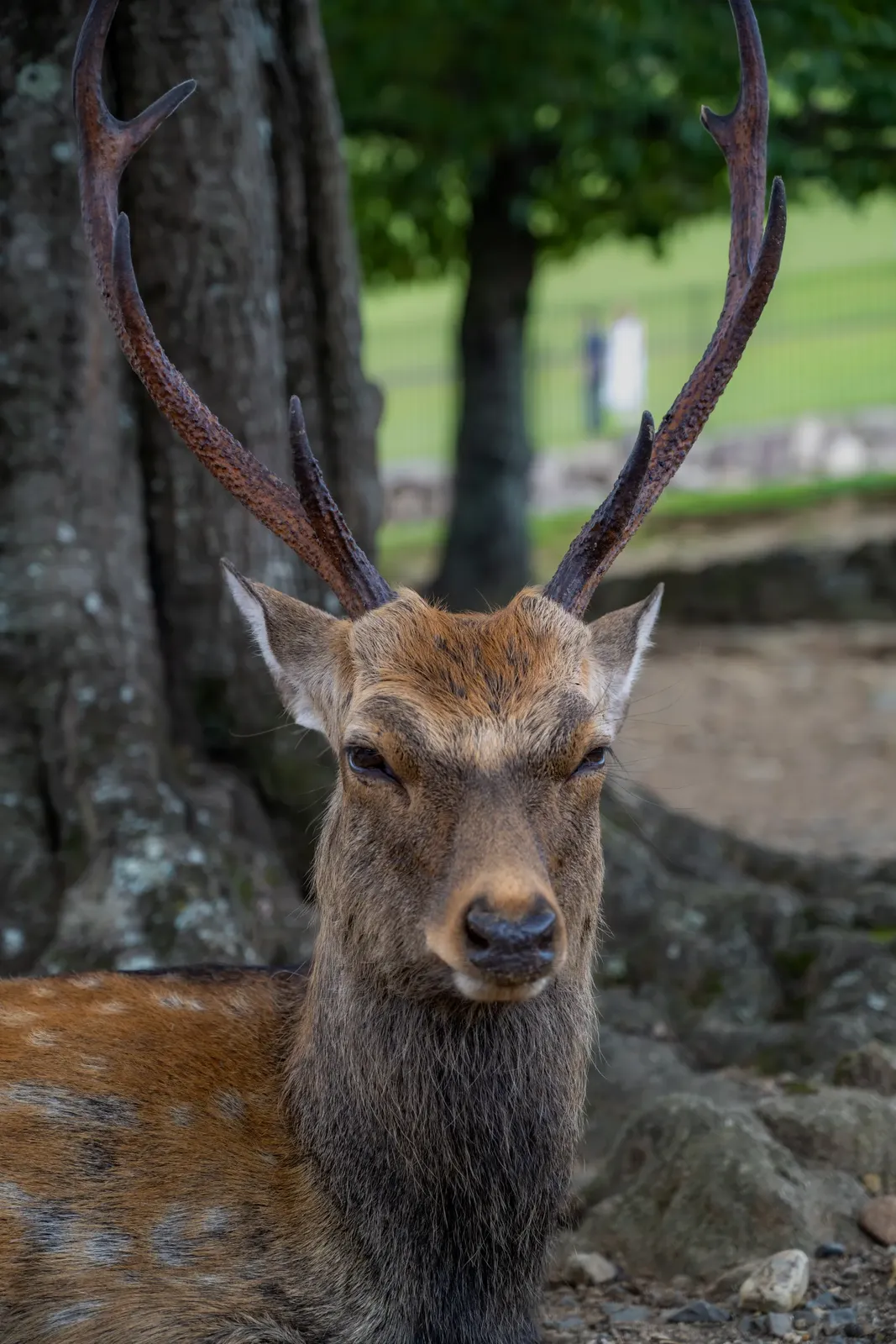
| Sika deer | Cervus nippon | 64-100 cm | 30-70 kg | Males only, modest tines | East Asia |
| Axis deer (chital) | Axis axis | 75-100 cm | 30-100 kg | Males only, slender three-tined | Indian subcontinent |
| Roe deer | Capreolus capreolus | 63-67 cm | 15-35 kg | Males only, short with up to three points | Europe to Siberia |
| Reeves’s muntjac | Muntiacus reevesi | 43-52 cm | 10-18 kg | Males only, very short; males also have small tusks | East and Southeast Asia |
| Water deer | Hydropotes inermis | 45-57 cm | 9-14 kg | None; males have long tusk-like canines | China and Korea |
White-Tailed Deer and Mule Deer: America’s Two Odocoileus
The white-tailed deer is the deer most Americans will ever see. Around 30 million of them roam North America, from Canadian forests to suburban backyards in Texas, and they have pushed south into Central and northern South America. The giveaway is the tail: white underneath, flipped up like a flag when the animal is alarmed. That flash is a warning signal to the rest of the herd. Bucks grow antlers with a single main beam and tines that branch upward, and they shed them every winter.

Mule deer, their western cousins, look similar at first glance but the details diverge quickly. The ears are oversized, almost comically so, which is where the name comes from. Their antlers fork into two branches that fork again (bifurcated), instead of the white-tail’s single-beam pattern. They move differently too: mule deer “stot,” bounding with all four feet landing together. Where the two species’ ranges overlap in the Great Plains, the ear and antler checks matter.

Europe’s Red Deer and Roe Deer
The red deer is Europe’s heavyweight. A mature stag can stand 1.37 m at the shoulder and weigh as much as 240 kg, and during the autumn rut its roaring can carry for more than a kilometer. Red deer once ranged across most of temperate Eurasia and North Africa; today strongholds include the Scottish Highlands and the Carpathians.

At the other end of the European scale sits the roe deer, barely knee-high and easy to underestimate. Roe deer are among Europe’s most successful wild mammals precisely because they ask for so little: a woodland edge, some farmland, and they thrive. Bucks carry short antlers with at most three points. One of their strangest traits is delayed implantation: the doe mates in summer but the embryo does not begin developing until winter, so the fawn is always born in spring no matter when mating happened.

Elk, Moose and Reindeer: The Northern Giants
Elk, also called wapiti in North America, are the second-largest deer on Earth. Bulls can weigh 450 kg and gather harems of cows each autumn, bugling across mountain valleys. Fossil and genetic work now places elk as a separate species (Cervus canadensis) from the European red deer, though the two look alike enough to confuse anyone.

Moose need no introduction once you see one in person. A bull can stand over 2 m at the shoulder and carry antlers spanning 1.8 m, and yet moose are famously quiet, solitary browsers that slip through willow thickets with surprising grace. They are strong swimmers and will dive several meters to feed on aquatic plants. If you are building a mental size ranking of deer species, moose sit alone at the top: nothing else in the family comes close.

Reindeer, known as caribou in North America, break the family’s biggest rule: females grow antlers too, the only deer species where that happens. They are built for the Arctic with wide splayed hooves that work like snowshoes, and some herds migrate more than 5,000 km a year, among the longest land migrations of any mammal.
Asia’s Spotted Deer: Sika, Axis and Fallow
Sika deer are the ones that keep their spots. Most deer fawns are spotted and lose the pattern with age, but adult sika keep theirs year-round, which makes them instant favorites in wildlife parks. Native to East Asia, sika have been introduced to the UK, Ireland and parts of the US, where they sometimes hybridize with red deer. They are compact, vocal animals, the males give a distinctive whistling scream during the rut.
The axis deer, or chital, is arguably the most beautiful deer in the world: a rich chestnut coat with permanent white spots and elegant lyre-shaped antlers on the males. They are intensely social, forming herds that can number in the hundreds on the grasslands of India and Nepal. Introduced populations now thrive in Texas and Hawaii, where wildlife managers watch them closely because axis deer breed year-round instead of in a fixed season.

Fallow deer round out the spotted group, though “spotted” undersells them. Fallow coats come in four distinct color phases: the common spotted, plus menil (paler), melanistic (near-black) and leucistic (white), and all four can appear in a single park herd. Their antlers are broad and flattened like an open hand (palmate), similar in shape to a moose’s but on a much smaller animal. Originally Mediterranean, fallow deer were spread across Europe by the Romans and later carried around the world.
The Oddballs: Muntjac and Water Deer
Not every deer follows the antler playbook. Reeves’s muntjac, often just called the muntjac or barking deer, is a compact forest dweller whose males grow only stubby antlers on bony pedestals. They compensate with elongated upper canine teeth, short tusks used in fights, and a loud, sharp bark that sounds more like a dog than a deer. Introduced to England in the early 20th century, muntjac are now widespread across southern Britain.

The water deer goes further and skips antlers entirely. Instead, the males grow long, visible canine teeth that jut from the upper jaw like tiny tusks, earning them the nickname “vampire deer.” Native to the wetlands of China and Korea, water deer are strong swimmers and surprisingly good at hiding in reeds despite those dramatic teeth. They are a useful reminder that the deer family rewards a second look: the strangest members rarely match the postcard image.

How to Tell Types of Deer Apart Quickly
When you spot a deer and want a fast ID, work through this checklist in order. Size narrows the field first, then antlers, then location.
| If you see… | It is probably… |
|---|---|
| A huge deer with broad, flattened antlers in the north | Moose |
| A very large deer bugling in a mountain valley | Elk |
| A deer with a white tail flashing as it runs, eastern or central US | White-tailed deer |
| Oversized ears and forked antlers in the western US | Mule deer |
| Antlers on a female deer in the Arctic | Reindeer (caribou) |
| Spotted adult deer with palmate antlers in a park | Fallow deer |
| Spotted adult deer, no spots lost, in Asia or the UK | Sika deer |
| Elegant spotted deer in a large Indian grassland herd | Axis deer (chital) |
| Small deer, knee-high, in a European wood | Roe deer |
| Tiny deer that barks like a dog | Muntjac |
| A deer with fangs instead of antlers | Water deer |
Range is the tiebreaker for the trickiest pairs. Red deer and elk look similar because they are close relatives, but red deer are Eurasian and elk are North American and East Asian. Sika and axis deer both keep adult spots, but sika belong to East Asia’s forests while axis deer belong to South Asia’s grasslands. For more species-by-species reference charts in this style, browse our all bear species and all fox species guides.
Frequently Asked Questions
How many species of deer are there in the world?
Taxonomists recognize around 43 to 55 living deer species in the family Cervidae, depending on how some close relatives are split. They are spread across every continent except Antarctica and Australia (where deer are introduced).
What is the largest deer species?
The moose (Alces alces) is the largest deer species on Earth. Bulls can stand over 2 meters at the shoulder and weigh up to 700 kg, with antlers spanning as much as 1.8 meters. The second-largest is the elk, followed by the red deer.
Do female deer have antlers?
In almost all deer species, only males grow antlers. The single exception is the reindeer (caribou), where females grow antlers too and keep them through winter to defend feeding sites. Female water deer and muntjac never grow antlers at all.
What is the smallest deer species?
The southern pudu of Chile and Argentina is the smallest deer in the world, standing about 35 cm at the shoulder and weighing 7 to 10 kg. Among the species covered here, the water deer and muntjac are the smallest, both under 60 cm tall.
Which deer species live in North America?
North America’s native deer are the white-tailed deer, mule deer (including black-tailed deer), elk, moose and caribou. Axis deer, sika deer and fallow deer also live there as introduced species, mainly on ranches and in parts of Texas, Hawaii and California.
Conclusion
Once you know what to look for, “deer” stops being one animal and becomes a whole family of them. Start with size and range, check the antlers (or the tusks), and use the chart above as your quick reference. For more wildlife reference charts in this style, see our complete guides to all wolf species, all fox species and all bear species. Whether you are identifying the deer in your backyard or planning a wildlife trip, these 12 species cover nearly every deer you are likely to meet, and each one is worth knowing by name.


Pingback: Types of Penguins: All 18 Species, Sizes, Habitats and Facts – Chart Identify
Pingback: Types of Dolphins: 20 Species, Sizes, Habitats and Facts – Chart Identify
Pingback: Types of Wild Cats: 18 Species, Sizes, Habitats and Facts – Chart Identify
Pingback: Types of Giraffes: All 4 Species and 9 Subspecies Compared – Chart Identify
Pingback: Types of Squirrels: 20 Species Compared by Size, Range and Facts – Chart Identify
Pingback: Types of Buffalo: 11 Species, Sizes and Habitats – Chart Identify
Pingback: Types of Gazelle: 20 Species, Sizes and Habitats – Chart Identify
Pingback: Reindeer Lifespan Chart: How Long Reindeer Live – Chart Identify