
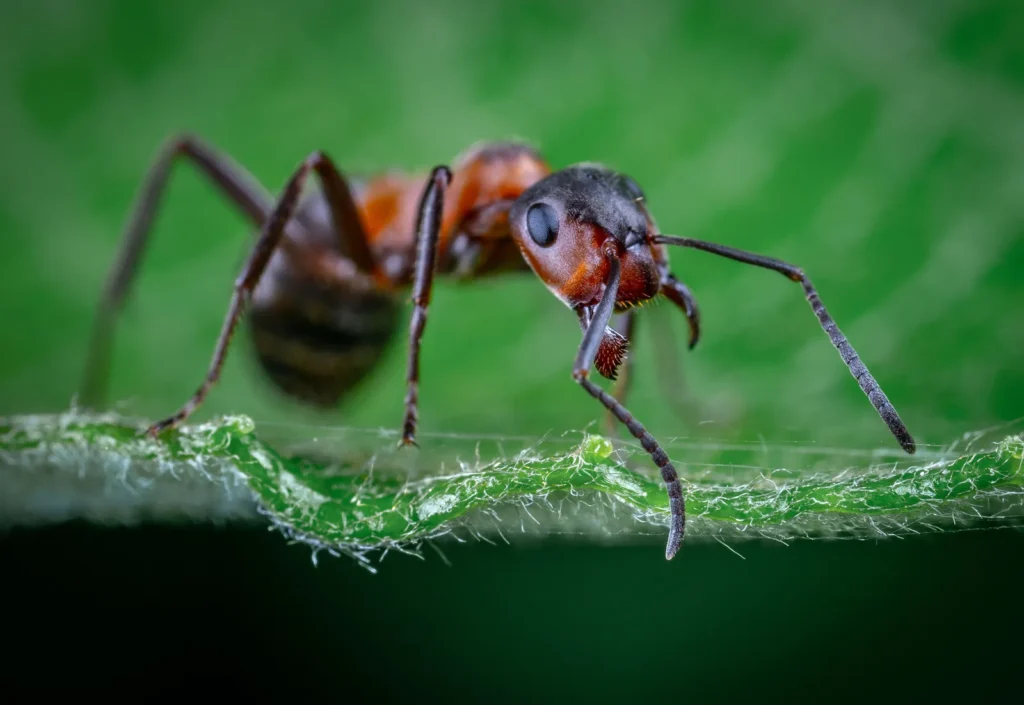
Finding an unfamiliar ant on your kitchen counter or garden path always raises the same question: what kind is this, and should I worry? This ant identification chart covers 20 common US species with real data: worker sizes, colors, the single feature that gives each species away, and where you are most likely to meet it. Tiny sugar ant trail, fire ant mound, or large black ant on the windowsill, start here.

How to Use This Ant Identification Chart
Four clues separate nearly every common ant species. First, measure a worker, not the biggest ant you see (that may be a queen); a coin for scale in a phone photo works fine. Second, note the color in natural light, since indoor lighting turns dark brown ants black. Third, record where you found it: kitchen, sidewalk crack, lawn mound, or inside wood. Fourth, count the bumps (nodes) on the narrow waist between thorax and abdomen. One node or two splits the ant world nearly in half.
Cautions: color alone misleads, and size varies within one colony, so the table lists full worker ranges. Combine all four clues and the match usually jumps out.
Ant Identification Chart: 20 Common US Species
The 20 species below are the ants Americans meet most often, from 1.3 mm ghost ants to half-inch carpenter ant majors. Sizes refer to workers.

| Species | Scientific name | Worker size | Color | Key ID feature | Where found |
|---|---|---|---|---|---|
| Black carpenter ant | Camponotus pennsylvanicus | 6-13 mm (1/4-1/2 in) | Black | Very large, single waist node, tunnels in wood without eating it | Eastern and northern US, nests in damp wood |
| Florida carpenter ant | Camponotus floridanus | 5-10 mm (1/5-2/5 in) | Reddish-orange head and thorax, black abdomen | Two-toned body, large, single waist node | Florida and Gulf Coast, nests in wood and wall voids |
| Red imported fire ant | Solenopsis invicta | 2-6 mm (1/16-1/4 in) | Reddish brown | Two waist nodes, aggressive sting, dome mounds, no center hole | Southeastern US lawns, parks, and pastures |
| Southern fire ant | Solenopsis xyloni | 2-6 mm (1/16-1/4 in) | Reddish with darker abdomen | Two waist nodes, stings but calmer than imported fire ant | Southwestern US, drier soils |
| Argentine ant | Linepithema humile | 2.2-2.8 mm (about 1/10 in) | Light to dark brown | Single waist node, no sting, supercolonies with long trails | California, Gulf Coast, invades kitchens in dry weather |
| Odorous house ant | Tapinoma sessile | 2.4-3.3 mm (about 1/10 in) | Brown to black | Rotten-coconut smell when crushed, flat single waist node | Nationwide US, classic kitchen sugar ant |
| Pavement ant | Tetramorium immigrans | 2.5-4 mm (about 1/8 in) | Dark brown to black | Two waist nodes, grooved head and thorax | Nationwide US, under sidewalks and slabs |
| Pharaoh ant | Monomorium pharaonis | 1.5-2 mm (about 1/16 in) | Yellow to light brown | Tiny, two waist nodes, nests indoors year-round | Nationwide US indoors, apartments and hospitals |
| Thief ant | Solenopsis molesta | 1.3-1.8 mm (about 1/16 in) | Yellow-bronze | Nests beside other colonies, steals their food and young | Nationwide US, near kitchens and pantries |
| Ghost ant | Tapinoma melanocephalum | 1.3-1.5 mm (about 1/16 in) | Dark head, pale translucent body and legs | One of the smallest US ants, loves sweets | Florida, Gulf Coast, indoors anywhere warm |
| Little black ant | Monomorium minimum | 1.5-2 mm (about 1/16 in) | Shiny black | Tiny, two waist nodes, slow foraging trails | Nationwide US lawns, gardens, kitchens |
| Big-headed ant | Pheidole megacephala | 2-4.5 mm (majors near 1/4 in) | Reddish brown | Majors have hugely oversized heads | Southeastern US and Hawaii, soil and mulch nests |
| Acrobat ant | Crematogaster ashmeadi | 2.5-4 mm (about 1/8 in) | Dark brown to black | Heart-shaped abdomen raised when disturbed | Eastern US, dead wood and wall voids |
| Tawny crazy ant | Nylanderia fulva | 2.5-3 mm (about 1/8 in) | Reddish brown | Fast, erratic zigzag runs, no neat trails | Texas, Gulf Coast, displaces fire ants |
| Cornfield ant | Lasius americanus | 2.5-4 mm (about 1/8 in) | Brown | Farms aphids on plant roots, single waist node | Nationwide US lawns and fields |
| Pyramid ant | Dorymyrmex bureni | 3-4 mm (about 1/8 in) | Reddish brown | Cone bump on thorax, small sand craters | Southeastern US, sandy soils |
| Citronella ant | Lasius interjectus | 4-6 mm (1/6-1/4 in) | Yellow-orange | Lemon smell when crushed, spring winged swarms | Eastern US, under logs and foundations |
| Silky field ant | Formica subsericea | 4-8 mm (1/6-1/3 in) | Black with a slight sheen | Fast runner, sprays formic acid, single waist node | Nationwide US, low lawn mounds |
| Allegheny mound ant | Formica exsectoides | 4.5-8 mm (1/5-1/3 in) | Red head and thorax, dark abdomen | Mounds up to 3 feet wide, kills nearby grass | Eastern US forests and clearings |
| Texas leafcutter ant | Atta texana | 5-14 mm (1/5-1/2 in) | Rusty red | Large-headed majors, workers carry leaf pieces overhead | Texas, Louisiana, deep sandy-soil nests |
Name note: the pavement ant was long called Tetramorium caespitum, but since 2017 the North American species is recognized as Tetramorium immigrans. Older guides still use the old name.

Quick Visual ID Key: Tiny, Medium, and Large Ants
Short on time? Start with size: it narrows 20 species to a handful in seconds.
Tiny ants (under 2.5 mm, barely bigger than a pinhead)
At this scale you are almost always looking at a house pest. Ghost ants show a dark head on a pale, nearly see-through body. Thief ants are yellow-bronze and appear near other ant trails they are robbing. Pharaoh ants are uniformly yellow and nest indoors all year. Little black ants are shiny black and slow. None sting, but never spray pharaoh ants: spraying splits one colony into several.

Medium ants (2.5 to 6 mm, about sesame seed size)
This is the busiest group, so count the waist nodes first. Two nodes points to fire ants (reddish, aggressive, dome mounds), pavement ants (dark, grooved head, sidewalk nests), big-headed ants (oversized soldier heads), or acrobat ants (heart-shaped abdomen lifted when poked). One node points to Argentine ants (long supercolony trails), odorous house ants (coconut smell when crushed), pyramid ants (cone bump on the thorax), or tawny crazy ants (frantic zigzag runners). Narrow waists and elbowed antennae separate ants from beetles at a glance; compare with our beetle identification chart if you are unsure your insect is an ant at all.
Large ants (6 mm and up, clearly visible individuals)
Large ants are the easiest to identify. Solid black and nesting in wood means black carpenter ant. Two-toned orange and black in Florida means Florida carpenter ant. Red head and thorax around a giant mound means Allegheny mound ant. Rusty red workers marching with leaf fragments overhead are unmistakable Texas leafcutters.

How to Tell a Queen Ant From a Worker
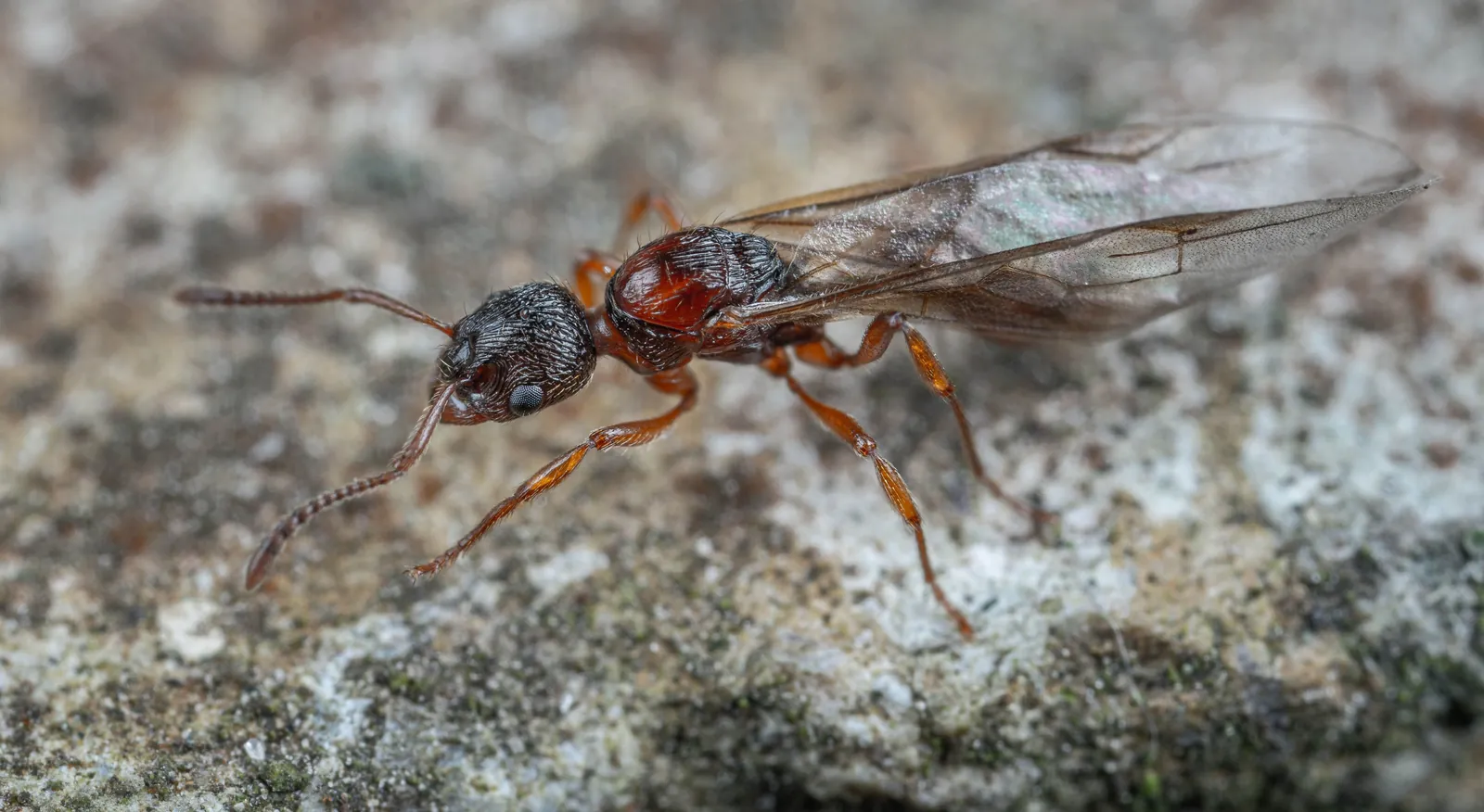
The most common identification mistake is measuring a queen and thinking you found a giant new species. Queens differ from workers in four ways: size (two to four times longer than their smallest workers, up to 20 mm in carpenter ants), a bulky muscular thorax, wing scars that remain after the wings are shed, and timing (winged queens swarm after rain near windows and lights, not in food trails). Workers never have wings or scars.
If your insect is fuzzy and round-bodied rather than marching in a trail, it may not be an ant at all. Our bee identification chart covers the 15 bees Americans confuse most often with winged ants.
Black Ants vs Red Ants: A Quick Guide
Color is only the first filter. Common black ants include carpenter ants (large, wood nesters), little black ants (tiny, shiny, harmless), odorous house ants (brown-black, coconut smell), and field ants (fast lawn runners). None sting, though carpenter ants bite and field ants spray formic acid.
Red ants demand more caution. Imported fire ants have two waist nodes, workers in many sizes, and dome mounds, and they sting aggressively. Southern fire ants look similar but are calmer. Harvester ants are larger with flat cleared discs and sting painfully. Texas leafcutters are rusty red and carry leaf pieces overhead. In the Southeast, treat an unfamiliar red ant as a fire ant until the waist nodes and mound shape say otherwise.

Ants in the House: Which Species and What to Do
Indoor ants are almost always one of five species, each needing a different response. Odorous house ants, the classic tiny brown kitchen ant: wipe trails with soapy water, seal entry cracks, and place sugar-based bait near the trail. Pharaoh ants, tiny and yellow, must never be sprayed, since spray makes their colonies bud into several new nests; bait patiently for weeks. Carpenter ants indoors signal moisture damage: look for sawdust-like frass under windowsills, fix the leak, and use protein-based bait. Pavement ants enter under slabs and foundation cracks; sealing plus outdoor baiting usually ends it. Argentine ants invade in dry weather in huge numbers; bait the exterior trail and seal the entry.
Three rules cover every case: remove food and water first, because no bait competes with an open honey jar; prefer slow-acting baits over sprays indoors, since sprays kill only the foragers you can see; call a professional for carpenter ant frass in structural wood, pharaoh ants that survive a month of baiting, or any stinging species nesting inside a wall void.

Ant Identification FAQs
What is the easiest way to identify an ant species?
Measure a worker, note its color in daylight, count the waist nodes, and record where you found it. Those four clues matched against the chart above identify nearly every common US ant.
How can I tell fire ants from other red ants?
Two waist nodes, workers in many sizes, dome-shaped mounds with no visible entrance hole, and an aggressive sting when disturbed. Harvester ants are larger with flat cleared discs; leafcutter ants carry leaf pieces overhead.

Are the tiny black ants in my kitchen dangerous?
No. Tiny black kitchen ants are usually odorous house ants or little black ants; neither stings nor spreads disease. They are a nuisance, not a hazard. Bait rather than spray, and they are gone in a week or two.
What is the difference between flying ants and termites?
Flying ants have pinched waists, elbowed antennae, and longer front wings. Termites have thick waists, straight antennae, and four equal wings. No waist at all means suspect termites and get an inspection.
How big do queen ants get compared to workers?
About two to four times the length of their workers. A ghost ant queen is still under 3 mm, while a carpenter ant queen can approach 20 mm. Confirm with the bulky thorax and wing scars, not size alone.

Conclusion
With a ruler, daylight, and this ant identification chart, you can name the trail in your kitchen, the mound in your lawn, or the large black ant on your windowsill, and know whether it needs bait, a sealed crack, or to be left alone. For wildlife at the other end of the scale, see our complete chart of all antelope species. And if a winged swarm turns out prettier than an ant, our butterfly identification chart will name that too.



Pingback: Aphid Identification Chart: Identify 20 Common Aphids by Sight – Chart Identify
Pingback: Termite Identification Chart: Identify 20 Common Termites by Sight – Chart Identify
Pingback: Types of Cockroaches: 20 Species, Sizes and How to ID Them – Chart Identify
Pingback: Types of Flying Ants: 20 Species, Sizes and Identification – Chart Identify