

There are 18 types of penguins in the world, and telling them apart is easier than most people think. Once you know the six groups they fall into, a single field mark is usually enough to name the bird in front of you: a thin black chinstrap, a spray of yellow crest feathers, or a bare pink patch around the eye.
I built this guide as a complete types of penguins chart covering every living species, with its size, weight, range, and conservation status, plus identification tips for each group and a region-by-region breakdown of where each species actually lives. Whether you are planning an Antarctic cruise, identifying birds at the zoo, or settling a debate about which penguin is the smallest, start with the master chart below and use the group profiles to confirm your ID.

Complete Chart of All 18 Types of Penguins
This is the master reference table. Heights are for adults standing upright and weights are typical adult ranges. Conservation status follows the IUCN Red List.
| Species | Scientific Name | Height | Weight | Range | IUCN Status |
|---|---|---|---|---|---|
| Emperor Penguin | Aptenodytes forsteri | 100-122 cm | 22-45 kg | Antarctic coast and sea ice | Near Threatened |
| King Penguin | Aptenodytes patagonicus | 85-95 cm | 9-18 kg | Sub-Antarctic islands | Least Concern |
| Adelie Penguin | Pygoscelis adeliae | 46-71 cm | 3.6-6 kg | Antarctic coastline | Least Concern |
| Chinstrap Penguin | Pygoscelis antarcticus | 68-76 cm | 3.2-5.3 kg | Antarctic Peninsula, Scotia Arc islands | Least Concern |
| Gentoo Penguin | Pygoscelis papua | 75-90 cm | 4.5-8.5 kg | Sub-Antarctic islands, Antarctic Peninsula | Least Concern |
| Macaroni Penguin | Eudyptes chrysolophus | 71 cm | 3.2-6.4 kg | Sub-Antarctic islands (Atlantic and Indian Oceans) | Vulnerable |
| Royal Penguin | Eudyptes schlegeli | 65-76 cm | 3-8 kg | Macquarie Island only | Near Threatened |
| Southern Rockhopper Penguin | Eudyptes chrysocome | 45-58 cm | 2-3.4 kg | Sub-Antarctic islands (Atlantic and Indian Oceans) | Vulnerable |
| Northern Rockhopper Penguin | Eudyptes moseleyi | 55-57 cm | 2.4-4.3 kg | Tristan da Cunha, Gough Island | Endangered |
| Fiordland Penguin | Eudyptes pachyrhynchus | 60 cm | 2-6 kg | West coast of New Zealand’s South Island | Near Threatened |
| Snares Penguin | Eudyptes robustus | 50-70 cm | 2.5-4 kg | Snares Islands, New Zealand | Vulnerable |
| Erect-crested Penguin | Eudyptes sclateri | 50-70 cm | 2.5-6 kg | Antipodes and Bounty Islands, New Zealand | Endangered |
| African Penguin | Spheniscus demersus | 60-70 cm | 2.2-3.5 kg | Coasts of South Africa and Namibia | Critically Endangered |
| Magellanic Penguin | Spheniscus magellanicus | 61-76 cm | 2.7-6.5 kg | Argentina, Chile, Falkland Islands | Least Concern |
| Humboldt Penguin | Spheniscus humboldti | 65-70 cm | 4-5.9 kg | Coasts of Peru and Chile | Vulnerable |
| Galapagos Penguin | Spheniscus mendiculus | 49-53 cm | 1.7-2.6 kg | Galapagos Islands, Ecuador | Endangered |
| Little Penguin | Eudyptula minor | 30-33 cm | About 1 kg | Southern Australia, New Zealand | Least Concern |
| Yellow-eyed Penguin | Megadyptes antipodes | 62-79 cm | 3-8.5 kg | New Zealand (South Island, sub-Antarctic islands) | Endangered |
How to Tell the Types of Penguins Apart
Scientists divide the 18 species into six genera. Learn the six groups below and you can identify almost any penguin on sight, because each group has one or two unmistakable field marks.
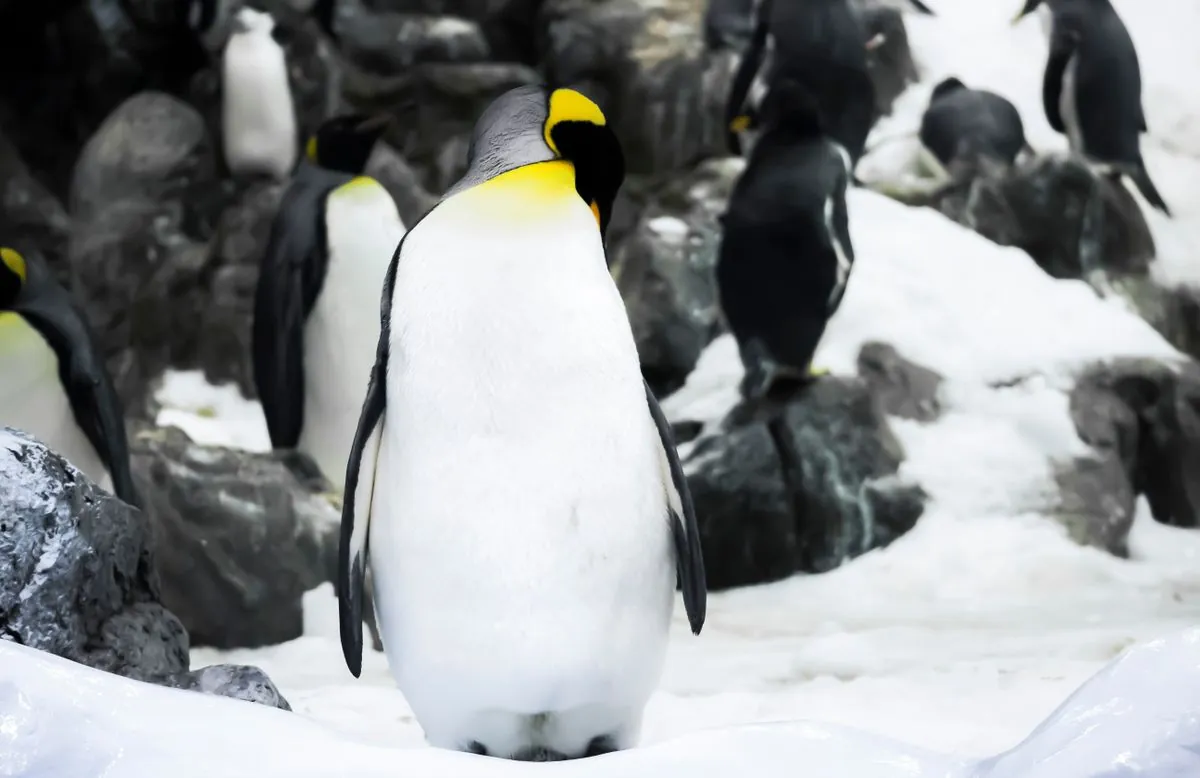
The Great Penguins (Aptenodytes): Emperor and King
These are the two tall, stately species with pale yellow-orange patches on the sides of the neck that fade into the chest. The emperor is in a league of its own at up to 122 cm and 45 kg, and it is the only bird that breeds on Antarctic sea ice in the middle of winter, with males incubating a single egg on their feet for two months. The king is smaller (up to 95 cm) with brighter, more sharply defined orange ear patches, and it breeds on sub-Antarctic islands like South Georgia. If the bird towers over every other penguin around it, it is an emperor.

The Brush-Tailed Penguins (Pygoscelis): Adelie, Chinstrap, Gentoo
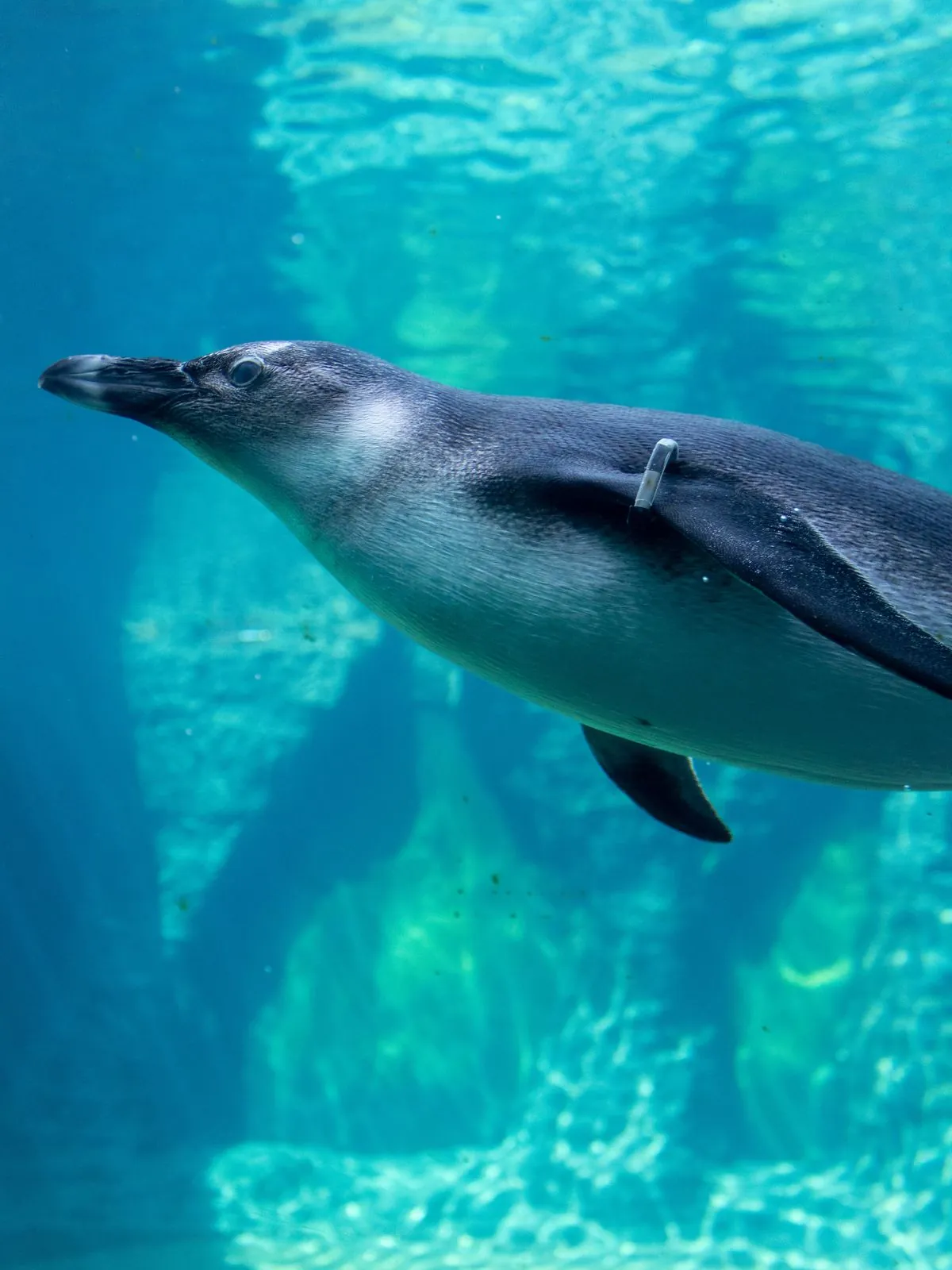
The three brush-tails share stiff tail feathers that drag on the ground like a brush, and all breed around Antarctica. Tell them apart by the head: the Adelie has a solid black head with striking white eye rings, the chinstrap wears a thin black line under its chin like a helmet strap, and the gentoo shows a white patch above each eye plus a bright orange-red bill. Gentoos are also the fastest swimmers of all penguins, reaching about 36 km/h underwater, which is why they look like they are flying beneath the surface.


The Crested Penguins (Eudyptes): Seven Species
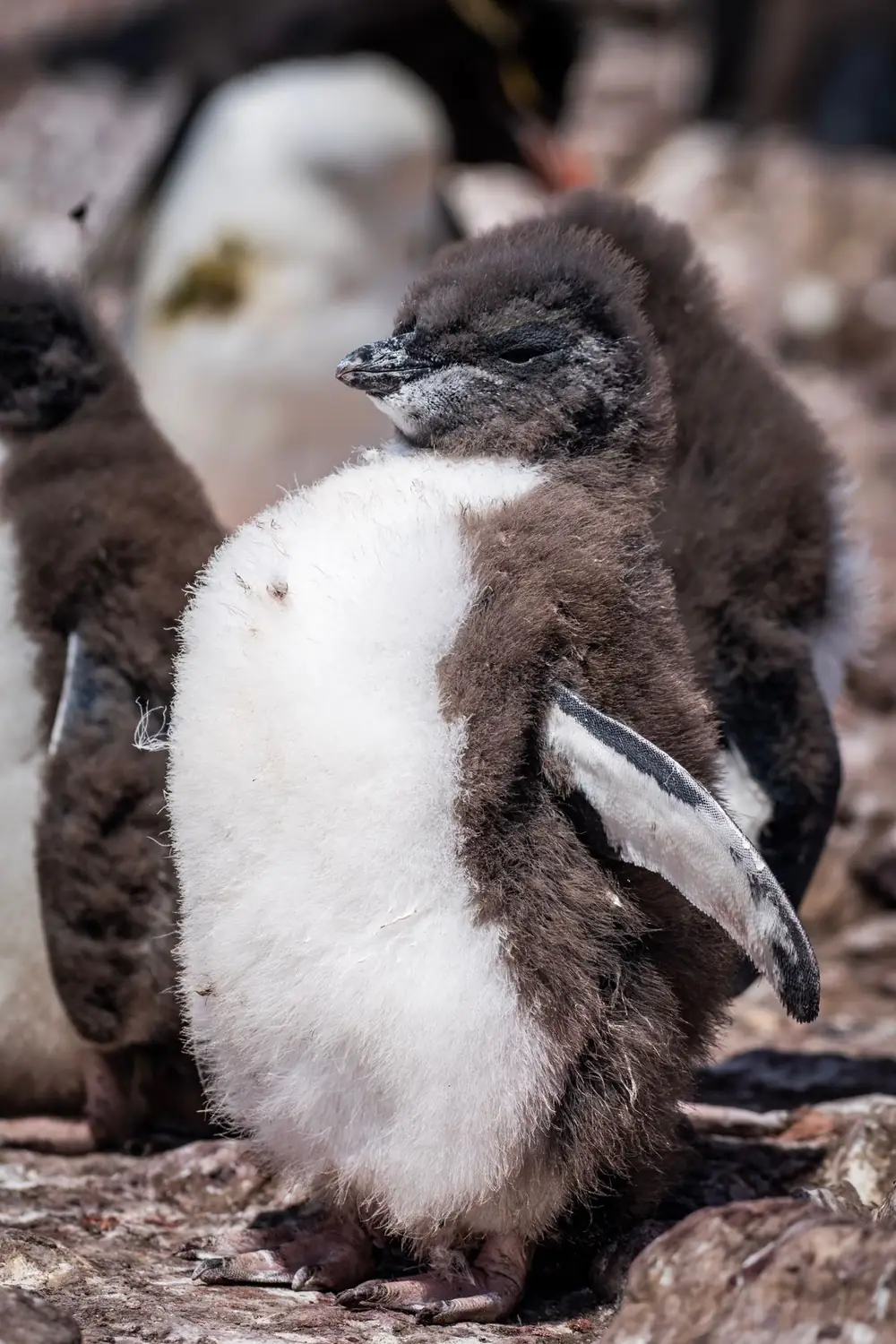
This is the largest group, with seven species: macaroni, royal, southern rockhopper, northern rockhopper, Fiordland, Snares, and erect-crested. All of them sport yellow or orange crest plumes that fan out above the eyes, along with red bills and red eyes. The macaroni is the most numerous penguin on Earth, with a population around 18 million. The royal is the easiest to pick out because it is the only crested penguin with a white face and throat. Rockhoppers are the comedians of the family: instead of sliding on their bellies, they hop from rock to rock on their sturdy feet.
The Banded Penguins (Spheniscus): Four Species
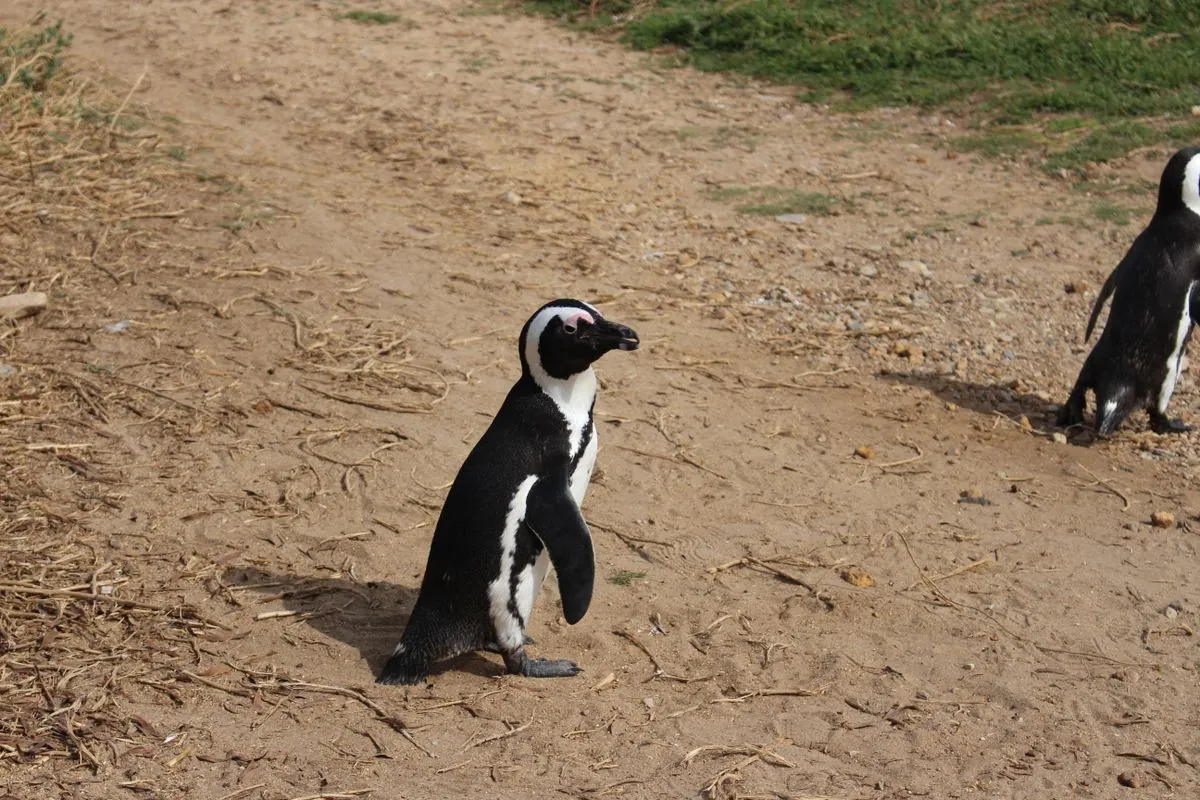
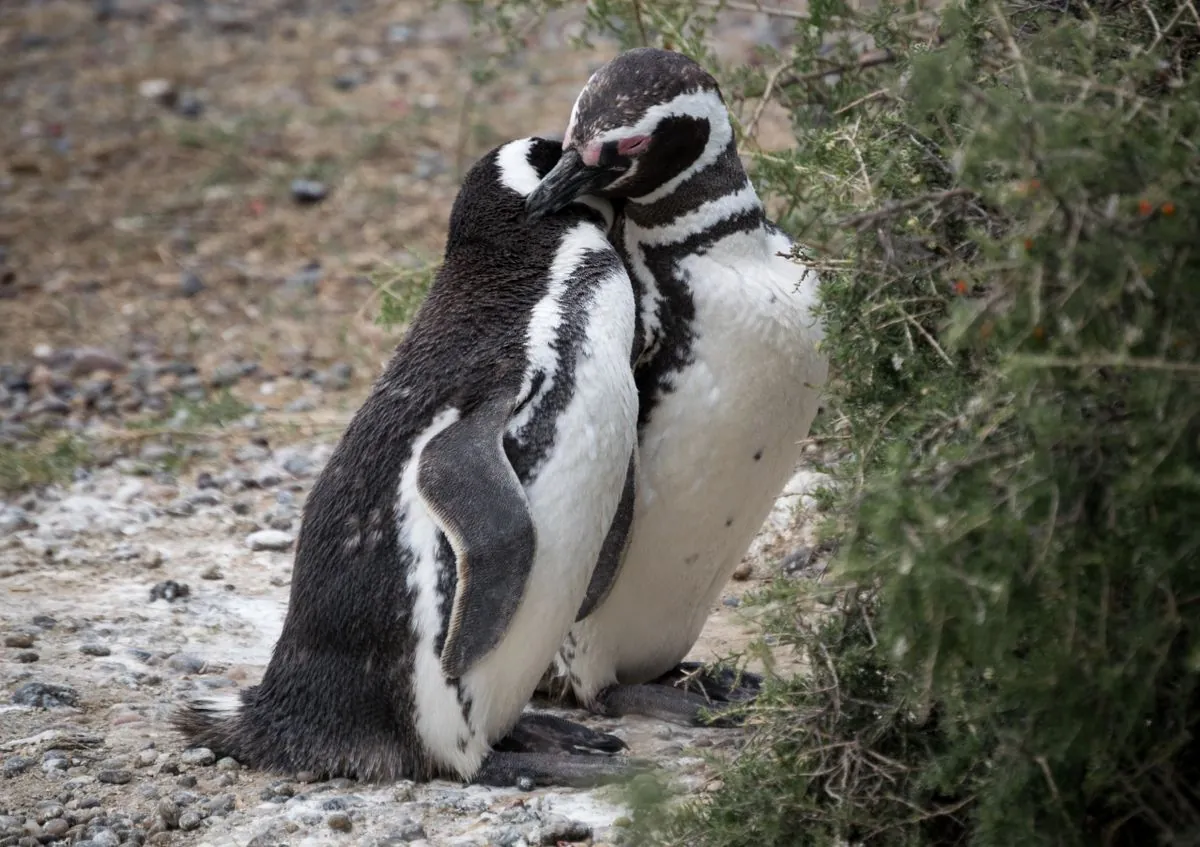
The banded group includes the African, Magellanic, Humboldt, and Galapagos penguins. Look for a black horseshoe band across the chest and patches of bare pink skin around the eyes and at the base of the bill, which help dump heat in warmer climates. Every banded penguin lives somewhere warmer than most people expect, from the beaches of South Africa to the equator itself. The Galapagos penguin is the only penguin species found north of the equator, surviving there thanks to cold, nutrient-rich currents.


The Little Penguin (Eudyptula minor)
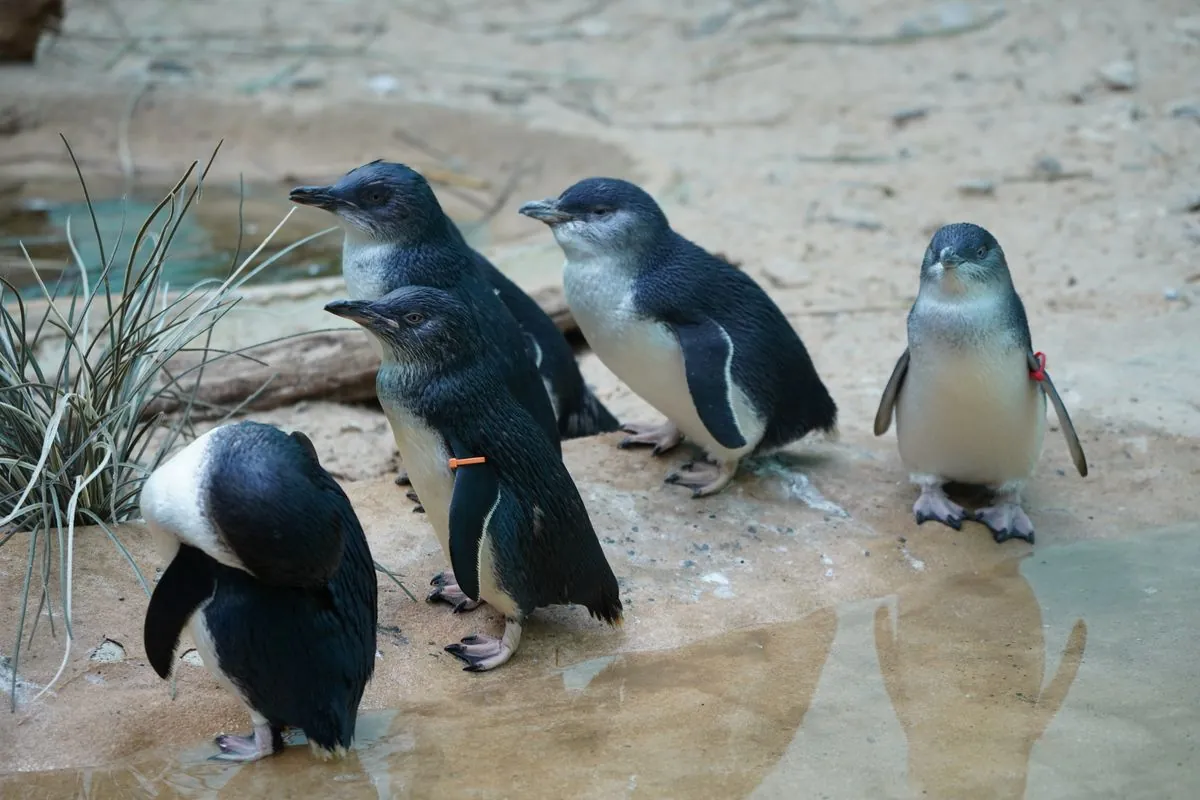
At just 30-33 cm tall and about 1 kg, the little penguin is the smallest of all penguin types, barely taller than a ruler. Its slate-blue back and white belly distinguish it from every other species, and it is the only penguin with blue-toned plumage. Little penguins nest in burrows along the coasts of southern Australia and New Zealand, coming ashore at dusk in groups that tourists gather to watch. Penguin eggs are surprisingly large for the bird’s body size, so if you ever spot an unfamiliar egg on a coastal walk, our bird egg identification chart covers 20 common species to compare it with.
The Yellow-Eyed Penguin (Megadyptes antipodes)
The yellow-eyed penguin stands alone in its own genus and is one of the rarest penguins in the world. Pale yellow eyes, a yellow band across the head, and a shy, solitary nature set it apart from the noisy colonial species. It nests in coastal forests and scrub of New Zealand’s South Island rather than on open beaches, and with only a few thousand breeding pairs left, it is listed as Endangered.
Types of Penguins by Region
Penguins live only in the Southern Hemisphere, with one famous exception noted below. Here is where each group is found:
- Antarctica: emperor, Adelie, chinstrap, and gentoo penguins breed along the continent’s coast and the Antarctic Peninsula.
- Sub-Antarctic islands: king, macaroni, royal, southern rockhopper, and gentoo penguins crowd the islands ringing Antarctica, including South Georgia and the Falklands.
- South America: Magellanic penguins nest in burrows along Patagonia, Humboldt penguins follow the cold current up Peru and Chile, and southern rockhoppers reach the continent’s southern tip.
- Africa: the African penguin is the continent’s only breeding species, found on the coasts of South Africa and Namibia.
- Australia and New Zealand: little penguins dot the southern coasts, while Fiordland, Snares, erect-crested, and yellow-eyed penguins are found only in New Zealand.
- Galapagos Islands: the Galapagos penguin is the only tropical penguin and the only species whose range crosses the equator into the Northern Hemisphere.

The Rarest Types of Penguins
Five species face the steepest climb. The African penguin is now Critically Endangered, with breeding pairs crashing over recent decades as overfishing removes the sardines and anchovies it depends on. The Galapagos penguin numbers only about 1,200 mature individuals and is hammered by El Nino events that warm its feeding waters. The northern rockhopper, erect-crested, and yellow-eyed penguins are all Endangered, threatened by some combination of climate-driven prey shifts, oil spills, introduced predators, and disturbance at nesting sites. Protecting these birds mostly means protecting their food: sustainable fisheries management around breeding colonies is the single most effective lever.
Where to See Different Types of Penguins in the US
You do not need a passport to meet several penguin species. African and Magellanic penguins are the birds you will most often see at American zoos and aquariums, with Humboldt, gentoo, chinstrap, macaroni, and king penguins also common in larger collections from San Diego to Chicago. Emperor penguins are a different story: they are extremely rare in captivity anywhere in the world, so spotting one in person almost always means joining an Antarctic expedition cruise. Wherever you go, bring this chart and try naming each bird by its group first, then its species.

Types of Penguins: Frequently Asked Questions
How many types of penguins are there?
There are 18 living penguin species, grouped into six genera. The count has shifted over the years as scientists split or merged species (the rockhoppers were divided into northern and southern species), but 18 is the current consensus.
What is the smallest type of penguin?
The little penguin (Eudyptula minor) is the smallest, standing just 30-33 cm tall and weighing about 1 kg, roughly the size of a small duck.
What is the largest type of penguin?
The emperor penguin is the largest living penguin, reaching up to 122 cm tall and weighing between 22 and 45 kg, about the weight of a large dog.
Do any penguins live in the Northern Hemisphere?
Only one: the Galapagos penguin. Part of its range on the Galapagos Islands sits just north of the equator, making it the only penguin species found in the Northern Hemisphere. All 17 other species live entirely south of the equator.
Which type of penguin is the most endangered?
The African penguin holds the worst status at Critically Endangered, driven by collapsing fish stocks, oil spills, and breeding habitat pressure. The Galapagos, northern rockhopper, erect-crested, and yellow-eyed penguins are all Endangered.
Can penguins fly?
No penguin can fly in the air. Their wings evolved into stiff flippers that make them clumsy on land but superb underwater, where gentoo penguins “fly” through the water at up to 36 km/h chasing fish and krill.
Conclusion
From the 122 cm emperor to the 30 cm little penguin, the 18 types of penguins cover an astonishing range of sizes, climates, and lifestyles, yet every one of them can be identified by learning just six groups. Bookmark the master chart above for your next zoo visit or wildlife trip. If you enjoy comparing whole animal families side by side, our types of deer chart does the same for North America’s most familiar hoofed mammals, and the goose identification chart will sharpen your waterbird ID skills closer to home.


Pingback: Types of Dolphins: 20 Species, Sizes, Habitats and Facts – Chart Identify
Pingback: Types of Apes: All Living Species, Sizes, Habitats and Facts – Chart Identify
Pingback: Types of Sharks: 20 Species, Sizes, Habitats and Facts – Chart Identify