

Some years ago I spent an afternoon at a Chicago park watching what I assumed were identical gray squirrels. After twenty minutes I noticed one was much bigger, rust colored underneath, and far bolder around people. That was my first fox squirrel, and it cracked open something I had never thought about: there are many types of squirrels, and the gray one in the park is only the beginning.
Scientists recognize around 280 squirrel species around the world, from thumb-sized forest dwellers to ground burrowers that weigh as much as a house cat. In this guide you will meet 20 of the most interesting, with sizes, ranges, and the field marks that tell them apart at a glance.

The Three Main Groups of Squirrels
Every squirrel belongs to one of three groups, and the difference is mostly about lifestyle. Tree squirrels climb and leap between branches. Ground squirrels dig tunnels and many hibernate for months. Flying squirrels glide between trees on a flap of skin, mostly at night.
| Trait | Tree Squirrels | Ground Squirrels | Flying Squirrels |
|---|---|---|---|
| Where they live | In branches and tree cavities | In underground burrows | In high tree cavities and nest boxes |
| Active time | Daytime | Daytime | Night |
| Tail | Long and bushy, often curled over the back | Shorter and less bushy | Flat and wide, used as a rudder |
| Key skill | Climbing and jumping | Digging; many sleep through winter | Gliding up to 50 meters or more |
| Examples | Gray, fox, red, giant squirrels | Chipmunks, marmots, prairie dogs | Southern, northern, woolly flying squirrels |
Tree Squirrel Species: The Climbers
Tree squirrels are the group most people know. They spend their lives in the canopy, and many have learned to share cities with us.
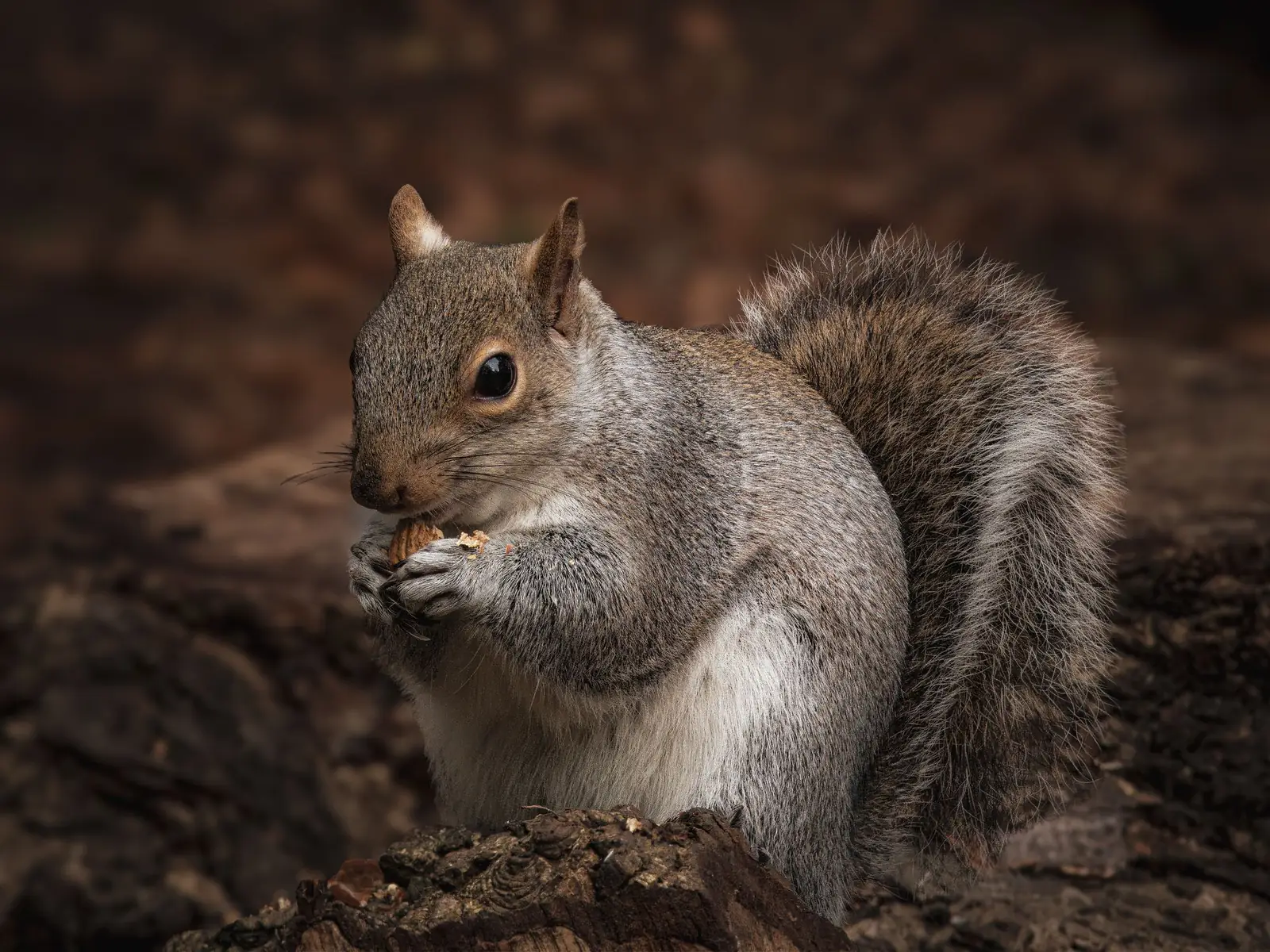
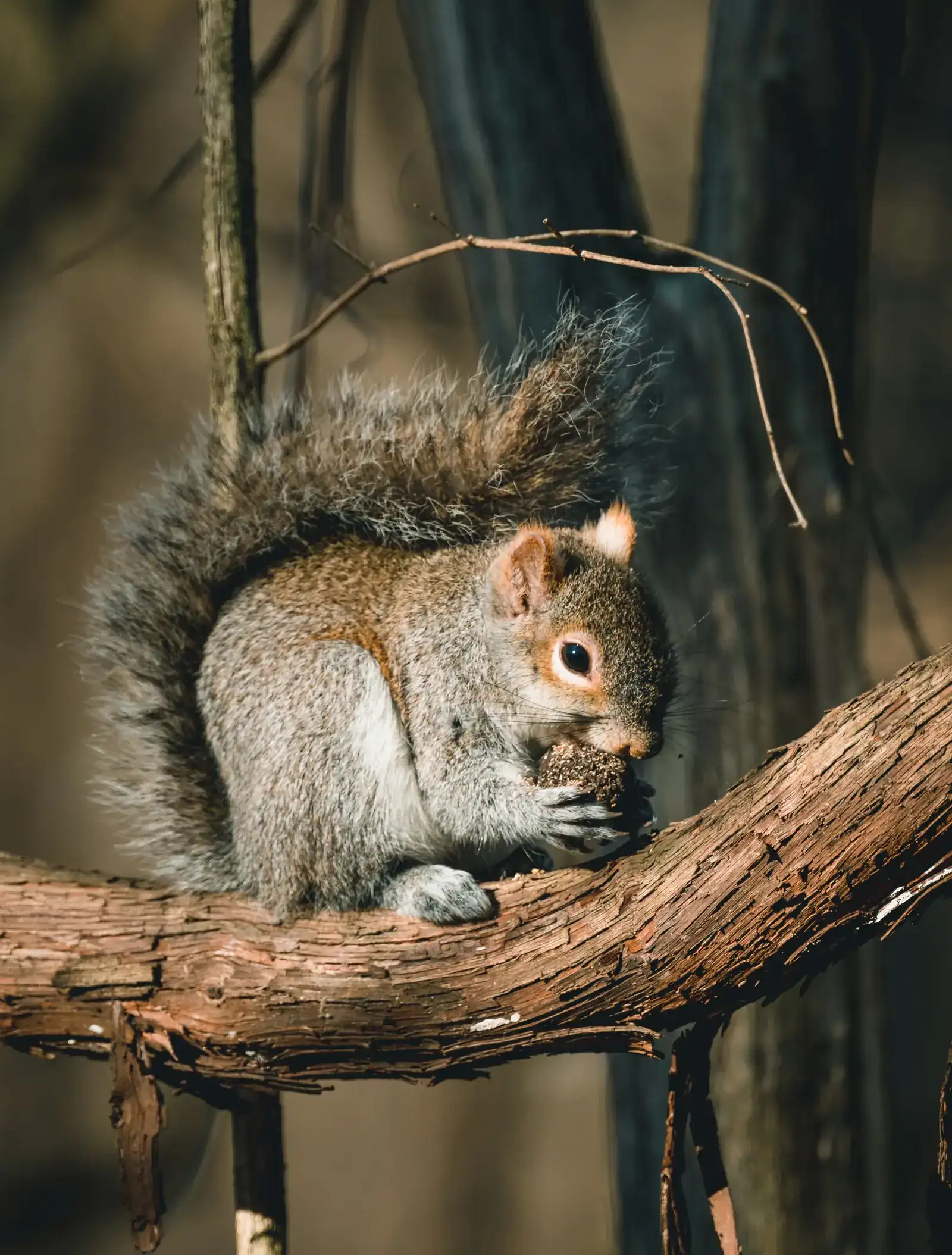
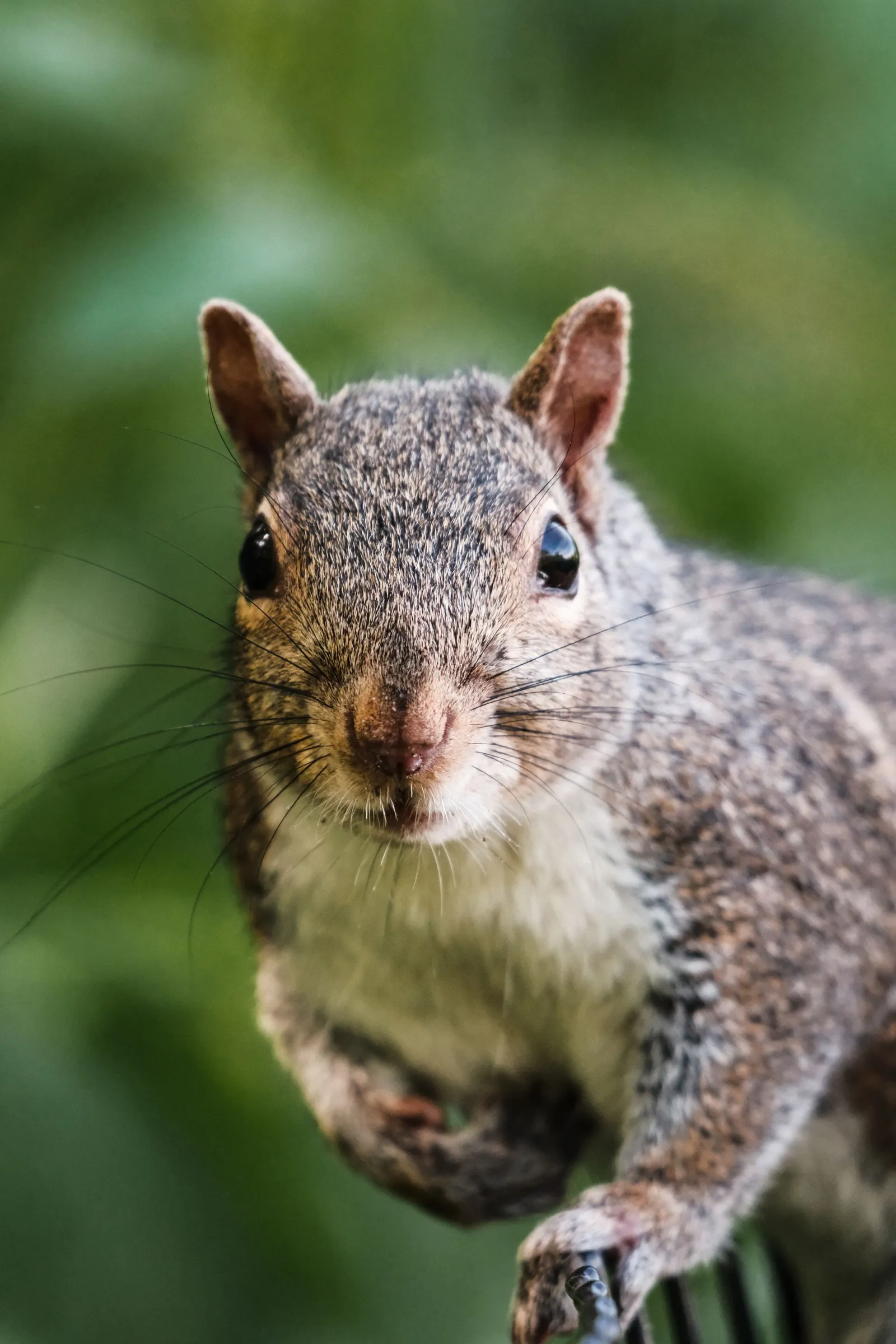
Eastern gray squirrel (Sciurus carolinensis) is the default city squirrel across eastern North America, introduced to Britain where it now dominates. Adults run 41 to 51 cm and weigh 400 to 600 g, and the famous “black squirrel” is just a dark color form of this same animal.
Fox squirrel (Sciurus niger) is North America’s largest tree squirrel at 46 to 69 cm and around 800 to 1,000 g. Its color varies wildly by region, from all black in Florida to grizzled gray-brown with an orange belly in the Midwest.
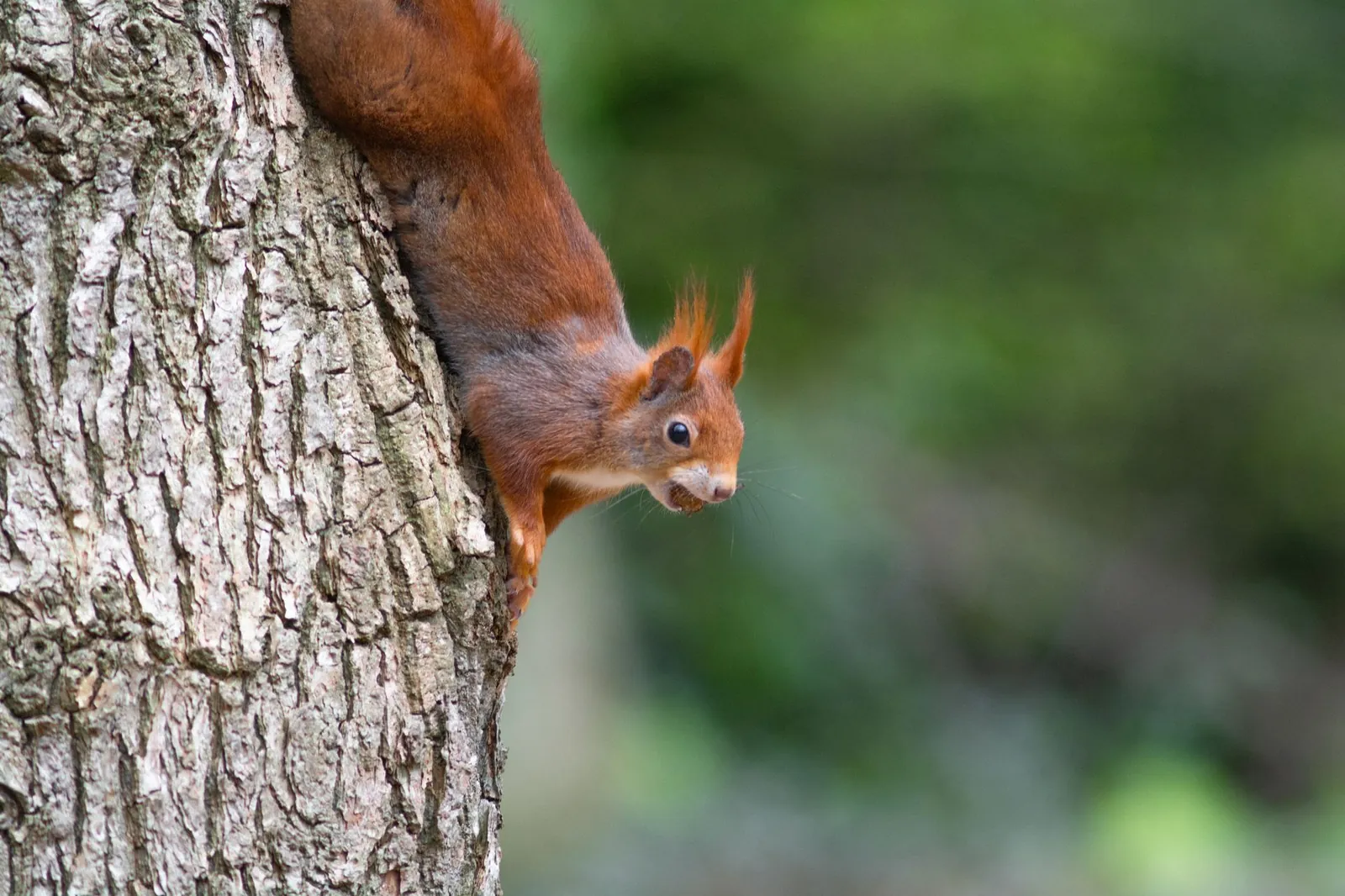
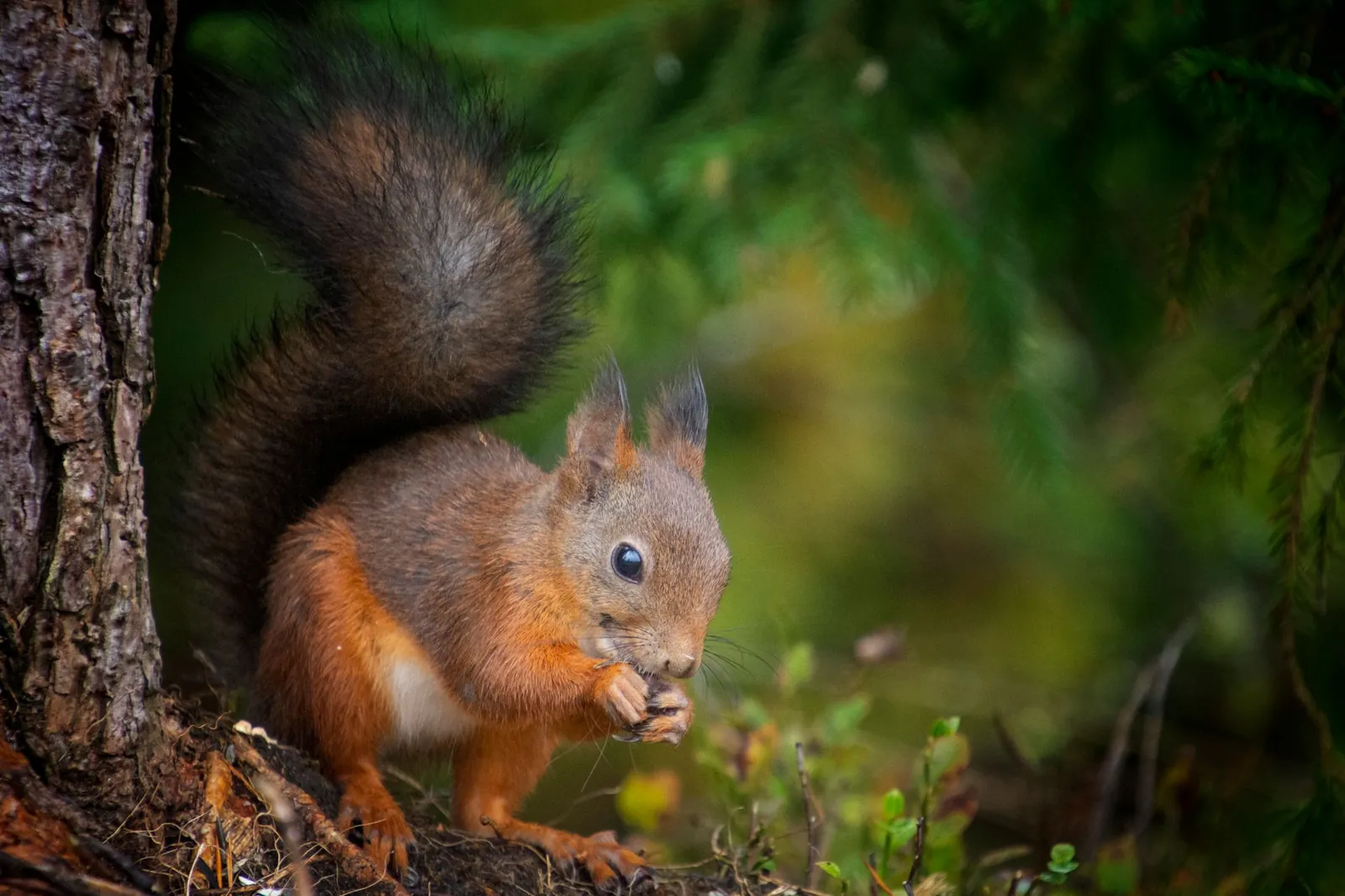
Eurasian red squirrel (Sciurus vulgaris) is the native red of Europe and northern Asia, roughly 35 to 45 cm. In Britain it has declined where introduced grays outcompete it, and its long winter ear tufts are the easiest field mark.
American red squirrel (Tamiasciurus hudsonicus) is small (25 to 38 cm) but fiercely territorial, defending cone caches with a rattling chatter. Like the big herbivores in our types of deer chart, it lives on a strict seasonal rhythm: cut cones in autumn, defend them all winter.
Douglas squirrel (Tamiasciurus douglasii), the “chickaree” of the Pacific Coast, is the red squirrel’s western cousin. A white eye ring sets it apart as it harvests Douglas fir cones with obsessive focus.
Abert’s squirrel (Sciurus aberti) lives almost exclusively in Southwestern ponderosa pine forests, eating pine seeds, inner bark, and fungi. Its long winter ear tufts, gray coat with a reddish back stripe, and plumed tail make it unmistakable.
Mexican gray squirrel (Sciurus aureogaster) is one of the largest in its genus at 50 to 60 cm. It ranges through Mexico and Central America and was introduced to the Florida Keys.
Western gray squirrel (Sciurus griseus) is the shy Pacific Coast counterpart of the eastern gray, similar in size but with a crisp white belly sharply divided from its gray back. It keeps to oak and pine woodlands and avoids cities.
Indian giant squirrel (Ratufa indica) is a canopy giant of India’s Western Ghats, reaching nearly a meter and around 2 kg. Its maroon, cream, rust, and black coat differs in almost every subspecies, and it rarely comes down to the ground.
Black giant squirrel (Ratufa bicolor) ranges across South and Southeast Asia and also tops 90 cm. Dark above and tan below, it shares the Indian canopy with langurs, which you can compare in our types of monkeys guide.
Prevost’s squirrel (Callosciurus prevostii) of Southeast Asia is often called one of the most colorful mammals alive: black back and tail, reddish-orange belly, white flanks. At 20 to 27 cm head-and-body it is medium sized but impossible to confuse with anything else.
African pygmy squirrel (Myosciurus pumilio) is the smallest squirrel on Earth: a 6 to 8 cm body and about 16 g. It forages on bark and insects in the rainforests of Cameroon, Gabon, and Equatorial Guinea.
Ground Squirrel Species: The Diggers
Ground squirrels trade the canopy for tunnels. Their burrows can be astonishing structures, and many species vanish underground for most of the winter.
California ground squirrel (Otospermophilus beecheyi) is the tan, mottled squirrel of western parks and hillsides, about 45 cm total and 280 to 738 g. When facing a rattlesnake it warms its tail and waves it to signal the snake it has been spotted.
Arctic ground squirrel (Urocitellus parryii) is the largest North American ground squirrel, 33 to 50 cm and up to 1.5 kg, hibernating for up to 9 months with a body temperature below freezing. Wolves, foxes, and eagles take them in the short arctic summer; see our chart of all wolf species for more on their predators.
Thirteen-lined ground squirrel (Ictidomys tridecemlineatus) is a 20 to 28 cm prairie specialist of the central US and Canada. Thirteen alternating light and dark stripes run down its back, and it stands upright to whistle an alarm at hawks.
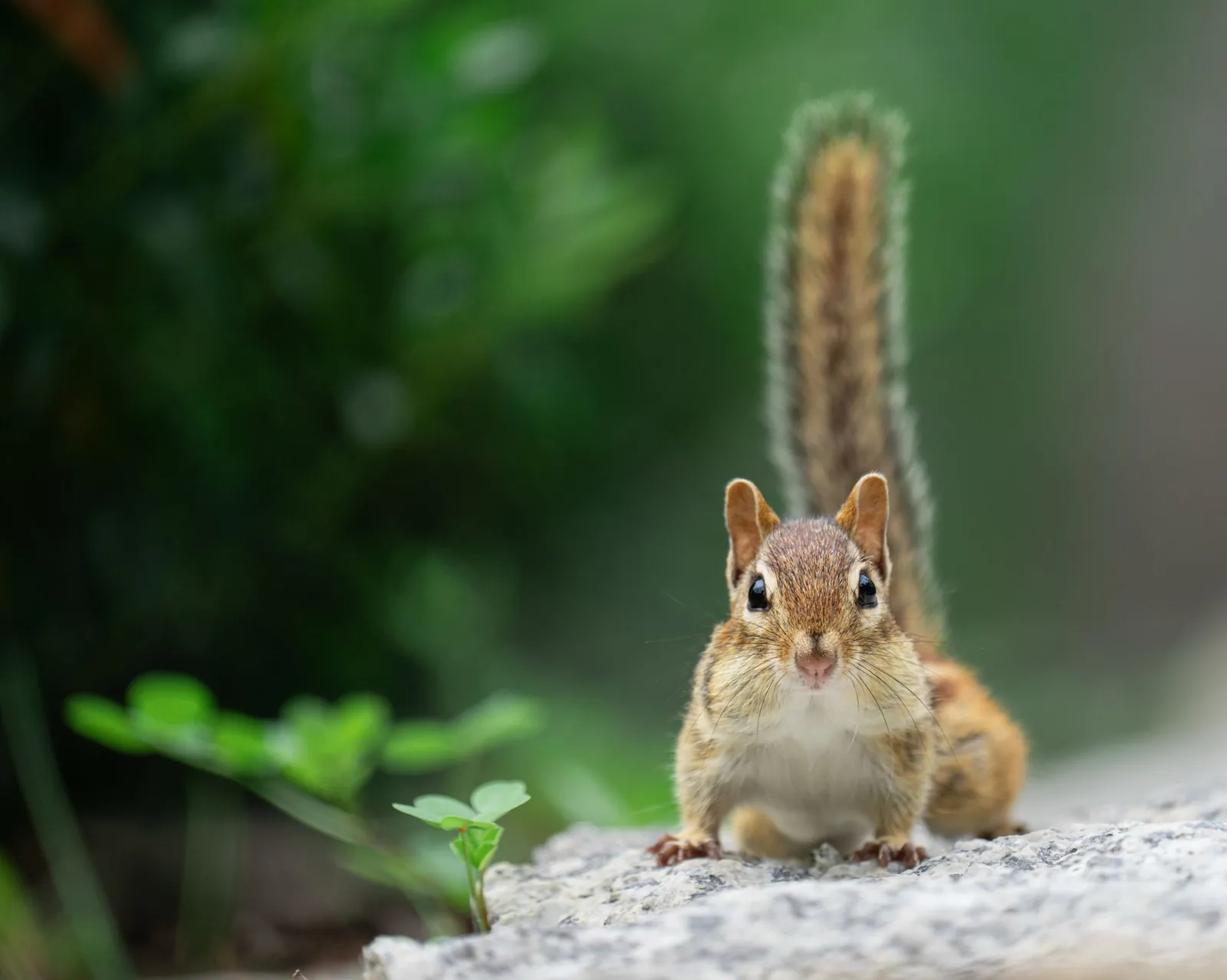
Eastern chipmunk (Tamias striatus) is a true squirrel, and its cheek pouches are the giveaway: one chipmunk can pack dozens of seeds per trip. Across eastern North America, badgers are among the few predators willing to dig it out of its burrow.
Black-tailed prairie dog (Cynomys ludovicianus) builds towns on the Great Plains that can sprawl for hundreds of acres. Its alarm calls encode the type, size, and speed of an approaching predator.

Flying Squirrel Species: The Gliders
Flying squirrels do not fly; they glide. A membrane called the patagium stretches from wrist to ankle, and the flat tail steers. Almost all are nocturnal, which is why most people never see one.
Southern flying squirrel (Glaucomys volans) is the big-eyed glider of eastern US forests, 21 to 26 cm and under 100 g. It can sail over 50 meters between trees, and winter groups huddle together in tree cavities for warmth.
Northern flying squirrel (Glaucomys sabrinus) is larger (25 to 37 cm) and ranges across Canada and the northern US. It is a truffle specialist that spreads forest fungi through its droppings, quietly keeping conifer forests healthy.
Woolly flying squirrel (Eupetaurus cinereus) is the giant of the gliders: head and body 42 to 60 cm, up to 2.5 kg. It lives in the high conifer forests of the western Himalayas and was thought extinct for 70 years until its rediscovery in Pakistan in 1994.
Complete Comparison Chart: 20 Types of Squirrels
Sizes below are approximate total lengths (nose to tail tip) and typical adult weights. Ranges and habitats are simplified for quick comparison.
| Species | Size (approx.) | Weight (approx.) | Range | Habitat / Key Fact |
|---|---|---|---|---|
| Eastern gray squirrel | 41-51 cm | 400-600 g | Eastern North America; introduced UK | Parks and suburbs; black morphs common up north |
| Fox squirrel | 46-69 cm | 800-1,000 g | Eastern and central USA | Largest North American tree squirrel; color varies by region |
| Eurasian red squirrel | 35-45 cm | 250-350 g | Europe, northern Asia | Winter ear tufts; declining in the UK |
| American red squirrel | 25-38 cm | 150-300 g | Canada, northern USA | Fiercely territorial; famous loud chatter |
| Douglas squirrel | 25-38 cm | 150-280 g | Pacific Coast forests | “Chickaree”; white ring around the eye |
| Abert’s squirrel | 45-58 cm | 540-970 g | Southwestern USA | Ponderosa pine specialist; big winter ear tufts |
| Mexican gray squirrel | 50-60 cm | 600-800 g | Mexico, Central America; introduced Florida Keys | One of the largest in its genus |
| Western gray squirrel | 45-55 cm | 450-700 g | Oregon, California, Washington | Shy; crisp white belly; avoids cities |
| Indian giant squirrel | Up to ~90 cm | 1.2-2 kg | Western Ghats, India | Multicolored canopy giant; rarely descends |
| Black giant squirrel | Up to ~90 cm | 1-1.5 kg | South and Southeast Asia | Dark back, tan belly; nests high in canopy |
| Prevost’s squirrel | 45-55 cm | 250-500 g | Southeast Asia | Black, white, and orange; extremely colorful |
| African pygmy squirrel | 12-14 cm | ~16 g | West and Central Africa | Smallest squirrel on Earth |
| California ground squirrel | ~45 cm | 280-738 g | Western USA, Baja California | Burrower; signals rattlesnakes with a warmed tail |
| Arctic ground squirrel | 33-50 cm | 0.5-1.5 kg | Alaska, northern Canada, E. Siberia | Hibernates up to 9 months; body temp drops below freezing |
| Thirteen-lined ground squirrel | 20-28 cm | 100-250 g | North American prairies | 13 striped pattern; upright alarm posture |
| Eastern chipmunk | 20-25 cm | 80-120 g | Eastern North America | Striped; cheek pouches carry seeds |
| Black-tailed prairie dog | 35-45 cm | 0.7-1.4 kg | Great Plains | Huge colonies; complex predator alarm calls |
| Southern flying squirrel | 21-26 cm | 50-90 g | Eastern USA | Nocturnal glider; glides 50+ meters |
| Northern flying squirrel | 25-37 cm | 100-180 g | Canada, northern USA | Truffle specialist; spreads forest fungi |
| Woolly flying squirrel | 85-115 cm | 1.4-2.5 kg | Western Himalayas | Rarest glider; rediscovered in 1994 after 70 years |
How to Identify the Squirrel You Are Seeing
You can name most squirrels with four quick clues. First, check the size: thumb-sized means a pygmy squirrel, house-cat-sized means a giant squirrel or a marmot. Second, look at the tail. Long and bushy and curled over the back points to a tree squirrel; short and thin points to a ground squirrel; flat and wide almost always means a flying squirrel.
Third, note the time and place. A squirrel active at night is a flying squirrel, full stop. One digging at burrow entrances in a meadow is a ground squirrel. In the eastern US, a gray squirrel with black fur is still an eastern gray, just the dark form, while a noticeably bigger, rust-bellied animal is a fox squirrel. In the West, ear tufts in winter and a gray coat with a red back stripe mean Abert’s.

The Rarest and Most Remarkable Squirrels
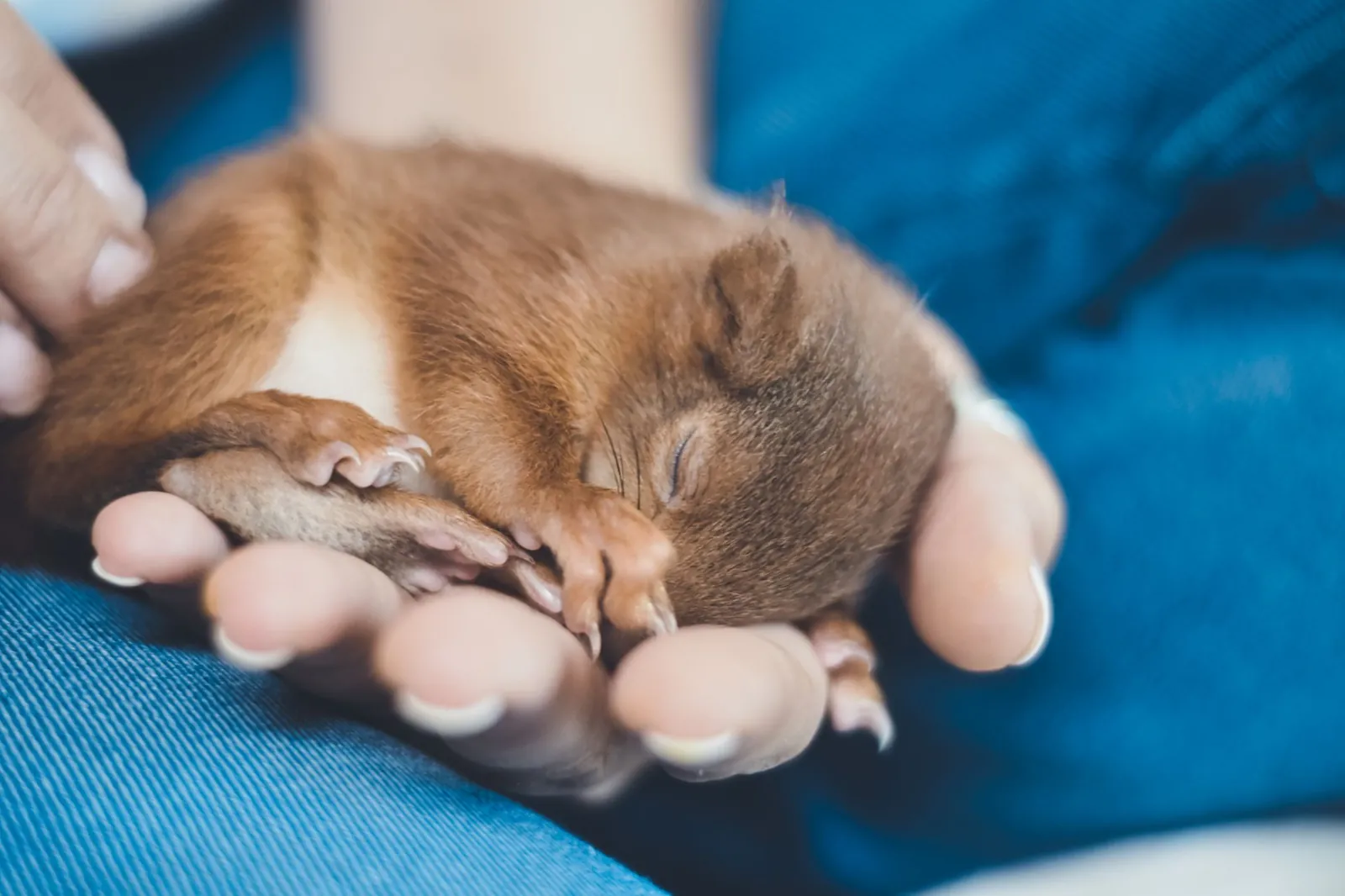
A few species deserve special mention. The woolly flying squirrel, above, went unseen by science for seven decades before its rediscovery. The African pygmy squirrel is the smallest of all, yet it thrives in dense rainforest most researchers struggle to work in. The Indian giant squirrel may be the most photographed: its Technicolor coat makes it a social media star, but it is a strict canopy specialist of a shrinking forest.
The arctic ground squirrel holds the hibernation record among mammals, and the prairie dog holds the communication record, with calls that describe a predator’s species, size, and speed. And the humble eastern gray, the squirrel of city parks, is also one of the most successful introduced mammals on the planet.
Frequently Asked Questions
How many types of squirrels are there?
Around 280 species are recognized worldwide. They divide into tree squirrels, ground squirrels, and flying squirrels, and the family also includes chipmunks, marmots, and prairie dogs.
What is the most common squirrel?
In North America it is the eastern gray squirrel. In Europe and northern Asia it is the Eurasian red squirrel. Both adapt well to parks and gardens, though the gray is outcompeting the red in Britain.
What is the smallest type of squirrel?
The African pygmy squirrel, with a body of 6 to 8 cm and a weight of about 16 g, lighter than a house mouse.
What is the largest type of squirrel?
Among tree squirrels, the Indian and black giant squirrels reach about 90 cm including the tail. The woolly flying squirrel can weigh up to 2.5 kg. Marmots, also in the squirrel family, are the heaviest of all.
Do flying squirrels really fly?
No. They glide on a membrane of skin between the wrists and ankles, steering with a flat tail. They cannot flap or gain altitude like a bat.
Are black squirrels a separate species?
No. A black squirrel is a dark color form of the eastern gray squirrel. Gray and black babies can be born in the same litter.
Final Thoughts
The next time a squirrel freezes on a fence and stares you down, take a second look. Check the tail, the size, the color, and the time of day, and you will often be able to name it. Whether it is a city gray, a bold fox squirrel, or a glider you only glimpse at dusk, every one of these 20 species found its own way to make the squirrel body plan work, and that variety is worth noticing.



Pingback: Types of Rabbits: 20 Breeds, Sizes and Care Facts – Chart Identify