

There are more than 4,000 bee species in North America, yet most people only know two: the honey bee and the bumblebee. This bee identification chart covers the 15 most common species, the fastest visual clues for telling them apart, and answers to the questions everyone asks, like whether that shiny black bee drilling into your porch is dangerous (probably not, but it is doing damage).
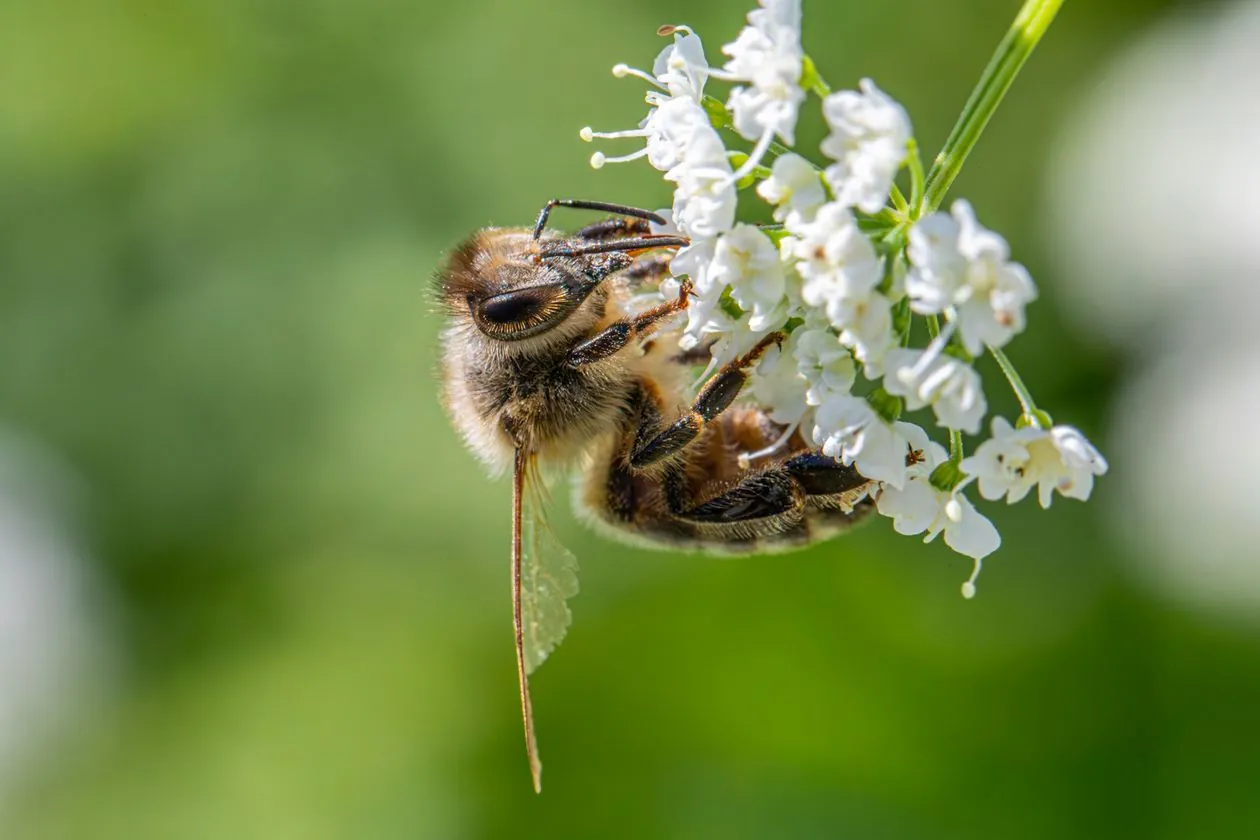
How to Use This Bee Identification Chart
Learn three traits and you can identify almost any bee. First, body hair: bees are hairy because those hairs carry pollen, while wasps look smooth and shiny. Second, color: yellow-and-black banding points to bumblebees or honey bees, solid black with a shiny rear means carpenter bee, and metallic blue or green usually means a mason, sweat, or orchard bee. Third, behavior: a bee working flowers calmly is foraging, while one hovering at face height near a wooden deck in spring is a male carpenter bee guarding his tunnel, and males cannot sting.
Size helps too. Compare the insect to a honey bee, the familiar baseline at about 15 mm long. Bumblebee queens are bigger and rounder, sweat bees and mining bees are smaller, and anything slender, smooth, and narrow-waisted is probably a wasp, not a bee at all.
Main Bee Identification Chart
This reference table covers the 15 bee species Americans encounter most often. Scan the appearance column first, then confirm with nesting and behavior.
| Bee | Size | Key ID marks | Nesting | Sting risk |
|---|---|---|---|---|
| Honey Bee | ~15 mm | Golden brown with black stripes, slender, hairy | Large colonies in hives or tree cavities | Stings once, then dies; defensive near hive |
| Bumblebee | 20-25 mm (queen) | Big, round, very fuzzy, black and yellow | Small colonies in ground cavities or grass | Can sting repeatedly; rarely aggressive |
| Carpenter Bee | 19-23 mm | Large black body, shiny hairless abdomen | Tunnels bored into wood | Females rarely sting; males cannot sting |
| Mason Bee | 8-12 mm | Metallic blue or green, stocky | Mud-walled cells in hollow stems or holes | Very gentle; almost never stings |
| Leafcutter Bee | 10-18 mm | Robust, dark with pale bands; carries pollen under belly | Leaf-lined cells in cavities | Docile; rarely stings |
| Sweat Bee | 5-12 mm | Small, often metallic green or blue | Burrows in bare soil | Mild sting; attracted to sweat |
| Mining Bee | 10-15 mm | Brown, black, or rusty; furry thorax | Tunnels in bare or sparse soil | Docile; rarely stings |
| Squash Bee | 12-16 mm | Yellow and black, looks like a small honey bee | Ground burrows near squash plants | Gentle; active at dawn |
| Digger Bee | 12-20 mm | Robust, hairy, often pale-banded | Burrows in sandy soil | Rarely stings |
| Long-Horned Bee | 10-16 mm | Males have extremely long antennae | Burrows in open ground | Docile; rarely stings |
| Wool Carder Bee | 12-18 mm | Stout, black and yellow; males patrol flowers | Plant-fiber nests in cavities | Males are territorial but cannot sting |
| Blue Orchard Bee | 10-14 mm | Deep metallic blue, smaller than a honey bee | Hollow stems and bee houses | Very gentle; almost never stings |
| Yellow-Faced Bee | 5-9 mm | Tiny, black with yellow face markings | Hollow stems and wood cavities | Rarely noticed, rarely stings |
| Plasterer Bee | 10-15 mm | Smooth, shiny, often dark | Ground burrows lined with waterproof secretion | Docile; rarely stings |
| Cuckoo Bee | 8-15 mm | Wasp-like, often brightly patterned, less hairy | Lays eggs in other bees’ nests | Rarely stings people |
Honey Bee: The Familiar One
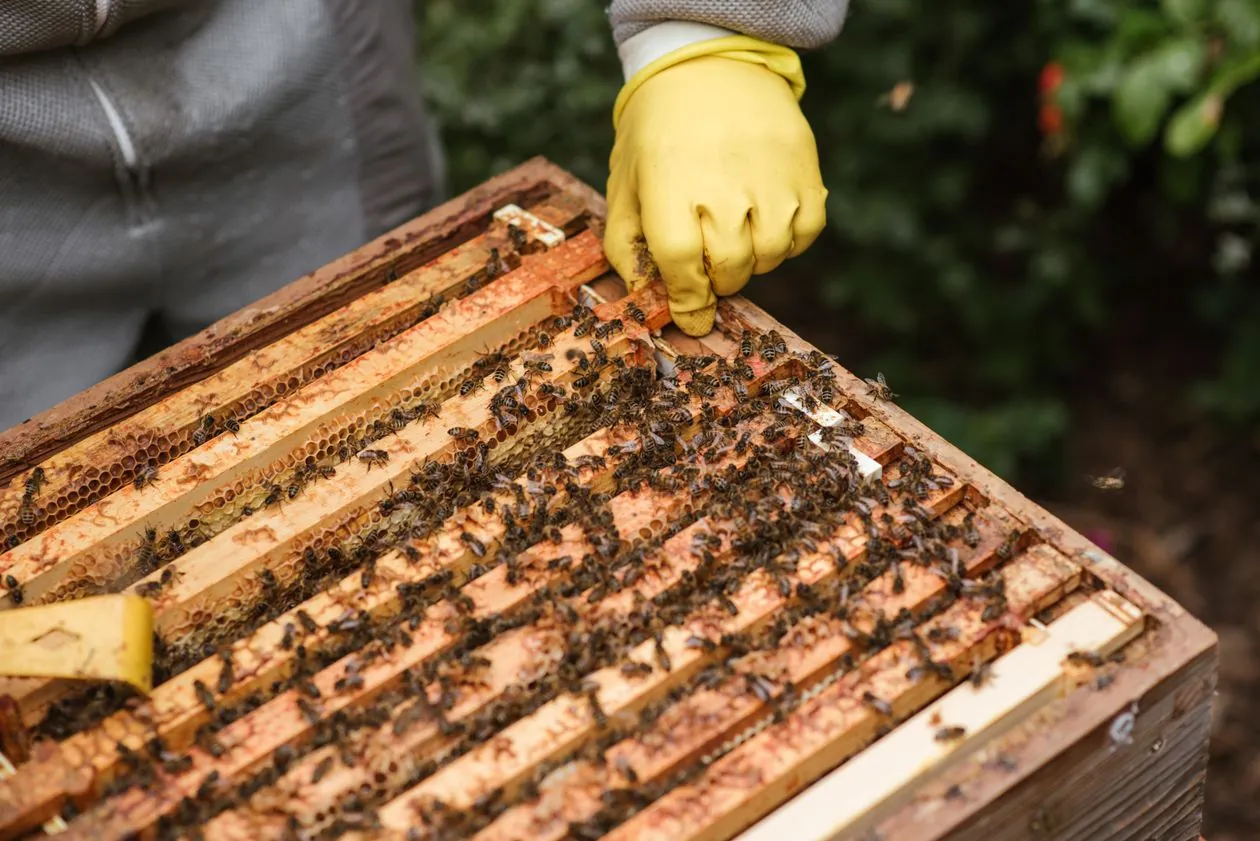
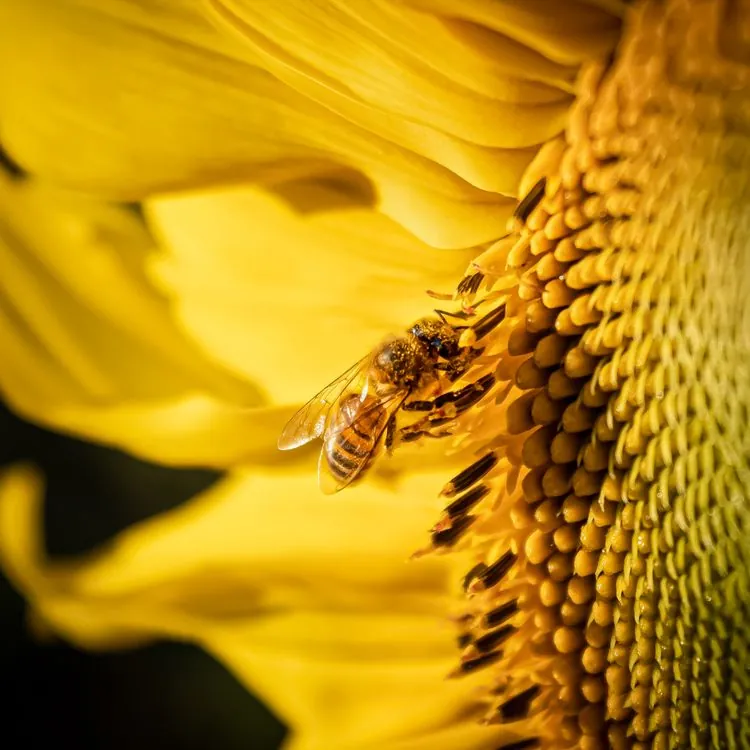
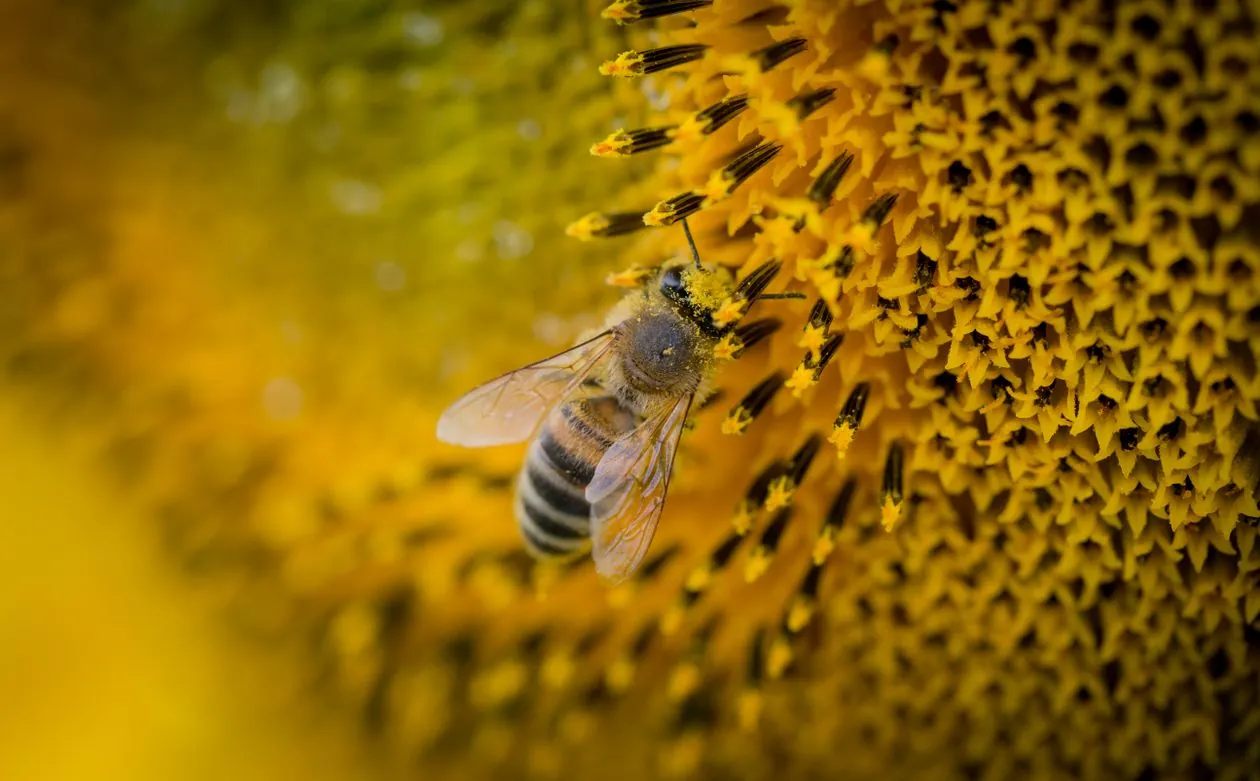
The Western honey bee is the reference point for this whole chart. Slender and golden brown with black abdominal stripes, honey bees live in colonies of 20,000 to 60,000 with a single queen. They are the only bees that make harvestable honey, and they share flower locations with the famous waggle dance.
Two facts surprise people. First, a honey bee can only sting once, because its barbed stinger tears free and the bee dies. Scrape a stinger out sideways with a fingernail rather than pinching it, which squeezes more venom in. Second, honey bees are not native to North America. They arrived with European settlers, which is why native plant gardens often do better with native bees.
Bumblebee: The Fuzzy Giant
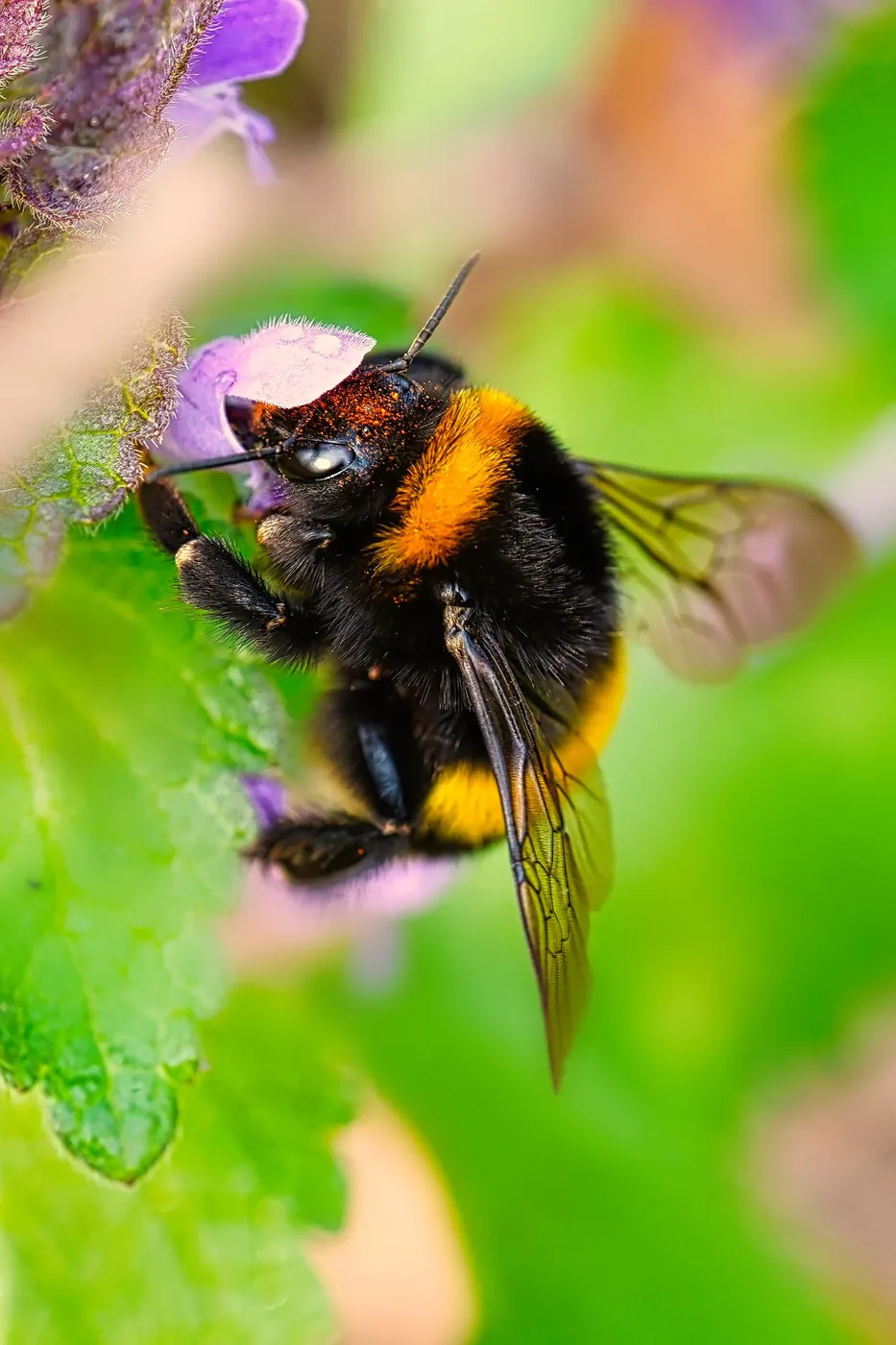
If it is big, round, loud, and looks like it is wearing a fur coat, it is a bumblebee. Queens reach about an inch long in spring. Colonies are small, usually 50 to 400 bees, and nest in the ground, often in abandoned rodent burrows or thick grass.
Bumblebees are the cold-weather champions of the bee world. They shiver their flight muscles to warm up, so they fly on chilly mornings when honey bees stay home, making them the main pollinators of early spring crops. They also perform buzz pollination, vibrating flowers to shake pollen loose, a trick tomatoes and blueberries depend on. They can sting more than once but almost never do.

Carpenter Bee: The Wood Borer
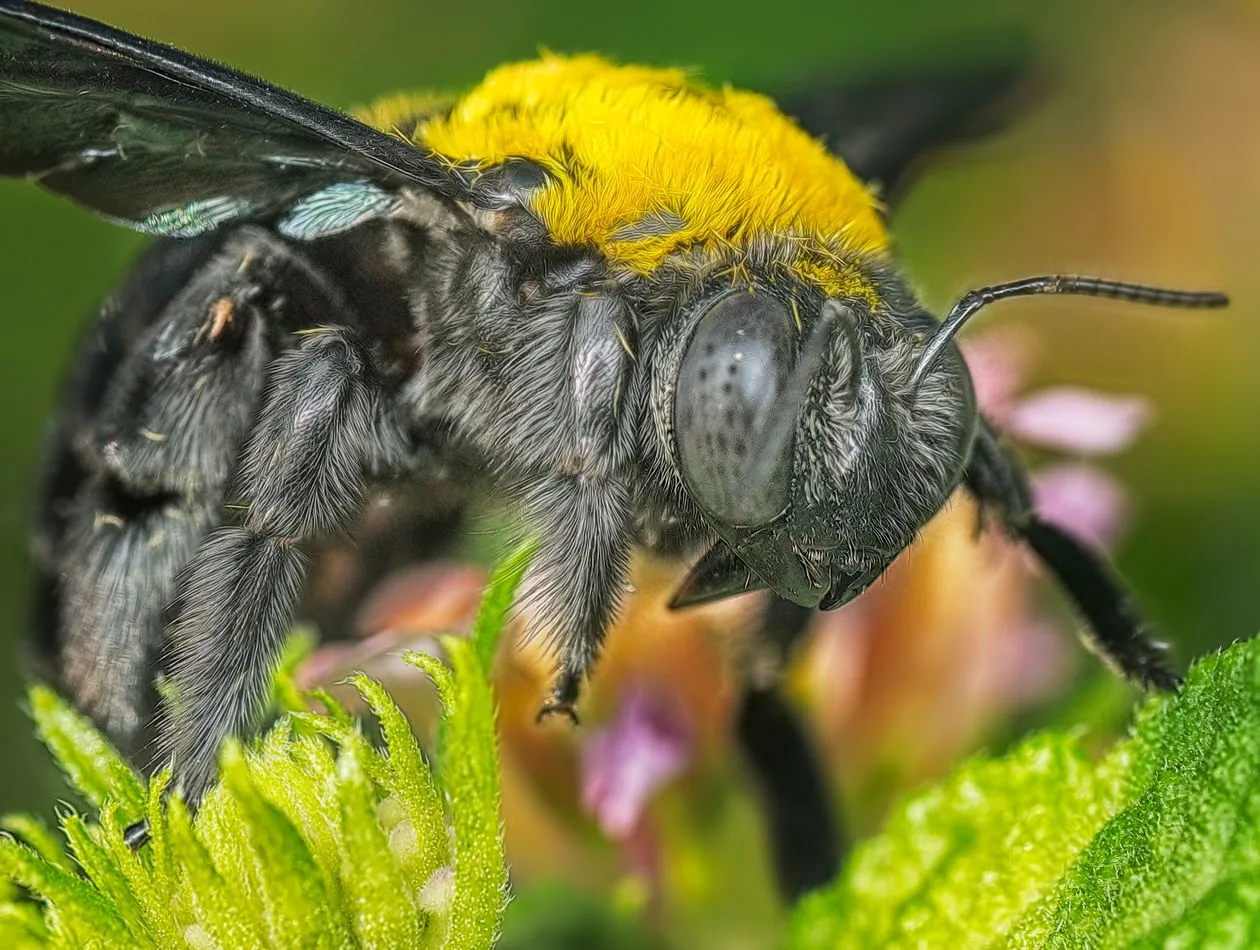
Carpenter bees cause more homeowner panic than any other bee here, and most of it is unnecessary. They look like bumblebees, but a bumblebee’s rear is fuzzy while a carpenter bee’s is smooth, shiny, and bare. Females drill perfectly round half-inch holes into wood, then tunnel along the grain to lay eggs.
Here is what matters for your house. Males, the ones hovering at face level near the deck, have no stinger at all. Females can sting but almost never do. The real problem is structural: tunnels get reused and extended year after year, and woodpeckers hunting the larvae often cause worse damage. Painted or stained wood deters them, since they prefer bare, weathered wood. Plug old holes with wood putty in late summer, never in spring while brood is inside.
Mason Bees and Blue Orchard Bees: The Gentle Metallics
Mason bees are the superstars of backyard pollination. One mason bee can do the work of 100 honey bees on fruit trees, partly because they are messy foragers that drop pollen everywhere. Small, stocky, and metallic blue or green, they have no interest in you. Males lack stingers and females almost never use theirs.
Instead of hives, mason bees need holes. In the wild they use beetle borings and hollow stems, sealing each egg chamber with mud, which is where the name comes from. A simple bee house, untreated wood drilled with 5/16-inch holes about six inches deep and mounted facing southeast, will usually find tenants within a season. Our fruit season chart pairs well here, since a long bloom season keeps mason bees fed from spring to fall.

Leafcutter Bees: The Circle Artists
Leafcutter bees announce themselves with near-perfect circles snipped from rose, lilac, or redbud leaves. They carry the discs to a cavity nest and use them as wallpaper for each brood cell. The bees are robust and dark with pale bands, and carry pollen on hairs under the abdomen, which looks like a golden belly.
Gardeners sometimes worry about the chewed leaves, but the damage is cosmetic and plants recover. In exchange you get elite pollinators of wildflowers, vegetables, and alfalfa, and like mason bees, leafcutters will happily move into bee houses.

Sweat Bees: The Tiny Metallic Ones
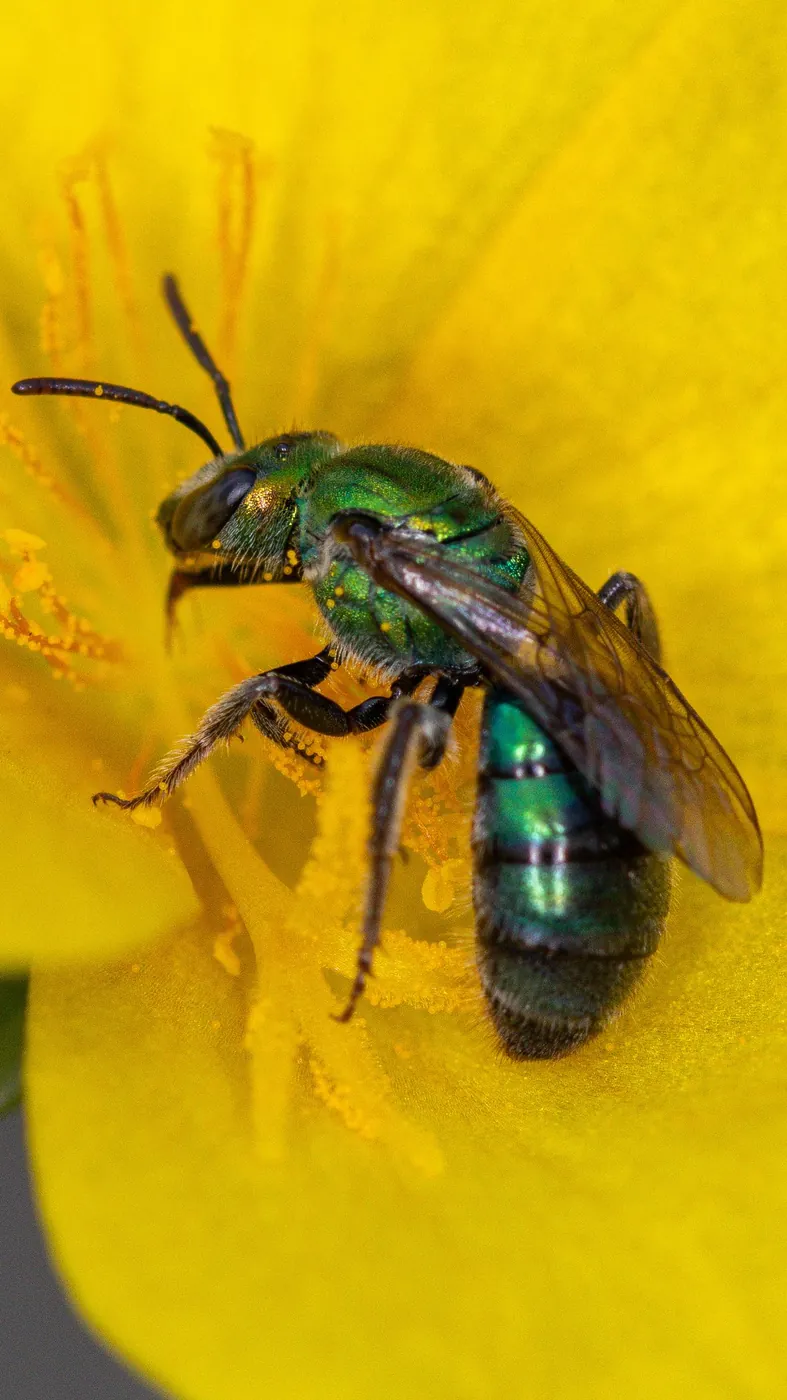
The jewel of this chart is the sweat bee: often just a quarter inch long, with a brilliant metallic green or blue body that flashes in sunlight. They get their name from landing on skin to sip sweat for its salts on hot days. It feels strange, but they are not aggressive and their sting is mild.
Sweat bees nest in the ground, sometimes in huge aggregations where thousands of burrows honeycomb a patch of bare soil. They are active all summer and visit a wide range of plants, making them important crop and wildflower pollinators. A tiny green bee on a yellow flower is one of the most beautiful and underappreciated insects in North America.
Mining Bees: The Spring Emergers
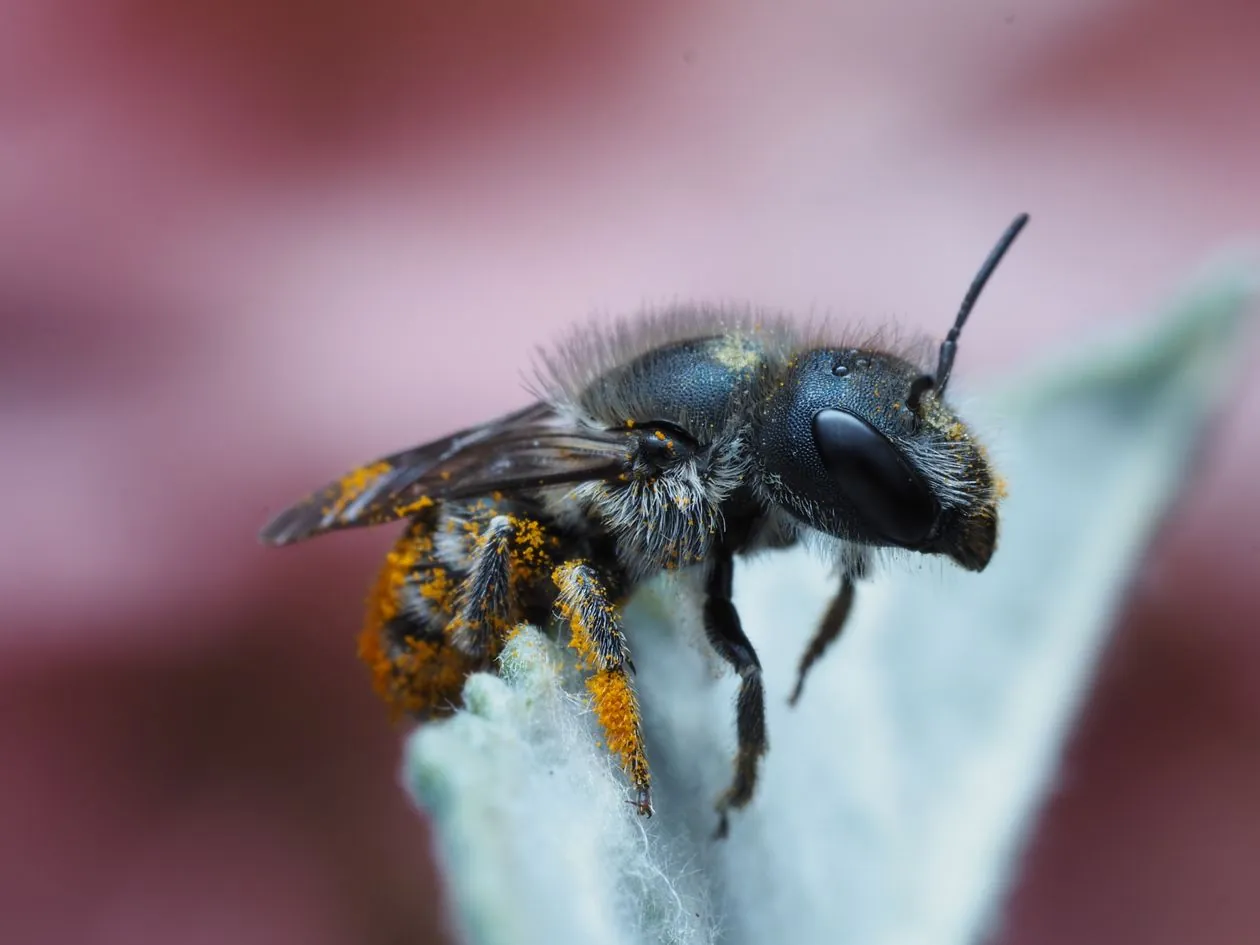
Mining bees are among the first bees out in spring, sometimes while snow is still on the ground. They are medium-sized, furry, and usually brown, black, or rusty colored. Each female digs her own tunnel in bare soil, pushing out a little volcano of dirt that marks the entrance.
Lawns dotted with these soil volcanoes in March and April alarm homeowners every year, but mining bees are harmless and temporary. They do not damage lawns, they rarely sting, and the adults are gone within a few weeks. Their early emergence makes them critical pollinators of spring ephemerals and fruit blossoms. Keep a nature journal like our hummingbird identification chart and log your first sighting each spring.
Squash Bees and Other Specialists
Most bees are generalists, but the squash bee is a devoted specialist. It pollinates only squash, pumpkins, and gourds, and starts work at dawn, timed to the morning opening of squash flowers. Look for a honey-bee-sized insect working squash blossoms in the early morning and check the soil nearby for its burrows.
Other specialists show the same tight bee-plant links. Long-horned bee males carry antennae so long they look like extra legs. Wool carder bee males patrol flower patches aggressively but, like male carpenter bees, cannot sting. The cuckoo bee lays its eggs in other bees’ nests and lets the host raise its young, which is why it looks more wasp-like and less hairy.
Bee vs Wasp: The 10-Second Test
Half of all “bee” sightings are actually wasps, so run this quick check first.
| Trait | Bee | Wasp |
|---|---|---|
| Body hair | Hairy, often fuzzy | Smooth and shiny |
| Waist | Thick, no narrow waist | Pinched, thread-like waist |
| Legs in flight | Tucked, often with pollen loads | Dangle visibly |
| Behavior at picnics | Ignores your food, visits flowers | Circles meat, soda, and fruit |
| Stinger | Defensive only (honey bee stings once) | Can sting repeatedly, more aggressive |
A yellow-and-black insect harassing your sandwich is a yellowjacket wasp. One ignoring you to work the clover is a bee.
Bee Identification Chart FAQs
What is the most common bee in the US?
The Western honey bee is the most recognized, but native bees dominate in numbers and diversity. Bumblebees are the most noticed wild bees, while tiny sweat bees are often the most abundant in gardens.
How can you tell a bee from a wasp?
Check hair (bees are fuzzy, wasps are smooth), waist (bees are thick, wasps are pinched), and behavior (bees visit flowers, wasps visit your food). The table above has the full comparison.
Which bees do not sting?
Male bees of every species cannot sting. Among females, mason bees, leafcutter bees, mining bees, and squash bees are famously gentle and almost never sting people.
What is the small metallic green bee in my garden?
Almost certainly a sweat bee. These tiny metallic green or blue bees are common across the US, nest in bare soil, and are excellent pollinators.
Do carpenter bees damage houses?
Over time, yes. Females bore half-inch tunnels into bare wood, and reuse extends the damage. Woodpeckers hunting larvae often cause worse damage. Paint exposed wood and plug old holes in late summer.
Conclusion
Once you can read the basic clues, hair, color, size, and nesting, the bees in your yard stop being a blur of yellow and black. Use this bee identification chart as a field reference, hang a bee house, and leave a patch of bare soil and some hollow stems. With a little identification skill, you will finally know who is who.


Pingback: Butterfly Identification Chart: 20 Common Butterflies – Chart Identify
Pingback: Budgie Color Chart: 22 Mutations Explained – Chart Identify
Pingback: Ant Identification Chart: Identify 20 Common Ants by Sight – Chart Identify
Pingback: Caterpillar Identification Chart: Identify 20 Common Caterpillars – Chart Identify
Pingback: Wasp Identification Chart: Identify 20 Common US Wasps – Chart Identify
Pingback: Dragonfly Identification Chart: Identify 20 Common US Dragonflies – Chart Identify
Pingback: Beneficial Insects Chart: 20 Garden Helpers, What They Eat and Where to Find Them – Chart Identify
Pingback: Types of Honey Bees: 11 Species, Sizes and Habitats – Chart Identify