
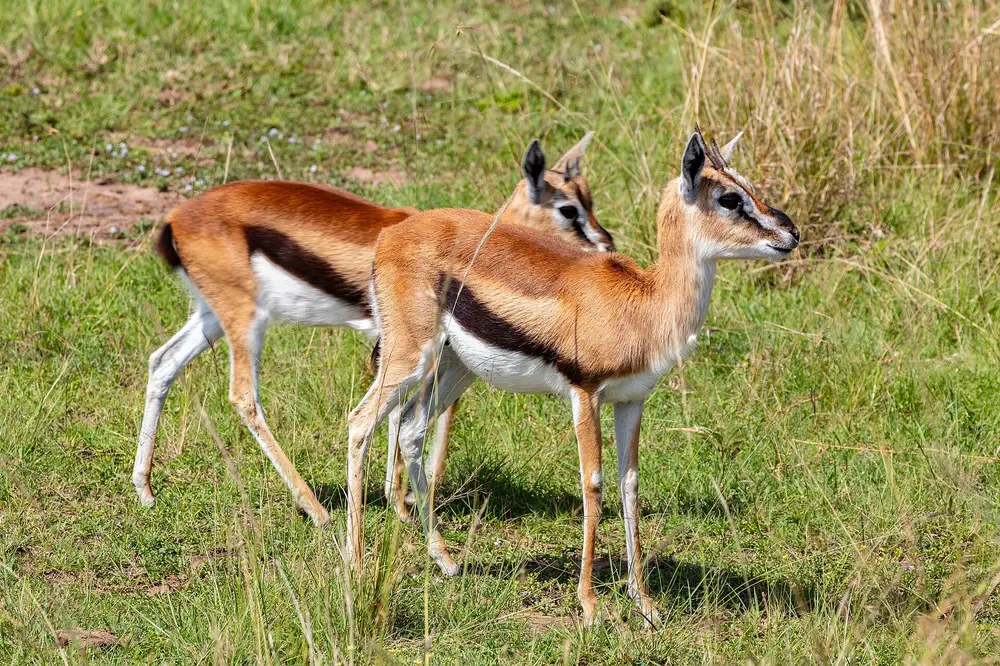
Most people picture one animal when they hear the word gazelle: a slim, tan antelope frozen mid leap on an African plain. The real story is far richer. There are about 19 living types of gazelle, plus close relatives such as the gerenuk, spread from the short grass of East Africa to the cold steppe of Mongolia and the high Tibetan Plateau. Some weigh less than a medium dog. Others stand almost waist high on a tall adult. Some still gather in herds of tens of thousands, while others survive only in fenced reserves and breeding centres.
Use the chart to identify a gazelle fast, then read on for field marks and habits.

Types of Gazelle Identification Chart
The table below is the quick reference for the whole article. Heights are shoulder heights for adults, weights are typical adult ranges, and statuses follow the IUCN Red List. Where a species has not been given its own separate assessment, the table says so plainly rather than guessing.
| Gazelle | Scientific name | Range | Shoulder height | Weight | IUCN status |
|---|---|---|---|---|---|
| Thomson’s gazelle | Eudorcas thomsonii | East Africa | 55 to 70 cm | 15 to 35 kg | Least Concern |
| Grant’s gazelle | Nanger granti | East Africa | 75 to 90 cm | 40 to 80 kg | Least Concern |
| Soemmerring’s gazelle | Nanger soemmerringii | Horn of Africa | 80 to 90 cm | 35 to 55 kg | Vulnerable |
| Speke’s gazelle | Gazella spekei | Somalia | 50 to 60 cm | 15 to 25 kg | Endangered |
| Mongalla gazelle | Eudorcas albonotata | South Sudan | 55 to 65 cm | 15 to 30 kg | Not separately assessed |
| Gerenuk | Litocranius walleri | East Africa and the Horn | 80 to 105 cm | 28 to 52 kg | Near Threatened |
| Dorcas gazelle | Gazella dorcas | North Africa to Arabia | 55 to 65 cm | 15 to 25 kg | Vulnerable |
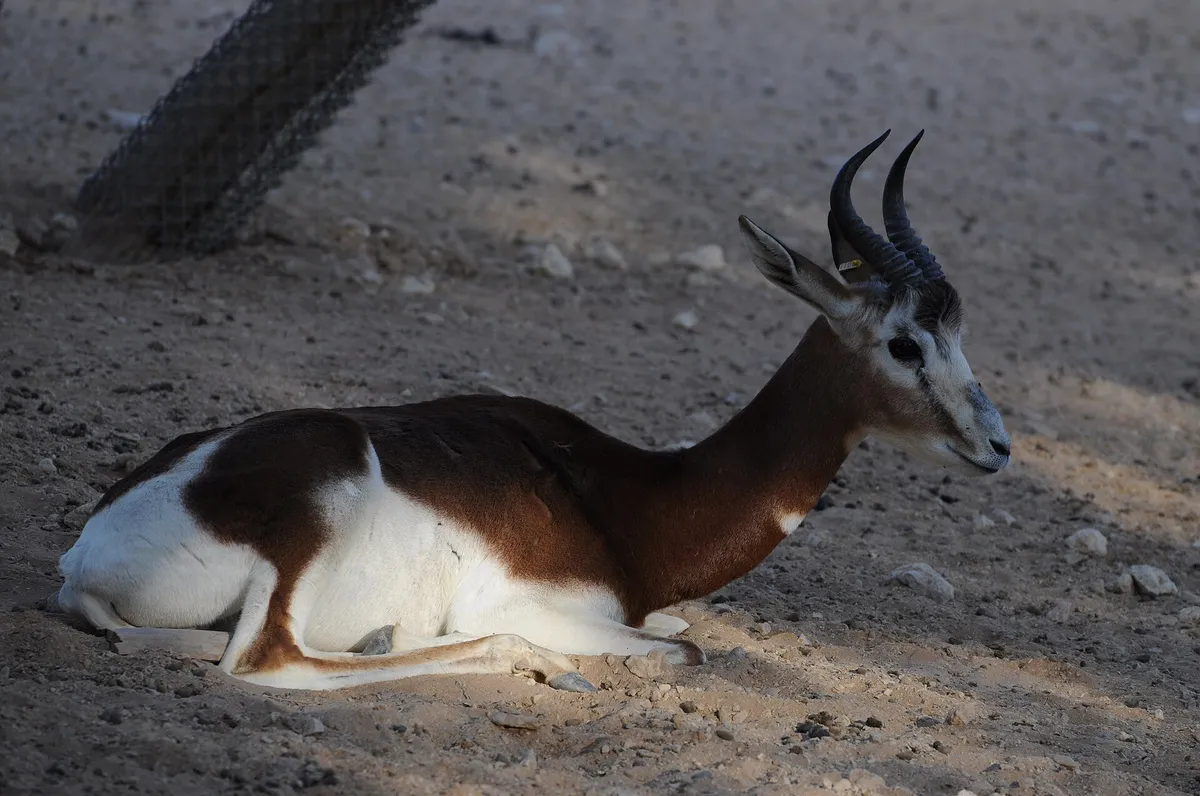
| Dama gazelle | Nanger dama | Sahara and Sahel | 90 to 110 cm | 40 to 75 kg | Critically Endangered |
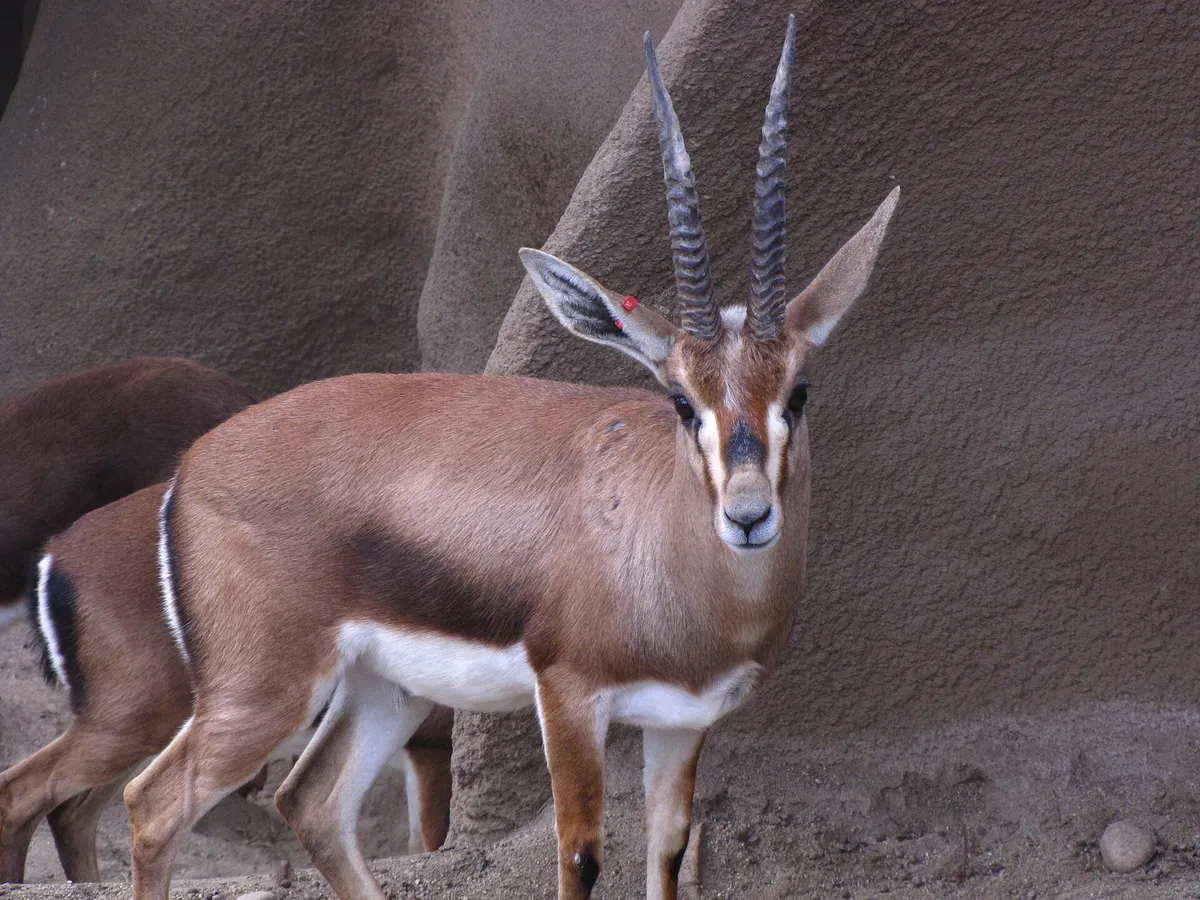
| Cuvier’s gazelle | Gazella cuvieri | Atlas Mountains, North Africa | 60 to 70 cm | 20 to 35 kg | Vulnerable |
| Slender-horned gazelle | Gazella leptoceros | Sahara Desert | 65 to 72 cm | 20 to 30 kg | Endangered |
| Red-fronted gazelle | Eudorcas rufifrons | West and Central Africa | 60 to 70 cm | 20 to 30 kg | Vulnerable |
| Mountain gazelle | Gazella gazella | Middle East hills and coastal plains | 60 to 80 cm | 17 to 30 kg | Endangered |
| Arabian gazelle | Gazella arabica | Arabian Peninsula | 55 to 65 cm | 15 to 25 kg | Vulnerable |
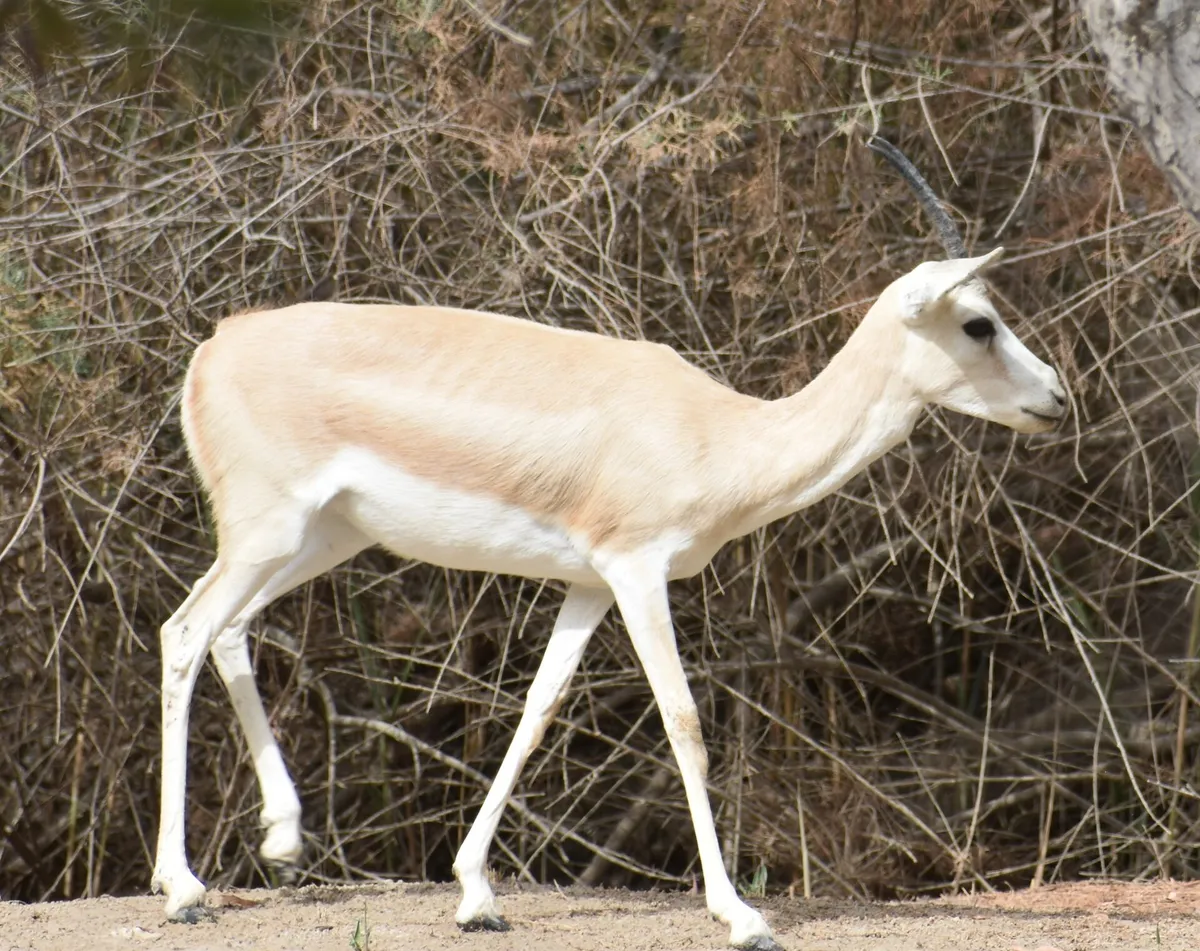
| Sand gazelle | Gazella marica | Arabian Peninsula | 55 to 65 cm | 15 to 25 kg | Vulnerable |
| Saudi gazelle | Gazella saudiya | Arabian Peninsula (historic) | About 60 cm | About 20 kg | Extinct |
| Goitered gazelle | Gazella subgutturosa | Central Asia and the Middle East | 60 to 80 cm | 25 to 45 kg | Vulnerable |
| Chinkara | Gazella bennettii | India, Pakistan and Iran | 55 to 65 cm | 15 to 25 kg | Least Concern |
| Mongolian gazelle | Procapra gutturosa | Mongolia and northern China | 55 to 80 cm | 20 to 40 kg | Least Concern |
| Przewalski’s gazelle | Procapra przewalskii | Qinghai, China | 50 to 70 cm | 17 to 32 kg | Endangered |
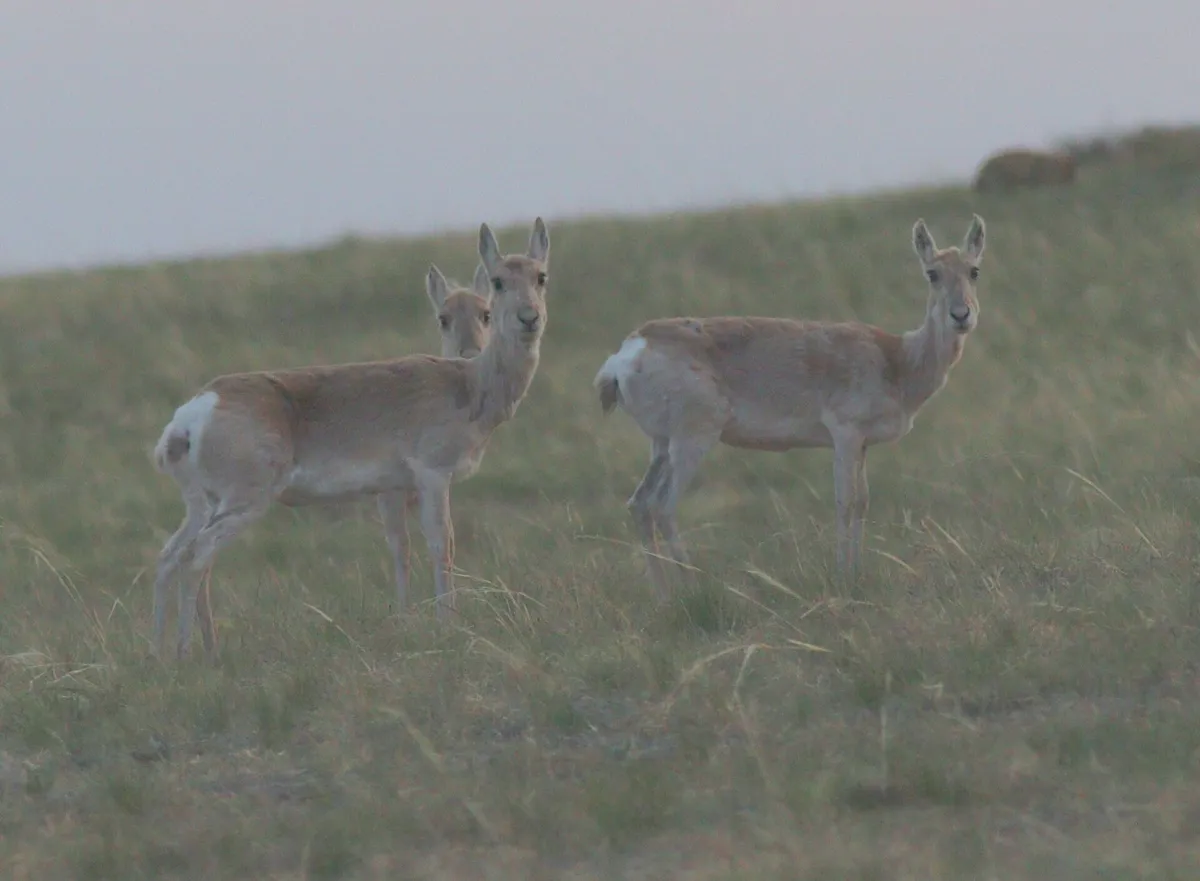
| Tibetan gazelle | Procapra picticaudata | Tibetan Plateau | 55 to 65 cm | 13 to 18 kg | Near Threatened |
What Makes an Animal a Gazelle
A gazelle is a small, fast antelope in the tribe Antilopini, inside the cattle family Bovidae. Most species fall into four genera: Gazella, Nanger, Eudorcas and Procapra. The first three live mainly in Africa and Arabia, while Procapra ranges across the high plains of Asia. Gazelles are close relatives of other antelopes, and you can see the wider family in our complete chart of all antelope species.
Both sexes usually carry ringed horns, although in some species only the male does. Unlike deer, which grow and shed branched antlers every year, a gazelle keeps its horns for life. For a direct comparison, see our types of deer chart.
Gazelles are built to run and to survive without much water. A Thomson’s gazelle can reach about 80 km/h, among the fastest land animals, and desert species can go long stretches without drinking. When a predator appears, many gazelles stot: they spring straight up on stiff legs, again and again, telling a cheetah that this gazelle is fit and fast, so the chase would probably fail.
East African and Horn of Africa Gazelles
This is the classic safari group, the gazelles of the wildlife documentaries. The Thomson’s gazelle, often called the tommie, is the small one with the bold black side stripe. It grazes short grass plains alongside zebra and wildebeest, and it is a main prey animal for cheetahs. The Grant’s gazelle is its larger, paler neighbour, told apart by a white rump patch that runs above the tail and by longer, lyre shaped horns.
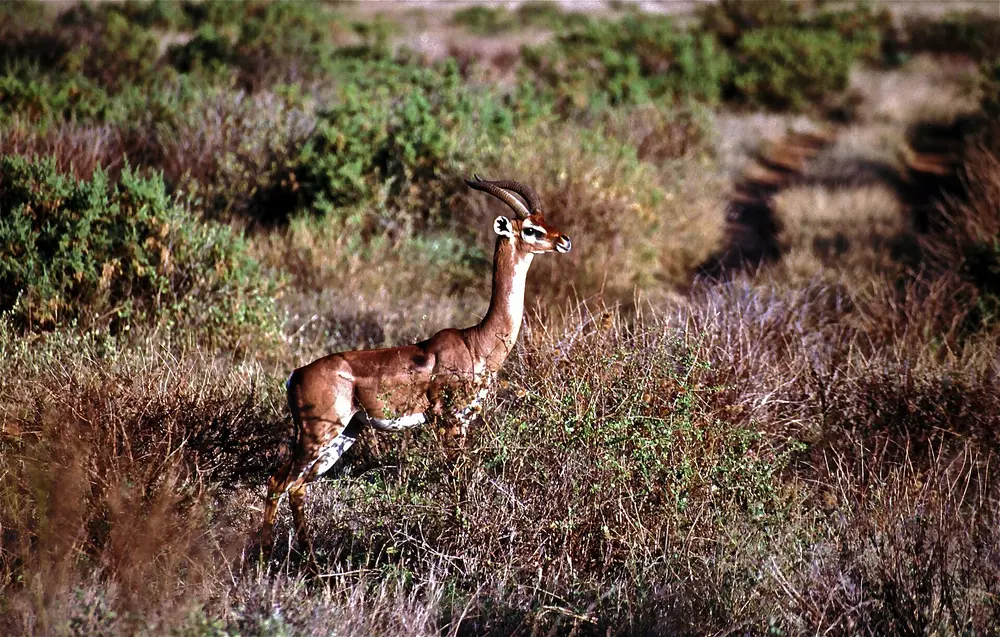
Soemmerring’s gazelle wears a striking black and white face and stands taller than most of its neighbours. Speke’s gazelle is the smallest gazelle of all, with a soft sandy coat and an odd nose sac it puffs up when alarmed. The Mongalla gazelle moves across the floodplains of South Sudan in huge seasonal herds, and it looks much like a small Thomson’s gazelle at first glance.
The standout here is the gerenuk, sometimes called the giraffe gazelle. Its neck and legs are so long that it looks half giraffe. It rises onto its hind legs to browse leaves no other gazelle can reach. Our types of giraffes guide covers the animal it is named after.
Sahara and Sahel Gazelles
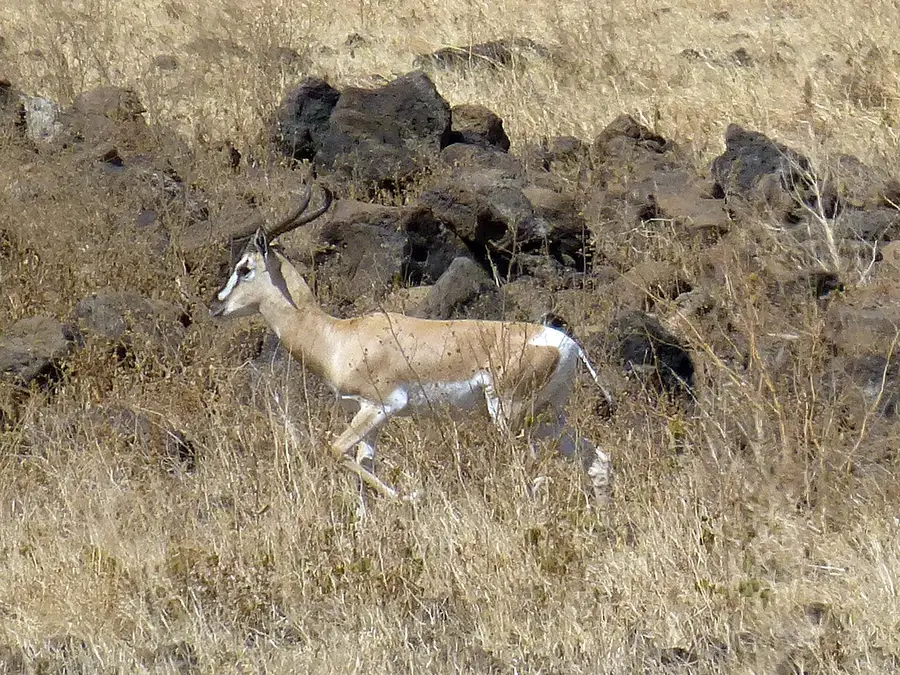
These gazelles live where almost nothing else does, in the sand and stone of the Sahara and the dry Sahel below it. The dorcas gazelle is the most widespread, a small pale animal with large ears that can live much of its life without drinking free water. The dama gazelle is the giant of the family, white with a deep reddish neck, and also the rarest gazelle on Earth, with only a few hundred left in the wild.
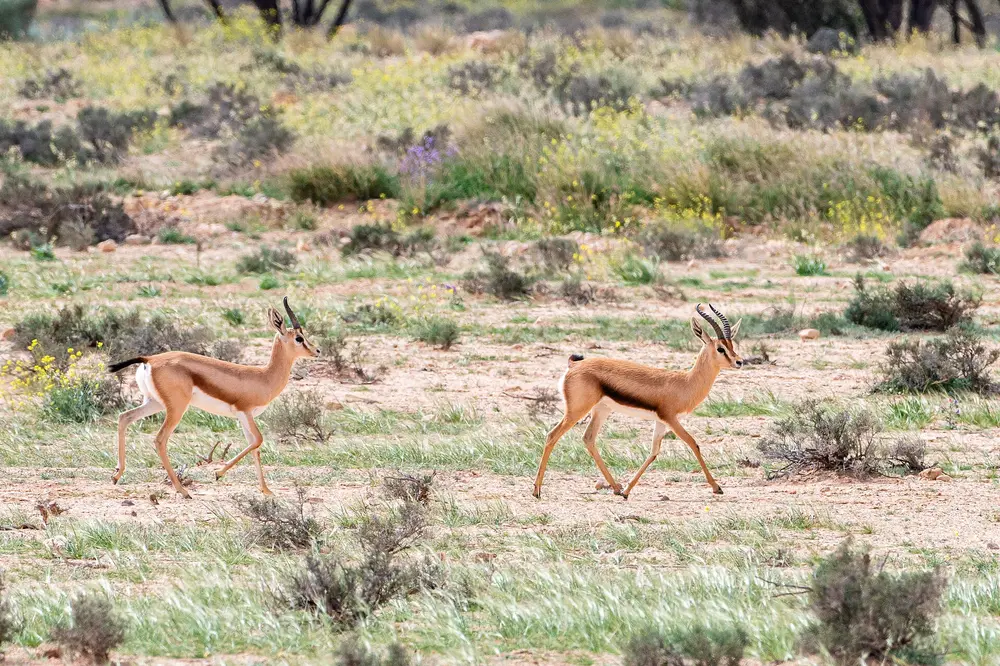
Cuvier’s gazelle holds on in the Atlas Mountains, where its darker coat and bold face stripes help it blend into scrub and rocky slopes. The slender-horned gazelle, also called the rhim, is the palest and most desert hardy of them all, built for the great sand seas. The red-fronted gazelle keeps to the thin grass belt at the southern edge of the desert, marked by a reddish band across its forehead.
Arabian Peninsula Gazelles
Arabia is a centre of gazelle diversity, although several of its species are now in trouble. The mountain gazelle lives in hills and coastal plains, usually close to acacia trees. The Arabian gazelle was once written off as lost, then recognised again as a living species in its own right.
The sand gazelle, also called the reem, handles heat and salt better than almost any hoofed animal. The Saudi gazelle is the sad entry on this list: gone, last seen in the wild in 1970, and the only gazelle here that is fully extinct.

Asian Gazelles
Asia has its own gazelles, built for cold deserts and high plateaus rather than hot savanna. The goitered gazelle takes its name from the swelling in the throat of rutting males, which becomes obvious in the breeding season. The chinkara is the only gazelle native to India, small and sandy with large dark eyes, and it lives in deserts and dry scrub from India through Pakistan and Iran.

The Mongolian gazelle still gathers on the steppe in herds of tens of thousands, one of the last great hoofed migrations in Asia. Przewalski’s gazelle is the rarest gazelle in Asia, clinging on around Qinghai Lake in China, where habitat loss and fencing have squeezed its range. The Tibetan gazelle lives higher than any other, above 4,000 metres on the Tibetan Plateau, with a grey brown coat and a heart shaped white rump patch.


How to Tell Thomson’s Gazelle from Grant’s Gazelle
These two share the same East African plains and trip up almost every new safari goer. Start with size: Grant’s is clearly bigger, at 75 to 90 cm against the Thomson’s 55 to 70 cm. Next, look at the side stripe. The Thomson’s has a bold black stripe along its flank, while the Grant’s stripe is faint or missing. Finally, check the rump. The white rump patch of a Thomson’s stops at the tail, while the Grant’s patch extends above the tail, and its horns are longer and more lyre shaped. Size, stripe and rump together settle almost every sighting.
Which Types of Gazelle Are Endangered
Gazelles are among the most threatened antelopes, mostly because of hunting and lost habitat. The dama gazelle is Critically Endangered, with fewer than 500 left in the wild, and it now survives mainly through reserves and breeding programmes. The Saudi gazelle is already extinct. The slender-horned, mountain, Speke’s and Przewalski’s gazelles are all Endangered, and many others, including the dorcas, Cuvier’s, Arabian, sand, goitered and red-fronted gazelles, are Vulnerable.
Several species are still common: Thomson’s, Grant’s, chinkara and Mongolian gazelles are all Least Concern, although even common species need their grasslands protected. The IUCN Red List is the authoritative source for checking any species yourself.
Frequently Asked Questions
How many types of gazelle are there?
About 19 living species sit in the gazelle tribe, plus close relatives such as the gerenuk. This guide covers 20 of the best known, from Africa and Arabia across to Central Asia, including one extinct species so the full picture is clear.
What is the fastest gazelle?
The Thomson’s gazelle. It reaches about 80 km/h, or 50 mph, which puts it among the fastest land animals. It cannot outrun a cheetah in a short sprint, but it can outlast and out-turn one, especially when it stots to advertise its fitness.
What is the largest and smallest gazelle?
The dama gazelle is the largest, up to about 110 cm at the shoulder and 75 kg in weight. The Speke’s gazelle is the smallest, close to 50 cm at the shoulder and often under 20 kg.
What is the difference between a gazelle and a deer?
They belong to separate families. A gazelle keeps permanent ringed horns for life, while a deer grows and sheds a fresh set of branched antlers every year. Gazelles are antelopes, not deer, even though both are hoofed grazers.
Why do gazelles jump straight up?
That bounce is called stotting or pronking. It signals to a predator that the gazelle is healthy and quick, so a chase would likely fail and waste energy. It is also a useful field mark: few other antelopes bounce in quite the same stiff legged way.
Conclusion
From the tiny Speke’s gazelle to the towering dama, and from the giraffe necked gerenuk to the high altitude Tibetan gazelle, the types of gazelle cover an astonishing range of sizes and habitats. Next time you spot a slim, horned antelope, check its size, side stripe, rump patch and range. Chances are, this guide has already named it.

