
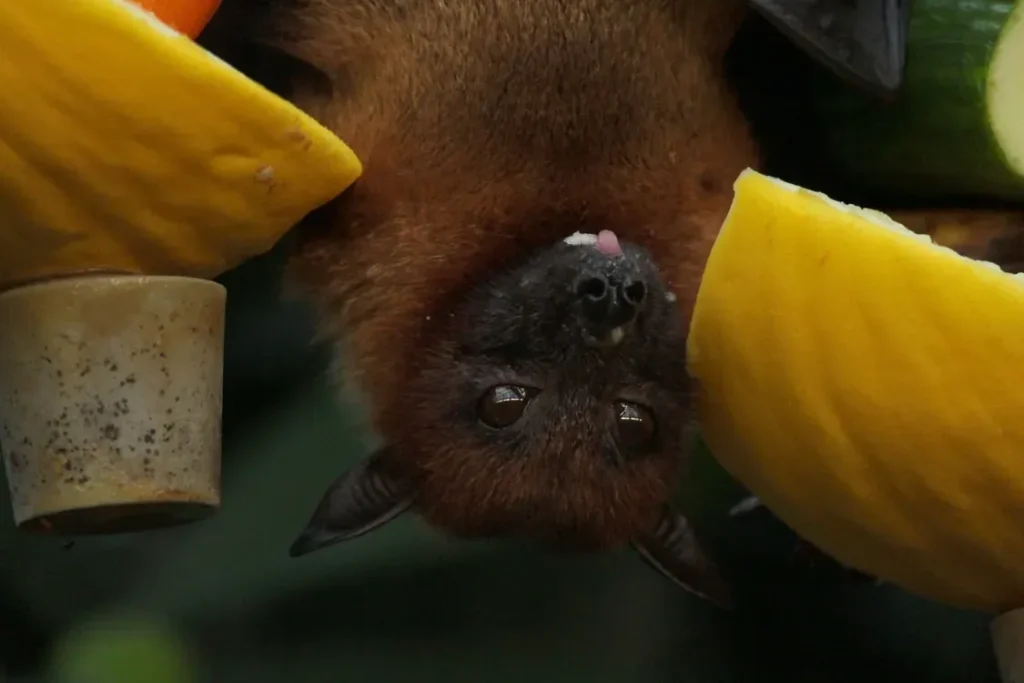
If you have watched bats looping across the evening sky, you have probably wondered how many types of bats there really are. Scientists recognize more than 1,400 species, the second-largest order of mammals on Earth, and the only mammals that can truly fly, from a fingertip-sized species to one with a wingspan wider than a tall person is tall.
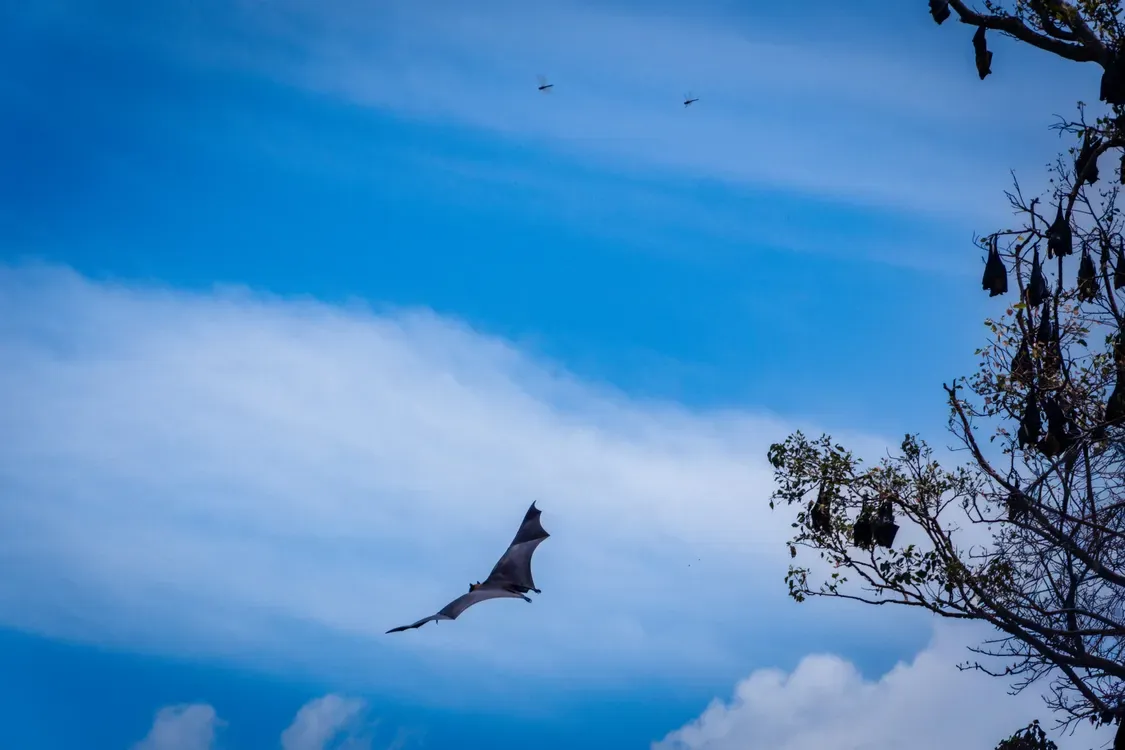
Below is a comparison chart of 20 species, then the stories behind the smallest bats, the giant flying foxes, the strangest specialists, and the bats you are most likely to see in North America, with real numbers throughout.
Types of Bats: The 20-Species Comparison Chart
The table lines up 20 species from largest to smallest, with wingspan, body length, range, diet, and each species’ most memorable fact.
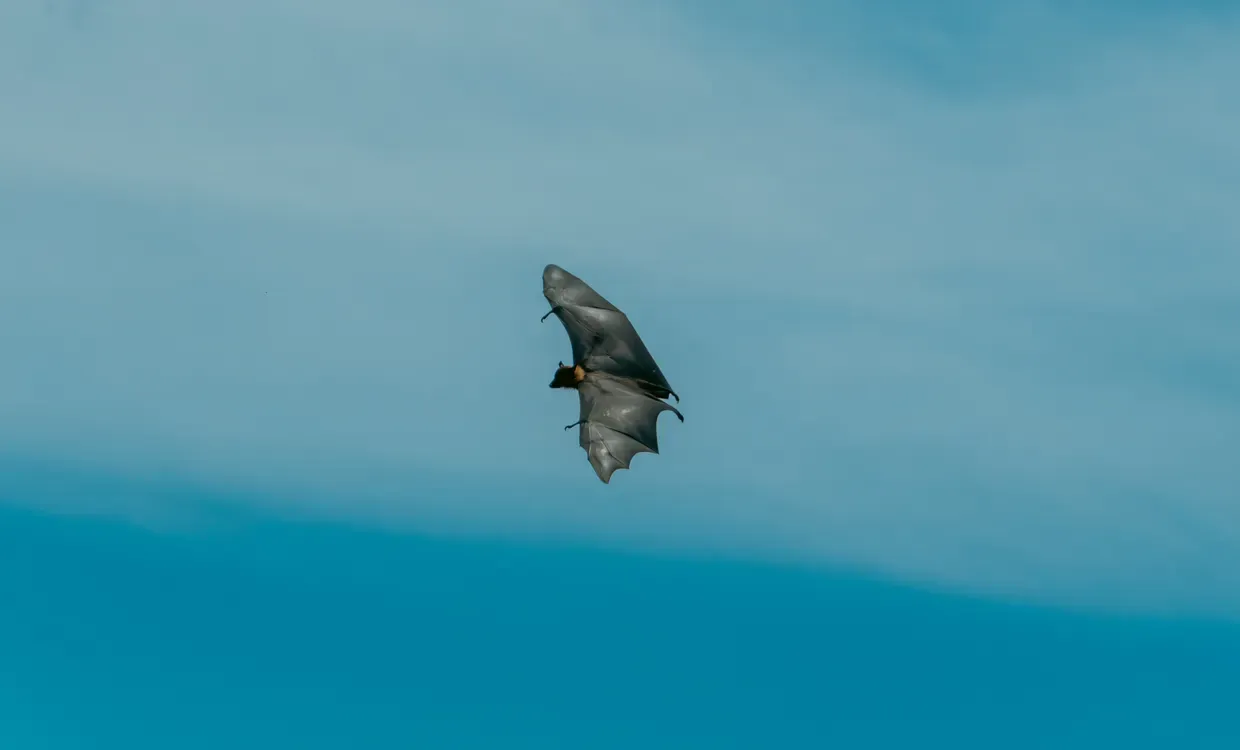
| Species | Wingspan | Body Length (Weight) | Range and Habitat | Diet | Key Fact |
|---|---|---|---|---|---|
| Giant golden-crowned flying fox | 5.6 ft (1.7 m) | 7-11 in, ~3.1 lb | Philippines, forest treetops | Figs, fruit | Largest bat wingspan; endangered |
| Indian flying fox | 4.9 ft (1.5 m) | ~3.5 lb | South Asia, tree roosts | Fruit, nectar, flowers | One of the heaviest bats |
| Grey-headed flying fox | 3.3 ft (1 m) | ~9 in, ~2.2 lb | E. Australia, forests and parks | Fruit, blossom nectar | Huge noisy camps; key pollinator |
| Straw-colored fruit bat | ~2.5 ft (75 cm) | ~9 in, ~0.6 lb | Sub-Saharan Africa | Fruit | Millions migrate to Kasanka, Zambia |
| Spectral bat | 2.6-3.3 ft | ~5.5 in, ~6 oz | Central, South America forests | Small mammals, birds, frogs | Largest carnivorous bat in the Americas |
| Fishing bat (bulldog bat) | ~2.3 ft | 4-5 in | Central, South America, Caribbean | Fish | Detects a minnow’s fin by echolocation |
| Mexican long-tongued bat | ~13 in | ~3.5 in | US Southwest, Mexico | Nectar, pollen | Tongue as long as its body; pollinates agave |
| Hoary bat | 13-16 in | ~5 in | Most of North America | Insects, moths | Largest North American bat; long-distance migrant |
| Noctule bat | 13-16 in | ~3 in | Europe, Asia | Insects | Large, fast, high-flying European bat |
| Greater horseshoe bat | 13-16 in | ~3 in | Europe, Asia, N. Africa caves | Insects | Horseshoe noseleaf focuses echolocation calls |
| Pallid bat | ~15 in | ~4.5 in | Western North America | Scorpions, crickets | Immune to scorpion stings; hunts on ground |
| Big brown bat | 12-16 in | ~4 in | N. and Central America cities | Beetles, moths | Common city bat; tough hibernator |
| Eastern red bat | 11-13 in | ~4 in | Eastern North America foliage | Moths, insects | Rust-red fur; roosts in leaves |
| Mexican free-tailed bat | 11-14 in | 3.5-4.5 in | Americas, caves and bridges | Insects | Bursts near 100 mph; huge Austin bridge colony |
| Townsend’s big-eared bat | ~11 in | ~4 in | Western N. America caves | Moths, insects | 1.5-in ears, curled back while roosting |
| Gray bat | 10-12 in | ~3.5 in | Southeastern US caves | Insects, mayflies | Cave specialist; endangered |
| Little brown bat | 8-10 in | ~3 in, 0.2-0.5 oz | N. America caves, woods | Insects | Lives 30+ years; hit by white-nose syndrome |
| Common vampire bat | ~8 in | ~3.5 in, ~1.5 oz | Central, South America | Mammal blood | Laps blood; shares food with roostmates |
| Honduran white bat | ~4 in | 1.5-1.9 in, ~0.2 oz | Central America rainforest | Figs | Snow-white fur; builds tents from heliconia leaves |
| Bumblebee bat (Kitti’s hog-nosed bat) | 5-6 in | 1.1-1.3 in, ~2 g | Thailand, Myanmar caves | Tiny insects, spiders | Smallest mammal by body length |
Fruit Bats vs Insect-Eating Bats: The Big Split
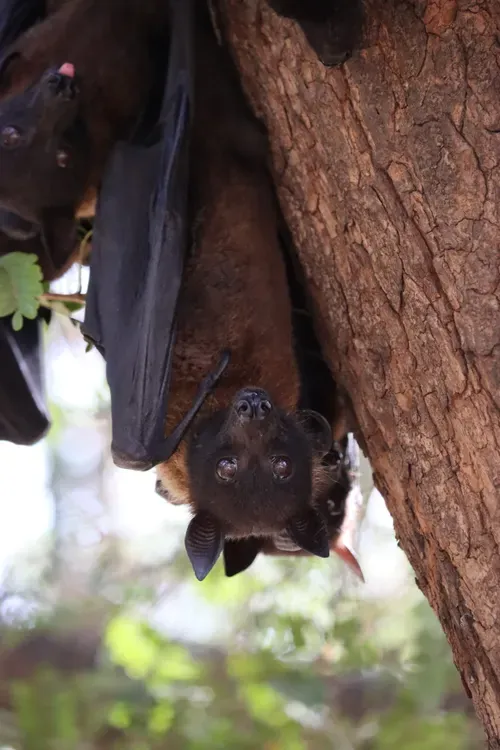
Nearly every bat belongs to one of two great groups. The megabats, about 200 fruit bats and flying foxes, navigate by big eyes and a keen sense of smell, and most never echolocate. The microbats, more than 1,200 species, are the echolocation masters, hunting by reading echoes in total darkness.
Fruit bats are the gardeners of the tropics, scattering thousands of seeds a night and pollinating bananas, mangoes, and agave. Insect-eating bats are pest controllers: one Mexican free-tailed bat can eat its body weight in insects in a night, a service to US agriculture worth billions of dollars a year.
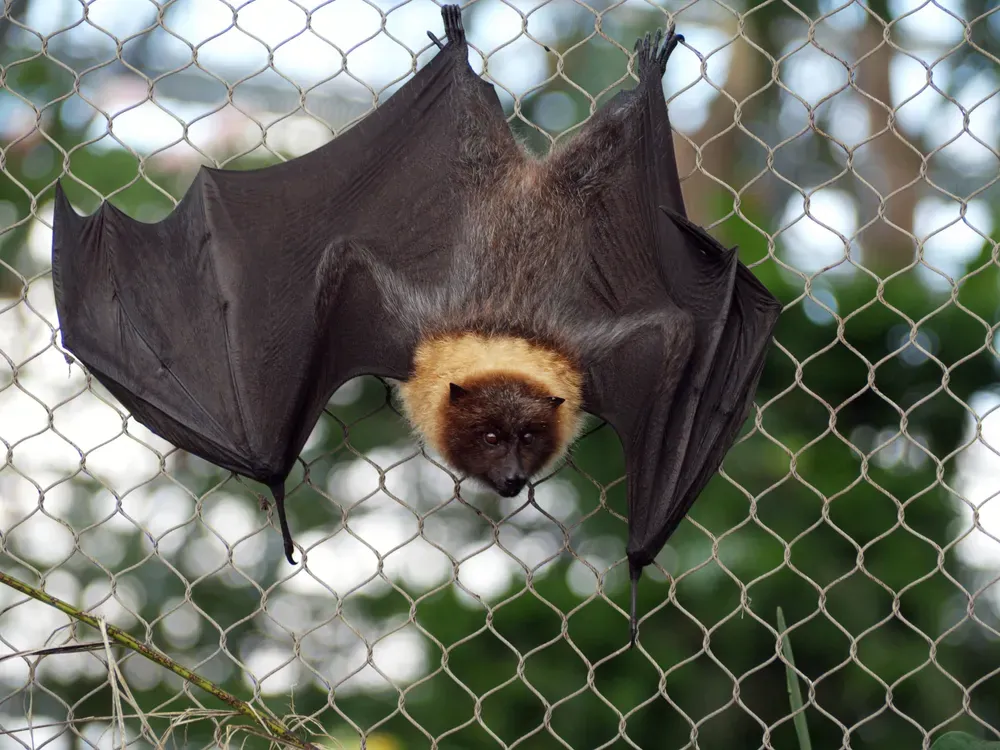
The Smallest Bats in the World
The bumblebee bat of Thailand and Myanmar is the smallest mammal on Earth by body length: 1.1 to 1.3 inches, about 2 grams, less than a penny. Discovered in 1974, it lives in a handful of limestone caves and forages for roughly half an hour at dusk and again at dawn. Its pig-like snout gives it the formal name Kitti’s hog-nosed bat.
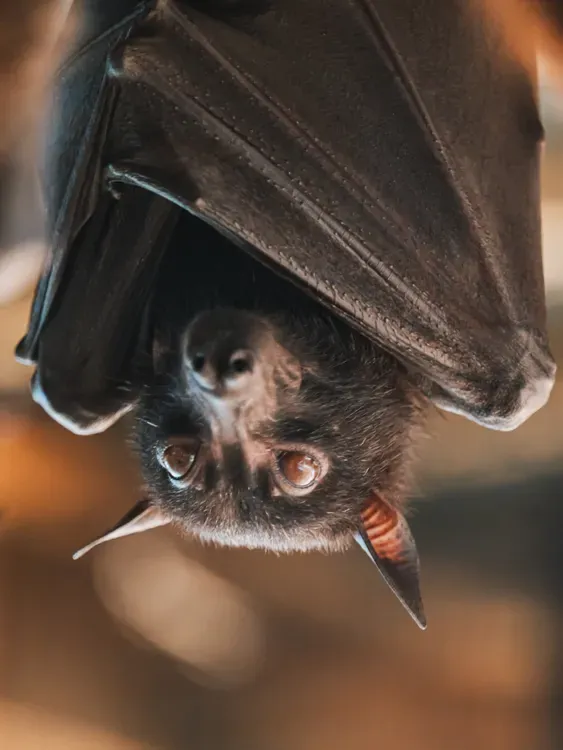
Close behind is the Honduran white bat at 1.5 to 1.9 inches. Small bats lose heat fast, so they eat a large share of their body weight nightly just to stay warm, which is why a mosquito-heavy evening keeps a little brown bat colony busy.
The Largest Bats: Flying Foxes and Their Cousins
The giant golden-crowned flying fox of the Philippines has the largest wingspan of any bat, up to about 5.6 feet, yet its body is only 7 to 11 inches long and weighs a little over 3 pounds. All the drama is in the wings. The Indian flying fox is its close rival, with a wingspan near 5 feet and a weight up to about 3.5 pounds, among the heaviest bats ever recorded.
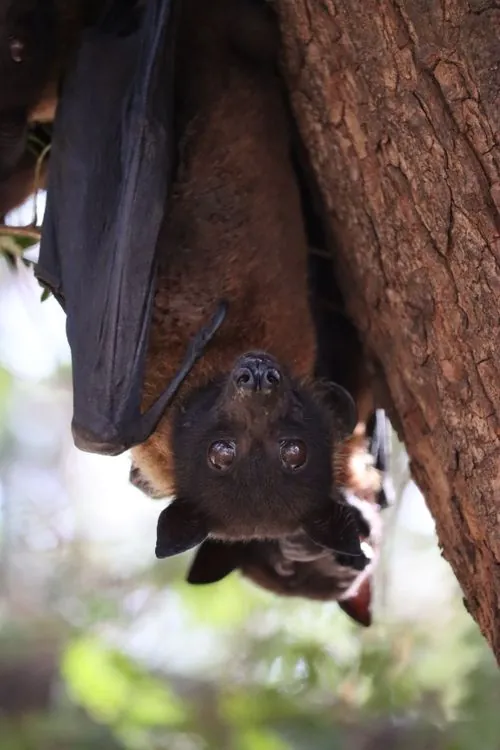
Flying foxes are gentle fruit eaters that roost in big noisy treetop colonies and travel miles nightly for ripe figs. The grey-headed flying fox sometimes camps in city parks, putting a 3-foot wingspan in public view. None of these giants drink blood or hunt; they are closer to fruit-picking squirrels that happen to fly.

The Weirdest and Rarest Bats
The Honduran white bat looks like a cotton ball with orange ears and a leaf-shaped nose. It has no tail and roosts in little tents it makes by biting heliconia leaf ribs so they fold over. Groups of five or six huddle under them in the Central American rainforest, eating almost nothing but one type of fig.
The three true vampire bats are the only mammals that feed entirely on blood. The common vampire bat is about 3.5 inches long and feeds mostly on livestock and wildlife, rarely on people, making a small nick with razor-sharp teeth and lapping blood with a grooved tongue. It can starve within two days without a meal, which is why vampire bats share food with hungry roostmates.
Other oddballs: the spectral bat, the largest carnivorous bat in the Americas with a 3-foot wingspan, hunts small mammals, birds, and frogs. The fishing bat detects a minnow’s fin breaking the surface by echolocation. Townsend’s big-eared bat curls its 1.5-inch ears like ram’s horns while roosting, and the pallid bat hunts scorpions on the desert ground.
Remember what bats are: mammals, closer to badgers than to any bird, and as different from reptiles as a whale is from a snake. Our types of badgers chart and types of lizards chart show the two very different branches bats do not belong to.
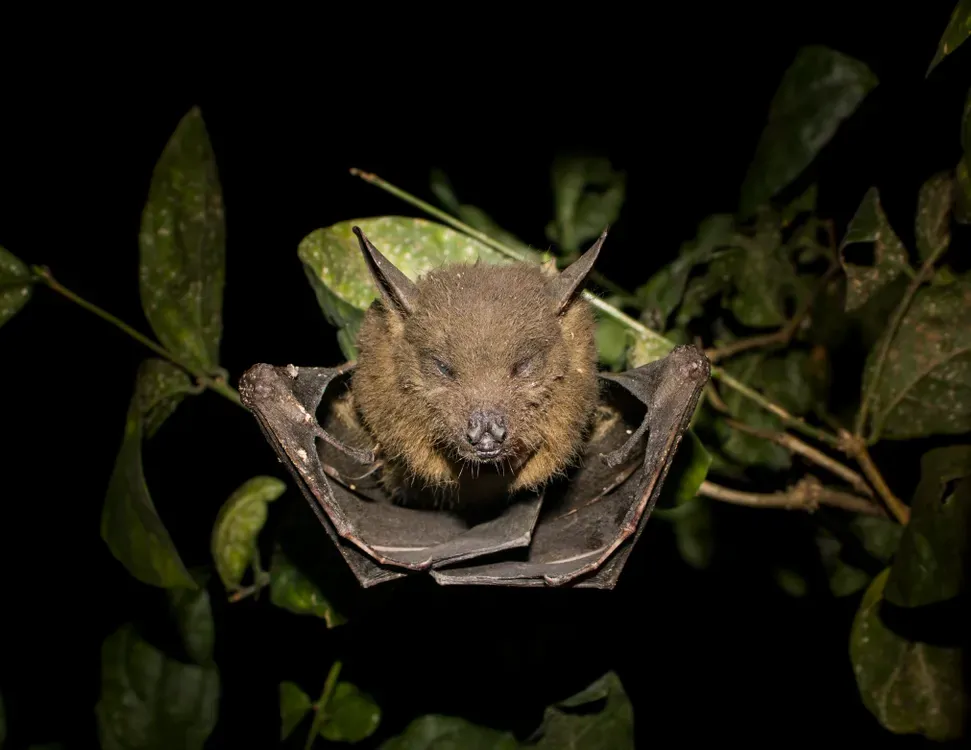
Types of Bats in North America
About 45 to 50 bat species live in North America. The little brown bat is the classic backyard bat of the northern US and Canada, under half an ounce yet living over 30 years, one of the longest lifespans for any animal its size. The big brown bat is its tougher city cousin and a frequent attic visitor. The eastern red bat, with rust-red fur, roosts alone in tree foliage like a dead leaf.
The hoary bat is the continent’s giant, with a 13 to 16 inch wingspan and frosted gray fur, migrating hundreds of miles; it is also the only land mammal native to Hawaii. The gray bat of the southeastern US is the endangered cave specialist, gathering in huge maternity colonies in a few caves. The Mexican free-tailed bat owns the skies of the Southwest, with Bracken Cave in Texas holding around 20 million at peak season.
At dusk you will see other insect hunters sharing the air, and it is easy to mistake a bird for a bat. Our warbler identification chart helps sort out the small birds flitting around the same twilight insects.
Bat Conservation: Why So Many Species Are in Trouble
In North America, white-nose syndrome, a fungal disease, has killed millions of bats since 2006, wiping out 90 percent or more of some little brown bat colonies. In the tropics, flying foxes are hunted for food and lose roosts to logging, and the giant golden-crowned flying fox is endangered. Wind turbines kill migrating bats, and a disturbed hibernation cave can doom a colony built over decades.
Bats respond well to protection: gating caves, leaving dead trees standing, putting up bat boxes, and cutting pesticide use. Unlike birds, most bats never build nests; they need roosts, a cave, a hollow tree, a bridge, or a folded leaf. Our bird nest identification chart shows what the other side of the animal kingdom does with twigs and mud.
Types of Bats: Frequently Asked Questions
How many types of bats are there in the world?
More than 1,400 species, roughly one in five mammals on Earth, and new ones keep turning up in tropical forests.
What is the smallest bat in the world?
The bumblebee bat of Thailand and Myanmar: 1.1 to 1.3 inches long, about 2 grams, the smallest mammal by body length.
What is the largest bat in the world?
The giant golden-crowned flying fox of the Philippines, wingspan up to about 5.6 feet; the Indian flying fox is a close rival and may be the heaviest, at 3.5 pounds. Both are gentle fruit eaters.
Do vampire bats drink human blood?
Very rarely. The three vampire bat species feed almost entirely on livestock, wild mammals, and birds, taking only about a tablespoon of blood per feeding.
Are bats blind?
No, that is a myth. Fruit bats see very well, and even echolocating microbats can see; they just rely more on sound when hunting in the dark.
What do bats eat?
Most eat insects such as moths, beetles, and mosquitoes. Fruit bats eat fruit, nectar, and pollen. A few eat fish, frogs, or small mammals, and only three species feed on blood.
Final Thoughts on the Many Types of Bats
Bats have an image problem they do not deserve. For every vampire bat, hundreds of species quietly eat crop pests, pollinate fruit trees, and scatter the seeds that grow tropical forests. These 20 species are only a doorway into a group of 1,400, from bumblebee-sized to a wingspan wider than a tall person.


Pingback: Types of Sloths: All 6 Species, Sizes and Habitats – Chart Identify