
You spot a neat cup of twigs in a hedge, or a blob of mud stuck under the porch eaves, and the question hits you: whose nest is this? A bird nest identification chart turns that guessing game into a short checklist. Match the nest’s shape, materials, location, and size against the 20 common US species below, and you can usually name the builder without ever seeing the bird.
Most nests you actually find belong to a small cast of regulars: robins, cardinals, wrens, swallows, and sparrows. This guide covers the 20 species whose nests people encounter most often, with the clues that separate one cup nest from another.
How to Use This Bird Nest Identification Chart
Work through these clues in order. Each step narrows the list fast. Identify from a distance: use binoculars, keep your visit short, and never touch the nest or eggs. Most US nests are legally protected, and a stressed parent may abandon the site.
- Note the location first: it is the fastest shortcut. A mud cup under an eave is a swallow; a pebble scrape on gravel is a killdeer; a grass cup in a nest box is a bluebird, wren, chickadee, or sparrow.
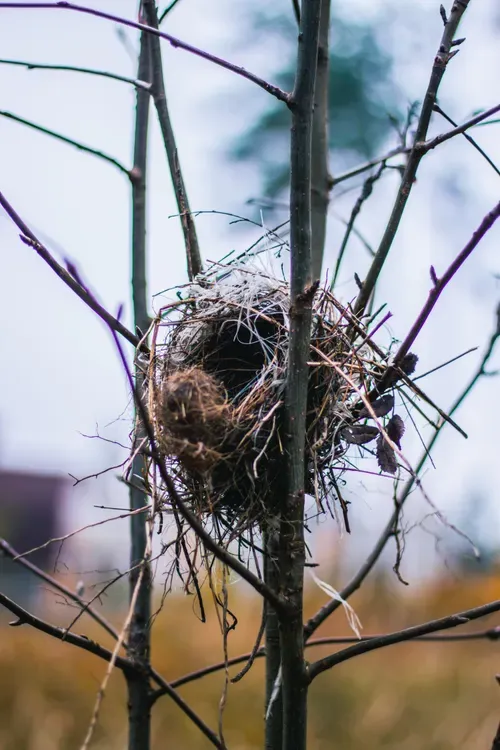
- Study the structure. Open cup, enclosed dome, hanging pouch, flat stick platform, or a dent in the ground? Architecture is remarkably consistent within a species.
- Look at the materials. Mud points to robins, phoebes, and swallows. Spider silk and lichen mean hummingbird. Sloppy twigs with trash woven in scream house sparrow. Pebbles and shell bits mean killdeer.
- Check the size. A walnut-sized cup on a thin branch is a hummingbird. A dinner-plate mound of sticks high in a tree is a crow. Most songbird cups run 3 to 5 inches across.
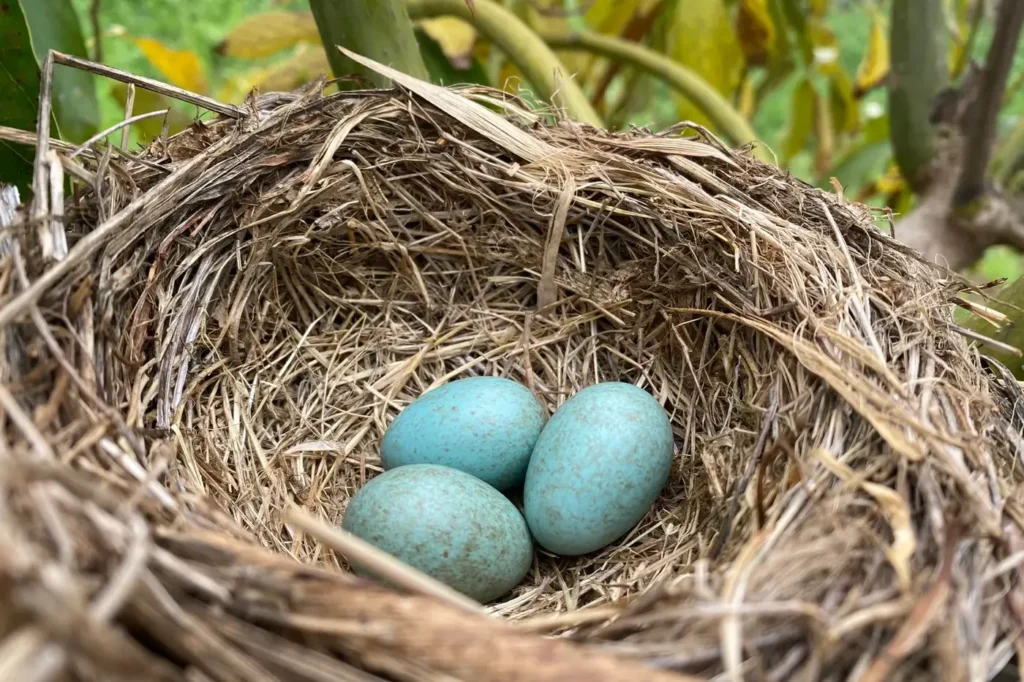
- Glance at the eggs if present. Sky-blue eggs in a mud-lined cup? Robin. Two white eggs in a flimsy twig platform? Mourning dove. Our bird egg identification chart pairs with this guide.
The 7 Nest Types You Will See in the United States
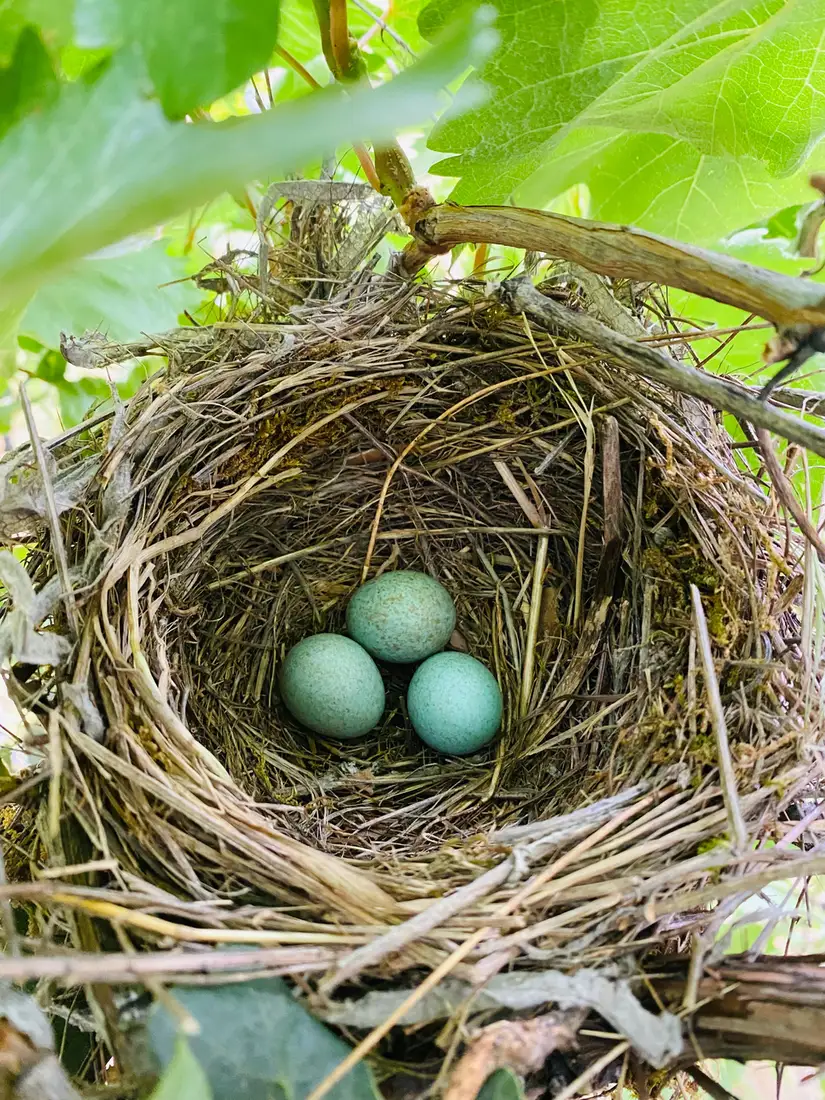
Open cup. The classic bowl of woven grasses and twigs. Robins, cardinals, mockingbirds, finches, and goldfinches all build cups; materials and placement tell them apart.
Cavity nests. Built inside a tree hollow, woodpecker hole, nest box, or gap in a building. Bluebirds, wrens, chickadees, sparrows, and starlings are cavity nesters.
Dome nests. Enclosed huts with a side entrance. Carolina wrens and house sparrows build them in brush piles, sheds, or dense vines.
Mud nests. Hundreds of mud pellets carried one beakful at a time. Barn swallows mold open half-cups onto walls, cliff swallows build enclosed gourds in colonies, and phoebes set mud cups on flat ledges.
Hanging (pendant) nests. Woven pouches dangling from branch tips. The Baltimore oriole’s sock-like nest, swaying 20 feet up, is the unmistakable US example.
Platform nests. Flat piles of sticks. Crows build hefty platforms high in trees; mourning doves build the flimsiest version imaginable.
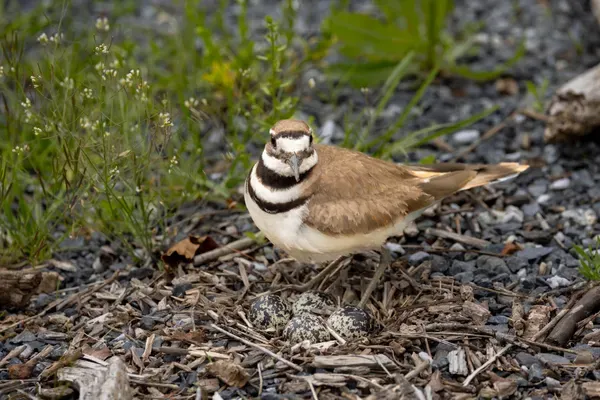
Ground scrapes. A shallow dent lined with pebbles. Killdeer lay speckled eggs that vanish against gravel; Canada geese build large down-lined bowls near water.

Bird Nest Identification Chart: 20 Common US Nests
Find the row that matches what you see, then read the notes below for confirmation. Clutch sizes are typical US ranges.
| Species | Nest type | Main materials | Typical location | Clutch size | Distinctive feature |
|---|---|---|---|---|---|
| American Robin | Open cup | Twigs, grass, mud | Tree forks, shrubs, ledges | 3-4 | Mud-reinforced cup; sky-blue eggs |
| Northern Cardinal | Open cup | Bark strips, twigs, grass | Dense shrubs, 3-10 ft | 2-4 | Loose cup built by the female only |
| American Goldfinch | Open cup | Plant fibers, thistle down | Shrub forks, saplings | 4-6 | Holds water; nests in late summer |
| House Finch | Open cup | Twigs, grass, rootlets | Shrubs, planters, ledges | 4-6 | Messy cup; often right at the house |
| Northern Mockingbird | Open cup | Twigs lined with grass | Shrubs, small trees | 3-4 | Bulky cup; dive-bombing parents |
| Eastern Bluebird | Cavity | Fine grass, pine needles | Tree holes, boxes | 4-5 | Neat grass cup inside the cavity |
| House Wren | Cavity | Twigs packed in, grass lining | Boxes, mailboxes, small holes | 4-8 | Male packs the cavity with sticks |
| Carolina Wren | Dome / cavity | Twigs, moss; side entrance | Brush piles, sheds, garages | 4-8 | Domed hut with side hole; may add snakeskin |
| Carolina Chickadee | Cavity | Moss, bark, animal hair | Self-dug rotted-wood cavities | 6-8 | Moss-and-hair cup; eggs covered when away |
| House Sparrow | Dome / cavity | Grass, straw, feathers, trash | Eaves, vents, boxes | 3-5 | Sloppy overstuffed dome; noisy colonies |
| European Starling | Cavity | Grass, straw, feathers | Tree holes, vents, boxes | 4-6 | Loose cup; male adds fresh green herbs |
| Barn Swallow | Mud cup | Mud pellets, grass | Eaves, beams, bridges | 4-5 | Half-cup glued under an overhang |
| Cliff Swallow | Mud gourd | Mud pellets | Barn walls, cliffs, eaves | 4-5 | Enclosed jug; nests in colonies |
| Eastern Phoebe | Mud cup | Mud, moss, grass | Flat ledges, porch beams | 5 | Mossy cup on a flat ledge |
| Baltimore Oriole | Hanging pouch | Plant fibers, grass, string | High branch tips | 4-5 | Deep sock dangling from a branch tip |
| Ruby-throated Hummingbird | Tiny cup | Spider silk, lichen, down | Small branch forks | 2 | Walnut-sized; lichen camouflage |
| Mourning Dove | Platform | Loose twigs | Tree limbs, ledges | 2 | Flimsy; sometimes see-through |
| American Crow | Platform | Sticks lined with bark and moss | High tree crotches | 4-5 | Bulky 1-2 ft stick platform |
| Killdeer | Ground scrape | Pebbles, shell bits | Gravel, lawns, lots | 4 | Speckled eggs look like pebbles |
| Canada Goose | Ground bowl | Grass, leaves, down | Ground near water | 5-8 | Large down-lined bowl; fierce parents |
Nest-by-Nest Identification Notes
The chart gives you the short version. These notes solve the common mix-ups.
Robin vs. cardinal vs. mockingbird: the cup-nest trio

These three build the cups people find most often. The American robin’s cup is the sturdiest: twigs and grass cemented with mud, then a fine grass lining, 5 to 25 feet up. Sky-blue eggs confirm it. The Northern cardinal builds a looser, messier cup of bark strips and leaves, usually low in dense shrubs; the female does all the building. The Northern mockingbird’s cup is bulkier and twiggier, and the site is often defended with startling aggression.
Goldfinch vs. house finch
The American goldfinch builds one of the finest cups in North America: plant fibers woven so tightly with thistle down that the nest can briefly hold water. It also nests late, often waiting until July or August for thistle seed. The house finch builds a rougher cup and loves human structures: hanging planters, porch wreaths, ledges. A thrown-together cup by your front door means house finch.
Cavity nesters: bluebird, wrens, chickadee, sparrow, starling

Eastern bluebirds make a tidy grass cup inside the cavity, 3 to 10 feet up. House wrens announce themselves by volume: the male packs the cavity with twigs, then the female builds a small grass cup in the middle. Carolina wrens roof it over into a domed hut with a side entrance, often in absurd spots like an old boot or a grill. Carolina chickadees dig their own cavities in soft rotten wood, line them with moss and hair, and cover the eggs whenever they leave. House sparrows stuff cavities with a sloppy dome of grass, straw, feathers, and scavenged trash, usually in noisy colonies under eaves. European starlings make a loose grass cup, and the male keeps adding fresh green plant material.
The mud builders: swallows and phoebes

Barn swallows plaster open half-cups of mud onto vertical walls, always under an overhang: porch eaves, barn beams, bridge undersides. Cliff swallows enclose the same mud-pellet work into gourds with small round entrances, built dozens side by side in colonies. The Eastern phoebe also uses mud but sets a mossy cup on a flat ledge, and it is the one flycatcher that regularly nests on houses. For the birds themselves, see our warbler identification chart and our duck identification chart.
The specialists: oriole, hummingbird, dove, crow, killdeer, goose
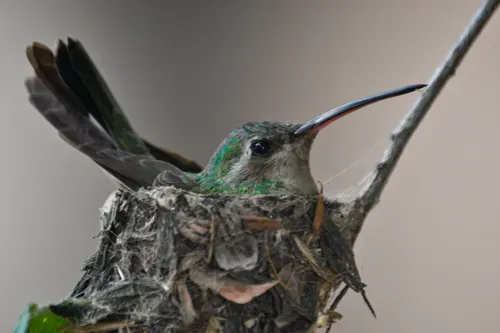
The Baltimore oriole’s hanging pouch is unmistakable: a deep sock of woven plant fibers dangling from a high branch tip.  The ruby-throated hummingbird’s nest is walnut-sized, bound with spider silk so it stretches as the chicks grow, and camouflaged with lichen.
 Mourning doves build the flimsiest nest in this guide: a loose twig platform holding exactly two white eggs. American crows build bulky 1 to 2 foot stick platforms high in tree crotches. Killdeer do not build at all: four speckled eggs sit in a pebble scrape, and the parents fake a broken wing to lure you away.
 Canada geese make large down-lined bowls near water and defend them with hissing charges.
 Our goose identification chart covers the species behind those nests.

Nest Safety and Etiquette: Look, Don’t Touch
Bird nests are more protected than most people realize. Under the US Migratory Bird Treaty Act, it is illegal to disturb, move, or destroy the active nest or eggs of nearly all native species, including robins, bluebirds, wrens, and swallows, from the first egg until the chicks fledge. House sparrows and European starlings are the exceptions, since they are non-native. Watch from 20 to 30 feet away with binoculars, keep visits short, and never touch eggs or nestlings. Keep cats indoors in nesting season, skip hedge trimming from March through August when possible, and call a licensed wildlife rehabilitator if a nest is in a dangerous spot.

Bird Nest Identification FAQ
What is the most common bird nest in the US?
The American robin’s mud-lined cup is the most recognized, but house sparrow domes and barn swallow mud cups are just as common.
How can you tell a robin nest from other cup nests?
Look for mud: the robin cements its cup with a thick mud layer, then adds a grass lining. The sky-blue eggs inside are a dead giveaway.
What bird makes a mud nest under my porch?
A barn swallow if it is an open half-cup glued to a wall, or a cliff swallow if it is an enclosed gourd with a small entrance. Eastern phoebes set their mud cup on a flat ledge instead.
Is it illegal to remove a bird nest?
If the nest is active and belongs to a native species, yes, under the Migratory Bird Treaty Act. House sparrow and starling nests are not protected.
Why do some birds not build nests at all?
Killdeer and many shorebirds lay eggs in a shallow scrape because camouflage is their defense: speckled eggs blend perfectly with pebbles.
When is bird nesting season in the US?
Most species nest March through August, peaking April through June. Goldfinches famously wait until July or August for thistle seed.
Conclusion
Nest ID comes down to four questions: where is it, what shape is it, what is it made of, and how big is it. Run those against the chart above and you will name the builder of most nests you find in a minute or two. Keep your distance, keep the visit short, and enjoy one of the best free shows in nature.

