

There are more types of badgers than most people realize. Say “badger” and most of us picture the black-and-white striped European badger, but the name covers twelve species across five genera, from English woodlands to African savannas and the mountain forests of Borneo. Some weigh under a kilogram; others top 14. Below is every one of them: a full comparison chart with scientific names, sizes, weights, ranges and standout features, then detailed sections on each group, a true-badger versus honey-badger breakdown, behavior and digging habits, an identification guide, and a short FAQ.

Types of Badgers: 12 Species in One Reference Chart
Below: all twelve recognized badger species. “True badgers” are the three species of the genus Meles; the rest belong to other genera, and the honey badger sits in its own subfamily. All twelve are members of the weasel family (Mustelidae).
| Common name | Scientific name | Group | Size/weight | Distribution | Standout feature |
|---|---|---|---|---|---|
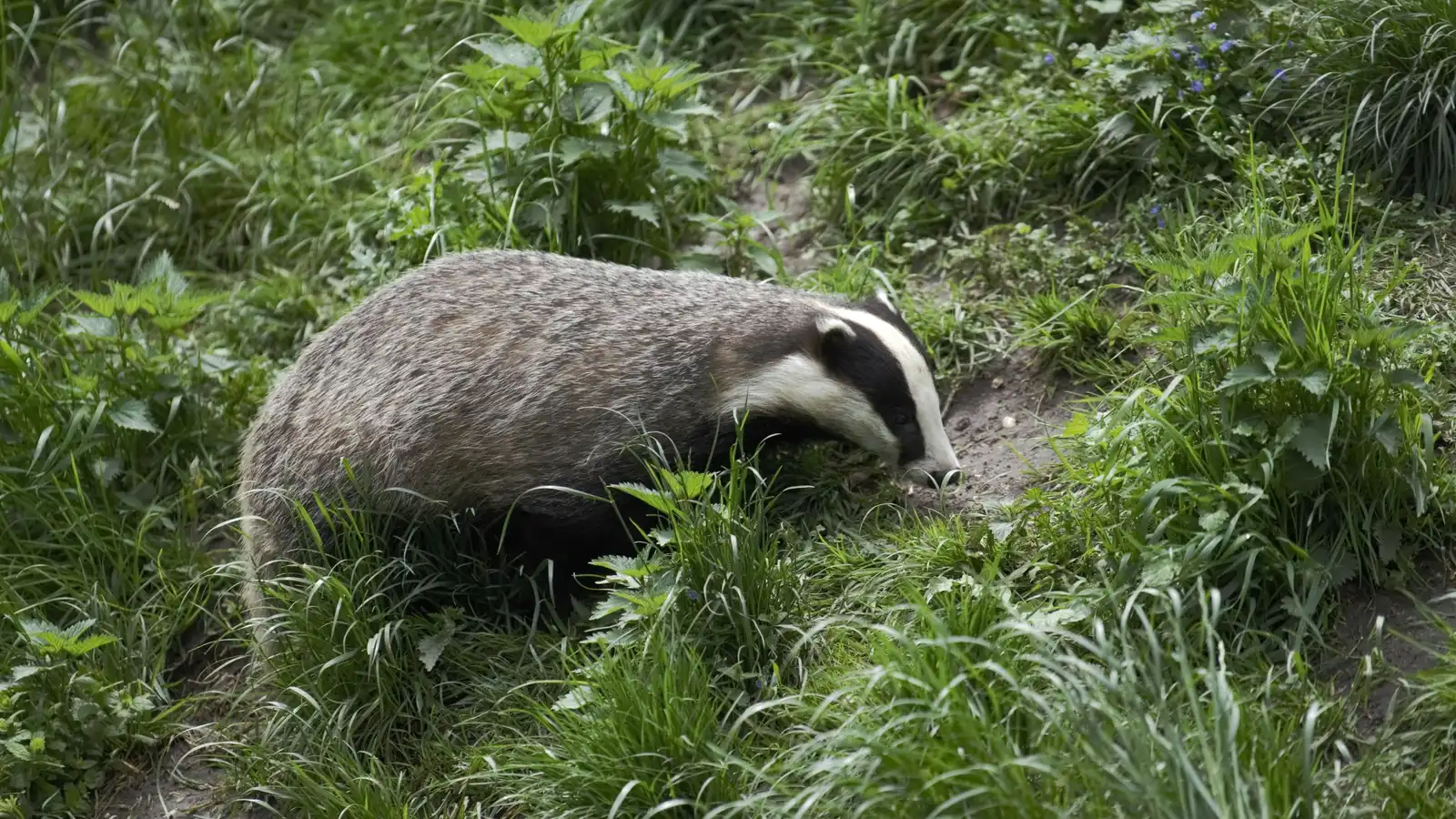
| European Badger | Meles meles | True badger | 60-90 cm; 8-12 kg (up to 17 kg in autumn) | Europe, Western Asia | Bold black-and-white striped face; lives in large social setts |
| Asian Badger | Meles leucurus | True badger | 50-70 cm; 3.5-9 kg | Central Asia, Siberia, Korea, northern China | Paler coat than its European cousin; hibernates deeply through harsh winters |
| Japanese Badger | Meles anakuma | True badger | 50-79 cm; 3.8-10 kg | Japan (Honshu, Shikoku, Kyushu) | Island species; smaller social groups and shorter burrows than M. meles |
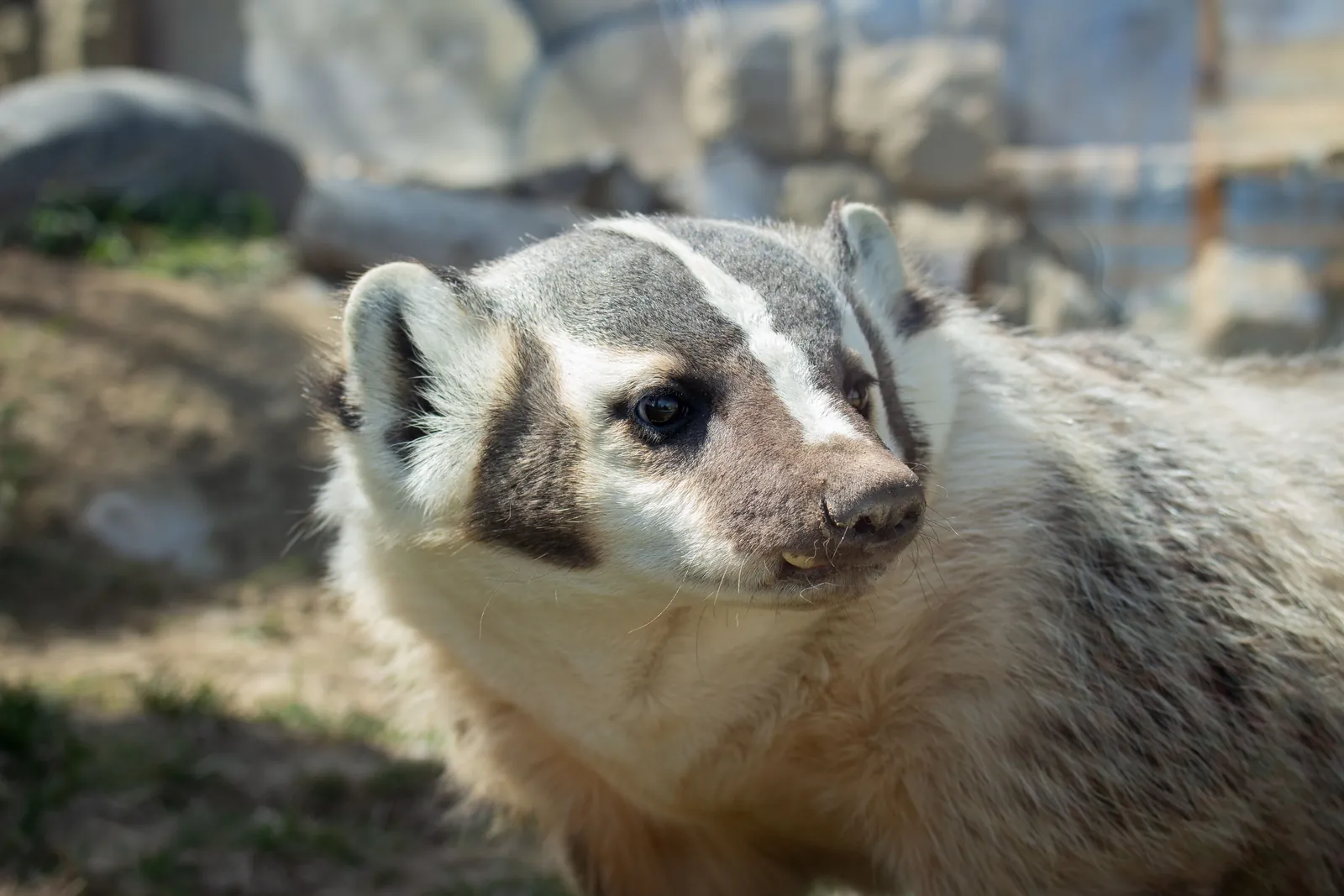
| American Badger | Taxidea taxus | American badger | 60-75 cm; 6-12 kg | Grasslands and deserts of North America | Flat, muscular body and huge front claws; a solitary rodent hunter |
| Honey Badger | Mellivora capensis | Honey badger | 55-77 cm; 5-14 kg | Africa, the Middle East, India, Nepal | Thick, loose skin; eats almost anything; famously fearless |
| Greater Hog Badger | Arctonyx collaris | Hog badger | 65-104 cm; 7-14 kg | South and Southeast Asia | Largest badger in Asia; pig-like snout used for rooting in soil |
| Northern Hog Badger | Arctonyx albogularis | Hog badger | 60-100 cm; 5.5-13.5 kg | Indochina, southern China | Recently split from A. collaris; paler head markings |
| Sumatran Hog Badger | Arctonyx hoevenii | Hog badger | 51-71 cm; 6-12 kg | Barisan Mountains, Sumatra | Rare mountain-forest species known from only a handful of records |
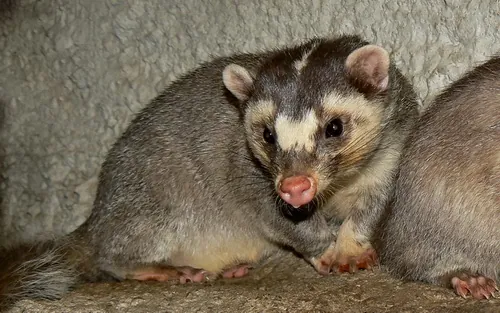
| Chinese Ferret-badger | Melogale moschata | Ferret-badger | 33-43 cm; 1-3 kg | Southern China, Taiwan, Laos, Vietnam, northeast India | Among the smallest badgers; climbs trees and sports bold white facial stripes |
| Burmese Ferret-badger | Melogale personata | Ferret-badger | 35-40 cm; 1.5-3 kg | Mainland Southeast Asia | Nearly identical to the Chinese species; told apart mainly by skull and teeth |
| Javan Ferret-badger | Melogale orientalis | Ferret-badger | 33-40 cm; 0.7-2 kg | Java, Indonesia | Island endemic; forages at night in forest understory |
| Bornean Ferret-badger | Melogale everetti | Ferret-badger | 32-45 cm; 1-2.5 kg | Montane forests of Borneo | High-elevation specialist, rarely photographed in the wild |

True Badgers: The Meles Genus
The three species of the genus Meles are the “true” badgers, and the only ones that live in large, stable social groups. The European badger, Meles meles, is the classic: grizzled gray coat, two bold black stripes from nose to ears, 8 to 12 kilos (an autumn male fattening for winter can hit 17). They live in clans of 4 to 12 in extensive burrow systems called setts, some occupied and extended for well over a century.
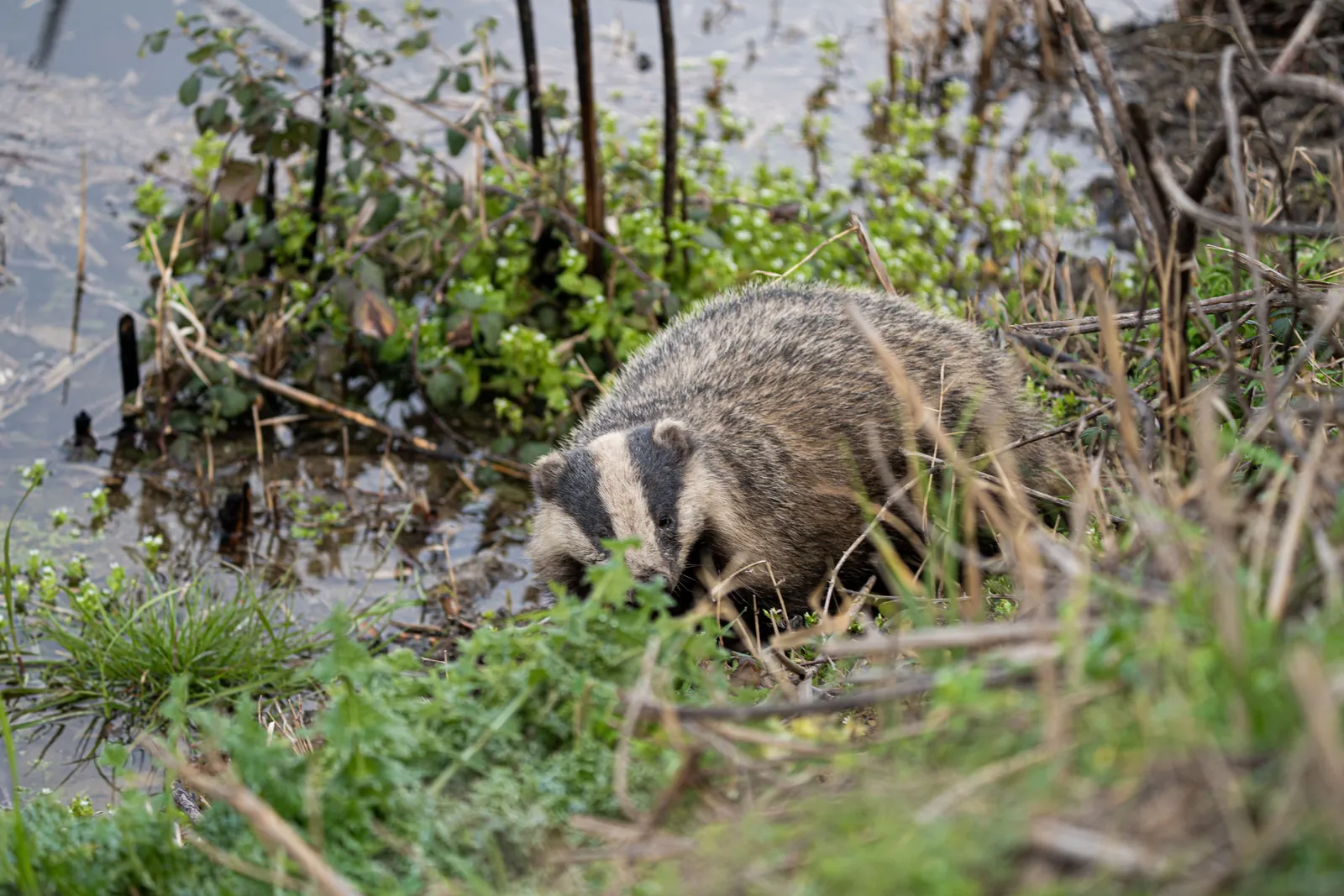
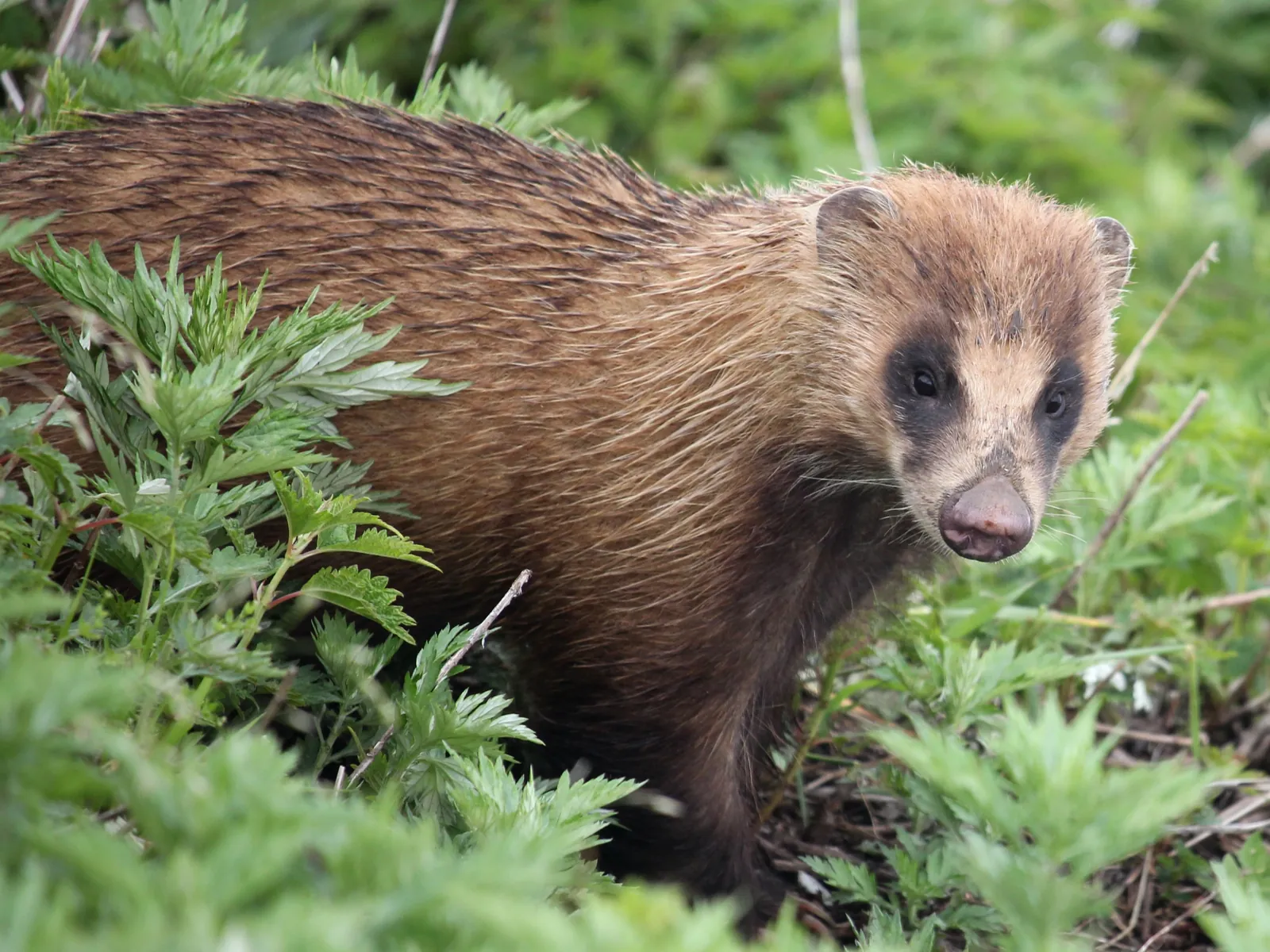
The Asian badger, Meles leucurus, roams steppe and forest edge from the Urals to Korea: paler fur, a slightly smaller frame, and true hibernation where winters are severe. The Japanese badger, Meles anakuma, is confined to three of Japan’s main islands and lives in noticeably smaller groups, a likely consequence of island life.
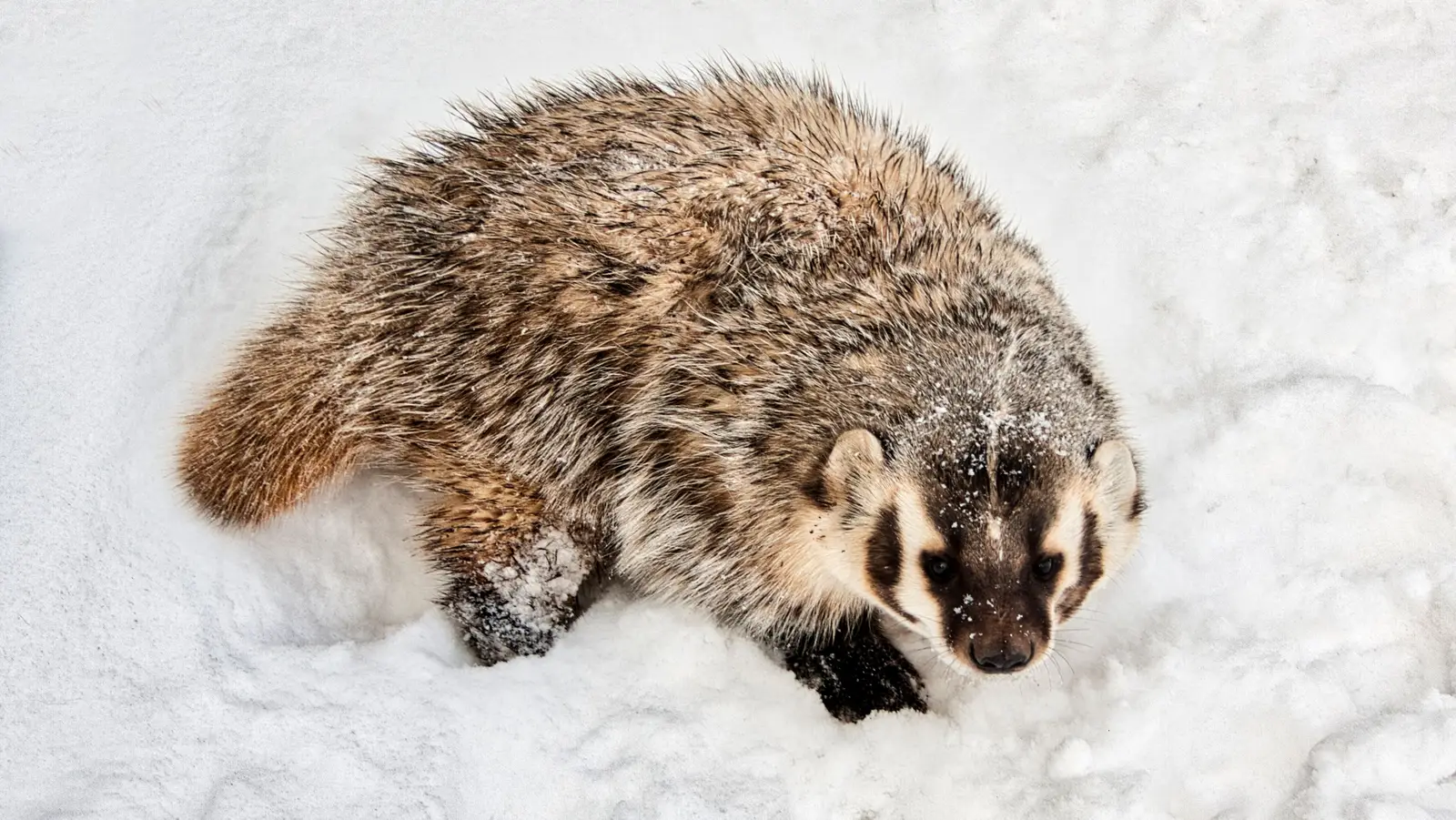
The American Badger: North America’s Burrowing Hunter
Taxidea taxus is built for one job: digging. The body is low and flattened, the legs short and powerfully muscled, and the front claws can reach five centimeters, longer than those of any other North American carnivore. A loner, it patrols grasslands and deserts from southern Canada to central Mexico, digging ground squirrels, prairie dogs and pocket gophers out of their tunnels.
It is famous for an unlikely partnership: American badgers sometimes hunt alongside coyotes, and studies show both catch more together than alone. Compare how other mammal predators make a living in our guide to types of wild cats.
The Honey Badger: Reputation Versus Reality
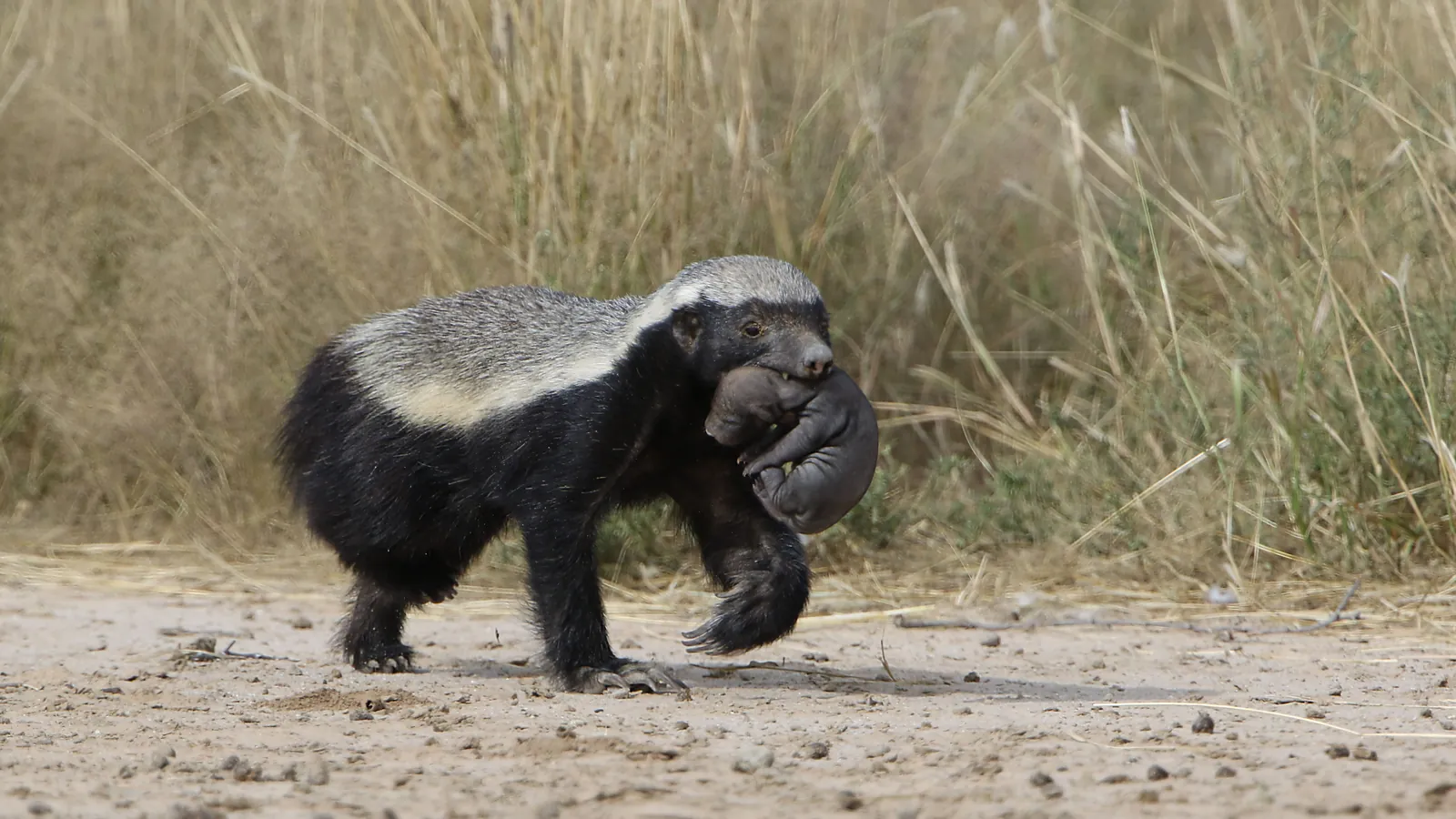
Mellivora capensis has been filmed taking on lions, raiding beehives while swarmed by stingers, and shrugging off snake venom that would kill most mammals. Its skin is so thick and loose it can twist inside it to bite back at something holding it, and its diet runs from scorpions to honeycomb to porcupine. Yet taxonomists treat it as an oddball: the only living member of its subfamily, genetically as different from a European badger as a skunk is from a weasel. It digs no communal setts, never hibernates, and a single male can wander a home range of 500 square kilometers.
Hog Badgers and Ferret-Badgers of Asia
The three hog badgers of the genus Arctonyx are the least-known big badgers on Earth. The greater hog badger can stretch past a meter, the largest badger in Asia, and roots through leaf litter with a bare, pig-like nose. The northern hog badger was only recognized as a separate species in the last two decades on genetic evidence, while the Sumatran hog badger is one of the world’s rarest carnivores, confirmed alive in the Barisan Mountains by camera traps after decades known only from museum skins.
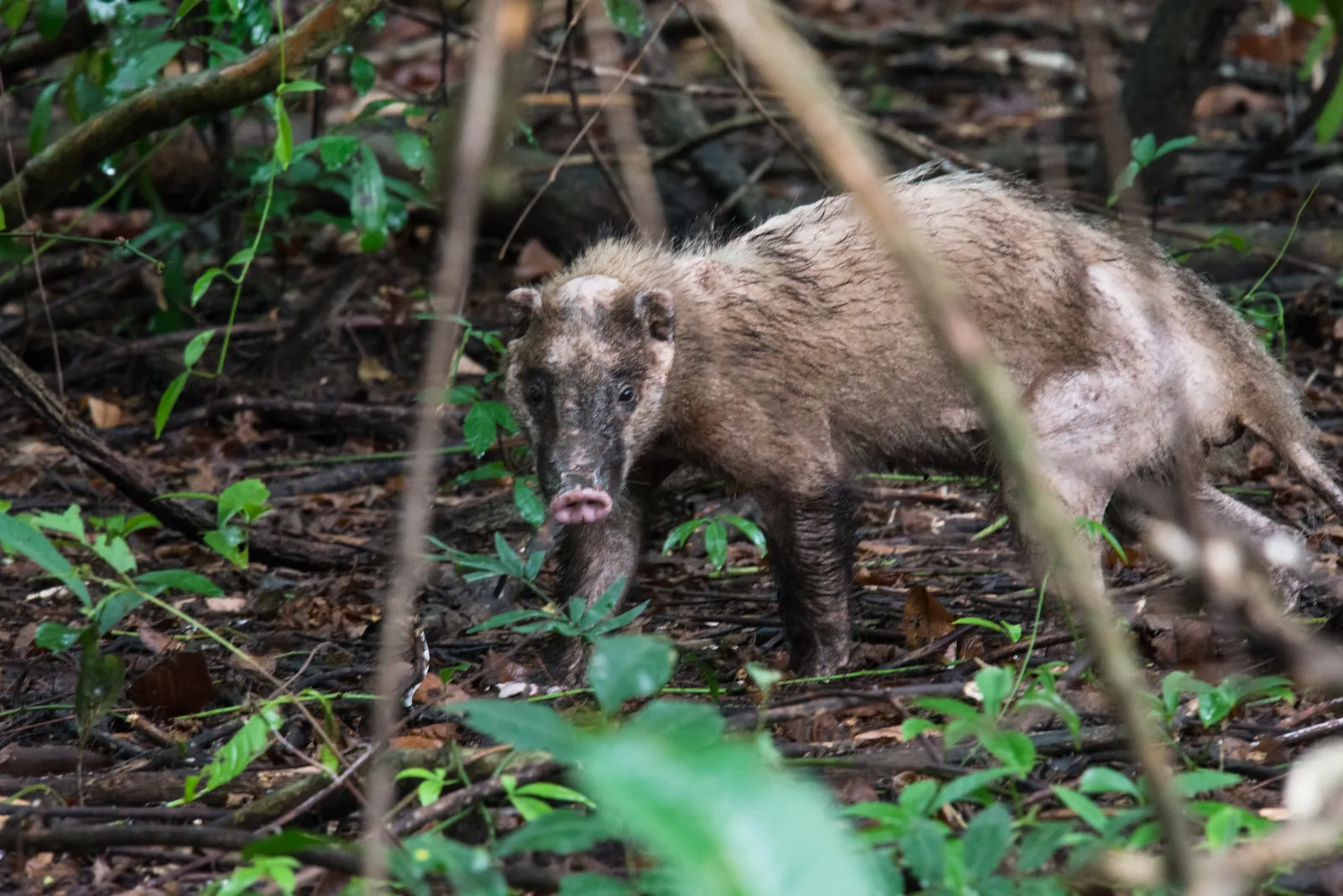
The four ferret-badgers of the genus Melogale sit at the other end of the scale: long, low, ferret-shaped animals weighing as little as 700 grams, agile climbers with striking white facial markings that stand out in camera-trap photos. The Chinese and Burmese species are so alike that researchers usually need skull measurements or DNA to separate them, while the Javan and Bornean species are each confined to a single island. For how much size can vary within another mammal group, see our roundup of all bear species, from the sun bear up to the Kodiak.
True Badgers Versus Honey Badgers: The Differences That Matter
Because the name is shared, people assume all badgers are close relatives. True badgers (Meles) are temperate burrowers that live in family groups, sleep through winter, and eat mostly earthworms, insects and plant matter. Honey badgers are tropical wanderers that live alone, never hibernate, and tackle prey true badgers would never attempt. The anatomy differs too: striped head and ordinary skin versus a silver-gray mantle over black with famously thick, loose hide. Weights can overlap, but social life, diet and range size are completely different.

Badger Behavior: Digging, Setts, and Diet
Digging is the badger superpower. A European badger’s sett can have 30 to 50 entrances, hundreds of meters of tunnels, and grass-lined chambers for sleeping and raising cubs. Excavating one is a multi-generational project, with old setts showing continuous use for a hundred years or more. The animals keep separate latrine pits outside the sett and change bedding regularly, unusually tidy for a wild mammal.

Diet varies by species but follows a pattern: badgers are opportunists. European badgers can eat several hundred earthworms in one damp night, switching to fruit, nuts, insects and the occasional rabbit when worms are scarce. American badgers are more committed carnivores, taking mostly rodents. Hog badgers root up earthworms, grubs and fallen fruit; ferret-badgers add frogs, small birds and large insects. Most species scavenge carrion too, which is one reason badgers and deer cross paths at night; compare ungulate habits in our guide to types of deer.
Most badgers are nocturnal. European badgers are the most social, living in territorial clans; every other species is solitary outside the breeding season.
How to Identify a Badger in the Wild
In Europe and western Asia, no other animal combines the black-and-white striped face with a stocky, waddling gait. In North America, the American badger’s flattened profile, grizzled coat and white head stripe separate it from skunks and wolverines. Honey badgers are unmistakable across Africa: silver-gray back sharply divided from black underparts, with a rolling, bow-legged walk.

Look for signs if the animal stays hidden. Badger footprints show five toes with long claw marks, broader than a fox’s and rounder than a dog’s. Sett entrances are D-shaped or oval, wider than tall, with a large spoil heap outside. Neat shallow pits in a line are latrines, and coarse black-and-white hairs snagged on fences near a hole are near-certain confirmation.
Types of Badgers: Frequently Asked Questions
Are honey badgers true badgers?
No. “True badger” means the genus Meles: the European, Asian and Japanese badgers. The honey badger is its own genus, Mellivora, and its own subfamily. Shared common name, not close family ties.
What is the largest badger species?
The greater hog badger (Arctonyx collaris) is the longest at 104 cm, while heavy autumn European badgers and large male honey badgers can both exceed 14 kg.
Do all badgers live in setts?
No. Only the true badgers (Meles) build large communal setts. American badgers dig simpler burrows they use alone and move between often; honey badgers, hog badgers and ferret-badgers use burrows, rock crevices or hollow logs as temporary dens.
What do badgers eat?
Almost all are omnivorous opportunists: earthworms, grubs and insects first, plus rodents, frogs, fruit, nuts, eggs and carrion. American badgers lean most toward meat; European badgers toward earthworms.
How long do badgers live?
In the wild, most live 5 to 10 years, European badgers occasionally reaching 14; in captivity, 15 to 16 years has been recorded. Traffic, disease and food scarcity are the main limits.
Conclusion
Twelve species, five genera, one family, and a range stretching across four continents: the badgers are far more varied than the striped animal most of us know. Each has tuned the same blueprint, a low-slung body and formidable claws, to a different way of life. Keep the chart above bookmarked, and the next striped face at dusk will be one you can name.


Pingback: Types of Bats: 20 Species, Sizes, Habitats and Facts – Chart Identify
Pingback: Types of Otters: All 13 Species, Sizes and Habitats – Chart Identify