

There is a special kind of embarrassment in confidently calling something “just a lizard” in front of someone who keeps reptiles. I did it once at a nature center, pointing at a chameleon, and the keeper corrected me gently: technically right, practically useless. The word “lizard” covers more than 7,000 species, from porch-wall geckos to three-meter dragons. This guide gives you a proper types of lizards chart with 20 real species, then walks through each family so you can identify the one on your fence.

Types of Lizards Chart: 20 Species, Sizes, Habitats and Facts
| Species | Family | Adult size | Native range | Habitat | Standout feature |
|---|---|---|---|---|---|
| Green iguana (Iguana iguana) | Iguanidae | 1.5-2 m (5-6.5 ft) incl. tail | Central & South America | Rainforest canopy | Mostly herbivorous; long whip-like tail |
| Marine iguana (Amblyrhynchus cristatus) | Iguanidae | 60-140 cm (2-4.5 ft) | Galapagos Islands | Rocky shores | Only lizard that forages in the sea |
| Komodo dragon (Varanus komodoensis) | Varanidae | Up to 3 m (10 ft); 70-90 kg | Indonesian islands | Dry forest & savanna | Largest living lizard |
| Savannah monitor (Varanus exanthematicus) | Varanidae | 75-105 cm (2.5-3.5 ft) | Sub-Saharan Africa | Grassland | Snail and millipede specialist |
| Panther chameleon (Furcifer pardalis) | Chamaeleonidae | 36-53 cm (14-21 in) | Madagascar | Coastal forest | Rapid color shifts for mood and mating |
| Veiled chameleon (Chamaeleo calyptratus) | Chamaeleonidae | 36-60 cm (14-24 in) | Yemen & Saudi Arabia | Arid highland scrub | Tall casque “helmet” on the head |
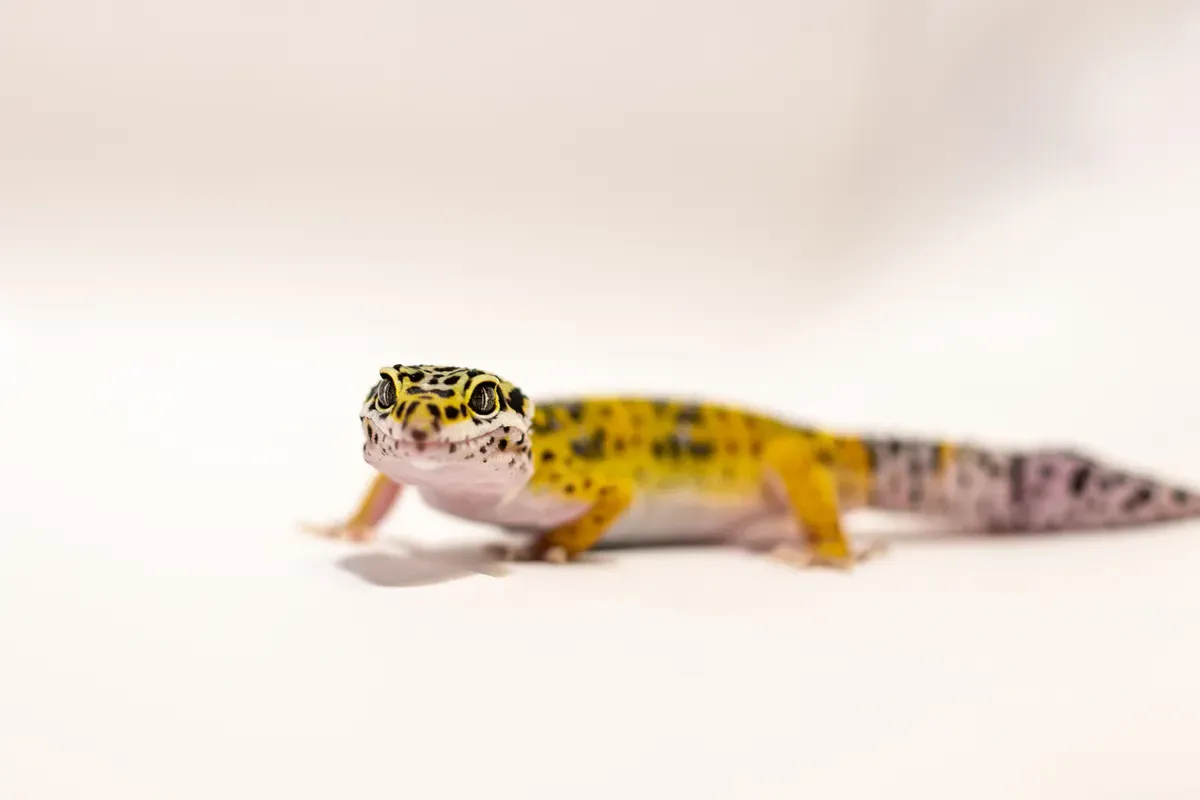
| Leopard gecko (Eublepharis macularius) | Eublepharidae | 20-25 cm (8-10 in) | Pakistan, India, Iran, Afghanistan | Rocky desert | Has eyelids (most geckos do not) |
| Tokay gecko (Gekko gecko) | Gekkonidae | 25-35 cm (10-14 in) | Southeast Asia | Forests & buildings | Loud two-syllable “to-kay” call |
| Common house gecko (Hemidactylus frenatus) | Gekkonidae | 7.5-15 cm (3-6 in) | S & SE Asia (now worldwide) | Homes & gardens | Climbs glass; chirps like a tiny bird |
| Blue-tongued skink (Tiliqua scincoides) | Scincidae | 45-60 cm (18-24 in) | Australia & New Guinea | Forest & grassland | Startling blue tongue used as a bluff |
| Shingleback skink (Tiliqua rugosa) | Scincidae | 30-40 cm (12-16 in) | Australia | Arid scrub | Pinecone-like scales; pairs stay together for life |
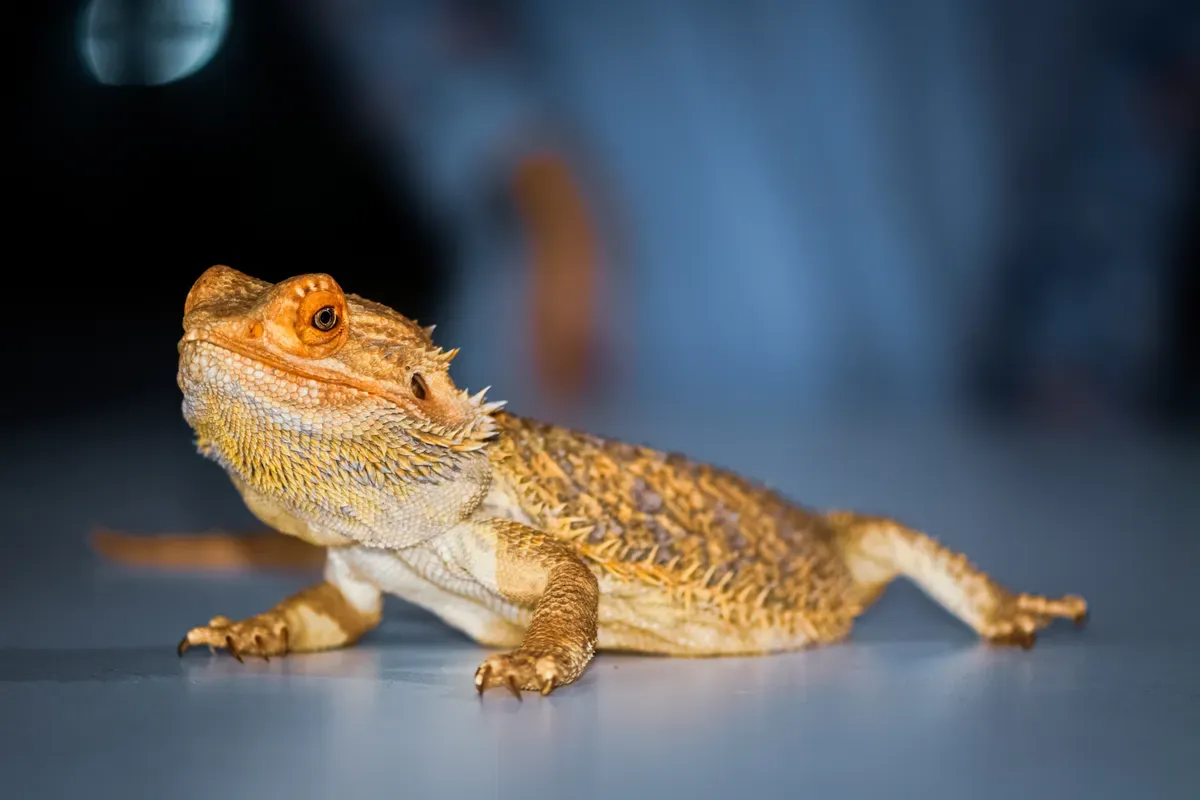
| Bearded dragon (Pogona vitticeps) | Agamidae | 45-60 cm (18-24 in) | Central Australia | Arid woodland | Puffs its “beard”; waves a foreleg in greeting |
| Green water dragon (Physignathus cocincinus) | Agamidae | 60-90 cm (2-3 ft) | Southeast Asia | Streamside forest | Dives into water; tail nearly as long as body |
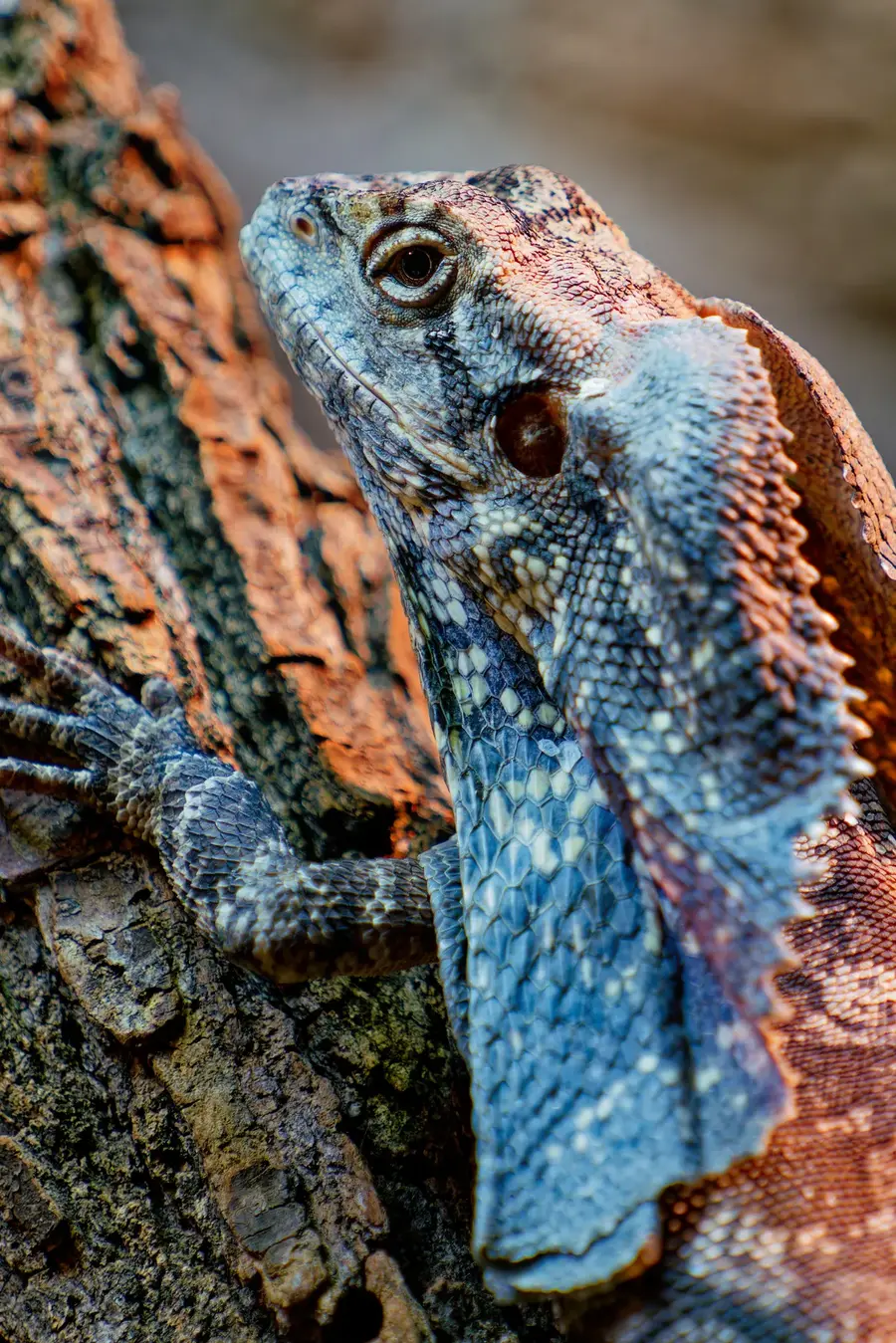
| Frilled lizard (Chlamydosaurus kingii) | Agamidae | 60-90 cm (2-3 ft) | N Australia & S New Guinea | Dry forest | Flared neck frill; sprints on two legs |
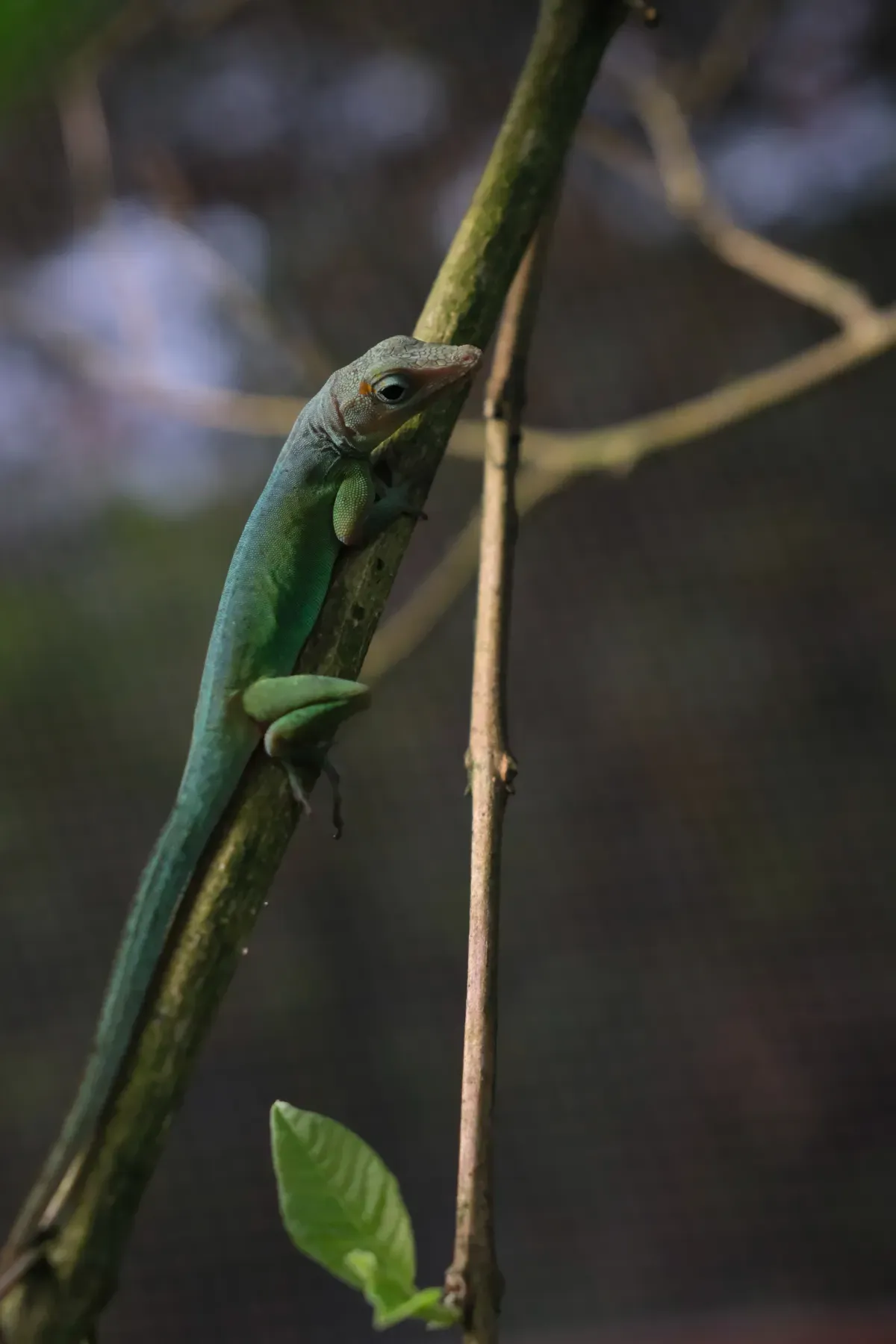
| Green anole (Anolis carolinensis) | Dactyloidae | 13-20 cm (5-8 in) | Southeastern United States | Trees & gardens | Pink dewlap display; shifts green to brown |
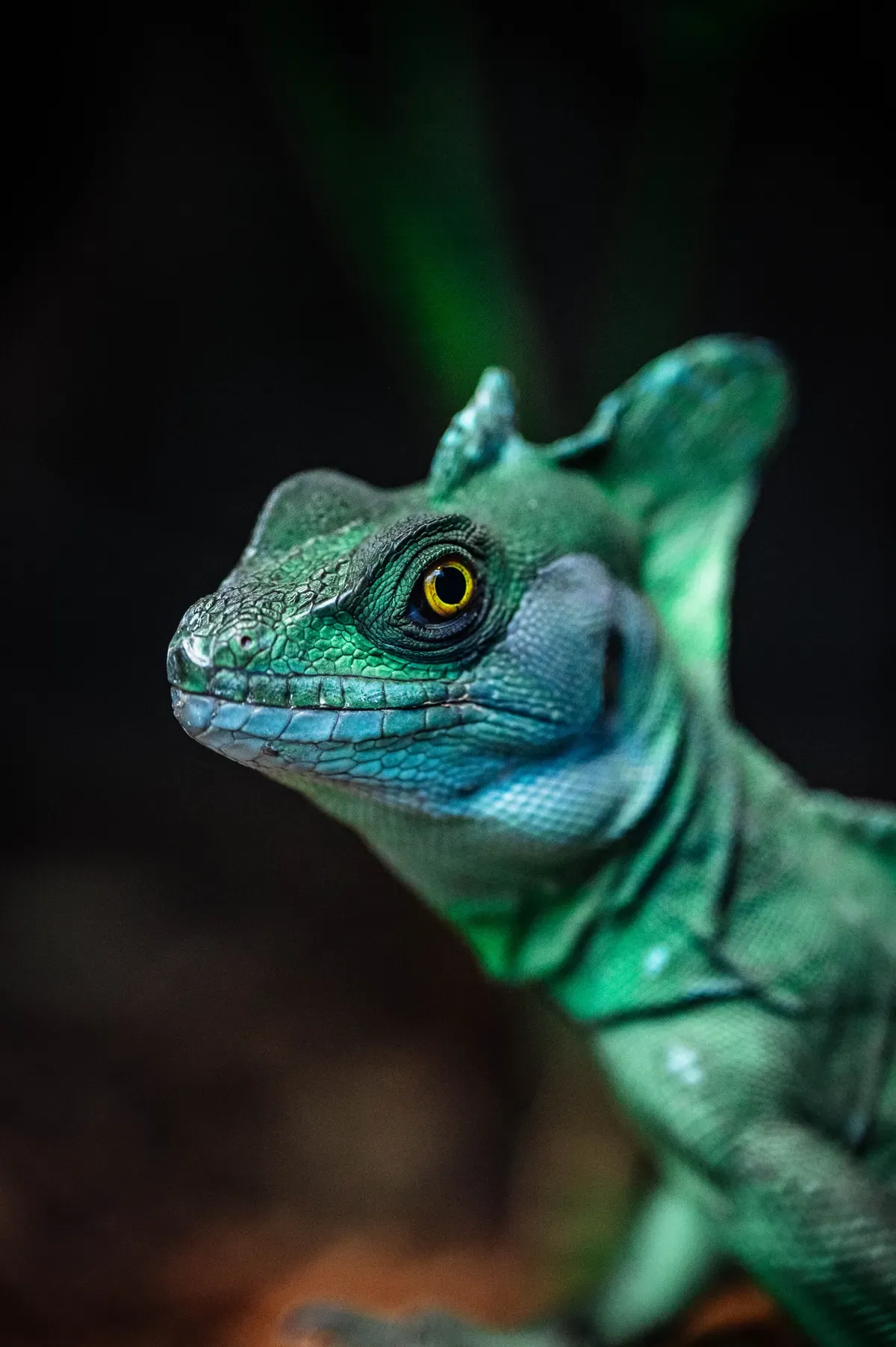
| Green basilisk (Basiliscus plumifrons) | Corytophanidae | 60-75 cm (2-2.5 ft) | Central America | Rainforest near water | Runs across water (“Jesus Christ lizard”) |
| Texas horned lizard (Phrynosoma cornutum) | Phrynosomatidae | 6-10 cm (2.5-4 in) | S-central US & N Mexico | Arid plains | Squirts blood from its eyes at predators |
| Western fence lizard (Sceloporus occidentalis) | Phrynosomatidae | 13-20 cm (5-8 in) | Western United States | Woodland & rocky hills | “Push-up” displays; its blood kills Lyme bacteria in ticks |
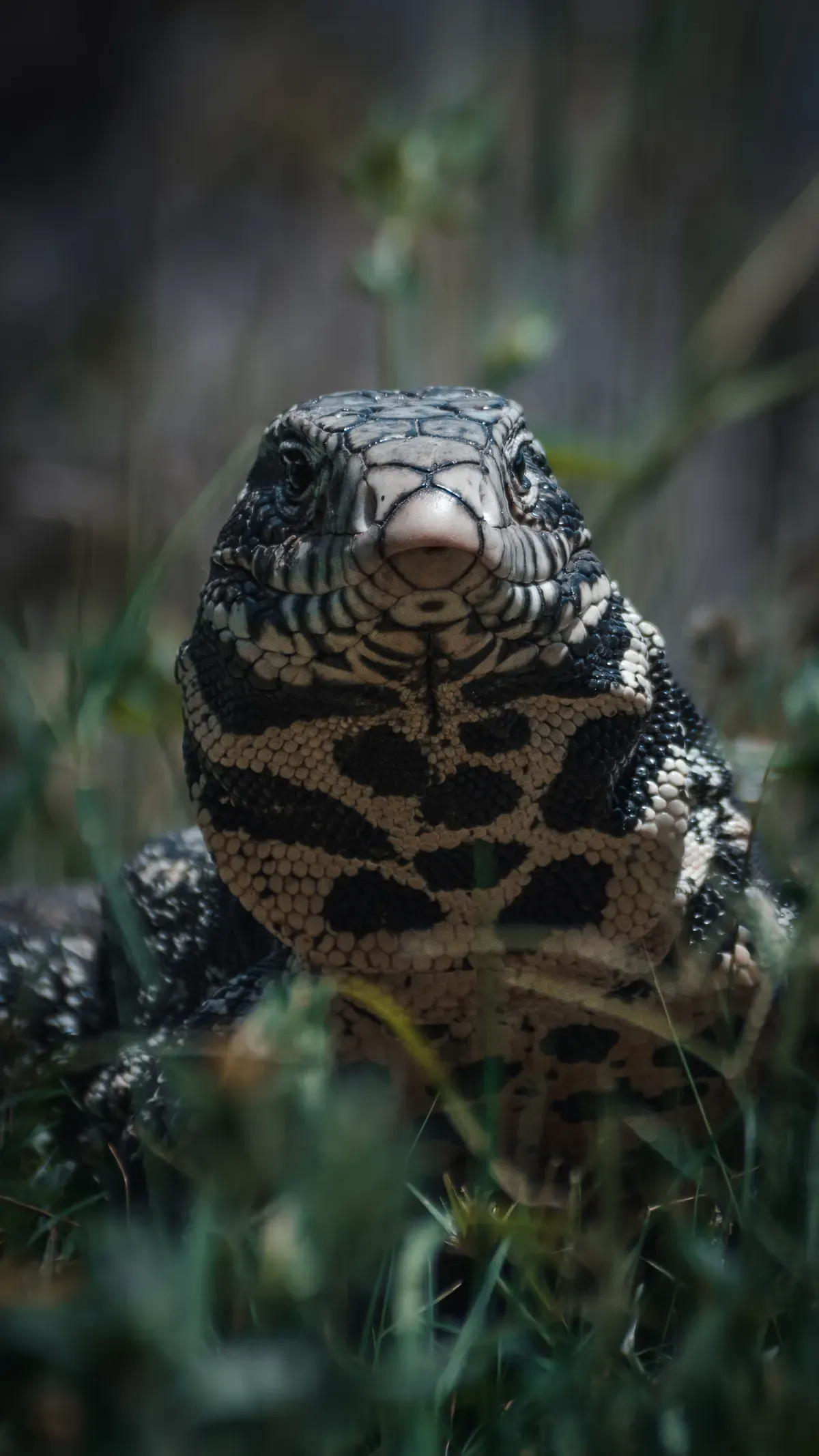
| Argentine black-and-white tegu (Salvator merianae) | Teiidae | 1.2-1.4 m (4-4.5 ft) | South America | Grassland & forest edge | Remarkably intelligent; invasive in Florida |
| Gila monster (Heloderma suspectum) | Helodermatidae | 45-56 cm (18-22 in) | SW US & NW Mexico | Desert scrub | One of the few truly venomous lizards |
Iguanas: Leaf Eaters of the Tropics
The green iguana is the lizard most people picture first: a spiny-backed climber of the Central and South American canopy, reaching two meters and eating mostly leaves, flowers and fruit. Its cousin, the marine iguana of the Galapagos, is the only lizard that forages in the sea, diving off lava rocks to graze algae, then hauling out to warm up and sneeze salt from its nostrils.
Monitor Lizards: The Heavyweight Hunters
Monitors hunt like mammals: active, curious and constantly flicking forked tongues to taste the air. The Komodo dragon sits at the top. A big male can exceed three meters and weigh as much as a grown man; on its Indonesian islands it takes deer and wild pigs with a venomous bite, and fewer than 6,000 remain in the wild.

The savannah monitor of sub-Saharan Africa is a stocky grassland forager whose adults become snail and millipede specialists, a diet almost no other lizard exploits. Nile monitors are bold enough to raid crocodile nests for eggs.
Chameleons: Masters of Color and Patience
Chameleons hunt in slow motion, firing a sticky tongue up to one and a half times their body length at passing insects. The famous color change is mostly about communication and temperature control, not camouflage. A panther chameleon from Madagascar flushes red and orange when displaying to a rival and settles into calm green when relaxed. The veiled chameleon of Yemen and Saudi Arabia, one of the largest chameleons, wears a tall casque that channels rainwater to its mouth.

Geckos: The Night Shift Climbers
Geckos own the night. Their toe pads carry millions of microscopic hairs that grip smooth surfaces through molecular attraction, so a house gecko can sprint up a window pane. They are also the only lizards that regularly talk. The leopard gecko breaks the family rules: movable eyelids, a rocky-desert home rather than walls, and fat stored in its thick tail. Calm and hardy, it became one of the most popular pet reptiles. Its opposite is the tokay gecko of Southeast Asia: big, loud and bad-tempered, named for its harsh two-syllable night call.
Skinks: Smooth, Shiny and Everywhere
Skinks are the largest lizard family at around 1,700 species, with smooth, polished-looking scales. The blue-tongued skink of Australia is the showpiece: up to 60 cm of heavy-bodied lizard that gapes its mouth and flashes a startling cobalt-blue tongue when threatened. The shingleback, also Australian, wears pinecone-like armor and a blunt tail that looks like its head, so predators bite the wrong end. Shinglebacks form monogamous pairs that reunite every breeding season, sometimes for over 20 years. Unlike frogs, skinks have waterproof skin, which is why they have colonized deserts, mountains and islands worldwide.

Agamas: Spiny Desert Personalities
Agamas are the Old World’s answer to iguanas: spiny, heat-loving and full of body language. The bearded dragon of central Australia inflates its spiny throat pouch when alarmed; relaxed ones lift a foreleg and rotate it slowly, a “wave” that signals submission. The green water dragon of Southeast Asia drops into streams at the first sign of danger. And the frilled lizard of northern Australia rears up and unfurls a ruff up to 30 cm across, then sprints away on its hind legs with the frill streaming like a cape.
Anoles, Basilisks and Horned Lizards
The green anole is the lizard of the American Southeast: the little green flash on garden fences from the Carolinas to Texas. Males unfurl a pink-red throat fan called a dewlap while bobbing their heads, shifting between green and brown with mood and temperature. The green basilisk of Central America earned the nickname “Jesus Christ lizard” honestly: young ones sprint across streams on their hind legs, slapping the water with fringed toes so fast each footfall traps an air pocket.
The Texas horned lizard is a flat, spiny desert specialist that eats almost nothing but harvester ants. When grabbed, its last resort is pure theater: it floods the blood vessels around its eyes and squirts foul-tasting blood at the attacker’s face. Its western cousin, the fence lizard, does push-ups on sunny rocks to flash blue belly patches at rivals, and does California a quiet favor: its blood kills the Lyme disease bacterium inside feeding ticks. The same dry plains these lizards patrol also feed roaming herds of deer, which browse the scrub at dawn.

Tegus and the Rare Venomous Types
The Argentine black-and-white tegu is the closest thing the lizard world has to a dog: up to 1.4 meters long, these South American giants recognize their keepers and solve problems that surprise researchers. Escaped pets have founded breeding populations in Florida and Georgia, where they raid turtle nests. Venom in lizards is extraordinarily rare, and the Gila monster of the Sonoran Desert is one of the few that has it. A compound in its venom, exendin-4, became the basis for a diabetes drug.

Frequently Asked Questions
How many types of lizards are there?
More than 7,000 recognized species. Skinks lead with around 1,700, followed by geckos and anoles.
Are geckos lizards?
Yes. Geckos sit inside the lizard group; their sticky toe pads, night habits and chirps set them apart, but taxonomically they are lizards.
What is the biggest lizard in the world?
The Komodo dragon, at up to 3 meters (10 feet) and 70-90 kg. The extinct Australian megalania was larger, but no living species comes close.
Are any lizards venomous?
Only a handful. The Gila monster and the beaded lizards of Mexico and Central America (genus Heloderma) are the truly venomous ones; Komodo dragons also make venom-like proteins that stop blood clotting.
Can lizards regrow their tails?
Many can. Geckos, skinks, anoles and iguanas drop the tail to distract a predator, and it regrows as a simpler cartilage rod. Chameleons and monitors cannot, so a lost tail is permanent for them.
What is the smallest lizard in the world?
The Jaragua sphaero, a dwarf gecko from the Dominican Republic, at about 16 mm (0.6 inches), small enough to curl up on a coin.
Conclusion
Lizards are not one kind of animal but a whole strategy for being a reptile, repeated thousands of times: climbers with glue feet, desert sprinters, sea grazers and a dragon that hunts like a lion. These 20 species are the famous faces, but they are a doorway, not the whole house. Next time something scaly crosses the garden wall, check the feet, the eyes and the tail.


Pingback: Types of Snakes: 20 Species, Sizes and Habitats – Chart Identify