
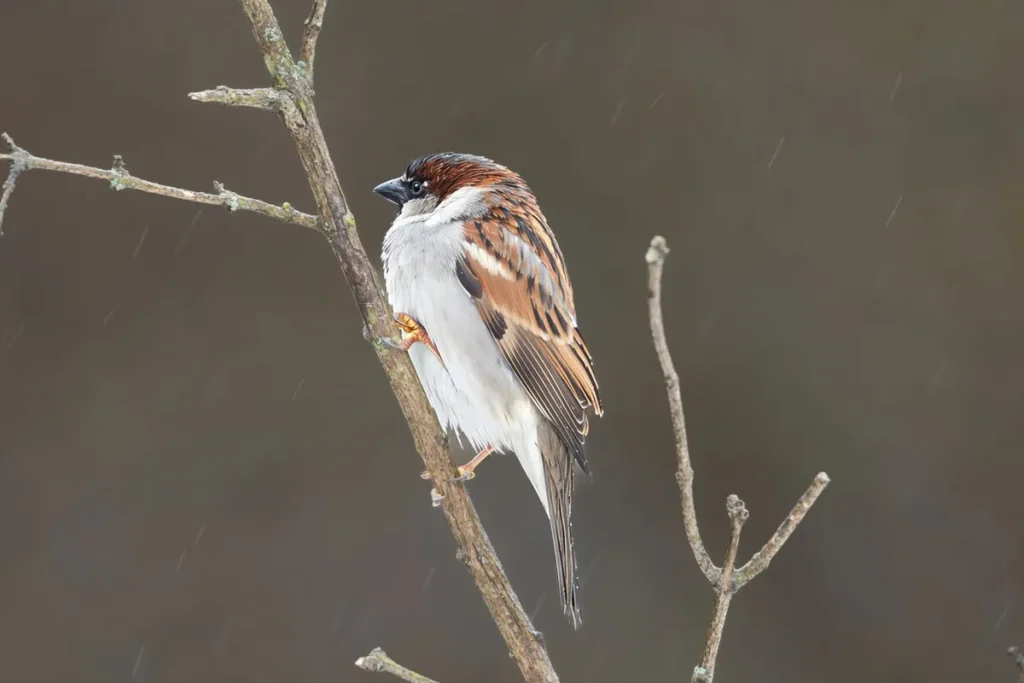
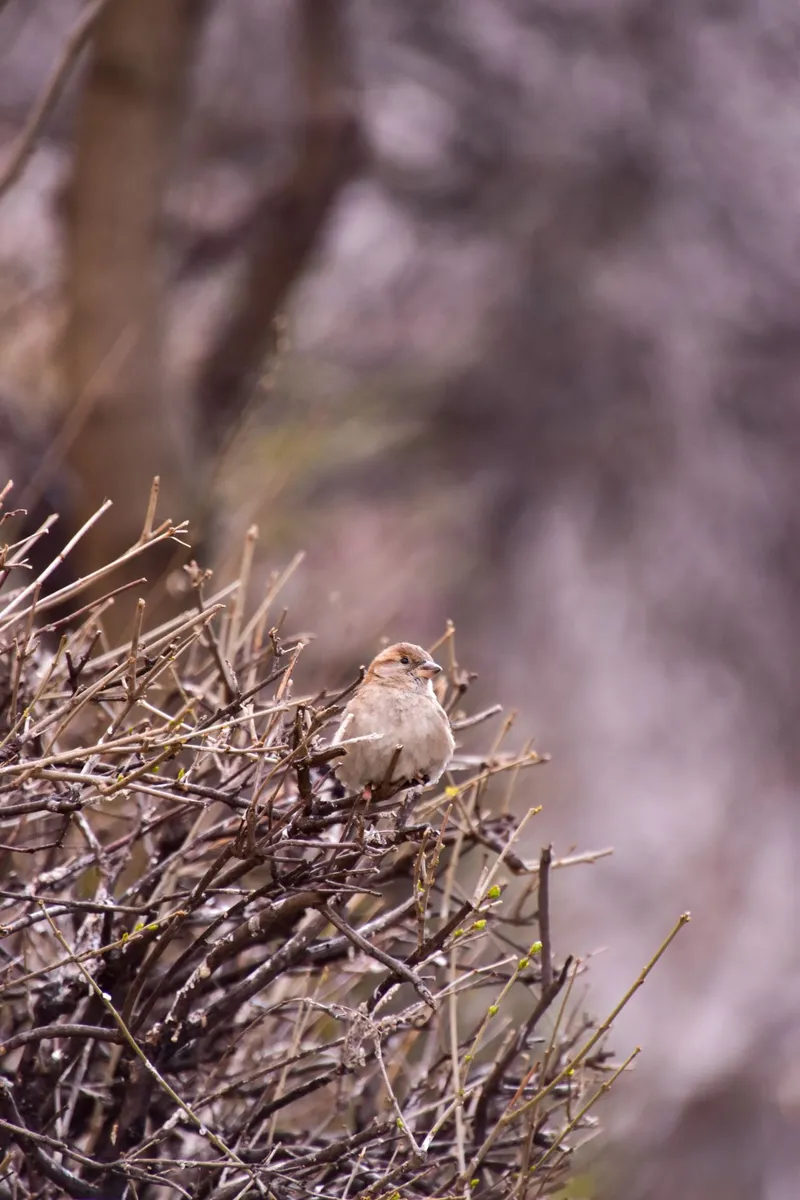
That small brown bird on your fence is probably a sparrow, but which one? The United States hosts dozens of sparrow species, and most beginners lump them all together as “little brown birds.” This sparrow identification chart changes that. It covers 20 common US sparrows with exact field marks, sizes, and ranges, so you can put a name to the bird at your feeder, on your trail, or in your backyard within seconds.

How to Use This Sparrow Identification Chart
Four clues separate almost every common sparrow. First, study the head: sparrow heads carry the boldest markings (stripes, caps, masks, throat patches) and give the fastest ID. Second, check the breast: is it clean and unstreaked, or heavily streaked down to the belly? Third, note the bill color: pink, yellow, dark, or two-toned narrows the list fast. Fourth, record the habitat and behavior: a marsh bird is never a desert bird, and a bird pumping its tail on the ground reads differently from one singing from a treetop.
One caution: sparrows change clothes with the seasons. Breeding males are crisp and colorful, while winter birds look washed out and streaky. The table below lists full ranges and the marks that hold up year round, and the cheat sheet after it groups species by head pattern for quick field use.
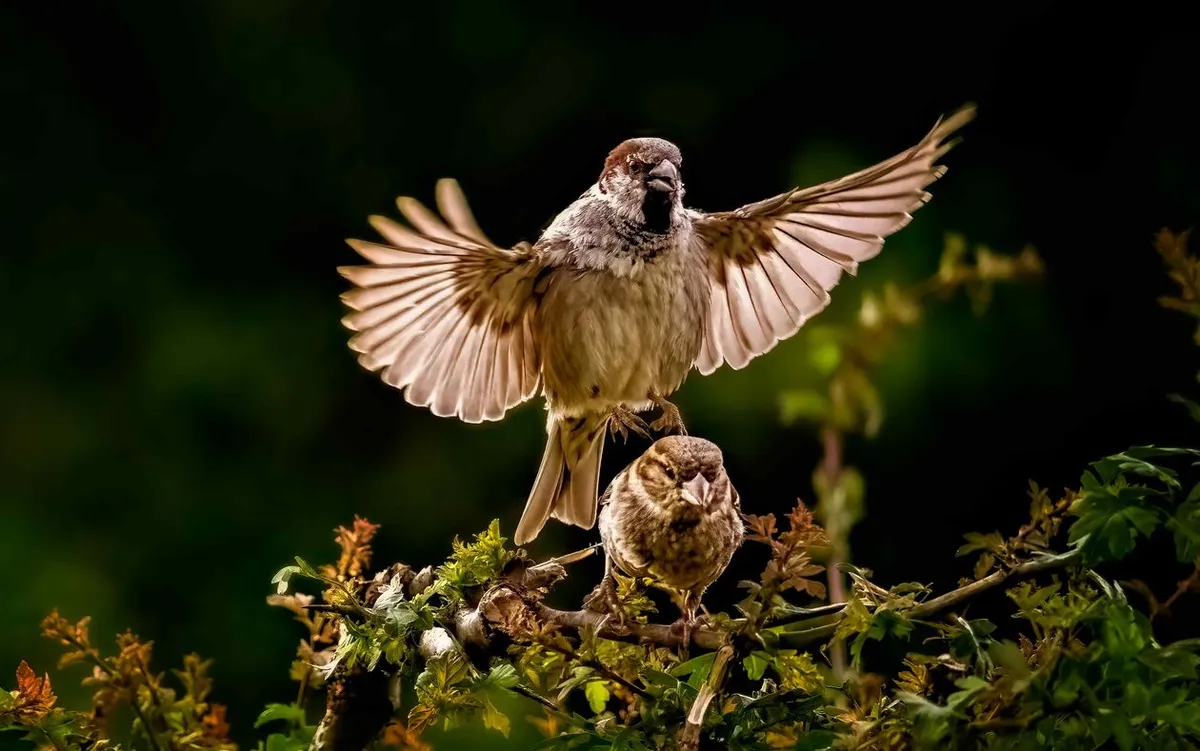
Sparrow Identification Chart: 20 Common US Species
The 20 species below are the sparrows Americans meet most often, from the 11 cm Savannah Sparrow to the 20 cm Harris’s Sparrow. Lengths include the tail.
| Species | Scientific name | Length | Key ID feature | Where found |
|---|---|---|---|---|
| House Sparrow | Passer domesticus | 14-16 cm (5.5-6.3 in) | Male: gray crown, chestnut nape, black bib. Female: plain buffy brown with pale eyebrow stripe | Nationwide, towns, farms, feeders, parking lots |
| Eurasian Tree Sparrow | Passer montanus | 12.5-14 cm (5-5.5 in) | Chestnut crown, bold black cheek spot, black throat patch, both sexes alike | Small US populations around St. Louis and scattered introductions |
| Song Sparrow | Melospiza melodia | 12-17 cm (4.7-6.7 in) | Heavy brown streaking with a central breast spot, long rounded tail, gray face with brown stripes | Nationwide, thickets, marshes, gardens, year round in most states |
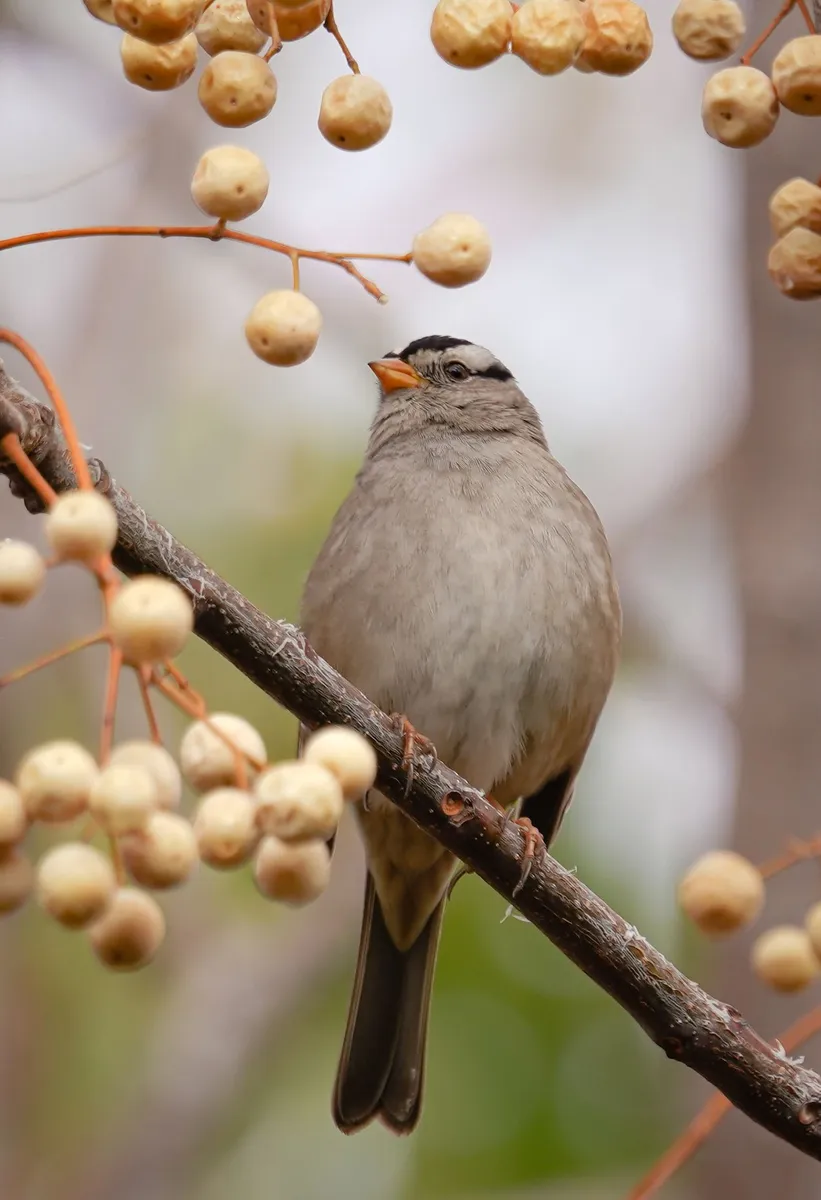
| White-crowned Sparrow | Zonotrichia leucophrys | 15-16 cm (5.9-6.3 in) | Bold black-and-white head stripes, pink or orange bill, clean gray unstreaked breast | Western and northern US breeder, winters across the southern half |
| White-throated Sparrow | Zonotrichia albicollis | 15-17 cm (5.9-6.7 in) | Bright white throat patch, yellow spot between eye and bill, striped crown | Eastern US in winter, breeds in the Northeast and Canada |
| Chipping Sparrow | Spizella passerina | 12-14 cm (4.7-5.5 in) | Rust-red cap, crisp black eye line, clean gray underparts; winter birds duller | Nationwide in summer, lawns, parks, open woods |
| Field Sparrow | Spizella pusilla | 12.5-15 cm (4.9-5.9 in) | Pink bill and pink legs, rusty cap, plain buffy unstreaked breast | Eastern US, old fields, brushy clearings, year round in the Southeast |
| Fox Sparrow | Passerella iliaca | 15-19 cm (5.9-7.5 in) | Large and rusty with heavy streaking, big bill, scratches loudly in leaf litter with both feet | Nationwide in winter, thickets and undergrowth |
| Lincoln’s Sparrow | Melospiza lincolnii | 13-15 cm (5.1-5.9 in) | Buffy chest band with fine streaks, gray face, secretive, rarely in the open | Western and northern breeder, migrates and winters in the South |
| Savannah Sparrow | Passerculus sandwichensis | 11-17 cm (4.3-6.7 in) | Yellow spot before the eye, short notched tail, streaked breast, runs on the ground | Open fields, prairies, salt marshes across the US |
| Swamp Sparrow | Melospiza georgiana | 12-15 cm (4.7-5.9 in) | Rich chestnut crown and wings, gray face, smooth gray unstreaked breast | Eastern US wetlands, marshes, bogs |
| Vesper Sparrow | Pooecetes gramineus | 13-18 cm (5.1-7.1 in) | White outer tail feathers flash in flight, white eye ring, chestnut shoulder patch | Grasslands and dry fields across the US |
| Brewer’s Sparrow | Spizella breweri | 13-15 cm (5.1-5.9 in) | Plain gray-brown with fine streaking, pale eye ring, small bill | Western US sagebrush country, summers only |
| American Tree Sparrow | Spizelloides arborea | 14 cm (5.5 in) | Rusty cap, two-toned bill (dark above, yellow below), dark spot on clean breast | Northern US and Canada in winter, weedy fields |
| Dark-eyed Junco | Junco hyemalis | 14-16 cm (5.5-6.3 in) | Slate-gray hood, clean white belly, white outer tail feathers, the classic “snowbird” | Nationwide in winter, feeders, roadsides, snowy yards |
| Golden-crowned Sparrow | Zonotrichia atricapilla | 15-18 cm (5.9-7.1 in) | Yellow central crown stripe bordered in black, large size | Pacific Coast, winters from British Columbia to California |
| Clay-colored Sparrow | Spizella pallida | 13-15 cm (5.1-5.9 in) | Pale buffy face with a dark-bordered pale central crown stripe, brown rump | Northern Great Plains in summer, Texas and Mexico in winter |
| Harris’s Sparrow | Zonotrichia querula | 17-20 cm (6.7-7.9 in) | North America’s largest sparrow, black crown, face and bib, pink bill | Great Plains in winter, brushy hedgerows |
| Lark Sparrow | Chondestes grammacus | 15-17 cm (5.9-6.7 in) | Harlequin head pattern in chestnut, white and black, spotted breast, white tail corners | Central and western US, open ground with scattered bushes |
| Seaside Sparrow | Ammospiza maritima | 13-15 cm (5.1-5.9 in) | Salt-marsh specialist, yellow spot before the eye, buffy breast with faint streaks | Atlantic and Gulf Coast salt marshes, year round |

Quick ID Cheat Sheet: Sparrows Grouped by Head Pattern
In the field you rarely have the table in front of you, so sort by what you can actually see: the head.
Striped heads (black and white stripes)
White-crowned Sparrow and White-throated Sparrow. Both are medium-large with crisp stripes. White-crowned has a plain throat and pink bill. White-throated has a glowing white throat patch and a yellow spot before the eye.
Red or rusty caps
Chipping Sparrow (black eye line, gray underparts), Field Sparrow (pink bill and legs, buffy unstreaked breast), American Tree Sparrow (two-toned bill, dark breast spot), Swamp Sparrow (gray face, gray unstreaked breast), Eurasian Tree Sparrow (black cheek spot).
Heavily streaked breasts
Song Sparrow (central spot, long tail), Fox Sparrow (big, rusty, leaf-scratching), Savannah Sparrow (yellow lore, short tail), Lincoln’s Sparrow (buffy chest band, fine streaks), Vesper Sparrow (white tail flash in flight).
Plain or gray breasts
Dark-eyed Junco (gray hood, white belly), Brewer’s Sparrow (plain gray-brown, tiny), Clay-colored Sparrow (pale buffy, brown rump), female House Sparrow (dull, with a pale eyebrow stripe).

Male vs Female Sparrow Identification
In most North American sparrow species the sexes look alike, which simplifies ID but complicates pairs at the feeder. The House Sparrow is the big exception: males wear the gray crown, chestnut nape and black bib, while females are plain buffy brown with a pale stripe over the eye. Three practical tips help with the rest.
First, males sing and females rarely do. A bird throwing its head back and singing from an exposed perch in spring is almost certainly male. Second, during breeding season male plumage is noticeably crisper: blacker stripes, richer chestnut, cleaner whites. Third, size differences exist but are small (males run a few percent larger), so only trust size when a clear pair sits side by side. For species like Song, White-crowned and Chipping Sparrows, behavior and song tell the sexes apart far better than plumage.
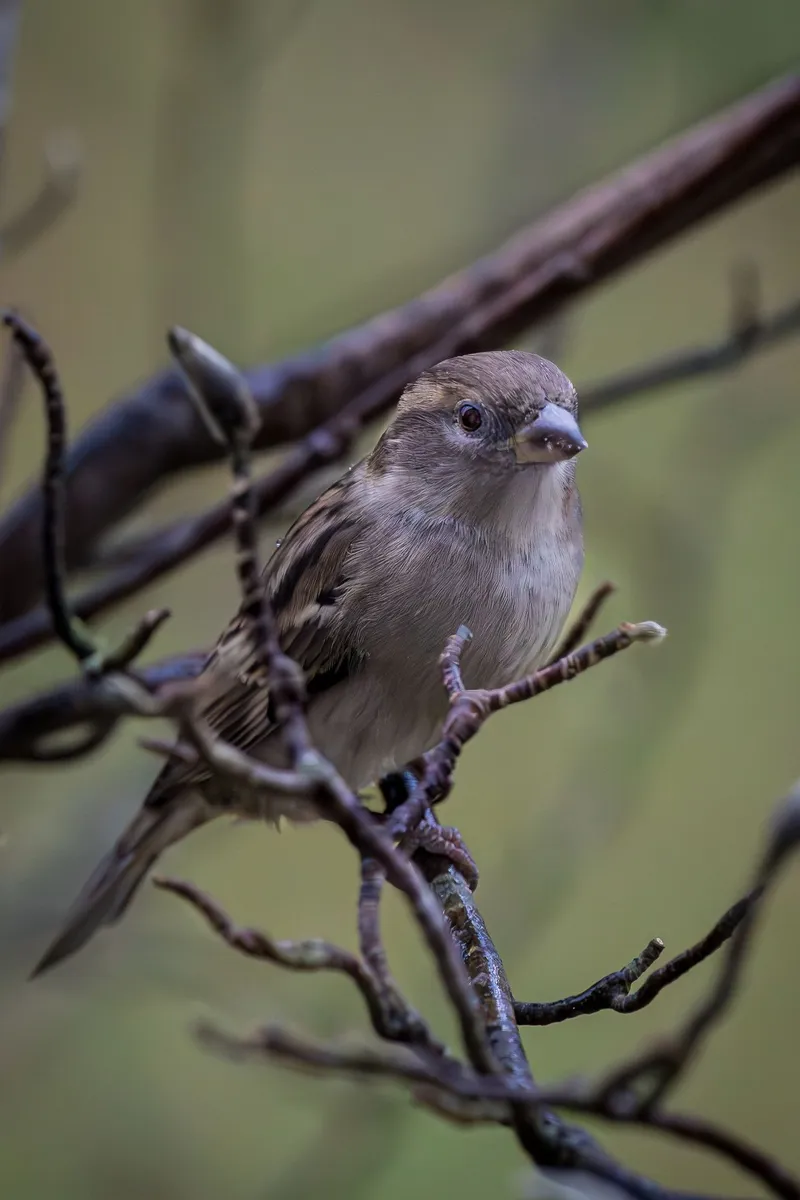
Sparrows vs Lookalikes: Birds Often Mistaken for Sparrows
Several common birds fool even experienced watchers. Run through these before settling on “sparrow.”
| Lookalike | How it differs from sparrows |
|---|---|
| House Finch | Male has rosy red on head and chest, and a heavier conical bill built for seeds |
| Purple Finch | Male is raspberry-red all over, female heavily streaked but with a bold white eyebrow and mustache stripe |
| Carolina Wren | Rich cinnamon color, bold white eyebrow, cocked-up tail, loud teakettle song |
| Eastern Towhee | Much larger, black hood, rufous sides, white belly, scratches like a Fox Sparrow but double the size |
| Brown-headed Cowbird (female) | Plain gray-brown like a female House Sparrow, but with a longer, more pointed bill and no wing bars |
When in doubt, look at the bill. Sparrows have short, thick, cone-shaped bills for cracking seeds. A thin or long bill means you are looking at a wren, warbler, or something else entirely. Our bird egg identification chart can also help you confirm a nesting pair, and the owl identification chart covers the predators that hunt small backyard birds.

Where and When to Find Sparrows
Sparrows are habitat birds: learn the habitat and you have half the ID. Salt marsh means Seaside or Savannah Sparrow. Sagebrush means Brewer’s. Wetland edges mean Swamp Sparrow. Lawns and parking lots mean House Sparrow. Timing matters too: Dark-eyed Juncos and American Tree Sparrows are winter visitors across the northern US, while Chipping and Clay-colored Sparrows dominate the summer. Keep a simple notebook of date, habitat, and the one feature you noticed; after a month the “little brown birds” start sorting themselves into species on their own.

Sparrow Identification Chart FAQ
What is the most common sparrow in the US?
The House Sparrow is by far the most common, an introduced species now found in nearly every town, farm, and city across the country. The native Song Sparrow is the most widespread wild sparrow.
How can you tell a House Sparrow from a native sparrow?
Look for the male’s gray crown, chestnut nape and black bib, or the female’s plain buffy plumage with a pale eyebrow stripe. Native sparrows like Song and Chipping Sparrows have striped or streaked heads instead of the House Sparrow’s solid patterns.
Are sparrows and finches the same?
No. Sparrows are generally smaller with streakier, browner plumage and thinner songs. Finches have heavier conical bills, and male finches often show red or yellow coloring that no US sparrow has.
Why do sparrows puff up in winter?
They trap a layer of warm air in their fluffed feathers, the same principle as a down jacket. A puffed sparrow on a cold morning is conserving heat, not sick.
What do sparrows eat?
Mostly seeds, which is why they visit feeders for millet and cracked corn, plus insects in summer, especially when feeding nestlings. A mix of millet, sunflower chips and a nearby water source draws the most species.
How long do sparrows live?
Wild sparrows typically live 2 to 5 years, though banded House Sparrows have reached 13 years. See our hawk identification chart for the raptors that are their main predators.

Conclusion
Sparrows reward the patient watcher. Start with the head pattern, confirm with the breast and bill, and let habitat and season cast the deciding vote. With the 20 species in this sparrow identification chart under your belt, the “little brown bird” on your fence will soon have a name, a story, and a place in your notebook.


Pingback: Types of Small Birds: 20 Tiny Species, Sizes and Habitats – Chart Identify