
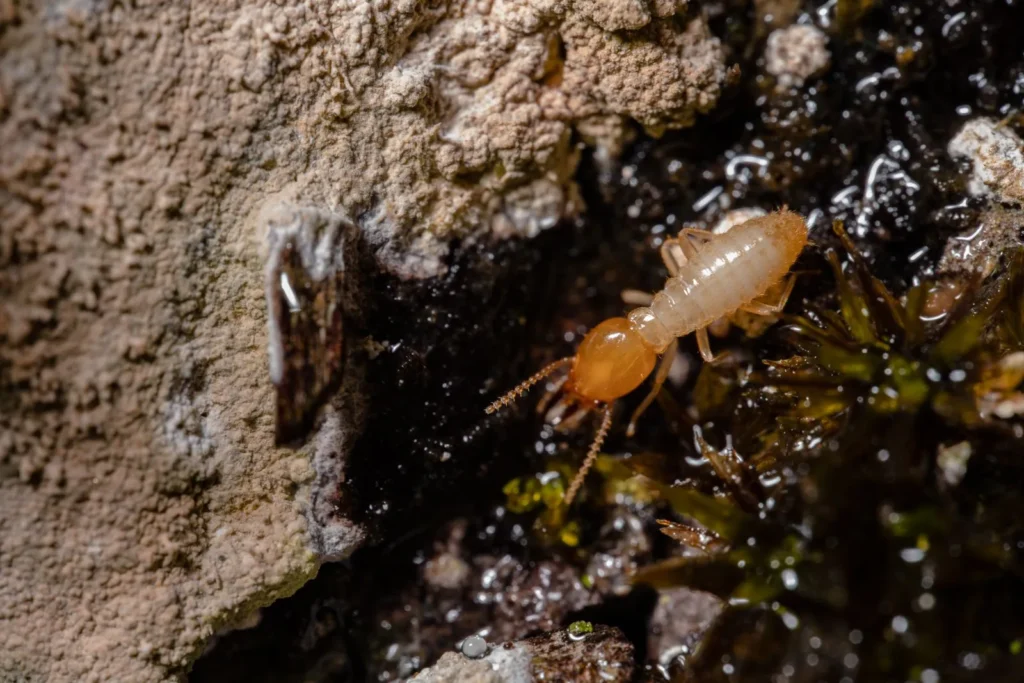
Finding chewed wood or a scatter of tiny wings on your windowsill is stressful enough without the extra question of what exactly you are looking at. A termite identification chart takes the guesswork out of that moment. Instead of wondering whether the pale insects near your baseboard are termites, ants, or something harmless, you can match what you see against real species, from the eastern subterranean termite chewing at foundations across the eastern states to the drywood termites quietly hollowing out attic beams out west. This guide walks you through twenty of the most common termites in the United States, the field marks that separate them, and a simple five-step method for naming whatever you find.
Identification matters because treatment depends on the type. Subterranean termites travel through soil and mud tubes, so control focuses on soil barriers and bait stations. Drywood termites live entirely inside the wood they eat, so treatment targets the wood itself. Dampwood termites only attack wet, decaying wood, so fixing the moisture problem often solves the infestation. Name the termite first, and every decision after that gets easier.

Termite Identification Chart: 20 Common US Species
The chart below covers the twenty termites you are most likely to run into in the United States. Sizes refer to workers unless noted. Damage risk is rated for homes and wooden structures, not for forests or grassland, where many of these species are harmless decomposers.
| Species | Size | Key Field Marks | Castes | Range and Habitat | Damage Risk |
|---|---|---|---|---|---|
| Eastern Subterranean Termite Reticulitermes flavipes |
Workers 1/4 in (6 mm); soldiers 1/3 in | Creamy-white soft bodies; soldiers have long rectangular heads with dark jaws; swarmers dark brown to black | Workers, soldiers, swarmers; colonies reach several million | Eastern US, from Texas and Florida to Maine; wood touching soil | High |
| Dark Southern Subterranean Termite Reticulitermes virginicus |
Workers 1/4 in; soldiers about 3/16 in | Soldiers’ heads darker brown than the eastern subterranean; swarmers dark brown with pale wings | Workers, soldiers, swarmers; smaller colonies than R. flavipes | Southeastern US; soil and wood in contact with soil | High |
| Light Southern Subterranean Termite Reticulitermes hageni |
Workers under 1/4 in | Smaller and paler than its southern relatives; soldiers with pale rectangular heads | Workers, soldiers, swarmers; modest colonies of a few hundred thousand | Southeastern and south-central US; soil contact wood | Moderate to high |
| Western Subterranean Termite Reticulitermes hesperus |
Workers 1/4 to 3/8 in | Creamy workers; soldiers with rectangular heads and dark mandibles; swarmers dark brown | Workers, soldiers, swarmers; colonies in the millions | Pacific coast states and inland West; soil contact wood | High |
| Arid-Land Subterranean Termite Reticulitermes tibialis |
Workers 1/4 in | Pale workers; swarmers dark brown with clear wings; mud tubes built in dry soil | Workers, soldiers, swarmers; colonies up to a few million | Great Plains and western US; dry soils, wood touching ground | High |
| Formosan Subterranean Termite Coptotermes formosanus |
Workers 1/8 to 1/4 in; soldiers about 1/2 in | Soldiers have oval, teardrop-shaped heads with a pore on the forehead; swarmers yellowish-brown, about 1/2 in with wings | Workers, soldiers, swarmers; colonies up to 10 million; aggressive foragers | Gulf Coast, Southeast, Hawaii, southern California; soil, wood, even high-rise buildings | Severe |
| Asian Subterranean Termite Coptotermes gestroi |
Similar to Formosan, slightly smaller | Nearly identical to Formosan termites to the naked eye; definitive ID needs a microscope | Workers, soldiers, swarmers; colonies in the millions | Florida (spreading), Hawaii; tropical and subtropical areas | Severe |
| Desert Subterranean Termite Heterotermes aureus |
Workers about 1/5 in | Small pale workers; soldiers with rectangular heads; builds mud tubes on desert plants and wood | Workers, soldiers, swarmers; colonies under a million | Arizona and southern California deserts; dry desert soils | Moderate |
| Western Drywood Termite Paraneotermes simplicicornis |
Soldiers about 1/2 in | Soldiers’ heads look like a dark reddish wooden plug; swarmers reddish-brown, about 1/2 in | Workers, plug-headed soldiers, swarmers; small colonies of a few thousand; no soil contact needed | California, Arizona, western US; dry wood, attics, furniture | Moderate |
| Light Western Drywood Termite Marginitermes hubbardi |
Smaller than western drywood | Paler swarmers; soldiers smaller with lighter-colored heads | Workers, soldiers, swarmers; small colonies in dry wood | Arizona and southern California; dry structural wood | Moderate |
| Southeastern Drywood Termite Incisitermes snyderi |
Swarmers about 1/2 in | Pale brown swarmers with clear wings; leaves six-sided frass pellets | Workers, soldiers, swarmers; small colonies | Florida and Gulf Coast; dry wood, attics, furniture | Moderate |
| Light Southeastern Drywood Termite Kalotermes approximatus |
Swarmers about 3/8 in | Smaller and paler than I. snyderi; hexagonal frass pellets | Workers, soldiers, swarmers; small colonies | Florida and coastal Southeast; dry wood structures | Moderate |
| West Indian Drywood Termite Cryptotermes brevis |
Soldiers about 1/5 in | Tiny dark plug-shaped soldier heads; very fine powdery frass | Workers, soldiers, swarmers; small, slow-spreading colonies | Florida, Hawaii, Gulf Coast; seasoned dry wood, furniture | Moderate |
| Florida Dampwood Termite Neotermes castaneus |
Soldiers up to 3/4 in; swarmers up to 1 in | Big robust soldiers with dark reddish heads; one of the largest termites in the Southeast | Workers, large soldiers, swarmers; medium colonies in wet wood | Florida; damp, decaying wood | Low to moderate (needs wet wood) |
| Pacific Dampwood Termite Zootermopsis angusticollis |
Swarmers up to 1 in; the largest US termite | Unmistakable size; soldiers up to 3/4 in with massive mandibles | Workers, soldiers, swarmers; colonies in damp logs, no soil contact | Pacific coast; wet logs, stumps, decaying wood | Low (decaying wood only) |
| Nevada Dampwood Termite Zootermopsis nevadensis |
Slightly smaller than Pacific dampwood | Similar giant build; found at higher elevations and drier sites | Workers, soldiers, swarmers; colonies in dead logs | Western US mountains; dead and decaying logs | Low |
| Conehead Termite Nasutitermes corniger |
Workers 1/4 in | Soldiers with cone or snout-shaped heads that squirt defensive fluid; workers dark brown, not pale | Workers, snouted soldiers, swarmers; large colonies with above-ground nests | Southern Florida (invasive); trees, structures, grassland | High |
| Desert Tube-Building Termite Gnathamitermes tubiformans |
Workers 1/4 in | Builds freestanding mud tubes on the soil surface; soldiers with long curved mandibles | Workers, soldiers, swarmers; desert grassland colonies | Texas, Oklahoma, New Mexico; desert grasslands | Low (rarely attacks structures) |
| Wheeler’s Desert Termite Amitermes wheeleri |
Workers about 1/5 in | Grass-feeding species; builds small mud workings on grasses and surface litter | Workers, soldiers, swarmers; colonies in desert soil | Texas and Southwest deserts; grasslands | Low |
| Florida Keys Drywood Termite Incisitermes schwarzi |
Swarmers about 3/8 in | Small pale swarmers; lives in dry coastal wood and driftwood | Workers, soldiers, swarmers; small colonies | Florida Keys and southern Florida; dry coastal wood | Low to moderate |
Three names on this chart cause the overwhelming majority of US structural damage: the eastern subterranean termite across the East, the western subterranean termite along the Pacific, and the Formosan subterranean termite along the Gulf Coast. If you find termites in or under your home, odds are strong it is one of those three. The rest matter too, especially drywood termites in attics and furniture, but start your search with the big three.

The 5-Step Termite ID Method
You do not need a microscope or an entomology degree to put a name on a termite. Work through these five steps in order, and most specimens land in the right group.
Step 1: Check the waist. Look at the insect from the side. Termites are the same width from head to rear, with no pinched waist. Ants have a narrow, pinched waist between the thorax and abdomen. This single trait settles the termite-versus-ant question in most cases.
Step 2: Check the antennae. Termite antennae are straight and bead-like, like a string of tiny pearls. Ant antennae bend sharply at an elbow. If the antennae zigzag, you are looking at an ant.
Step 3: Check the wings, if it has them. Flying termites, called alates or swarmers, carry two pairs of wings that are all the same length, noticeably longer than the body, and shed easily. You will often find the discarded wings before you find the insect. Flying ants have front wings clearly larger than their hind wings.
Step 4: Identify the caste. Pale, wingless, soft-bodied workers are the most numerous and the hardest to identify to species, so look for soldiers. Rectangular dark heads point to subterranean Reticulitermes species. Oval, teardrop heads with a forehead pore mean Formosan or Asian subterranean termites. Plug-shaped heads that look like a wooden stopper mean drywood termites. Snout-shaped heads that squirt liquid mean coneheads.
Step 5: Read the signs around the insect. Mud tubes climbing a foundation wall mean subterranean termites. Tiny six-sided pellets piled below a small hole mean drywood termites. Termites inside soggy, rotting wood with no tubes and no pellets mean dampwood termites. The evidence around the insect often identifies it faster than the insect itself.
Termite vs Ant: How to Tell Them Apart
This is the most common identification mistake in American homes. A swarm of flying ants pouring out of a wall crack looks alarming, but ants do not eat houses the way termites do. Before you panic, run through this comparison. If you decide the insect is an ant after all, our ant identification chart will help you name that species instead.
| Feature | Termite | Ant |
|---|---|---|
| Waist | Broad, uniform width from head to rear; no pinch | Narrow, pinched waist between thorax and abdomen |
| Antennae | Straight, bead-like | Elbowed, with a sharp bend |
| Wings (swarmers) | Two pairs, all equal in length, longer than the body | Front pair clearly larger than the hind pair |
| Body texture | Soft, pale, almost translucent | Hard, often dark or reddish, with a defined exoskeleton |
| Eyes | Workers and soldiers have none or tiny underdeveloped eyes | All ants have compound eyes |
| Signs left behind | Mud tubes, shed wings of equal size, six-sided frass pellets | Sawdust-like frass with insect parts, visible trails, mounds |
One more practical test: termite wings tear off with almost no effort, so a pile of loose, equal-sized wings on a windowsill with no insects attached is a classic termite signature. Ants hold onto their wings more stubbornly and their shed wings come in two sizes.
Indoor Signs vs Outdoor Signs
Where you find the evidence tells you as much as the evidence itself. Termites behave differently inside a house than they do in the yard, and each setting has its own checklist.
Signs Inside Your Home
Start with the quiet places: basements, crawl spaces, the backs of closets, and the framing around windows and doors. Look for pencil-thin mud tubes running up foundation walls or across concrete; subterranean termites build these as protected highways between soil and wood. Tap wooden baseboards, door frames, and floorboards with a screwdriver handle and listen for a hollow sound, which means the inside has been eaten away. Blistering or bubbling paint can mean termites feeding just under the surface. Small piles of what looks like sawdust under a tiny hole in wood are drywood termite frass, and the pellets have six distinct sides if you look closely. Note that powderpost beetles also leave frass, so if the pellets look like fine powder rather than six-sided grains, check our beetle identification chart to rule beetles out. Finally, discarded wings on windowsills or near light fixtures in spring signal a recent swarm inside the structure.
Signs Outside Your Home
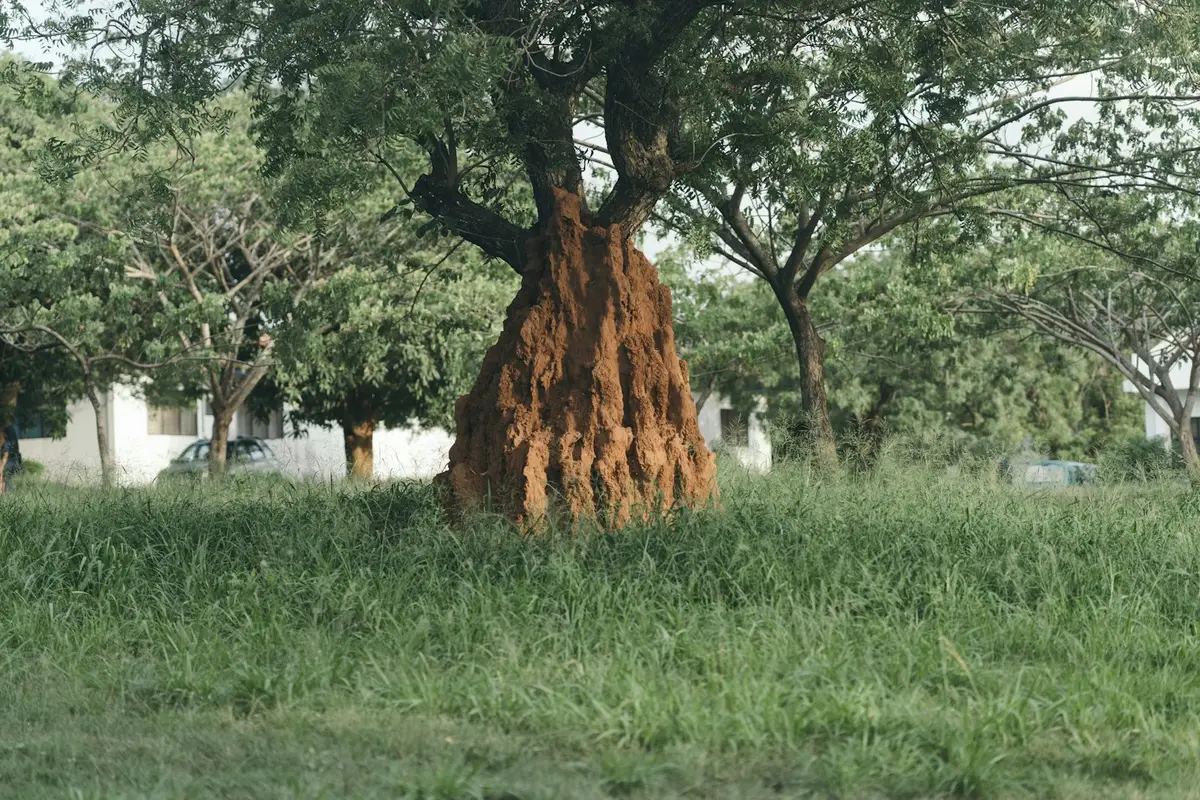
Walk the perimeter and look where wood meets soil: fence posts, deck supports, firewood stacks, and mulch beds piled against siding. Mud tubes on the outside of the foundation are the classic outdoor sign of subterranean termites, and they often reappear in the same spots year after year. Rotting stumps, fallen logs, and dead tree limbs near the house can host dampwood termites or serve as a bridge for subterranean colonies moving toward the structure. In the desert Southwest, freestanding mud tubes snaking across bare soil point to desert tube-building termites, which rarely threaten homes but are worth knowing. After heavy spring rain, watch for swarmers emerging from soil or woodpiles at dusk; noting exactly where they emerge tells a pest professional where the colony lives.

Termite Identification FAQ
How do I know if I have termites or flying ants?
Check three things: waist, antennae, and wings. Termites have a broad waist, straight bead-like antennae, and two pairs of equal-length wings. Ants have a pinched waist, elbowed antennae, and front wings larger than the hind wings. A pile of loose, equal-sized wings on a windowsill is almost always termites.
What do termite droppings look like?
Drywood termite droppings, called frass, look like tiny six-sided pellets, often in small piles beneath a pinhead-sized hole in the wood. The color matches the wood being eaten, from light tan to dark brown. Subterranean termites do not leave visible droppings; they use their waste to build mud tubes instead.
Do termites bite people or pets?
No. Termites eat cellulose, which means wood, paper, and plant material. Soldiers can give a mild pinch with their mandibles if handled, but termites do not seek out people or animals and pose no venom or disease risk. The damage they do is to structures, not skin.
Can I identify termites from just a photo of wings?
Often, yes. Shed wings that are all the same size, about as long as the insect’s body was, and nearly transparent with few veins point to termites. If the wings come in two clearly different sizes, with larger front wings, the insect was an ant. A clear photo of the wings next to a coin for scale is usually enough for a pest professional to confirm.
What should I do first if I find termites?
Do not disturb them more than necessary. Breaking open mud tubes or spraying household insecticide scatters the colony and makes professional treatment harder. Take clear photos, note exactly where you found the insects or signs, and call a licensed pest control company for an inspection. Identification guides like this one help you understand what you are dealing with, but treatment planning belongs to a professional.
Are the big termites more dangerous than the small ones?
Not necessarily. The Pacific dampwood termite is the largest termite in the US and barely threatens homes, because it only eats already-rotting wood. The Formosan subterranean termite is smaller but far more destructive, with colonies of up to ten million workers. Judge the threat by species and behavior, not by size.

Conclusion
Termite identification comes down to a short list of observable facts: the width of the waist, the shape of the antennae, the size of the wings, the shape of the soldier’s head, and the signs left in the wood and soil. With those five clues and the twenty-species chart above, you can put a name on almost any termite you encounter in the United States, and that name tells you how urgent the problem is and what kind of professional help to seek. Keep this chart bookmarked, check the quiet corners of your home each spring, and you will catch the next colony long before it catches you off guard.



Pingback: Types of Flying Ants: 20 Species, Sizes and Identification – Chart Identify