
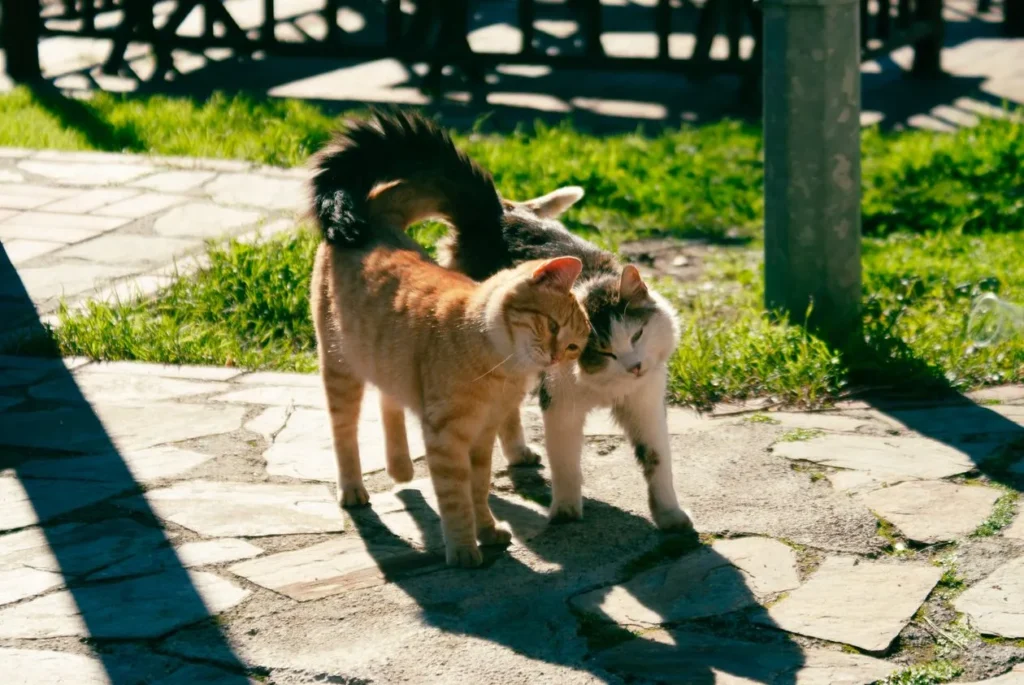
Your cat stared at you for a full minute, blinked once, then sprinted down the hallway for no reason at all. If you have ever wondered what any of that means, this cat behavior chart is your decoder ring. Cats are some of the most expressive animals in the house; they just speak in tails, ears, whiskers, and 3 a.m. zoomies instead of words.
Below you will find a complete reference: charts mapping tail positions, ear positions, sounds, and body postures to what they mean and how to respond. Then we cover the affectionate signals, the warning signs, the weird-but-normal habits, and the red flags that mean a vet visit.
Cat Behavior Chart: Tail Positions
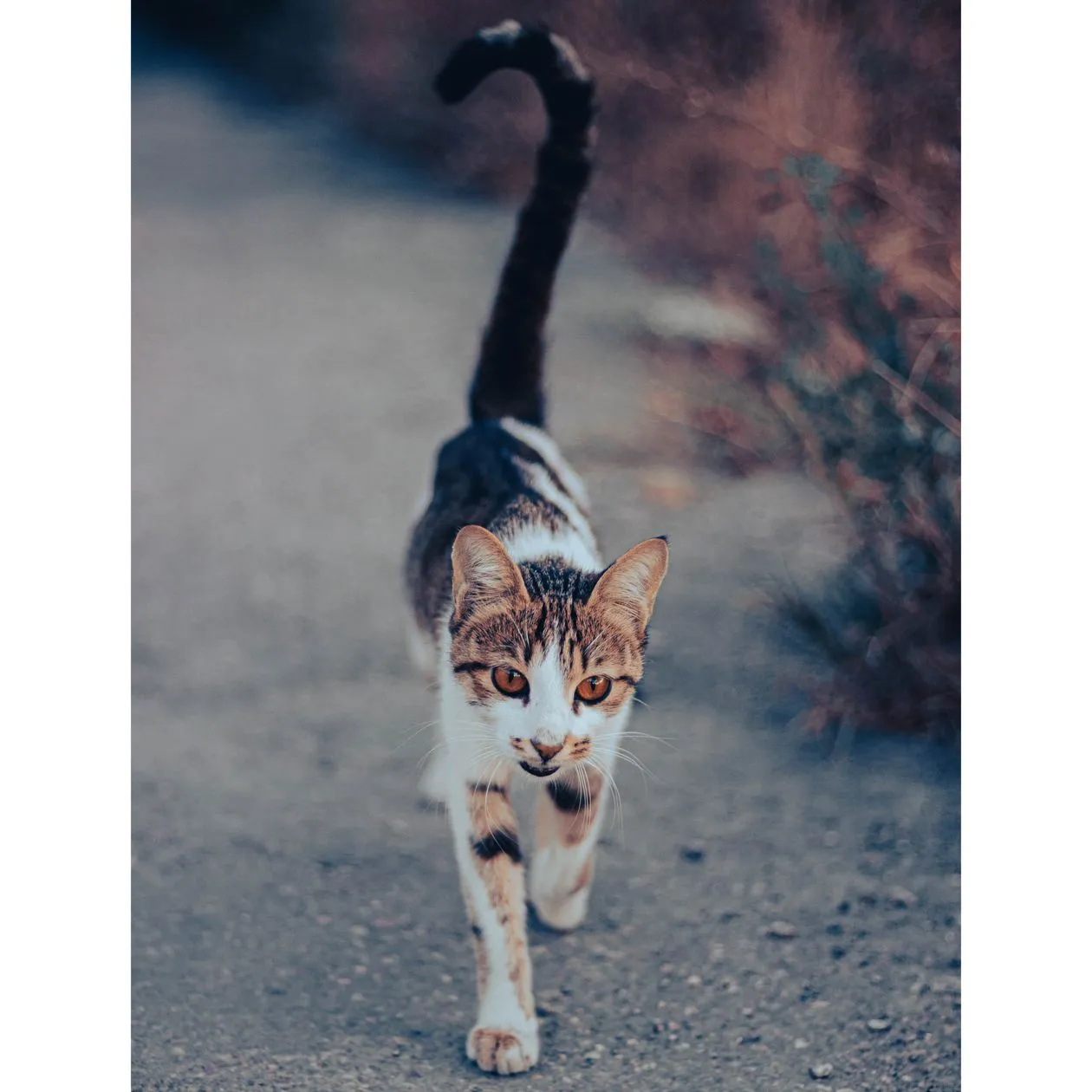
The tail is the most honest part of a cat, basically a mood meter with fur on it. A high tail means confidence; a low, tucked tail means the opposite. Here is the full breakdown:
| Tail Position | What It Looks Like | What It Means | How to Respond |
|---|---|---|---|
| Straight up | Held vertically, tip may curl | Happy, confident, friendly greeting | Say hello, offer a hand to sniff |
| Question mark curve | Up with the tip hooked over | Playful, curious, wants interaction | Grab a toy and play |
| Relaxed and low | Hanging loosely behind the body | Calm, neutral | No action needed |
| Puffed up | Thick, doubled in width | Frightened or defensively aggressive | Give space, remove the threat |
| Tucked between legs | Pressed tight to the belly | Fearful, anxious | Speak softly, do not reach for them |
| Lashing side to side | Fast, wide swings | Irritated, overstimulated, warning | Stop petting, back off before a swat |
| Gentle tip twitch | Only the tip flicking | Focused, mildly excited, hunting mode | Fine to watch; expect a pounce on a toy |
| Wrapped around you | Draped around your arm or leg | Affection, a cat “hug” | Enjoy it |
Cat Behavior Chart: Ears, Eyes, and Body
The tail shows the mood; the ears, eyes, and posture tell the story. Read all three together for the full picture.
| Signal | What It Looks Like | What It Means | How to Respond |
|---|---|---|---|
| Ears forward | Upright, facing forward | Alert, curious, friendly | Good time for play or treats |
| Ears slightly back | Tilted back a few degrees | Uneasy, assessing | Keep your distance, stay calm |
| Ears flat | Pressed flat to the head | Scared or defensive | Do not touch; give an escape route |
| Slow blink | Eyes closing and opening slowly | Trust, affection | Slow blink back |
| Dilated pupils | Large round pupils in daylight | Arousal: fear, excitement, or play | Check context; if scared, back away |
| Hard stare | Unblinking fixed gaze | Challenge or intense focus | Do not stare back; look away calmly |
| Arched back | Back rounded up, fur on end | Threatened, trying to look bigger | Remove the trigger, do not scold |
| Belly exposed | Rolling over, showing the stomach | Trust, usually NOT an invitation to rub | Admire, do not touch unless invited |
Cat Behavior Chart: Sounds
Adult cats mostly meow at humans, not at each other; they learned long ago that meowing gets a response. A sudden change in how much or how loudly your cat vocalizes is always worth noticing.
| Sound | What It Sounds Like | What It Means | How to Respond |
|---|---|---|---|
| Meow | Classic “meow,” varies in pitch | Request: food, attention, door, greeting | Check food, water, litter; give attention |
| Purr | Low continuous rumble | Contentment, but also self-soothing when hurt | If relaxed, enjoy it; if off food, watch closely |
| Trill / chirp | Rolled “brrrt” | Friendly greeting, invitation to follow | Follow them; they are showing you something |
| Chatter | Teeth-clicking at a window | Frustrated hunting instinct | Offer an interactive toy |
| Hiss | Sharp “tsss” of air | Fear or warning: “back off” | Give space immediately, no punishment |
| Growl | Low sustained rumble | Serious warning, feeling cornered | Retreat; remove the stressor |
| Yowl | Long drawn-out “owww” | Distress, pain, or disorientation | Check on them; persistent yowling means vet |

Affectionate Behaviors: How Cats Say “I Love You”
Kneading
Kneading goes back to kittenhood, when kittens knead their mother to stimulate milk flow. An adult cat kneading your lap or a blanket is reliving a moment of comfort. It means they feel safe with you. Trim their nails so the love does not draw blood.

Head Bunting
Head bunting marks you with facial scent glands and shows affection at the same time. You are being claimed as family. Behaviorists read this as one of the strongest trust signals a cat offers.
The Slow Blink
A slow blink is a cat kiss. Closing the eyes around another animal is a vulnerability in the wild, so a cat that slow blinks at you trusts you completely. Studies show cats respond well when humans slow blink back. Try it: hold their gaze, close your eyes slowly, open them.

Following You Room to Room
If your cat shadows you from the kitchen to the bathroom, congratulations, you have a companion cat. Most cats that follow their people are simply bonded and curious. It mellows with age (see our cat human age chart for how your cat’s age translates).
Warning Signals: Back Off Before Things Escalate
Cats almost always warn before they bite. The problem is that humans miss the warnings. Learn this ladder: tail lashing, ears rotating back, pupils dilating, body tensing, then a growl, a hiss, a swat. The bite is what happens when every warning was ignored.
If the tail tip starts twitching faster, the skin ripples along the back, or the ears shift sideways while you pet, stop immediately. Most “love bites” are petting-induced overstimulation. Hissing deserves special respect: it is pure fear, not meanness. Never punish a hissing cat; remove whatever is scaring them and let them retreat somewhere quiet.

Weird but Completely Normal Behaviors
The Zoomies
Those 3 a.m. sprints have a name: Frenetic Random Activity Periods. They are a normal energy release, especially in young cats. A solid play session before bed usually reduces the midnight marathon. If zoomies suddenly start in a senior cat, mention it to your vet (see our cat lifespan chart).
Scratching Furniture
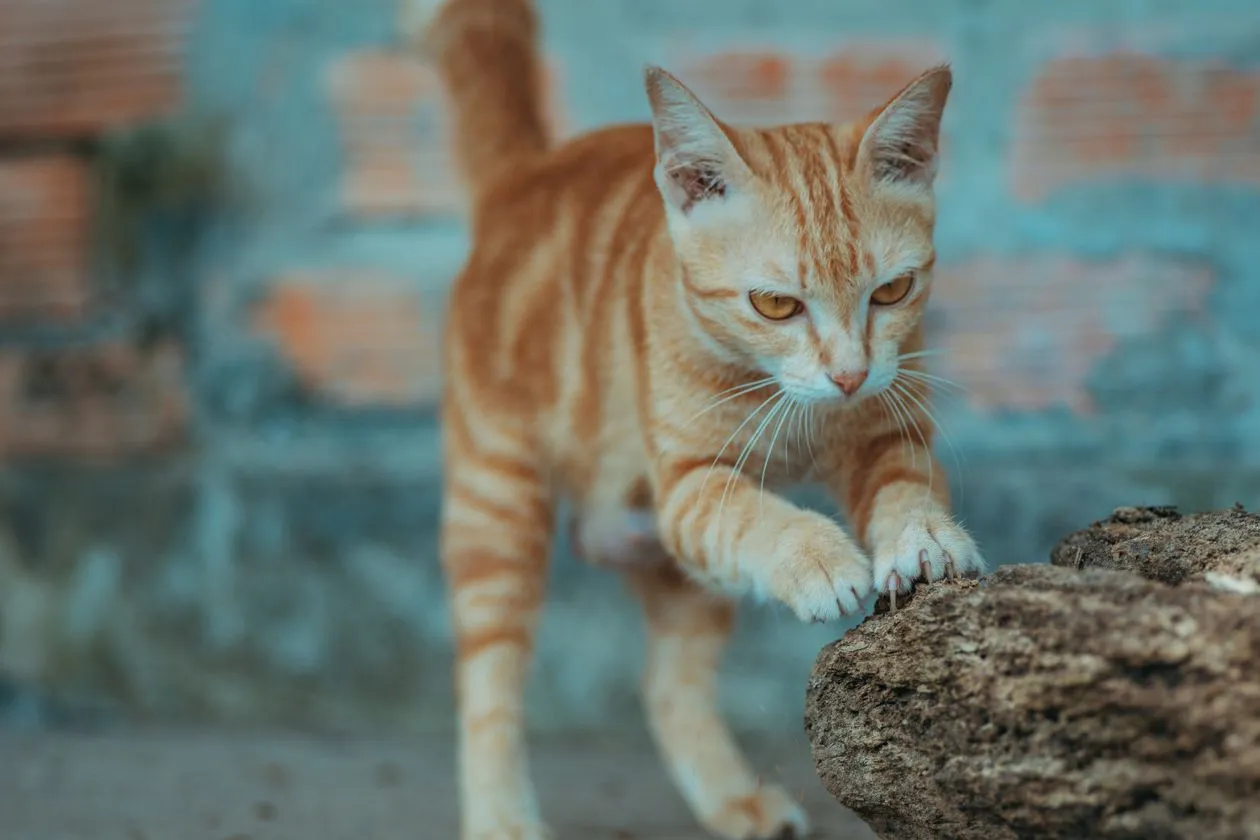
Scratching is not misbehavior. Cats scratch to shed the outer sheath of their claws, stretch, and leave scent marks. The fix is placement, not punishment: put a tall scratching post next to the scratched furniture and make it attractive with catnip.
Knocking Things Off Tables
Cats test gravity, they test your reaction, and honestly, watching things fall is entertainment. Secure breakables, provide puzzle feeders and window perches, and accept that your cat will always find one more object to audit.
Sitting in Boxes
Enclosed spaces reduce stress in cats; shelter studies show cats with hiding boxes adapt to new environments faster. Give your cat a box and you are giving them a security blanket.

Litter Box Behaviors
The litter box is a health dashboard. Cats are private about elimination, so changes here often appear before any other symptom. A cat that suddenly avoids the box, strains, cries out, or visits far more often may have a urinary infection, constipation, or stress.
Normal digging and burying is instinct. Going right next to the box often means the box itself is the issue: cats generally want one box per cat plus one extra, scooped daily, in a quiet spot.
Behaviors That Mean a Vet Visit
Cats hide illness instinctively, so behavior is often the only early warning. Call your vet if you notice:
- Sudden hiding or withdrawal in a normally social cat, lasting more than a day.
- Appetite changes: skipping meals, or ravenous hunger with weight loss.
- Lethargy: a normally active cat that stops playing.
- Litter box changes: straining, crying, blood, or going outside the box.
- Overgrooming: licking one spot bald, which can mean stress, allergies, or pain.
- New nighttime yowling in a senior cat: can signal thyroid disease or cognitive decline.
- Sudden aggression: a sweet cat that starts biting may be in pain. Dental pain is a common hidden cause (see our cat teeth chart).
- Drinking much more water than usual: a classic early sign of kidney disease or diabetes.
When in doubt, call. Vets would far rather hear “false alarm, she is fine” than see a cat that suffered silently for weeks.
Quick Reference: How to Respond
- Tail up, ears forward: happy to see you. Greet them, play, offer a treat.
- Slow blink: blink back slowly. You just had a conversation.
- Kneading on your lap: sit still, enjoy it, trim those nails later.
- Head bunt: gentle head scratch in return. You have been marked as family.
- Chattering at the window: they want to hunt. Break out the feather wand.
- Tail lashing during petting: stop petting now. Session over.
- Hissing: back away, remove the stressor, never punish.
- Scratching the couch: add a post nearby, redirect, reward the post.
- Zoomies at midnight: play hard before bed tomorrow.
- Meowing at the door: check food, water, litter first. Some breeds are simply more talkative (see our cat breed size chart).

FAQs About Cat Behavior
Why does my cat bite after being petted nicely?
This is petting-induced overstimulation. Most cats enjoy a few strokes, then the sensation becomes irritating. Watch for tail twitching, skin rippling, or ears rotating, and stop at the first sign. Shorter, more frequent petting sessions work better than long ones.
Why does my cat knead blankets and my lap?
Kneading is a leftover nursing behavior from kittenhood, tied to comfort and contentment. Paw pads also carry scent glands, so it doubles as marking. It is a compliment, not a problem. Keep a thick blanket handy to protect your legs.
Is it normal for cats to be active at night?
Yes. Cats are crepuscular, most active at dawn and dusk, the prime hunting hours of their wild ancestors. An energetic play session followed by an evening meal mimics the hunt-eat-groom-sleep cycle and calms the night down.
What does a puffed-up tail mean?
A bottle-brush tail means your cat is frightened or feels threatened and is trying to look bigger. Give the cat space and remove the cause of the fear if you can. Once the threat passes, the tail deflates within minutes.
Why does my cat stare at me?
Usually affection or curiosity: a soft stare with slow blinks means your cat feels bonded to you. Sometimes they are reading your routine, waiting for the signal that means food or play. A hard, unblinking stare with a tense body is different, that is a warning. Ears and tail tell you which one it is.
Conclusion
Once you know the vocabulary, your cat has been talking to you all along. The tail gives you the mood, the ears give you the attitude, the eyes give you the intensity, and the sounds give you the request. Respond to the message instead of the behavior, and you will get the slow blinks, head bunts, and lap naps that mean you finally speak fluent cat.

Pingback: Cat Poop Color Chart: What Each Color Means (Vet-Backed Guide) – Chart Identify
Pingback: Cat Body Language Chart: What Your Cat Is Saying – Chart Identify