
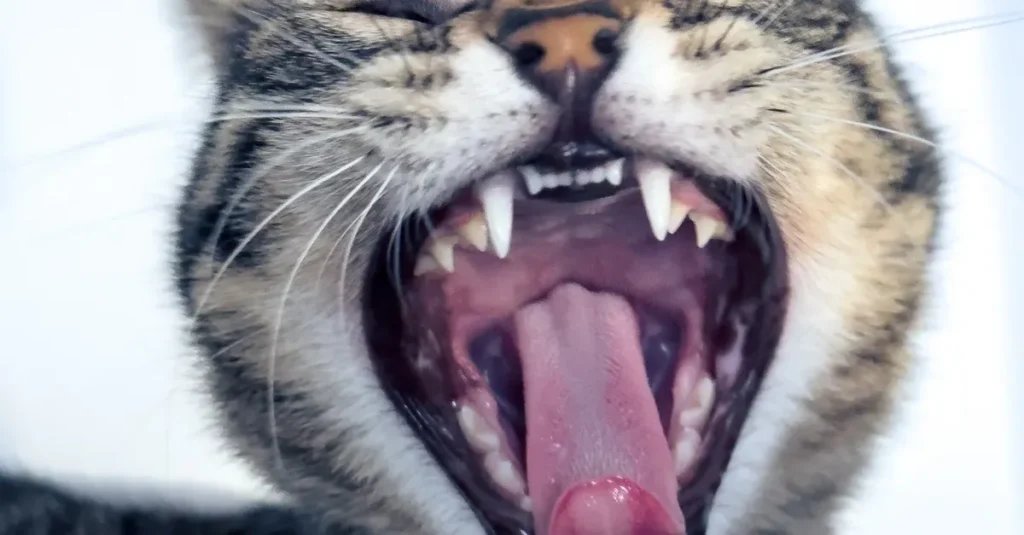
Most cat owners can tell you their cat's favorite food, favorite napping spot, and least favorite houseguest, but ask how many teeth are in that little mouth and you will usually get a shrug. This cat teeth chart answers that question completely, tracking your cat's teeth from the toothless newborn weeks through the full adult set of 30, with eruption timelines, the official feline dental formula, and the warning signs that mean a vet visit is due.
Cat Teeth Chart by Age
Bookmark this table. It covers the entire feline dental journey in one place, from birth to the senior years.
| Age | Baby Teeth | Adult Teeth | What Is Happening |
|---|---|---|---|
| 0 to 2 weeks | 0 | 0 | Kittens are born toothless; gums are smooth and pink. |
| 2 to 4 weeks | 12 incisors erupt | 0 | Tiny needle-like front teeth appear; first nibbling behavior. |
| 3 to 4 weeks | Canines erupt | 0 | The four pointed baby "fangs" come in. |
| 4 to 6 weeks | Premolars erupt | 0 | Back baby teeth arrive; kittens start showing interest in solid food. |
| 6 to 8 weeks | Full set of 26 | 0 | All baby teeth are in; weaning is well underway. |
| 3 to 4 months | Teeth start falling out | Incisors erupt | You may find tiny teeth on the floor; this is normal. |
| 4 to 5 months | Mostly gone | Canines erupt | Peak teething: chewing, drooling, mild grumpiness. |
| 4 to 6 months | Gone | Premolars and molars erupt | The back teeth arrive; appetite may dip for a few days. |
| 6 to 7 months | 0 | Full set of 30 | Adult dentition complete; a good time to start toothbrushing. |
| 1 to 2 years | 0 | 30 | Teeth are white and sharp; slight tartar may appear on upper back teeth. |
| 3 to 5 years | 0 | 30 | Yellow tartar builds on molars; early gum redness is common. |
| 5 to 10 years | 0 | 30 (or fewer) | Wear, staining, and gum recession progress; dental cleanings often needed. |
| 10+ years | 0 | Often fewer than 30 | Missing or worn teeth are common; vet dental exams become essential. |

How Many Teeth Do Cats Have?
The short answer: kittens have 26 baby teeth and adult cats have 30 permanent teeth. That gives cats two full sets of teeth in one lifetime, just like humans. Here is how the numbers break down by tooth type.
| Tooth Type | Baby Teeth | Adult Teeth | Job |
|---|---|---|---|
| Incisors | 12 | 12 | Small front teeth for nibbling, grooming, and picking up food. |
| Canines | 4 | 4 | Long pointed fangs for gripping; the most visible teeth. |
| Premolars | 10 | 10 | Sharp-edged side teeth for shearing meat. |
| Molars | 0 | 4 | Flat back teeth for crushing; only in the adult set. |
| Total | 26 | 30 |
Notice what is missing from the baby set: molars. Kittens do all their early chewing with premolars, and the four molars only arrive with the adult teeth at around 4 to 6 months.

Kitten Teething Timeline: What to Expect
Teething kittens are easy to spot once you know the signs: extra chewing, mild drooling, pawing at the mouth, and a sudden interest in gnawing your fingers. The process happens in two phases.
Phase 1 covers the baby teeth, from 2 to 8 weeks. This phase is mostly uneventful because it happens while the kitten is still nursing. You might notice the mother cat becoming reluctant to nurse around week 4 or 5, and those new needle teeth are exactly why. Soft kitten food can be introduced as the premolars come in.

Phase 2 covers the adult teeth, from 3 to 6 months, and this is the phase owners actually witness. Baby teeth loosen and fall out, sometimes swallowed unnoticed and sometimes found on the floor or in a food bowl. Mild bleeding from the gums, drooling, and a few days of picky eating are all normal. Offer soft food and safe chew toys, and skip hard treats until the new teeth are fully in.

One thing worth watching: retained baby teeth. If you see two teeth, a baby and an adult, occupying the same spot, especially a canine, mention it at the next vet visit. Retained teeth trap food and push adult teeth out of alignment, and they usually need professional removal.
Cat Dental Formula Explained
Vets use a shorthand called the dental formula to record a cat's teeth. It lists, for one side of the mouth, how many of each tooth type sit in the upper jaw (top number) and lower jaw (bottom number).
Kitten formula: 2 x (i 3/3, c 1/1, p 3/2) = 26
Adult formula: 2 x (I 3/3, C 1/1, P 3/2, M 1/1) = 30
In plain English, the adult formula says: on each side, top and bottom, a cat has 3 incisors, 1 canine, 3 upper and 2 lower premolars, and 1 upper and 1 lower molar. Double it for both sides and you get 30. You do not need to memorize this, but recognizing it helps when your vet's notes mention a specific tooth.

How Vets Estimate a Cat's Age From Its Teeth
Teeth are one of the most reliable ways to estimate the age of a kitten or young cat, and shelters use this method every day. The logic is simple: teeth erupt on a predictable schedule, so the mouth reveals the age.
- No teeth at all: under 2 weeks old
- Only tiny incisors: 2 to 4 weeks
- Canines visible: 3 to 4 weeks
- All 26 baby teeth present: 6 to 8 weeks
- Missing teeth, or double teeth (baby plus adult): 3 to 6 months
- Full clean set of 30 with no tartar: 6 months to 2 years
- Yellow tartar on back teeth: usually 3 years or older
- Heavy wear, staining, or missing teeth: senior, often 10 or older
The method gets less precise after age 3, since diet and dental care affect tartar buildup more than birthdays do. If you adopted a stray and want a second opinion on age, our cat human age chart converts whatever age your vet estimates into human years.

7 Warning Signs of Dental Problems in Cats
Dental disease is one of the most common health problems in cats, and cats are experts at hiding pain. By the time most owners notice something, the problem has been building for months. Watch for these signs.
| Sign | What It May Mean | How Urgent |
|---|---|---|
| Bad breath that will not go away | Tartar buildup, gum infection | Schedule a dental check soon |
| Drooling more than usual | Mouth pain, sore gums, possibly a damaged tooth | Vet visit within days |
| Pawing at the mouth or face | Tooth pain, a stuck object, or a loose tooth | Vet visit within days |
| Dropping food or chewing on one side | Painful tooth on the avoided side | Vet visit within days |
| Red or bleeding gums | Gingivitis or advanced gum disease | Schedule a dental check soon |
| Sudden disinterest in dry food | Chewing hurts; the cat switches to soft food | Vet visit within days |
| Weight loss with no diet change | Chronic mouth pain reducing food intake | Vet visit promptly |
Tooth resorption deserves a special mention. It is a painful condition where the tooth structure slowly breaks down, it is especially common in cats, and it often hides below the gum line where only a dental X-ray can find it. This is one reason vets recommend professional dental exams even for cats that seem fine.

How to Keep Your Cat's Teeth Healthy
Good dental care at home does not need to be complicated. Four habits cover almost everything.
Brush if you can. Daily brushing with a cat-safe toothbrush and enzymatic cat toothpaste (never human toothpaste) is the single most effective thing you can do. Start slowly: let the cat taste the toothpaste for a few days, then brush a few teeth at a time, building up to the full mouth.
Feed with teeth in mind. Dental-formula kibble and dental treats help scrape plaque as the cat chews, and they work best as a supplement to brushing rather than a replacement. Crunchy food alone will not keep teeth clean, despite the old myth.
Offer the right chew toys. Soft rubber toys marketed for dental health can help, especially for teething kittens. Avoid very hard toys and bones, which can crack the long canine teeth.
Keep up with vet dental care. Most vets recommend a dental check at every annual visit and a professional cleaning under anesthesia when tartar builds up. Anesthesia sounds scary, but it is what allows a thorough cleaning below the gum line, where most dental disease lives.

Frequently Asked Questions
How many teeth do adult cats have?
Adult cats have 30 permanent teeth: 12 incisors, 4 canines, 10 premolars, and 4 molars. The full set is usually complete by 6 to 7 months of age.

When do kittens lose their baby teeth?
Kittens start losing baby teeth at around 3 to 4 months, and the process is usually finished by 6 months. Finding tiny teeth around the house during this window is completely normal.
Is bad breath normal in cats?
Mild odor right after eating is normal, but persistent bad breath is not. In most cases it signals tartar buildup or gum disease, and it is one of the earliest signs worth a vet check.

Can cats live happily with missing teeth?
Yes. Cats do not chew the way humans do; they shear and swallow. Many cats missing several teeth, especially seniors, eat perfectly well, sometimes switching to softer food. What matters is that the remaining teeth and gums are healthy.
How often should a cat's teeth be professionally cleaned?
It depends on the cat, but many vets suggest evaluating dental health yearly and cleaning when tartar accumulates, often every 1 to 2 years for cats prone to buildup. Your vet will base the timing on what they see in the mouth, not the calendar.
Conclusion
Your cat's mouth tells a story you can now read: 26 baby teeth giving way to 30 adult teeth on a schedule so reliable that vets use it to estimate age. Keep the chart above handy, watch for the warning signs, and give those teeth a little regular attention. A few minutes of dental care now saves your cat real pain later, and it is one of the simplest ways to add healthy years to their life.
For more feline reference guides, browse the Cat Chart category.


Pingback: Cat Lifespan Chart: Average Lifespan by Breed (2026) – Chart Identify
Pingback: Cat Breed Size Chart: Height, Weight and Lifespan of 20 Popular Breeds – Chart Identify