
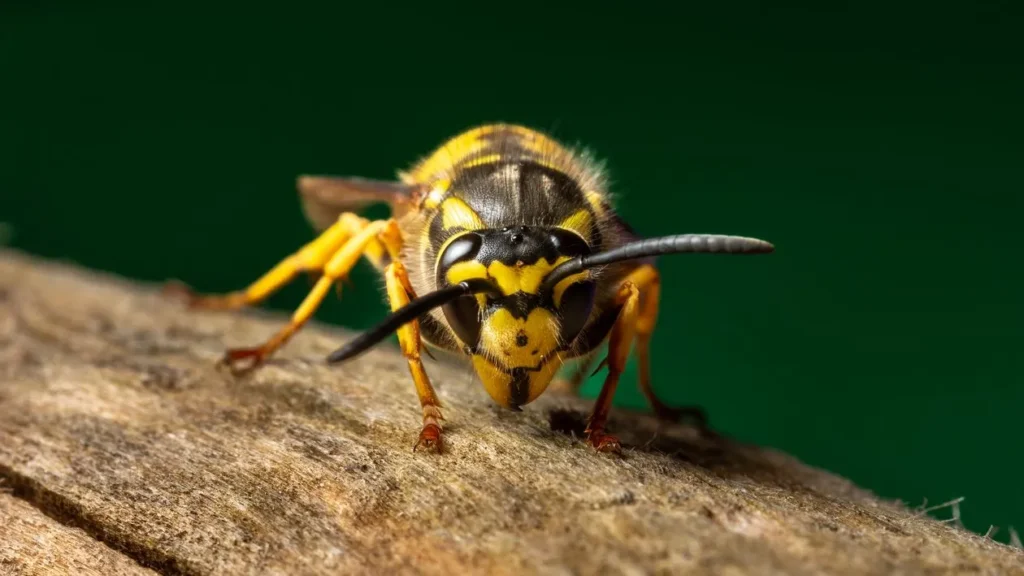
I used to lump every buzzing black-and-yellow insect into one mental category: danger. Then one August afternoon I watched a wasp drag a paralyzed spider across my patio and disappear into a hole in the ground, and I realized I had no idea what I was actually looking at. That sent me down a rabbit hole that ended with a notebook full of field marks and a genuine respect for these insects.
Here is the thing most people miss. “Wasp” is not one insect. More than 4,000 wasp species live in North America, and the ones you meet in your yard range from the genuinely aggressive yellowjacket to solitary hunters that will never bother you at all. Learning to tell them apart is the difference between needless panic and knowing exactly when to back away. This wasp identification chart covers the 20 wasps you are most likely to encounter in the United States, with the field marks, nests, and sting risk for each.

How to Identify a Wasp: The 5 Field Marks That Matter
Before you try to name the species, confirm you are looking at a wasp and not a bee or fly. Five features do most of the work:
- The waist. Wasps have a dramatic pinch between thorax and abdomen (called a petiole). Bees look plump by comparison. Some wasps, like thread-waisted sand wasps, take this to an extreme and look like two beads joined by a thread.
- The body hair. Bees are fuzzy because they collect pollen. Wasps are smooth and shiny, with little to no hair. If it glints in the sun, it is probably a wasp.
- The wings at rest. A resting wasp folds its wings lengthwise, flat along its back. Bees let theirs lie flatter and wider.
- The behavior. Bees visit flowers calmly. Wasps patrol: they hover, dart, and investigate. Around picnics and trash cans in late summer, the bold scavengers are almost always yellowjackets.
- The nest. This is the clincher. Paper umbrellas under eaves mean paper wasps. A big gray football in a tree means bald-faced hornets. Traffic in and out of a hole in the ground means yellowjackets. Mud tubes on walls mean mud daubers.
Once you know it is a wasp, the chart below narrows it to species.

Wasp Identification Chart: 20 Common US Wasps
| Wasp | Size | Color and Markings | Nest | Sting Risk |
|---|---|---|---|---|
| Eastern Yellowjacket (Vespula maculifrons) | 12-16 mm | Bright yellow with black bands, black anchor mark on face | Underground paper nest, often in old rodent burrows | High. Aggressive around food and nests |
| Western Yellowjacket (Vespula pensylvanica) | 12-16 mm | Yellow and black, western counterpart of the eastern species | Underground, sometimes in wall voids | High. Notorious picnic pest |
| German Wasp (Vespula germanica) | 13-16 mm | Yellow and black with three tiny black dots on the face | Underground paper nest | High. Introduced species, very defensive |
| Common Aerial Yellowjacket (Dolichovespula arenaria) | 12-15 mm | Yellow and black with wavy bands | Gray paper nest hanging in shrubs or under eaves | Moderate to high. Defends aerial nests |
| Bald-Faced Hornet (Dolichovespula maculata) | 18-20 mm | Black body with white face and white-tipped abdomen | Large gray enclosed paper nest in trees | High. Extremely defensive of the nest |
| European Hornet (Vespa crabro) | 25-35 mm | Reddish brown head and thorax, yellow and brown abdomen | Paper nest in hollow trees, barns, wall voids | Moderate. Large but usually calm away from nest |
| Asian Giant Hornet (Vespa mandarinia) | 40-50 mm | Orange head, dark brown body with orange-tipped abdomen | Underground nest | High but rare. Found only in small Pacific Northwest pockets |
| Northern Paper Wasp (Polistes fuscatus) | 16-20 mm | Dark brown to reddish with yellow markings, very variable | Open umbrella-shaped paper comb under eaves | Low to moderate. Docile away from the nest |
| European Paper Wasp (Polistes dominula) | 13-17 mm | Bright yellow and black, slender with long legs | Small open paper comb in sheltered spots | Low to moderate. Introduced, spreading fast |
| Red Paper Wasp (Polistes carolina) | 18-25 mm | Uniform reddish brown with darker wings | Open paper comb under eaves and branches | Low to moderate. One of the calmer paper wasps |
| Golden Paper Wasp (Polistes aurifer) | 15-20 mm | Golden yellow and brown | Open comb, often on buildings | Low. Western species, rarely aggressive |
| Common Paper Wasp (Polistes exclamans) | 15-20 mm | Brown with yellow bands and markings | Open umbrella comb | Low to moderate. Defends nest if bumped |
| Great Black Wasp (Sphex pensylvanicus) | 25-40 mm | Entirely shiny black with smoky dark wings | Burrow in loose soil | Very low. Solitary hunter, almost never stings people |
| Blue Mud Dauber (Chalybion californicum) | 20-25 mm | Metallic blue-black all over | Mud nests, often reuses other daubers’ tubes | Very low. Hunts spiders, ignores humans |
| Black-and-Yellow Mud Dauber (Sceliphron caementarium) | 15-25 mm | Black with yellow legs and thread-thin waist | Cylindrical mud tubes on walls and cliffs | Very low. Solitary and calm |
| Eastern Cicada Killer (Sphecius speciosus) | 30-50 mm | Black with yellow abdominal bands, amber wings | Burrows in sandy soil, often in lawns | Very low. Males cannot sting at all |
| Tarantula Hawk (Pepsis grossa) | 40-50 mm | Metallic blue-black body, bright orange wings | Burrow provisioned with a paralyzed tarantula | Low risk, extreme pain. Southwestern deserts |
| Four-Toothed Mason Wasp (Monobia quadridens) | 14-20 mm | Black with ivory-white bands on the abdomen | Mud partitions inside hollow stems and wood cavities | Very low. Solitary, gentle |
| Eastern Velvet Ant (Dasymutilla occidentalis) | 18-25 mm | Wingless females: dense red and black fuzz | No nest. Lays eggs in ground-nesting bee burrows | Moderate. Females have a famously painful sting |
| Potter Wasp (Eumenes fraternus) | 10-15 mm | Black with white or yellow bands, narrow waist | Tiny clay pots stuck to twigs and walls | Very low. Solitary, rarely noticed |
Sizes are worker or female body length. Sting risk describes how likely the insect is to sting an unprovoking person, not how painful the sting is.
Yellowjackets: The Ones Ruining Your Picnic
If a wasp is aggressively circling your soda can in August, it is a yellowjacket, almost certainly an eastern, western, or German wasp. These are the social wasps with the worst reputation, and they earn it: colonies peak at several thousand workers in late summer, protein and sugar hunger makes them bold, and they can sting repeatedly without losing the stinger.
Identification is straightforward. Yellowjackets are compact, fast, and brightly banded, and they fold into that classic wasp shape without the long dangling legs of paper wasps. Watch where they go. A steady stream of yellowjackets diving into a hole in the lawn or a gap in siding points to an underground nest, which can hold thousands of defenders. Give those nests a wide berth and call a professional rather than handling them yourself. If you need to tell wasps from their lookalikes, our bee identification chart lays out the differences side by side.

Paper Wasps, Hornets, and the Big Ones
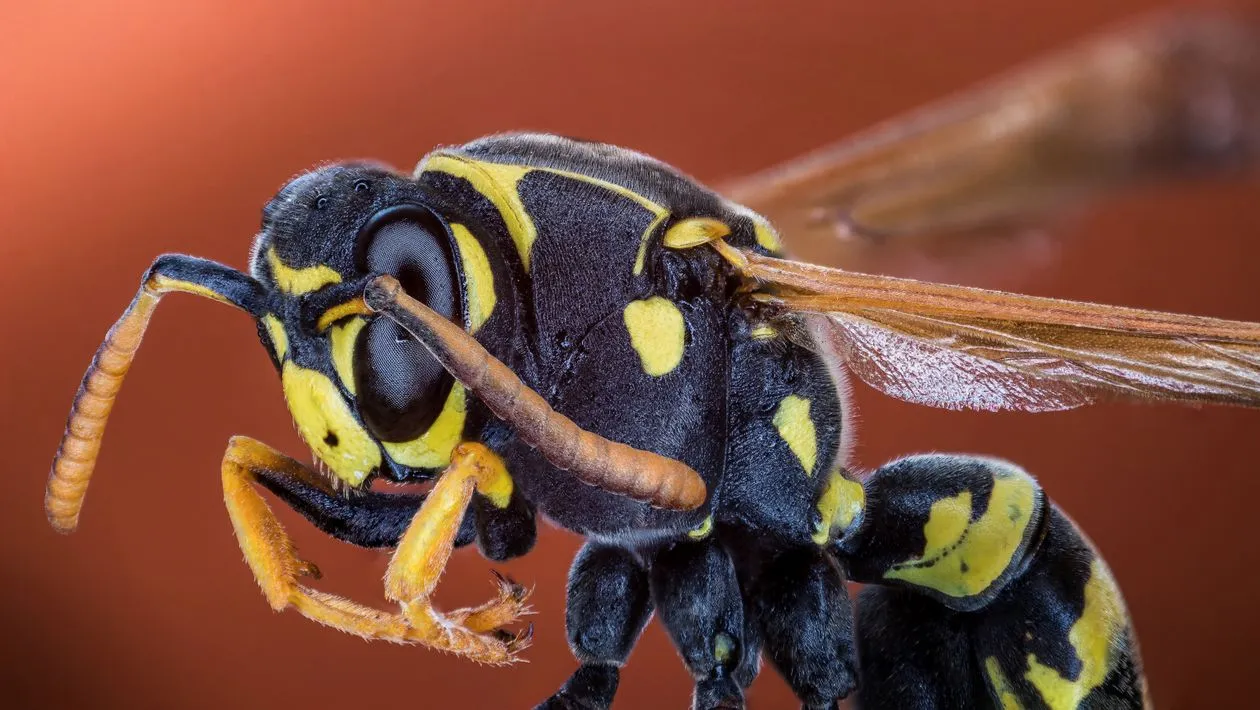
Paper wasps are the long-legged, slow-flying wasps that build open umbrella combs under your eaves. Their legs dangle in flight like landing gear, which makes them easy to spot even from a distance. Northern, European, red, golden, and common paper wasps all share this build, and all are far calmer than yellowjackets. I have gardened within feet of a northern paper wasp nest all summer without a single incident. They defend the nest if you bump it, but they do not hunt you down.

Hornets are simply large social wasps. The bald-faced hornet is not a true hornet but a big aerial yellowjacket, black with striking white markings, and it guards its football-sized gray nest fiercely. True European hornets are reddish brown giants that mostly fly at dusk and are surprisingly mellow away from home. The Asian giant hornet is the famous “murder hornet”: enormous, orange-headed, and found only in small pockets of the Pacific Northwest, where eradication teams actively hunt its nests.

The Gentle Giants: Solitary Wasps You Can Relax Around
This is the part of the chart that surprises people. Some of the most intimidating wasps are the least dangerous.
The eastern cicada killer is enormous, loud, and terrifying in flight, yet the males cannot sting at all and females reserve their venom for cicadas. Great black wasps cruise flower beds hunting grasshoppers and katydids, utterly uninterested in you. Blue and black-and-yellow mud daubers plaster mud tubes on your walls while hunting spiders, and they are famously calm enough to observe up close. Tarantula hawks own one of the most painful stings in the insect world, but they save it for tarantulas; hikers in the Southwest pass them daily without incident.
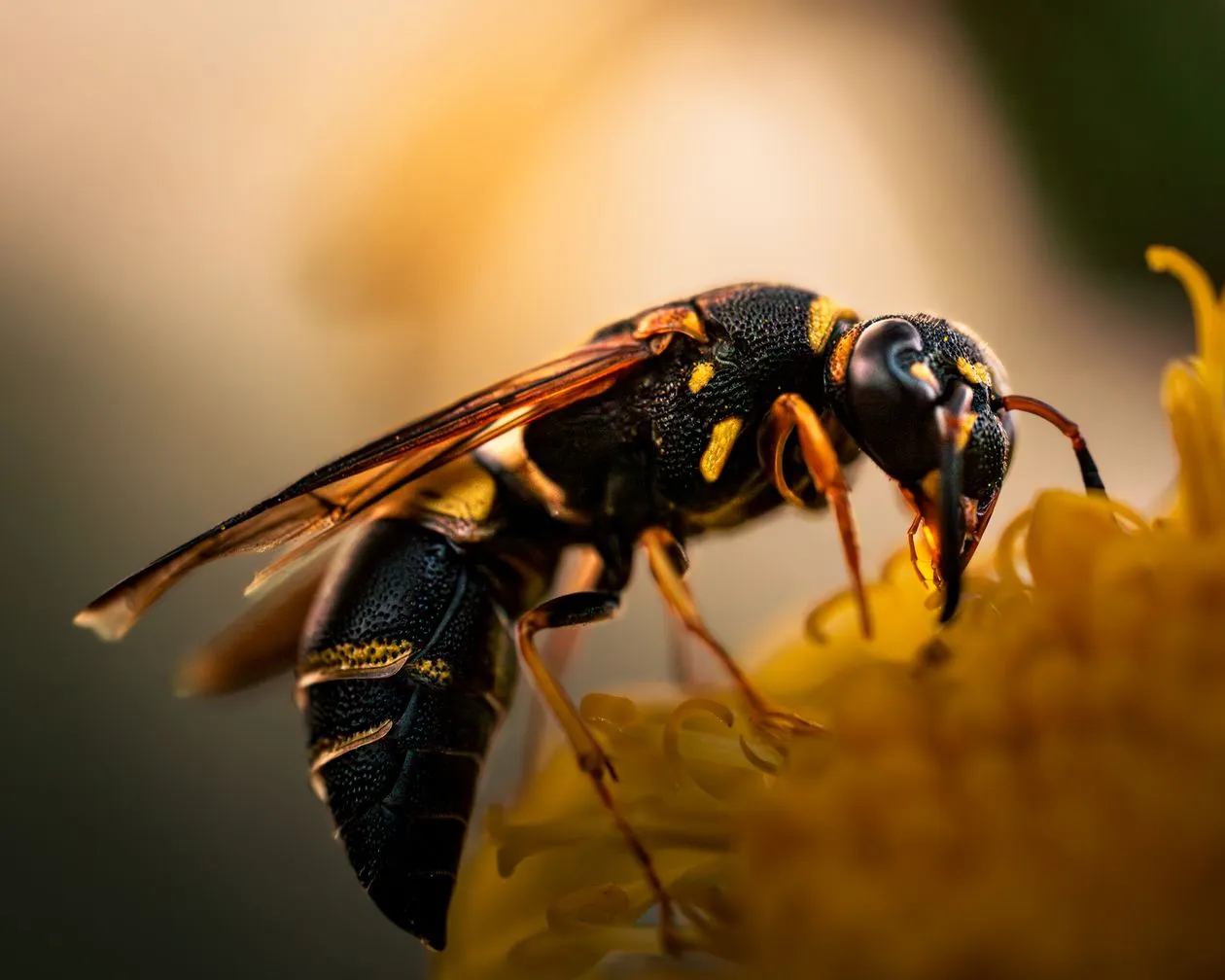
The rule of thumb: solitary wasps have no colony to defend, so they have almost no reason to sting you. Social wasps have thousands of sisters to protect, so respect their space. For the smaller six-legged crowd, our bug identification chart covers the most common species you will meet in the garden.
Wasp Nest Identification Guide
Nests are often easier to identify than the insects themselves. Here is what each type looks like:
- Open paper umbrella. A single gray comb hanging from a stalk under eaves, porch ceilings, or branches. Paper wasps. Usually small, often fewer than 30 cells early in the season.
- Enclosed gray football. A large teardrop or ball of papery material in a tree or shrub, sometimes basketball-sized by fall. Bald-faced hornets or aerial yellowjackets. Treat with respect.
- Hole in the ground with traffic. Constant in-and-out flights at a burrow entrance in the lawn or garden bed. Yellowjackets. The most dangerous common nest because it is easy to step on.
- Mud tubes or pots. Cigar-shaped mud tunnels on walls, or tiny clay pots stuck to twigs. Mud daubers and potter wasps. Harmless; many gardeners leave them alone.
- Burrows in sandy soil. Quarter-inch holes with a little fan of excavated dirt, big wasps coming and going. Cicada killers or sand wasps. Loud but harmless.


Never seal, poke, or flood a nest to identify it. Watch from at least 10 feet away, preferably in the cooler morning hours when wasps are sluggish. If a nest is large, in a wall void, or near a walkway or play area, call a pest professional. Late summer and fall nests are at peak population and peak temper.
Wasp vs Bee vs Hornet: Quick Comparison
People constantly mix these up, so here is the short version. Wasps have smooth, shiny bodies with a pinched waist and fold their wings lengthwise at rest. Bees are fuzzy, rounder, and carry pollen; most can sting only once. Hornets are just big wasps: the bald-faced “hornet” is black and white, while true European hornets are reddish brown and mostly active at dusk. Hoverflies mimic wasps with yellow and black stripes but have only two wings and cannot sting at all. If it hovers perfectly still in midair, it is probably a harmless fly doing wasp cosplay.

What to Do If You Get Stung
Even careful observers get stung sometimes. Move away from the area calmly and quickly, since disturbed social wasps release alarm chemicals that summon nestmates. Wash the sting with soap and water, apply a cold pack, and take an antihistamine or pain reliever if needed. Unlike bees, wasps do not leave a stinger behind, so there is nothing to scrape out. Watch for signs of serious allergy: trouble breathing, swelling of the face or throat, dizziness, or hives spreading beyond the sting site. Those mean calling emergency services immediately. Anyone with a known sting allergy should carry an epinephrine auto-injector outdoors.

FAQs
How can I tell a wasp from a bee?
Look for the pinched waist and smooth, shiny body. Wasps look sleek and nearly hairless, while bees look fuzzy and round. Wasps also fold their wings lengthwise when resting, and they behave like hunters, darting and patrolling, rather than calmly working flowers.
What is the most aggressive wasp in the US?
Yellowjackets, especially eastern, western, and German wasps, are the most aggressive toward people. They defend large underground nests, scavenge boldly around food in late summer, and sting readily. Bald-faced hornets are equally defensive near their aerial nests.
Do mud daubers sting?
Almost never. Mud daubers are solitary spider hunters with no colony to defend, and they are famously docile. You can watch one build its mud nest from a few feet away without any risk.
Why are wasps so aggressive in late summer?
Colonies reach maximum size in August and September, just as the queen stops producing the larvae that workers feed on. Hungry workers switch to scavenging sugar and protein from your picnic, and thousands of defenders guard a mature nest.
Should I remove a wasp nest myself?
Small, accessible paper wasp nests can sometimes be knocked down at night when wasps are inactive, but underground yellowjacket nests, large aerial hornet nests, and anything inside a wall should be left to professionals. When in doubt, call one.
Are wasps good for anything?
Very much so. Wasps are top-tier pest controllers: paper wasps eat caterpillars, mud daubers eat spiders, and cicada killers and sand wasps keep soil pests in check. Many also pollinate while visiting flowers. A yard with wasps is usually a yard with fewer garden pests.
Conclusion
The next time something striped buzzes past your ear, you will know what to look for: the waist, the shine, the legs, the wings, and where it goes home. Most of the wasps in this chart want nothing to do with you, and the few that demand respect advertise themselves clearly once you know the signs. Keep this wasp identification chart bookmarked for the next encounter, and give the solitary hunters a little appreciation. They are doing your garden a favor.


Pingback: Hornet Identification Chart: 20 Common US Hornets – Chart Identify
Pingback: Fly Identification Chart: Identify 20 Common US Flies – Chart Identify
Pingback: Types of Wasps: 20 Species, Sizes and Sting Risk – Chart Identify
Pingback: Types of Hornets: 20 Species, Identification and Facts – Chart Identify
Pingback: Types of Yellow Jackets: 20 Species, Sizes and Identification – Chart Identify
Pingback: Flying Insect Identification Chart – Chart Identify