

A budgie’s color is not random decoration. Every shade, from wild green to snow-white albino, comes from a small set of genetic mutations stacked on top of each other. If you have ever wondered what makes your bird sky blue while the one next to it is olive green, this budgie color chart has the answer. Below is a complete reference table of the 22 most common color mutations, plus the systems breeders use to read any budgie’s color: series, dark factor, and yellowface. You will also learn which mutations are sex-linked and which colors are genuinely rare.
Budgie Color Chart: 22 Common Mutations
This table is the core of the guide. Find the row that matches your bird, then read the sections below to understand exactly what each column means.
| Mutation | What it looks like | Color series | Inheritance | Eyes |
|---|---|---|---|---|
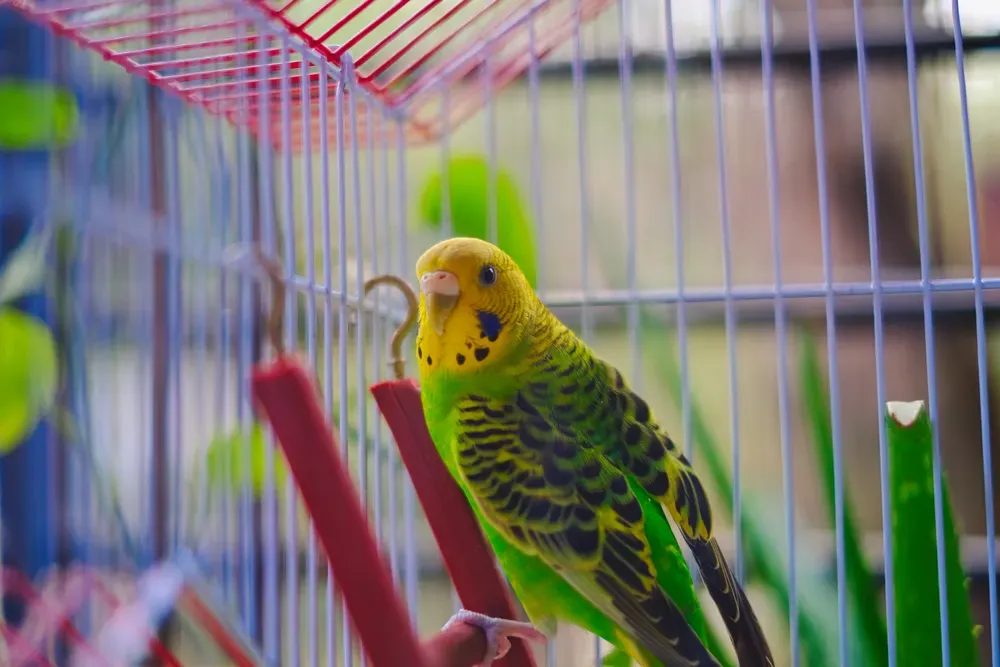
| Light Green (wild type) | Bright yellow-green body, black barring, yellow face | Green | Dominant base | Dark, white iris ring |
| Dark Green | Deeper teal-green body, one dark factor | Green | Dark factor (1) | Dark |
| Olive | Khaki-olive body, two dark factors | Green | Dark factor (2) | Dark |
| Grey-Green | Green body washed with grey | Green | Grey factor | Dark |
| Skyblue | Pale powder-blue body, white face | Blue | Recessive blue | Dark |
| Cobalt | Rich medium blue, one dark factor | Blue | Blue + dark factor (1) | Dark |
| Mauve | Greyish-purple blue, two dark factors | Blue | Blue + dark factor (2) | Dark |
| Violet | Blue with an electric violet sheen | Blue | Violet (semi-dominant) | Dark |
| Grey | Solid grey body, white face | Blue | Dominant grey | Dark |
| Lutino | Solid bright yellow, orange cheek patches | Green + ino | Sex-linked (ino) | Red |
| Albino | Solid white, no markings | Blue + ino | Sex-linked (ino) | Red |
| Lacewing | Yellow or white body, pale cinnamon-brown markings | Cinnamon + ino | Sex-linked | Red |
| Fallow | Pale body with bronze-brown markings | Any | Recessive | Red |
| Opaline | Body color floods into the wings, V-shaped clear patch on the back | Any | Sex-linked | Dark |
| Spangle | Wing markings reversed: dark edges, pale centers | Any | Dominant | Dark |
| Cinnamon | Brown markings instead of black, warmer body tone | Any | Sex-linked | Dark (plum at hatch) |
| Greywing | Black markings diluted to soft grey | Any | Recessive | Dark |
| Clearwing | Wing coverts nearly white, markings almost gone | Any | Recessive | Dark |
| Dominant Pied | Irregular white patches, clear band across the chest | Any | Dominant | Dark |
| Recessive Pied | Often mostly white with colored patches | Any | Recessive | Dark, no iris ring as adult |
| Yellowface I | Blue-series bird with a pale creamy-yellow face | Blue + yellowface | Dominant | Dark |
| Yellowface II / Goldenface | Blue-series bird with bright yellow face bleeding into the body (teal look) | Blue + yellowface | Dominant | Dark |
Note: “rainbow” is not a single mutation but a combination of four factors: clearwing plus opaline plus yellowface II plus the blue series. That is why true rainbows are prized and expensive.
Green Series vs Blue Series: The Foundation of Every Budgie Color
Everything starts here. A budgie is either green series or blue series, and every other mutation modifies one of these two bases.
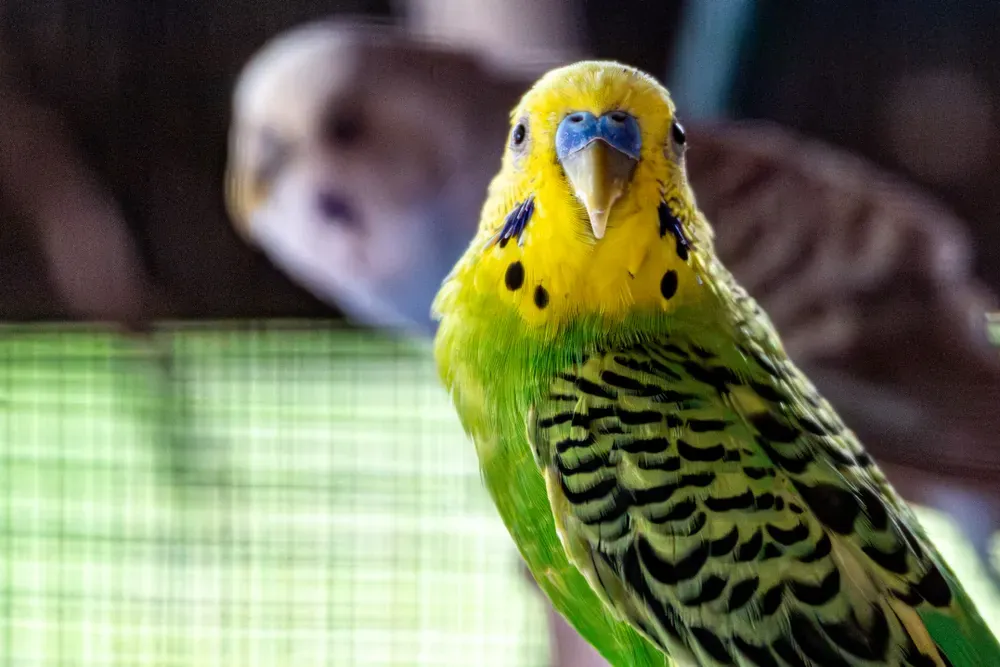
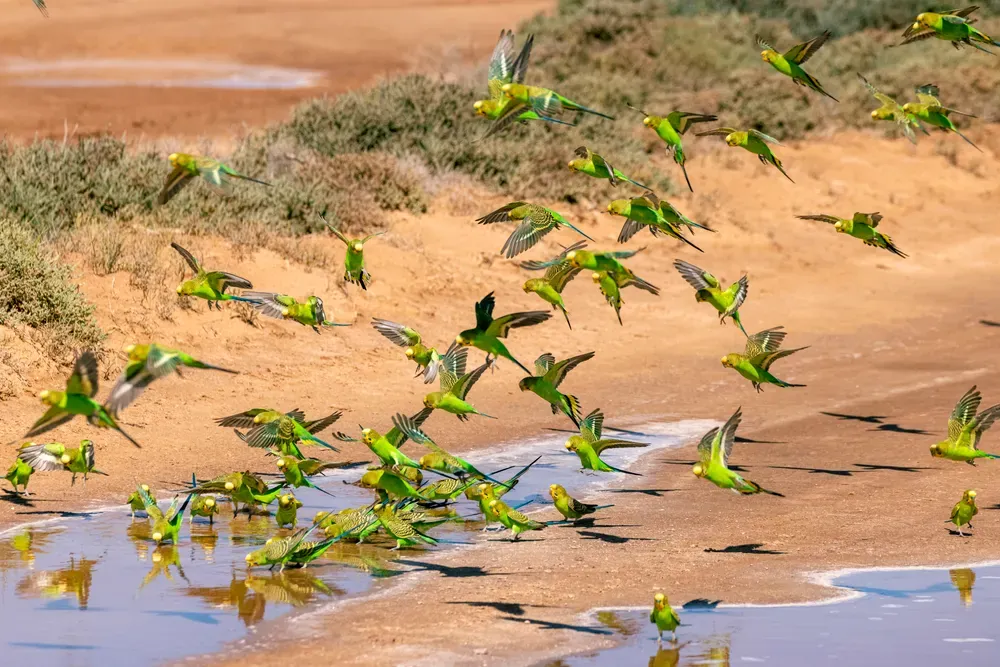
Green series means the yellow pigment (psittacin) is present. It is dominant and it is the wild type: every wild budgerigar in Australia is light green with black barring and a yellow face. Any yellow wash on the body means green series, full stop.
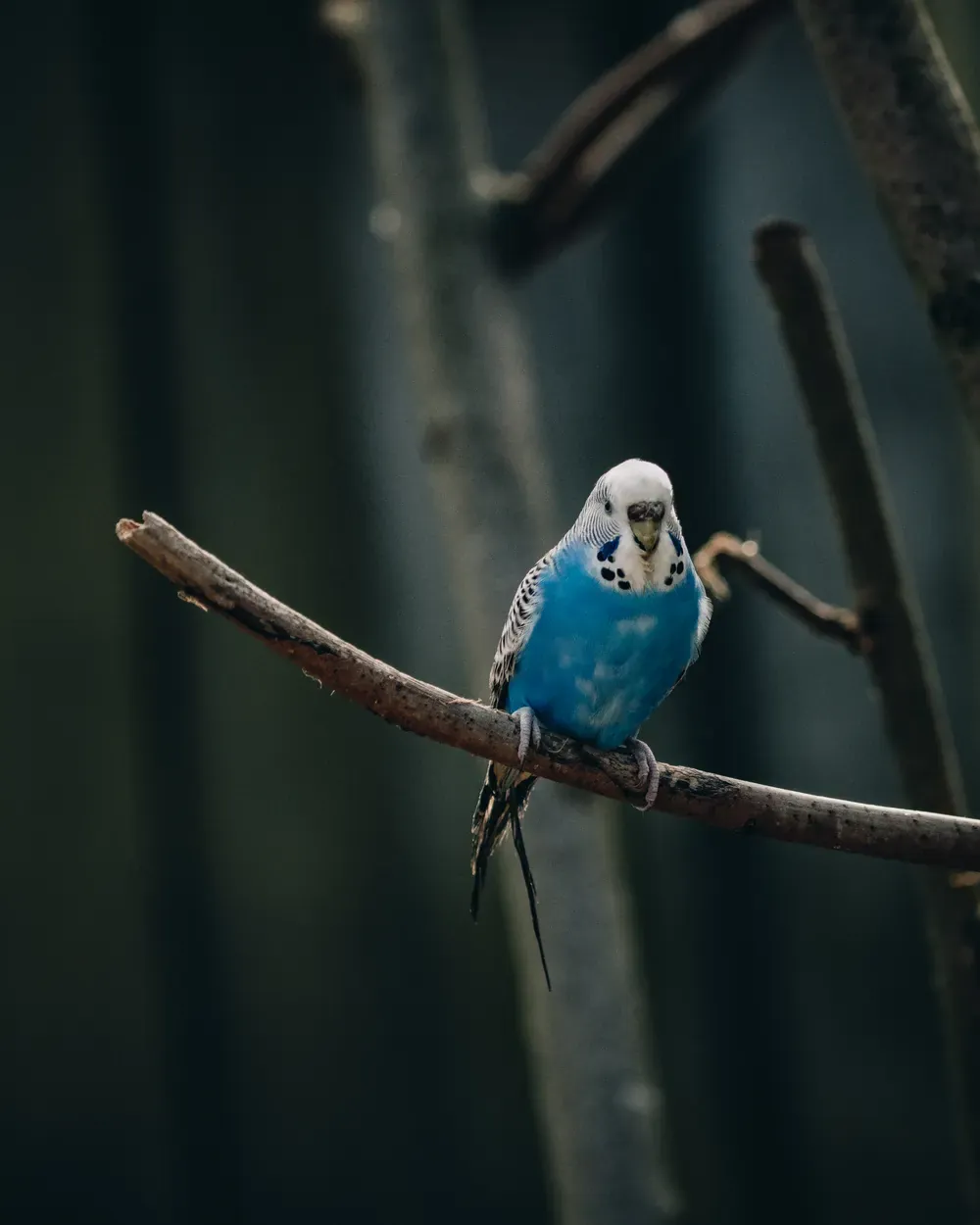
Blue series means the blue mutation has removed the yellow pigment, revealing the structural blue underneath. It is recessive, so a bird needs two copies of the gene to look blue. This is the single most misunderstood fact in budgie colors: two green budgies can absolutely produce blue chicks, as long as both parents silently carry the recessive blue gene. A bird cannot be both series at once. The one famous exception is the yellowface blue, which looks teal or turquoise because yellow pigment returns to just the face and body, and we will get to that below.
The Dark Factor: Why Green Becomes Olive and Blue Becomes Mauve
The dark factor is an additive gene, independent of the series, and it works like a dimmer switch with three settings.
With zero dark factors, you get the lightest shades: light green in the green series, skyblue in the blue series. Add one dark factor and everything deepens: light green becomes dark green, skyblue becomes cobalt. Add two dark factors and you reach the darkest shades: olive in green series, mauve in blue series.
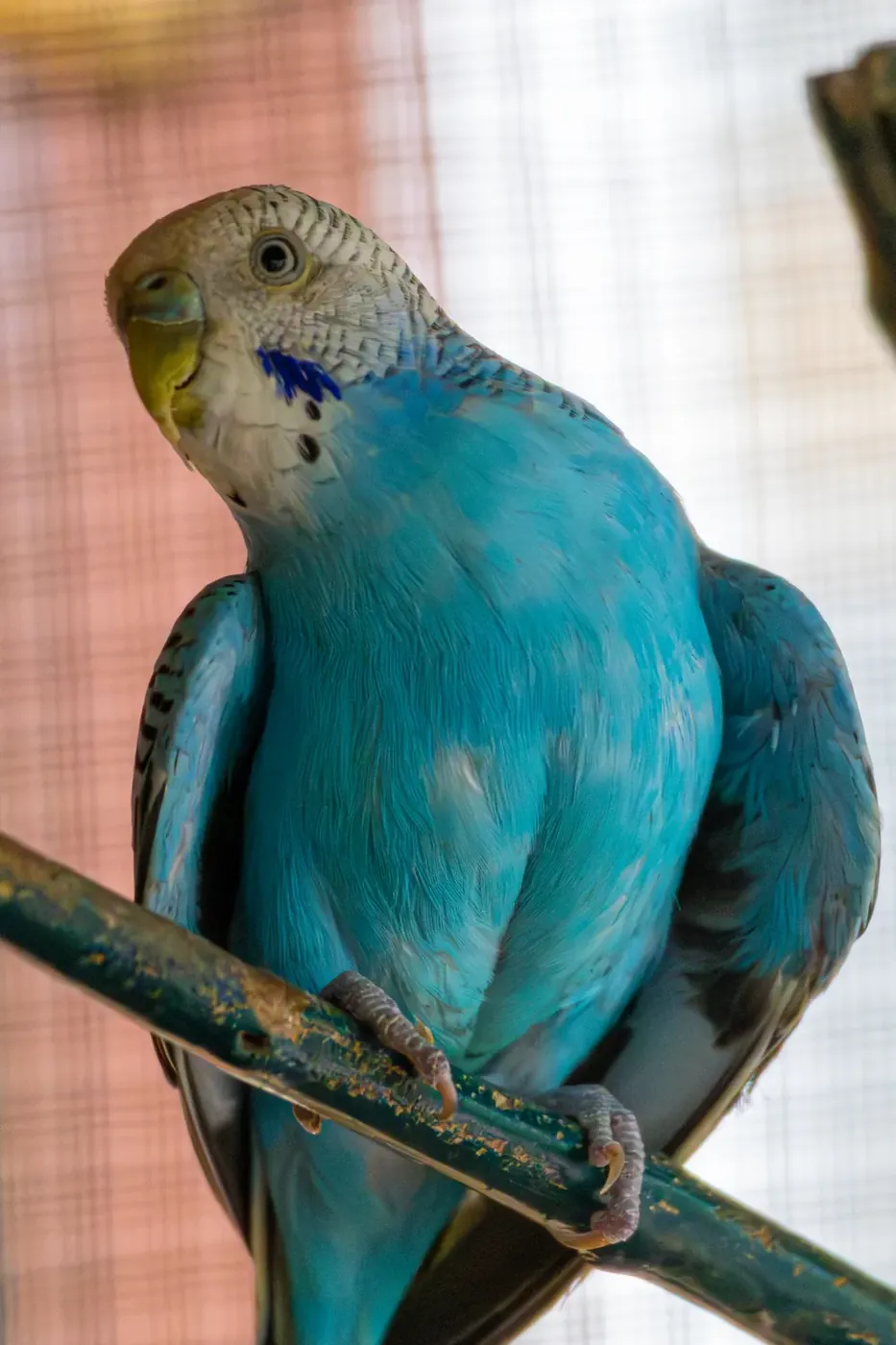
Violet is a separate, semi-dominant factor that layers an electric sheen over blue-series birds.
Yellowface Types: Type I, Type II, and Goldenface
Yellowface only shows on blue-series birds, because green birds already have yellow faces. It is a dominant mutation, and it comes in three strengths.
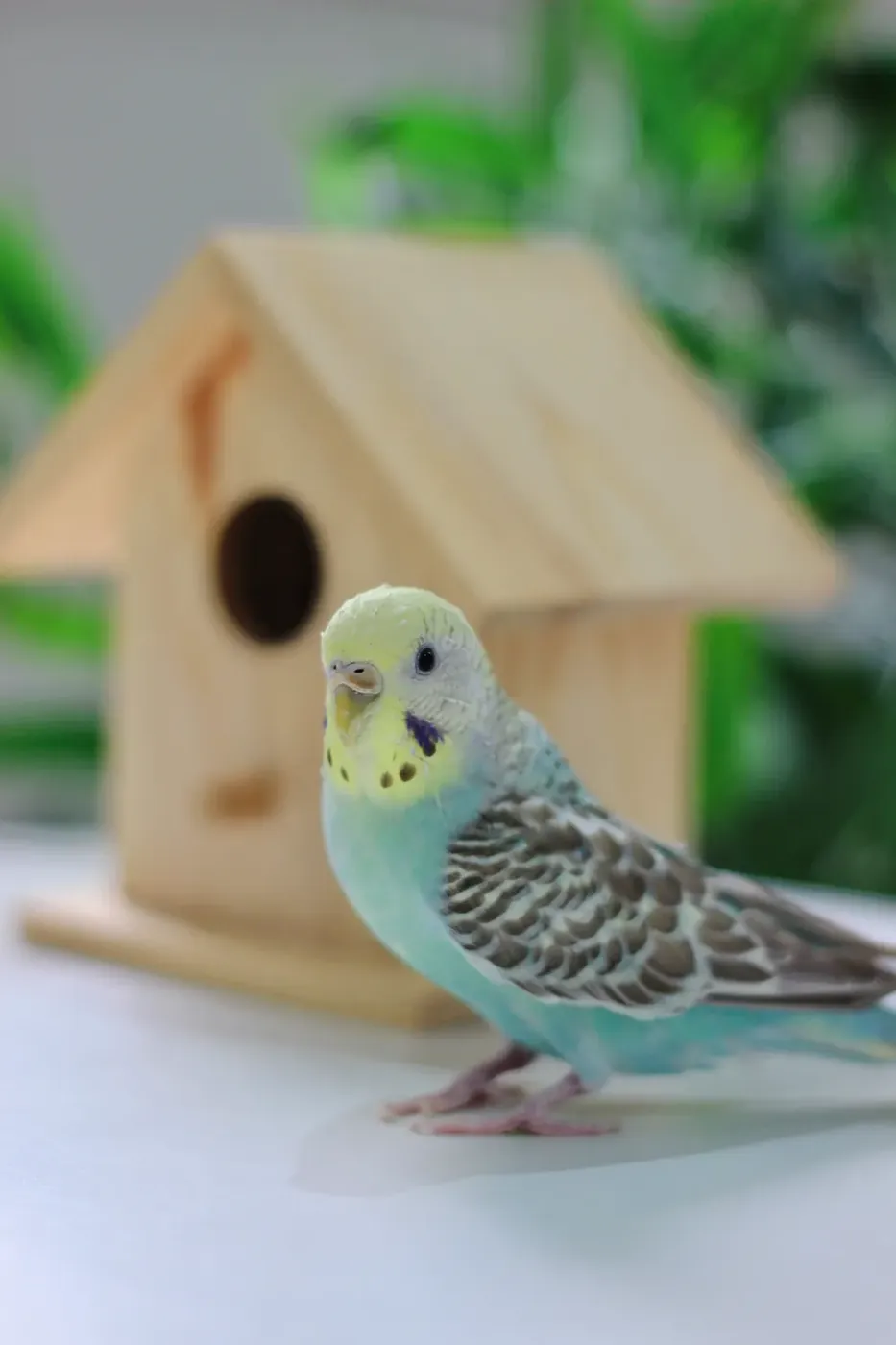
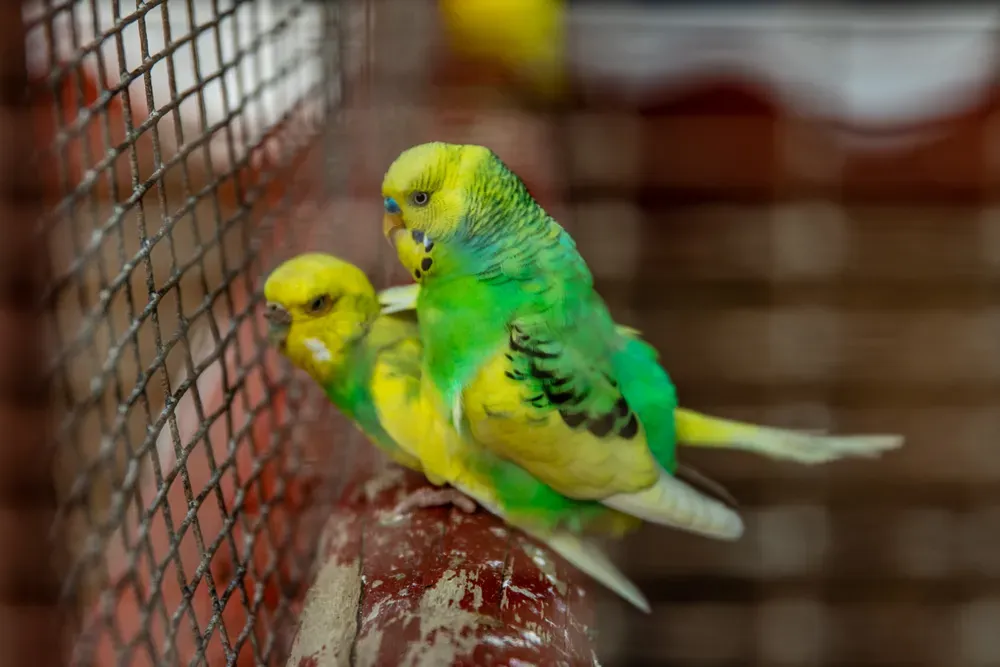
Yellowface Type I gives a pale, creamy-yellow face with very little spread into the body. The bird still reads as blue at a glance. Yellowface Type II is brighter, and the yellow bleeds down into the body, creating the famous teal or turquoise look that many owners mistake for a separate mutation. Goldenface is the richest of the three, with a deep golden-yellow face and the strongest suffusion into the body.
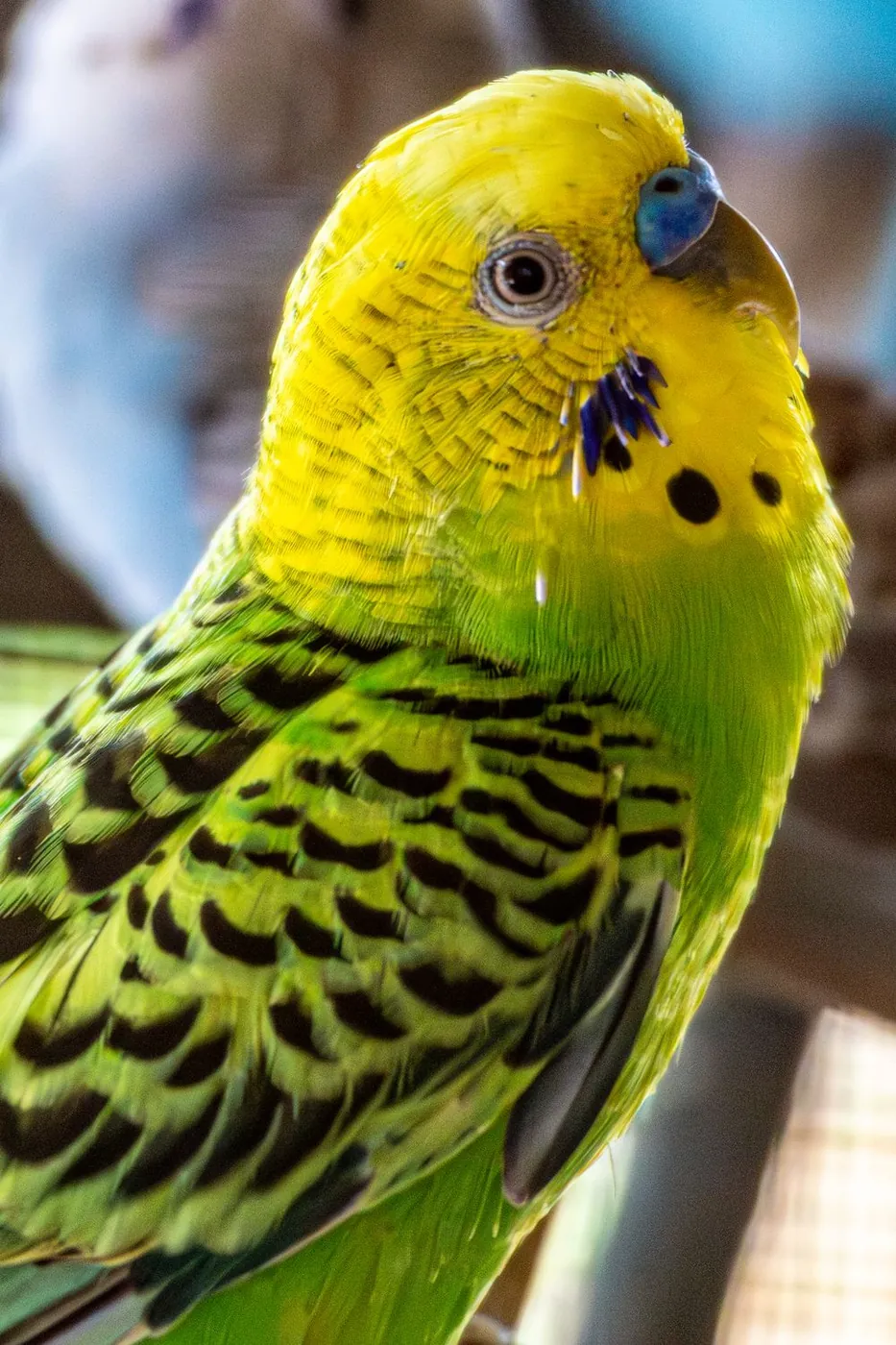
Combine yellowface II with clearwing and opaline on a blue-series bird and you have the recipe for a rainbow budgie.
Wing Pattern Mutations: Read the Wings
If the series tells you the base color, the wings tell you the pattern mutation. Learn these five and you can identify most pet-shop budgies on sight.
Opaline (sex-linked) floods the body color into the wing coverts, so the wings look colorful instead of barred, and leaves a V-shaped clear patch on the back between the wings. The body color also looks brighter and more saturated than normal.
Spangle (dominant) reverses the wing markings: instead of dark centers with pale edges, each feather shows dark edges with pale centers, giving the wings a lacy, scalloped look.
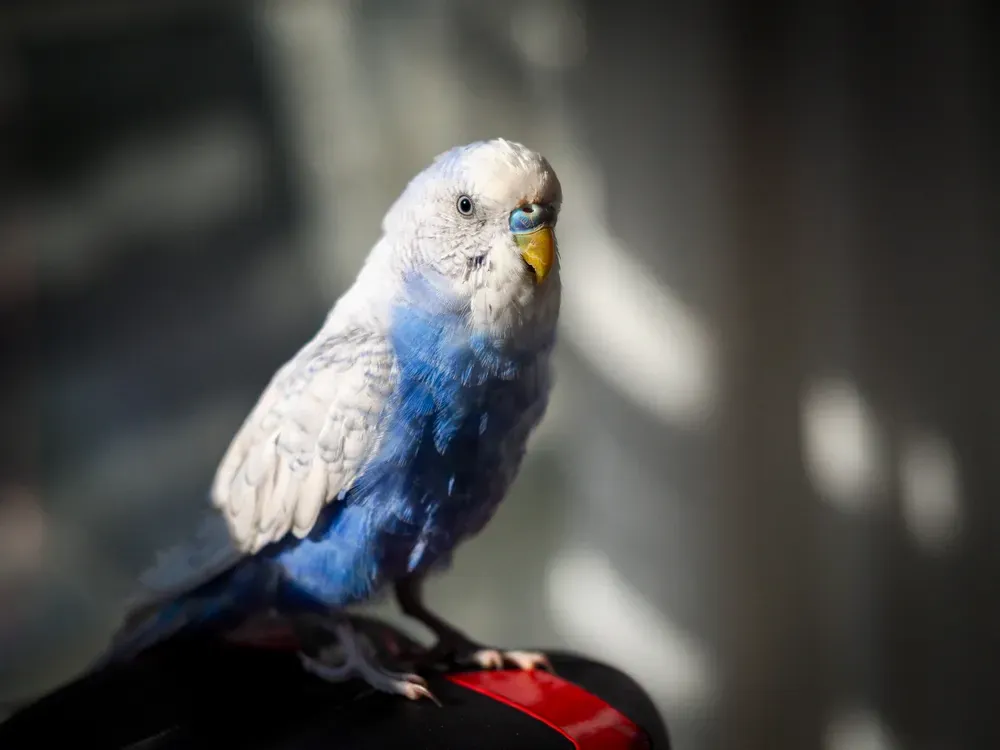
Cinnamon (sex-linked) turns the black markings brown, warming the whole bird. Cinnamon chicks hatch with distinctive plum-colored eyes that darken within days, which is how breeders identify them in the nest.
Greywing (recessive) dilutes the black markings to soft grey at roughly half strength, while clearwing (recessive) goes further and leaves the wing coverts nearly white. Clearwing is the essential ingredient of the rainbow combination: trust the wings, which show clear coverts rather than transparent feathers.
Pied Budgies: Dominant, Recessive, and Clearflight
Pied means patches of white (or yellow, on green-series birds) where color should be, and the pied family is where beginners get confused most.
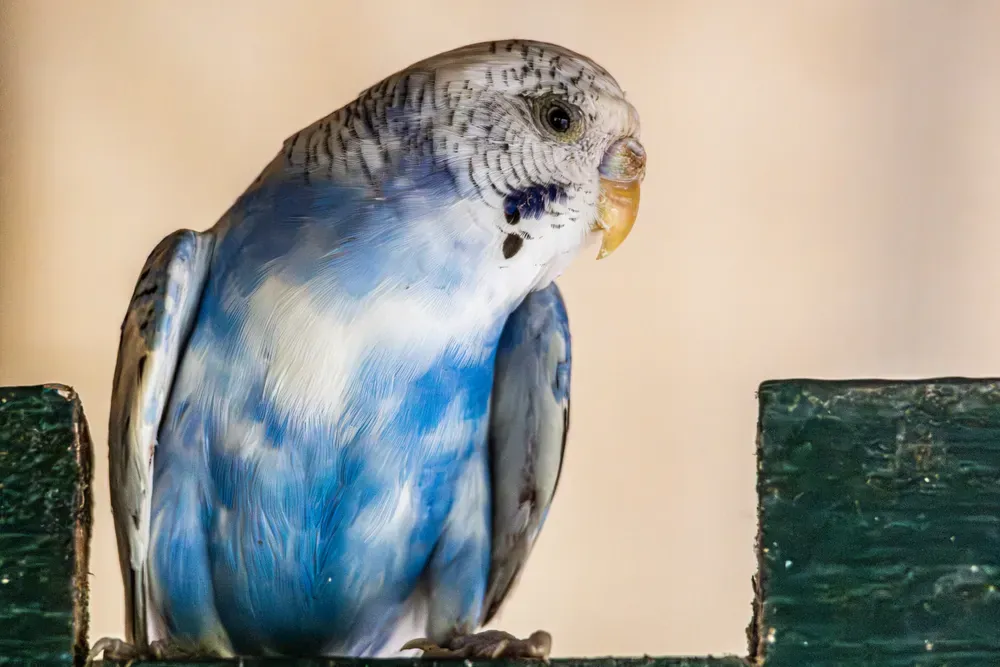
Dominant pied is the common one: irregular white patches plus a clear band across the chest, like a bib. Recessive pieds are often nearly all white and carry a unique identifier: adults keep dark eyes with no white iris ring. Clearflight pied sits in between, with white flight feathers and a mostly colored body.
The Red-Eyed Varieties: Lutino, Albino, Lacewing, Fallow
Red eyes narrow the field fast. Only four common mutations produce them, and they are easy to separate once you know the markings.
The ino mutation (sex-linked) strips out all dark melanin. On a green-series bird that gives you the lutino: solid bright yellow with orange cheek patches. On a blue-series bird it gives the albino: solid white with no markings at all. Both have red eyes and pink feet.
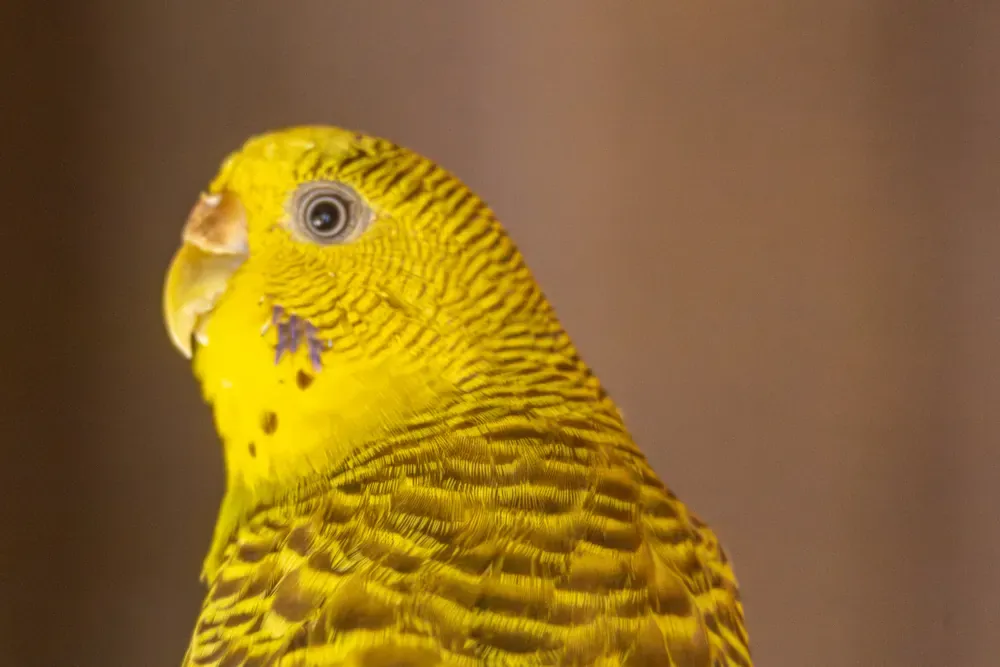
Lacewing is cinnamon plus ino combined (also sex-linked): a yellow or white bird with pale cinnamon-brown wavy markings and red eyes. Remember the formula: brown markings plus red eyes equals lacewing. Fallow is separate and recessive, with bronze-brown markings and red eyes, and it is rarer still.
What Is the Rarest Budgie Color?
Among the mutations in the chart, lacewing and fallow are genuinely uncommon in pet shops, and true rainbow budgies are prized because they require four factors to line up at once. But the truly rare colors go beyond this chart: anthracite, an almost black mutation; Texas clearbody; and saddleback are all seldom seen and expensive when available. Feather mutations like crested, combined with rare colors, are rarer still.
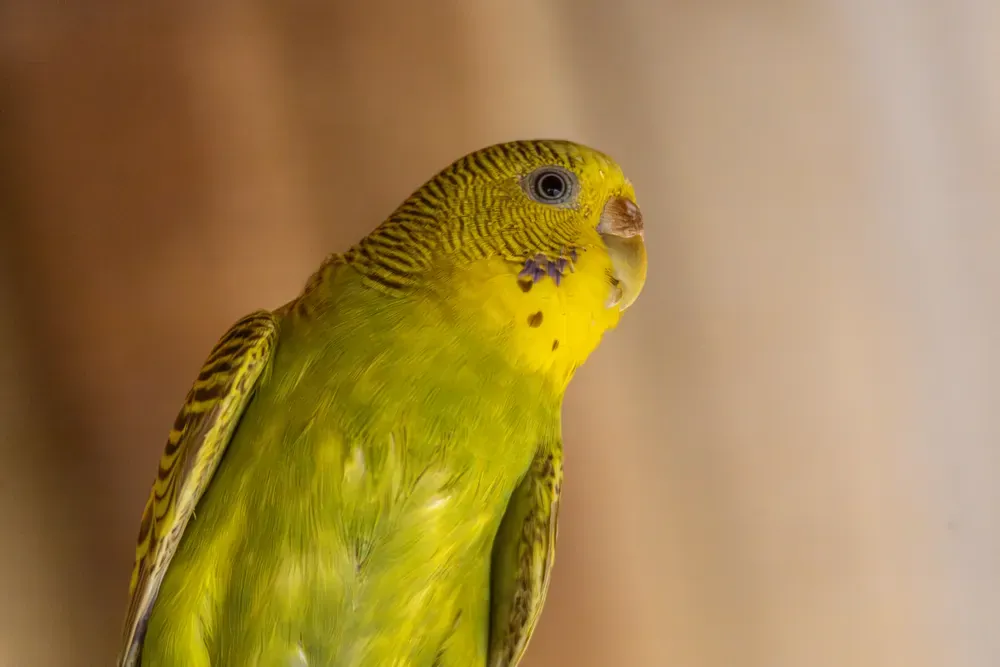
One reassurance: rarity has no link to health. A rare color is not a sickly color. Most color mutations are perfectly healthy birds, and the wild-type green remains the hardiest only because it is the most common, not because other colors are fragile.
Identify Your Budgie in 4 Steps
You can name almost any budgie’s variety with the system in this chart, the same way field marks identify wild birds (see our hummingbird identification chart and butterfly identification chart for the same approach with wild species).
Step 1: Green series or blue series? Any yellow wash on the body means green series. Pure white face with a blue body means blue series.
Step 2: Count the dark factor. Is the shade light (light green, skyblue), medium (dark green, cobalt), or deep (olive, mauve)? That is zero, one, or two dark factors.
Step 3: Check the face. On a blue-series bird, a yellow face means yellowface. Pale cream is Type I, bright yellow bleeding into the body is Type II or goldenface.
Step 4: Read the wings and eyes. Wing pattern names the pattern mutation (opaline, spangle, cinnamon, greywing, clearwing, pied). Red eyes narrow it to lutino, albino, lacewing, or fallow. Dark eyes with no iris ring in an adult mean recessive pied. Our bee identification chart shows how the same step-by-step elimination works for insects.
Frequently Asked Questions
Are male and female budgies different colors?
No. Color mutations occur in both sexes. Sex is read from the cere, the fleshy patch above the beak: adult males usually show blue or purplish ceres, adult females tan or brown. There are exceptions: in ino, lacewing, and recessive pied varieties, adult males often keep pinkish-purple ceres instead of turning blue.
Do budgie colors change as they age?
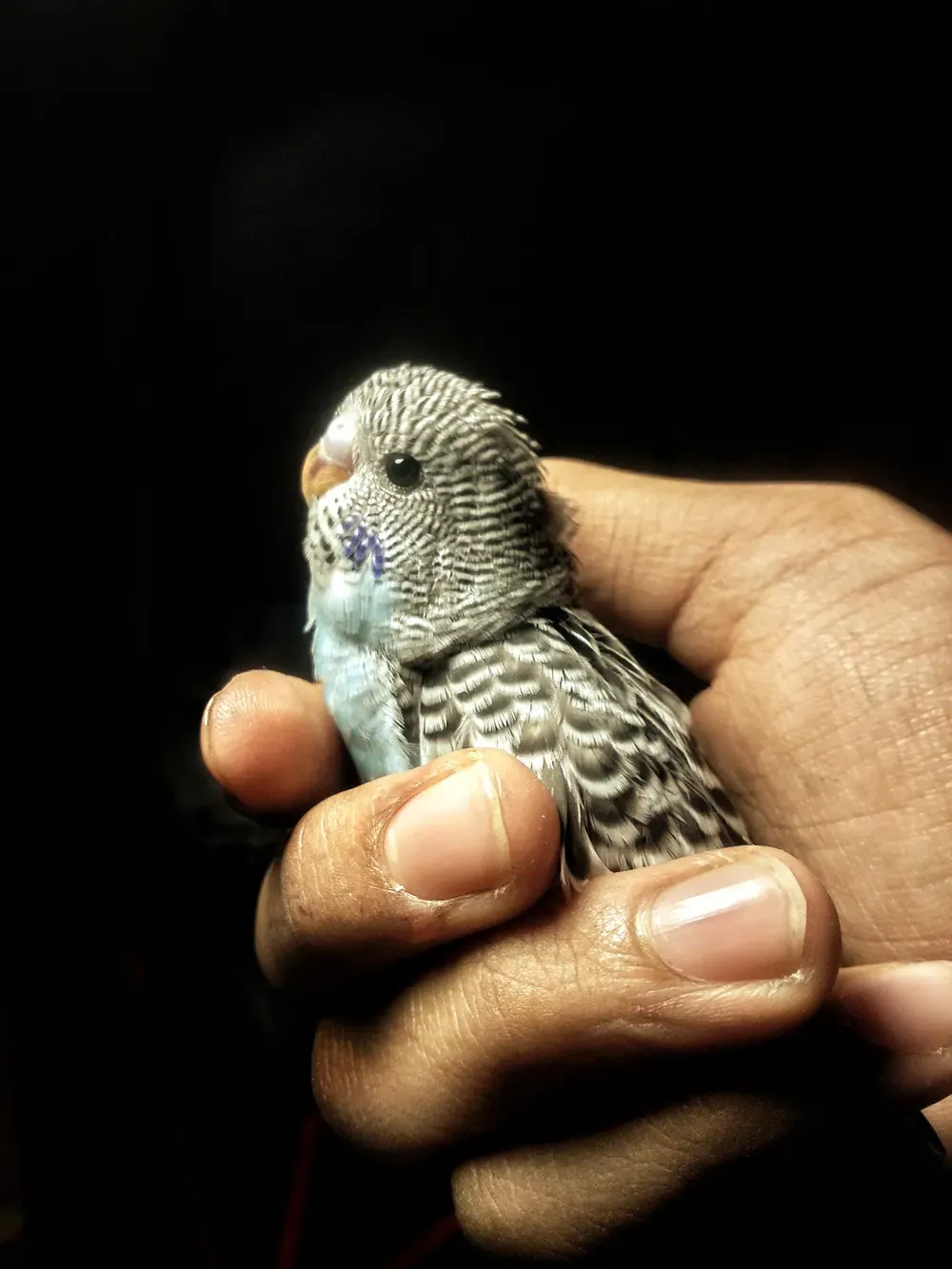
The base color is stable for life, but juveniles look different: their foreheads are barred all the way down to the cere, and their eyes are dark with no iris ring. The forehead clears and the white iris ring develops around six to eight months.
Which budgie color is the healthiest?
Color has no link to health or lifespan. A blue, lutino, or pied budgie from a good breeder is just as healthy as a wild-type green. Buy from the breeder’s reputation, not the bird’s color.
Can two green budgies have blue chicks?
Yes. Blue is recessive, so two green-series parents that each silently carry one copy of the blue gene can produce blue-series chicks. This is also why a “pure green” breeding pair sometimes surprises its owner.
Conclusion
Every budgie color traces back to a short recipe: series, dark factor, and face, wing, or pied modifiers. Run any bird through those four checks and the chart above will give you its variety. Colors may be the reason most people fall for budgies, but the genetics behind them are the real show.


Pingback: Cockatiel Color Chart: 20 Mutations Explained – Chart Identify