
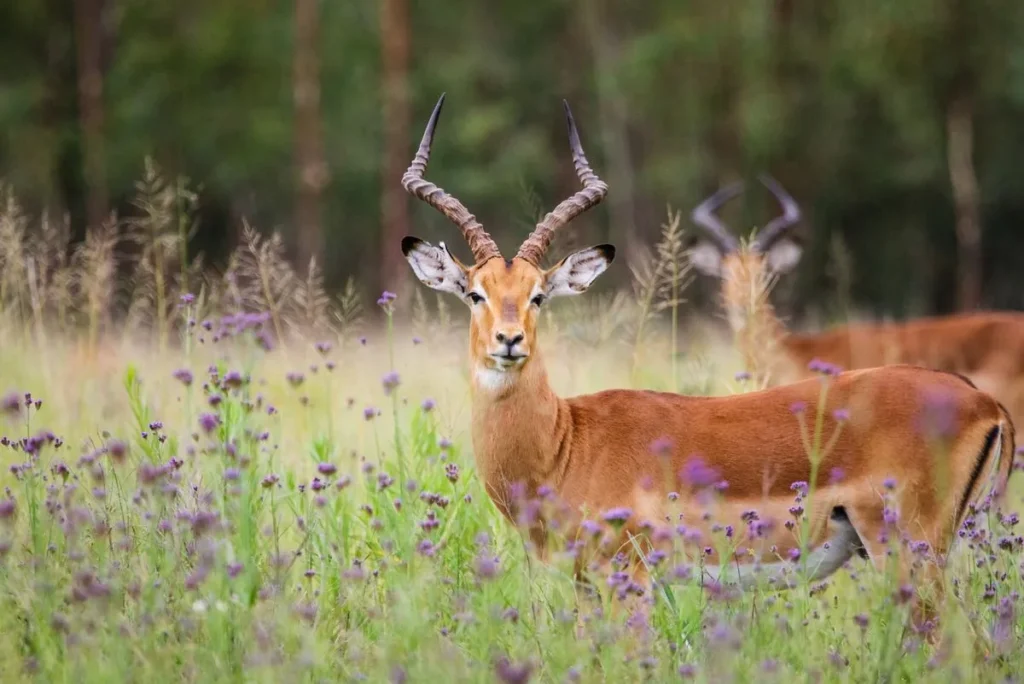
An antelope can weigh as much as a small car or barely more than a house cat. This guide to all antelope species puts 30 of the best known kinds in one chart, with shoulder heights, weights, ranges and status that quick lists usually skip.
Antelope is not a strict scientific group. The word covers grazing members of the cattle family, Bovidae, that are not cattle, sheep or goats. Most live in Africa, a handful in Asia, and none is native to the Americas.
The Complete All Antelope Species Chart
Heights are at the shoulder, weights are typical adult ranges. Compare our all fox species chart: its heaviest animal would barely reach an eland calf.
| Species | Scientific Name | Shoulder Height | Weight | Range | Standout Fact | IUCN Status |
|---|---|---|---|---|---|---|
| Common Eland | Taurotragus oryx | 150-180 cm | 400-940 kg | East and southern Africa | Largest antelope | Least Concern |
| Giant Eland | Taurotragus derbianus | 150-175 cm | 380-1,000 kg | West and Central Africa | Rivals common eland in size | Vulnerable |
| Greater Kudu | Tragelaphus strepsiceros | 120-160 cm | 190-315 kg | East and southern Africa | Spiral horns to 180 cm | Least Concern |
| Lesser Kudu | Tragelaphus imberbis | 90-110 cm | 60-105 kg | Horn of Africa thornbush | Shy, rarely drinks | Near Threatened |
| Bongo | Tragelaphus eurycerus | 110-130 cm | 150-405 kg | Central and West African forest | Chestnut coat, white stripes | Near Threatened |
| Nyala | Tragelaphus angasii | 80-120 cm | 55-140 kg | Southeastern Africa | Males grey, females chestnut | Least Concern |
| Sable Antelope | Hippotragus niger | 117-140 cm | 177-270 kg | East and southern Africa | Bulls turn jet black | Least Concern |
| Roan Antelope | Hippotragus equinus | 130-160 cm | 220-320 kg | African savanna, patchy | Horse like build | Least Concern |
| Gemsbok | Oryx gazella | 115-125 cm | 180-240 kg | Kalahari and Namib | Rapier horns, both sexes | Least Concern |
| Scimitar-Horned Oryx | Oryx dammah | 110-125 cm | 140-210 kg | Sahara fringe | Reintroduced in Chad | Endangered |
| Addax | Addax nasomaculatus | 95-115 cm | 60-125 kg | Sahara desert | Splayed hooves for sand | Critically Endangered |
| Arabian Oryx | Oryx leucoryx | 90-100 cm | 65-75 kg | Arabian Peninsula | Rebuilt after wild extinction | Vulnerable |
| Blue Wildebeest | Connochaetes taurinus | 115-145 cm | 118-290 kg | East and southern Africa | Great Migration herds | Least Concern |
| Black Wildebeest | Connochaetes gnou | 110-120 cm | 110-180 kg | South African highveld | White flowing tail | Least Concern |
| Hartebeest | Alcelaphus buselaphus | 110-150 cm | 75-200 kg | Patchy across Africa | Very long face | Least Concern |
| Topi | Damaliscus lunatus | 104-126 cm | 90-147 kg | East African floodplains | Purple tinged dark patches | Least Concern |
| Impala | Aepyceros melampus | 75-95 cm | 40-76 kg | East and southern Africa | Only males carry horns | Least Concern |
| Springbok | Antidorcas marsupialis | 71-86 cm | 27-48 kg | Dry southern Africa | Pronks high into the air | Least Concern |
| Thomson’s Gazelle | Eudorcas thomsonii | 55-67 cm | 15-35 kg | Kenya and Tanzania | Bold black flank stripe | Least Concern |
| Grant’s Gazelle | Nanger granti | 75-91 cm | 35-81 kg | East Africa | Pale, tolerates dry country | Least Concern |
| Gerenuk | Litocranius walleri | 89-105 cm | 28-52 kg | Horn of Africa | Browses on hind legs | Near Threatened |
| Waterbuck | Kobus ellipsiprymnus | 120-136 cm | 161-262 kg | Sub-Saharan, near water | White ring on rump | Least Concern |
| Sitatunga | Tragelaphus spekii | 77-119 cm | 24-119 kg | Central and West African swamps | Splayed swamp hooves | Least Concern |
| Common Duiker | Sylvicapra grimmia | 50-70 cm | 12-22 kg | Most of sub-Saharan Africa | Dives into bushes | Least Concern |
| Kirk’s Dik-Dik | Madoqua kirkii | 30-40 cm | 3-7 kg | East and southwest Africa | Lifelong pairs | Least Concern |
| Klipspringer | Oreotragus oreotragus | 43-60 cm | 8-18 kg | Rocky hills, East and south | Walks on hoof tips | Least Concern |
| Royal Antelope | Neotragus pygmaeus | 25-28 cm | 2-3 kg | West African forest | World’s smallest antelope | Least Concern |
| Blackbuck | Antilope cervicapra | 74-84 cm | 34-45 kg | India and Nepal | Black and white males | Least Concern |
| Nilgai | Boselaphus tragocamelus | 120-145 cm | 109-288 kg | India, Nepal, Pakistan | Largest Asian antelope | Least Concern |
| Saiga | Saiga tatarica | 61-81 cm | 26-69 kg | Central Asian steppe | Swollen nose filters dust | Near Threatened |
The Giants: Elands and Kudu

A common eland bull stands as tall as a grown man and can weigh close to a tonne, yet elands slip away through bush rather than charge. Both sexes carry tight spiral horns, and old bulls turn blue grey at the neck. The giant eland matches it for size but lives in smaller, scattered herds.

The greater kudu carries the most dramatic horns of any antelope: two and a half twists running to about 180 cm along the curve. White stripes break up its outline so well that a 300 kg animal can vanish metres from a road.
Classic Savanna Species
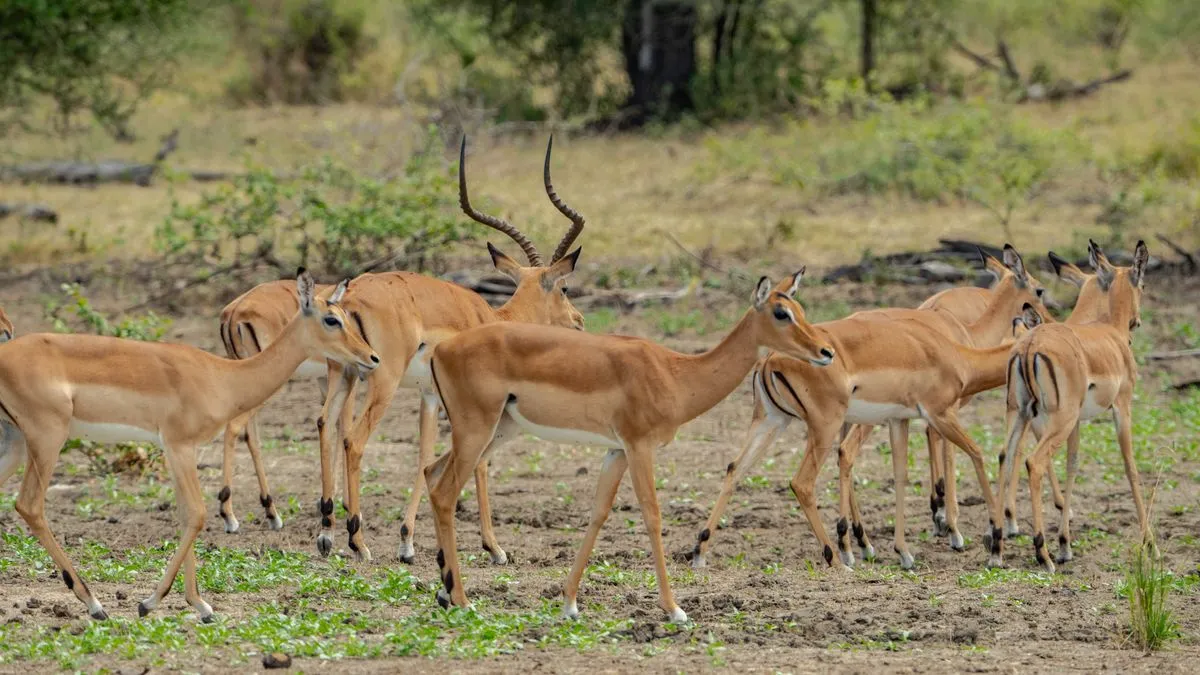
If you picture an antelope, you probably picture an impala, the standard prey animal of the East and southern African savanna. A fleeing impala launches into repeated leaps 3 metres high, back legs kicked out behind it.

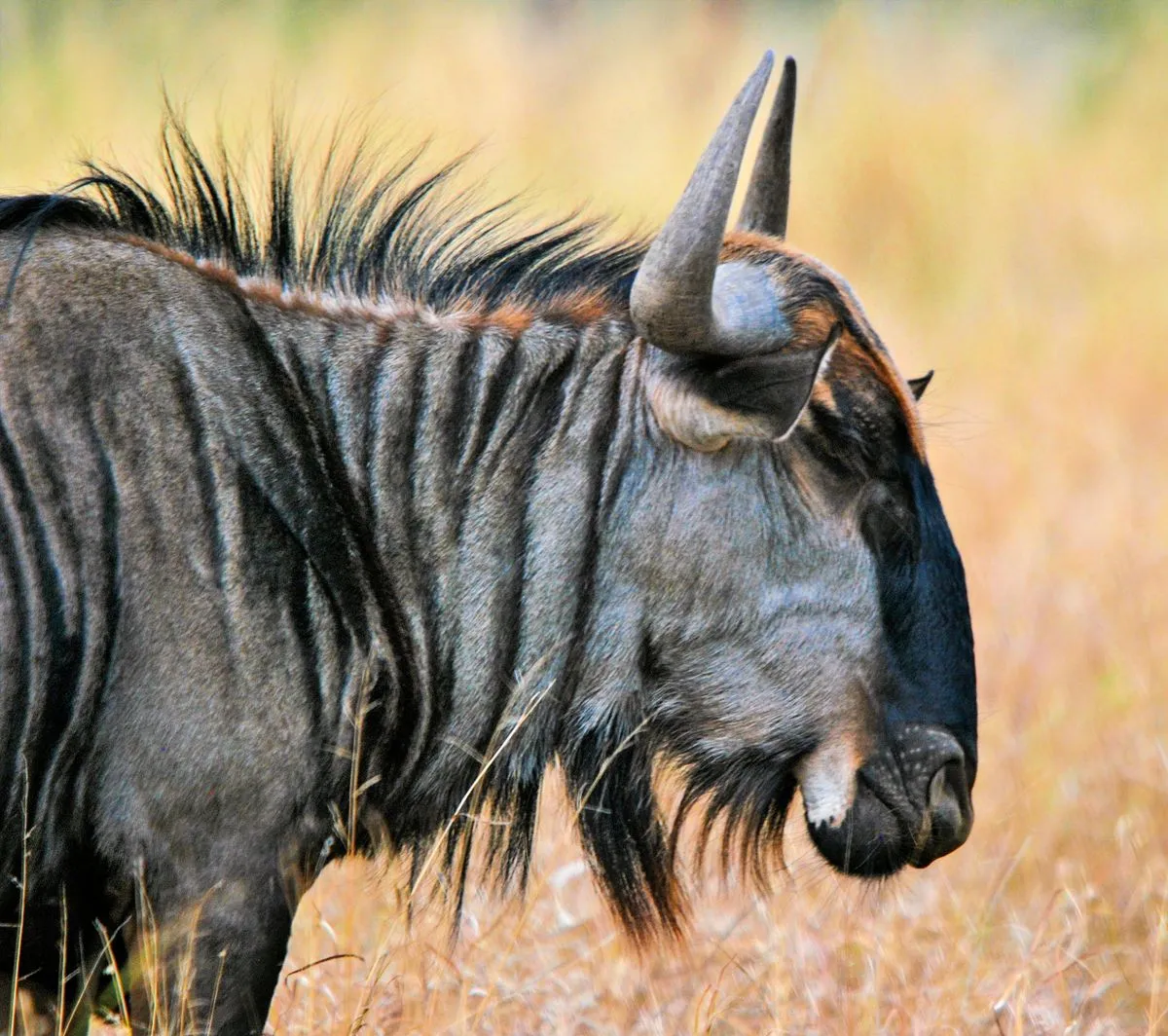
The blue wildebeest is built at the opposite scale: heavy shoulders, big head, beard. Around 1.5 million walk the Serengeti migration circuit each year. The black wildebeest is its smaller South African relative, told apart by its white, horse like tail. Herd life here is shaped by lions, much as northern herds are shaped by the predators in our all wolf species chart.
Topi and hartebeest complete the plains set. Topi males spend hours standing on termite mounds watching for rivals, their dark patches shining purple in strong light. The hartebeest has the longest face of any antelope, built for cropping short grass.

Gazelles: Built for Speed
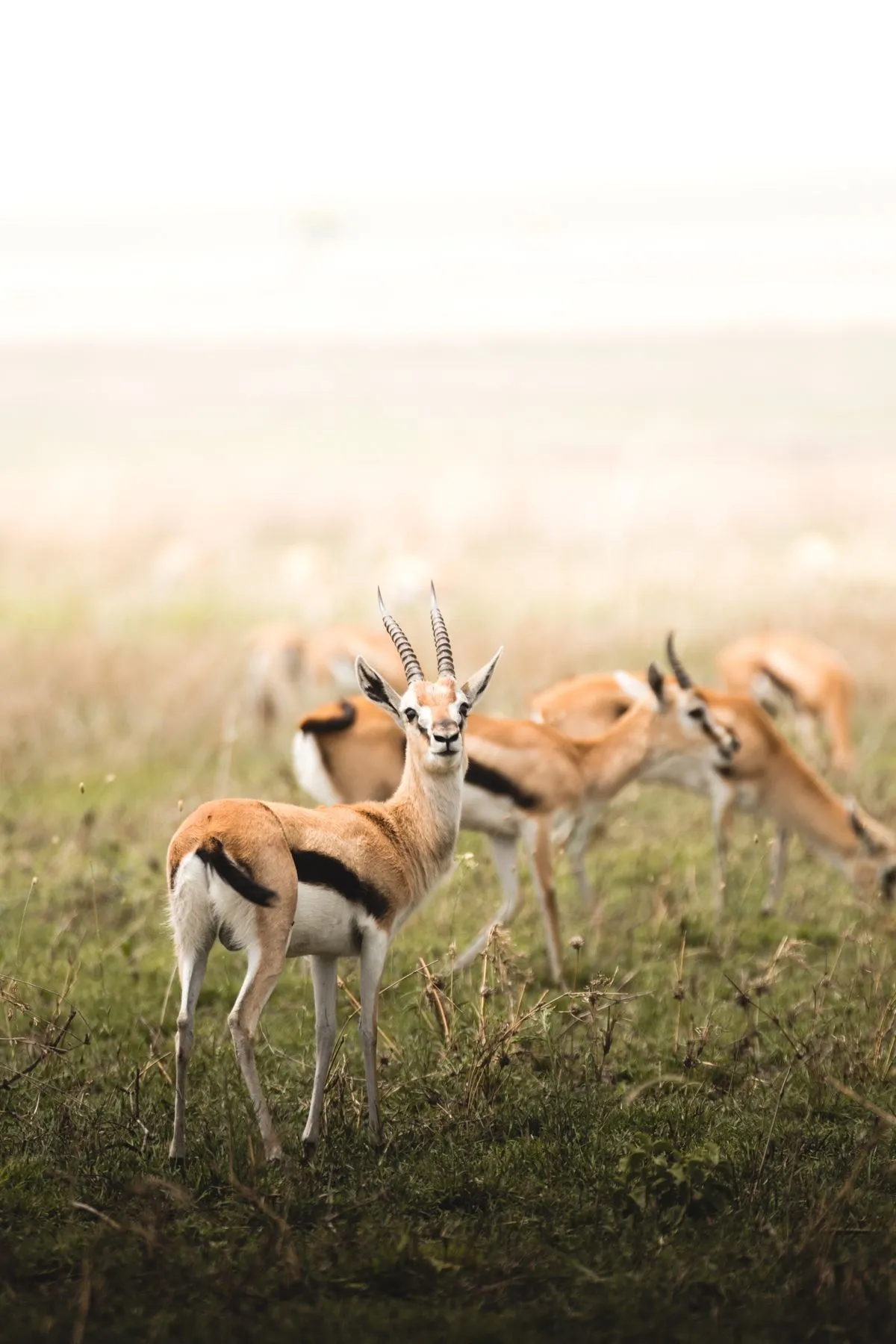
Gazelles trade bulk for speed. The Thomson’s gazelle weighs about as much as a large dog and pairs vigilance with bursts near 80 km per hour. It is still the cheetah’s favourite target. Grant’s gazelle is its bigger, paler neighbour.

The springbok, South Africa’s national animal, pronks higher than any of them, clearing 2 metres with legs held stiff while a fold of back skin flashes a white crest.
Desert Specialists: Oryx and Addax
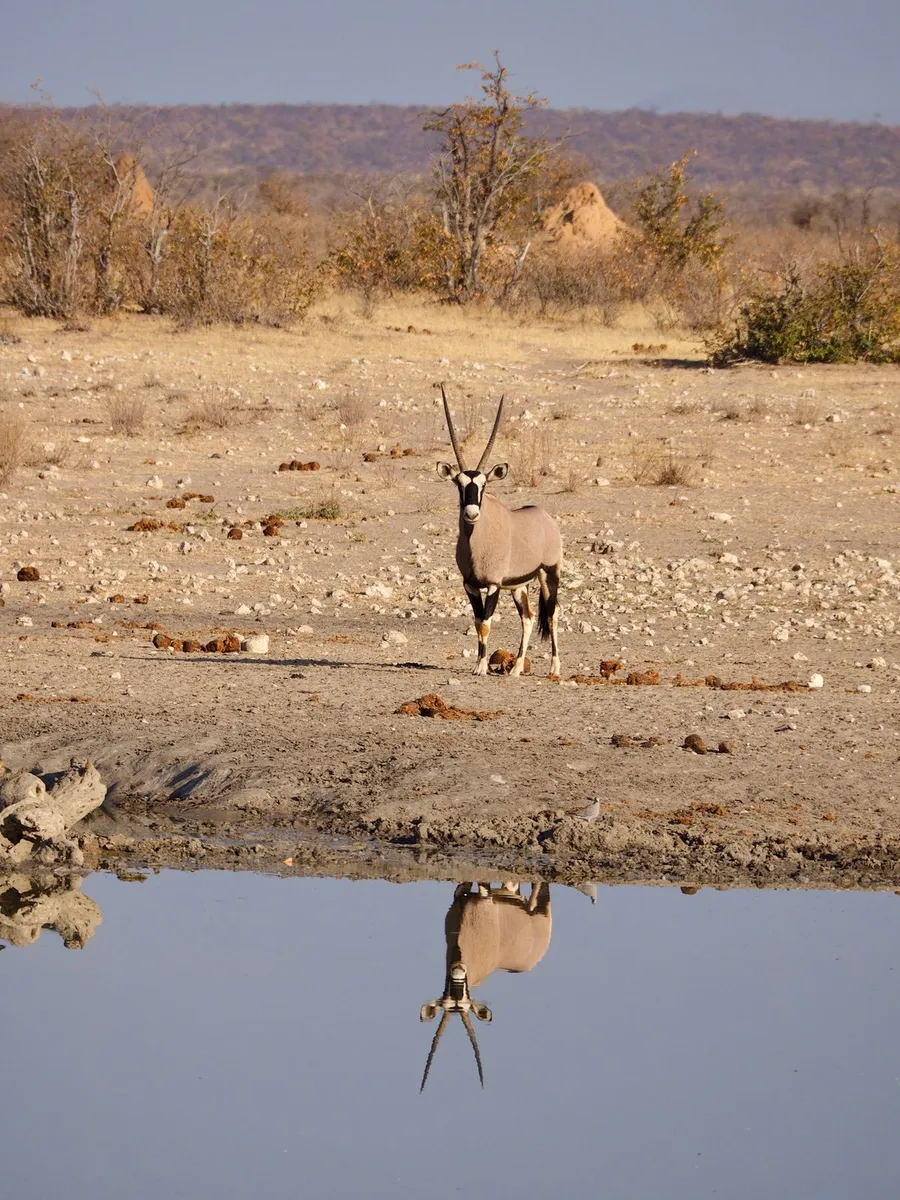
Desert antelopes face heat, glare and almost no water. The gemsbok lets its body temperature climb by day and cools the blood before it reaches the brain. Its straight horns can kill a lion. The addax ranges deeper into the Sahara than any other antelope, gets most of its water from plants, and is the rarest animal in this chart.
The other oryx are recovery stories. The scimitar-horned oryx vanished from the wild around 2000 and has been released back into Chad. The Arabian oryx was hunted out in 1972 and rebuilt from captive animals.
Forest Antelopes
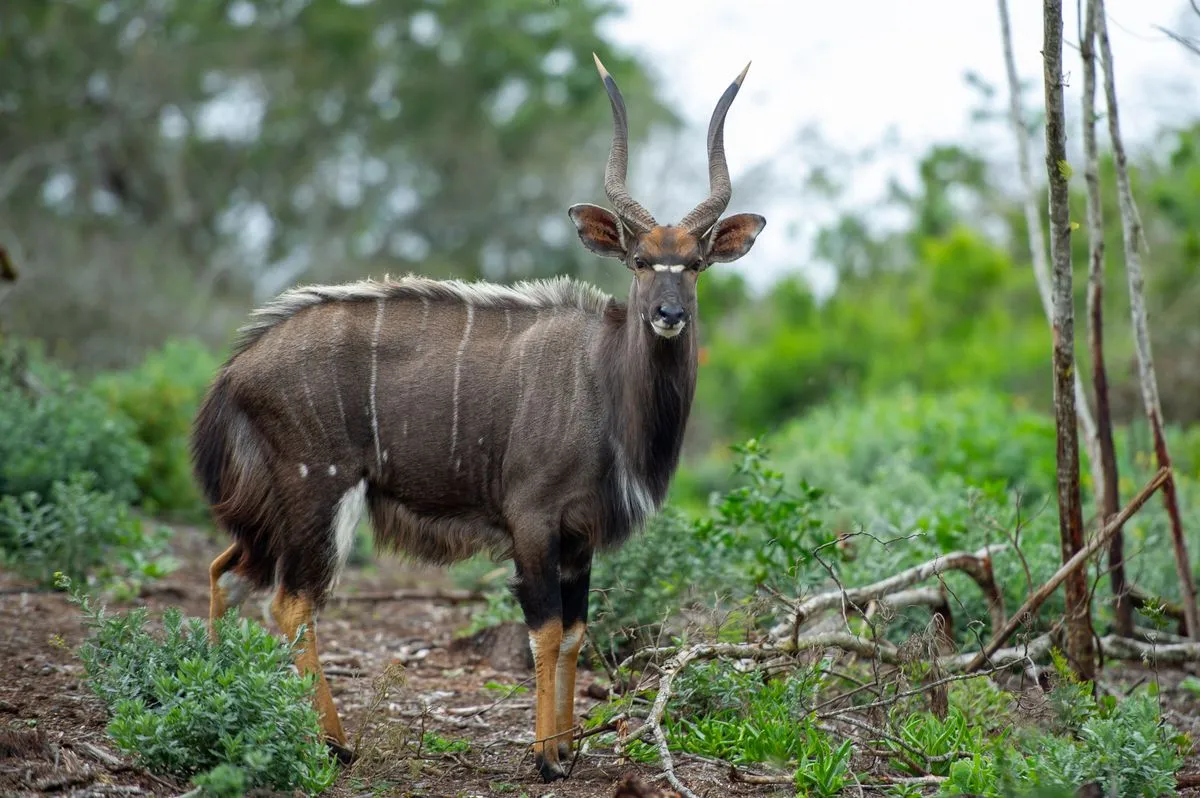
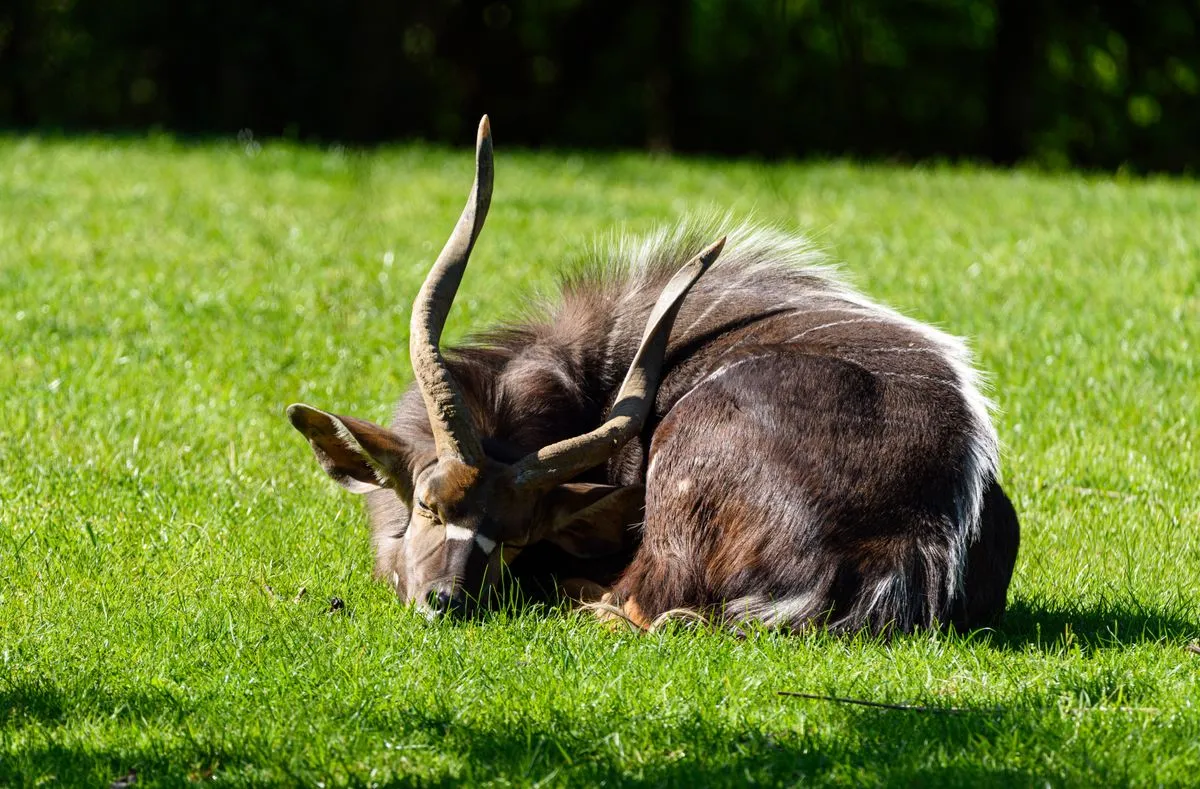
Forest antelopes wear stripes. The bongo, chestnut with white bands, is the largest forest antelope and moves through rainforest mostly at night. The nyala shows the sharpest split between the sexes here: females stay bright chestnut, while bulls turn dark slate grey with a shaggy fringe.
The sitatunga takes forest life into the swamp, on long splayed hooves that spread its weight over floating vegetation. A threatened sitatunga sinks until only its nostrils show.
Tiny Antelopes
At the small end, antelopes turn secretive. Kirk’s dik-dik stands about knee height and lives in lifelong pairs. Duikers are named for the Afrikaans word for diver: a startled duiker dives into the nearest thicket.
The klipspringer lives in the open but only on rocks, walking on the tips of its hooves like a ballerina. Smallest of all is the royal antelope, 25 to 28 cm tall and 2 to 3 kg.
Asian Antelopes

Asia holds fewer species, but they stand out. The blackbuck is among the fastest antelopes over distance, and mature males turn black and white while females stay fawn. The nilgai, Asia’s largest, is a big blue grey crop raider in India. The saiga looks like nothing else: its swollen, trunk like nose filters summer dust and warms winter air. Saiga numbers crashed by over 95 percent in the 1990s and 2000s, then recovered so fast in Kazakhstan that its status improved to Near Threatened in 2023.
One famous name does not belong here. The North American pronghorn is often called an antelope, but it sits in its own family and is closer to giraffes than to true antelopes.
Biggest vs Smallest Antelope

- Largest overall: common and giant eland, with the biggest bulls approaching 1,000 kg.
- Longest horns: greater kudu, about 180 cm along the curve.
- Largest in Asia: nilgai, at up to 288 kg.
- Smallest overall: royal antelope, 25 to 28 cm tall and just 2 to 3 kg.
- The gap: a big eland bull weighs roughly 300 to 400 times a royal antelope.
Size follows habitat: plains reward big bodies and herds, forest rewards stripes and solitude, and the smallest species hide rather than run.
Quick ID Tips: Tell Antelope Species Apart Fast
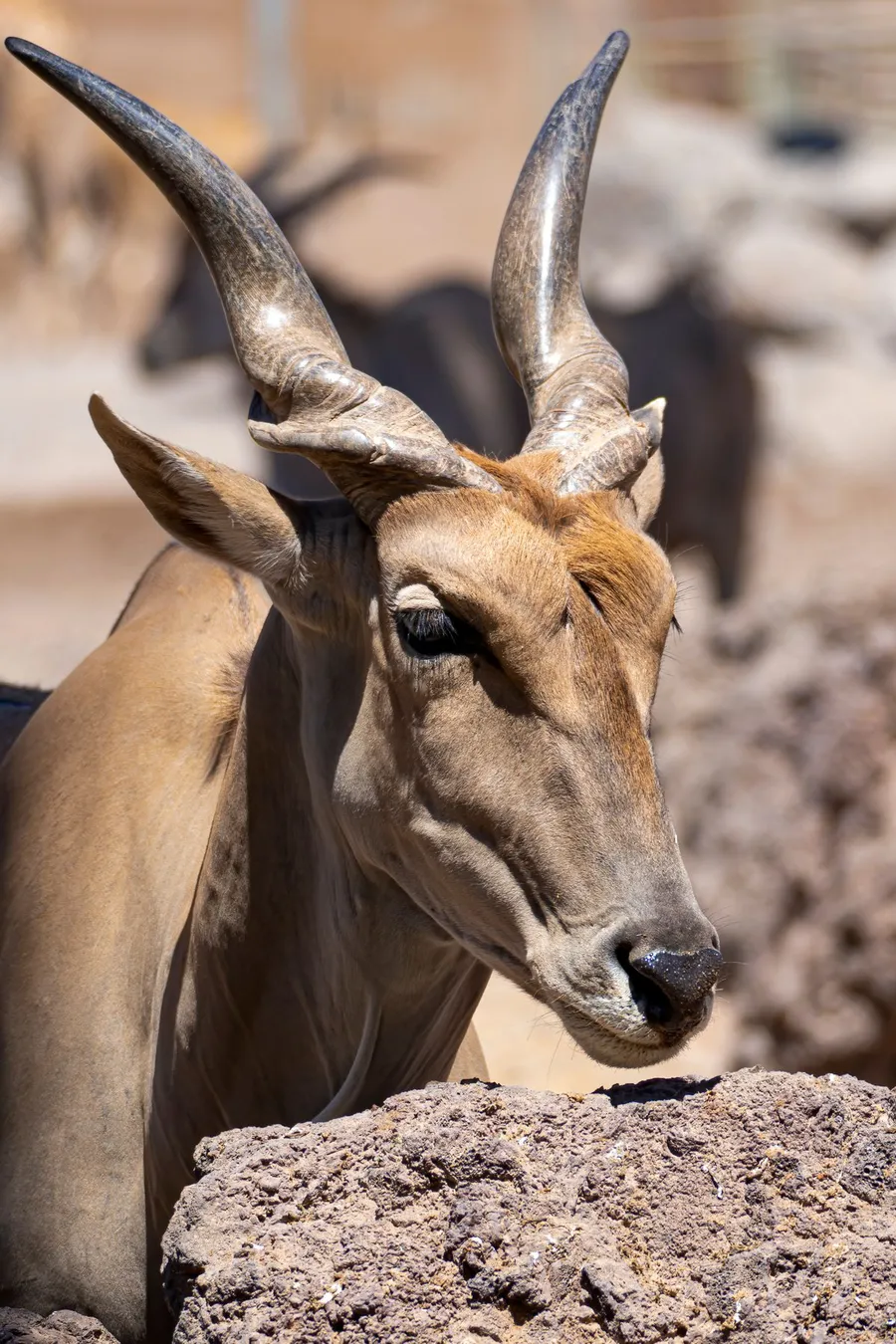
- Horns first: tight spirals mean eland or kudu. Straight spears mean oryx. A scimitar curve swept back means sable.
- Rump marks: a white ring is a waterbuck. A flaring white rump is a springbok. Black and white hindquarter stripes are an impala.
- Face marks: a black and white mask is a gemsbok. A long, narrow face is a hartebeest. A swollen nose is a saiga.
- Colour split: black males with brown females means sable or blackbuck. Dark grey bulls with chestnut females means nyala.
- Behaviour: browsing on hind legs is a gerenuk. Standing guard on a termite mound is often a topi.
- Habitat: deep sand means gemsbok or addax. Swamp means sitatunga. Rocks mean klipspringer. Striped chestnut in forest means bongo.

Conservation Notes: Which Antelopes Need Help
Most species here are secure, and a few are true comebacks: the Arabian oryx, the scimitar-horned oryx and the saiga.
The worry list is real. The addax is Critically Endangered, the scimitar-horned oryx stays Endangered, giant eland and Arabian oryx are Vulnerable, and bongo, lesser kudu and gerenuk are Near Threatened. Habitat loss and bushmeat hunting drive most declines.
Frequently Asked Questions
How many antelope species are there in the world?
About 90, depending on the taxonomy used. This chart covers 30 of the best known.
What is the largest antelope species?
The elands. Big bulls can approach 1,000 kg, heavier than a large horse.
What is the smallest antelope species?
The royal antelope, at 25 to 28 cm at the shoulder and only 2 to 3 kg.
Is the pronghorn an antelope?
No. It sits in its own family and is not a true antelope. All real antelopes live in Africa or Asia.
Which antelope is the most endangered?
The addax of the Sahara, with a few hundred left in the wild.
Do female antelopes have horns?
Often, yes. Eland, oryx, wildebeest and many gazelle females carry horns. Impala and dik-dik females do not.
Conclusion
From a one tonne eland to an antelope smaller than a rabbit, no grazing family covers more shapes. Keep the horn shapes and rump marks in mind, and all antelope species stop blurring into one brown animal in the grass.
Keep exploring the series with the all fox species chart, our all wolf species guide and the all bear species chart.


Pingback: All Turtle Species: Complete Chart of Size, Range and Facts – Chart Identify
Pingback: Types of Gazelle: 20 Species, Sizes and Habitats – Chart Identify