That chirping from the garden on a warm night can be over in a few weeks, while the silent cricket in a basement can still be there next year. This cricket lifespan chart sorts out that gap: it gives the adult lifespan and full life cycle for 14 cricket types, then breaks the life of a house cricket down stage by stage.
Most crickets live less than a year in total, and the adult stage, the only stage that chirps, usually lasts just 1 to 3 months. Camel and cave crickets are the exception, reaching 1 to 2 years, and mole crickets can take up to 3 years underground.

Cricket Lifespan Chart: 14 Types Compared
Read the two columns differently. Adult lifespan is the time after the final molt, when the cricket has wings and can breed. Total life cycle counts everything, from egg to adult death. For seasonal species the egg does most of the waiting, often through the whole winter.
| Cricket Type | Scientific Name | Adult Lifespan | Total Life Cycle | Where It Lives |
|---|---|---|---|---|
| House cricket | Acheta domesticus | 8 to 10 weeks | 2 to 3 months | Houses, farms, feeder colonies |
| European field cricket | Gryllus campestris | 2 to 3 months | About 1 year | Grassland burrows in Europe |
| Fall field cricket | Gryllus pennsylvanicus | 2 to 3 months | About 1 year | Fields and gardens in North America |
| Jamaican field cricket | Gryllus assimilis | 2 to 3 months | 3 to 4 months | Warm grassland, also farmed as feeders |
| Two-spotted cricket | Gryllus bimaculatus | 2 to 4 months | 3 to 6 months | Dry grassland in Africa and Europe |
| Mole cricket | Gryllotalpa spp. | 3 to 6 months | 1 to 3 years | Underground burrows in damp soil |
| Tree cricket | Oecanthus spp. | 1 to 3 months | About 1 year | Shrubs, trees and tall weeds |
| Snowy tree cricket | Oecanthus fultoni | 1 to 2 months | About 1 year | Bushes and garden plants |
| Camel cricket | Rhaphidophoridae spp. | 1 to 2 years | 1 to 2 years | Basements, sheds and woodpiles |
| Cave cricket | Ceuthophilus spp. | 1 to 2 years | 1 to 2 years | Caves and other dark, damp places |
| Mormon cricket | Anabrus simplex | 2 to 3 months | About 1 year | Western North American rangeland |
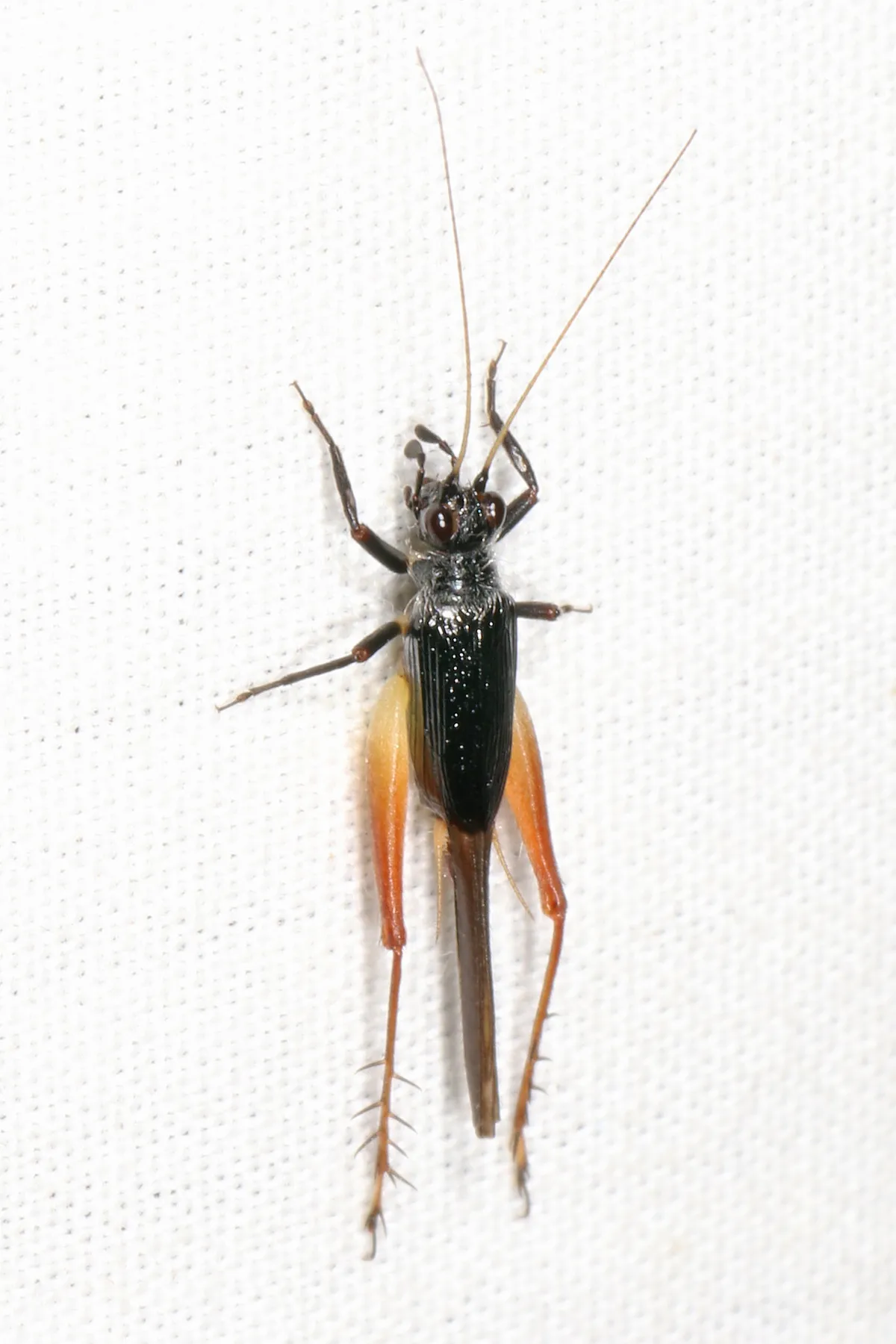
| Sword-tailed cricket | Trigonidium spp. | 1 to 3 months | 6 to 12 months | Leaf litter and low plants |
| Ground cricket | Allonemobius spp. | 1 to 2 months | About 1 year | Leaf litter, lawns and forest floors |
| Banded cricket | Gryllodes sigillatus | 2 to 3 months | 3 to 5 months | Warm buildings, also farmed as feeders |
Two patterns stand out. The long-lived crickets are the quiet ones: camel and cave crickets have no wings, never chirp, and grow slowly where few predators hunt. The farmed species cluster in the middle, finishing a cycle in 2 to 5 months, which is why farms can raise them in huge numbers. Our wider bug lifespan chart compares crickets with dozens of other insects.

The Cricket Life Cycle, Stage by Stage
Crickets use incomplete metamorphosis, with only three stages: egg, nymph and adult. There is no pupa. A newly hatched cricket already looks like a cricket, just tiny, pale and wingless. The timings below use the house cricket, kept warm at about 80 to 86 degrees Fahrenheit (27 to 30 degrees Celsius). Cooler rooms stretch every stage.
| Stage | How Long It Lasts | What Happens |
|---|---|---|
| Egg | 7 to 14 days warm, or all winter outdoors | The female pushes eggs into damp soil or plant tissue with her ovipositor, several hundred in her life. |
| Nymph | 6 to 8 weeks | The nymph eats, grows and molts 8 to 10 times. Wing buds appear in later molts, and nymphs need hides after a molt, when the body is soft. |
| Adult | 8 to 10 weeks | Wings are complete after the final molt. Males chirp within days, females lay within about a week. |
Outdoor species run the same stages on a seasonal clock. A fall field cricket lays eggs in autumn, they sit in soil through winter, nymphs feed through spring and summer, and adults sing in late summer before frost kills them. The egg stage alone can last 6 months or more. Our insect egg identification chart compares cricket eggs with other insect eggs.
Which Crickets Live the Longest, and Which Die Youngest?
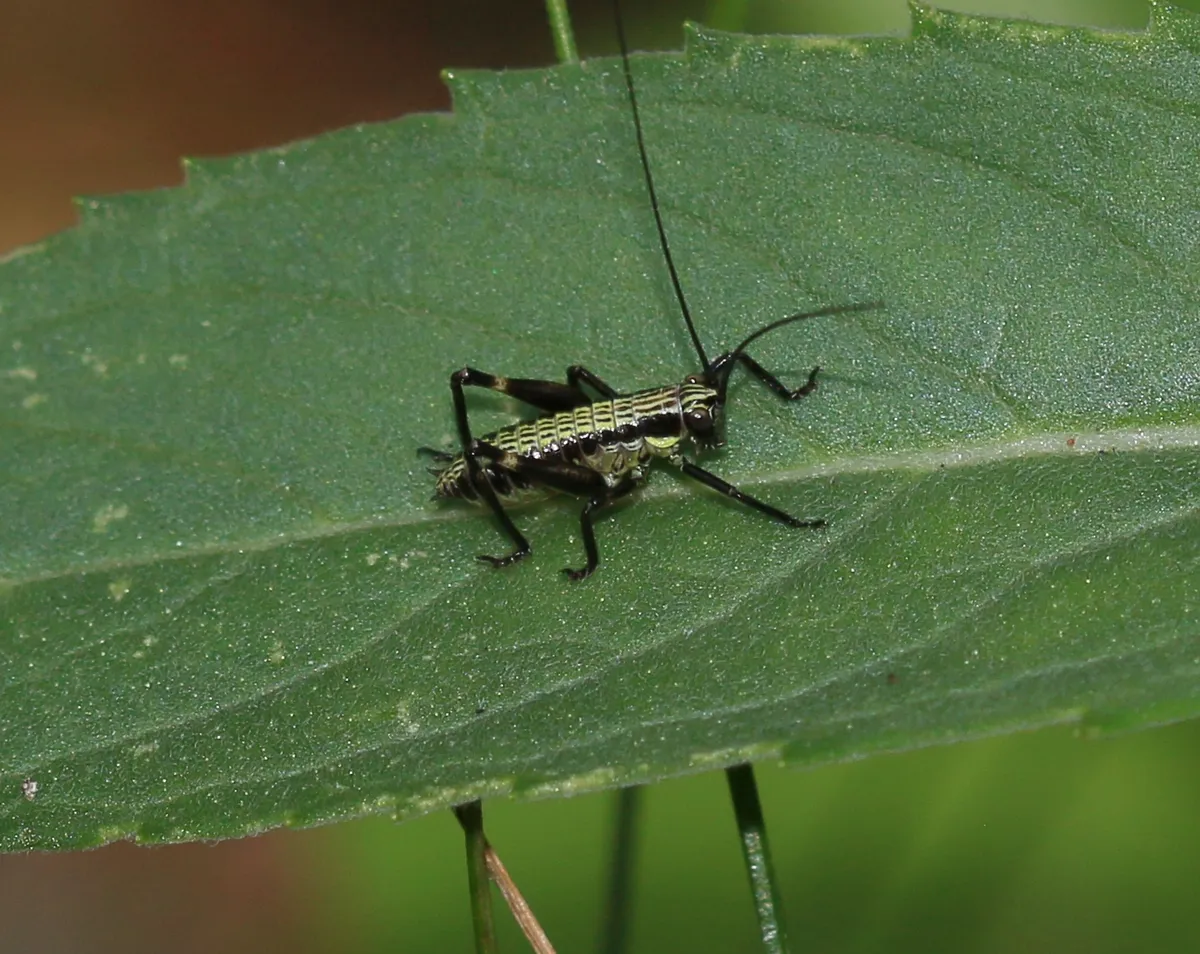
Camel and cave crickets live the longest, at 1 to 2 years. Their homes help: a basement or cave stays cool and damp all year, food such as fungi and dead insects is steady, and no frost ends the season. Slow growth in the cold stretches the whole life out.

Mole crickets come next. A European mole cricket can spend 2 years as a nymph underground before a final adult season of 3 to 6 months, a total of up to 3 years in the cold north of its range. In warmer regions the same species finishes in about 1 year, proof that temperature, not just species, sets the clock.
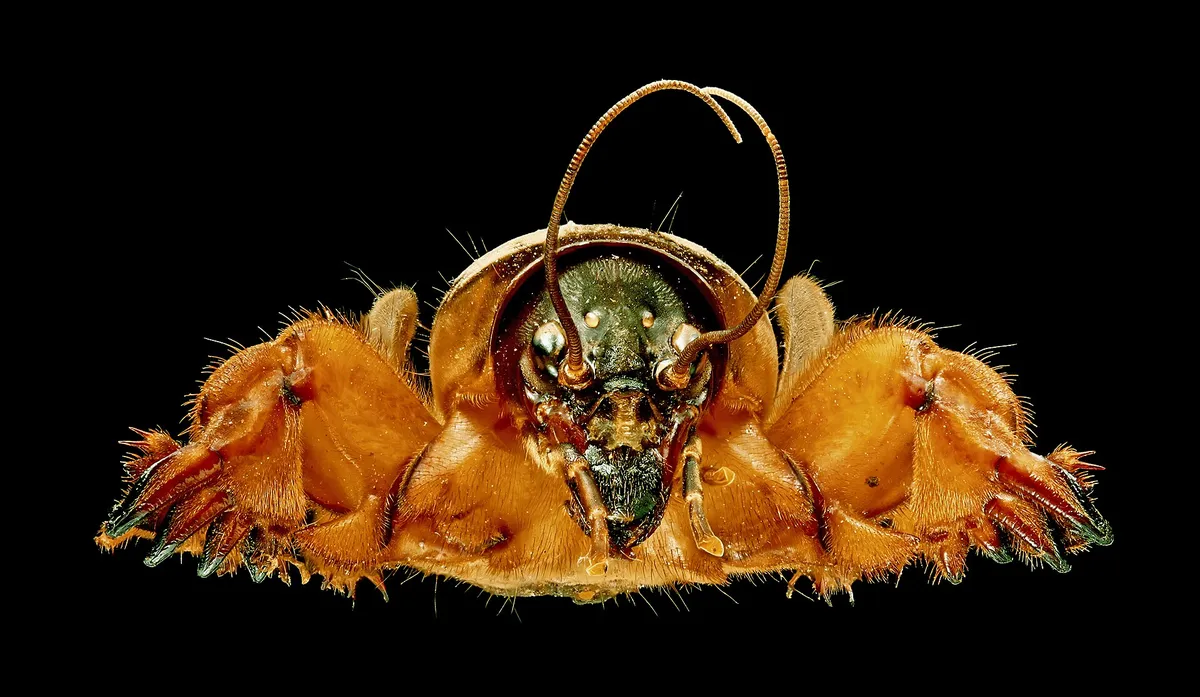
At the short end sit ground crickets and snowy tree crickets, with adults living only 1 to 2 months. That is a strategy, not a failure: the egg survives winter safely, and the adult gets one job, breed fast during the warm weeks. House crickets sit in between at 8 to 10 weeks as adults.
Why Only Some Crickets Chirp
Only males chirp, and only in species with wings. The sound is made by stridulation: a scraper on one forewing is drawn across a row of tiny teeth, called the file, on the other wing. Pitch differs by species, so a good listener can name a cricket by song alone. Crickets hear through ears on their front legs.
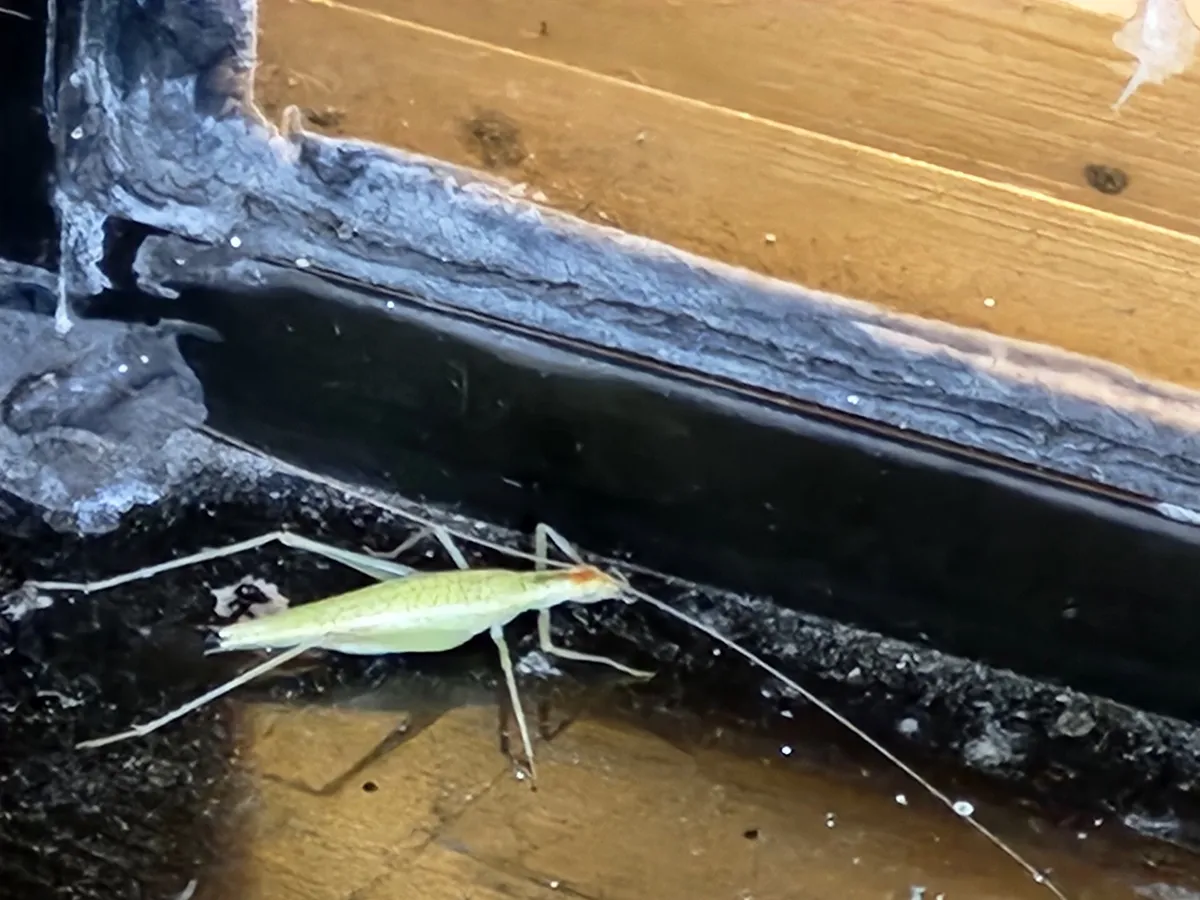
The snowy tree cricket is the famous one. Its chirp rate tracks temperature so closely that it earned the nickname thermometer cricket: count its chirps in 14 seconds and add 40 for a rough temperature in Fahrenheit. This link is called Dolbear’s law. Camel and cave crickets, by contrast, are wingless, silent. If something jumps in your basement but never sings, that silence is a clue.
What Shortens or Stretches a Cricket’s Life?
Temperature. Warmth speeds up growth, breeding and aging at once. A house cricket at 86 degrees Fahrenheit races through its cycle, while the same species in a cool room grows slowly and can live a little longer as an adult.
Frost and season. For most outdoor crickets, the first hard frost is the real limit. Adults do not survive winter in cold climates; the species survives as eggs.
Food and water. Crickets are omnivores that eat leaves, seeds, fruit, dead insects and fungi. Steady food and moisture keep nymphs molting on schedule. Dry, hungry nymphs stall and die at molts.
Predators and disease. Birds, frogs, lizards, spiders and bats eat crickets at every stage. In crowded feeder colonies, viruses and cannibalism during molting cut lives short faster than age does. Space, hides and constant food are the fixes.
Crickets as Feeders and Pets: How Long in Captivity?
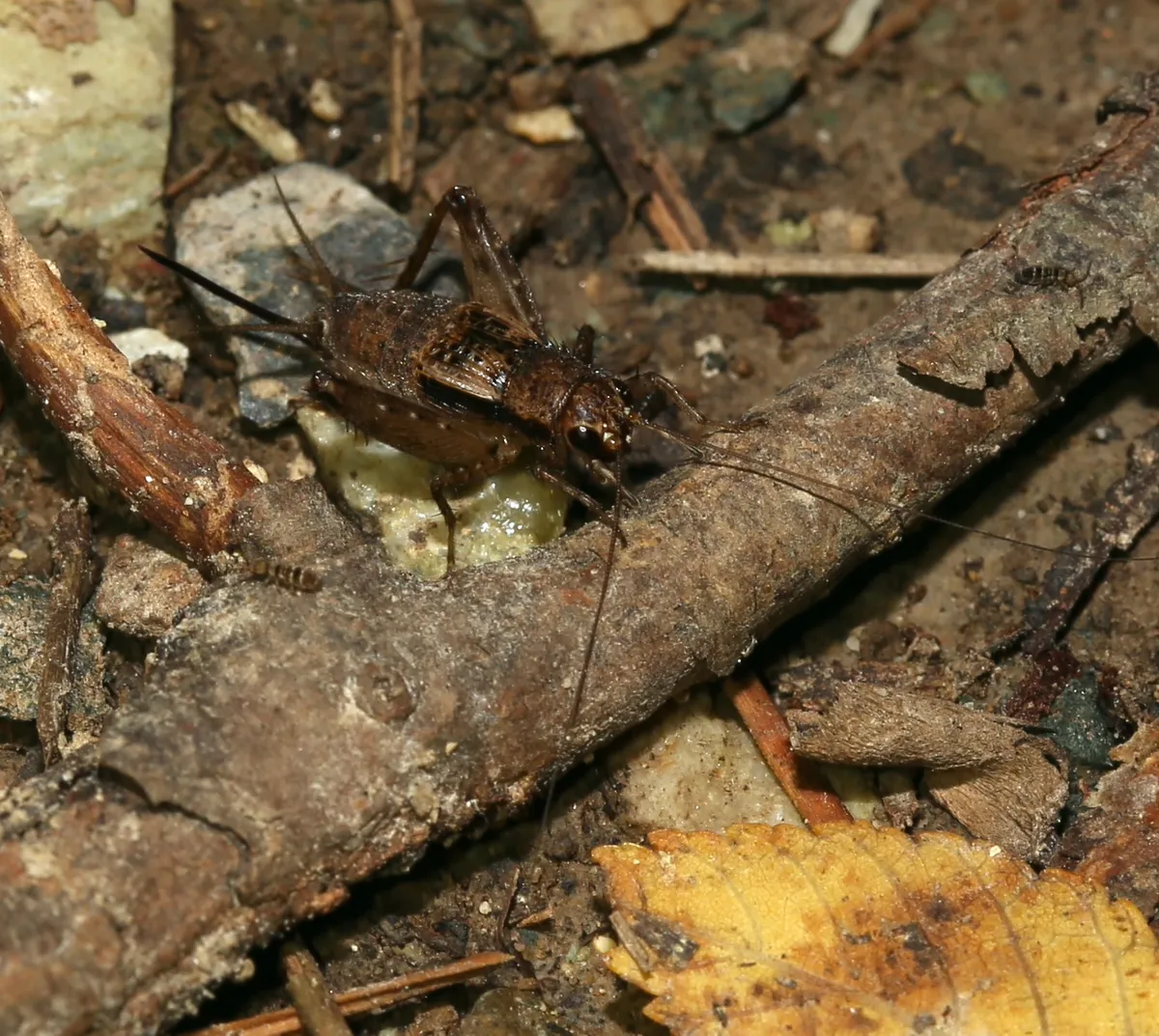
House, Jamaican field and banded crickets are sold as live food for reptiles and amphibians. Bought as adults, they live another 2 to 6 weeks. Raised from pinhead nymphs, they complete the full cycle in the chart above.
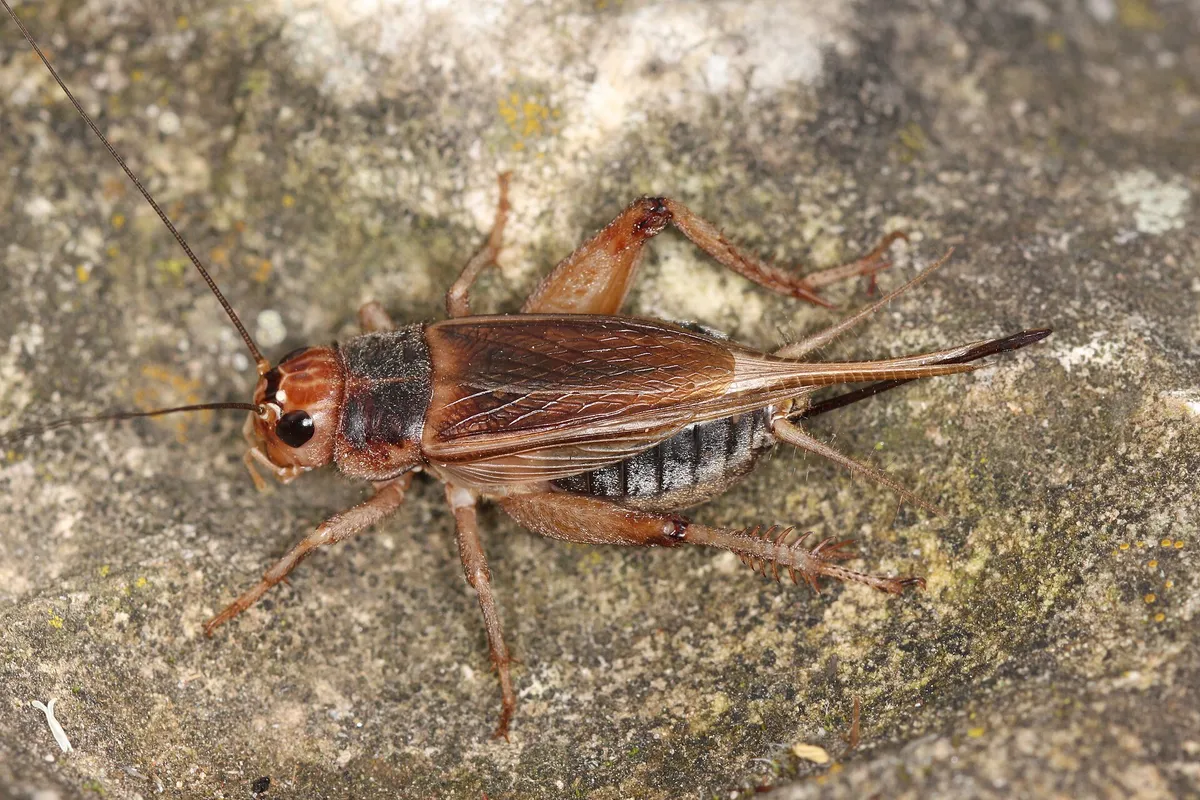
For the longest life, keep feeder crickets at 75 to 85 degrees Fahrenheit, give them egg crate to hide in, feed dry grain based food plus fresh vegetables, and offer water as gel or a damp sponge, not an open dish, which drowns small crickets. Remove dead crickets daily.
People also keep crickets as pets, especially field crickets in China and Japan, where singing males have been kept in small cages for centuries. Captivity removes frost and predators, but it does not reset the basic clock. For a different insect comparison, see our beetle lifespan chart and ladybug lifespan chart.
Cricket, Grasshopper or Katydid?
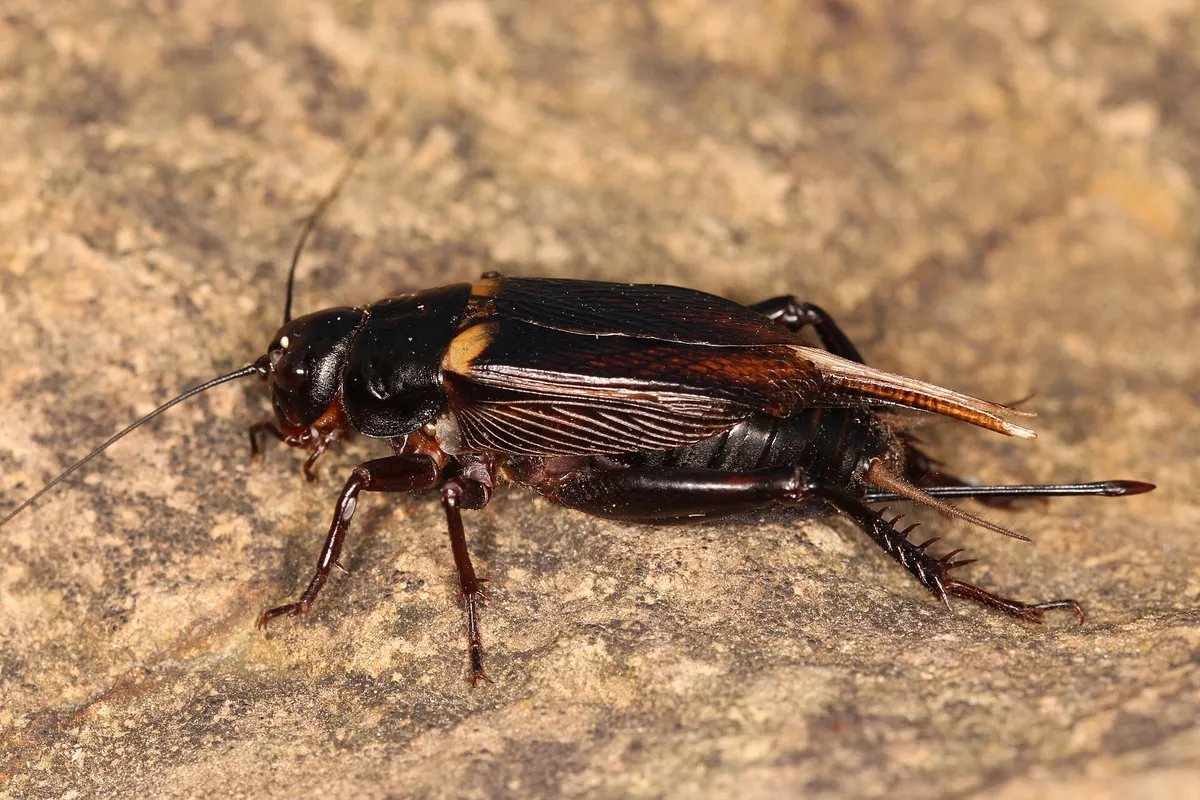
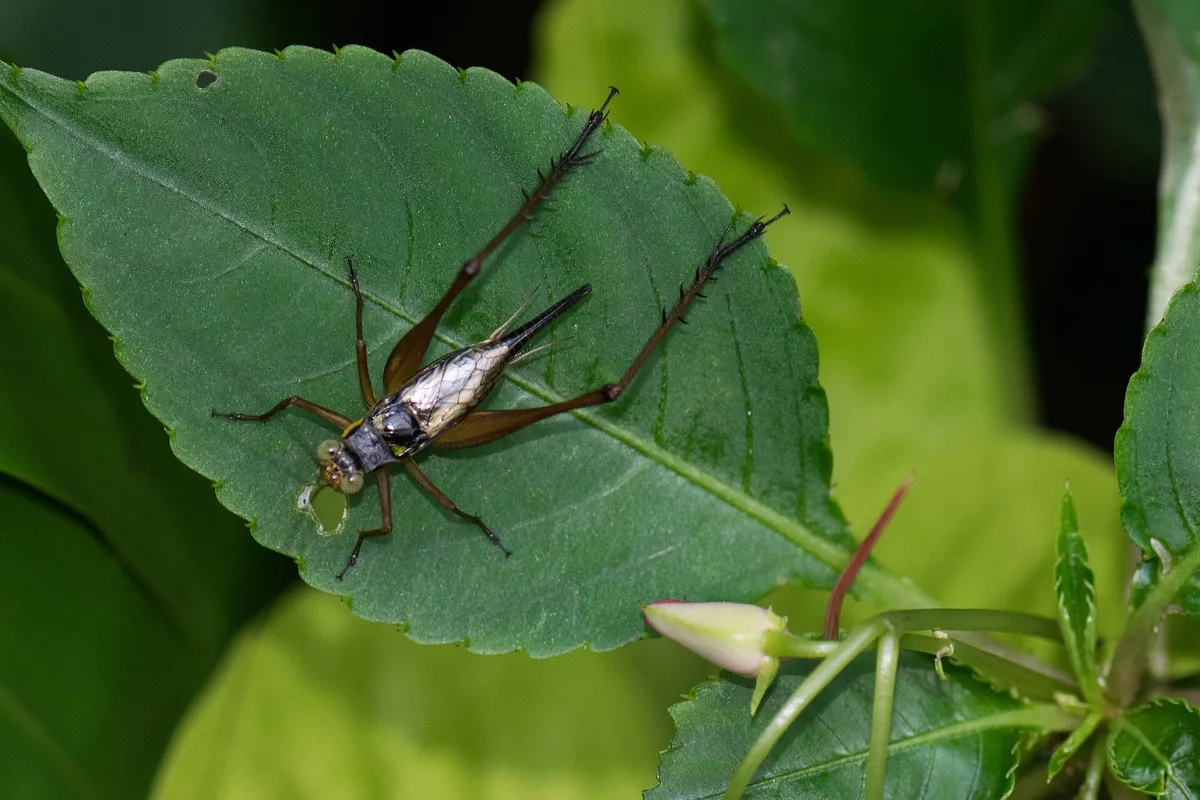
These three get mixed up constantly. Crickets have long antennae, often longer than the body, hold their wings flat, and sing at night. Grasshoppers have short antennae, are active by day, and most adults live 2 to 6 months within a roughly 1 year cycle. Katydids have very long antennae and leaf shaped wings, and also run a seasonal cycle of about 1 year.

Two names in the main chart need the same honesty. The Mormon cricket is not a true cricket: it is a flightless, shield backed katydid that travels in huge marching bands across western rangeland. Camel and cave crickets are also not true crickets: they belong to a separate family, have no wings and no song, and owe their long lifespan to that sheltered way of life. True crickets are the family Gryllidae: house, field, tree, ground and sword-tailed crickets.
Frequently Asked Questions
How long do crickets live?
Most crickets live 2 months to about 1 year in total, with an adult stage of 1 to 3 months. Camel and cave crickets are the exception at 1 to 2 years, and mole crickets can take up to 3 years in total.
How long do pet or feeder crickets live?
Adult feeder crickets bought from a store usually live 2 to 6 more weeks. Raised from pinhead nymphs with warmth, food and hiding space, they complete a full life of 2 to 4 months, depending on species.
Which cricket lives the longest?
Camel and cave crickets live longest as adults, at 1 to 2 years. Counting the full cycle, mole crickets can match them, taking up to 3 years in cold regions.
Do crickets die in winter?
Adult true crickets do. In cold climates the first hard frosts kill the singing adults, and the species survives the winter as eggs in soil or plant stems. Camel crickets are different: they shelter in basements and caves and can stay active all year.
Why is there a cricket in my house, and how long will it stay?
House crickets come indoors for warmth, food and moisture, and a male may chirp behind furniture for much of its 8 to 10 week adult life. A basement camel cricket is a longer term but silent and harmless guest, at 1 to 2 years. Sealing gaps and drying damp areas moves both out.
Can you really tell the temperature from a cricket?
Roughly, yes, with a snowy tree cricket. Count its chirps in 14 seconds and add 40 for the temperature in Fahrenheit. Dolbear’s law is a guide, not a thermometer, and works best between about 55 and 100 degrees.
Conclusion
A cricket’s life is short, seasonal and set by temperature. Most true crickets get 1 to 3 months as singing adults inside a total life of under a year, much of it spent waiting as an egg. The rule breakers escape the season: camel and cave crickets in sheltered homes reach 1 to 2 years, and mole crickets underground can take 3. Use the chart above to place any cricket you find.