

An octopus can solve a puzzle, open a jar from the inside, and change colour in less than a second. Then, after about two years, it is gone. That is the strange deal at the heart of this octopus lifespan chart: the smartest invertebrate on Earth gets one of the shortest lives in the sea.
Most octopuses live one to two years. The giant Pacific octopus reaches three to five years, the deep sea dumbo octopus may match it, and the Atlantic pygmy octopus can finish its whole life in eight to twelve months. This chart lines up twelve species, with wild and captive figures, sizes, and habitats.
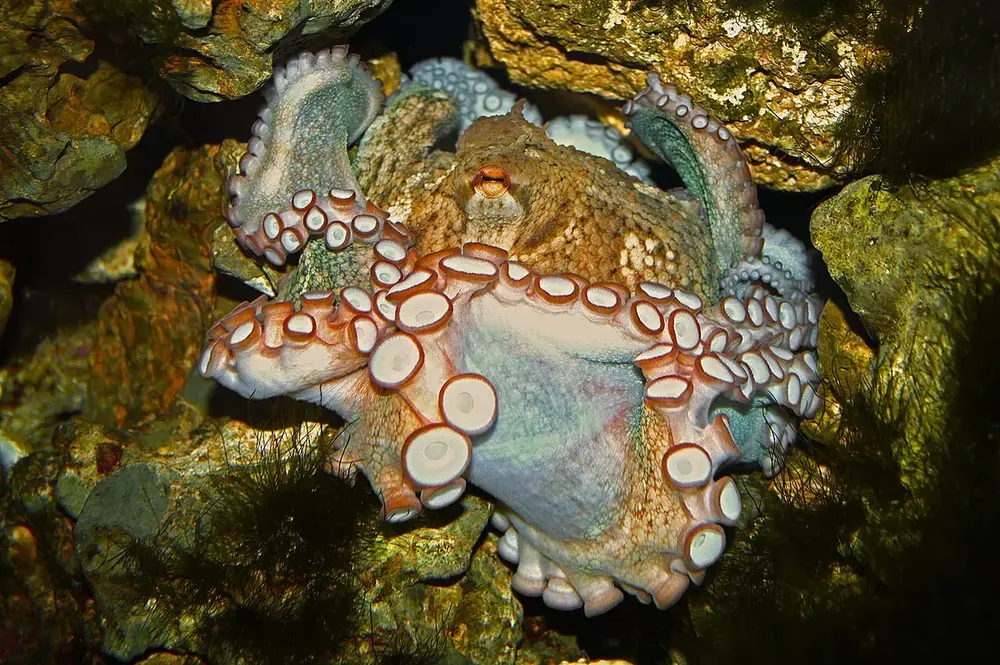
Octopus Lifespan Chart: 12 Species Compared
The table compares twelve octopus species. Figures are typical ranges from aquarium records and field studies. A warm reef animal sits at the short end of its range, while a cold water one may reach the long end.
| Species | Scientific Name | Wild Lifespan | Captivity | Maximum Size | Habitat |
|---|---|---|---|---|---|
| Common octopus | Octopus vulgaris | 1-2 years | About 2 years | Up to 1 m arm span | Mediterranean and eastern Atlantic |
| Giant Pacific octopus | Enteroctopus dofleini | 3-5 years | 3-5 years | Up to 6 m arm span, 50 kg | Cold North Pacific |
| Greater blue-ringed octopus | Hapalochlaena lunulata | 1-2 years | About 2 years | Up to 20 cm | Indo-Pacific reefs |
| Southern blue-ringed octopus | Hapalochlaena maculosa | 7 months-1 year | About 1 year | Up to 10 cm | Southern Australia |
| Mimic octopus | Thaumoctopus mimicus | 12-18 months | About 1 year | Up to 60 cm | Indo-Pacific sandy seabeds |
| Coconut octopus | Amphioctopus marginatus | 1-1.5 years | About 1.5 years | Up to 15 cm | Indo-Pacific shallow water |
| Caribbean reef octopus | Octopus briareus | 10-12 months | 10-17 months | Up to 60 cm | Caribbean coral reefs |
| Atlantic pygmy octopus | Octopus joubini | 8-12 months | About 1 year | Up to 15 cm | Western Atlantic shallows |
| Dumbo octopus | Grimpoteuthis spp. | 3-5 years | Rarely kept | Up to 30 cm | Deep sea worldwide |
| Day octopus | Octopus cyanea | 12-15 months | About 1 year | Up to 80 cm | Indo-Pacific reefs |
| California two-spot octopus | Octopus bimaculoides | 1-2 years | 1-2 years | Up to 60 cm | Eastern Pacific, California to Mexico |
| Blanket octopus | Tremoctopus violaceus | 1-2 years | Rarely kept | Females up to 2 m | Tropical open ocean |
Two patterns jump out. Almost every species lands under two years, and the two longest lived both live in cold water. For the animals behind these numbers, see our types of octopus guide.
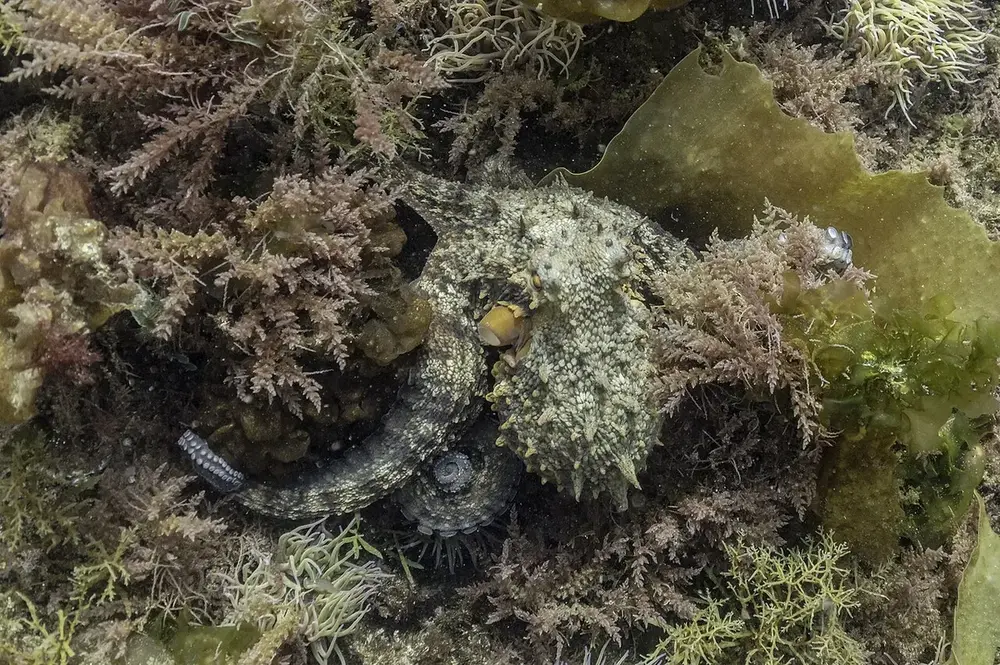

Which Octopus Lives the Longest?
The giant Pacific octopus holds the longest confirmed lifespan of any shallow water species, at three to five years. It is also the largest, with an arm span up to six meters and a weight up to 50 kg, living in the cold North Pacific, where low temperatures slow its metabolism and stretch its life out.
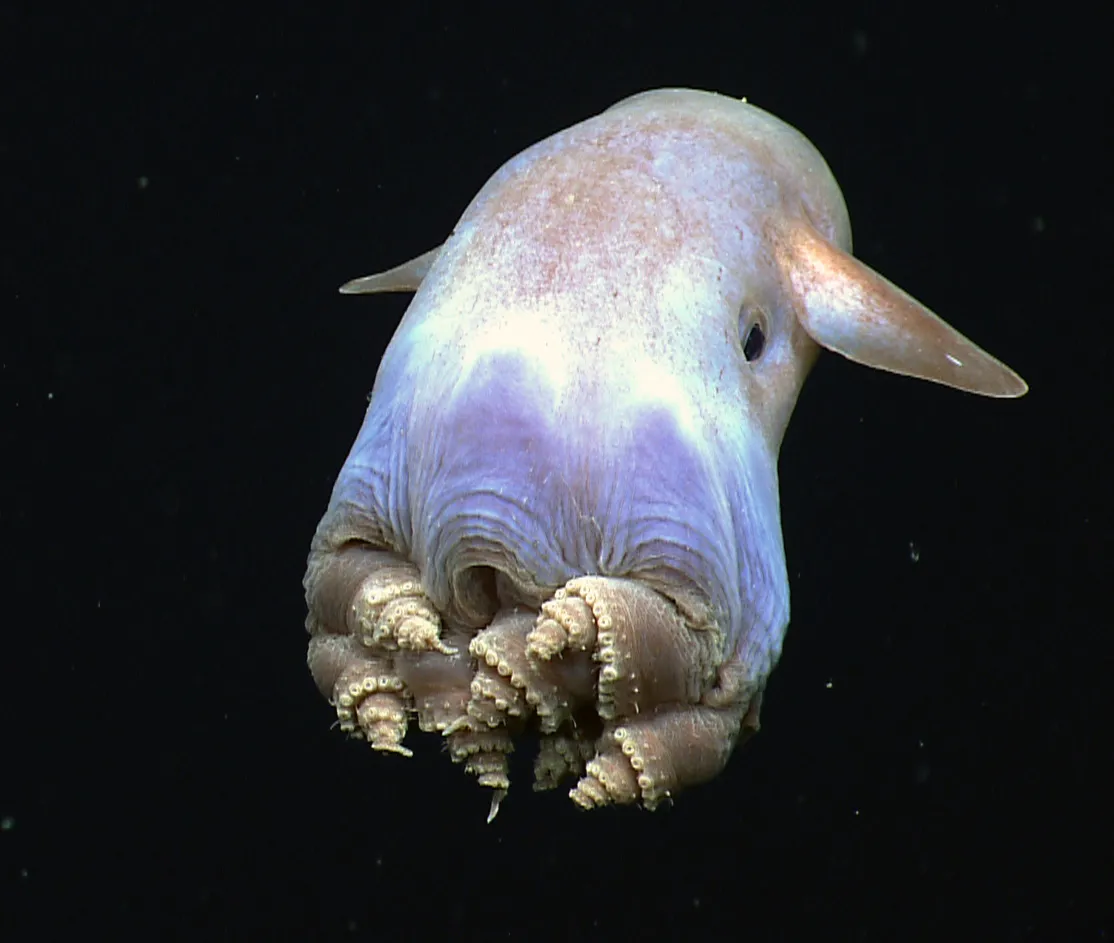
The dumbo octopus may match it. The Natural History Museum estimates three to five years for dumbos, but they live thousands of meters down, so the figure rests on growth studies rather than long term tracking, and no dumbo has ever been kept in an aquarium for a full lifespan. Everything else sits well below that: the common octopus and the California two-spot reach about two years, the day, mimic, and coconut octopuses run twelve to eighteen months, and the reef species are shortest of all.
Why Octopuses Live Such Short Lives
Octopuses are semelparous, which means they breed once and then die. There is no second breeding season and no old age in the way a turtle experiences it. After mating, a gland behind the eyes, called the optic gland, triggers a rapid decline known as senescence. The animal stops eating, its colour dulls, and within weeks it is gone.
Males usually go first, within a few months of mating. Females last a little longer because they stay to guard their eggs, fanning them with fresh water for months without feeding. By the time the eggs hatch, she is starving and dying.
Evolution has traded longevity for a different strategy: grow fast, learn fast, breed once, and put everything into one huge batch of eggs. A female common octopus may lay 100,000 to 500,000 eggs. Most are eaten within days, but a few survive. Compare that with a sea turtle lifespan chart, where the animal breeds for decades and lives 50 to 80 years.

Octopus Life Stages: From Egg to Old Age
An octopus life is short, but it is packed. The stages below follow a common octopus from egg to death, with similar timing across most shallow water species.
| Life Stage | Approx. Age | What Happens |
|---|---|---|
| Egg | 0-2 months | Eggs hang in strings in the den. The mother guards them and does not feed. |
| Paralarva | 0-2 months | Tiny hatchlings drift in open water on plankton. Most are eaten within days. |
| Juvenile | 2-6 months | Survivors settle on the seabed, find a den, and grow fast on crabs and shrimp. |
| Subadult | 6-12 months | Growth continues. The octopus learns hunting, camouflage, and escape. |
| Adult | 12-18 months | Reaches full size and mates. Females prepare a den for eggs. |
| Senescence | Final weeks | After breeding, the optic gland triggers decline and death within weeks. |


Short-Lived Reef Species vs Long-Lived Cold-Water Species
Warm water speeds everything up. A reef octopus lives in water near 26 to 29 degrees Celsius, hunts every day, and burns through its life in about a year. The Atlantic pygmy octopus finishes in eight to twelve months.
Cold water does the opposite. The giant Pacific octopus lives in water below 10 degrees Celsius, and its slower metabolism stretches the same life plan across three to five years. The dumbo octopus takes this further: in near freezing deep sea water, its whole biology slows to a crawl. Size helps too, but only alongside temperature. Blanket octopus females grow up to two meters long, yet still live only one to two years in warm tropical water. Big alone is not enough. Cold is the real lever.
Wild vs Captivity: Does a Tank Add Time?
People expect captivity to add years, the way it does for parrots or tortoises. With octopuses, it barely moves the needle. A tank removes predators, but biology sets the limit, and the optic gland fires on schedule either way.
| Species | Wild | Captivity | Takeaway |
|---|---|---|---|
| Common octopus | 1-2 years | About 2 years | Roughly the same |
| Giant Pacific octopus | 3-5 years | 3-5 years | No real gain |
| Caribbean reef octopus | 10-12 months | 10-17 months | Slight edge in a tank |
| Atlantic pygmy octopus | 8-12 months | About 1 year | Roughly the same |
| Dumbo octopus | 3-5 years | Rarely kept | Too deep to study in tanks |

What Decides How Long an Octopus Lives
Five things move the number, and temperature does most of the work.
| Factor | Effect on Lifespan |
|---|---|
| Water temperature | Cold water slows metabolism and stretches life. |
| Body size | Bigger species live longer than tiny pygmy octopuses. |
| Breeding (semelparity) | Each octopus breeds once, then declines and dies within weeks. |
| Depth | Deep sea cold slows everything down. |
| Captivity | A safe tank rarely adds time. Biology sets the clock. |
Notice the pattern: cold and big means longer, warm and small means shorter. Our animals with the longest lifespan chart puts this in perspective: the longest lived octopus reaches five years, while the longest lived animals there reach centuries.
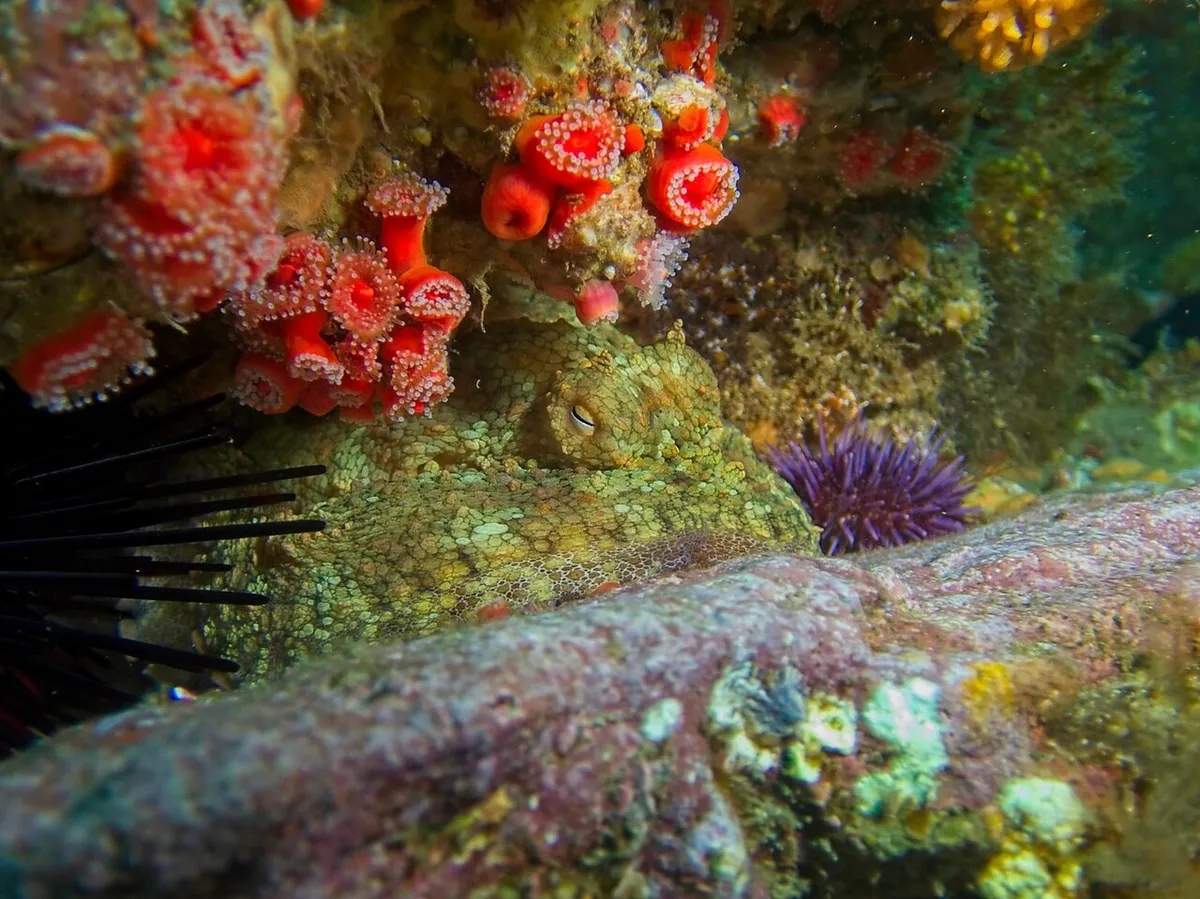

Octopus Lifespan Myths
The most common myth is that octopuses live for decades, or that a big one must be old. Even the largest giant Pacific octopus is at most five years old. Size reflects species and food, not age: a well fed common octopus can reach full size in a year.
Another myth is that keeping an octopus in a tank will double its life. It will not. The table above shows the same numbers in the wild and in captivity for almost every species.

Frequently Asked Questions
How long do octopuses live on average?
Most octopuses live one to two years. The giant Pacific and dumbo octopuses are the exceptions at three to five years, while the smallest reef species can finish in under a year.
Which octopus lives the longest?
The giant Pacific octopus, at three to five years, has the longest confirmed lifespan among shallow water species. The dumbo octopus may match it in the deep sea, but the data is thin.
Why do octopuses die so young?
They breed only once. A gland behind the eyes triggers a rapid decline after mating, and the animal dies within weeks. Males go first, and females die after their eggs hatch.
Do octopuses live longer in captivity?
Rarely. A tank removes predators but does not change the internal clock. Most species live about the same in a tank as in the wild.
Which octopus has the shortest lifespan?
The Atlantic pygmy octopus is among the shortest at eight to twelve months. The southern blue-ringed octopus is close behind at seven months to one year.
How long do octopuses live compared to other sea animals?
It is short. Where a sea turtle can live for decades, almost every octopus is gone within a few years. Only the giant Pacific and dumbo octopuses reach five years.
Can an octopus live 10 years?
No. There is no verified record of any octopus living ten years. The realistic ceiling is five years, and two years or less for most species.

Conclusion
The octopus lifespan chart still surprises people the first time they hear it. The cleverest animal in the sea, an escape artist with three hearts and blue blood, gets about two years. The biggest one gets five, and the smallest get less than one.
That short life is not a flaw. It is the whole strategy: grow fast, learn fast, breed once, and leave behind hundreds of thousands of eggs. Every trick an octopus shows you was learned in a life shorter than a school year.
Pingback: Starfish Lifespan Chart: How Long Starfish Live – Chart Identify