

Around 300 octopus species have been described so far, and the different types of octopus range from a giant with a 9 meter arm span to deep sea drifters you could hold in your palm. This guide covers 15 of the most remarkable species with real sizes, ranges, and ID features. Start with the master chart, then read the profiles for the details that make each species unmistakable.

Master Chart: 15 Octopus Species Compared
| Species | Scientific name | Max size | Range / Habitat | Key ID feature |
|---|---|---|---|---|
| Giant Pacific Octopus | Enteroctopus dofleini | 9.6 m, 272 kg | N. Pacific coasts | Rust-red, huge bulk |
| Common Octopus | Octopus vulgaris | 1 m, 10 kg | Mediterranean, E. Atlantic | Mottled, color-shifting |
| Caribbean Reef Octopus | Octopus briareus | 60 cm | Caribbean reefs | Blue-green web, blue suckers |
| Day Octopus | Octopus cyanea | 1 m span | Indo-Pacific reefs | Big head, hunts by day |
| Greater Blue-Ringed Octopus | Hapalochlaena lunulata | 10 cm | Indo-Pacific tide pools | Blue rings, venomous |
| Blue-Lined Octopus | Hapalochlaena fasciata | 15 cm | S. Australia reefs | Blue lines, venomous |
| Mimic Octopus | Thaumoctopus mimicus | 60 cm | Indonesia, Malaysia | Banded arms, impersonates fish |
| Coconut Octopus | Amphioctopus marginatus | 15 cm | Indo-Pacific sand | Carries shells as armor |
| Algae Octopus | Abdopus aculeatus | 25 cm | Indo-Pacific intertidal | Long tapered arms |
| Wonderpus | Wunderpus photogenicus | 25 cm | Philippines, Indonesia | Red/white bars, fixed pattern |
| Dumbo Octopus | Grimpoteuthis spp. | 30 cm | Deep sea worldwide | Ear fins, umbrella web |
| Flapjack Octopus | Opisthoteuthis californiana | 20 cm | N. Pacific deep sea | Flat disc, pinkish |
| Glass Octopus | Vitreledonella richardi | 45 cm | Tropical deep ocean | Transparent body |
| Seven-Arm Octopus | Haliphron atlanticus | 3.5 m, 75 kg | Deep sea worldwide | Males show 7 arms |
| California Two-Spot Octopus | Octopus bimaculoides | 60 cm span | California to Baja | Blue false eyespots |
1. Giant Pacific Octopus (Enteroctopus dofleini)
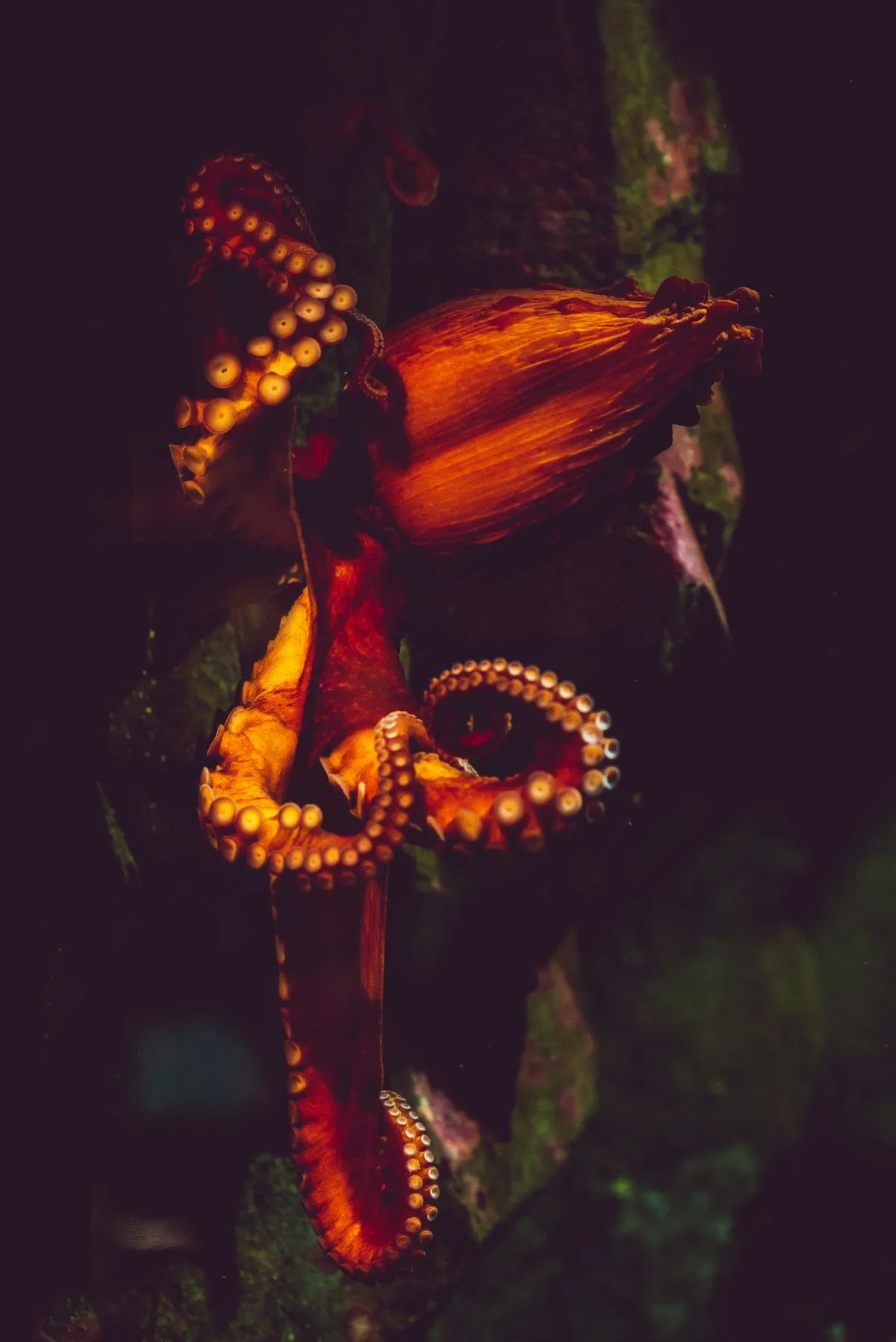
The giant Pacific octopus is the heavyweight of the octopus world. The largest measured individual spanned about 9.6 meters and weighed roughly 272 kilograms, though most adults are closer to 5 meters and 15 kilograms. It lives on rocky reefs and in kelp forests from California to Alaska and across to Japan, with rust-red, deeply folded skin.
2. Common Octopus (Octopus vulgaris)
The common octopus is the species most people picture and the one most studied for problem solving. It reaches about 1 meter and 10 kilograms and dens in rocks and rubble across the Mediterranean and eastern Atlantic. Its mottled browns and grays shift in seconds, and piles of empty crab shells outside a rocky hole mark its den.
3. Caribbean Reef Octopus (Octopus briareus)
A night diver who spots flashing blue-green webbing in the Caribbean is looking at Octopus briareus. It grows to about 60 centimeters and haunts reefs, seagrass beds, and lagoons across the Caribbean and Gulf of Mexico. By day it hides in brown camouflage; at night it hunts with arms spread wide, revealing an iridescent blue-green membrane. It shares these reefs with sea turtle species like the green turtle.
4. Day Octopus (Octopus cyanea)
Most octopuses are nocturnal, which makes the day octopus a snorkeler favorite. Active in daylight across Indo-Pacific reefs from Hawaii to the Red Sea, it reaches about 1 meter in arm span with a large rounded head. Its skin shifts from smooth olive to rough, pale, or boldly patterned as it hunts crabs.
5. Greater Blue-Ringed Octopus (Hapalochlaena lunulata)

Small, beautiful, and genuinely dangerous. The greater blue-ringed octopus is only about 10 centimeters long and lives in Indo-Pacific tide pools from Indonesia to Sri Lanka. At rest it looks like a plain brown pebble, but when threatened it flashes up to 60 iridescent blue rings. Its saliva carries tetrodotoxin, and there is no antivenom. Admire, never pick up.
6. Blue-Lined Octopus (Hapalochlaena fasciata)
The blue-lined octopus is the greater blue-ringed’s southern Australian cousin and just as venomous. It grows to about 15 centimeters and shows shimmering blue lines along its arms instead of rings. It lives on shallow reefs along Australia’s southern coast. Same tetrodotoxin venom, same rule: observe from a distance.
7. Mimic Octopus (Thaumoctopus mimicus)

Discovered in 1998, the mimic octopus is the first animal documented impersonating other venomous species. Found on sandy bottoms around Indonesia and Malaysia, it reaches about 60 centimeters with brown and white banded arms. Threatened, it can trail its arms like a lionfish or tuck six away to mimic a sea snake.
8. Coconut Octopus (Amphioctopus marginatus)
The coconut octopus is famous for tool use. About 15 centimeters long with dark arms lined in white suckers, it collects coconut husks and clam shells on Indo-Pacific sand, then carries them to build shelters or roll itself inside like an armored ball. It even walks on two arm-tips while holding shelter overhead.
9. Algae Octopus (Abdopus aculeatus)

The algae octopus rules the intertidal zone, living in tide pools and shallow flats across the Indo-Pacific. Its thin, tapered arms stretch its total length to about 25 centimeters, and mottled brown-green skin blends with seaweed. It often hunts in daylight, snatching crabs between tides.
10. Wonderpus (Wunderpus photogenicus)
The wonderpus has the best name in the sea and the pattern to match: rusty red with white bars and spots on long, delicate arms, reaching about 25 centimeters. It hunts at night on volcanic black sand around the Philippines and Indonesia. Divers confuse it with the mimic, but its ornate pattern stays fixed.
11. Dumbo Octopus (Grimpoteuthis spp.)
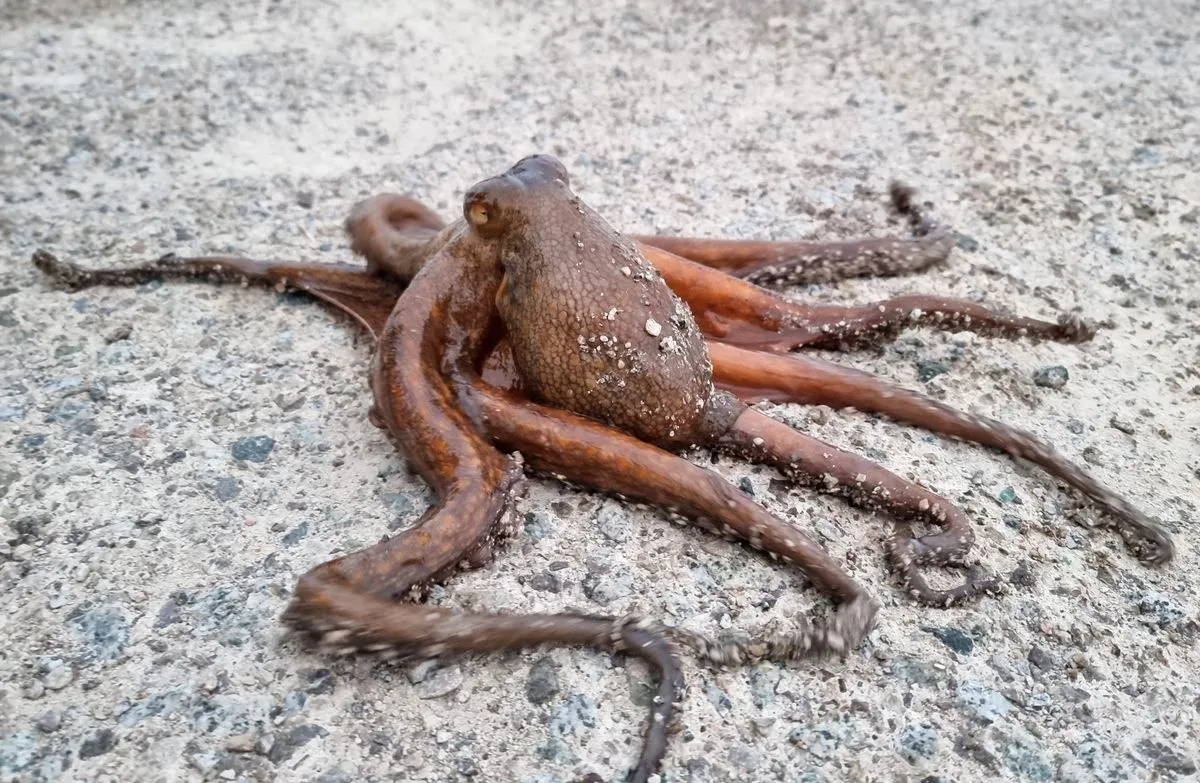
The dumbo octopus is the deepest living octopus known, recorded down to about 4,800 meters. Named for the ear-like fins it flaps to swim, it grows to about 30 centimeters and drifts through the dark in pale pink or white, pulsing its umbrella-like webbed arms. Grimpoteuthis covers a dozen such species.
12. Flapjack Octopus (Opisthoteuthis californiana)
The flapjack octopus is the deep sea’s pancake. Living at 500 to 800 meters in the North Pacific, it grows to about 20 centimeters with a flattened disc body, short arms, and pinkish purple skin. It has small fins and hair-like cirri and moves by fin flaps and gentle pulses.
13. Glass Octopus (Vitreledonella richardi)

The glass octopus is almost entirely transparent; only its eyes, optic nerve, and digestive tract show as dark shapes. It drifts in the deep open ocean of the tropics worldwide, reaching about 45 centimeters. Transparency is the ultimate midwater camouflage where predators hunt by silhouette. It shares those waters with pelagic hunters like the species in our shark species chart.
14. Seven-Arm Octopus (Haliphron atlanticus)
The seven-arm octopus has a misleading name and a record body. Males appear to have seven arms because the eighth is modified for reproduction and tucked into a pouch under the right eye. Females show all eight and reach 3.5 meters and 75 kilograms, the largest octopus by mass.
15. California Two-Spot Octopus (Octopus bimaculoides)
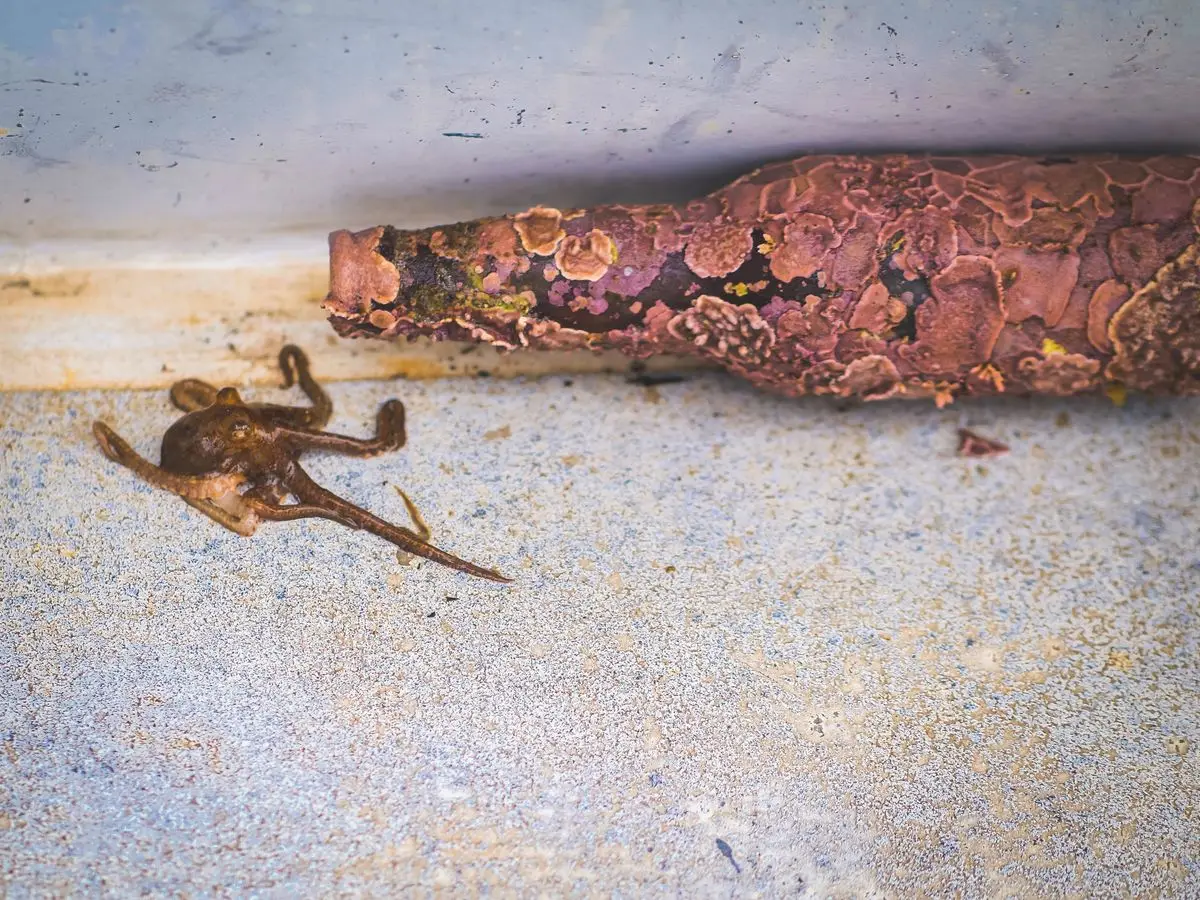
The California two-spot, or bimac, is the friendly face of the Pacific coast tide pool. Found from central California to Baja in kelp beds and tide pools, it reaches about 60 centimeters in arm span. Its signature is a pair of false eyespots ringed in electric blue beneath its real eyes.
Biggest to Smallest: Octopus Size Comparison
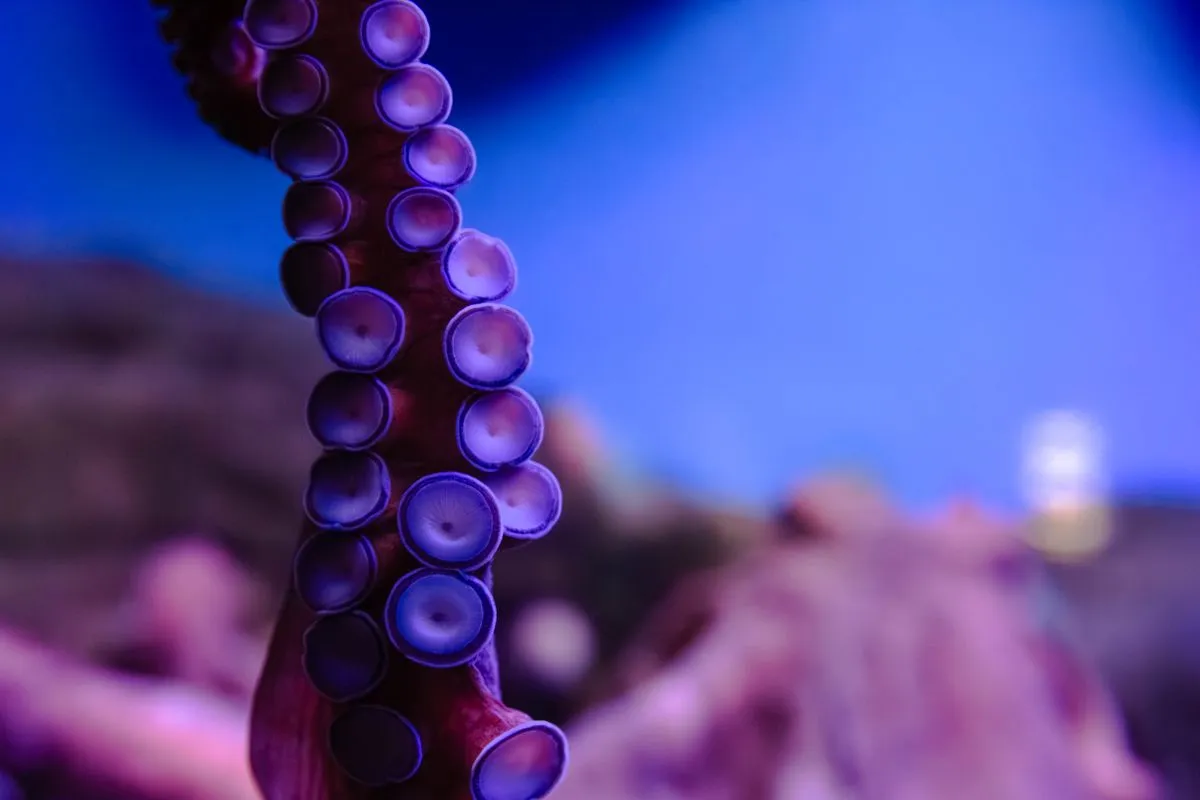
Octopus sizes span an astonishing range. Here are the 15 species ranked by maximum size; for the ocean’s true heavyweights, see our whale species guide.
| Species | Max size |
|---|---|
| Giant Pacific Octopus | 9.6 m, 272 kg |
| Seven-Arm Octopus | 3.5 m, 75 kg (females) |
| Common Octopus | 1 m, 10 kg |
| Day Octopus | 1 m span |
| California Two-Spot Octopus | 60 cm span |
| Caribbean Reef Octopus | 60 cm |
| Mimic Octopus | 60 cm |
| Glass Octopus | 45 cm |
| Dumbo Octopus | 30 cm |
| Algae Octopus | 25 cm |
| Wonderpus | 25 cm |
| Flapjack Octopus | 20 cm |
| Blue-Lined Octopus | 15 cm |
| Coconut Octopus | 15 cm |
| Greater Blue-Ringed Octopus | 10 cm |
Venom and Safety: Which Octopuses Are Dangerous
Only two species here are dangerous to humans: the blue-ringed octopuses, Hapalochlaena lunulata and H. fasciata. All octopuses make some venom to subdue crabs, but in every other species it is harmless to people. The blue-ringed danger is tetrodotoxin in their saliva, the same neurotoxin in pufferfish. Bites are painless and can paralyze breathing within minutes, and there is no antivenom. They are not aggressive; bites happen when someone picks one up. Never handle small tide pool octopuses.

How to Tell These Types of Octopus Apart
Size first. Over 2 meters in the North Pacific means giant Pacific; under 15 centimeters in a tide pool means blue-ringed, blue-lined, coconut, or algae.
Read the pattern. Blue rings mean greater blue-ringed; blue lines mean blue-lined; blue false eyespots mean California two-spot. Banded arms on sand suggest mimic or wonderpus; the wonderpus keeps its pattern fixed, the mimic changes shape.
Check habitat. Tide pools point to algae, coconut, blue-ringed, or two-spot. An octopus out on an Indo-Pacific reef by day is almost certainly a day octopus. Below 1,000 meters means dumbo, glass, or seven-arm.
Watch behavior. An octopus carrying shells is a coconut octopus, full stop. One impersonating a lionfish is a mimic. Ear-like fins mean dumbo; a flattened disc means flapjack.
Frequently Asked Questions
How many types of octopus exist?
Around 300 octopus species have been described, and deep sea surveys keep finding more. This guide covers 15 of the most distinctive, from shallow reefs to the abyss.
Which type of octopus is the most dangerous?
The blue-ringed octopuses (Hapalochlaena lunulata and H. fasciata) are the only ones dangerous to humans. Their saliva holds tetrodotoxin, which can paralyze breathing, and there is no antivenom. Never handling small tide pool octopuses removes the risk.
What is the biggest type of octopus?
The giant Pacific has the longest recorded arm span at about 9.6 meters, while the seven-arm holds the weight record at about 75 kilograms for large females. The giant Pacific is the biggest a diver is likely to meet.
Mimic octopus vs wonderpus: what is the difference?
Both live on Southeast Asian sand flats with banded arms, but the mimic impersonates animals like lionfish and sea snakes. The wonderpus keeps a fixed ornate red and white pattern, has longer thinner arms, and never mimics.
How long do octopuses live?
Most live only 1 to 2 years, remarkably short for such intelligent animals. The giant Pacific can reach 3 to 5 years. Nearly all reproduce once and die, with females guarding eggs without eating until they hatch.

Conclusion
From the giant Pacific patrolling cold northern reefs to the tiny blue-ringed flashing its warning in a tide pool, these 15 species show how much variety fits into one eight-armed body plan. Bookmark the master chart for your next reef trip, learn the warning colors, and remember the golden rule: look, never touch.


Pingback: Octopus Lifespan Chart: How Long Octopuses Live – Chart Identify