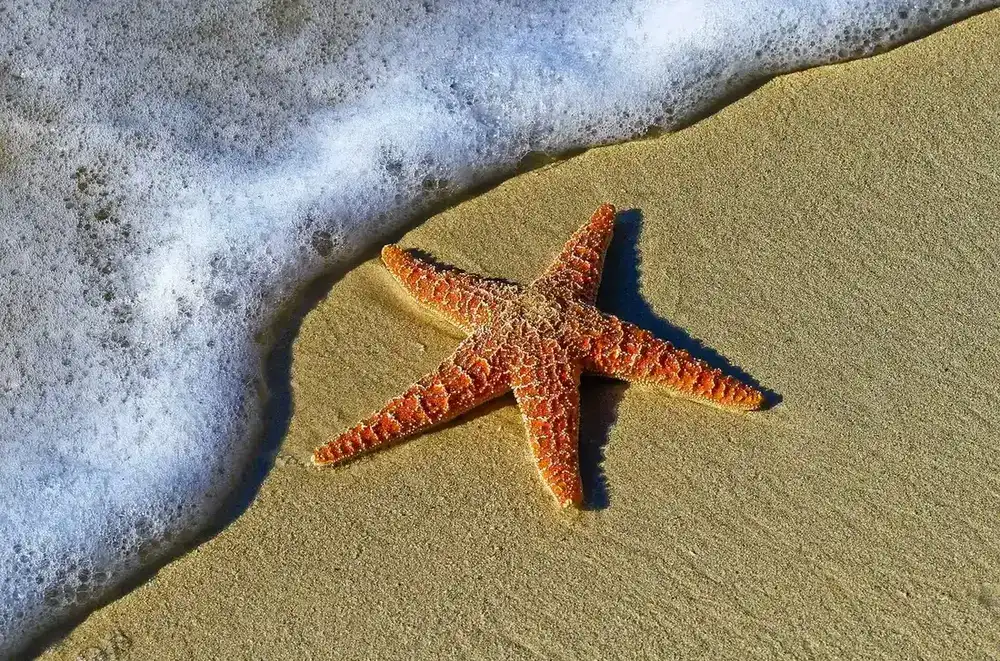
Most people meet their first starfish on a beach at low tide. It sits on a rock or half buried in wet sand, looking like a toy someone dropped. What surprises people is the age hiding inside that quiet little animal. This starfish lifespan chart shows that some sea stars live only two or three years, while others can outlive the family dog by decades.
Starfish, more properly called sea stars, are not fish at all. They are echinoderms, close cousins of sea urchins, and about 2,000 species live in oceans around the world. Nobody has followed a wild sea star from birth to old age, so most figures are estimates built from growth rates, tagging studies, and aquarium records. Below is the range for each species: typical wild and captive lifespans, and the longest age on record.
Starfish Lifespan Chart: 10 Sea Star Species Compared
Wild and captive figures often match, but the maximum column holds surprises.
| Species | Scientific Name | Wild Lifespan | Captive Lifespan | Max Recorded | Typical Size | Habitat |
|---|---|---|---|---|---|---|
| Common sea star | Asterias rubens | 5-10 years | 5-10 years | About 10 years | 10-30 cm | North Atlantic shores |
| Ochre sea star | Pisaster ochraceus | 10-20 years | 10-20 years | About 34 years | Up to 50 cm | NE Pacific rocky shores |
| Sunflower sea star | Pycnopodia helianthoides | 5-10 years | 5-10 years | Up to 65 years | Up to 1 m | NE Pacific |
| Blue sea star | Linckia laevigata | 10-15 years | 10-15 years | About 15 years | Up to 30 cm | Indo-Pacific coral reefs |
| Chocolate chip starfish | Protoreaster nodosus | 5-10 years | 5-10 years | About 10 years | Up to 30 cm | Indo-Pacific reefs |
| Crown-of-thorns starfish | Acanthaster planci | 5-10 years | 8-15 years | About 15-17 years | Up to 40 cm | Indo-Pacific coral reefs |
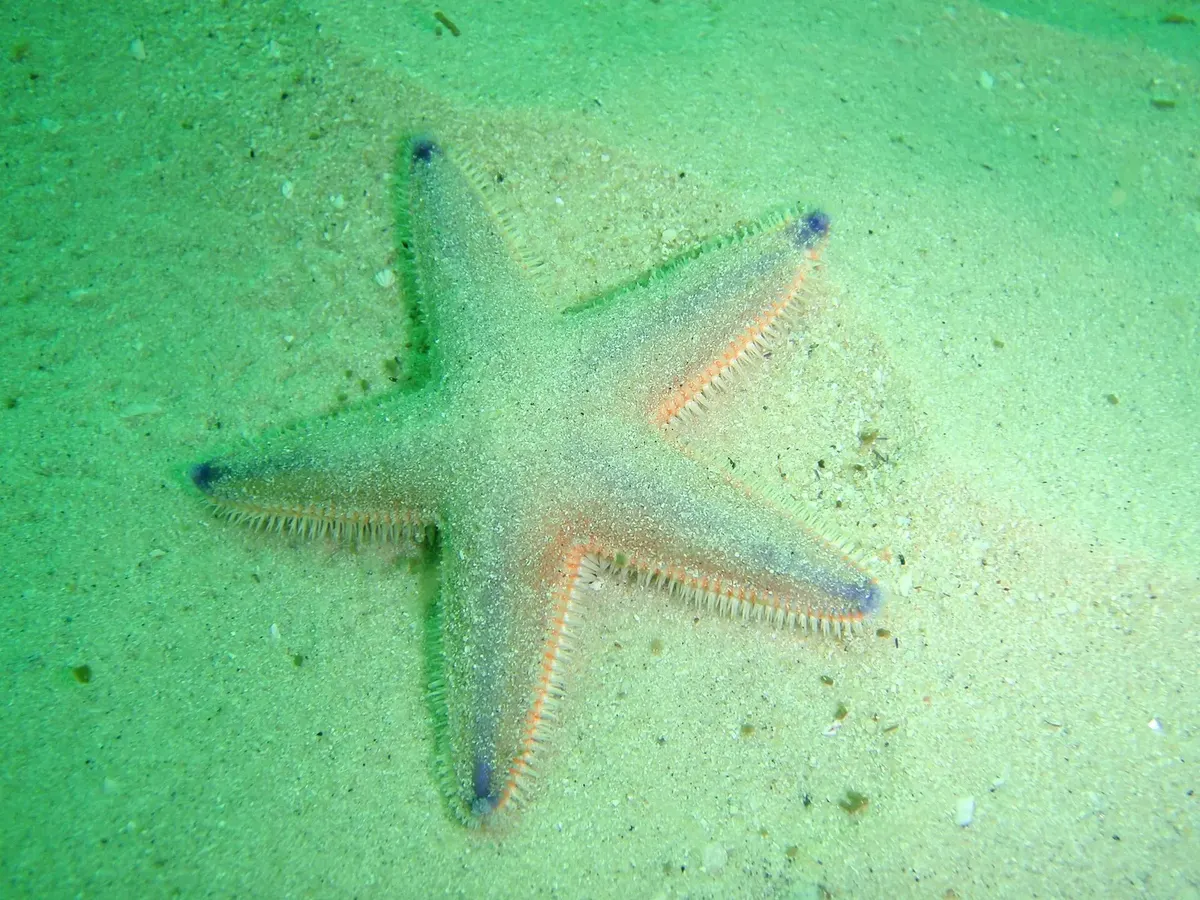
| Sand sifting starfish | Astropecten spp. | 2-5 years | 2-5 years | About 5 years | Up to 20 cm | Tropical sandy seabeds |
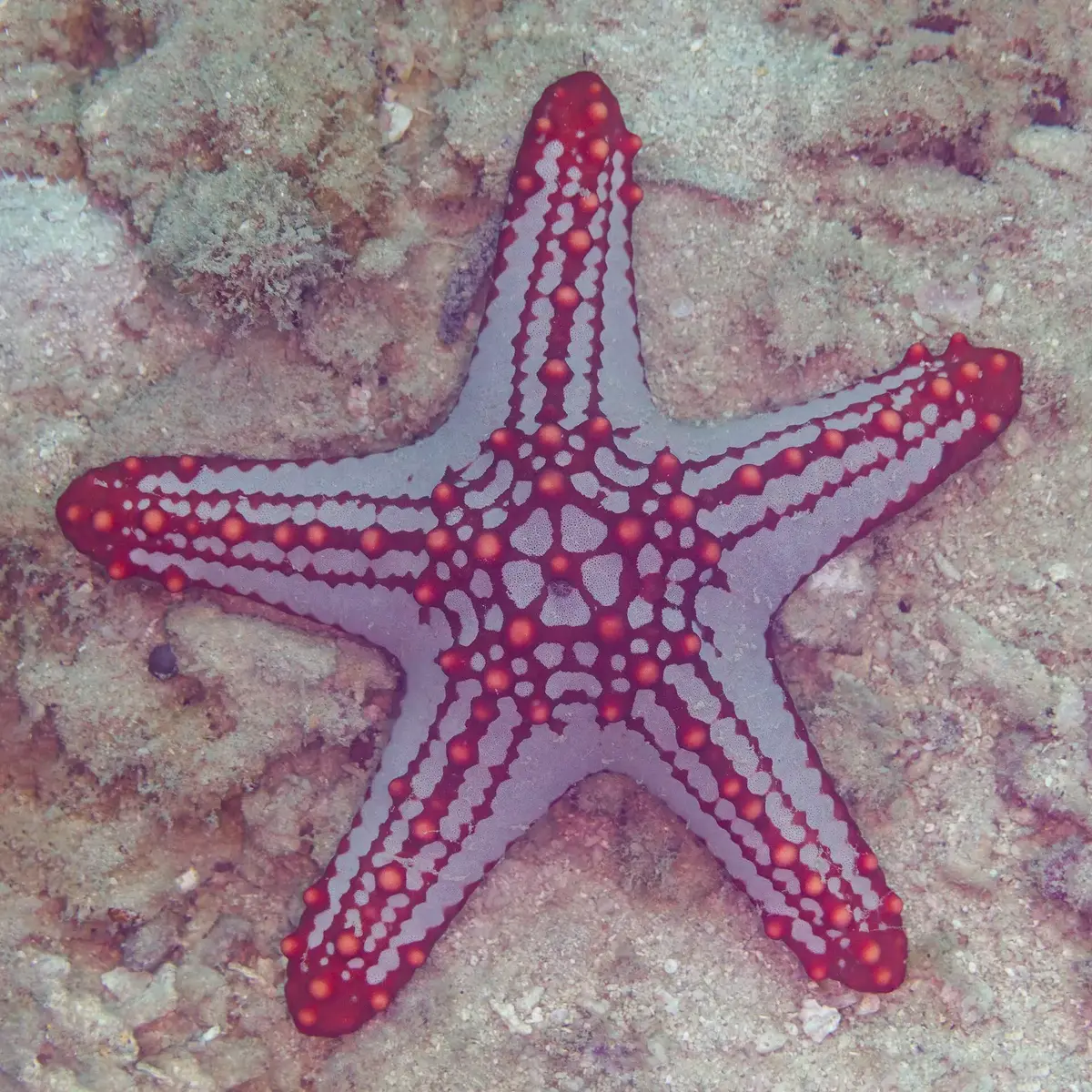
| Red-knobbed sea star | Protoreaster lincki | 5-10 years | 5-10 years | About 10 years | Up to 30 cm | Indian Ocean reefs |
| Cushion star | Culcita novaeguineae | 5-10 years | 5-10 years | About 10 years | Up to 30 cm | Indo-Pacific reefs |
| Giant pink sea star | Pisaster brevispinus | 10-20 years | 10-20 years | About 20 years | Up to 60 cm | NE Pacific sandy bottoms |
Two names jump off the chart: the ochre sea star can reach 34 years, and the sunflower sea star holds a record near 65 years even though its average is closer to seven. Small burrowing species rarely see five years. Cold water, large size, and slow growth point to a longer life.

Reef and Tropical Sea Star Lifespans
These are the warm water species on coral reefs and in home aquariums. Most live 5 to 15 years, and keepers often get the lower end, because water quality and feeding are harder to keep perfect in a glass box.
The blue sea star is the classic example. Its bright blue arms make it one of the most photographed animals on Indo-Pacific reefs, and lives 10 to 15 years in a stable tank. It is sensitive to sudden changes in salinity, though, so a careless water change can end its life in days. The chocolate chip starfish is hardier, but still needs a large tank with plenty of live rock. The crown-of-thorns star is different from the rest: it feeds on coral, and a single female can shed tens of millions of eggs in one spawning season.


Cold-Water and Coastal Sea Star Lifespans
Temperate and cold-water sea stars live the longest. Slow growth in cold water tends to come with a longer life, and these are the species studied most closely: they live on shores researchers can walk at low tide.
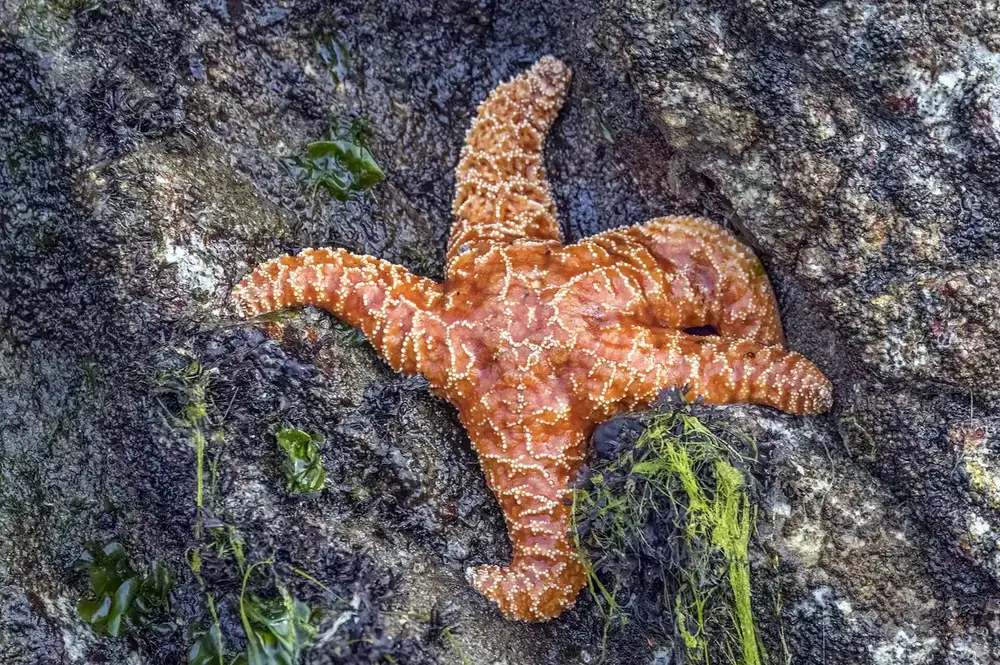
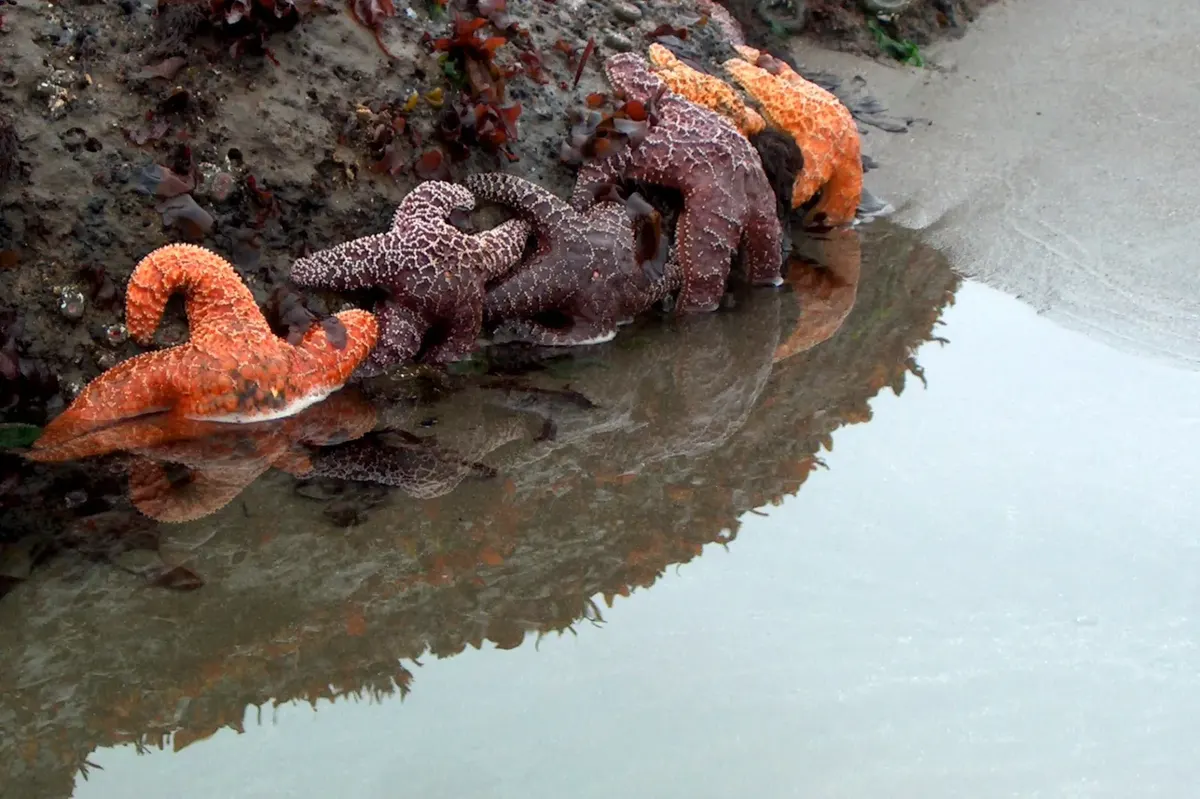
The ochre sea star is the famous one. It starred in Robert Paine’s 1960s tide pool experiments, the work behind the keystone species idea: remove the ochre star and mussels take over the rock. Individual ochre stars have been followed for decades, the oldest about 34 years. These cold-water species were also hit hardest by sea star wasting disease, which swept the Pacific coast from 2013.
The Sunflower Sea Star Collapse
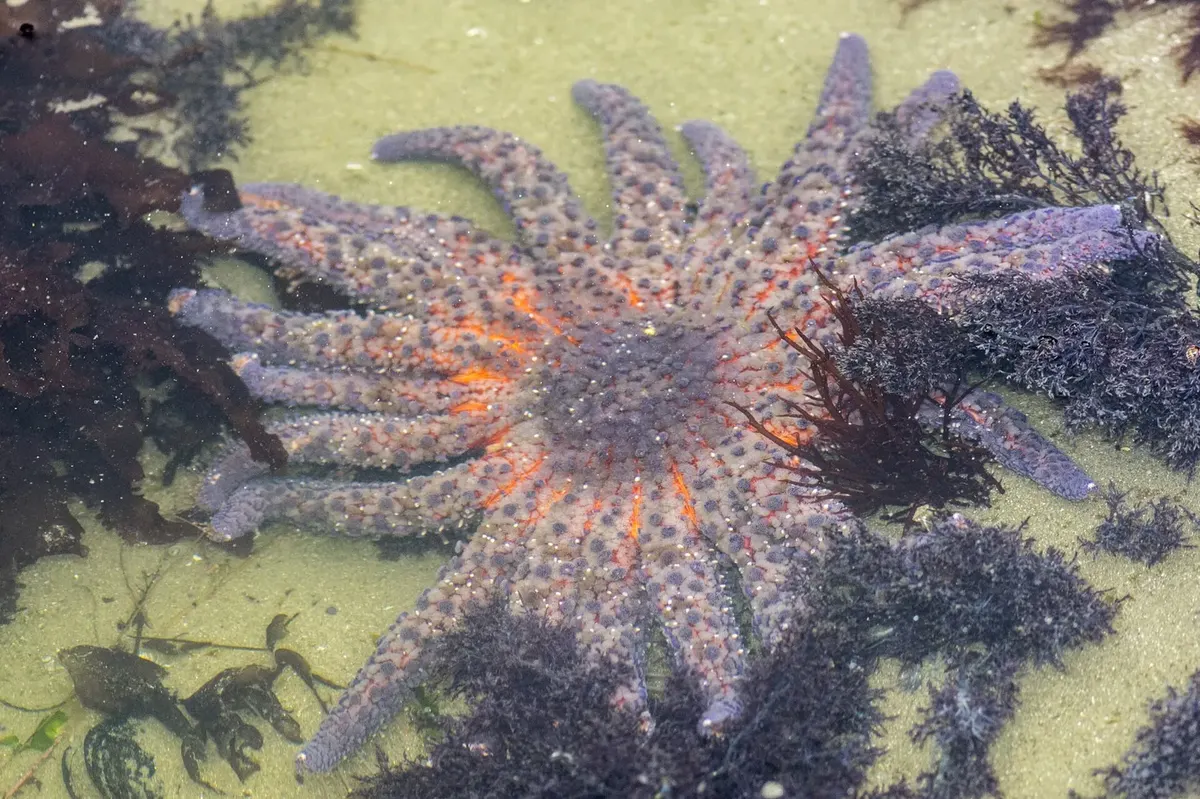
The sunflower sea star is one of the largest sea stars on Earth, up to a meter across with 24 arms, and it once kept sea urchin numbers in check along the Pacific coast. Sea star wasting disease changed everything. Starting in 2013, it killed billions of sea stars, and the sunflower star was hit worst of all. The IUCN listed it as Critically Endangered in 2020, and aquariums are now breeding it to try to bring it back.

Small vs Large Sea Stars: Size and Temperature
Size and water temperature predict starfish lifespan better than anything else. Warm water speeds up metabolism, so tropical species grow fast, breed young, and die young. Cold water slows everything down.
| Trait | Small and Tropical | Large and Cold-Water |
|---|---|---|
| Examples | Sand sifting, cushion star | Ochre, sunflower sea star |
| Typical lifespan | 2 to 10 years | 10 to 34 years or more |
| Growth rate | Faster, matures young | Slower in cold water |
| Main threats | Predation, poor tank conditions | Wasting disease, warming seas |
| Typical size | Up to 20-30 cm | Up to 1 m |
That explains the gap: a buried sand sifter may only reach five years while a cold-water ochre star passes 30, the same body plan running on a very different clock.
How Scientists Estimate a Starfish’s Age
Starfish have no countable rings in their skeleton, so researchers piece together age from several lines of evidence. First, they measure growth: young sea stars grow fast, then slow down, so size gives a rough age. Second, they tag and recapture, following the same animal for years. Third, they study the tiny calcite plates in a sea star’s skin, called ossicles, which carry readable growth bands. Aquarium records fill in the rest, since a starfish that lives its whole life in a public aquarium has a known arrival date.
What Affects How Long a Starfish Lives
Lifespan is not fixed within a species: a handful of pressures move the number up or down, in the wild and in a tank.
| Factor | Effect on Lifespan |
|---|---|
| Water temperature | Cold, stable water means slow growth and longer life |
| Water quality | Pollution, low oxygen, and wrong salinity shorten life fast |
| Disease | Sea star wasting disease can kill whole populations in weeks |
| Food supply | Steady prey supports growth |
| Predation and damage | Lost arms regrow, but heavy injury cuts lives short |
| Handling out of water | Air exposure stresses sea stars |
Regrowing lost arms is the starfish talent most people have heard about. Many species can replace a lost arm, and a few can rebuild a whole body from one arm plus part of the central disc. Repair costs energy, though, and a star that keeps losing arms spends its reserves on healing instead of growing. The longest-lived animals are the ones that avoid injury: big, well fed, and living in cold, stable water.


How Long Do Starfish Live in Aquariums?
A well kept pet starfish can live about as long as its wild cousins, sometimes longer, because it faces no predators and gets regular food. Most aquarium starfish die young, though, not from old age but from water problems.
Starfish are far more sensitive than fish to changes in salinity, temperature, and pH, and cannot regulate their internal salt balance quickly, so a sudden swing can kill them within days. A tank needs to be mature, meaning months of stable water and plenty of live rock, before a starfish is added. Feeding matters too: sand sifting starfish can starve once a small tank’s sand bed runs out. Before buying any sea star, check what it eats in the wild and whether your tank can provide it for years.
Starfish Lifespan Compared With Other Sea Animals
Starfish sit in the middle of the ocean’s longevity ladder, outliving most fish but falling far short of the true record holders.
| Animal | Typical Lifespan | How It Compares |
|---|---|---|
| Octopus | 1-5 years | Octopuses live fast and die young. See our octopus lifespan chart. |
| Starfish | 5-15 years (up to 65 recorded) | Longer than most reef fish. |
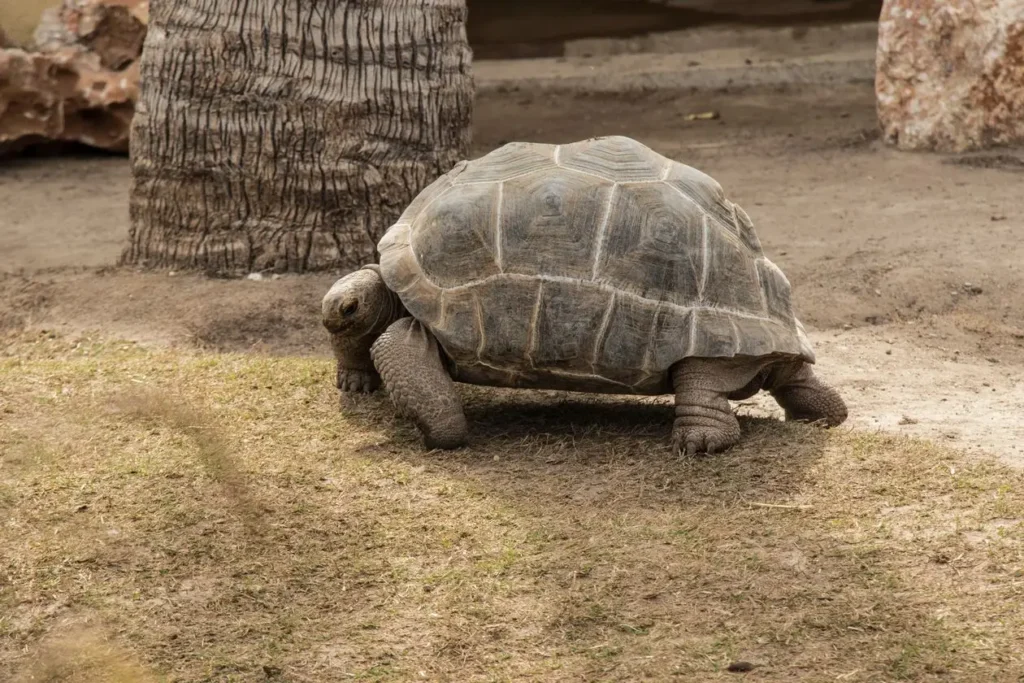
| Sea turtle | 50-100 years | Far longer. See our sea turtle lifespan chart. |
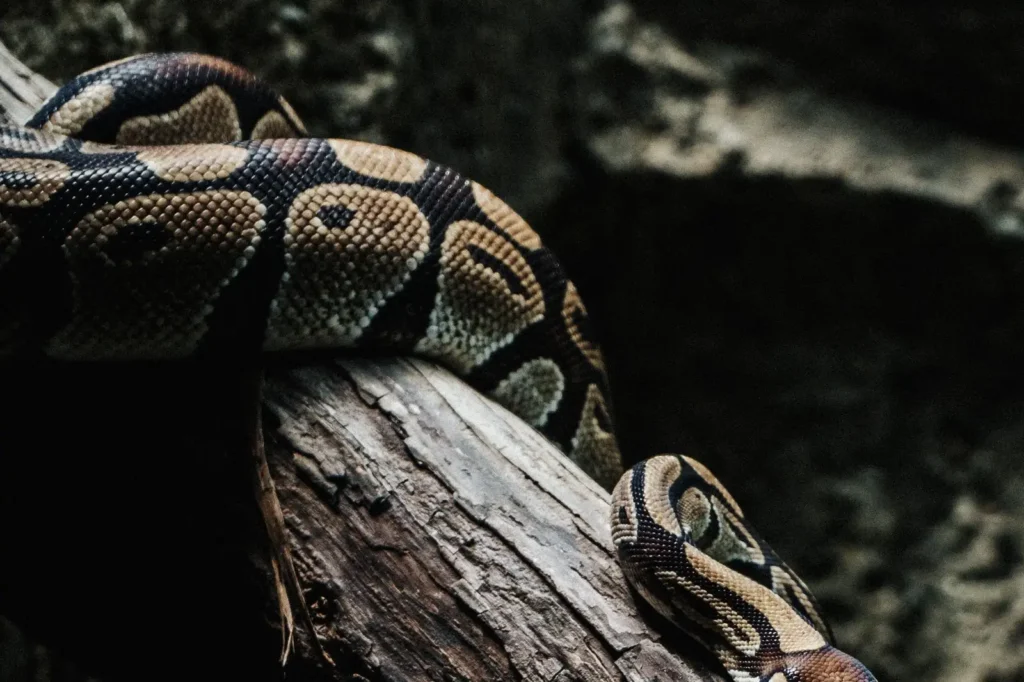
| Snake (land) | 10-30 years | Similar range to a long-lived sea star. See our snake lifespan chart. |
| Greenland shark | 250-500 years | Among the longest-lived vertebrates. See our longest lifespan chart. |
A blue sea star living 15 years has outlasted most fish on its reef, and an ochre star at 34 has outlived the family dog.

Key Takeaways
- Most starfish live 5 to 15 years: burrowing species 2 to 5, cold-water species 10 to 20 or more.
- Longest on record: the sunflower sea star at up to 65 years, then the ochre sea star at about 34.
- Cold water and large size point to a longer life, warm water and small size to a shorter one.
- Wasting disease hit the longest-lived species hardest; the sunflower star is now Critically Endangered.
- In aquariums, stable water and proper feeding matter most.
Starfish Lifespan FAQs
How long do starfish live on average?
Most sea stars live 5 to 15 years. Small burrowing species may only reach 2 to 5, while large cold-water species can pass 30.
Which starfish lives the longest?
The sunflower sea star, at up to 65 years, though its average is closer to seven. Next is the ochre sea star, at about 34 years.
Do starfish live longer in the wild or in captivity?
It is close. Good tank conditions can match wild lifespans, but poor water quality often cuts captive lives short.
How long do sand sifting starfish live?
Sand sifting stars in the genus Astropecten are short-lived, usually 2 to 5 years. In aquariums they can starve once the sand bed runs out.
Why is the sunflower sea star endangered?
Wasting disease killed most of the population after 2013. The IUCN listed it as Critically Endangered in 2020, and aquariums are now breeding it to help.
Can a starfish die of old age?
In theory yes, but most wild starfish die from predators, disease, or habitat change first.
Can starfish regrow arms?
Yes. Most species can regrow a lost arm over months, and a few can rebuild a whole body from one arm plus part of the central disc. Regrowing costs energy, so a star that loses arms often lives shorter.
How long do starfish live out of water?
Only minutes to a few hours. Starfish breathe through their skin and tube feet, so air exposure dries them out quickly. If you find one on a beach, gently return it to the water.
Conclusion
A starfish is easy to underestimate: no brain, no blood, no real eyes, yet some live for decades on cold rocky shores. The next time you spot one in a tide pool, remember the chart: that small purple star could be older than the child pointing at it, and the sunflower star is now fighting to survive.