
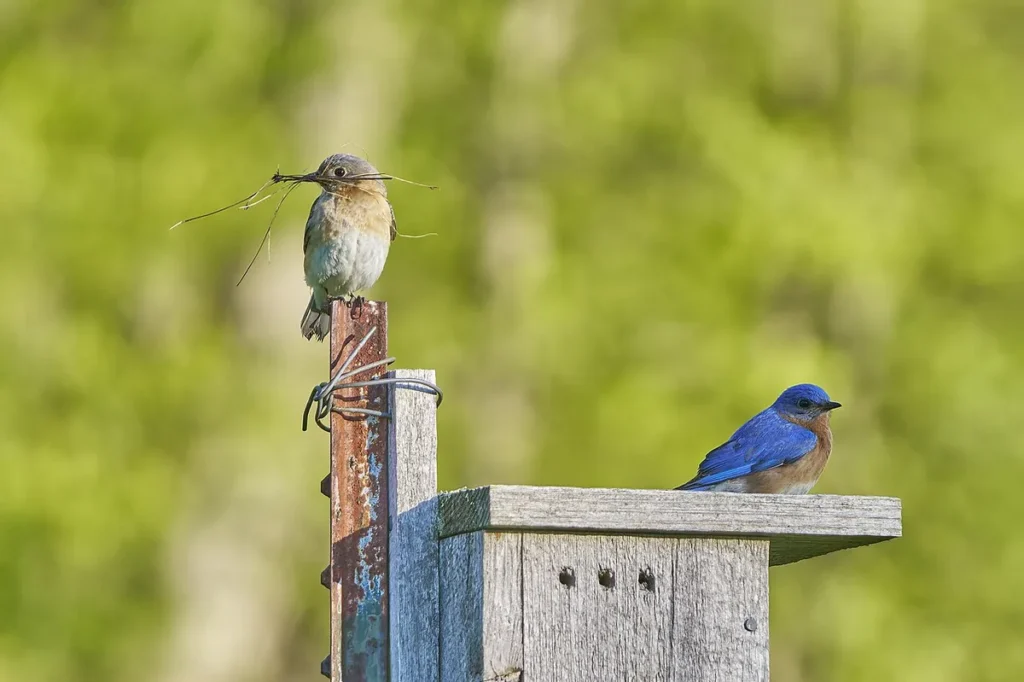
Bluebirds are the most loved songbirds in North America, and they are also some of the easiest to identify once you know what to look for. Three types of bluebirds exist, and all three live in North America: the eastern bluebird, the western bluebird, and the mountain bluebird. They look similar at first glance, but each one has its own range, colors, and habits. This guide compares all three, with sizes, identification tips, nesting facts, and advice for bringing them to your yard.
The types of bluebirds are all thrushes, in the same family as robins, and they share the thrush love of open ground and perched hunting. A bluebird hunts by sitting on a low branch or a fence post, watching the grass below, then dropping down to catch an insect. That habit makes them easy to watch and easy to photograph. In winter they switch to fruit and berries, and they gather in small flocks.
The 3 Types of Bluebirds
Only three bluebird species exist, and each one owns a part of North America. The eastern bluebird covers the east, from Canada to Mexico. The western bluebird covers the west, from British Columbia to Mexico. The mountain bluebird covers the high country of the western mountains, from Alaska to Mexico. Their ranges overlap in the western states, which is where identification gets interesting.
Types of Bluebirds Chart
Use this chart to compare the three species at a glance.
| Species | Length | Weight | Wingspan | Range | Male | Female | Habitat |
|---|---|---|---|---|---|---|---|
| Eastern Bluebird | 6.3 to 8.3 in | 1.0 to 1.1 oz | 9.8 to 12.6 in | Eastern North America | Blue back, orange chest | Gray-blue, orange wash | Open fields, orchards |
| Western Bluebird | 6.3 to 7.5 in | 0.8 to 1.1 oz | 11.0 to 13.0 in | Western North America | Deep blue, rusty chest | Gray with blue tinge | Open woodlands, farms |
| Mountain Bluebird | 6.3 to 7.9 in | 1.0 to 1.1 oz | 11.0 to 13.0 in | Western mountains | Sky blue all over | Gray-brown, blue wings | High meadows, alpine |
Eastern Bluebird
The eastern bluebird is the most common and most familiar of the three. The male is bright blue on the back, head, and wings, with a rusty orange chest and throat and a white belly. The female is softer: gray-blue on the back with a pale orange wash on the chest. Eastern bluebirds live across the eastern United States and southern Canada, and south into Mexico and Central America. They are year-round residents in most of the south, and they move south only from the far north in winter.

Eastern bluebirds are the state bird of New York and Missouri. They nearly disappeared in the early 1900s, when house sparrows and starlings took over their nesting cavities and old orchards were cleared. The comeback came from nest boxes: thousands of people put up bluebird boxes, and the population recovered. Today the eastern bluebird is common again in open fields and orchards. For help identifying the eggs in a bluebird nest, see our blue bird egg identification chart.
Western Bluebird
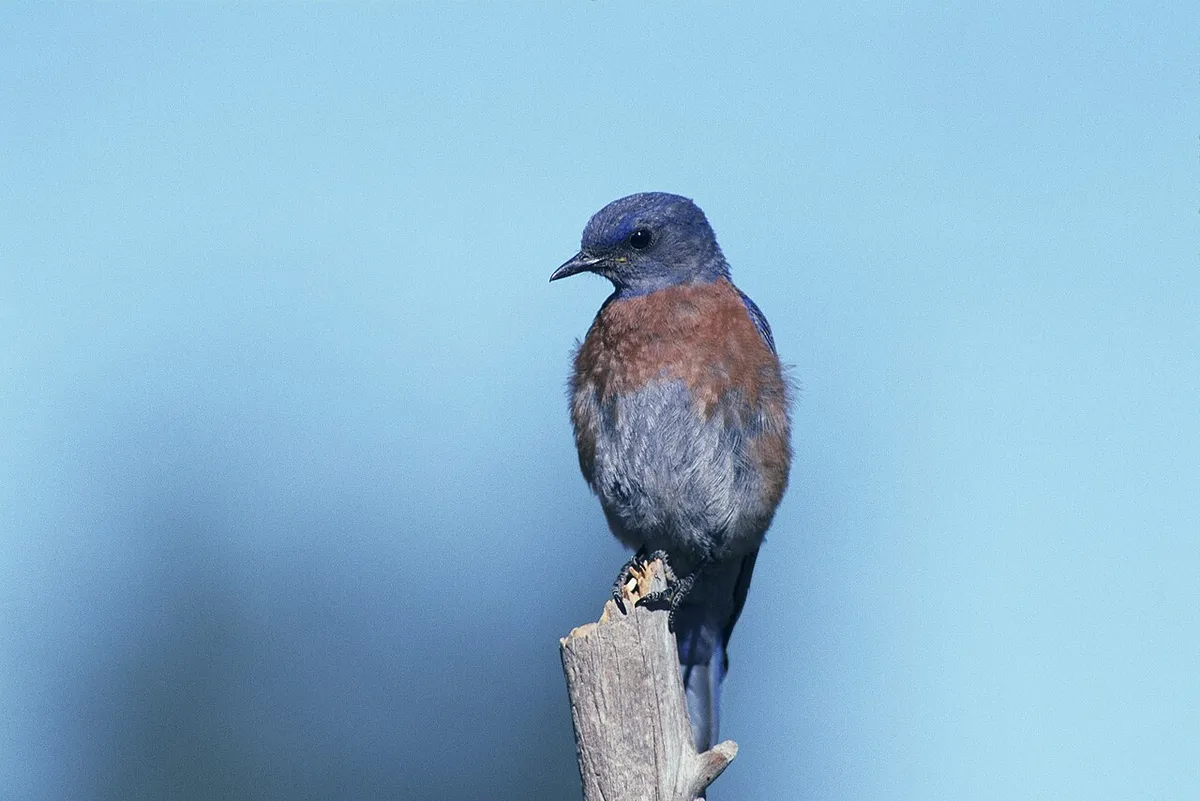
The western bluebird is the western counterpart of the eastern bird, and the two look almost identical at a distance. The differences are small but reliable: the male western bluebird has a blue throat, while the eastern male has an orange throat. The western male also has rusty orange patches on his upper back and shoulders. The female western bluebird is grayer than the eastern female, with less orange on the chest.
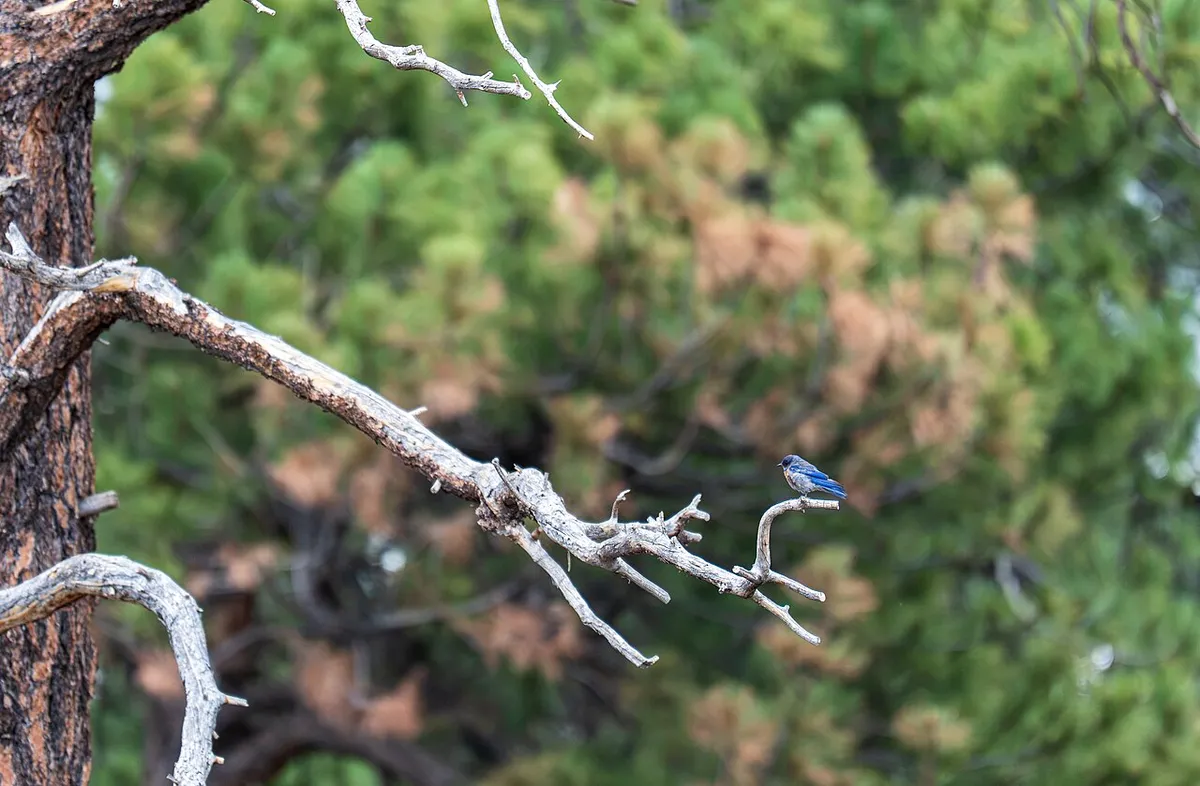
Western bluebirds live from British Columbia south through the western United States to Mexico. They prefer open woodlands, oak savannas, and farmland, and they are common in burned forests, where standing dead trees provide nesting holes. Like the eastern bird, the western bluebird is a cavity nester that uses old woodpecker holes and nest boxes. In winter, western bluebirds gather in flocks and wander in search of berries.
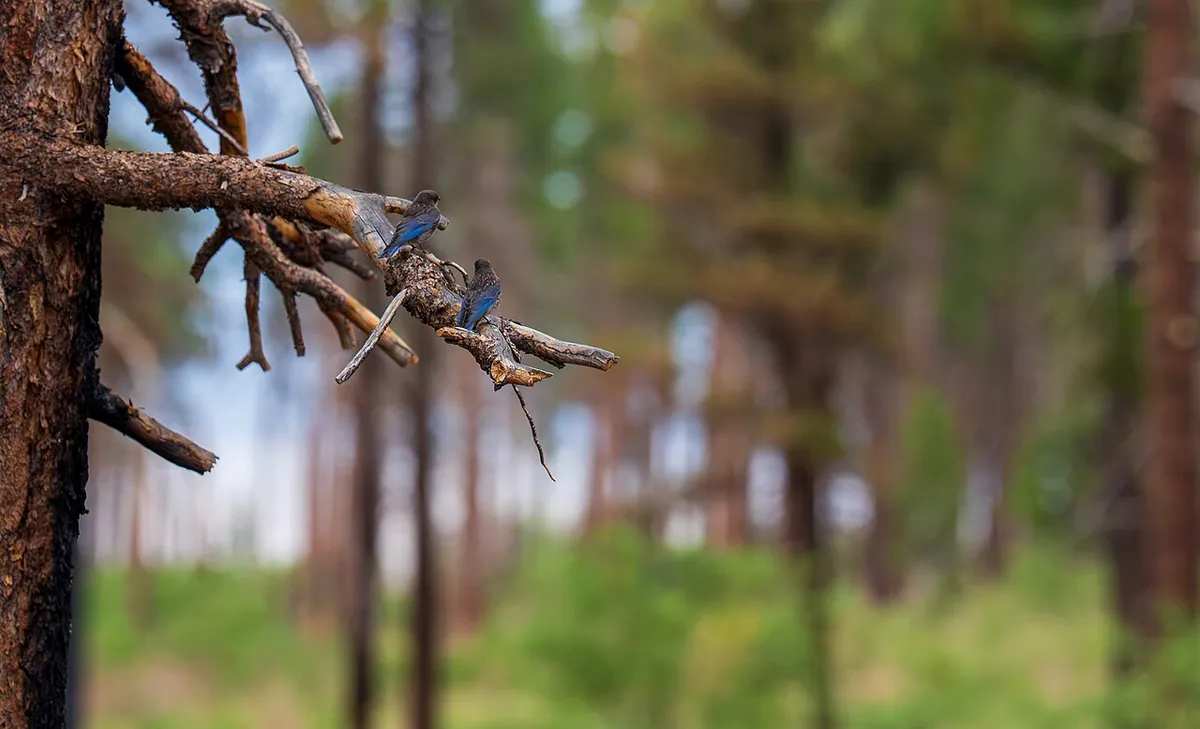
Mountain Bluebird
The mountain bluebird is the most striking of the three, and the easiest to identify. The male is sky blue all over, from head to tail, with no orange anywhere. The female is gray-brown with blue on the wings and tail, and she is much harder to spot against dry grass and rock. Mountain bluebirds are the state bird of Idaho and Nevada.

Mountain bluebirds live at high elevations across the western mountains, from Alaska to Mexico. They breed in open meadows, alpine tundra, and burned forests above 5,000 feet, and they move to lower valleys in winter. They are the most migratory of the three bluebirds, and some travel hundreds of miles between summer and winter. They hunt like other bluebirds, perching low and dropping onto insects, and they often hover briefly before pouncing.

How to Tell Bluebirds Apart
Start with the color of the chest. If the bird is all blue with no orange, it is a male mountain bluebird. If the bird has an orange chest and a blue back, it is an eastern or western bluebird. To separate those two, look at the throat: orange throat means eastern, blue throat means western.
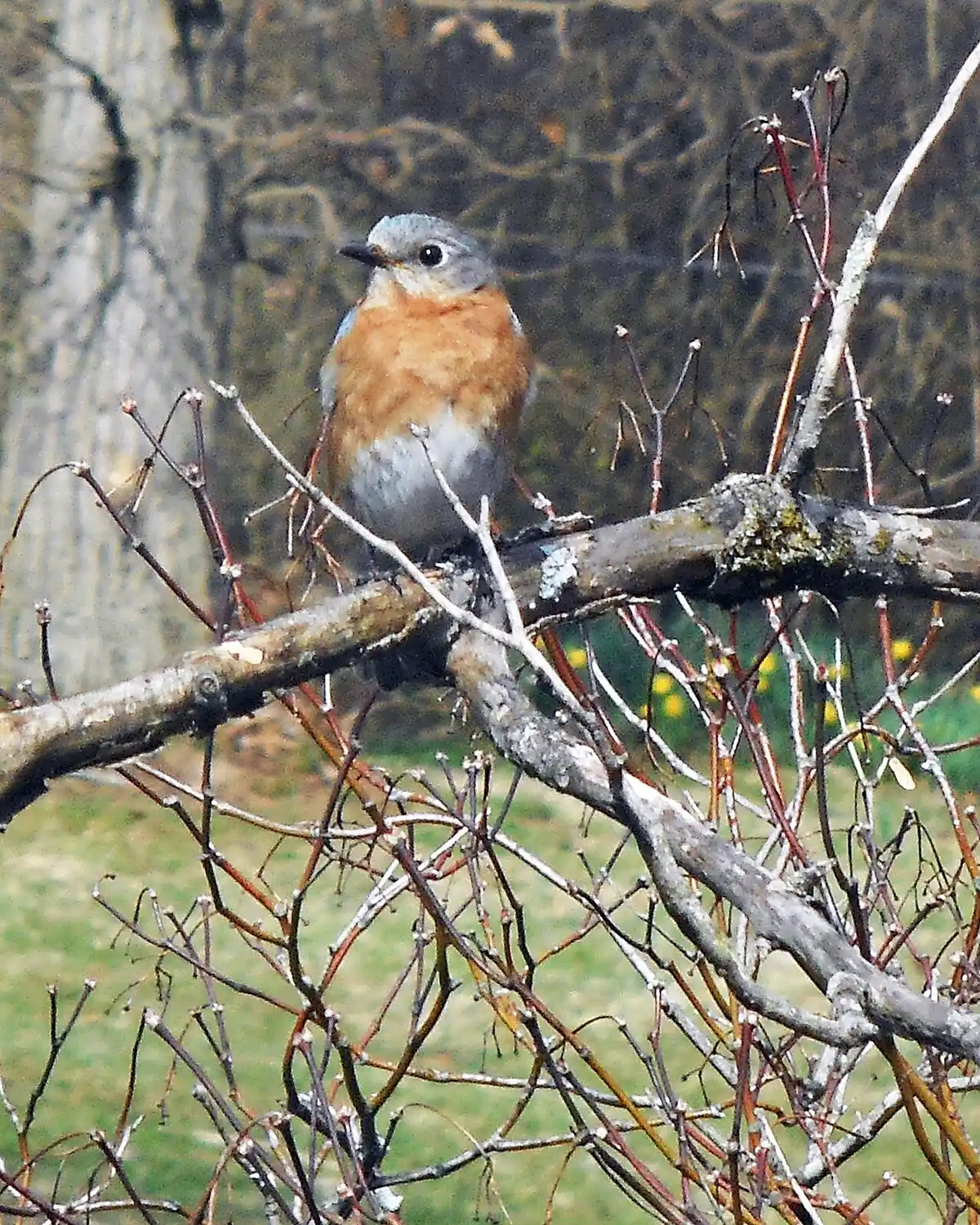
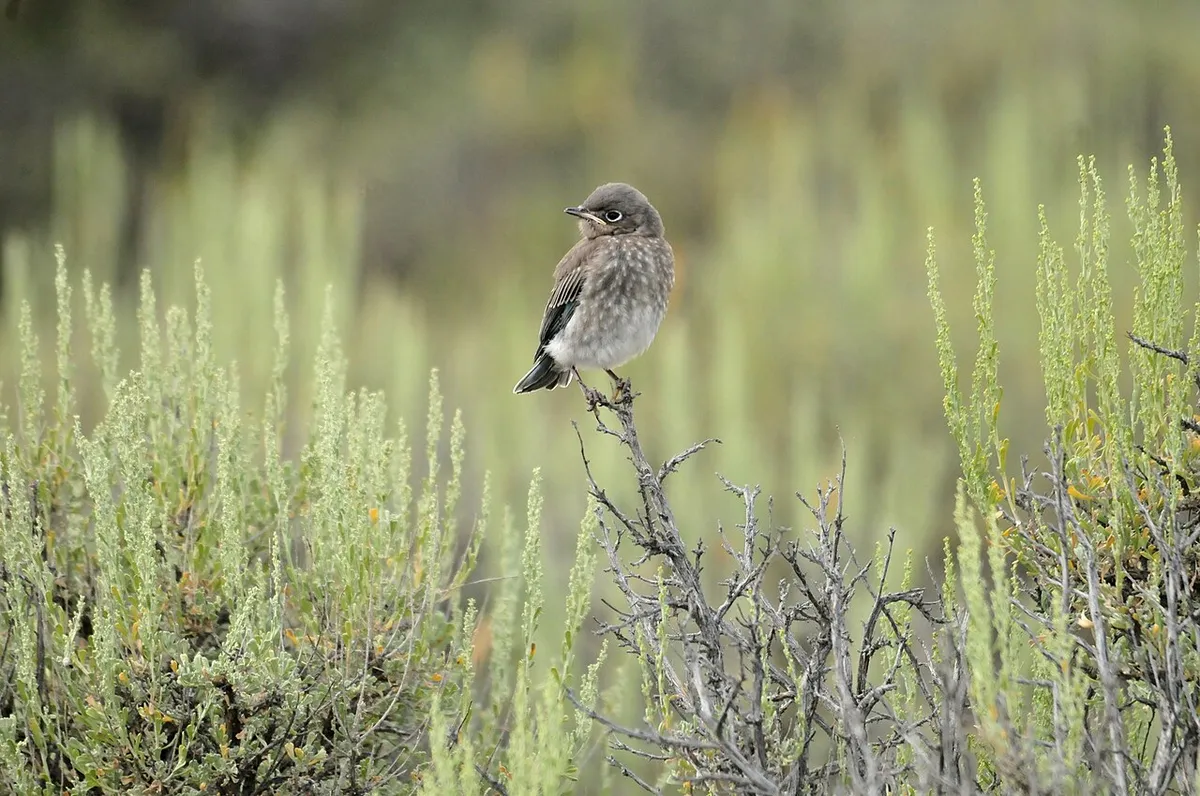
Females are harder, because all three are grayish with some blue. The mountain female is the palest, gray-brown with blue only on the wings and tail. The eastern female has a clear orange wash on the chest. The western female is gray with a blue tinge and very little orange. Location helps too: east of the Rockies, almost every bluebird is an eastern bluebird. In the high mountains of the West, the all-blue male is a mountain bluebird.
Bluebirds are also confused with other blue birds. The blue jay is much bigger, crested, and noisy, with a white face and black necklace. The indigo bunting is smaller than a bluebird, all blue with no orange, and sings from the top of a bush. The tree swallow has a blue-green back and a clean white belly, and it flies with quick, fluttering wingbeats over water and fields. If the bird is perched on a fence post watching the grass, small, round, and blue, it is almost certainly a bluebird.
Bluebird Nesting and Eggs
All three bluebirds nest in cavities: old woodpecker holes, hollow trees, and nest boxes. They cannot dig their own holes, so they depend on woodpeckers and on people who put up boxes. The female builds a loose cup nest of grass and pine needles inside the cavity, and she lays four to six pale blue eggs. Incubation takes about 14 days, and the young leave the nest about 18 to 20 days after hatching.
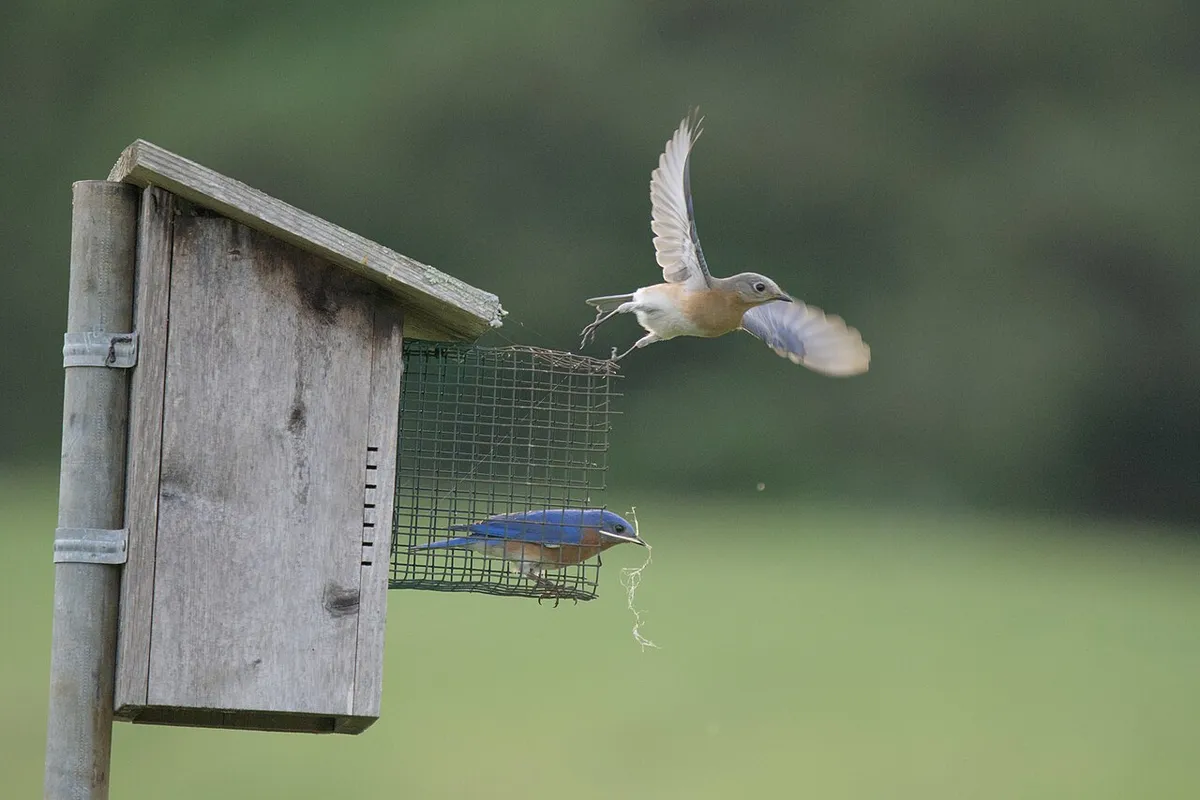
Bluebirds usually raise two broods a year, and sometimes three in the south. The male brings food to the nestlings, and both parents keep feeding the young for a few weeks after they leave the nest. The biggest threats to a nest are house sparrows, which take over boxes, and raccoons and snakes, which raid them. A good nest box has a predator guard on the pole and an entrance hole sized for bluebirds: one and a half inches for eastern bluebirds, and one and nine sixteenths inches for western and mountain bluebirds. For more on bird nests, see our bird nest identification chart.
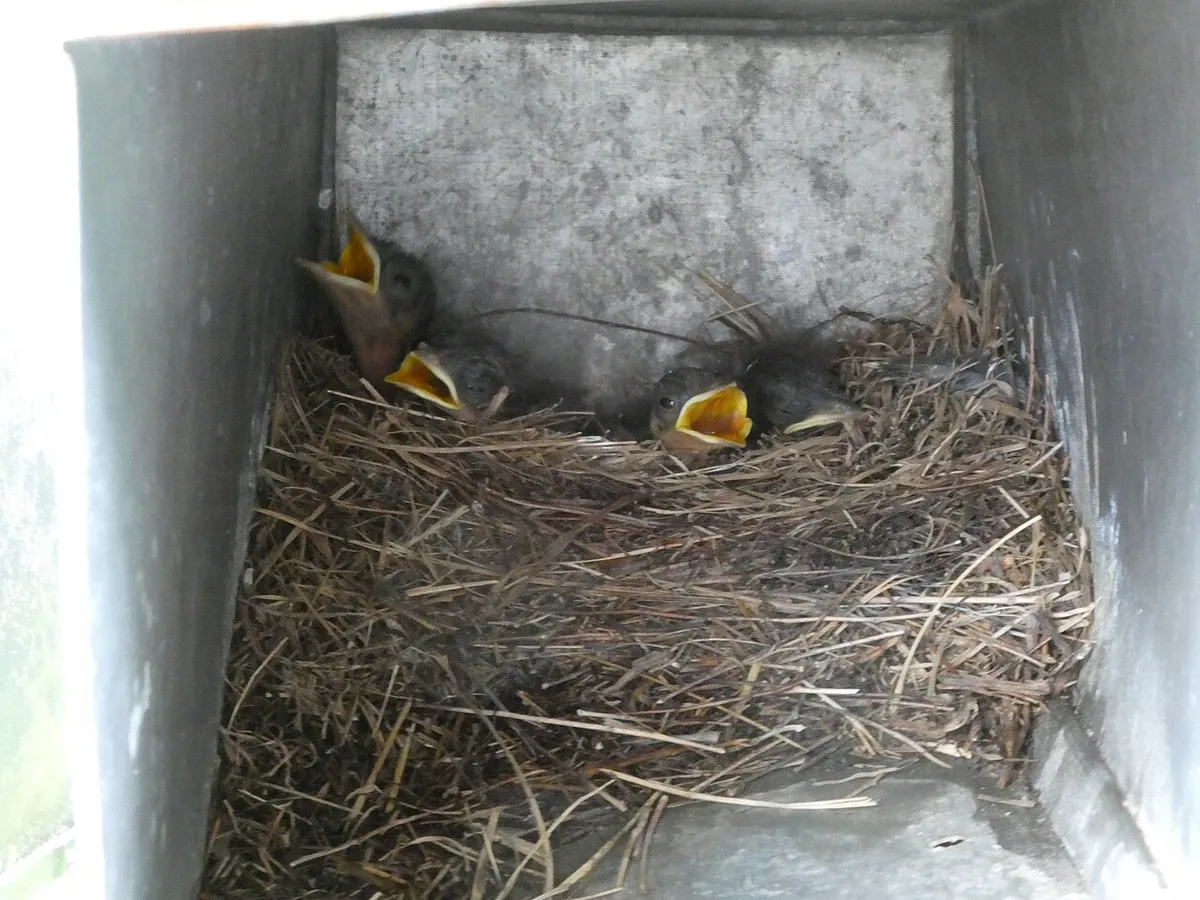
Bluebird parents are devoted, and the fledglings are a treat to watch. Young bluebirds are speckled gray-brown with blue wings and tail, and they look nothing like their parents for the first few weeks. The male often takes over feeding the fledglings while the female starts the next brood. If you find a bluebird nest, watch from a distance and check the box only once a week.
Attracting Bluebirds to Your Yard
The single best thing you can do for bluebirds is put up a nest box. Place it on a pole in open ground, five to ten feet high, facing away from the prevailing wind, with a predator guard on the pole. Space boxes at least 100 yards apart, because bluebirds are territorial. Put the box up in late winter, and clean it out after each brood leaves.

Food helps too. Bluebirds eat insects in summer, and they love mealworms, live or dried, offered in a dish feeder. In winter they eat fruit, so plant native berry bushes like dogwood, serviceberry, and sumac. Provide fresh water in a shallow birdbath, and avoid pesticides, which kill the insects bluebirds feed their young. An open lawn with scattered trees and a nest box is the perfect bluebird yard. For more small birds that share the same yard, see our guide to the types of small birds.

Frequently Asked Questions
How many types of bluebirds are there?
There are three types of bluebirds in the world: the eastern bluebird, the western bluebird, and the mountain bluebird. All three live in North America, and no bluebird species lives anywhere else.
What is the difference between eastern and western bluebirds?
The male eastern bluebird has an orange throat, while the male western bluebird has a blue throat. The western male also has rusty orange patches on his upper back. Females are harder to separate, but the eastern female has more orange on the chest. Their ranges meet in the western United States, where both species can occur.
Do bluebirds migrate?
Mountain bluebirds migrate the farthest, moving from high mountain breeding grounds to lower valleys and deserts in winter. Eastern and western bluebirds are partly migratory: birds in the far north move south, while birds in the south stay put all year. In winter, bluebirds gather in small flocks and roost together for warmth.
What do bluebirds eat?
Bluebirds eat insects in spring and summer, including grasshoppers, beetles, caterpillars, and crickets. In fall and winter they switch to fruit and berries, including dogwood, sumac, mistletoe, and juniper. They also eat mealworms at feeders, which is the best food to offer them.
What size hole does a bluebird house need?
A bluebird house needs a round entrance hole of one and a half inches for eastern bluebirds, and one and nine sixteenths inches for western and mountain bluebirds. A smaller hole keeps out starlings, which take over bluebird boxes. Mount the box on a pole with a predator guard, five to ten feet high, in open ground.
Conclusion
The three types of bluebirds, eastern, western, and mountain, are among the most beautiful and most welcome birds in North America. They are easy to identify once you know the throat colors and the chest patterns, and they are easy to attract with a nest box, mealworms, and berry bushes. Their recovery from near disappearance is one of the great success stories of American bird conservation, and it happened because ordinary people put up boxes. Put up a box, keep the yard open and pesticide free, and you may soon have a flash of blue on your fence post. The bluebirds will do the rest.


Pingback: British Butterflies Chart: 20 Species to Spot in the UK (2026) – Chart Identify