
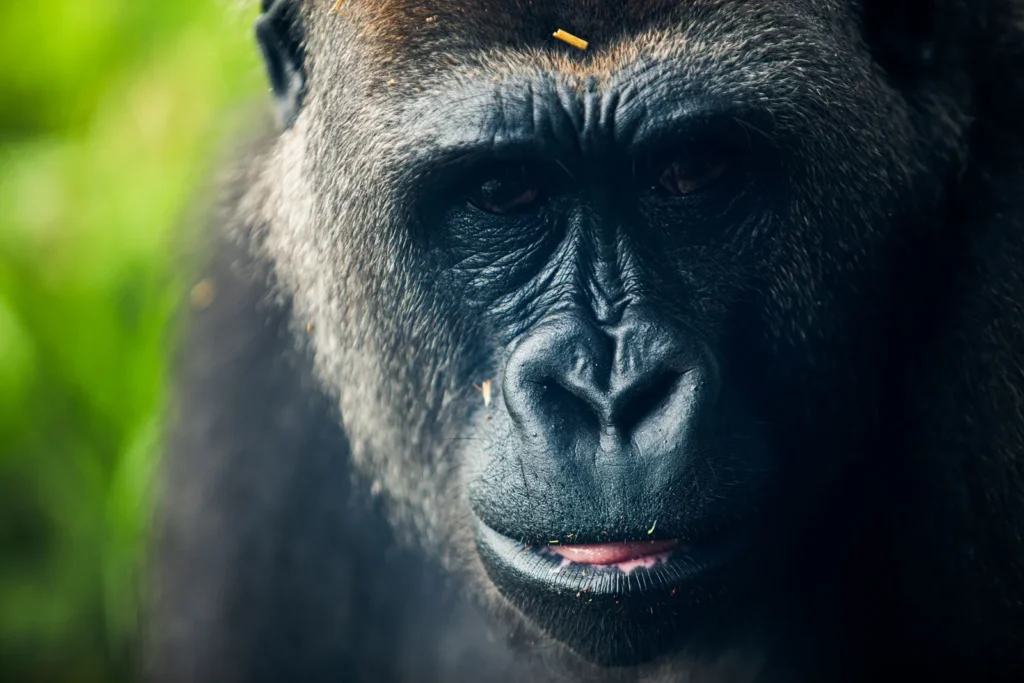
Most people can name three types of apes: the gorilla, the chimpanzee, and the orangutan. But that short list misses the real story. There are 27 living species of non-human apes on Earth, ranging from a 200-kilogram silverback gorilla to a gibbon no heavier than a house cat. All are tailless, all are remarkably smart, and almost all are losing ground. This guide covers every one of them, with a complete chart of all 27 species: size, range, habitat, and the single fact that makes each one worth knowing.
First, the quick orientation. Apes split into two families. Great apes (Hominidae) are the heavyweights: gorillas, chimpanzees, bonobos, orangutans, and humans. Lesser apes (Hylobatidae) are the gibbons and the siamang: smaller, faster, built for life in the treetops. Neither group has a tail, which is the fastest way to tell an ape from a monkey at a glance.
Types of Apes by Family: Great Apes vs Lesser Apes
The two families diverged roughly 15 to 20 million years ago, and the differences run deep. Great apes have large brains, broad chests, and flexible shoulder joints. They use tools, recognize themselves in mirrors, and pass learned behaviors down generations. Gibbons rarely top 12 kilograms. They travel by brachiation, swinging arm-over-arm through the canopy near 55 kilometers per hour, and bonded pairs sing loud morning duets that carry for kilometers, each species with its own song.
Cognition is where the great apes pull ahead. Wild chimpanzees strip twigs to fish termites, crack nuts with stone hammers, and sharpen sticks into spears. Orangutans use leaves as gloves for spiny fruit and as rain umbrellas. Gorillas test water depth with sticks before crossing streams. That problem-solving, plus complex social lives, is why great apes draw so much research attention. For another famously brainy animal family, see our chart of types of dolphins.
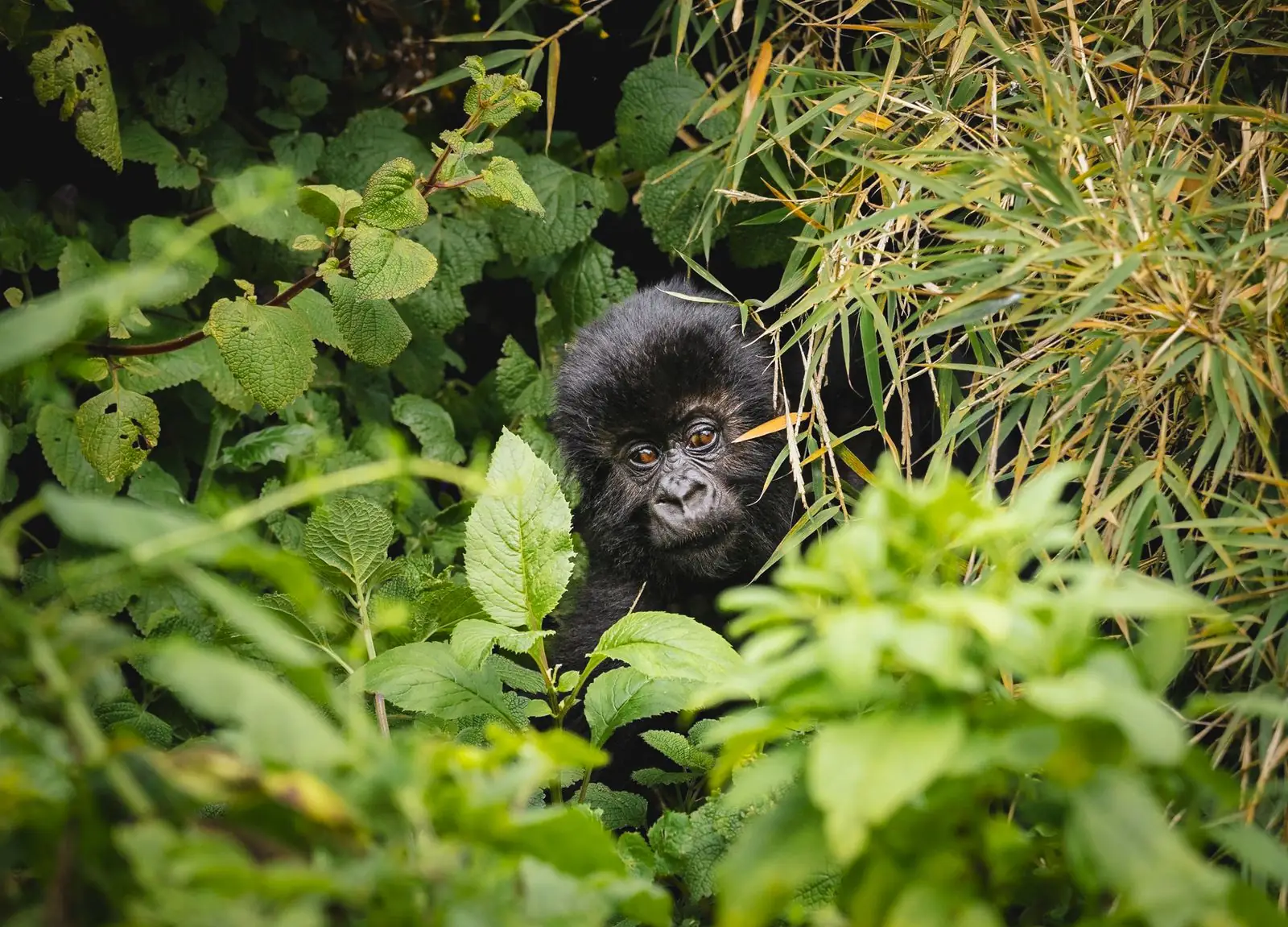
The 7 Non-Human Great Apes
Common chimpanzee (Pan troglodytes). The most widespread great ape, from Senegal to Tanzania. Males weigh 40 to 60 kilograms and live in communities of up to 150. The legendary tool-user, sharing about 98 percent of its DNA with humans.
Bonobo (Pan paniscus). Found only south of the Congo River in the DR Congo. Slimmer than chimps, with female-led, unusually peaceful societies. Males weigh 34 to 60 kilograms.
Western gorilla (Gorilla gorilla). Rainforests of West and Central Africa. Males reach 150 to 200 kilograms. Both subspecies suffer from poaching and Ebola outbreaks.
Eastern gorilla (Gorilla beringei). The largest living primate. Big silverbacks pass 200 kilograms. Includes the recovering mountain gorilla and the declining Grauer’s gorilla of the eastern Congo.
Bornean orangutan (Pongo pygmaeus). The largest tree-dwelling animal on Earth. Adult males weigh 50 to 100 kilograms and grow huge cheek pads. Mostly solitary, building a fresh sleeping nest every night.
Sumatran orangutan (Pongo abelii). Slightly smaller, more social, and almost entirely arboreal. Local populations have their own distinct tool cultures.
Tapanuli orangutan (Pongo tapanuliensis). Recognized as a separate species only in 2017, and already the rarest great ape: fewer than 800 survive in the Batang Toru forests of northern Sumatra.
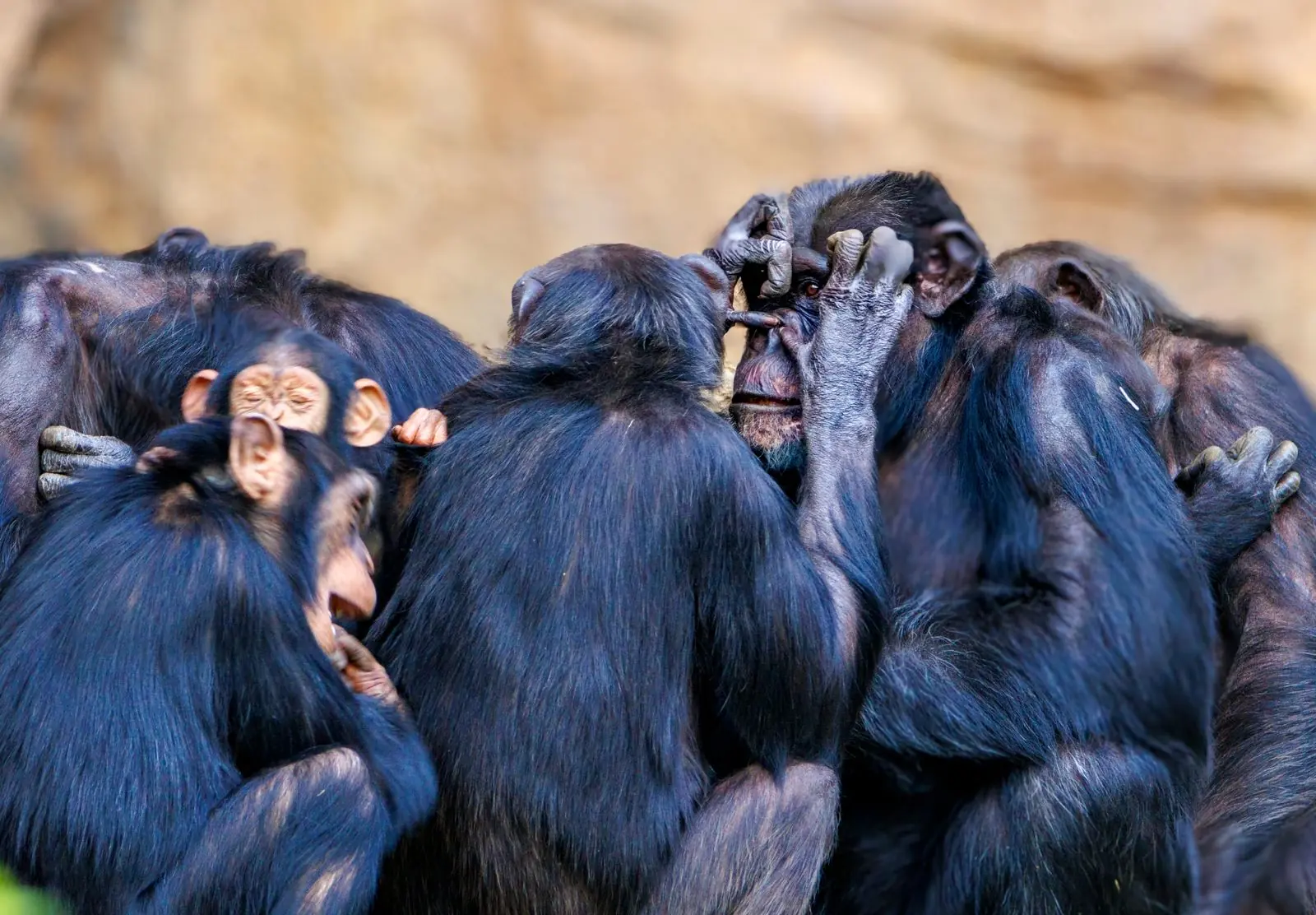

The 20 Lesser Apes: Gibbons and the Siamang
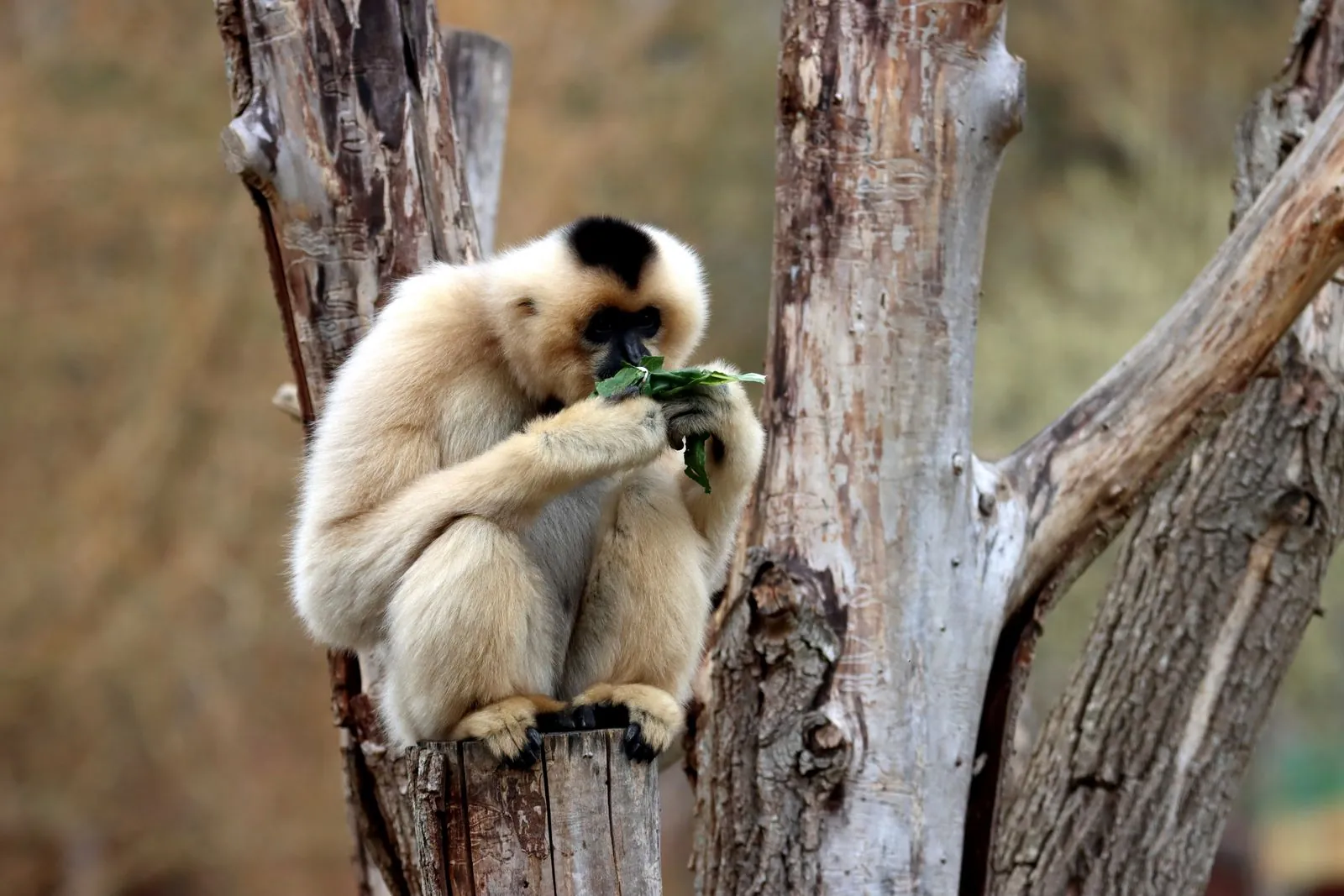
Gibbons are the forgotten apes. Twenty species across four genera (Hylobates, Hoolock, Nomascus, Symphalangus) range from northeastern India to southern China and Indonesia, and 19 of the 20 are endangered or critically endangered. Arms longer than legs, wrists that work like ball joints, leaps of 8 meters between branches. Most form long-term monogamous pairs, which is rare among apes.
The siamang (Symphalangus syndactylus) is the family heavyweight at 10 to 12.5 kilograms, carrying an inflatable throat sac that makes its booming call audible for kilometers. Standouts among the rest: the lar gibbon with white hands and face ring, the pileated gibbon’s white-crowned males, the silvery gibbon unique to Java, Kloss’s gibbon whose males sing solo instead of duetting, the three hoolock gibbons including the Skywalker hoolock named in 2017 partly after Star Wars, and the crested gibbons of genus Nomascus, led by the Hainan gibbon, the world’s rarest ape at about 44 individuals.
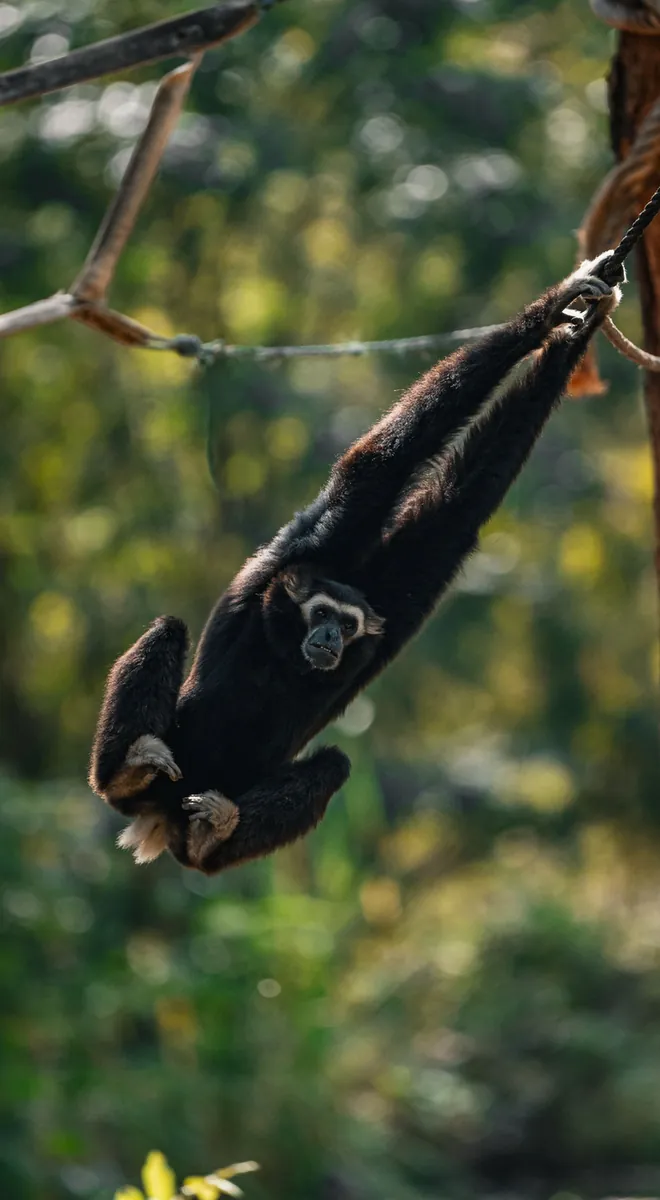
Complete Types of Apes Chart: All 27 Living Species
The full reference chart. Every living non-human ape species, with size and weight, range and habitat, and the key fact that defines each one.
| Species | Size / Weight | Range / Habitat | Key Fact |
|---|---|---|---|
| Bornean Orangutan | 100-140 cm; M 50-100 kg, F 30-50 kg | Borneo; rainforest | Largest tree-dwelling animal; males grow huge cheek flanges |
| Sumatran Orangutan | 100-140 cm; M 45-90 kg, F 30-45 kg | N. Sumatra; rainforest | Most social orangutan; distinct local tool cultures |
| Tapanuli Orangutan | 100-140 cm; M 45-90 kg, F 30-45 kg | Batang Toru, N. Sumatra; hill forest | Species described 2017; fewer than 800 remain |
| Western Gorilla | 140-170 cm; M 150-200 kg, F 70-100 kg | W. and C. Africa; rainforest | Devastated by Ebola as well as poaching |
| Eastern Gorilla | 150-190 cm; M 140-210 kg, F 70-115 kg | E. and C. Africa; montane and lowland forest | Largest living primate; includes the mountain gorilla |
| Common Chimpanzee | 100-130 cm; M 40-60 kg, F 26-50 kg | W. and C. Africa; forest and savanna | Most widespread great ape; legendary tool user |
| Bonobo | 73-83 cm; M 34-60 kg, F 27-38 kg | DR Congo; rainforest | Peaceful, female-led societies; only in one country |
| Siamang | 70-90 cm; 10-12.5 kg | Sumatra, Malay Peninsula; montane forest | Largest gibbon; throat sac amplifies calls for kilometers |
| Lar Gibbon | 44-63 cm; 4.4-7.6 kg | Thailand to Sumatra; evergreen forest | White hands, feet, face ring; loud dawn duets |
| Agile Gibbon | 44-63 cm; 5-8 kg | Sumatra, Borneo, Malay Peninsula; lowland forest | Black hands and feet; among the fastest brachiators |
| Pileated Gibbon | 44-63 cm; 6-9 kg | Cambodia, Thailand, Laos; evergreen forest | Males black with a white crown |
| Bornean White-bearded Gibbon | 44-63 cm; 4.9-6.5 kg | Borneo; peat swamp and lowland forest | White beard fringe around the face |
| Mueller’s Bornean Gibbon | 44-63 cm; 4.9-6.5 kg | N. and E. Borneo; rainforest | Buff-gray fur; one of three gibbons unique to Borneo |
| Abbott’s Gray Gibbon | 45-65 cm; 6-7 kg | NW Borneo; lowland rainforest | Split from Mueller’s gibbon in 2005 |
| Northern Gray Gibbon | 45-65 cm; 6-7 kg | N. Borneo; rainforest | Also split from Mueller’s in 2005; Borneo only |
| Silvery Gibbon | 44-64 cm; 5.5-8 kg | Java; rainforest | Bluish-gray coat; Java’s only native ape |
| Kloss’s Gibbon | 44-63 cm; 5.5-6 kg | Mentawai Islands; rainforest | Males sing solo, not in pair duets |
| Western Hoolock Gibbon | 45-65 cm; 6-8.5 kg | NE India, Bangladesh, Myanmar; evergreen forest | India’s only ape; males have bold white eyebrows |
| Eastern Hoolock Gibbon | 45-65 cm; 6-8.5 kg | Myanmar, SW China; subtropical forest | White brow band longer than the western species |
| Skywalker Hoolock Gibbon | 45-65 cm; 6-8.5 kg | Yunnan, E. Myanmar; montane forest | Described 2017; partly named after Star Wars |
| Western Black Crested Gibbon | 43-54 cm; 7-10 kg | S. China, Laos, Vietnam; montane forest | Males jet black with a crest; females golden |
| Eastern Black Crested Gibbon | 40-52 cm; 7-8 kg | NE Vietnam, SE China; karst forest | Fewer than 60 left; rediscovered in 2002 |
| Hainan Gibbon | 40-54 cm; 6-10 kg | Hainan Island, China; rainforest | World’s rarest ape: about 44 individuals |
| Northern White-cheeked Gibbon | 40-50 cm; 6-8.5 kg | Laos, Vietnam, S. China; evergreen forest | Black males with white cheeks; buff females |
| Southern White-cheeked Gibbon | 40-50 cm; 6-8.5 kg | Laos, Vietnam, Cambodia; evergreen forest | Split from the northern species by song and genes |
| Yellow-cheeked Gibbon | 40-50 cm; 6.8-8.8 kg | Vietnam, Cambodia, Laos; lowland forest | Black males with yellow-orange cheek tufts |
| Northern Buffed-cheeked Gibbon | 40-50 cm; 6-8.5 kg | Vietnam, Laos; Annamite forest | Recognized in 2010 from its distinct song |
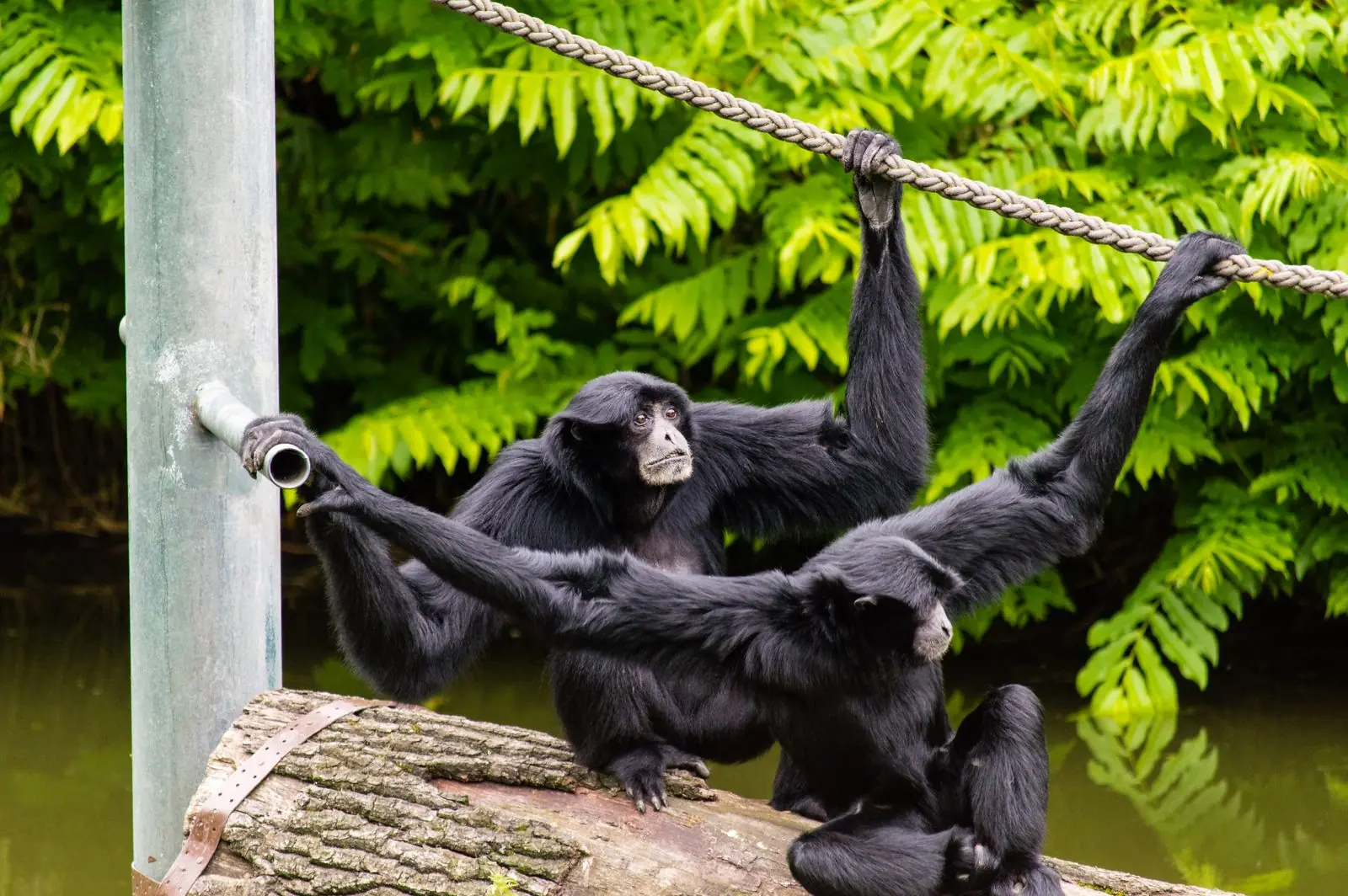
Where Different Types of Apes Live
Every wild ape lives in Africa or Asia, and the two continents barely overlap in species. Africa is the great ape continent: chimps, bonobos, and both gorilla species live in its central, western, and eastern forests. Asia holds all three orangutans plus every gibbon and the siamang, across an arc from northeastern India to southern China and Indonesia. No apes live wild in the Americas; South America has monkeys, not apes. Unlike the polar birds in our types of penguins chart, apes are strictly tropical animals.
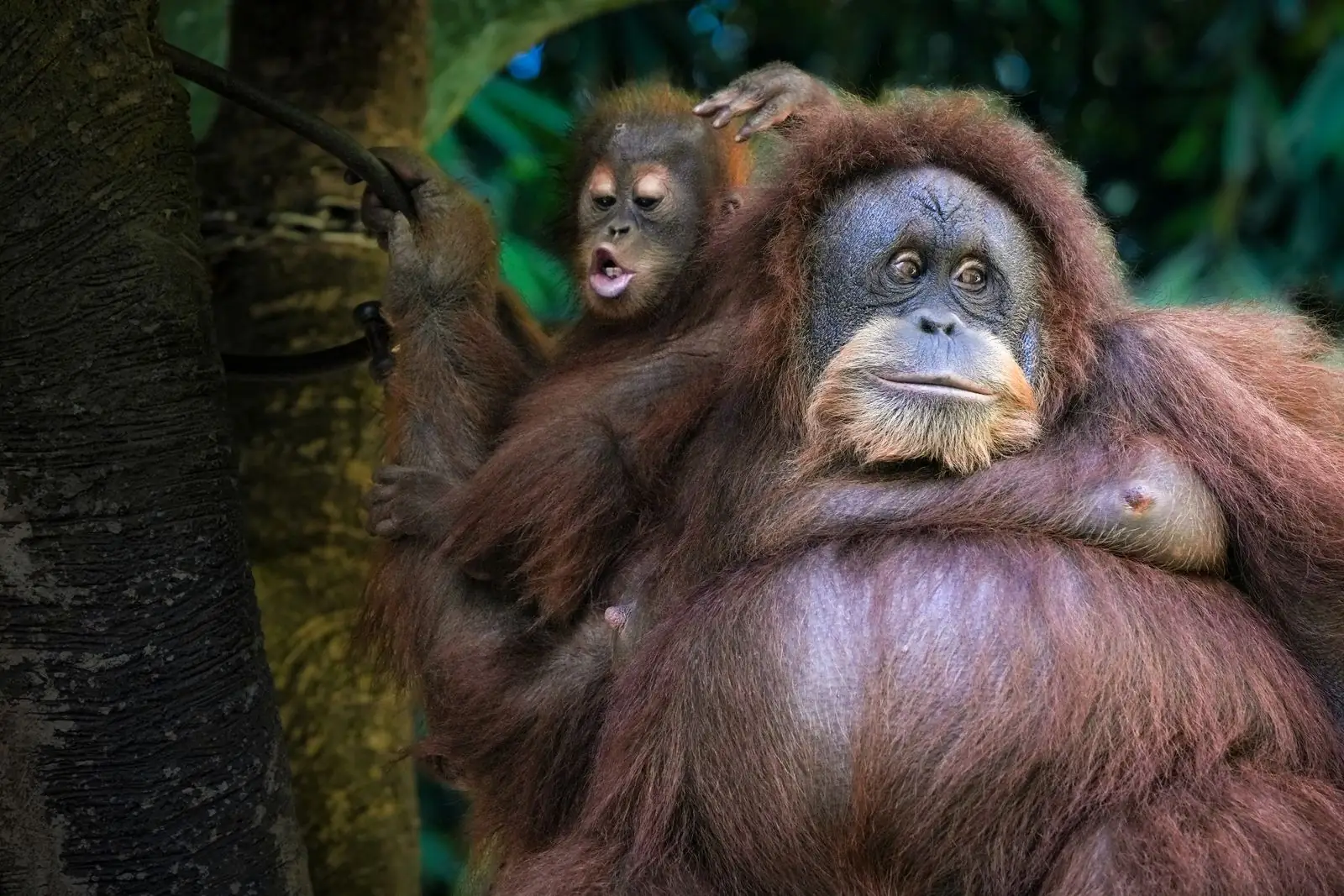
Apes vs Monkeys: A Quick Identification Guide
Apes have no tails; most monkeys do. Apes are generally larger, with bigger brains, broader chests, and more flexible shoulders. Monkeys often have narrower chests and tails built for balance. Apes also spend more time upright and show more complex behavior, from tool use to self-recognition. For the other side of the forest food web, see our types of wild cats chart.
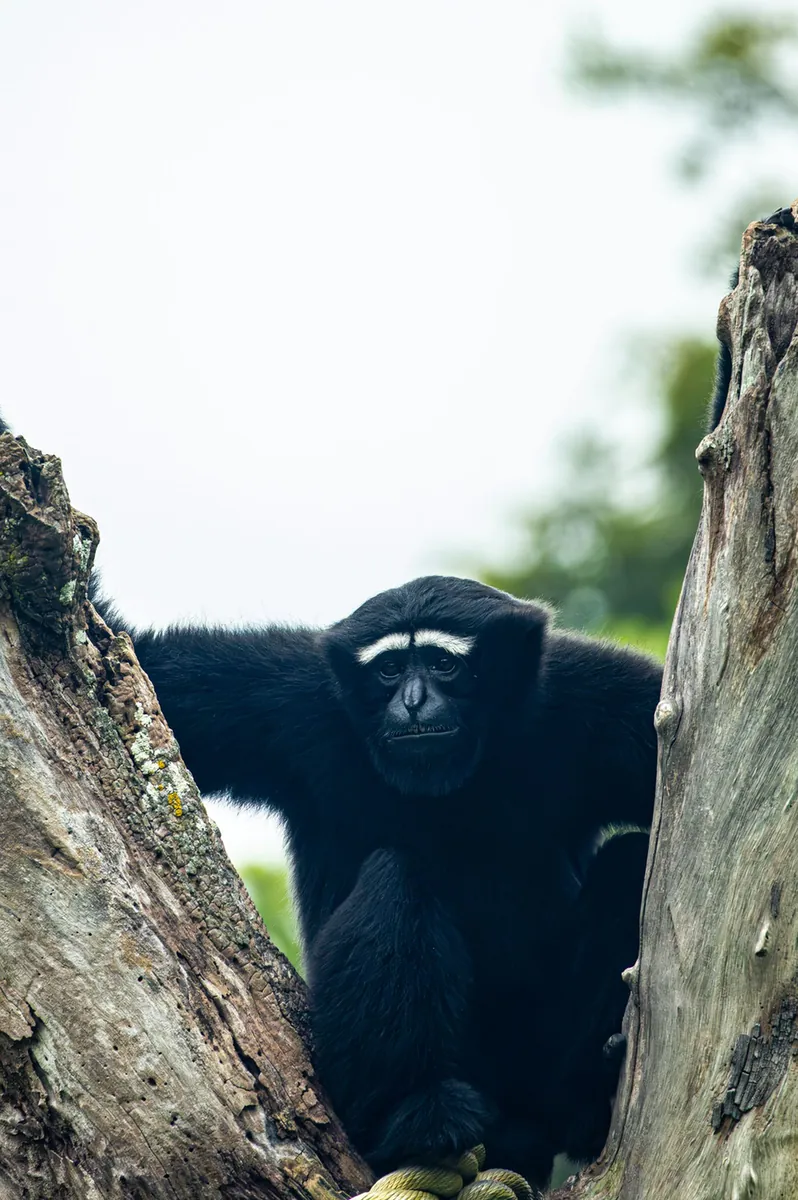
Conservation: Most Ape Species Are in Trouble
Of the 27 living ape species, the overwhelming majority are endangered or critically endangered. The threats repeat: palm oil and farm clearing, hunting and the pet trade, Ebola, and climate-driven disasters. The Tapanuli orangutan lost an estimated 7 percent of its entire population to 2025 cyclone-triggered landslides. The Hainan gibbon’s 44 animals all live in one patch of forest on one island. Like the reptiles in our types of sea turtles chart, apes reproduce slowly, so losses take decades to reverse.
The mountain gorilla is the rare success story: decades of veterinary care, anti-poaching patrols, and ecotourism funding grew the population from about 250 in the 1980s to more than 1,000 today. The Hainan gibbon climbed from fewer than 10 animals in the late 1970s to 44. Apes recover when protection is relentless.


Types of Apes FAQs
How many types of apes are there?
27 non-human species: 7 great apes and 20 lesser apes (19 gibbons plus the siamang). Humans are the eighth great ape.
Are humans considered apes?
Biologically, yes. Humans sit in the great ape family Hominidae. In wildlife writing, “apes” normally means the non-human species.
What is the smallest ape?
The crested gibbons of genus Nomascus, weighing as little as 6 kilograms. Most gibbons weigh 4.5 to 8 kilograms, about the size of a domestic cat.
Which ape is the largest?
The eastern gorilla. A large silverback can exceed 200 kilograms and stand near 1.9 meters, the largest living primate on Earth.
Do all apes use tools?
No. Chimps, orangutans, bonobos, and gorillas all use tools, with regional cultures passed down socially. Wild gibbons and siamangs are not known to.
Are there apes native to South America?
No. South America has many monkeys but zero native apes. Wild apes live only in Africa and Asia.
Conclusion
Twenty-seven species is far more than the three or four most of us can name, and the gap matters. The gibbons duetting at dawn, the bonobo societies run by female alliances, the Tapanuli orangutan holding its last patch of Sumatran hill forest: each is a distinct animal with its own behavior, range, and story. The chart above keeps them straight. And the mountain gorilla proves the rest is not hopeless. Apes come back when people commit to protecting them. The question is whether we act in time for the other 26.


Pingback: Types of Lemurs: 20 Species, Sizes, Habitats and Facts – Chart Identify
Pingback: Types of Monkeys: 25 Species, Sizes, Habitats and Identification Guide – Chart Identify
Pingback: Types of Gorillas: Complete Chart of All 4 Subspecies (2026) – Chart Identify
Pingback: Types of Orangutans: All 3 Species, Sizes and Habitats – Chart Identify