
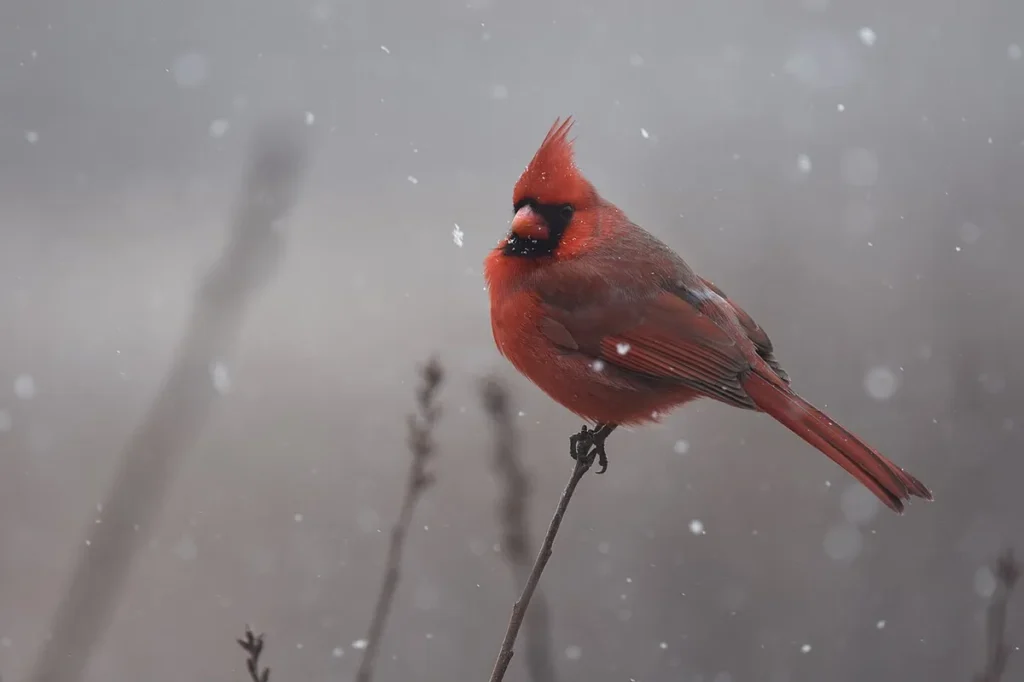
When most people picture a cardinal, they see a bright red bird with a tall crest sitting in a snowy tree. That bird is the northern cardinal, and it is the best known of the group. But the types of cardinals go beyond that one familiar bird: three true cardinals exist, plus several close relatives that birders often call cardinals too. This guide covers all eight.
Cardinals are common, colorful, and easy to attract, which makes them one of the best birds for beginners to study. Use the chart below as a quick reference, then read the species accounts for the full picture.
What Counts as a Cardinal?
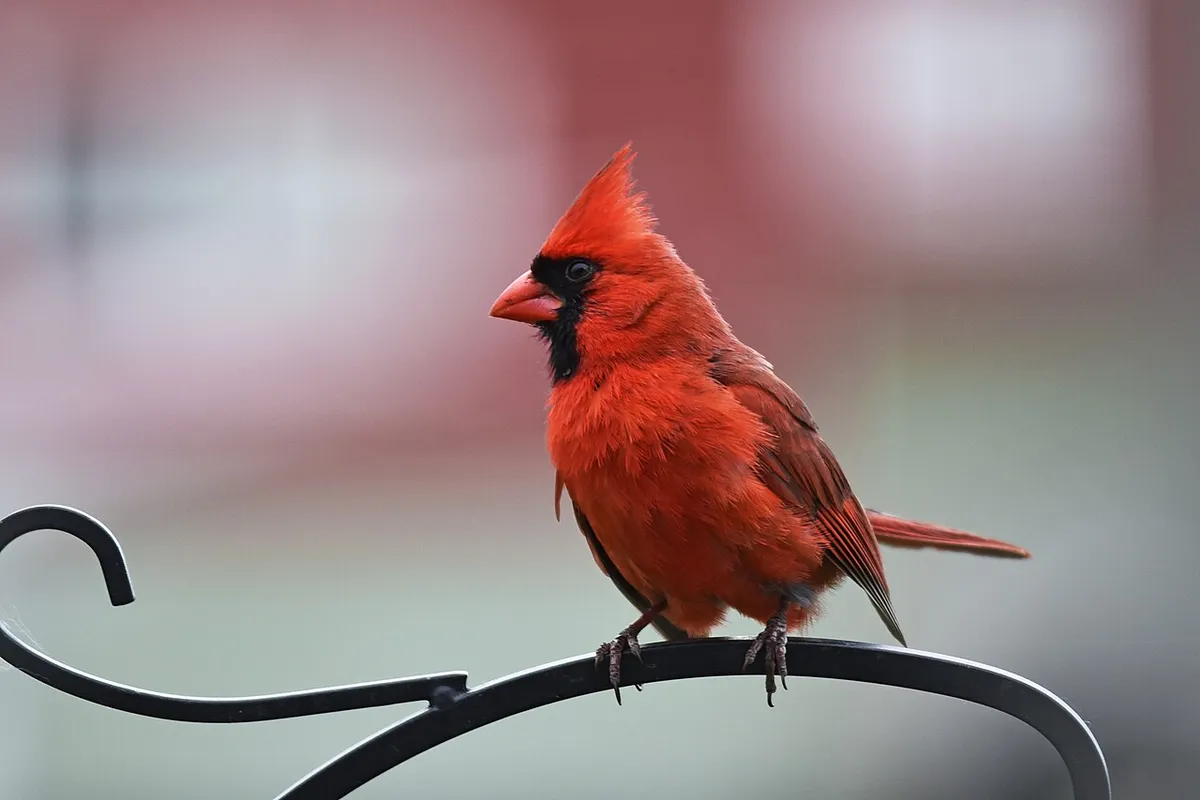
The word cardinal has two meanings in birding. In the strict sense, it refers to the three species in the genus Cardinalis: the northern cardinal, the pyrrhuloxia, and the vermilion cardinal. All three have a crest, a thick seed-cracking bill, and red in the male plumage. In the loose sense, birders also use the word for other members of the cardinal family, Cardinalidae, which includes tanagers, grosbeaks, and buntings.
This article covers both groups: the three true cardinals first, then five close relatives. Every bird below is one you can see in the United States, except for the vermilion cardinal, which lives in northern South America.
Types of Cardinals Chart
Use this chart to compare the eight birds at a glance.
| Species | Length | Weight | Range | Male Color | Habitat |
|---|---|---|---|---|---|
| Northern Cardinal | 8.3 to 9.1 in | 1.5 to 1.7 oz | Eastern North America | Bright red all over | Woodland edges, gardens |
| Pyrrhuloxia | 8.3 in | 0.8 to 1.5 oz | Southwest US, Mexico | Gray with red face | Desert scrub, thornbush |
| Vermilion Cardinal | 7.5 in | 0.8 to 1.1 oz | Northern South America | Deep red with long crest | Dry scrub, cactus country |
| Summer Tanager | 6.7 in | 1.0 oz | Southern US | Plain red, no crest | Open woods, river trees |
| Scarlet Tanager | 6.3 to 7.5 in | 0.8 to 1.3 oz | Eastern US forests | Scarlet with black wings | Deciduous forest canopy |
| Rose-breasted Grosbeak | 7.1 to 8.3 in | 1.4 to 1.6 oz | Eastern North America | Black, white, rose chest | Forest edges, gardens |
| Blue Grosbeak | 5.9 to 7.5 in | 0.9 to 1.1 oz | Southern US | Deep blue, rusty wing bars | Shrubby fields, roadsides |
| Painted Bunting | 4.7 to 5.5 in | 0.5 to 0.7 oz | Southern US | Red, blue, and green | Shrubby fields, gardens |
The 3 True Cardinals
Northern Cardinal
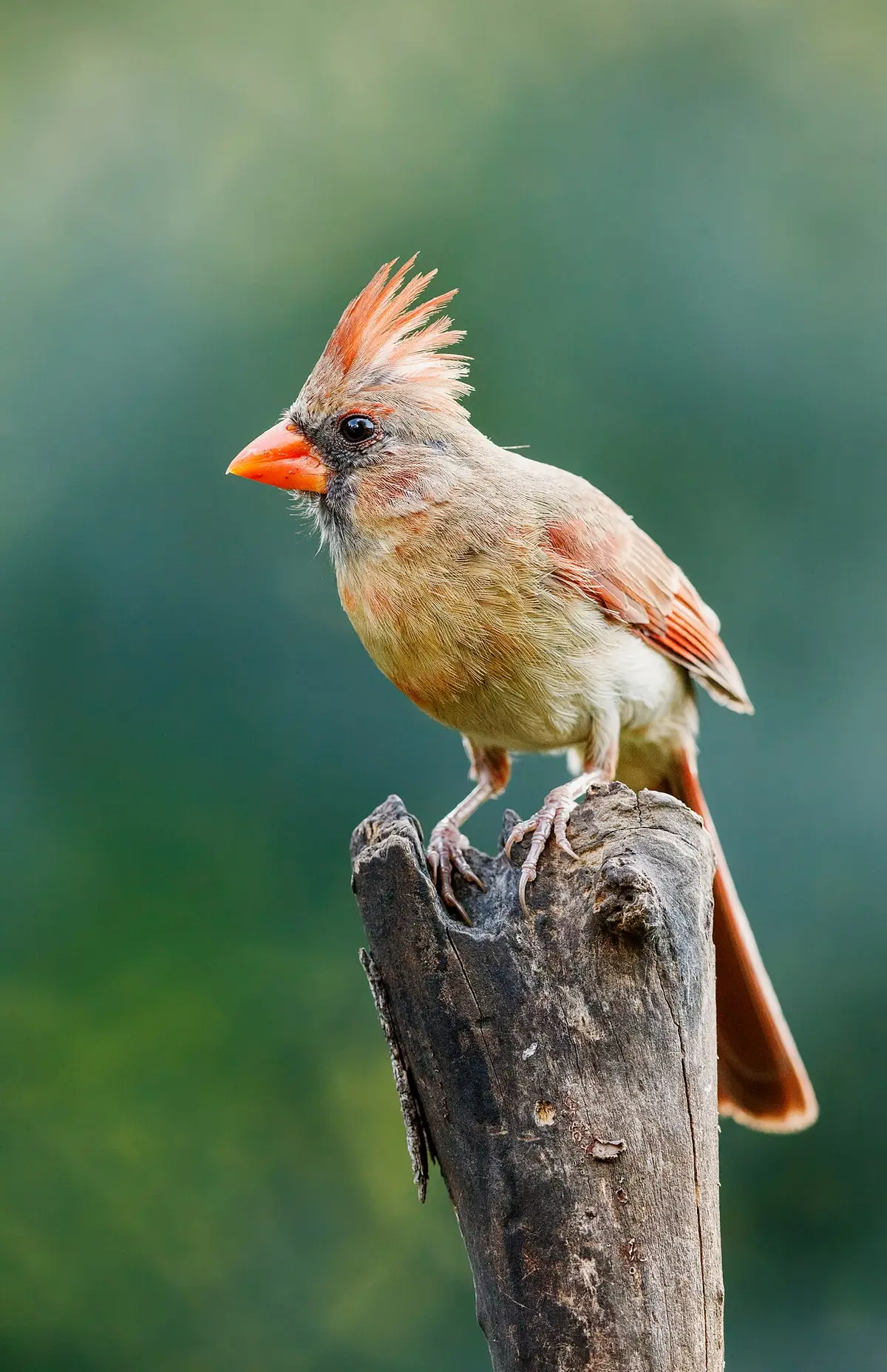
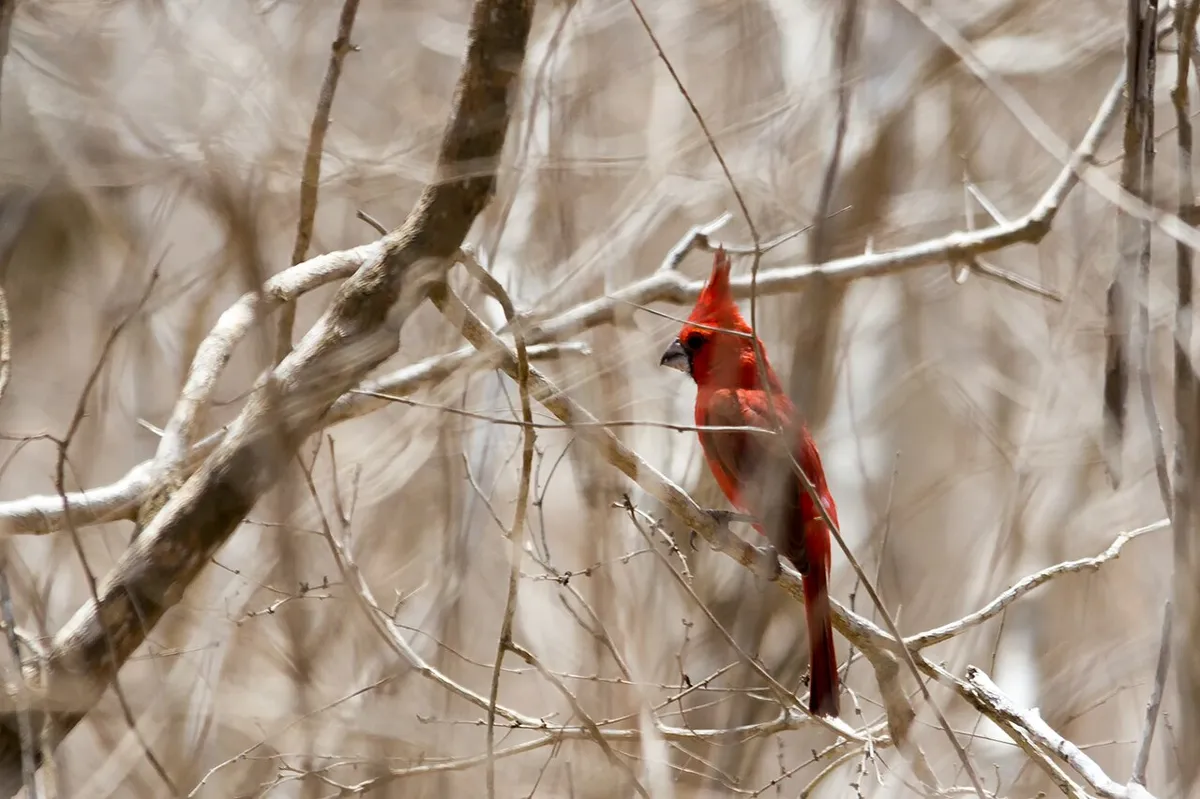
The northern cardinal is the bird most Americans mean when they say cardinal. The male is bright red from head to tail, with a black mask around the bill and a tall pointed crest. The female is warm tan-brown with red tinges on the wings, tail, and crest, and she sings just like the male. Northern cardinals do not migrate, so they are a year-round sight in the eastern United States, from Maine to Florida and west to Texas.
Cardinals eat mostly seeds and fruit, with insects added in summer when they feed nestlings. They prefer a platform feeder or the ground to a hanging tube. A pair usually raises two broods a year. Their song is a loud, clear whistle, often described as “cheer, cheer, cheer.”
Pyrrhuloxia
The pyrrhuloxia, also called the desert cardinal, is the northern cardinal’s gray cousin from the arid Southwest. It lives in Arizona, New Mexico, and Texas, and south into Mexico. The male is soft gray with a red face, throat, chest, and tail, plus a red crest. The female is gray-brown with less red. The easiest way to separate it from a female northern cardinal is the bill: the pyrrhuloxia has a short, curved, yellowish bill shaped like a parrot’s beak, while the northern cardinal’s bill is thick and orange-red.
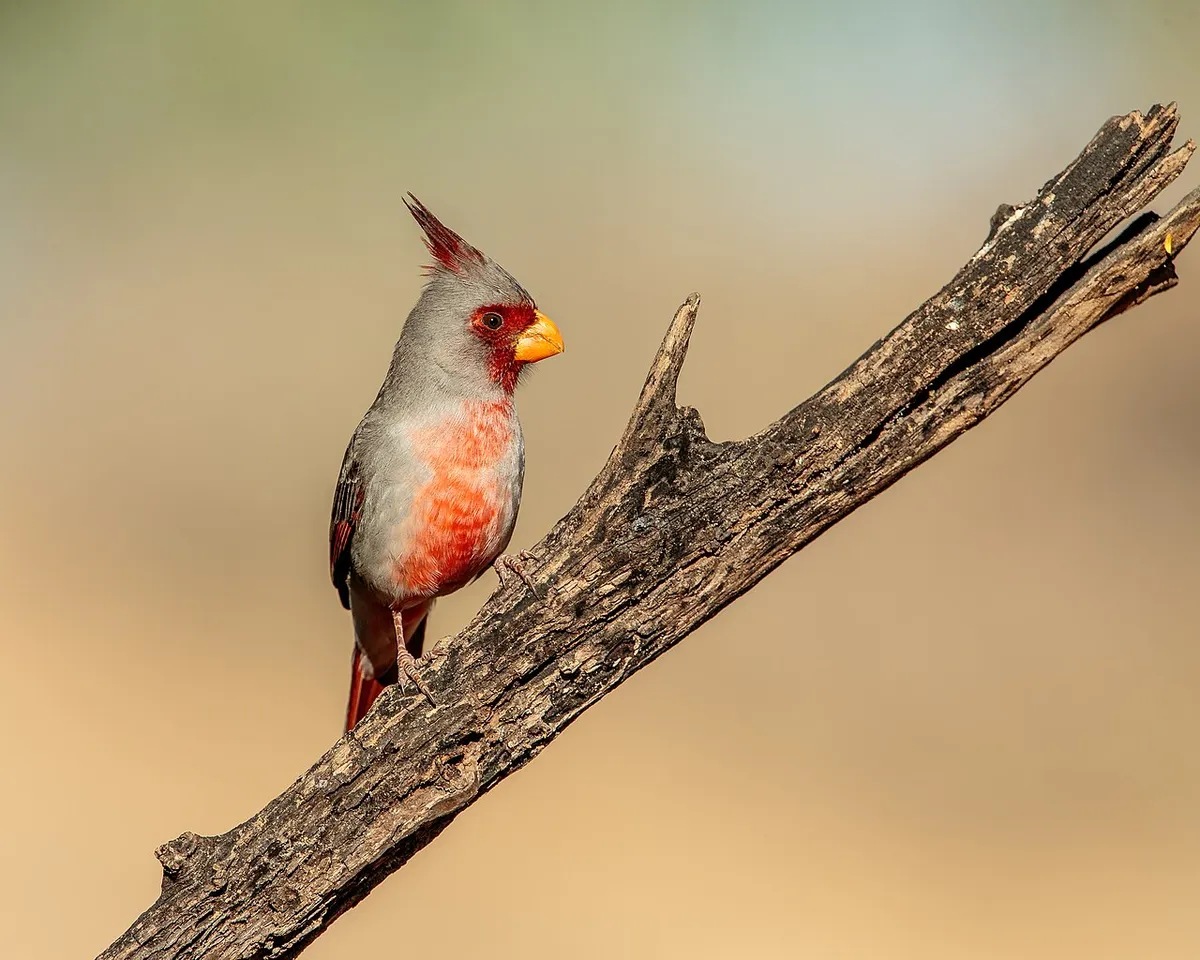
Pyrrhuloxias live in thorn scrub, mesquite, and desert washes, where northern cardinals are scarce. They eat seeds, cactus fruit, and insects, and they often forage on the ground in small flocks. Where the two species overlap in Texas, they sometimes hybridize.
Vermilion Cardinal
The vermilion cardinal is the third true cardinal, and the only one that does not occur in the United States. It lives in the dry scrub of Colombia and Venezuela. The male is a deep, rich red with a very long crest, and the female is gray-brown with a reddish wash.
5 Close Relatives in the Cardinal Family
The cardinal family, Cardinalidae, holds about fifty species. Five of them are the ones American birders meet most often alongside the true cardinals. They lack the tall crest, but they share the heavy bill and the bright breeding plumage.
Summer Tanager
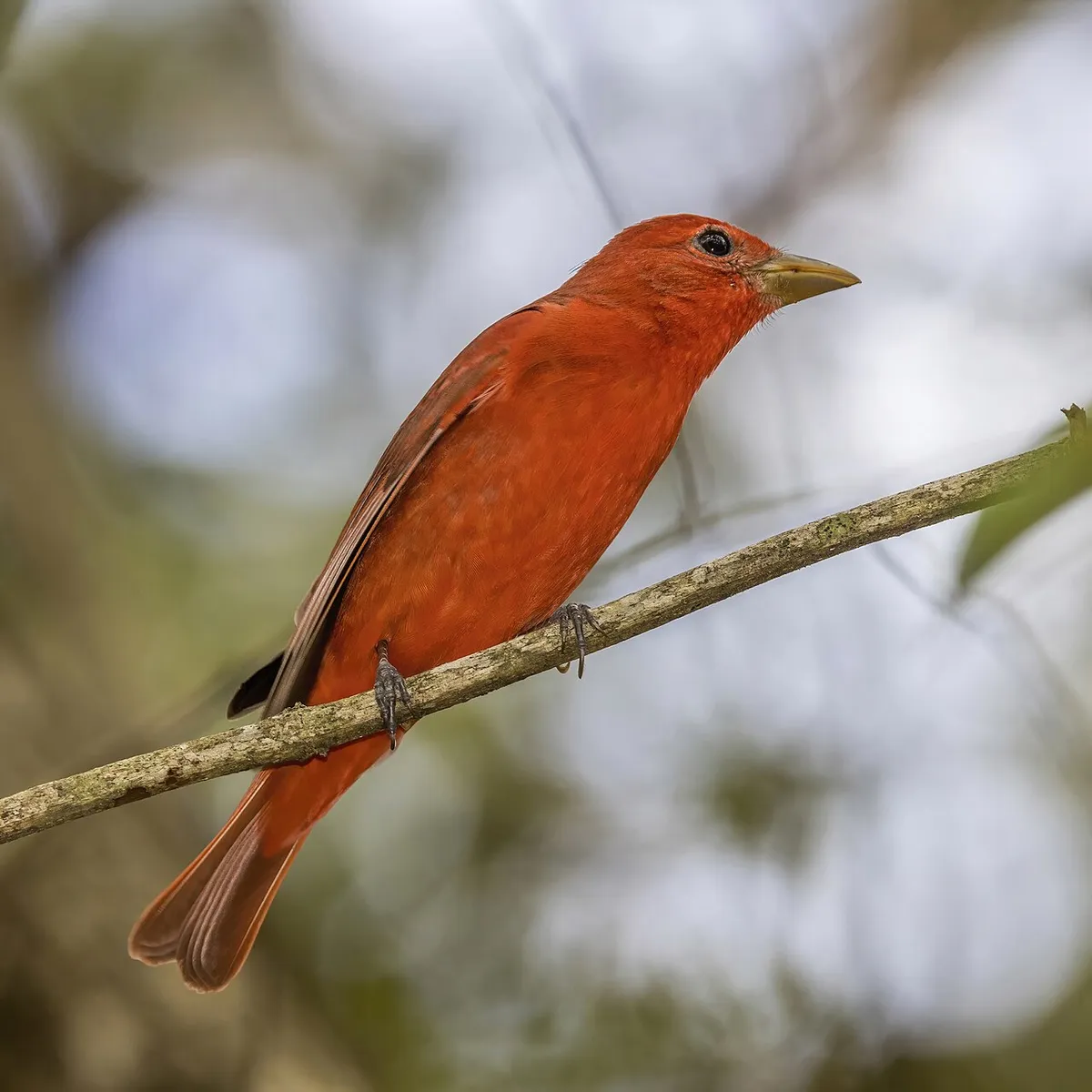
The summer tanager is the only all-red bird in North America besides the northern cardinal, and the two are easy to confuse at a glance. The differences are clear once you know them: no crest, no black mask, and a pale yellowish bill instead of an orange-red one. The male is plain red all over, and the female is yellow-green. Summer tanagers breed in open woods across the southern United States and winter in Mexico and Central America. They are famous bee and wasp eaters, catching the insects in flight and rubbing off the stinger on a branch before swallowing.
Scarlet Tanager
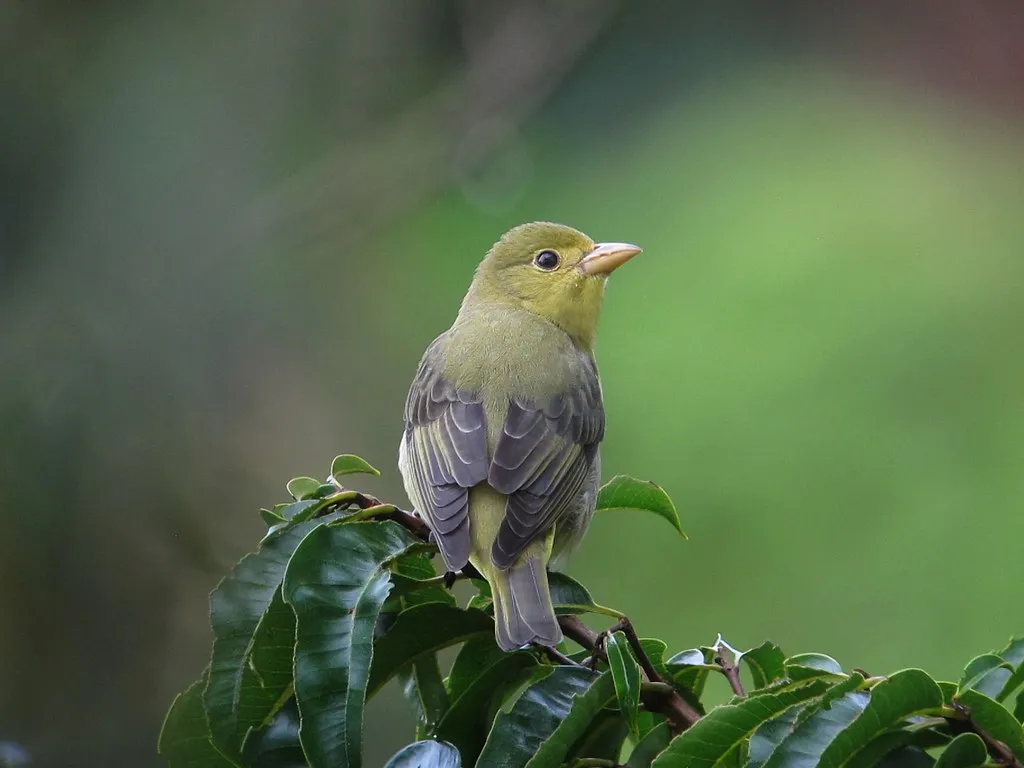
The scarlet tanager is one of the most striking birds in eastern forests, and one of the hardest to spot. The male is bright scarlet with jet black wings and tail, but he sings from the high canopy, where leaves hide him. Many birders hear his hoarse, robin-like song before they see him. The female is yellow-green with darker wings. Scarlet tanagers migrate to South America for the winter, one of the longest migrations in the cardinal family.
Rose-breasted Grosbeak
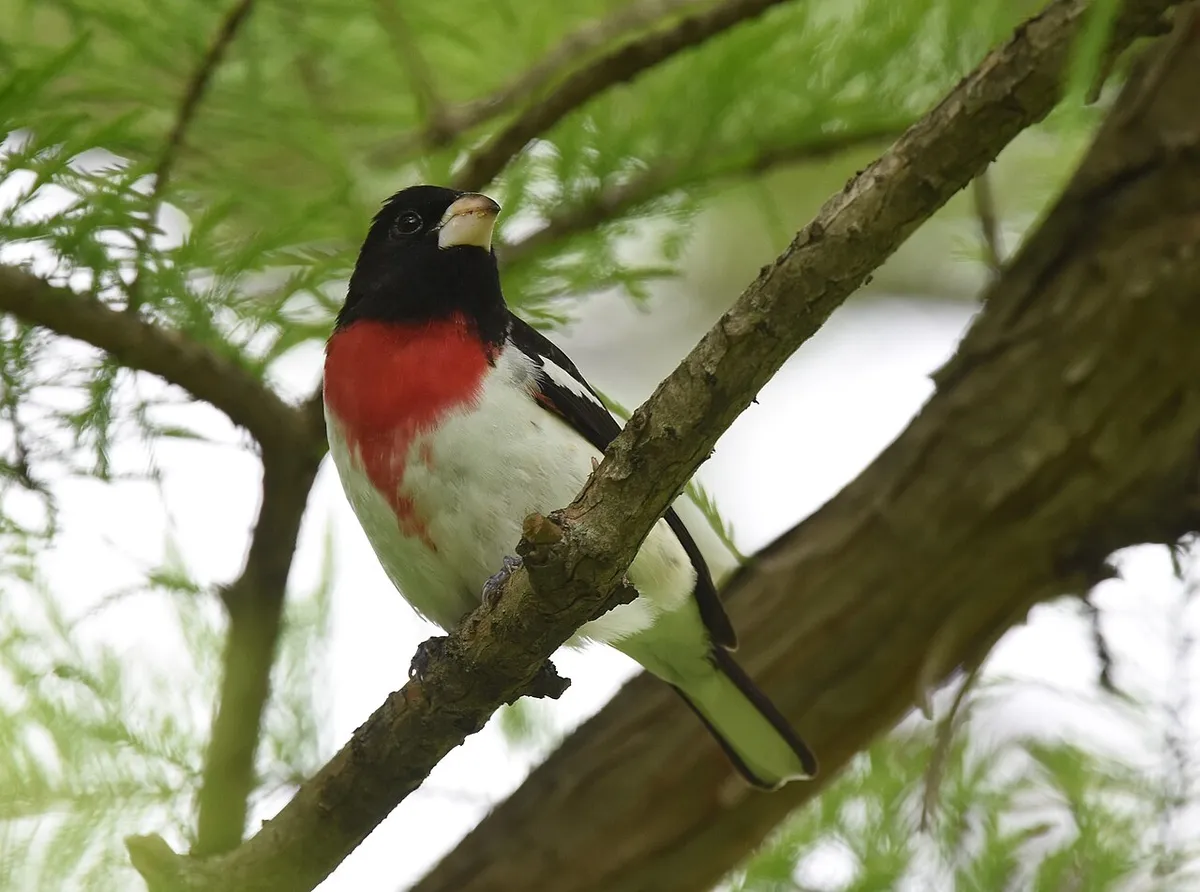
The rose-breasted grosbeak is a spring favorite at feeders across the eastern United States. The male is black and white with a triangle of rose-red on his chest, like a bib. The female is brown and streaky, with a bold white eyebrow stripe. Grosbeaks have an enormous pale bill built for crushing seeds, and they eat potato beetles and other garden pests. They pass through the eastern states in April and May on their way north.
Blue Grosbeak
The blue grosbeak is a southern bird of shrubby fields, hedgerows, and roadsides. The male is deep blue with two rusty brown wing bars, and his huge silver-gray bill is the best field mark. Females are warm brown with the same wing bars. They breed from California to Florida and winter in Mexico and Central America.

Painted Bunting
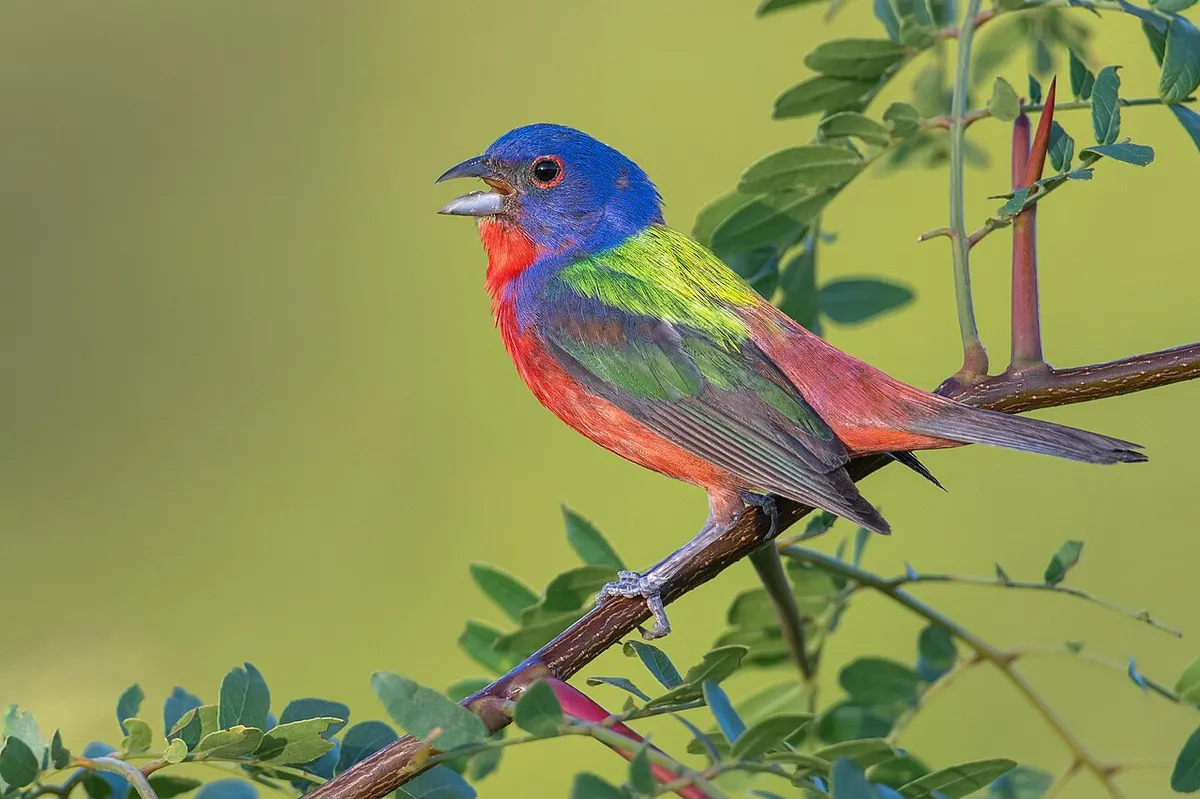
The painted bunting is often called the most beautiful bird in North America. The male wears red underparts, a blue head, and a green back, all at once. The female is plain green-yellow, which makes her hard to spot in the leaves. Painted buntings breed in shrubby fields and gardens from Texas to Florida, and winter in Mexico and the Caribbean. They are shy and quiet for such a colorful bird, and they often feed low in dense cover.
How to Tell Cardinals Apart
Start with the crest. A tall pointed crest and a black mask means northern cardinal. A crest with gray plumage and a yellow parrot-like bill means pyrrhuloxia. No crest means one of the relatives: an all-red bird with a pale bill is a summer tanager, a scarlet bird with black wings is a scarlet tanager, a blue bird with rusty wing bars is a blue grosbeak, a black and white bird with a rose chest patch is a rose-breasted grosbeak, and a small bird with red, blue, and green together is a painted bunting.
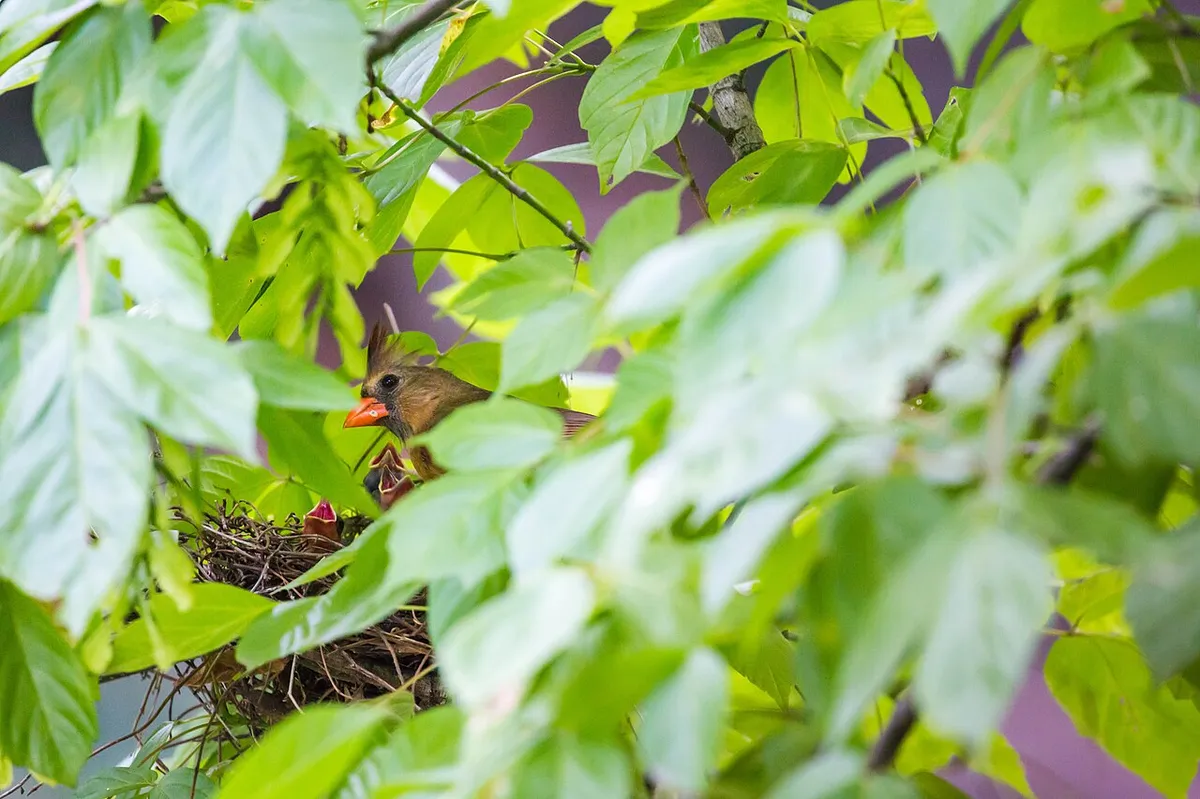
Females are harder, because most of them are brown, tan, or green. The female northern cardinal is the easiest: warm tan with red on the wings, tail, and crest, plus the orange bill. Female tanagers and grosbeaks need a closer look at the bill shape, the wing bars, and the habitat. When in doubt, listen: cardinals sing all year.
Where to See Cardinals
Northern cardinals live year-round across the eastern United States, in suburbs, parks, gardens, and woodland edges. Pyrrhuloxias need a trip to the desert Southwest, especially southern Arizona and south Texas. Summer tanagers and blue grosbeaks are southern summer birds, best found in open woods and weedy fields from May to August. Scarlet tanagers and rose-breasted grosbeaks are eastern forest birds, easiest in spring migration. Painted buntings are the hardest of the eight: try coastal Texas and Florida in spring and summer.
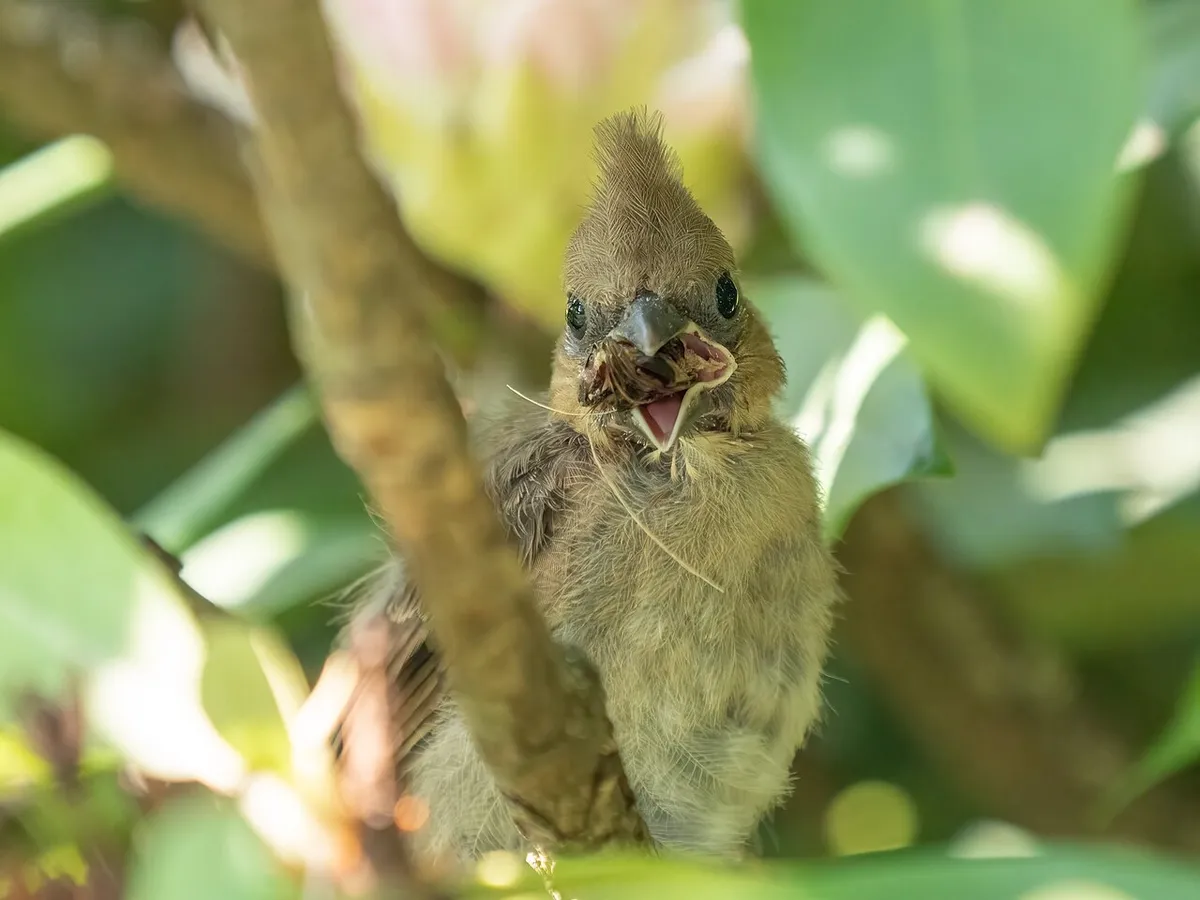
All eight species nest in cup-shaped nests in shrubs or low trees. If you find one, watch from a distance and never touch it.
Attracting Cardinals to Your Yard
Cardinals are among the easiest birds to attract. Put out black oil sunflower seed on a platform feeder or a hopper feeder, and keep a tray or ground feeding area, because cardinals prefer to feed low. Add safflower seed, which cardinals like and squirrels usually ignore. Provide dense shrubs or an evergreen for cover, since cardinals nest in thickets and need shelter from hawks. For more small birds that visit the same feeders, see our guide to the types of small birds.

Frequently Asked Questions
How many types of cardinals are there?
There are three true cardinals: the northern cardinal, the pyrrhuloxia, and the vermilion cardinal. The cardinal family also includes about fifty related species, including tanagers, grosbeaks, and buntings.
Are cardinals and red birds the same thing?
Not exactly. Many red birds are not cardinals, including summer tanagers, scarlet tanagers, and house finches. True cardinals have a crest, a thick bill, and a black face mask.
Do female cardinals sing?
Yes. Female northern cardinals sing regularly, which is unusual among North American songbirds, and pairs sometimes sing duets.
Do cardinals migrate?
Northern cardinals do not migrate. They stay in the same area all year, which is why they are a familiar sight at winter feeders. The tanagers, grosbeaks, and buntings in this guide all migrate south for the winter.
What is the best food for cardinals?
Black oil sunflower seed is the best single food for cardinals. They also eat safflower seed, cracked corn, peanuts, and fruit. Offer the seed on a platform feeder or on the ground.
Conclusion
The types of cardinals range from the familiar red bird at your feeder to the gray desert cardinal of the Southwest and the multicolored painted bunting of the southern fields. The three true cardinals share the crest and the heavy bill, while their relatives add the tanagers, grosbeaks, and buntings that fill American summers with color and song. Learn the eight birds in this guide, and you will be able to name almost any cardinal you meet. For help identifying the eggs you might find in a cardinal nest, see our bird egg identification chart and our warbler identification chart for the small songbirds that share the same woods.

