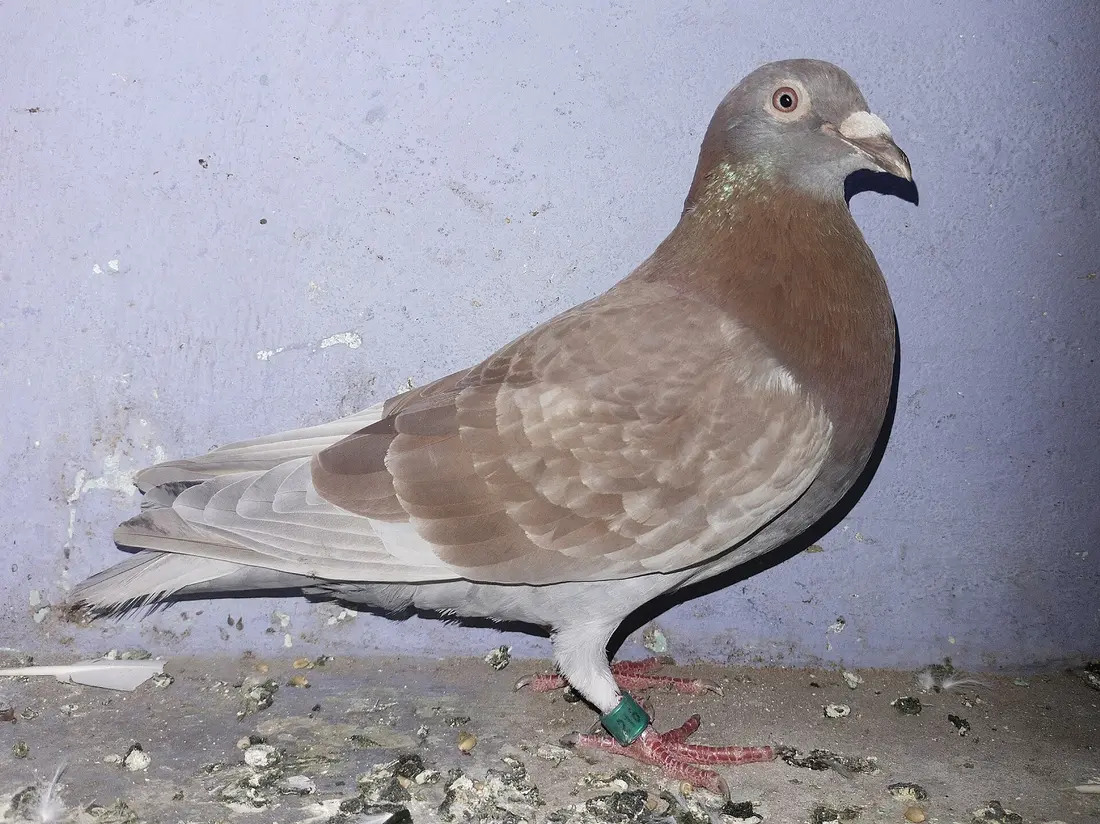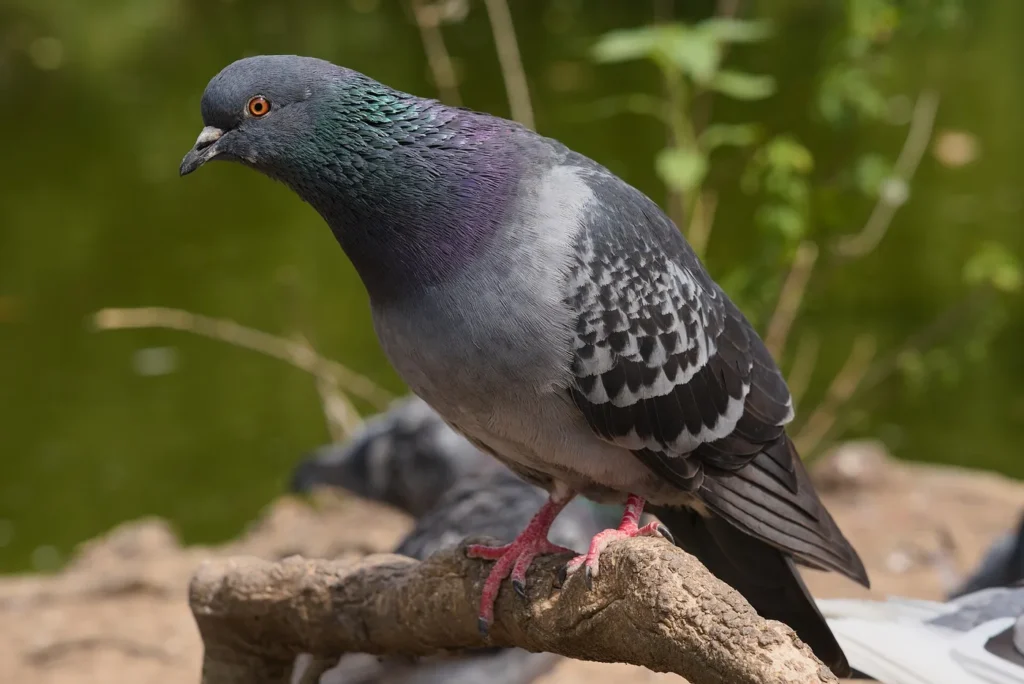
A pigeon color chart turns a confusing flock into something you can actually read. The pigeon color chart below covers 15 colors and patterns, from the plain blue bar bird on every city sidewalk to rare almond and opal pigeons worth thousands of dollars. If you have ever wondered why no two pigeons in a park look quite the same, this guide explains what you are seeing, and the genetics behind it.
Every domestic pigeon descends from the wild rock dove, Columba livia: blue gray with two black wing bars and a green and purple shine on its neck. Centuries of selective breeding stretched that one starting point into dozens of colors, by mixing a small set of genes.
How Pigeon Colors Work: 3 Base Colors
Pigeon color genetics rests on three base colors: blue, ash-red, and brown. Blue is the wild type and the default. Ash-red is dominant over blue, and brown is recessive to both. A bird shows only one base color at a time, and everything else in the chart is a pattern or a modifier layered on top of that base.
On top of the base color sit the wing patterns, running from barless (no bars) through bar (two neat bars), check (heavy dark speckling), and T-pattern (wings almost solid dark). Then come the modifiers. Spread turns the whole bird one solid color. Dilute washes the color out. Recessive red covers the pattern with solid red. Grizzle sprinkles white feathers through the plumage. Pied adds white patches.
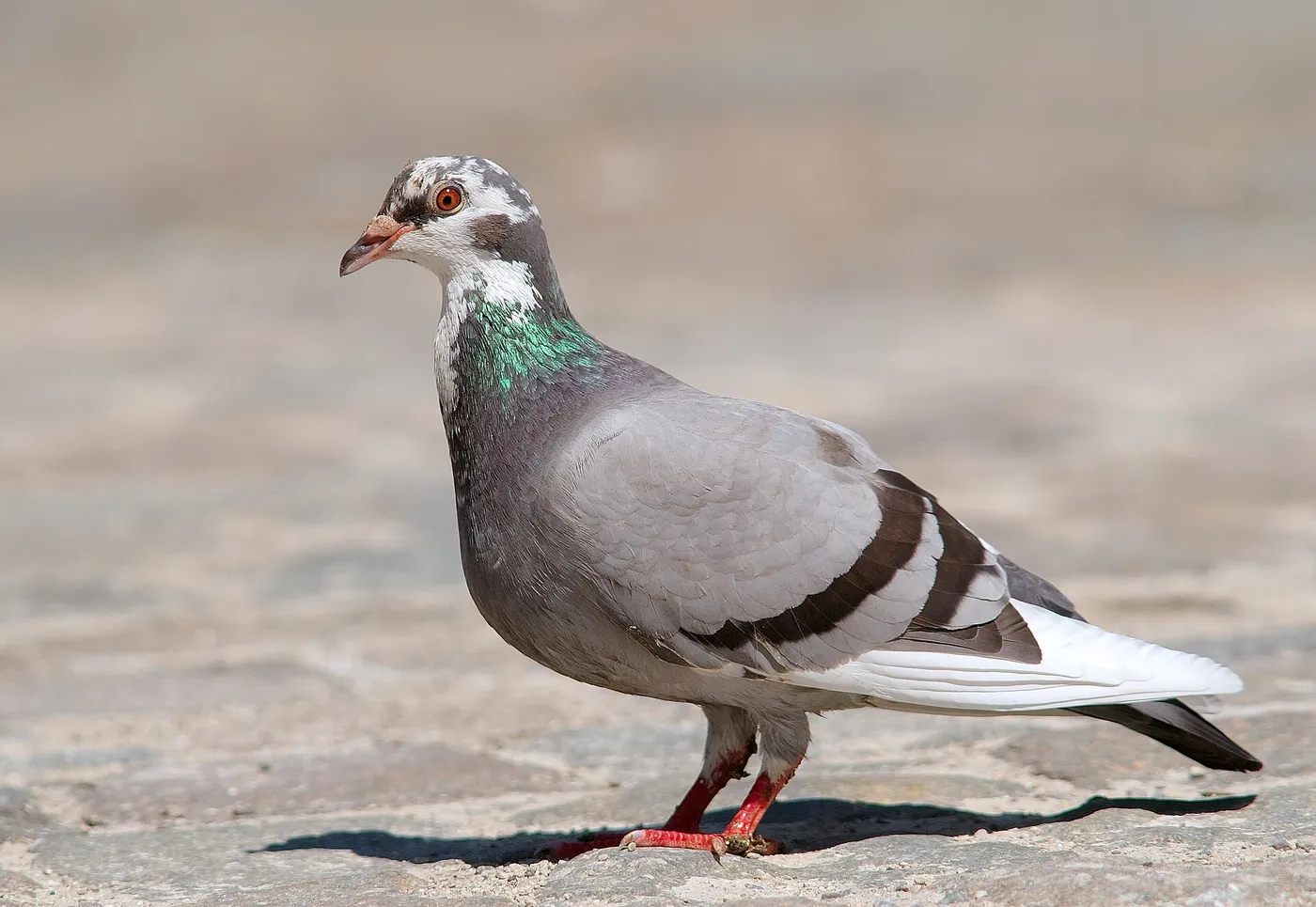
Pigeon Color Chart: 15 Colors and Patterns Explained
Use this chart as your quick reference. Find the color that matches the bird in front of you, then read across to see which genes produced it and which breeds show it most.
| Color / Pattern | Appearance | Genetics Basis | Common Breeds |
|---|---|---|---|
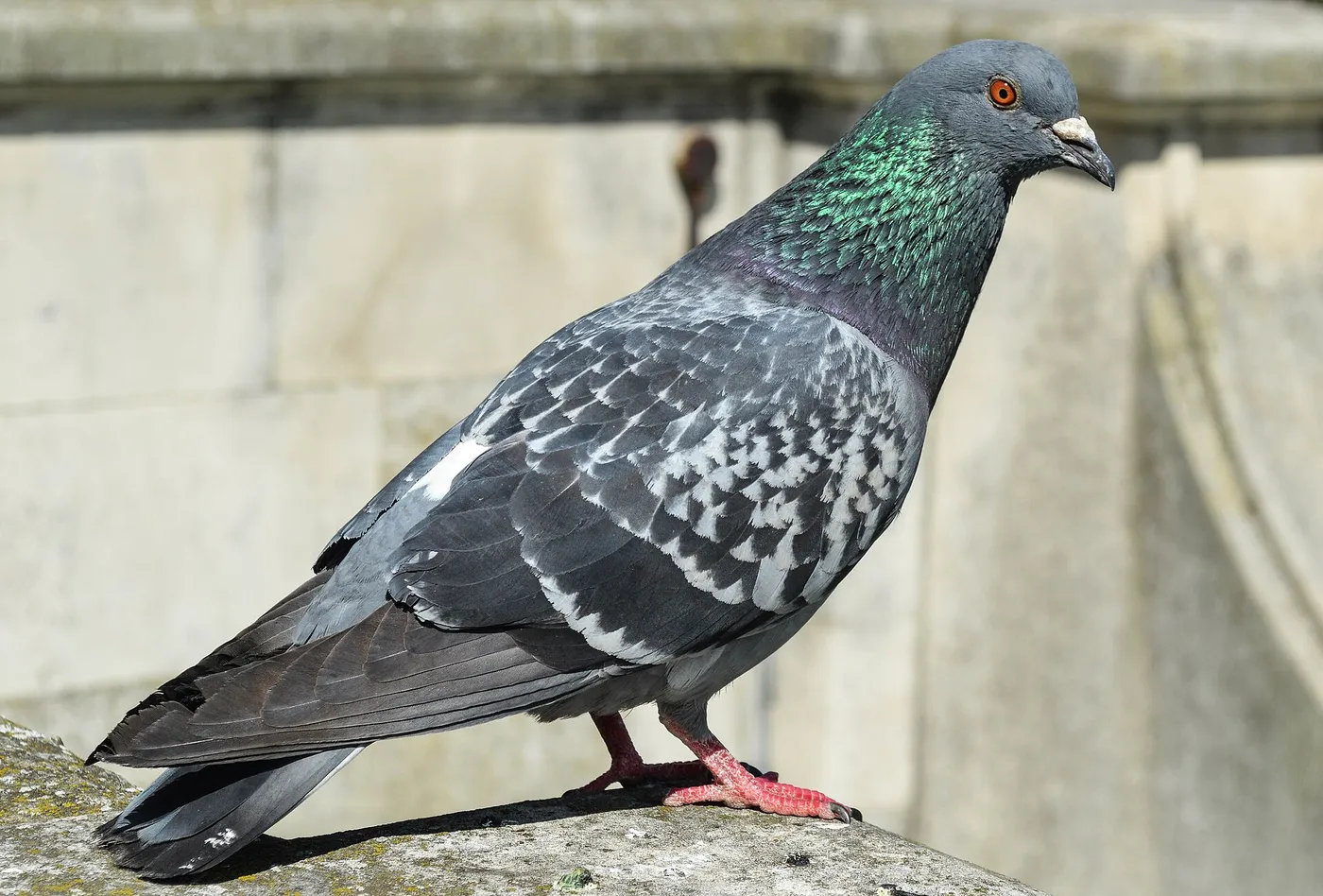
| Blue Bar | Blue gray body, two black wing bars, iridescent green neck | Wild type blue base (B+) with bar pattern (C+) | Rock dove, Racing Homer, feral pigeon |
| Blue Check | Blue gray body with heavy dark checkering across the wings | Blue base (B+) with check pattern (C) | Racing Homer, Tippler, feral pigeon |
| T-Pattern Blue | Wings almost solid dark blue gray, very little light showing | Blue base (B+) with T-pattern (C^T), the darkest pattern | Racing Homer, Roller, feral pigeon |
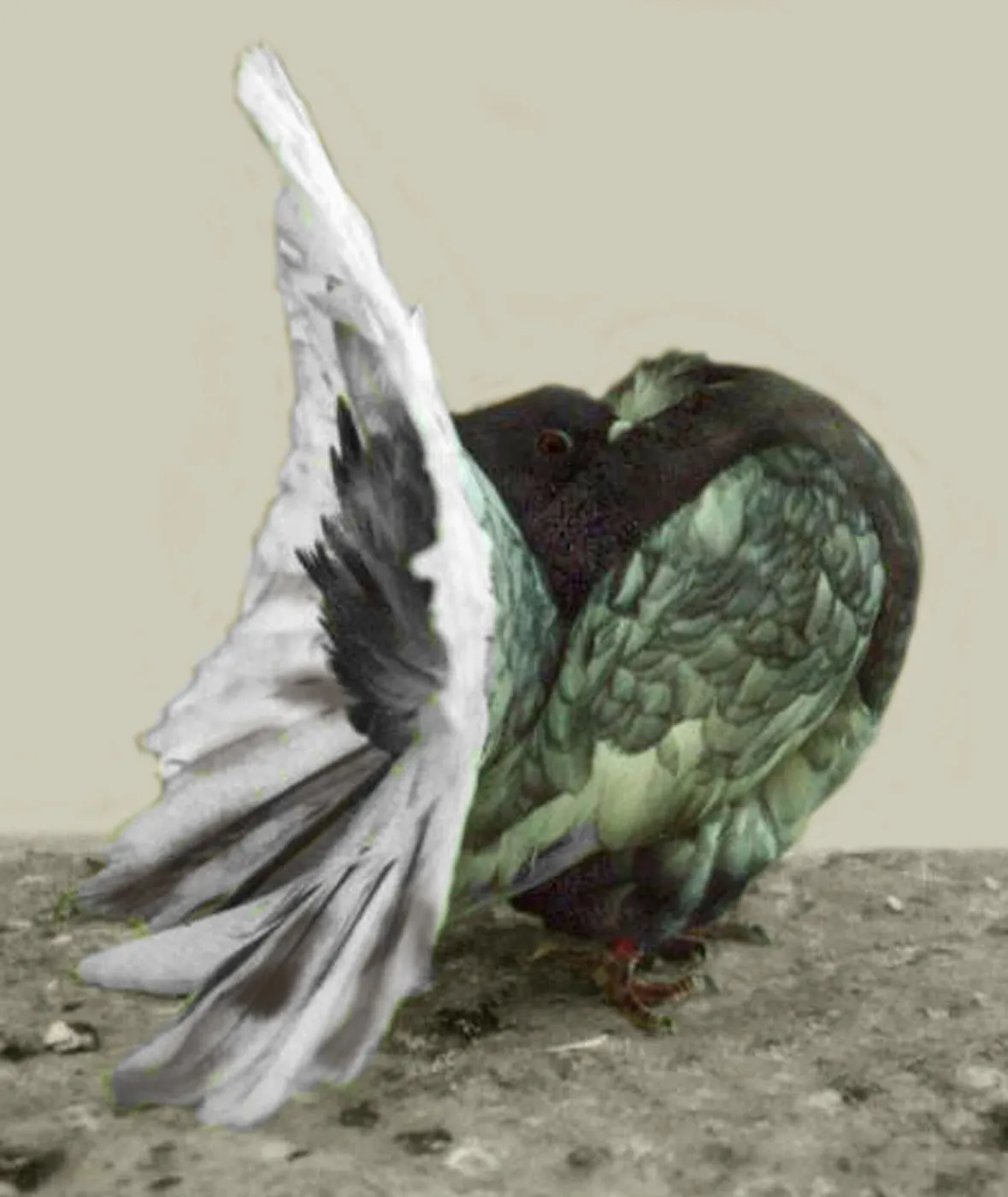
| Spread Black | Solid black all over, sometimes with a green or purple sheen | Blue base (B+) plus spread (S), which fills the whole bird | King, Modena, Fantail |
| Ash-Red Bar | Warm reddish gray body with red brown wing bars | Ash-red base (B^A), dominant over blue, with bar pattern | Racing Homer, Fantail, Modena |
| Ash-Red Check | Reddish body with dense red checkering on the wings | Ash-red base (B^A) with check pattern (C) | Racing Homer, Roller, Tippler |
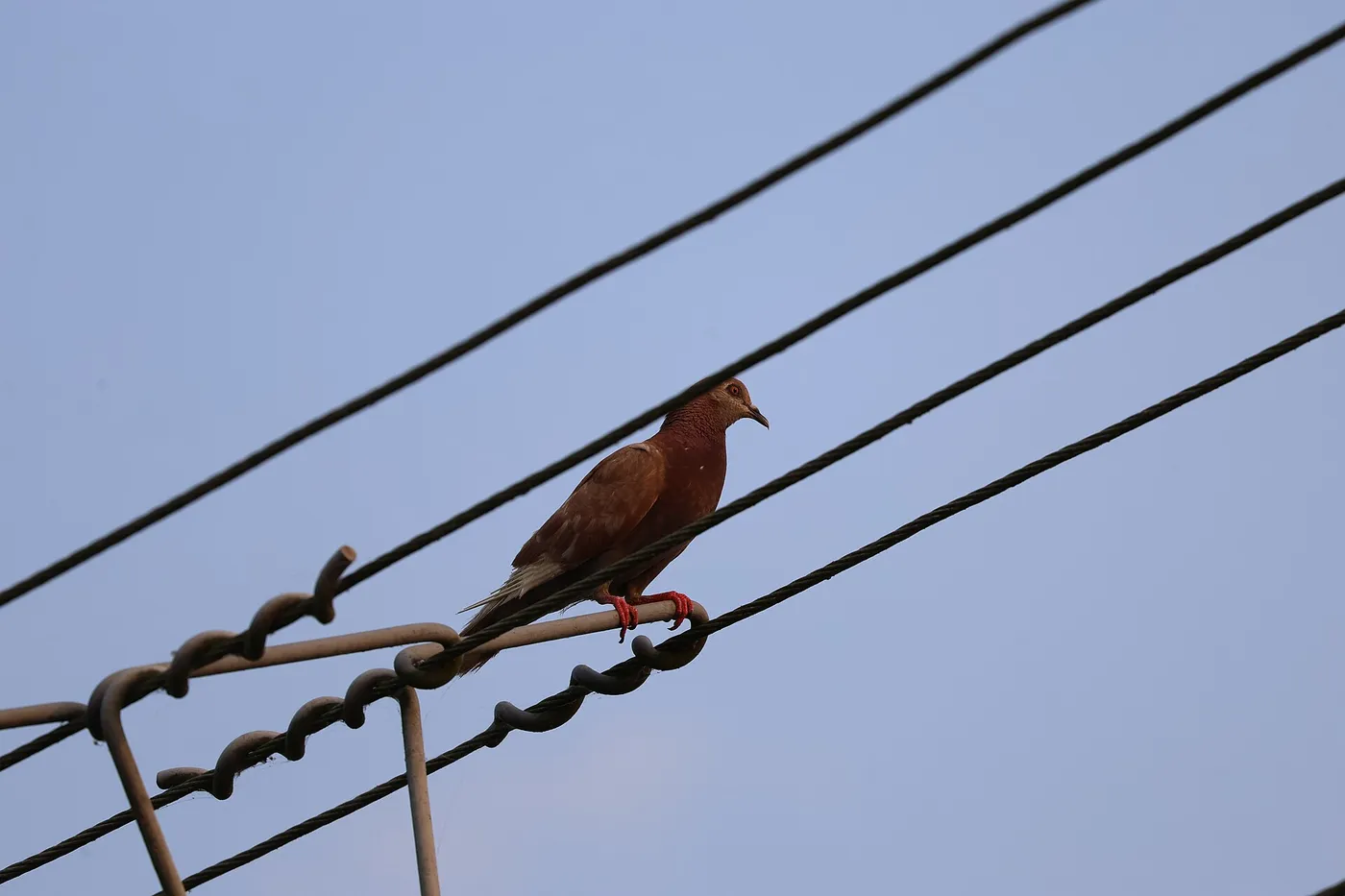
| Brown | Soft chocolate brown body, bars in a lighter brown | Brown base (b), recessive to blue and ash-red | Fantail, Lahore, Modena |
| Recessive Red | Rich solid red from head to tail, no visible pattern | Recessive red (e/e), which masks the base color and pattern | Jacobin, Fantail, King |
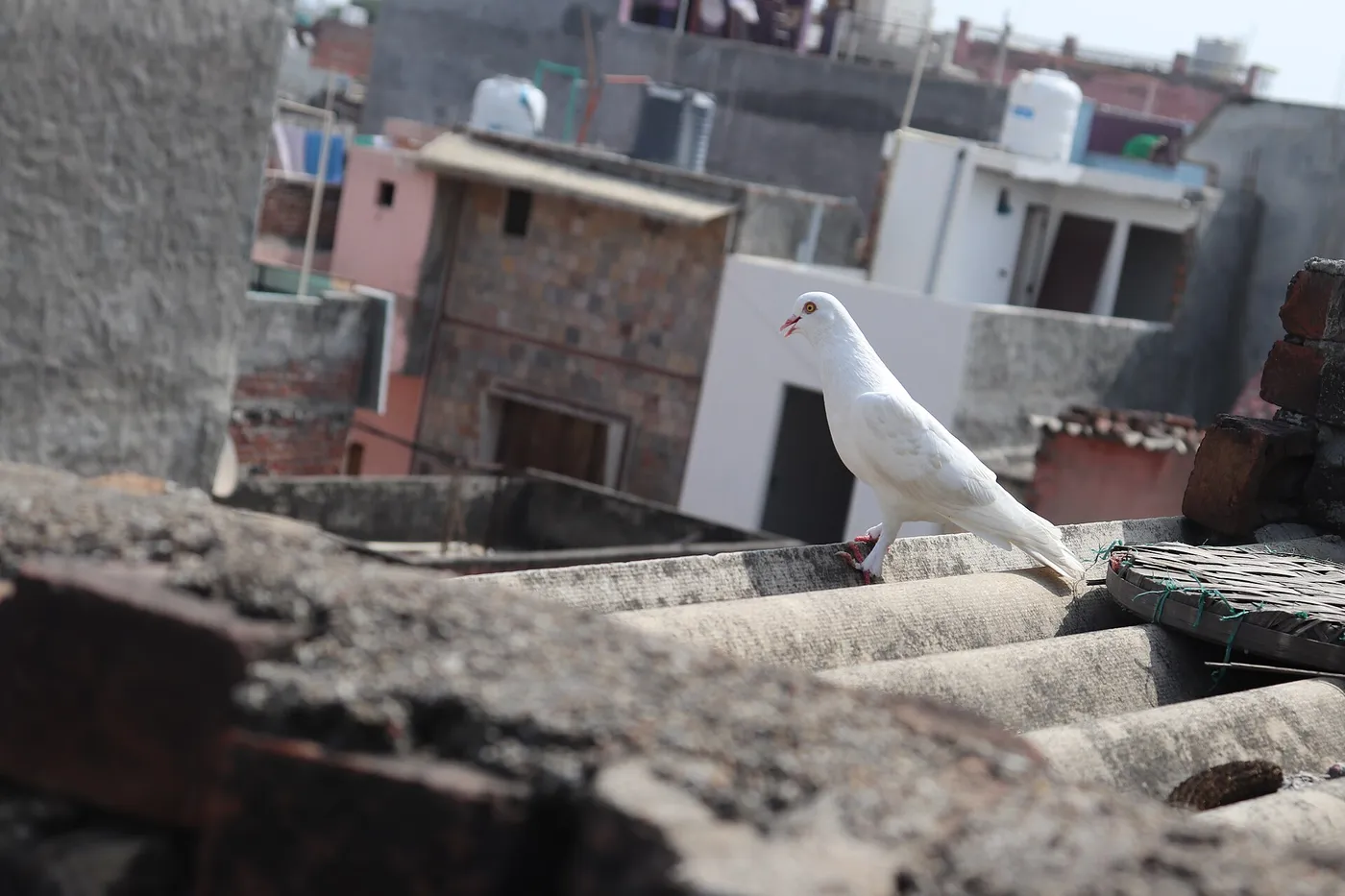
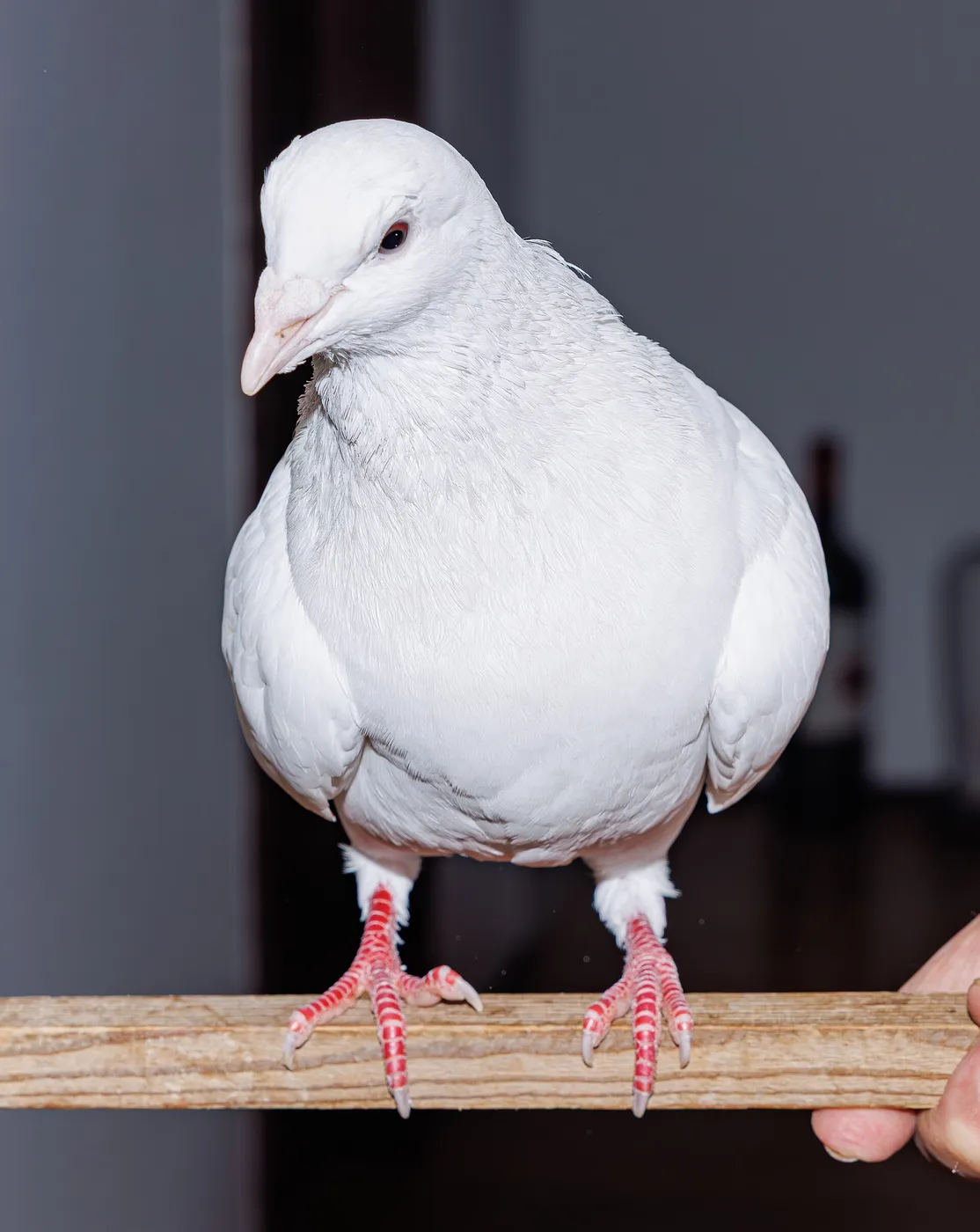
| White | Pure white plumage, dark eyes in most birds | Recessive white (z) or extreme pied; masks all other color | White King, Fantail, White Homer |
| Pied | White patches mixed with the base color, often on wings and head | Piebald (s), recessive; amount of white varies widely | Roller, Tumbler, Lahore |
| Grizzle | White feathers sprinkled through the colored plumage, like frost | Grizzle (G), dominant; lightens with each molt | Racing Homer, Fantail, Roller |
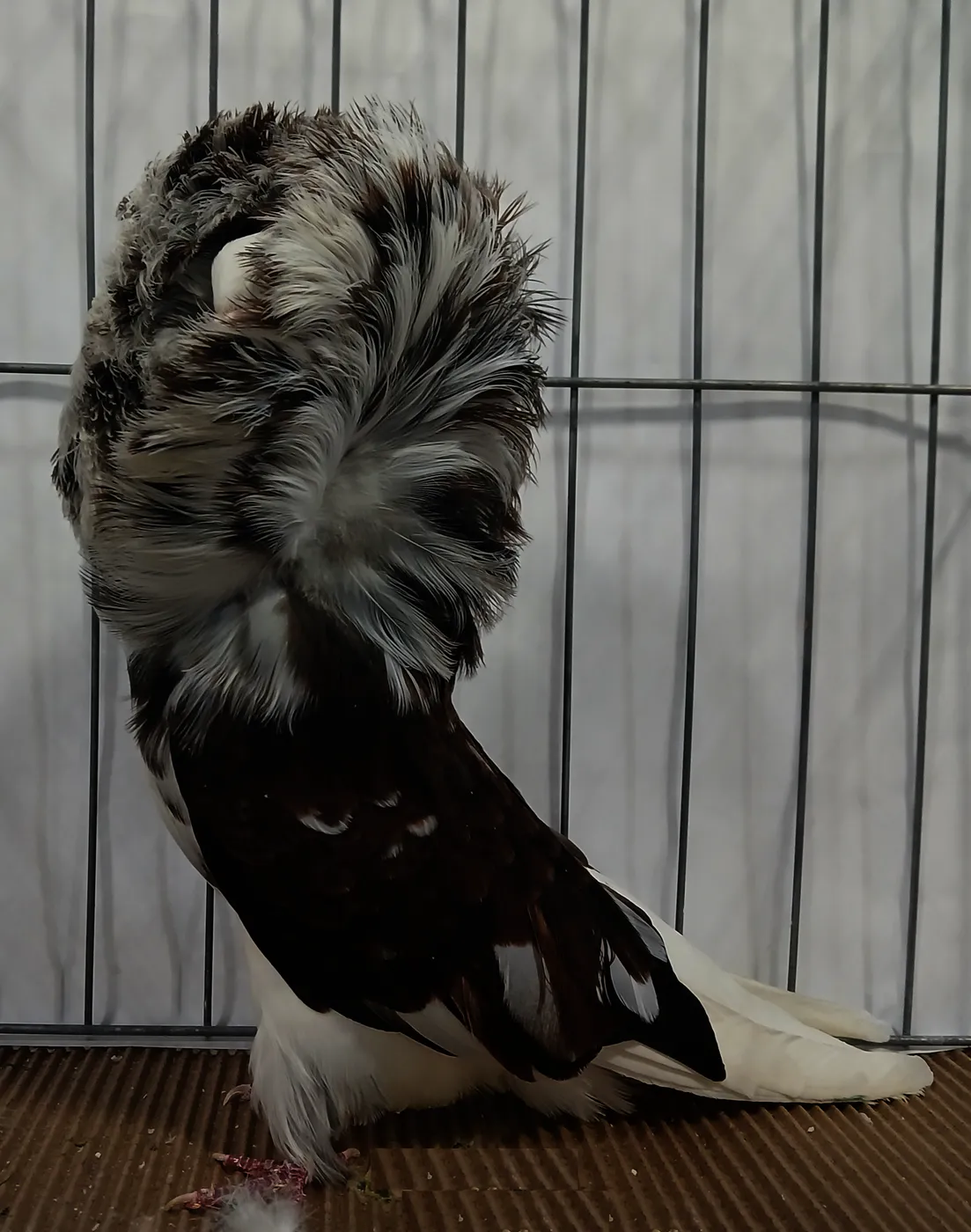
| Almond | Creamy yellow base with random dark speckles and splashes | Almond (St), sex-linked dominant; no two birds look alike | Jacobin, Fantail, Tumbler |
| Dilute Blue (Silver) | Pale silvery blue gray, bars faded to soft gray | Blue base (B+) plus dilute (d), which halves the pigment | Fantail, Lahore, Modena |
| Dun | Grayish brown with a cool, dusty tone and pale bars | Spread black plus dilute (d), the diluted form of black | King, Fantail, Modena |
| Opal | Soft pastel body with an iridescent sheen that shifts in the light | Dominant opal (Od), which changes how pigment sits in the feather | Modena, Tumbler, Fantail |
The 3 Base Colors Explained
Blue is the color most people picture when they think of a pigeon. It is the wild type, the color of the rock dove, and still the most common color in feral flocks. A blue pigeon is not really blue the way a bluebird is. The feathers are gray with a bluish cast, and the neck flashes green and purple in sunlight because of the feather structure.
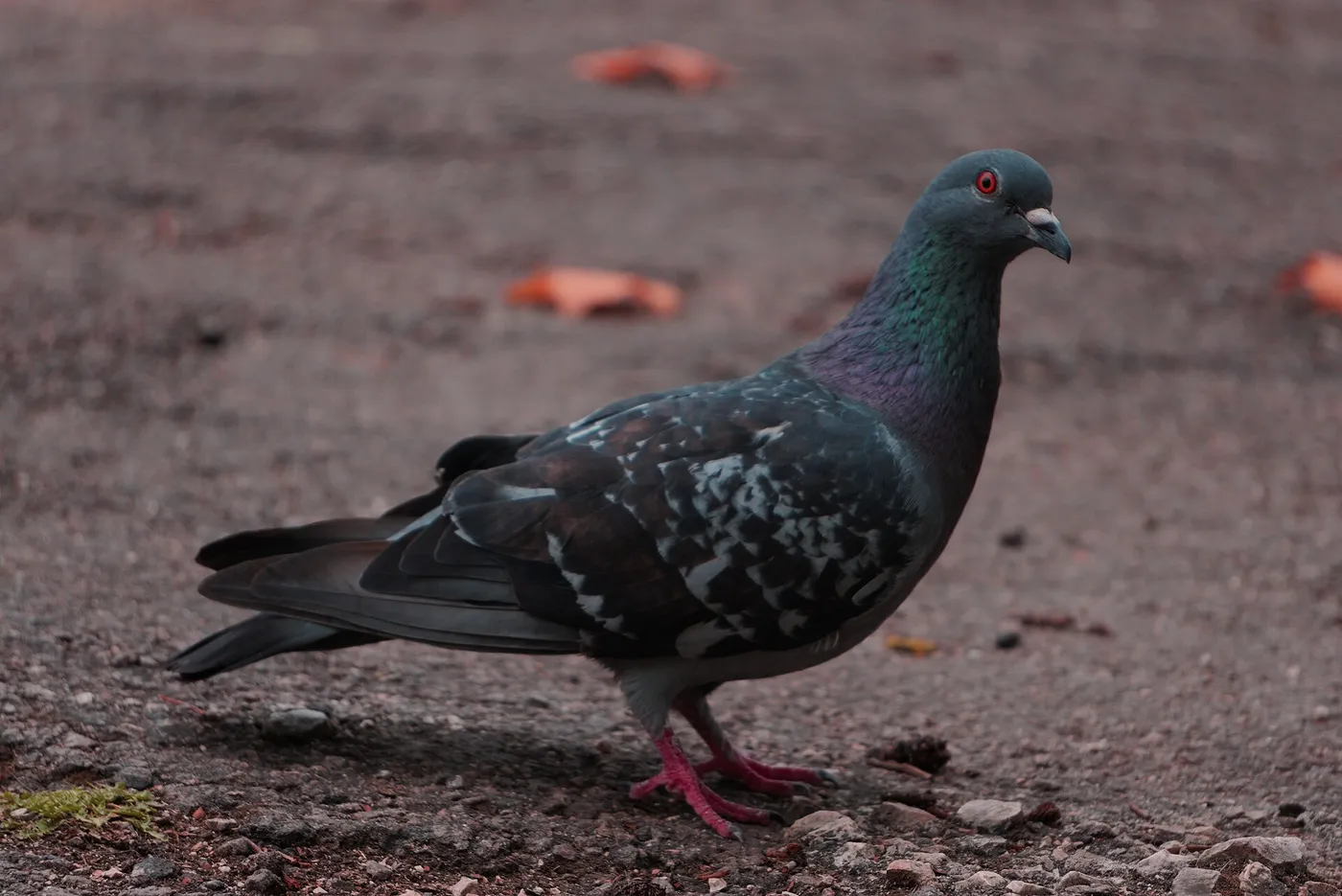
Ash-red is the showiest of the three base colors. Birds look warm reddish gray, sometimes almost pink in bright light, with bars in a deeper red brown. Ash-red is dominant over blue, so a pigeon needs only one copy of the gene to show it, which is why it turns up so often in racing lofts.
Brown is the quietest base color and the easiest to miss. It is recessive, so a pigeon needs two copies of the brown gene to show it. Brown birds look like milk chocolate, with softer contrast between body and bars than blue birds have.
Wing Patterns: Bar, Check, T-Pattern, and Spread
The wing pattern is the fastest way to narrow down a pigeon color, so look at the wing first. A bar pattern shows two clean dark bars across each wing with plain feathers between them. That is the wild type pattern. Barless birds have no bars at all, just smooth pale wings.
Check is where things get busy. In a check pigeon, the wing is covered in dark speckles and patches. Light checks have scattered spots, while dark checks look nearly solid. T-pattern sits at the far end of the series, with the wing almost entirely dark.
Spread is the gene that erases the pattern completely. A blue pigeon with spread becomes solid black, because spread fills the whole feather with pigment. A spread ash-red bird becomes solid red brown. Spread is dominant, so it shows up with a single copy.
White, Pied, and Grizzle Patterns
White pigeons are the most misunderstood birds in the chart. A truly white pigeon is not a separate base color. It is a bird whose white genes hide everything underneath. Recessive white masks the base color and pattern entirely, so two white parents can produce colored chicks.
Pied is different from solid white. A pied pigeon has white patches mixed with its normal color, and the patches fall in different places on every bird. Some pieds have just a white forehead or a white wing tip. Others are mostly white with colored patches on the head and tail.
Grizzle is the frosted look. White feathers are scattered through the colored plumage, and the bird gets lighter with every molt. A young grizzle can look almost solid, then turn nearly white over a few years. Grizzle is dominant, so a single copy produces the effect.
Rare Pigeon Colors Worth Knowing
Almond is the most famous rare pigeon color, and the hardest to breed well. Almond birds have a creamy yellow ground color broken by random dark speckles, and no two are ever alike. The gene is sex-linked and dominant, and it is linked to poor eyesight in some birds, so responsible breeders never breed almond to almond.
Opal is a softer rarity. It changes the way pigment sits in the feather, so the bird looks pastel, with a sheen that shifts between blue, pink, and silver as the light changes. Dominant opal is the common form, and it works on any base color.
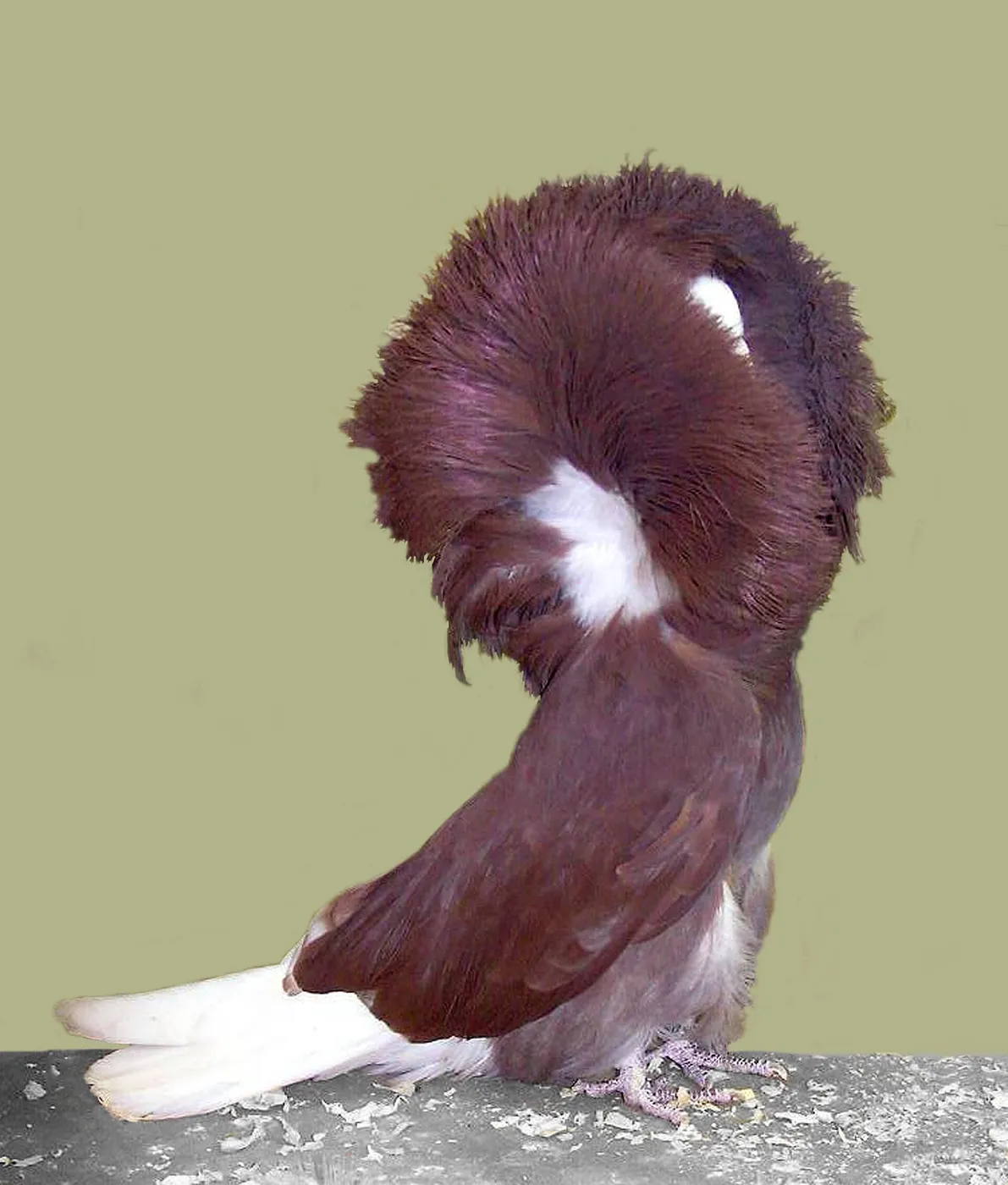
Indigo pushes blue toward a deep, almost purple blue, and it changes the wing bars into a darker, richer tone. Indigo birds can look black in poor light and then flash deep blue in the sun. Dilute is the opposite trick: it washes color out. Dilute blue becomes silver, dilute ash-red becomes a pale cream, and dilute black becomes dun, the dusty gray brown in the chart above.
How to Identify a Pigeon’s Color in 4 Steps
Start with the wing pattern, because it is the easiest feature to see at a distance. Note whether the wing is barless, barred, checked, T-pattern, or solid. Then look at the base color underneath: is the ground color blue gray, reddish, or brown? Third, check for modifiers. White patches mean pied, white sprinkling means grizzle, and a washed out look points to dilute. Finally, look at the neck shine: the green and purple gloss shows on blue based birds, while brown based birds have a warmer, plainer neck.
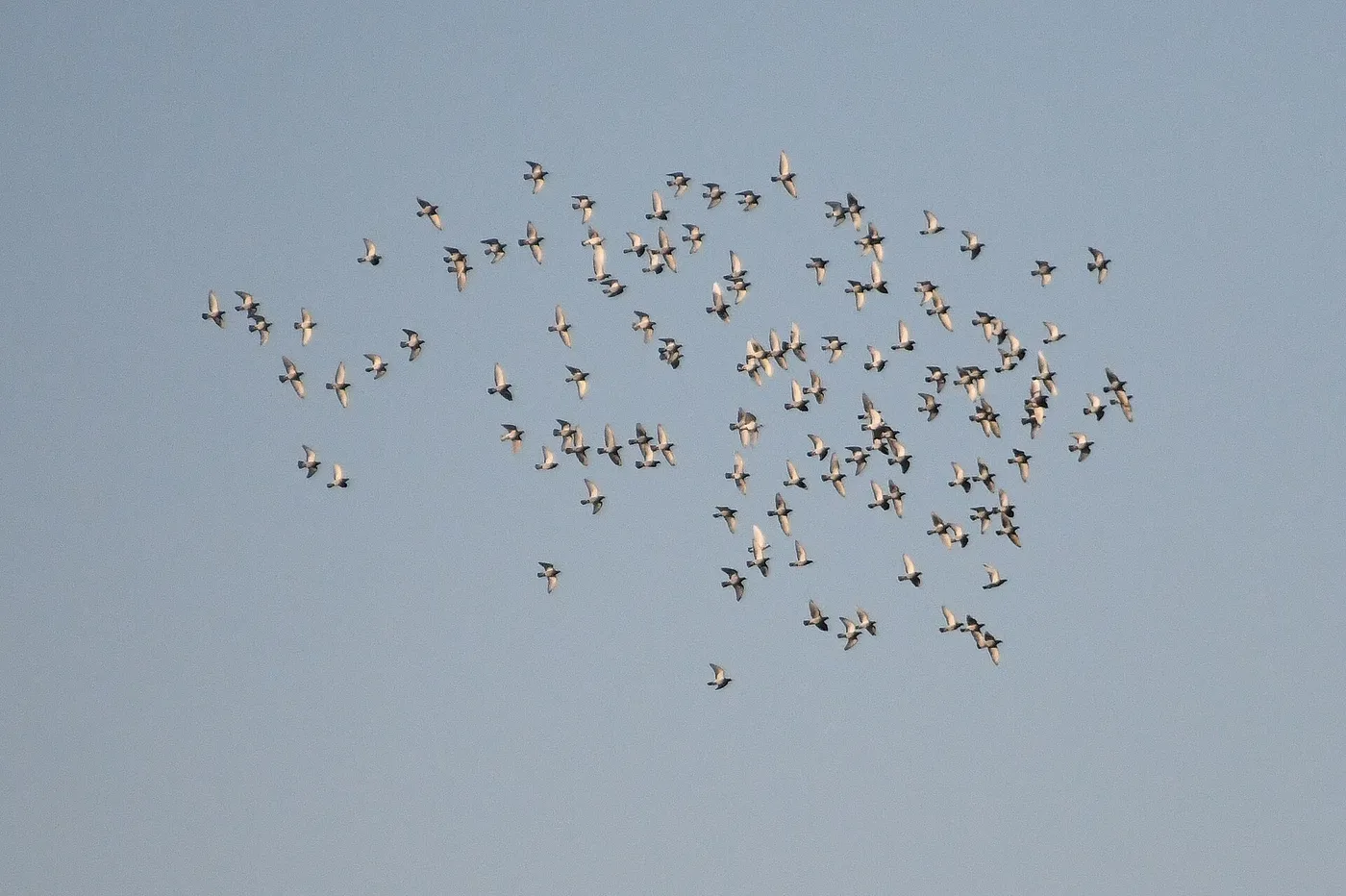
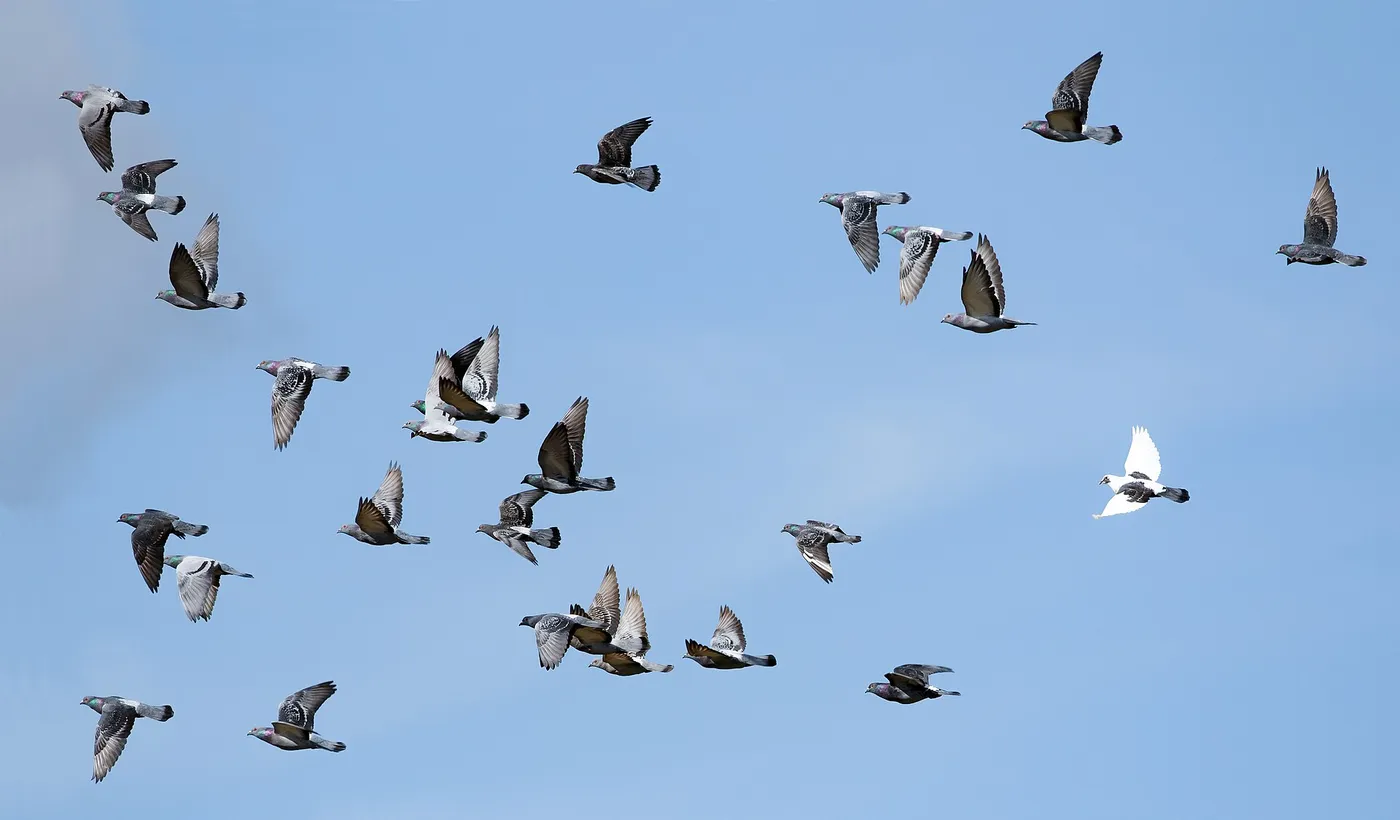
Photograph the bird in daylight if you can. Pigeon colors shift a lot under artificial light, and a phone photo in shade will make an ash-red bird look blue. Compare your photo with the chart above, and check the same bird twice if it is a grizzle, since those birds change with each molt. A city flock usually holds blue bar, blue check, spread black, ash-red, and pied birds side by side, which makes it easy to compare patterns directly. The dove identification chart is a useful next step, since doves and pigeons share the same color logic.
Frequently Asked Questions
What is the most common pigeon color?
Blue bar is the most common pigeon color by a wide margin. It is the wild type color of the rock dove, and it dominates feral flocks in every city. Blue check is second, followed by spread black and ash-red.
What is the rarest pigeon color?
Almond is the rarest well known pigeon color, because it is hard to breed and every bird looks different. True pink and lavender pigeons are also extremely rare, and most birds described that way are actually dilute ash-red or opal.
Can two pigeons of the same color have chicks of a different color?
Yes, and it happens often. Recessive genes hide for generations, so two blue bar parents can produce brown or white chicks if both carry the hidden gene. That is why breeders track pedigrees instead of trusting appearance alone.
Do pigeon colors change as the bird gets older?
Most colors stay the same for life, but grizzle and almond change with every molt. Grizzle birds get whiter over time, and almond birds gain or lose speckles.
Conclusion
The pigeon color chart shows how much variety hides inside one familiar bird. Three base colors, four wing patterns, and a handful of modifiers produce the 15 colors above, plus countless combinations breeders are still exploring. Learn the wing pattern first, then the base color, then the modifiers, and you will be able to name almost any pigeon you meet. Keep the chart handy on your next walk, and see how many of the 15 you can spot in a single flock. For more bird identification, our types of birds guide and the types of small birds chart cover the other species you are likely to see alongside pigeons.