Most people find their first millipede by accident, curled into a tight coil under a flowerpot or a damp log. This millipede lifespan chart starts with a simple surprise: that quiet little animal can outlive a pet hamster and most of the insects in your garden, sometimes by years. Some big tropical species live for a decade, a long run for a creature most of us step over without a second thought.
Millipedes are not insects, not worms, and not centipedes. A small greenhouse millipede may be gone in a year or two, while a giant African millipede can still be crawling around your terrarium ten years after you brought it home. This guide lists the lifespan of 13 common types, explains why the giants live so long, and covers how to tell a millipede from a centipede, how many legs they really have, and what makes a pet millipede live longer.
Millipede Lifespan Chart
The table below gives the typical lifespan and the longest recorded lifespan for each type. The typical column covers the usual range in the wild and in captivity, and the maximum column is the longest reliable record, usually from a well-kept pet.
| Millipede Type | Scientific Name | Typical Lifespan | Maximum Recorded | Size | Habitat and Notes |
|---|---|---|---|---|---|
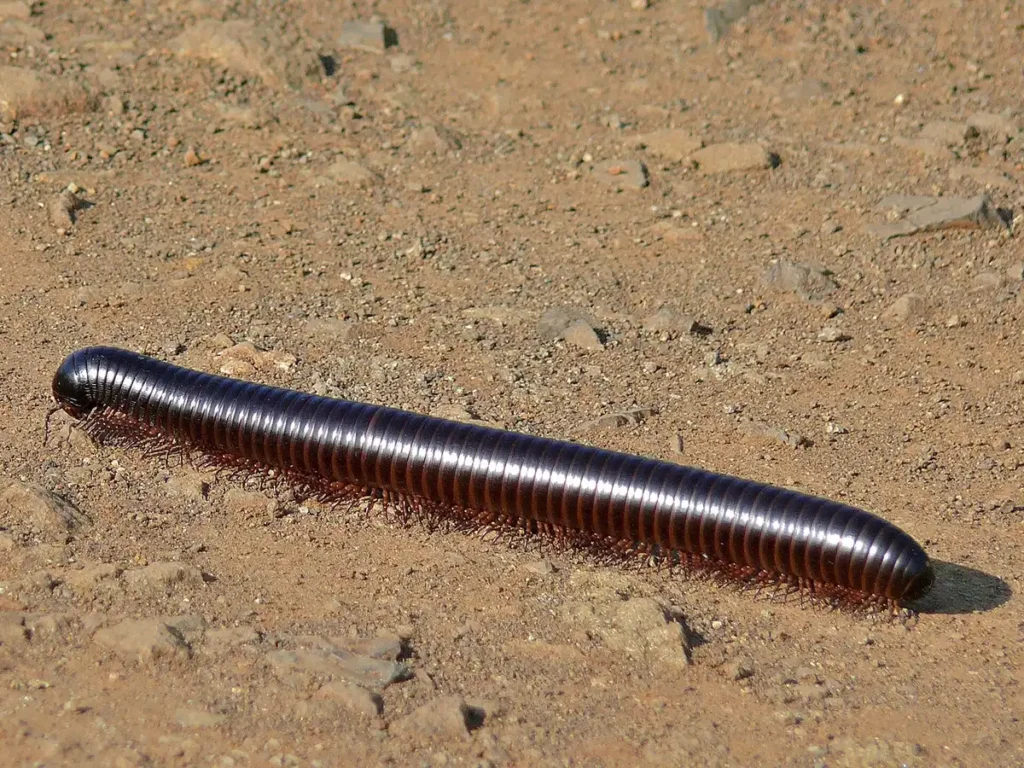
| Giant African millipede | Archispirostreptus gigas | 7 to 10 years | 10+ years | Up to 33 cm (13 in) | East Africa; the most popular pet millipede |
| American giant millipede | Narceus americanus | 7 to 10 years | 11 years | Up to 10 cm (4 in) | Eastern North America; under logs and leaf litter |
| Ivory millipede | Chicobolus spinigerus | 5 to 7 years | 10 years | Up to 10 cm (4 in) | Florida and the southeastern USA; cream with dark bands |
| Bumblebee millipede | Anadenobolus monilicornis | 3 to 5 years | 7 years | Up to 8 cm (3 in) | Caribbean and Florida; yellow and black bands |
| Scarlet millipede | Trigoniulus corallinus | 3 to 5 years | 6 years | Up to 7 cm (2.75 in) | Southeast Asia; bright red, likes warm terrariums |
| Pill millipede | Glomeris marginata and others | 5 to 10 years | 11 years | Up to 2 cm (0.8 in) | European woodlands; rolls into a perfect ball |
| Greenhouse millipede | Oxidus gracilis | 1 to 2 years | 3 years | Up to 2.5 cm (1 in) | Greenhouses and compost worldwide; small, fast spreading |
| Flat-backed millipede | Various Polydesmida species | 2 to 5 years | 7 years | Up to 5 cm (2 in) | Leaf litter in North America and Europe; wide, flat body |
| Desert millipede | Orthoporus ornatus | 5 to 10 years | 10 years | Up to 15 cm (6 in) | Southwestern USA deserts; active after rain |
| Smokey oak millipede | Narceus gordanus | 5 to 8 years | 10 years | Up to 10 cm (4 in) | Southeastern USA oak forests; grey-brown |
| Pink dragon millipede | Desmoxytes purpurosea | 1 to 2 years | 2 years | Up to 3 cm (1.2 in) | Limestone caves in Thailand; vivid pink |
| Texas gold millipede | Orthoporus texicolens | 3 to 5 years | 6 years | Up to 10 cm (4 in) | Texas and northern Mexico; golden brown |
| Red-legged millipede | Trigoniulus species | 3 to 5 years | 6 years | Up to 6 cm (2.4 in) | Tropical Asia and Pacific; reddish legs |
Which Millipedes Live the Longest?
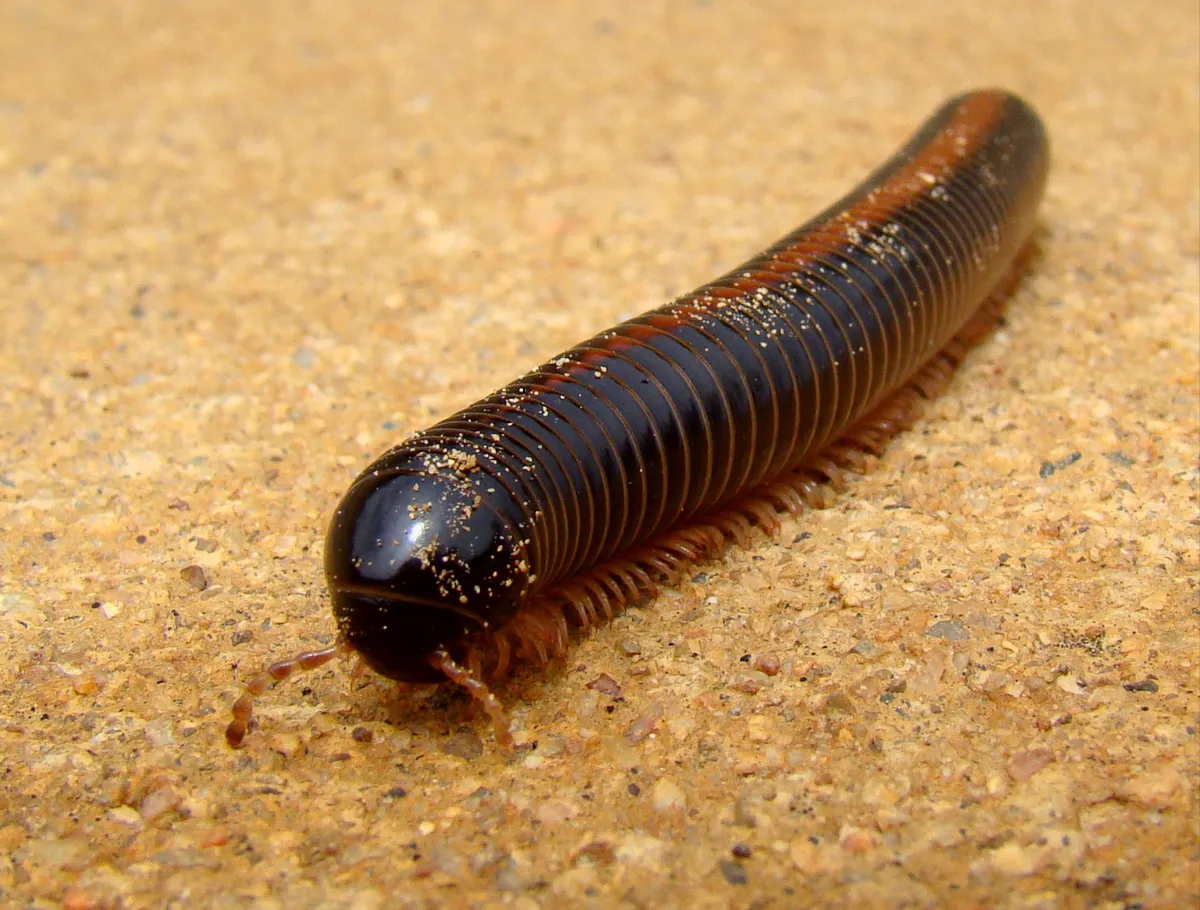
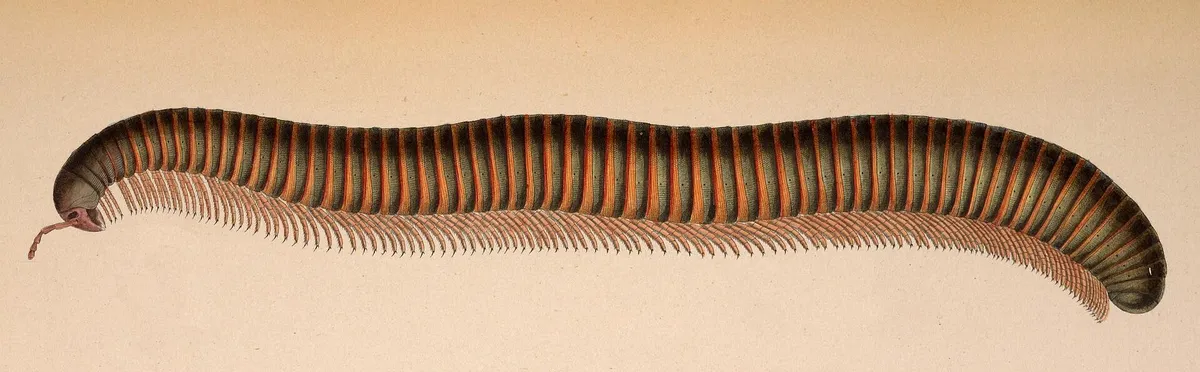
The American giant millipede and the pill millipede share the top spot at up to 11 years, with the giant African millipede close behind at ten years or more. Most insects measure their adult lives in weeks or months, as our bug lifespan chart shows, while these millipedes keep going for a decade.
Size is the main reason. Big tropical millipedes grow slowly, molt many times, and take years to reach full size. Their slow metabolism and their diet of decaying leaves mean they burn energy at a gentle pace, and that pace stretches their lives out. The pill millipede is the odd one out: it is tiny, barely two centimetres long, yet it can live as long as the giants, thanks to a slow, sheltered life in cool woodland leaf litter, rolled into a ball, safe from predators and dry spells. They are also the most popular pet millipedes, so expect a decade of company if you buy one.
Which Millipedes Have the Shortest Lifespans?
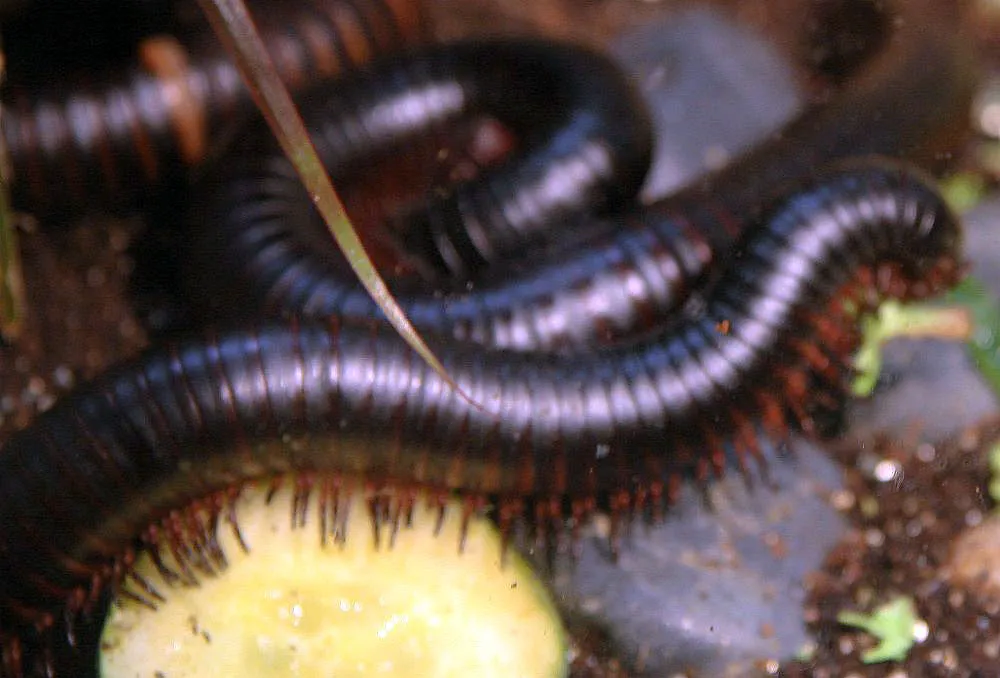
The greenhouse millipede and the pink dragon millipede are the short-lived ones here, finishing in one to two years. The greenhouse millipede is a small, fast-spreading flat-backed species you will find in pots, compost bins, and greenhouses around the world. Our crane fly lifespan chart puts that in perspective: adult crane flies live only a few days, so a two-year millipede is practically ancient by insect standards. Small millipedes live fast and breed fast, maturing in months and leaving behind dozens of offspring, which is why they turn up in every damp pot in the garden.
The Millipede Life Cycle: Eggs, Molting, and Adding Legs
Millipedes belong to the class Diplopoda, a name that means “double foot,” because most body segments carry two pairs of legs, not one. They are not insects but myriapods, a separate branch of the arthropods, and that two-pairs-per-segment feature is the clearest way to tell them apart from centipedes.
Their growth is the strange part. A millipede hatches from its egg with only a few segments and a handful of legs. With each molt it adds more segments, and each new segment brings more legs, so an older millipede has more legs than a young one. A young giant African millipede may have fewer than a hundred legs; a full-grown adult can have more than three hundred. Large species take two or three years just to mature, which is one reason their total lifespan stretches so long.
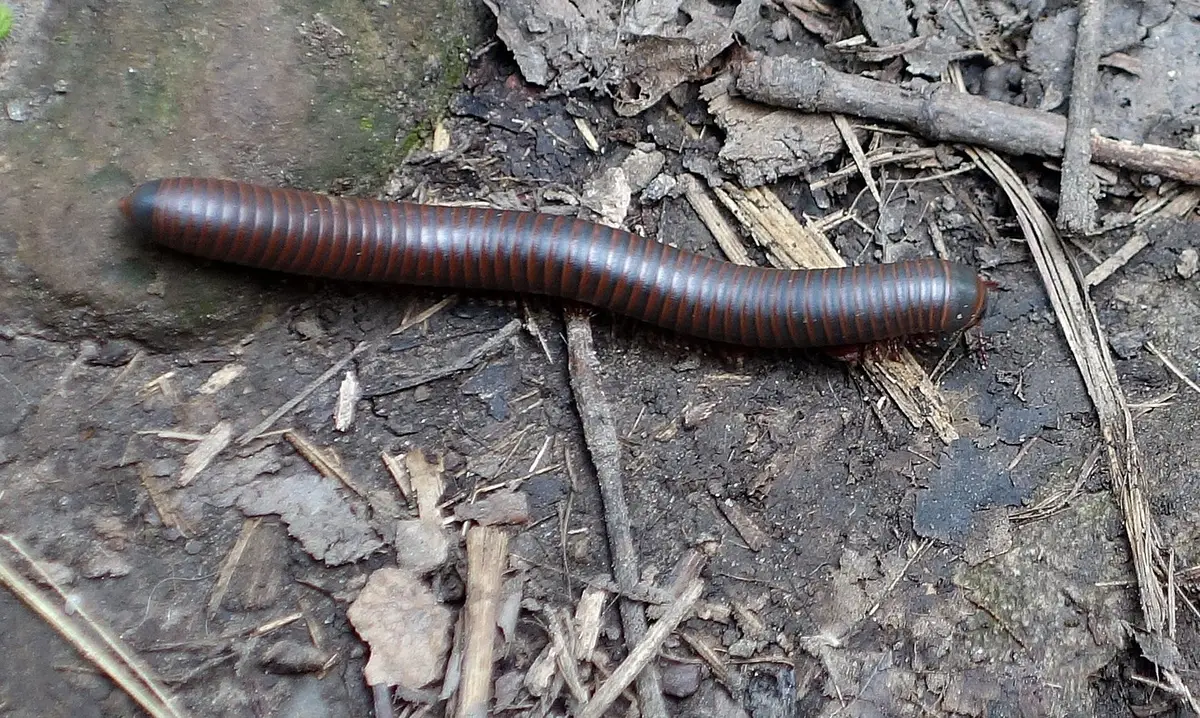
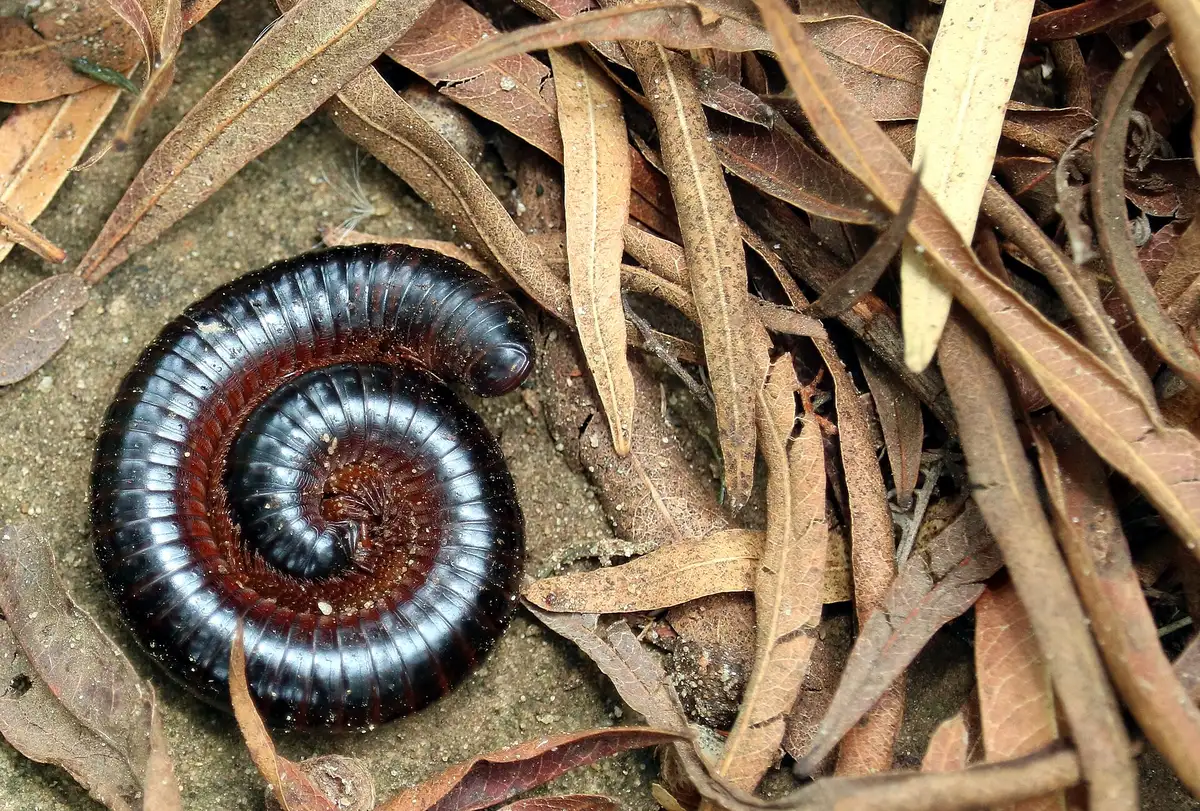
Adults are detritivores, feeding on rotting leaves and wood, which makes them quiet but important decomposers. They do not bite. When threatened, they curl into a spiral and release a defensive fluid that is harmless to people but may stain the skin, and it puts off many predators.
Factors That Affect Millipede Lifespan
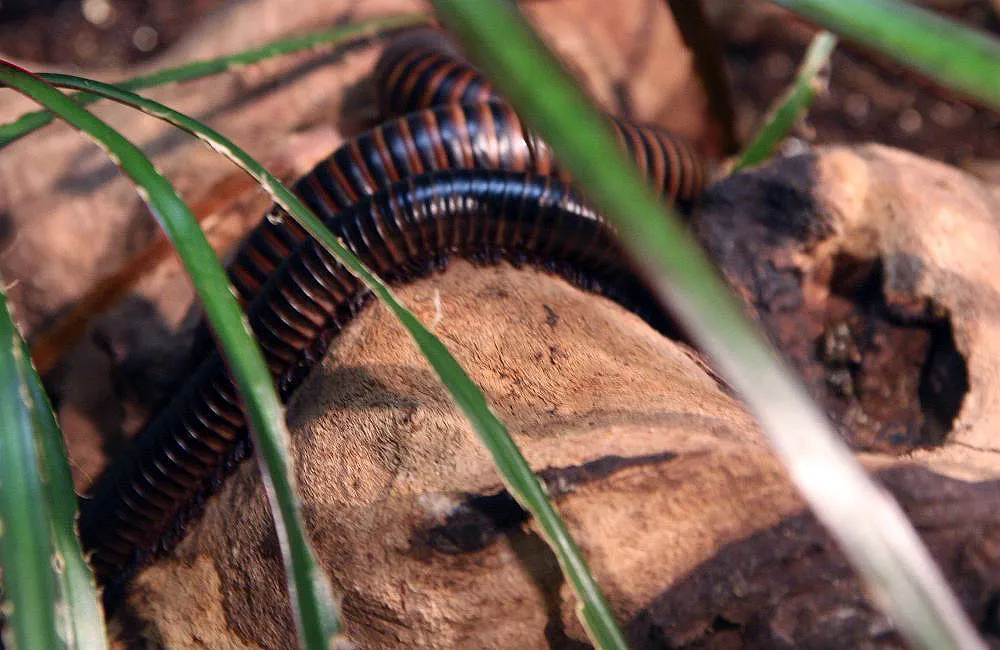
Millipede lifespans depend on species first and conditions second. Species and size lead the list: large tropical millipedes live for years, while small flat-backed species finish in one or two. Moisture comes next. Millipedes need damp conditions and dry out quickly, so steady humidity extends their lives, especially in captivity. A dry terrarium is the fastest way to shorten a pet millipede’s life: keep the substrate moist and mist regularly.
Temperature and diet round out the list. Tropical species need temperatures around 22 to 28 degrees Celsius, and sharp swings hurt even temperate species. A steady supply of decaying leaves and calcium for the exoskeleton supports a longer, healthier life, so offer leaf litter, rotting hardwood, and occasional vegetables, plus a cuttlebone or calcium supplement. Millipedes that lack calcium molt badly, and a bad molt can kill them. Adult gnats, by contrast, live only a few days, as our gnat lifespan chart shows.
Millipede vs Centipede
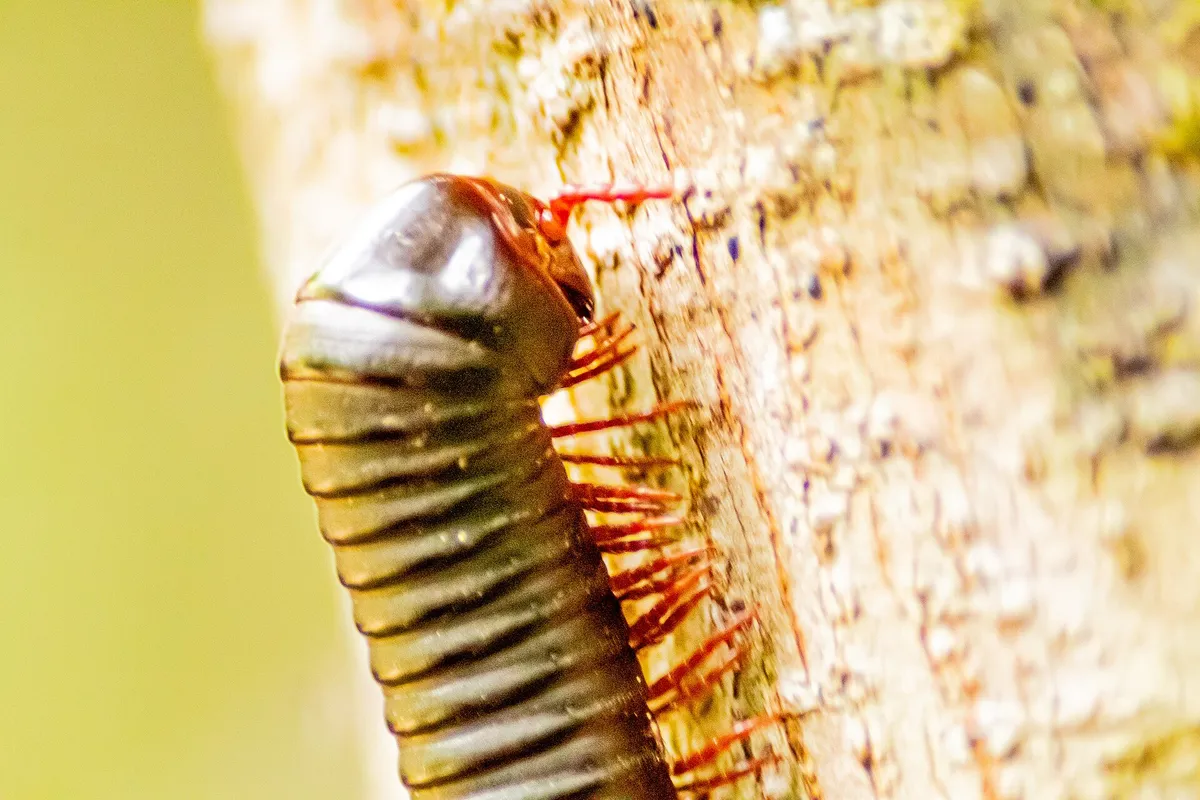
Millipedes and centipedes get mixed up constantly, but they live very different lives. The quick test is the legs: two pairs per segment means a millipede, one pair means a centipede.
| Feature | Millipede | Centipede |
|---|---|---|
| Class | Diplopoda | Chilopoda |
| Legs per segment | Two pairs | One pair |
| Body shape | Rounded, cylindrical | Flattened |
| Leg position | Tucked under the body | Splayed out to the sides |
| Speed | Slow | Fast |
| Diet | Decaying plants (detritivore) | Hunts insects (predator) |
| Danger to people | No bite; harmless secretions | Venomous bite; can sting |
The short version is simple. A millipede is a slow, harmless leaf-eater, while a centipede is a fast hunter that can bite. Both are arthropods, but neither is an insect. To identify the fast, biting cousin in more detail, see our guide to the types of centipedes.
Record Holders: The Leggiest and Largest Millipedes
Despite the name, which means “thousand feet,” no millipede was known to have even 1,000 legs until recently. That changed in 2021 with Eumillipes persephone, a pale, eyeless millipede found 60 metres underground in Western Australia. One female had 1,306 legs, making it the leggiest animal on the planet. Most millipedes carry between 34 and 400 legs.
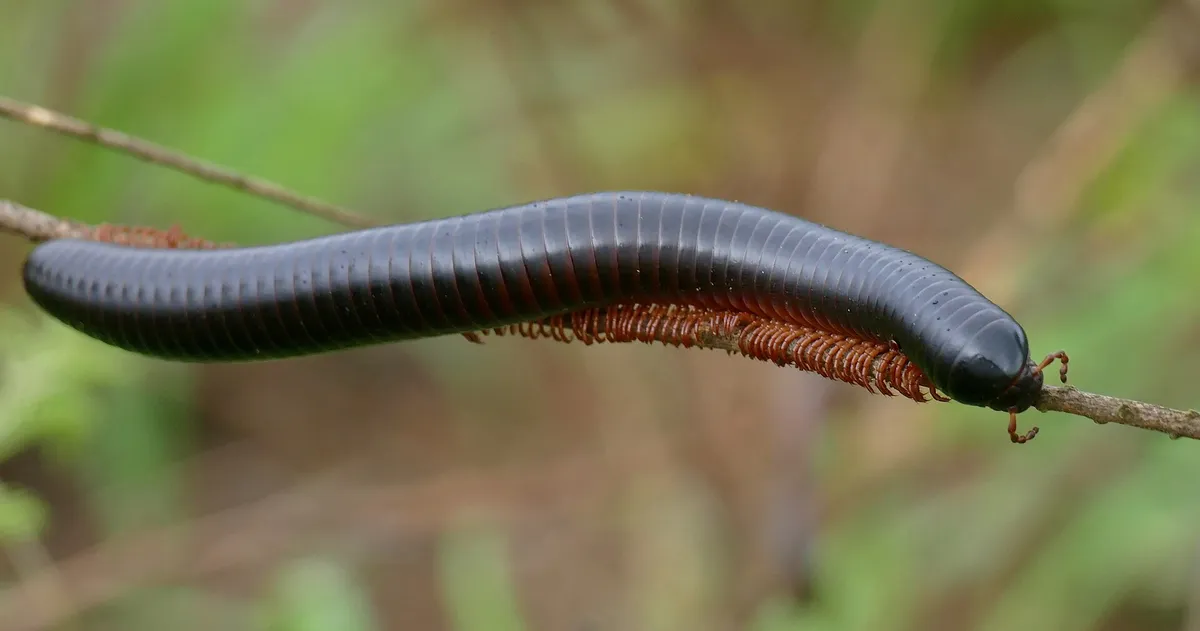
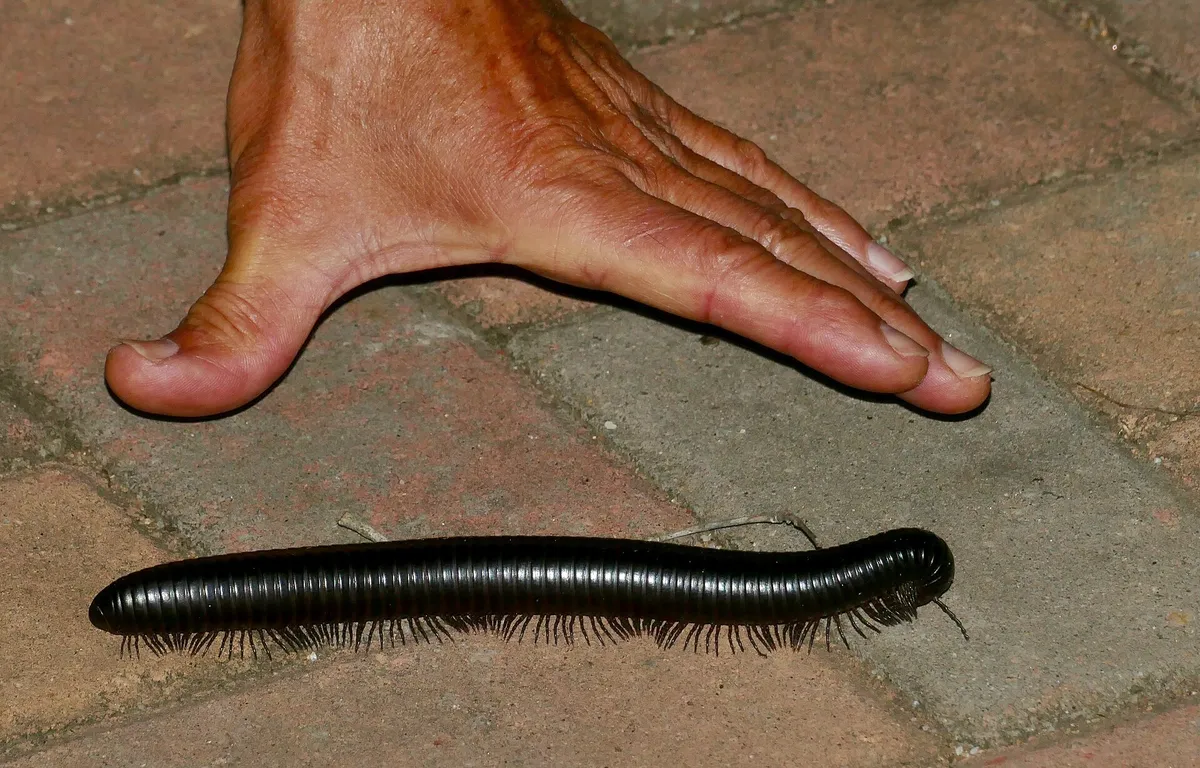
For size, the record goes to the giant African millipede, which can grow to about 33 centimetres, or just over a foot. It is the largest millipede in the world and, helped by a lifespan near a decade, one of the most popular in the pet trade.
Keeping a Pet Millipede Alive Longer
If you keep a millipede as a pet, its lifespan is largely in your hands. A pet millipede in a good setup can reach the top of the range in the chart above, sometimes beyond it. Start with the enclosure: a deep layer of substrate, at least 10 centimetres, lets the millipede burrow, molt in peace, and stay moist. Use a mix of coconut fibre, leaf litter, and rotting hardwood, with bark on top for hiding places.
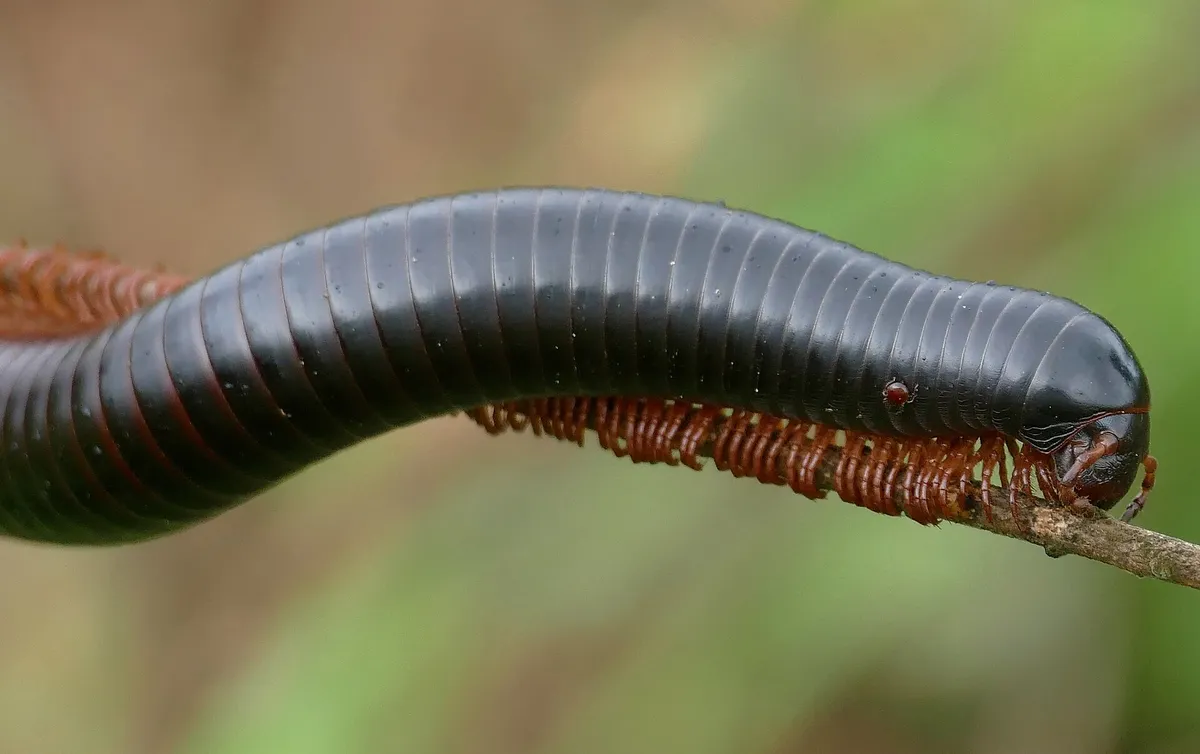
Keep it damp and warm: mist the enclosure every day or two, and hold the temperature steady in the low to mid twenties Celsius for tropical species. Feed them properly, with decaying leaves and rotting wood always available, plus small amounts of cucumber, sweet potato, or mushroom once or twice a week. Always include a calcium source such as cuttlebone, since millipedes need calcium to build each new exoskeleton after molting. Handle them gently and rarely, and never pick up a millipede that is molting: a molting millipede is soft and fragile, and disturbing it can be fatal.
FAQs
How long do millipedes live?
It depends on the species. Small greenhouse millipedes live one to two years; giant African, American giant, and pill millipedes can reach 10 or 11 years.
How many legs does a millipede have?
Most have between 34 and 400 legs, not a thousand. The record holder, Eumillipes persephone, has 1,306 legs, the most of any animal.
Are millipedes insects?
No. Millipedes are arthropods in the class Diplopoda, part of the myriapod group. Insects have six legs, while millipedes have two pairs on most segments.
What is the difference between a millipede and a centipede?
Millipedes have two pairs of legs per segment, eat decaying plants, and do not bite. Centipedes have one pair of legs per segment, hunt prey, and can bite with venom.
Do millipedes bite?
No. They cannot bite or sting; their only defense is to curl up and release a fluid that can stain skin but is harmless to people.
Which millipede lives the longest?
The American giant millipede and the pill millipede live longest, up to about 11 years. The giant African millipede is close behind at 10 years or more.
Conclusion
Millipedes are slow in every sense, and that slowness is their strength. While insects burn through a life in weeks, a giant millipede takes years to grow, years to mature, and years more to live out its span in the leaf litter. The giants trade numbers for time.