If you have ever waved away a cloud of tiny flies over a houseplant, you have met a gnat. This gnat lifespan chart shows how long each kind lives, from egg to adult.
Most gnats live only a few days to a few weeks as adults, but the full life cycle is longer. A fungus gnat lives about 7 to 10 days as a flying adult, yet the whole cycle from egg to adult takes around 3 to 4 weeks. Killing the adults you can see does nothing about the eggs and larvae already in the soil, which is why gnats keep coming back.
Gnat Lifespan Chart: How Long Each Type Lives
Two numbers matter: how long the adult flies, and how long the full life cycle runs.
| Gnat Type | Adult Lifespan | Full Life Cycle | Where It Lives |
|---|---|---|---|
| Dark-winged fungus gnat (Bradysia species) | 7 to 10 days | 3 to 4 weeks | Damp potting soil, greenhouses |
| Fungus gnat, general (Sciaridae family) | 7 to 10 days | 21 to 28 days | Houseplants, compost, moist soil |
| Eye gnat (Liohippelates species) | 2 to 4 weeks | 4 to 6 weeks | Warm fields, around eyes and faces |
| Drain fly or moth fly (Psychodidae) | 1 to 3 weeks | 3 to 4 weeks | Drains, sewers, damp pipes |
| Biting midge or no-see-um (Culicoides) | 2 to 4 weeks | 4 to 6 weeks | Marshes, beaches, damp soil |
| Sand fly (Phlebotomus and Lutzomyia) | 2 to 4 weeks | 30 to 45 days | Warm dry regions, animal burrows |
| Black fly or buffalo gnat (Simuliidae) | 2 to 3 weeks | 4 to 6 weeks | Near fast-flowing streams |
| Fruit fly (Drosophila, often mistaken for a gnat) | 40 to 50 days | About 50 days | Ripe fruit, kitchens, drains |
| Gall gnat (Cecidomyiidae) | 2 to 5 days | 3 to 4 weeks | Plant galls, leaves and stems |
| Shore fly (Ephydridae) | About 2 weeks | About 3 weeks | Wet soil, algae, shorelines |
| Winter gnat (Trichoceridae) | 2 to 4 weeks | Several months | Cool damp places, active in winter |
| Non-biting midge (Chironomidae) | 3 to 5 days | 3 to 6 weeks | Lakes, ponds, slow water |
For nearly every type, the adult stage is the shortest part of the insect’s life. Larvae do most of the living, feeding in damp soil or drain film for about two weeks. A fresh wave of adults is the end of a cycle that started weeks earlier.
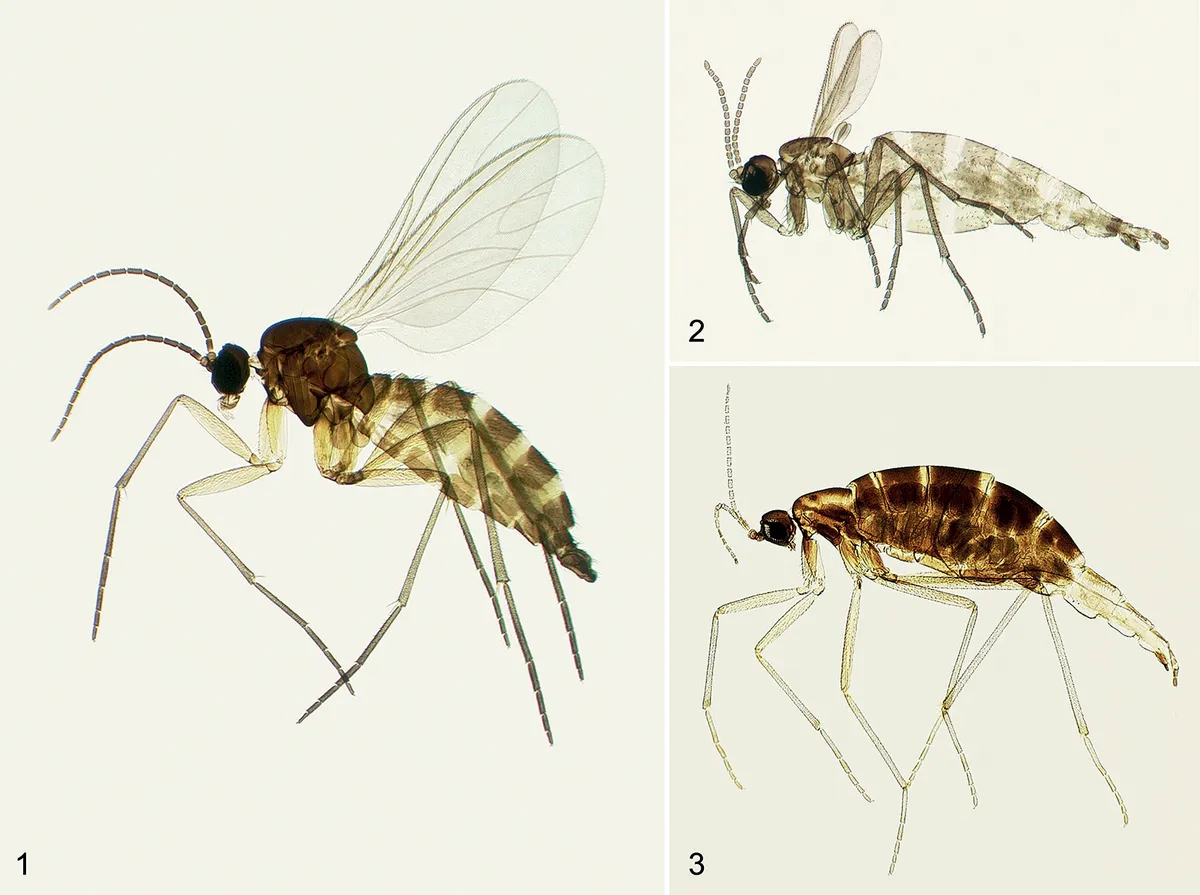
Fungus Gnats: The Gnat Most People Meet
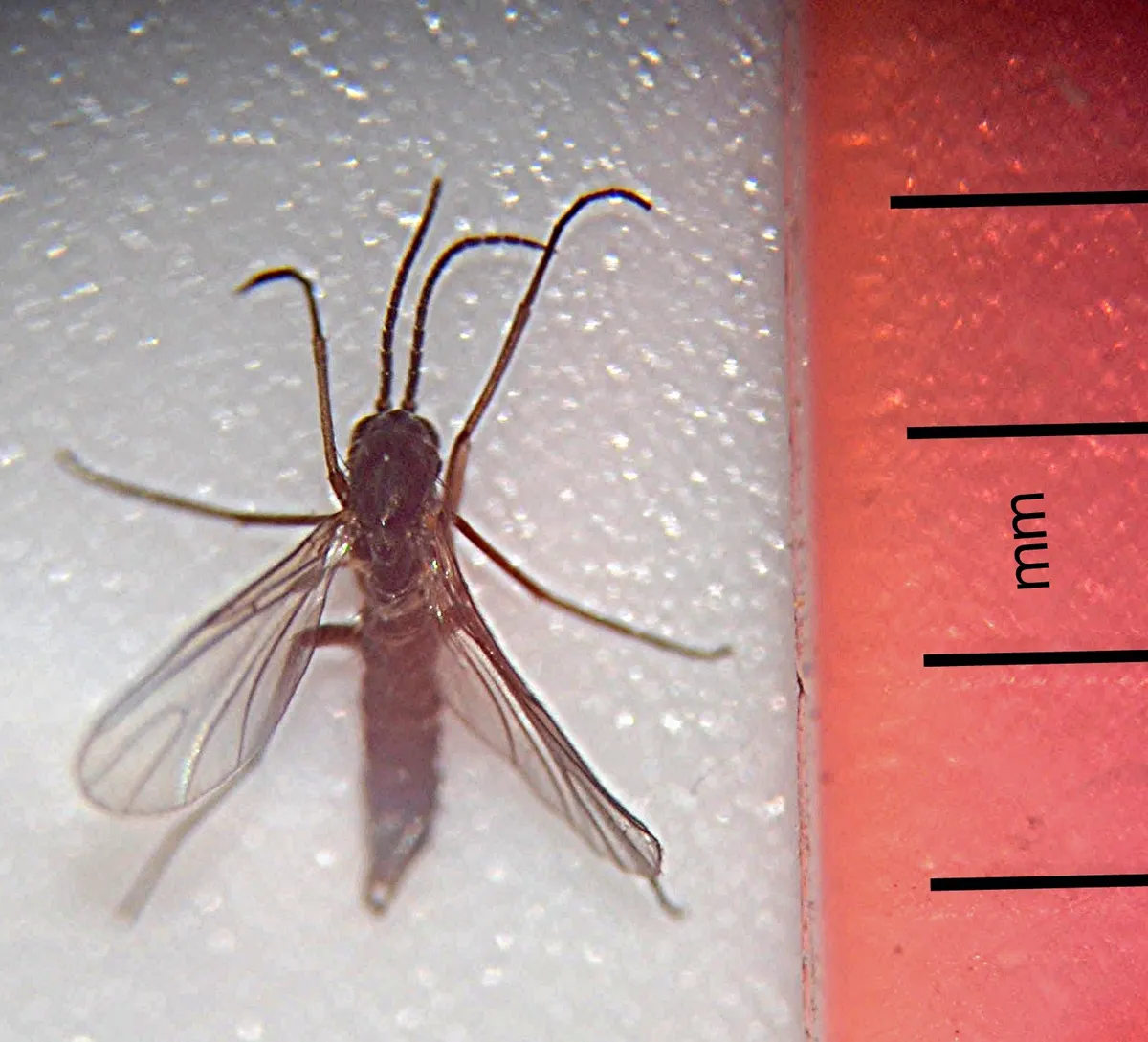
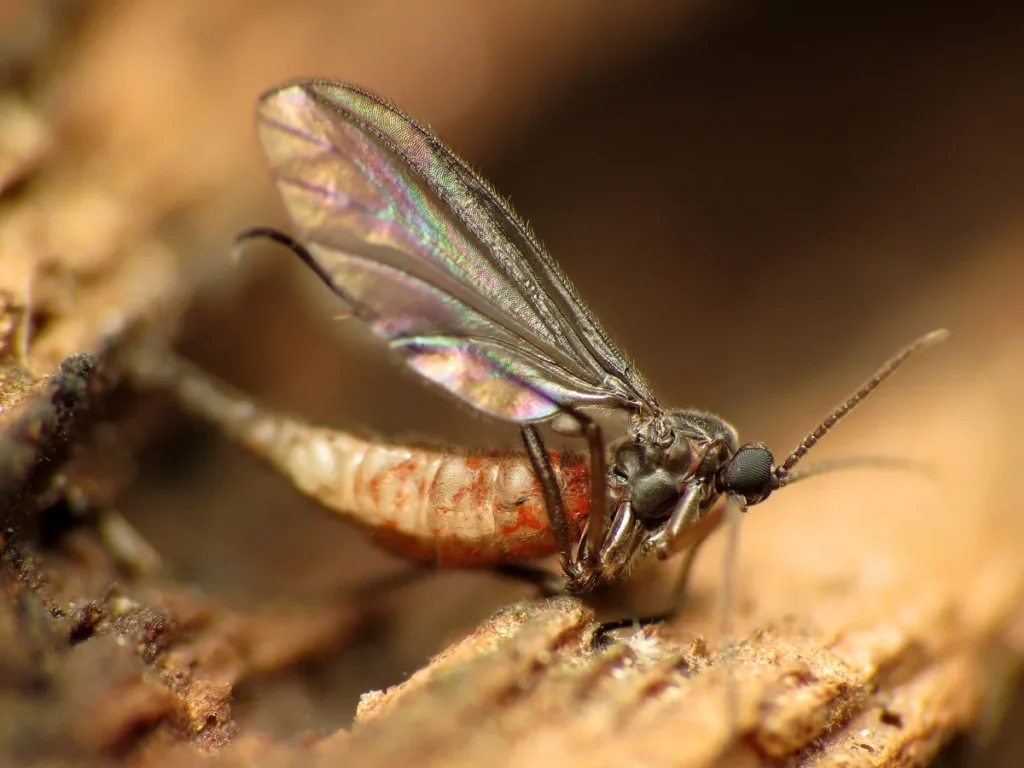
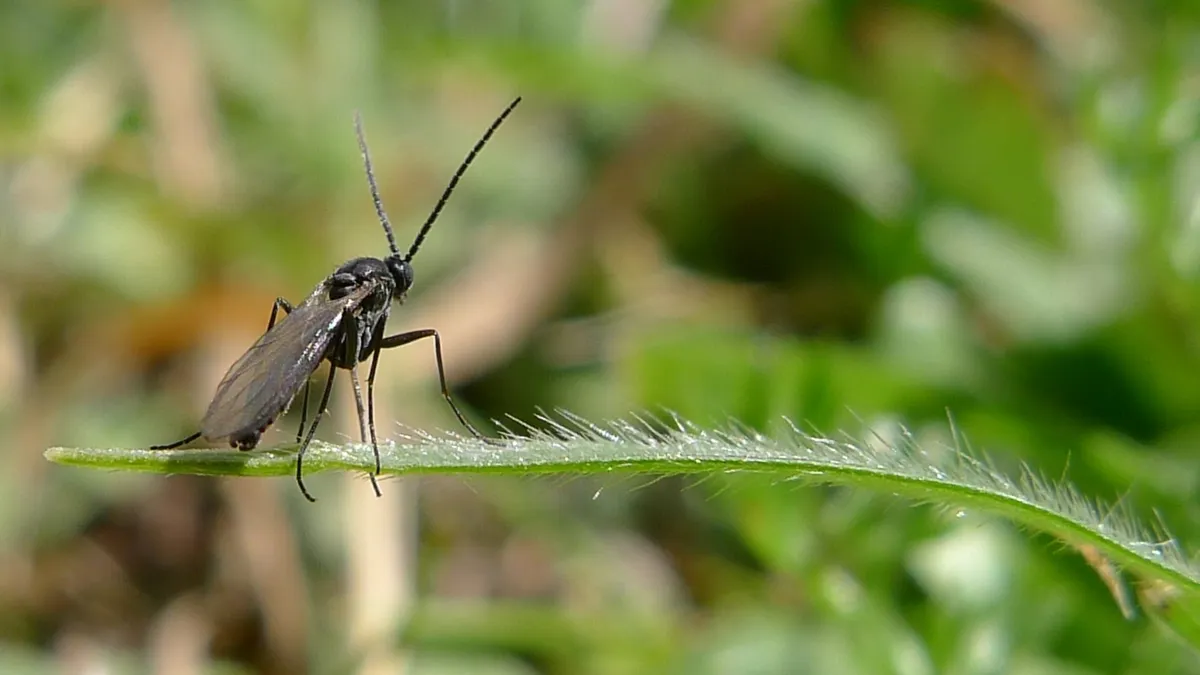
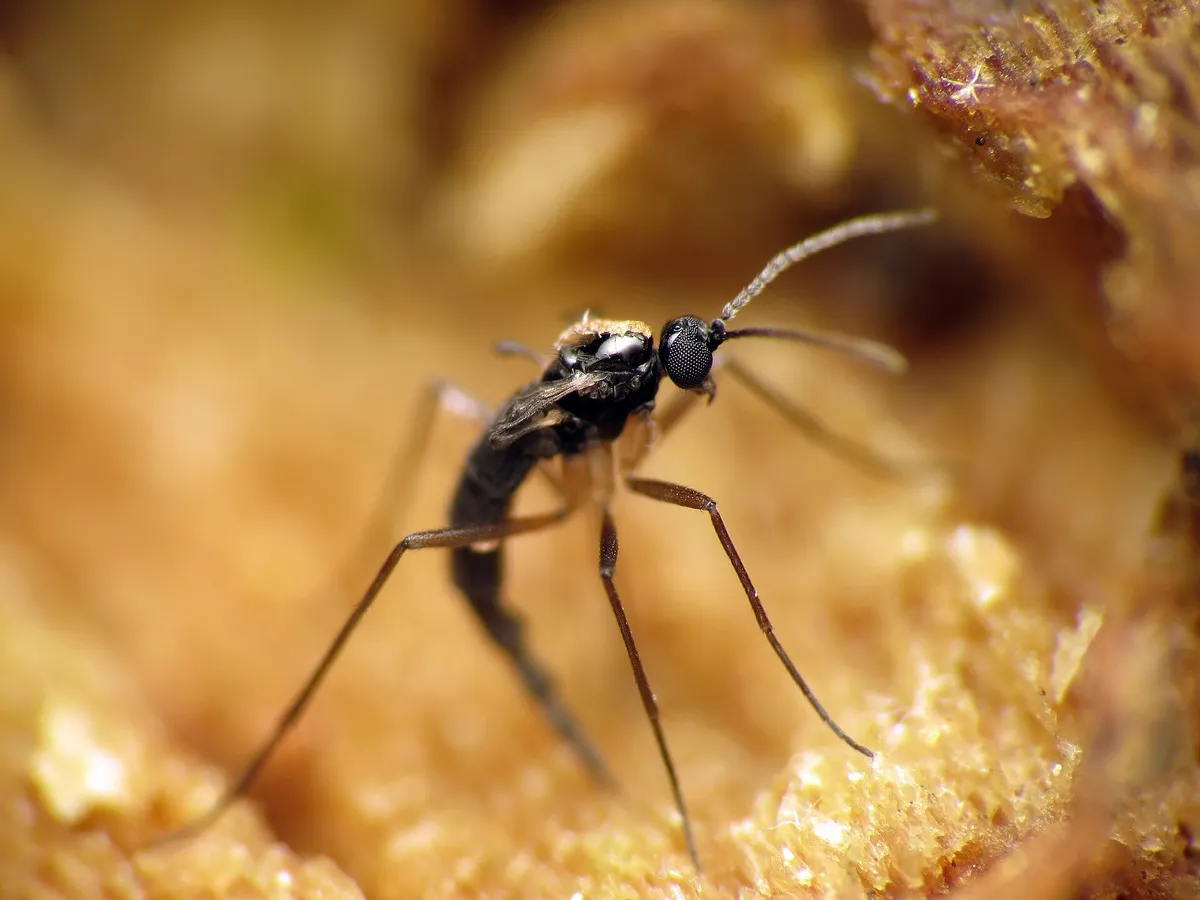
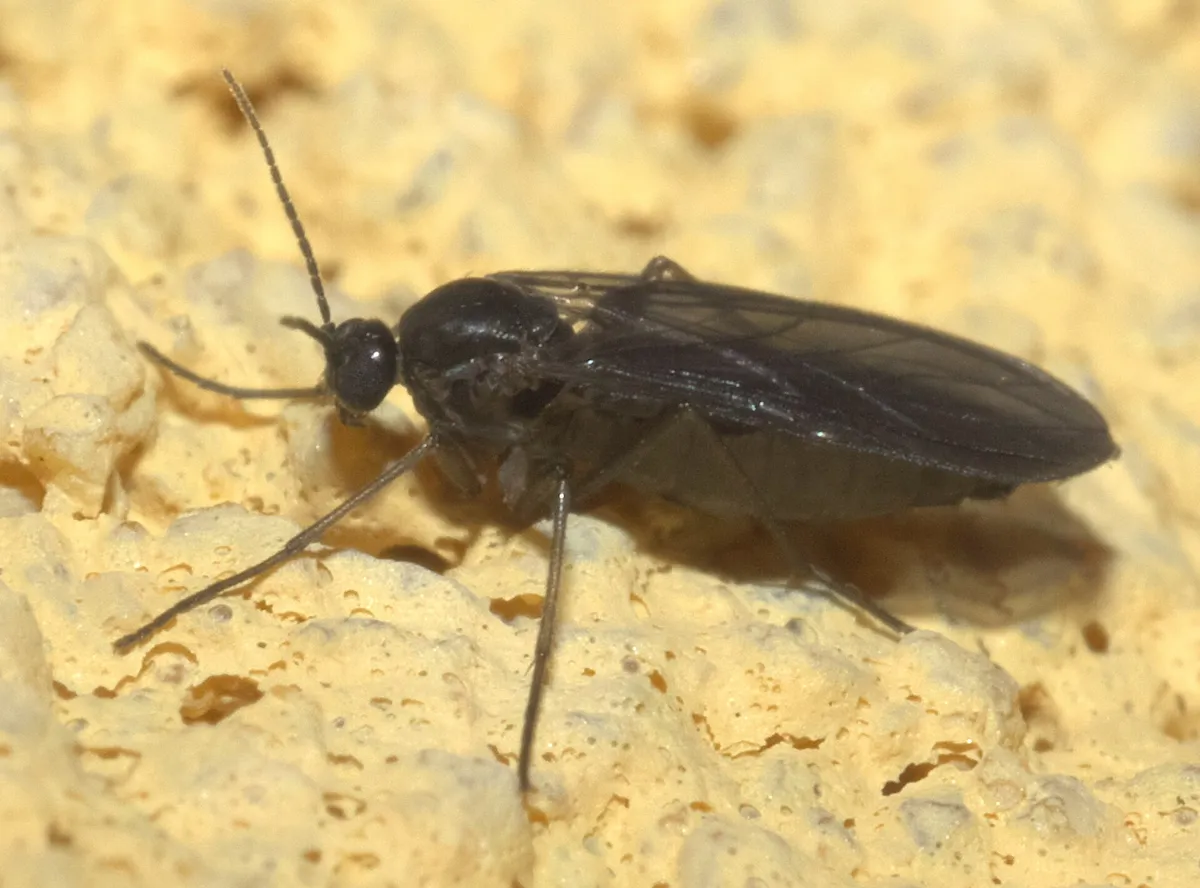
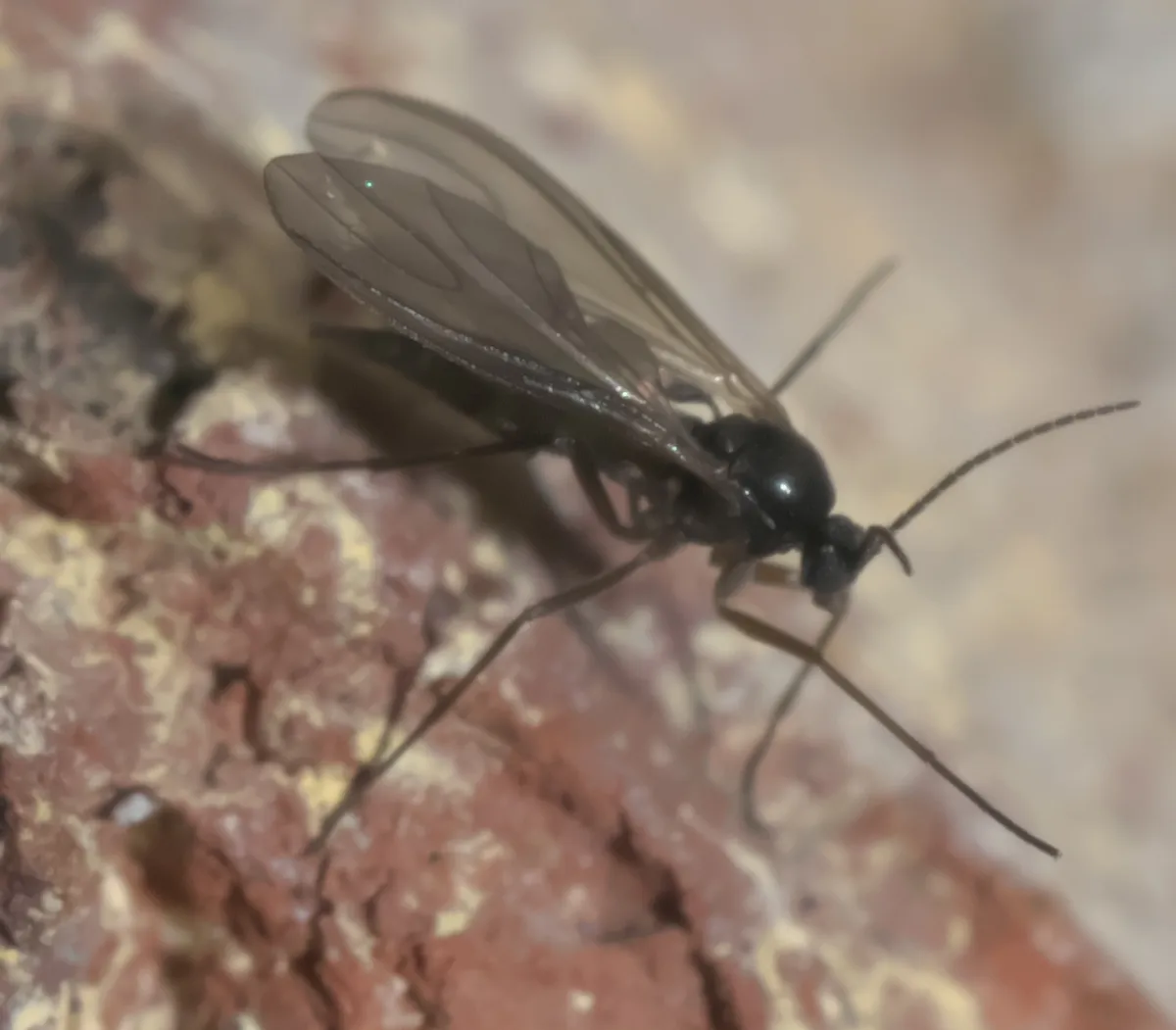
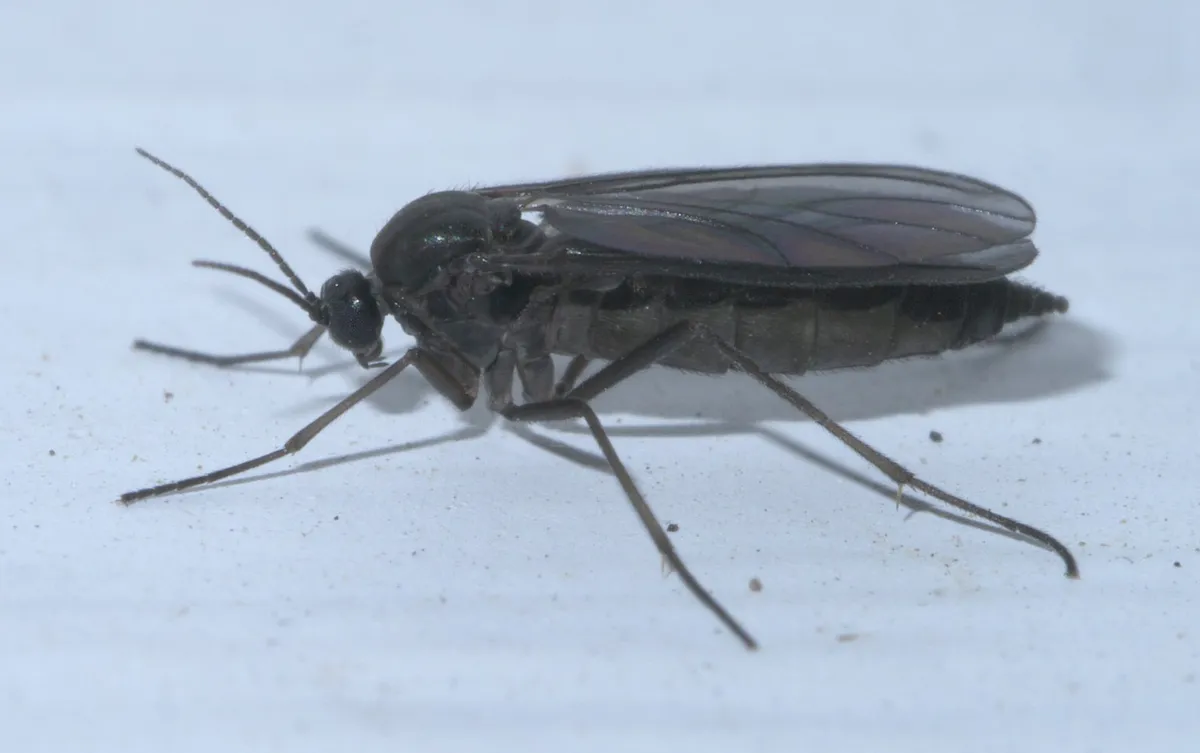
Fungus gnats are the small black flies that rise in a puff when you water a houseplant. They belong to the family Sciaridae, and the dark-winged fungus gnat shows up indoors most often. Adults are about 2 to 3 millimeters long, with long legs and dark wings.
An adult fungus gnat lives only 7 to 10 days. In that window it mates, and the female lays 100 to 200 eggs in the top inch of damp soil. The eggs hatch in 4 to 6 days. The larvae are tiny white worms with black heads that feed on fungi and root hairs for about 14 days, then pupate for 3 to 4 days. One generation takes 3 to 4 weeks, and generations overlap, so new adults keep appearing.
The larvae rarely kill a healthy plant, but a heavy infestation can stunt seedlings by chewing fine roots. Letting the top inch or two of soil dry between waterings breaks the cycle, because eggs and larvae need constant moisture.
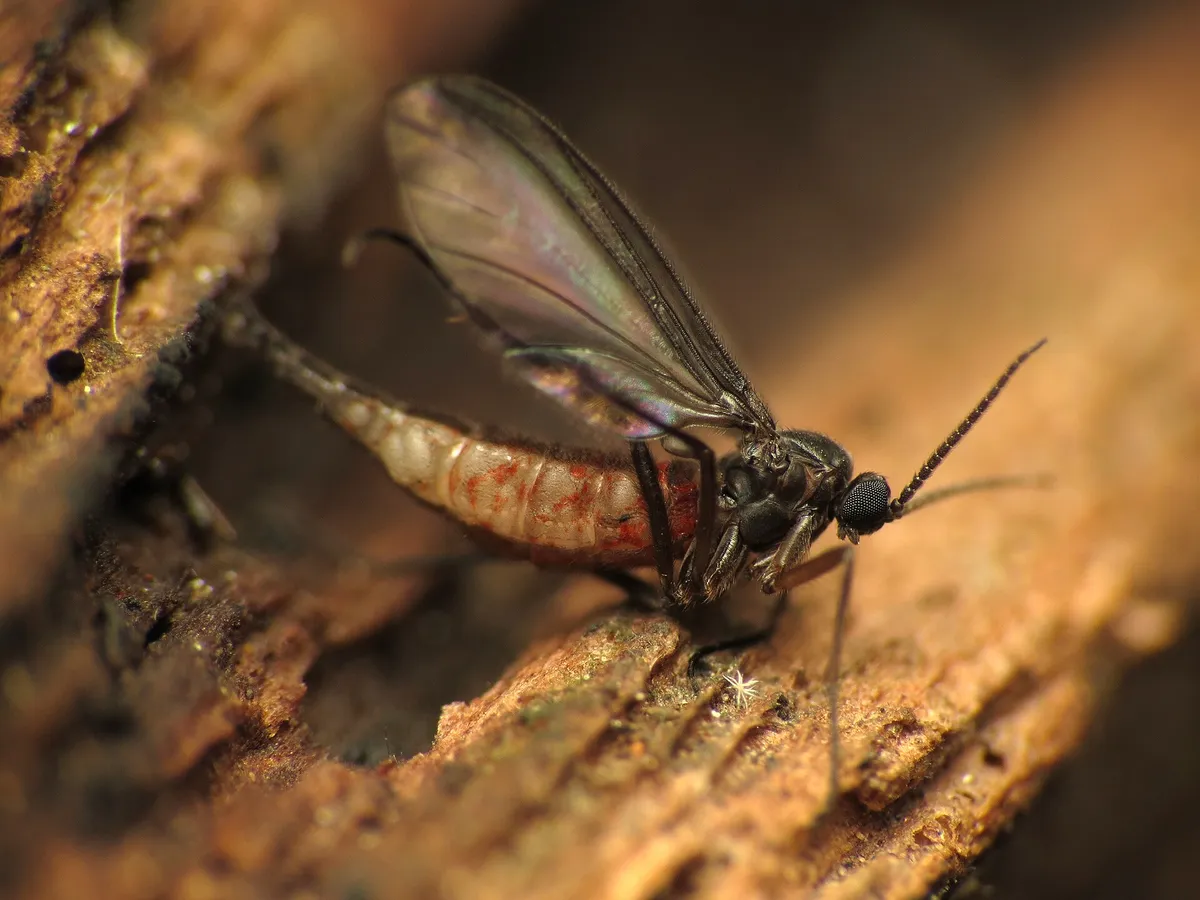
Fungus gnats are short-lived and harmless. Crane flies are much bigger and also live only a short time as adults, but they do not gather around houseplants. Flies near fruit on your counter are probably fruit flies, which live far longer.
Eye Gnats and Drain Flies
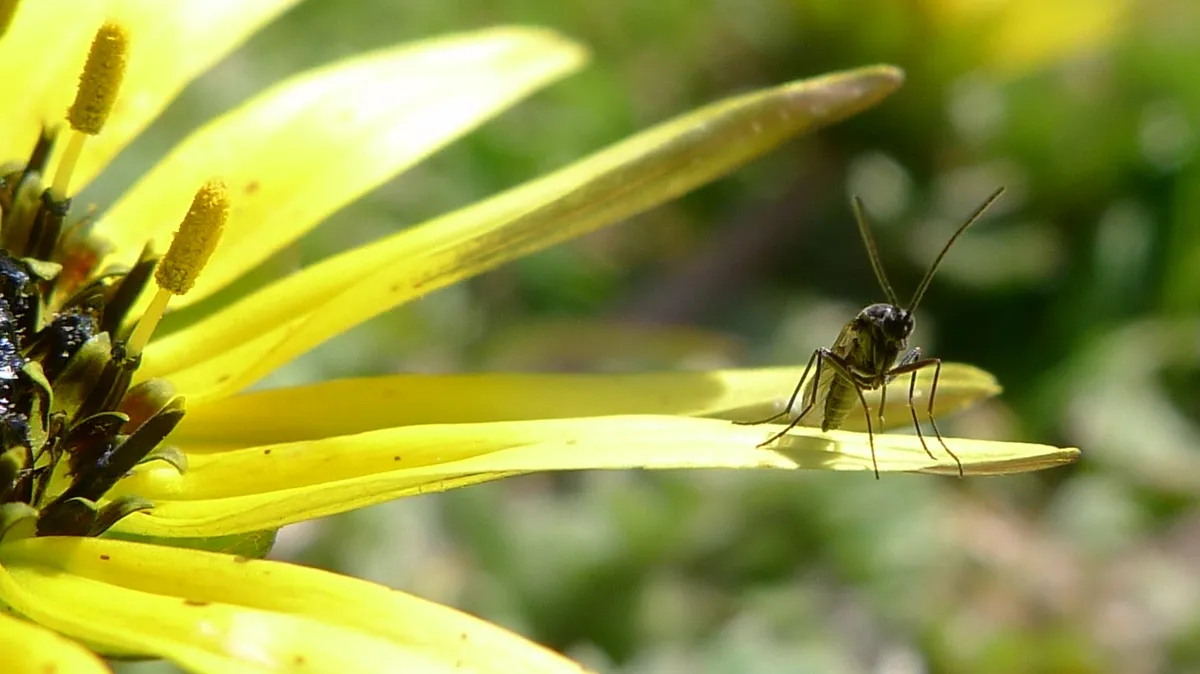
Eye gnats hover around faces and feed on eye moisture and sweat. They thrive in warm climates and around farms and gardens. Adults live 2 to 4 weeks, longer than fungus gnats. They do not bite, but they can spread eye infections. Their larvae develop in soil rich in organic matter.
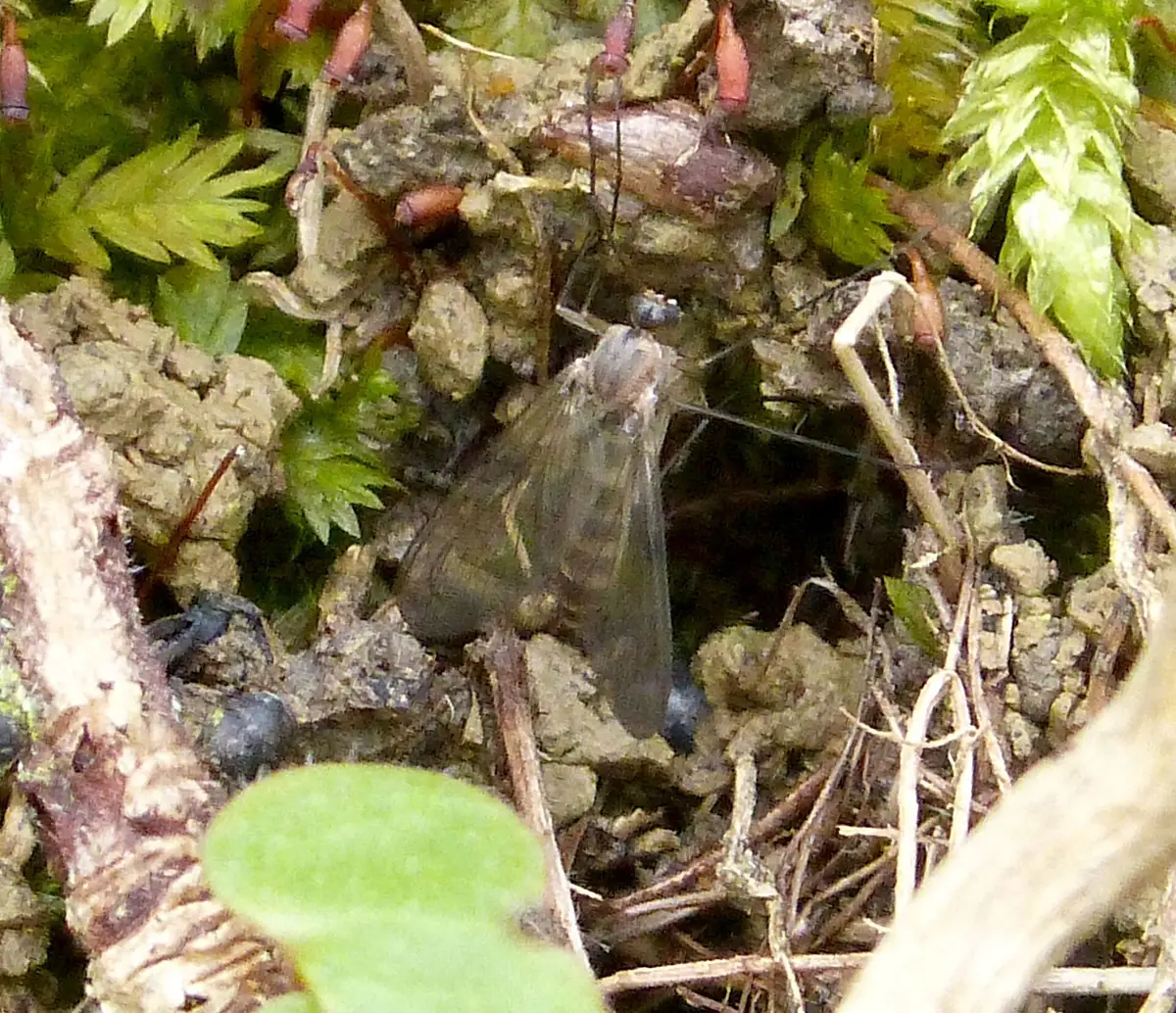
Drain flies, also called moth flies, are the fuzzy little flies on bathroom walls near sinks and showers. They look like tiny moths, with hairy wings held flat over their bodies. Adults live 1 to 3 weeks. Their larvae live in the jelly-like film inside drains, and the whole cycle takes 3 to 4 weeks. A drain fly problem means a dirty drain. Scrubbing the drain is the only lasting cure.
Biting Gnats: No-See-Ums, Sand Flies, and Black Flies
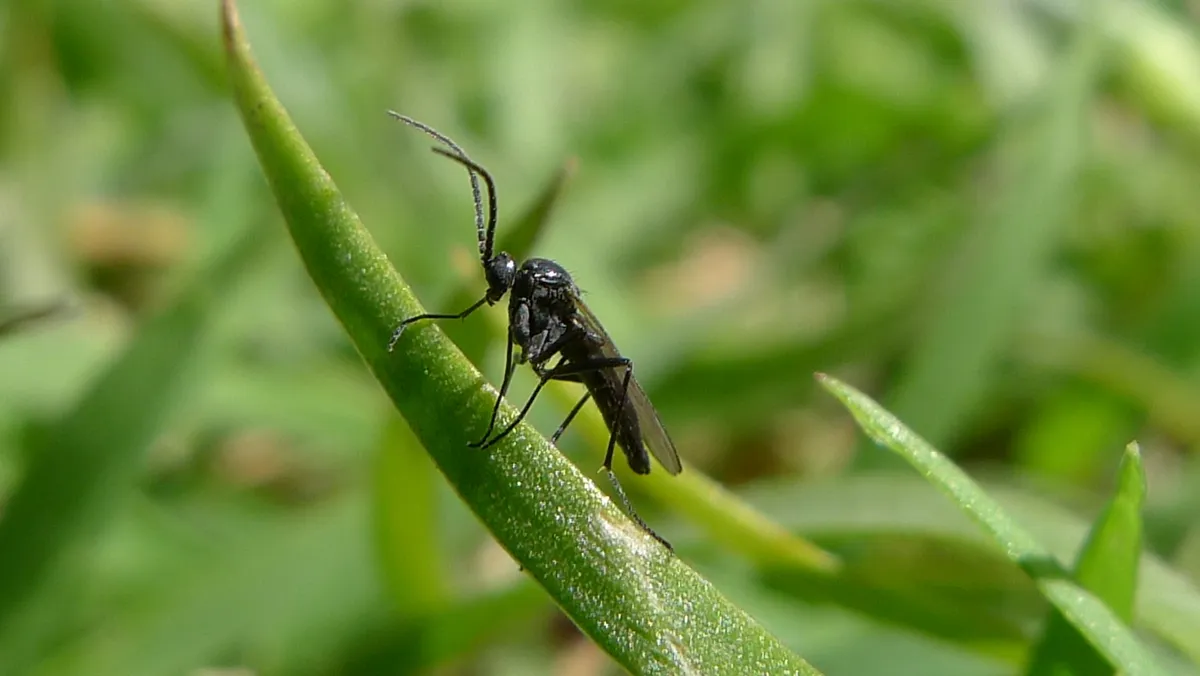
Biting midges, known as no-see-ums, are barely 1 to 3 millimeters long, small enough to pass through a normal window screen. Only the females bite, and they need a blood meal to lay eggs. Adults live 2 to 4 weeks, and the full cycle runs 4 to 6 weeks. Their bites itch far out of proportion to their size, and the welts can last for days.
Sand flies are common in warm and dry regions. Adults live 2 to 4 weeks, with a total life cycle of 30 to 45 days. They rest in cool dark places by day and feed at dusk and at night. In some regions they carry leishmaniasis.
Black flies, sometimes called buffalo gnats, breed in clean fast-flowing streams. Adults live 2 to 3 weeks, and the full cycle takes 4 to 6 weeks. They bite by day and swarm near water in spring and early summer. Fine mesh screens and repellent are the practical defenses.
Flies People Mistake for Gnats
Fruit flies are the most common mix-up. A fruit fly is larger and sturdier than a fungus gnat, with red eyes and a tan body. Adults live 40 to 50 days, five times longer than a fungus gnat adult. If your flies cluster around bananas or the compost bin, they are fruit flies, not gnats. A vinegar trap works on them, but it will not touch the larvae in your soil.
Shore flies look like tiny dark gnats and live around wet soil and algae, with adults lasting about two weeks. Winter gnats stay active in cold weather and can live for months from egg to adult. Non-biting midges form the dancing clouds over lakes at dusk. The adults live only 3 to 5 days and do not bite.
The Gnat Life Cycle, Stage by Stage
Almost every gnat follows the same four-stage pattern. Eggs come first. A female fungus gnat lays up to 200 eggs in moist soil, and a female drain fly lays hers in the film inside a pipe. Eggs hatch in a few days when it is warm and wet, and they dry out and die if the surface dries.
Larvae are the longest stage. They are small, legless, and worm-like, and they feed constantly. Fungus gnat larvae feed for about two weeks, and this is the stage that damages plant roots. Pupae rest and transform over 3 to 7 days. They are hard to kill because they do not feed and they sit protected in soil or pipe film. Adults then mate and lay eggs, and die. Most adult gnats do not feed at all. Biting females are the exception, and they need blood to produce eggs.
How to Tell Which Gnat You Have
Identification starts with location. Flies above potted plants are almost always fungus gnats. Flies on the bathroom wall near the drain are drain flies. Flies around your face outdoors are eye gnats or no-see-ums. Flies near fruit are fruit flies. Clouds of flies over a lake at dusk are non-biting midges.
Fungus gnats are slender, dark, and mosquito-like, with long legs. Drain flies are fuzzy and moth-like, and they sit still on walls. Fruit flies are rounder and tan, with red eyes. No-see-ums are so small you may feel the bite before you ever see the insect.
How Long Will a Gnat Infestation Last?
Adults die within 10 days, so if you stopped every egg from hatching today, the flying gnats would be gone in about a week. The catch is the larvae already in the soil. They keep emerging for two or three more weeks, so treat for at least four weeks, not four days. An untreated infestation can stretch to two or three months.
Speed up the end with a combined approach. Let the soil dry between waterings. Set yellow sticky traps to catch adults. Water with Bacillus thuringiensis israelensis to kill larvae. Top dress the soil with sand so females cannot reach it to lay eggs. Together they break the cycle in about a month. For a wider look at insect lifespans, see our bug lifespan chart, and for the biting flies often lumped in with gnats, see our types of mosquitoes guide.
Frequently Asked Questions
How long do gnats live?
Most gnats live 7 to 10 days as adults, with a full life cycle of 3 to 4 weeks. Biting kinds such as no-see-ums and sand flies live about 2 to 4 weeks as adults. Fruit flies live 40 to 50 days as adults.
How long do fungus gnats live?
Adult fungus gnats live 7 to 10 days, and the full cycle takes 3 to 4 weeks. Females lay 100 to 200 eggs in damp soil, and larvae feed there for about two weeks before pupating.
Do gnats die in winter?
Most gnats die off outdoors when temperatures drop, but fungus gnats survive all winter indoors on houseplants. Winter gnats stay active in cold weather.
What kills gnats the fastest?
Nothing kills a whole infestation instantly, because eggs, larvae, pupae, and adults are all present at once. The fastest real fix combines dry soil, yellow sticky traps, and Bacillus thuringiensis israelensis for larvae. Expect improvement in a week and full control in about four weeks.
How long do drain flies live?
Drain flies live 1 to 3 weeks as adults, with a full life cycle of 3 to 4 weeks. The larvae live in the film inside drains, so scrubbing the drain is the only lasting fix.
Conclusion
Gnats are small, short-lived, and stubborn. The adult you swat today lived for a week at most, but the eggs it laid can keep the problem going for another month. The chart above shows the range: a few days for gall gnats and midges, a week or two for fungus gnats and drain flies, and several weeks for the biting kinds.
Once you know which gnat you have and how long each stage lasts, the fix is obvious. Dry the soil, clean the drain, or protect yourself at dusk, and keep it up for a full life cycle. Four weeks of steady effort beats four days of spraying, because it outlasts the larvae you cannot see.