
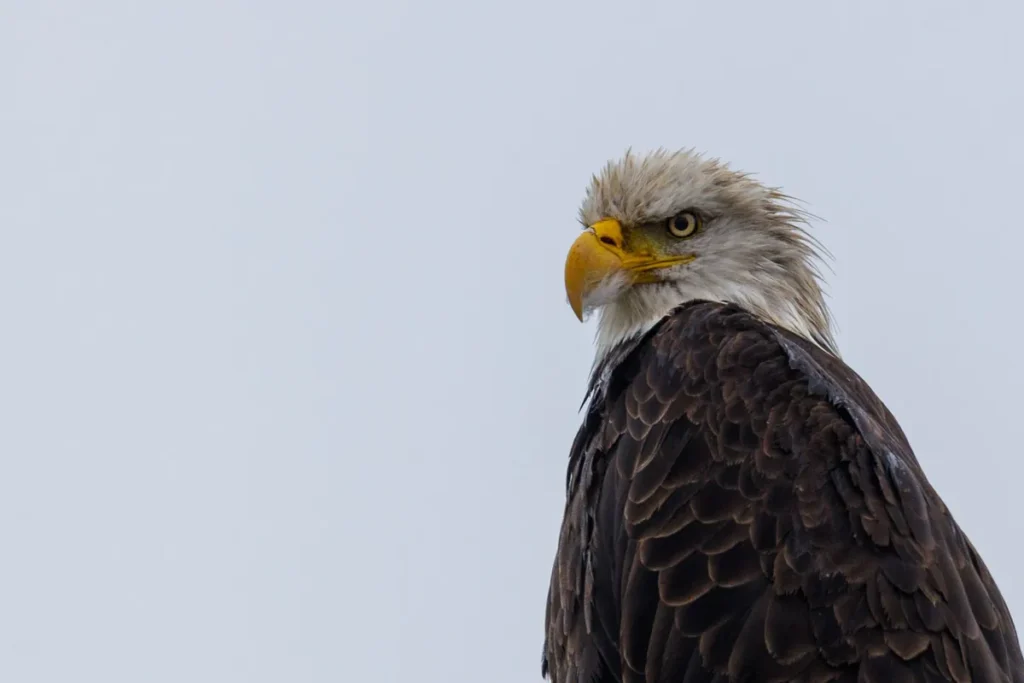
Spotting a huge raptor circling overhead is one of the best moments in American birding, but naming it is where most people get stuck. This eagle identification chart guide covers the two true eagles of the United States, the bald eagle and the golden eagle, the juvenile plumages that make young birds look like different species entirely, and the hawks, vultures, and ospreys that get mistaken for eagles every day.
The US has exactly two native eagle species. Adult bald eagles are the easy ones, white head, white tail, huge yellow bill. Golden eagles are all dark brown with a golden wash on the back of the neck. A bald eagle takes four to five years to grow its famous white head, and until then it is a mottled brown bird that looks like a golden eagle. Most misidentifications are young bald versus young golden, not eagle versus hawk.
Two Eagles of the United States
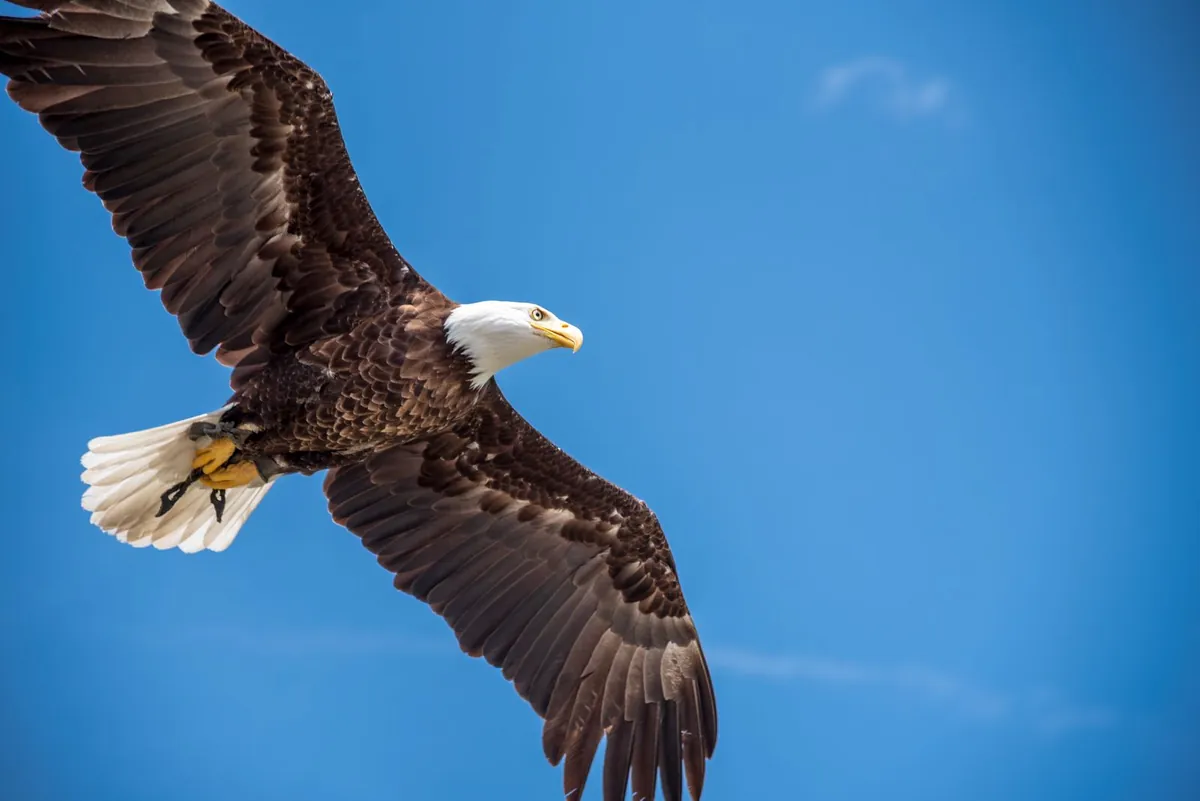
The bald eagle is America’s best comeback story. From just 417 breeding pairs in the lower 48 states in the early 1970s, it now numbers more than 300,000. Bald eagles live near water almost everywhere in the US, rivers, lakes, reservoirs, coasts, and they are the bird you most often see stealing fish at a lake or sitting on a snag above a river. For more stage-by-stage bird IDs, our hummingbird identification chart applies the same approach to a much smaller bird.
The golden eagle lives a different life. It is a bird of the open West: western mountains, deserts, grasslands, ranch country, slightly more compact and incredibly powerful. While bald eagles patrol water, golden eagles patrol hillsides. Habitat alone already settles many sightings.
Size overlap is real, which is why people struggle. Bald eagles run 28 to 40 inches long with a 72 to 90 inch wingspan, weighing 8 to 14 pounds. Golden eagles run 26 to 40 inches with a 66 to 88 inch wingspan, weighing 6.5 to 13 pounds. Females are larger than males in both species, so size alone never settles it.
Bald Eagle Identification Chart: Adult vs Juvenile Stages
A bald eagle does not look like a bald eagle for its first four years. The white head and tail are adult plumage, and the road there runs through several patchy, mottled brown stages. Many “golden eagles” reported east of the Rockies are actually young bald eagles in this awkward phase.

First-year juveniles are almost entirely dark chocolate brown with a dark gray-to-black bill and white mottling under the wings and belly. In the second and third years, blotchy white appears on the head, belly, and underwings, and the bill lightens toward yellow. Full adult plumage, crisp white head and tail with a deep yellow bill, arrives around age four to five.
Golden Eagle Identification: Key Field Marks

An adult golden eagle is a study in restraint. The whole bird is dark brown, with a wash of golden feathers across the nape, the back of the head and neck, that catches the light when the bird turns. Adults have fully feathered legs down to the feet, which bald eagles lack. In flight, look for a relatively small head and bill, wings held in a slight V when soaring, and a dark underside.
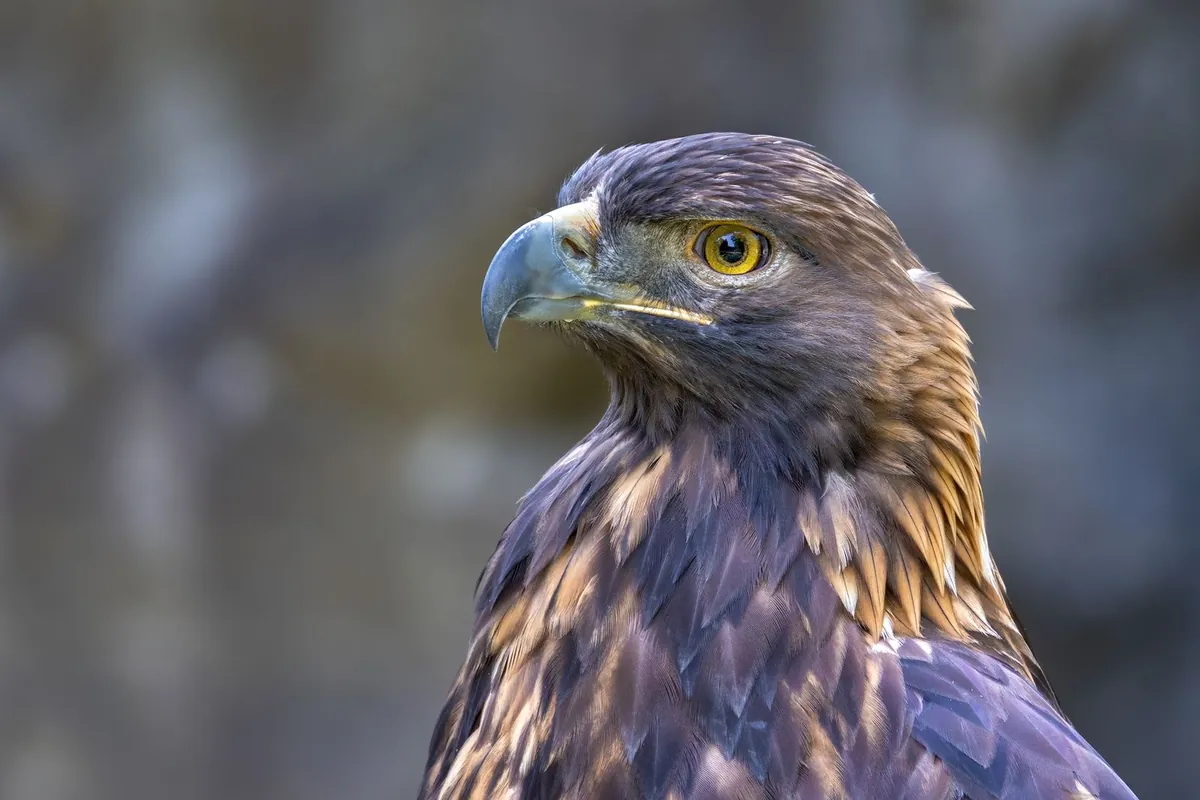
Juvenile golden eagles carry the most distinctive mark of any young North American raptor: bright white patches at the base of the primary feathers on the underwing and a broad white band across the base of the tail. From below, the bird shows a bullseye pattern that no bald eagle ever shows. Young bald eagles have random, patchy white mottling, never those crisp symmetrical flashes. Clean white underwing patches plus a white-banded tail means golden eagle.
Adult golden eagles rarely show white. So the quick summary: white wing flashes and a white tail band on one dark bird means golden; white head alone means bald.
Eagle Identification Chart: Species and Lookalikes Compared
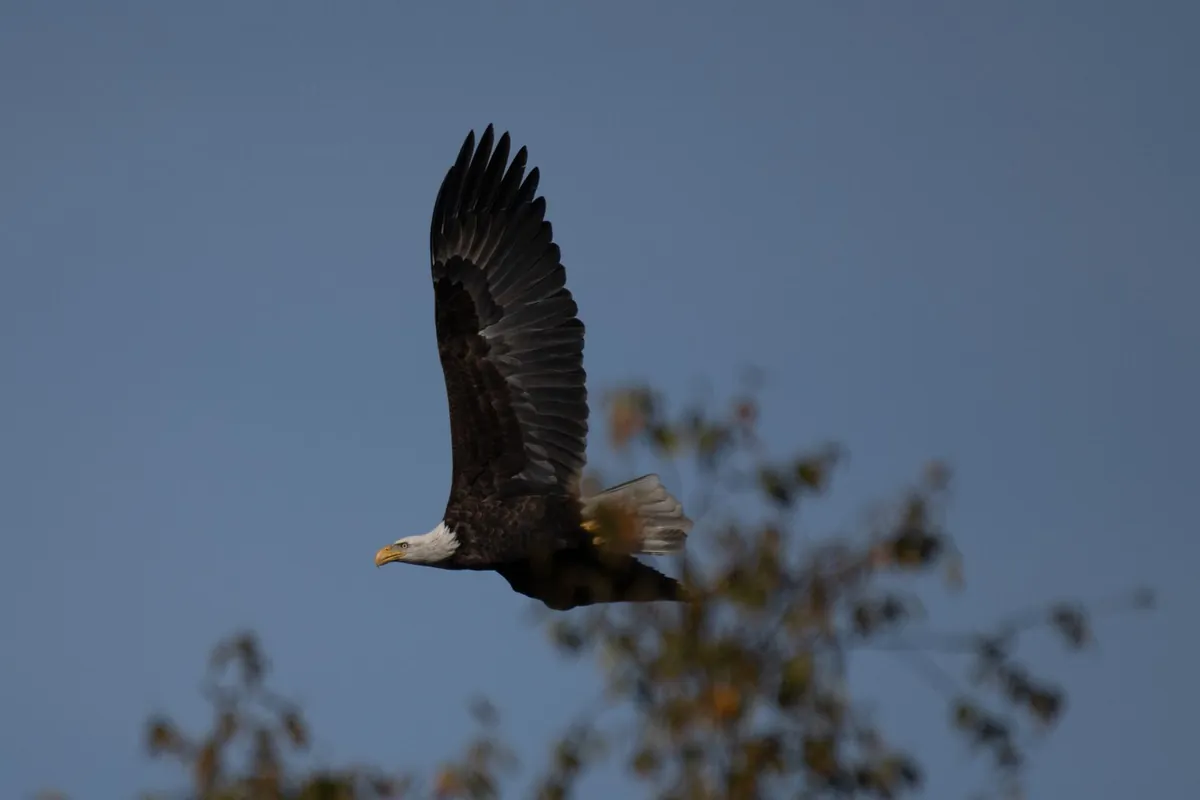
Numbers help when the bird gives you a good look. The table below compares the two US eagles with the three most common lookalikes, using typical adult ranges.
| Bird | Length | Wingspan | Weight | Adult plumage | Juvenile plumage | Key field marks | US range and habitat |
|---|---|---|---|---|---|---|---|
| Bald Eagle | 28-40 in | 72-90 in | 8-14 lbs | White head and tail, dark brown body, yellow bill | Dark brown, patchy white mottling underneath | Huge yellow bill, flat plank wings, white head | Near water nationwide |
| Golden Eagle | 26-40 in | 66-88 in | 6.5-13 lbs | Dark brown all over with golden nape, feathered legs | White wing patches, broad white tail band | Golden nape, small head and bill, wings in slight V | Western mountains, deserts, grasslands |
| Red-tailed Hawk | 17-22 in | 43-57 in | 1.5-3.5 lbs | Brown back, pale belly with dark belly band, brick-red tail | Similar to adult, tail brown and banded | Red tail, dark shoulder patches, belly band, much smaller | All US, open country |
| Turkey Vulture | 25-32 in | 63-72 in | 3.5-5.5 lbs | Dark brown-black, bare red head, silver flight feathers below | Same as adult, head gray instead of red | Two-tone underwing, wobbly rocking flight, small bare head | All US, over fields and roads |
| Osprey | 21-24 in | 54-72 in | 2.5-4.5 lbs | Dark brown above, white below, bold black eye stripe | Same as adult, pale edging on back feathers | Black eye mask, kinked M-shaped wings, hovers over water | Coasts, lakes, rivers nationwide |
The red-tailed hawk and osprey are much smaller, roughly half an eagle’s weight, so a close size comparison ends those debates quickly. The turkey vulture is the tricky one: its wingspan reaches 72 inches, well into golden eagle territory. For vultures, watch the flight, not the measurements. Vultures rock side to side with wings raised in a V, while eagles fly on flat, steady, plank-like wings.
How to Identify an Eagle in 5 Steps
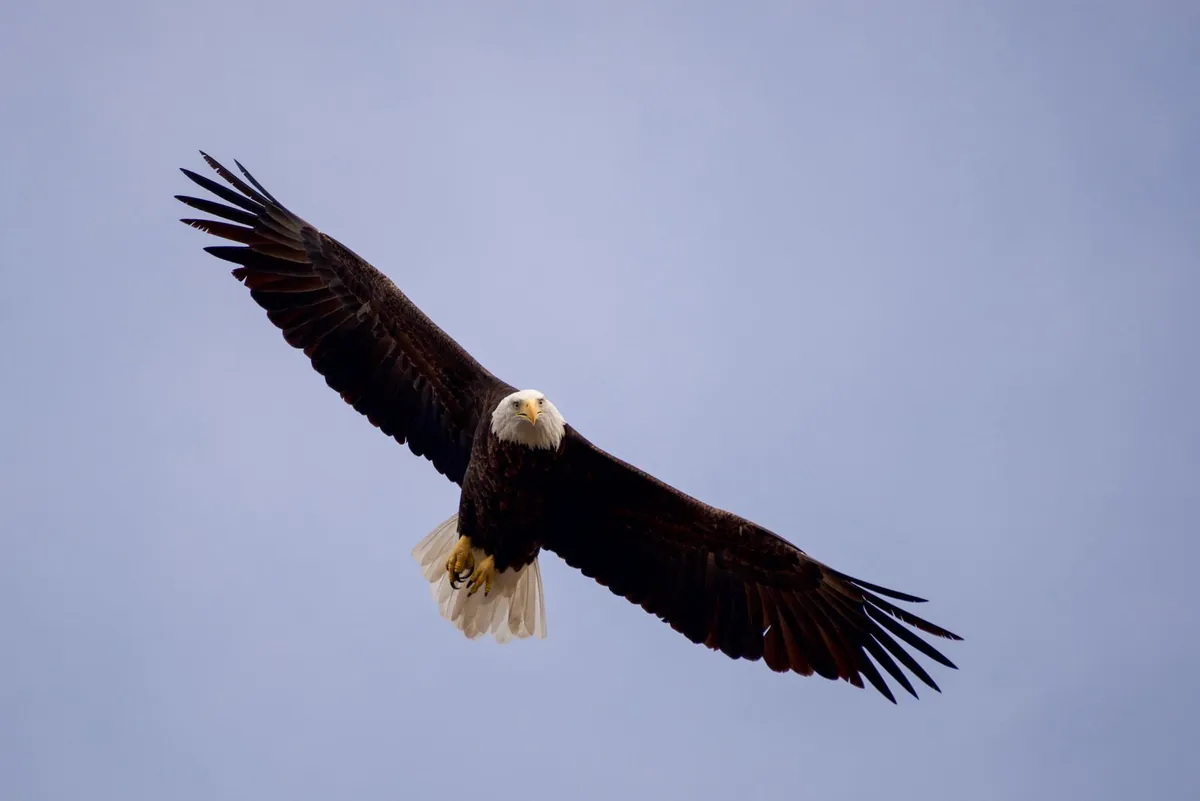
Run through these five steps the next time a big raptor crosses your view, and you will usually have the answer before it leaves sight.
Step 1: Check the habitat. Near water? Lean bald eagle. Western hills or desert far from water? Lean golden. Habitat alone proves nothing, but it tells you which bird to test first.
Step 2: Look at the wings. Eagles soar on broad, flat, plank-like wings with almost no rocking. Golden eagles hold theirs in a shallow V. Turkey vultures rock side to side. Hawks flap more and glide on shorter wings.
Step 3: Find the head. A white head means adult bald eagle, full stop. A small dark head with a golden nape means golden. A bare red or gray head means vulture. A black bandit mask through the eye means osprey.
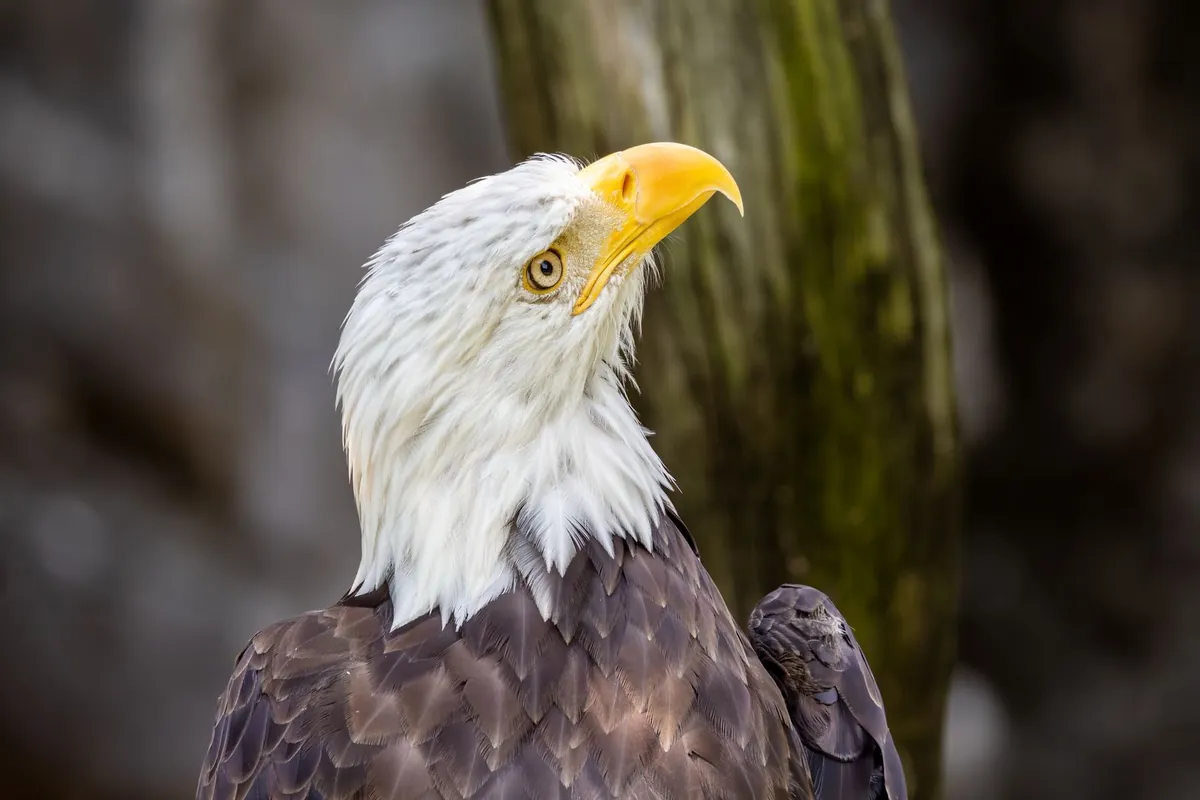
Step 4: Study the bill and legs. The bald eagle’s bill is enormous and yellow in adults. Golden eagles have smaller, darker bills and feathered legs, which rule out bald eagles instantly.
Step 5: Check for juvenile flashes. On a dark bird, look underneath for white. Crisp white patches at the wing bases and a white tail band say juvenile golden. Random patchy white everywhere says young bald. No white at all with a golden nape says adult golden. This step solves the young-bird puzzle.
The same routine transfers to other groups: our duck identification chart uses a similar step-by-step method for telling dabblers from divers at a distance.
Eagles vs Lookalikes: Who Is Who
Most “eagle” sightings that turn out to be something else involve these three birds.
Red-tailed Hawk

The red-tailed hawk is the most common large raptor in the US, so it gets blamed for eagle sightings daily. It is much smaller, 17 to 22 inches against an eagle’s 28 plus, with broader, rounder wings. The clincher is the brick-red tail on adults, visible from above in good light, plus a dark band of streaks across the belly. Eagles never show that belly band.
Turkey Vulture

Turkey vultures overlap golden eagles in wingspan, which causes real confusion at a distance. A vulture’s head looks tiny and naked, red on adults and gray on young birds, and the bird teeters as it soars. Underneath, the wings show a striking two-tone pattern, dark coverts against silvery flight feathers. Eagles hold steady on flat wings with a feathered, proportional head. Rocking flight plus tiny bare head equals vulture, every time. For another master of the confusing silhouette, see our owl identification chart, where ear tufts and facial disks do the same quick-sorting work.
Osprey

Ospreys get called eagles constantly because they are big, fish-eating raptors that share lakes with bald eagles. They are noticeably smaller at 21 to 24 inches, and the white underside with a bold black stripe through the eye is unmistakable once you have seen it. In flight, osprey wings kink at the wrist into an M shape, and they hover over water before plunging feet-first, a hunting style no eagle uses.
Eagle Identification FAQ

How can I tell a juvenile bald eagle from a juvenile golden eagle?
Look underneath the bird in flight. A juvenile golden eagle shows clean, symmetrical white patches at the base of the outer wing feathers and a broad white band across the base of the tail. A juvenile bald eagle shows random, patchy white mottling with no crisp pattern, and its bill is much larger. Symmetrical white flashes mean golden; messy mottling means young bald.
Do bald eagles and golden eagles live in the same places?
Sometimes, but their core ranges differ. Bald eagles follow water in all 48 contiguous states: rivers, lakes, coasts. Golden eagles are birds of the western US, open mountains, deserts, and grasslands, wandering east in winter. Where ranges overlap, habitat still helps: over a lake, bet on bald; over a desert ridge, bet on golden.
What is the fastest way to identify an eagle in flight?
Use the five-second rule: wings, head, white. Flat plank-like wings say eagle, then the head finishes it. White head and tail means adult bald eagle. All-dark with a golden nape means golden eagle. Clean white wing patches and tail band on a dark bird mean juvenile golden. Anything rocking side to side with a tiny bare head is a turkey vulture, not an eagle at all.
Conclusion

Eagle identification gets easier the moment you stop asking “is it an eagle?” and start asking “which stage and which species?” Bald and golden eagles separate cleanly on head color, bill size, wing posture, and habitat once you know what to look for. The juveniles are the real test, and they have their own answers: crisp symmetrical white flashes point to golden, messy mottling points to young bald. The lookalikes each carry one signature mark that ends the debate in seconds.
Take this eagle identification chart out on your next walk near a river or a western ridge and run the five-step routine on every big bird you see. Within a season, the checks become reflex.


Pingback: All Bear Species: Complete Chart of the 8 Living Bears – Chart Identify
Pingback: Hawk Identification Chart: 16 Common US Hawks – Chart Identify
Pingback: Eagle Feather Identification Chart: Identify 12 Species by Feather – Chart Identify
Pingback: Endangered Birds Chart (2026) – Chart Identify