
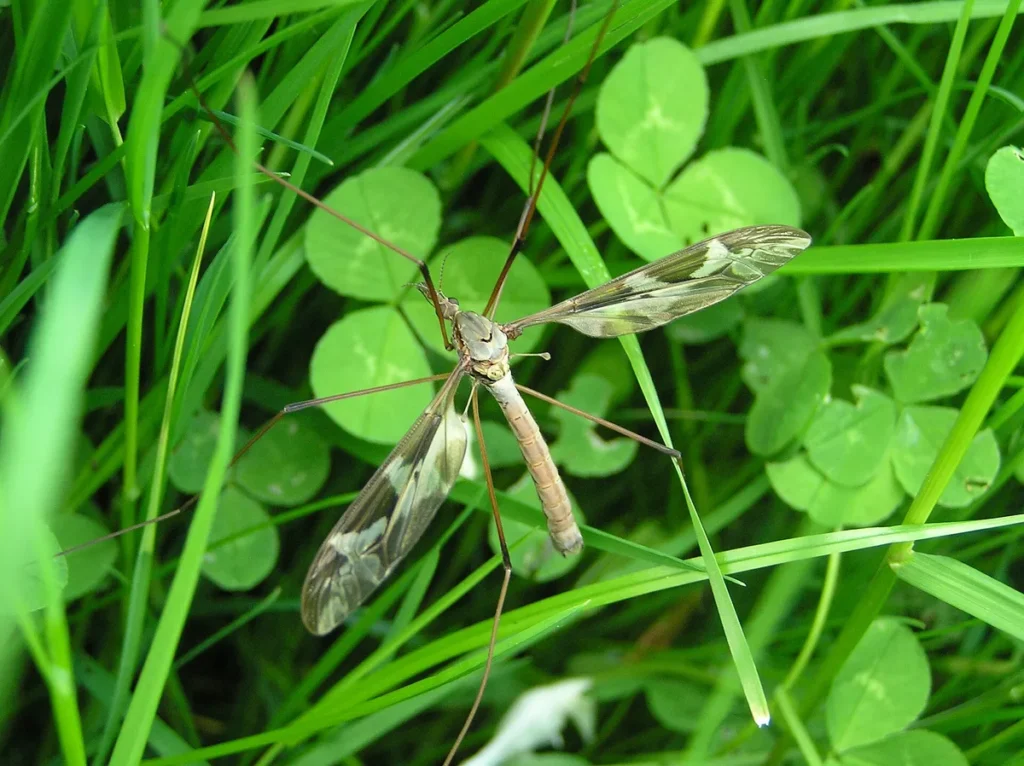
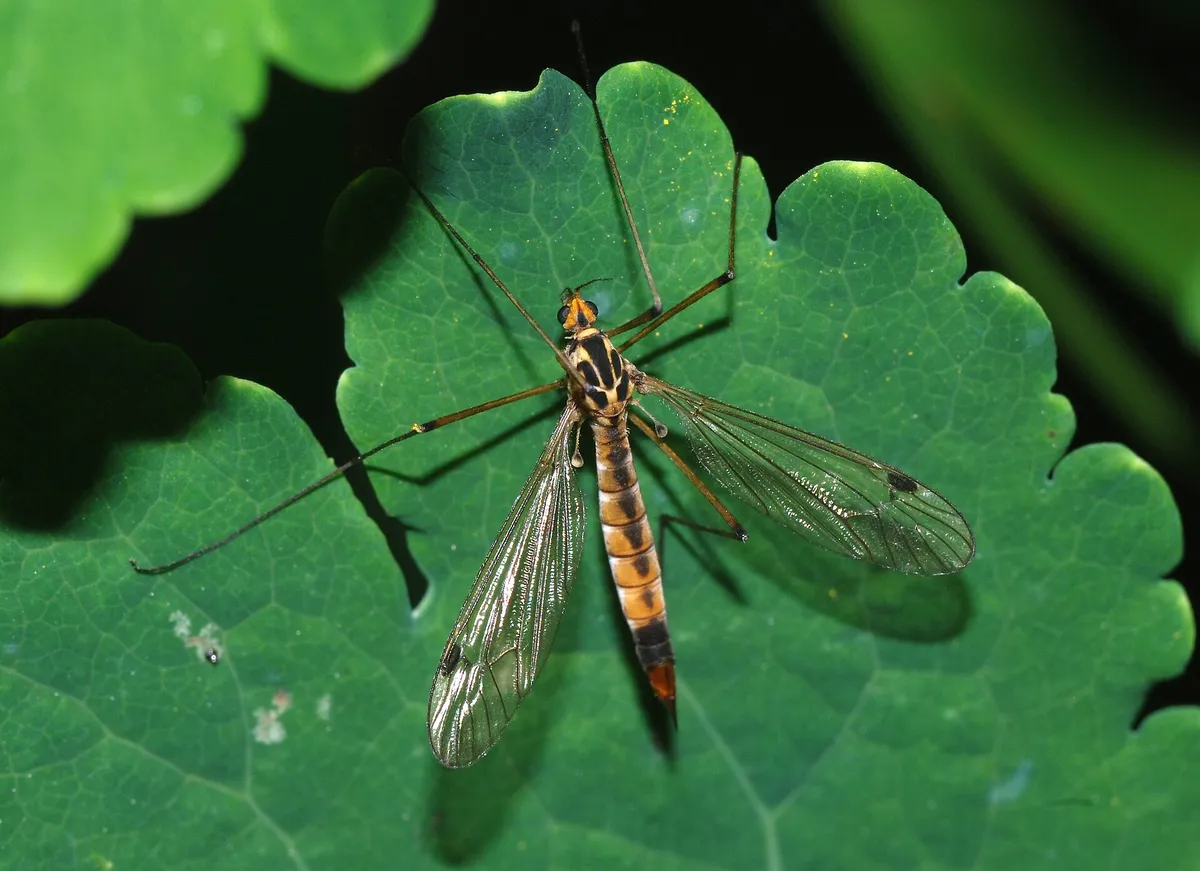
Every autumn, a gangly insect with legs like stilts bounces off the porch light, and someone calls it a giant mosquito, but it is not a mosquito at all. This crane fly lifespan chart shows how long 15 types live as adults, and how long the full life cycle lasts. In short, the flying adult is only the final few days of a life lived mostly underground.
Most people only meet the adult, so they assume the whole animal lives a week. That is backwards: it spends months in the soil as a grub first, then mates, lays eggs, and dies, often without eating.
How Long Do Adult Crane Flies Live?
Adult crane flies live about 3 to 15 days, depending on species and weather. Most lawn species last 5 to 15 days, while the winter crane fly can reach three weeks in cool, damp conditions.
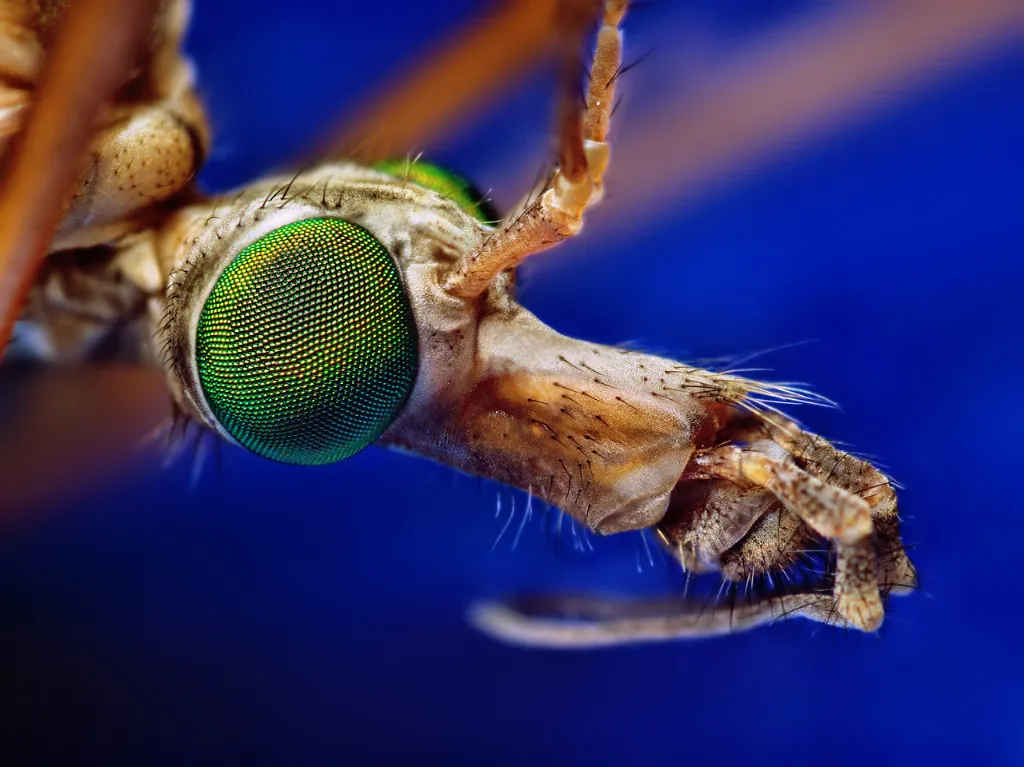
Many adults do not feed at all, living on energy stored from their larval days: their mouthparts are too weak for solid food, though some sip nectar. With no way to rebuild energy, the adult lifespan is largely fixed, and warm, dry weather shortens it. Cool, humid evenings are kindest, and most drift around lights then. Females die within a day or two of laying eggs, and males often sooner, but one female lays 200 to 300 eggs. Our bug lifespan chart puts crane flies next to houseflies, fruit flies, and mayflies.
Crane Fly Lifespan Chart: 15 Types
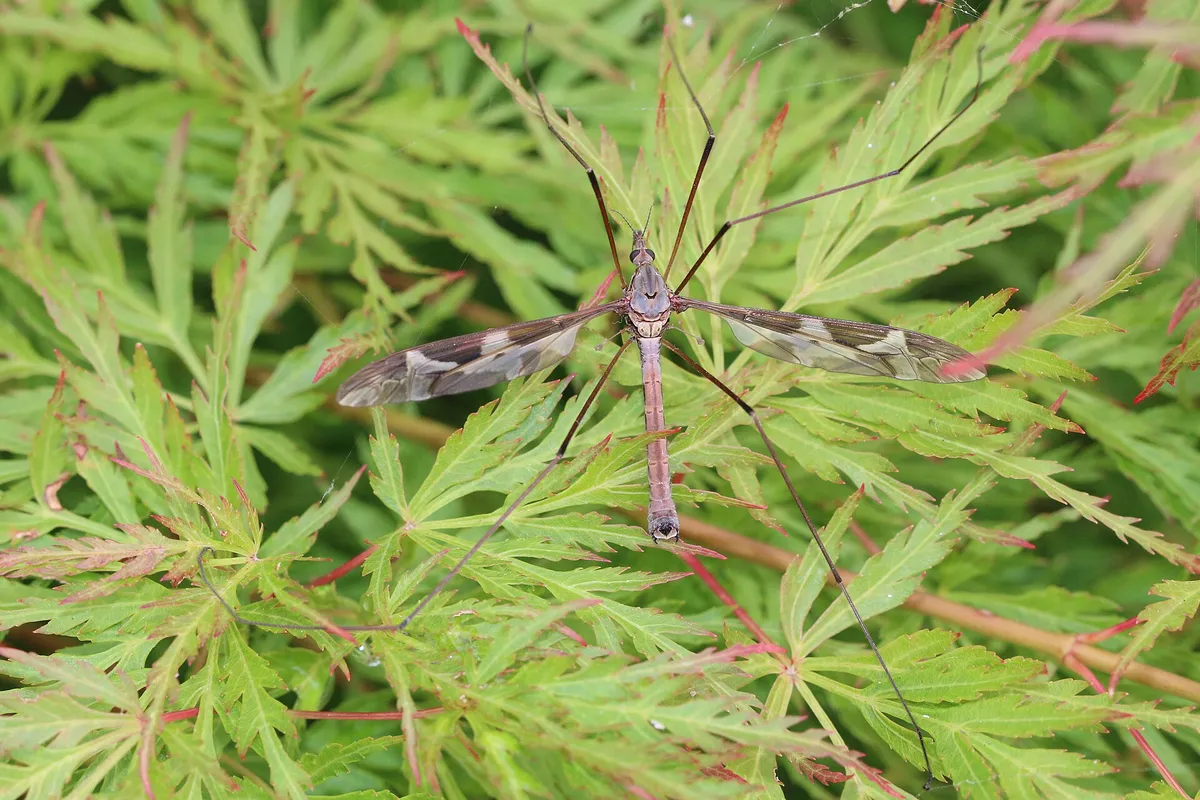
The table gives adult lifespan and full life cycle for 15 crane fly types. The life cycle is almost always around one year, because the leatherjacket feeds in the soil for months.
| Type | Scientific Name | Adult Lifespan | Full Life Cycle | Where It Lives |
|---|---|---|---|---|
| Common crane fly | Tipula oleracea | 5 to 15 days | About 1 year | Lawns, damp meadows |
| European crane fly | Tipula paludosa | 10 to 15 days | About 1 year | Moist turf, pastures |
| Giant crane fly | Tipula maxima | 5 to 12 days | About 1 year | Wet meadows, stream banks |
| Marsh crane fly | Tipula oleracea | 5 to 15 days | About 1 year | Marshes, wet grassland |
| Winter crane fly | Trichocera annulata | 1 to 3 weeks | About 1 year | Cool, damp woodland |
| Phantom crane fly | Bittacomorpha clavipes | 4 to 10 days | About 1 year | Shaded wetlands, slow streams |
| Spotted crane fly | Nephrotoma appendiculata | 7 to 14 days | About 1 year | Gardens, meadows |
| Banded crane fly | Tipula fascipennis | 5 to 12 days | About 1 year | Damp woodland edges |
| Tiger crane fly | Nephrotoma ferruginea | 5 to 14 days | About 1 year | Gardens, grassland |
| Yellow crane fly | Nephrotoma appendiculata | 7 to 14 days | About 1 year | Sunny meadows |
| Wood crane fly | Tipula lunata | 5 to 12 days | About 1 year | Deciduous woodland |
| Aquatic crane fly | Tipula abdominalis | 7 to 14 days | 1 to 2 years | Streams and wet soil |
| Snow crane fly | Chionea species | 1 to 2 weeks | About 1 year | Cold mountain forests |
| Golden crane fly | Tipula hortorum | 5 to 10 days | About 1 year | Meadows, clearings |
| Yellow-spotted crane fly | Nephrotoma flavescens | 5 to 12 days | About 1 year | Warm meadows |
Note: the common and marsh crane flies are the same species, Tipula oleracea, listed twice because gardeners meet it under both names. Most types belong to the family Tipulidae; the snow crane fly is a wingless relative that walks on snow.
Which Crane Flies Live Longest, and Which Live Shortest
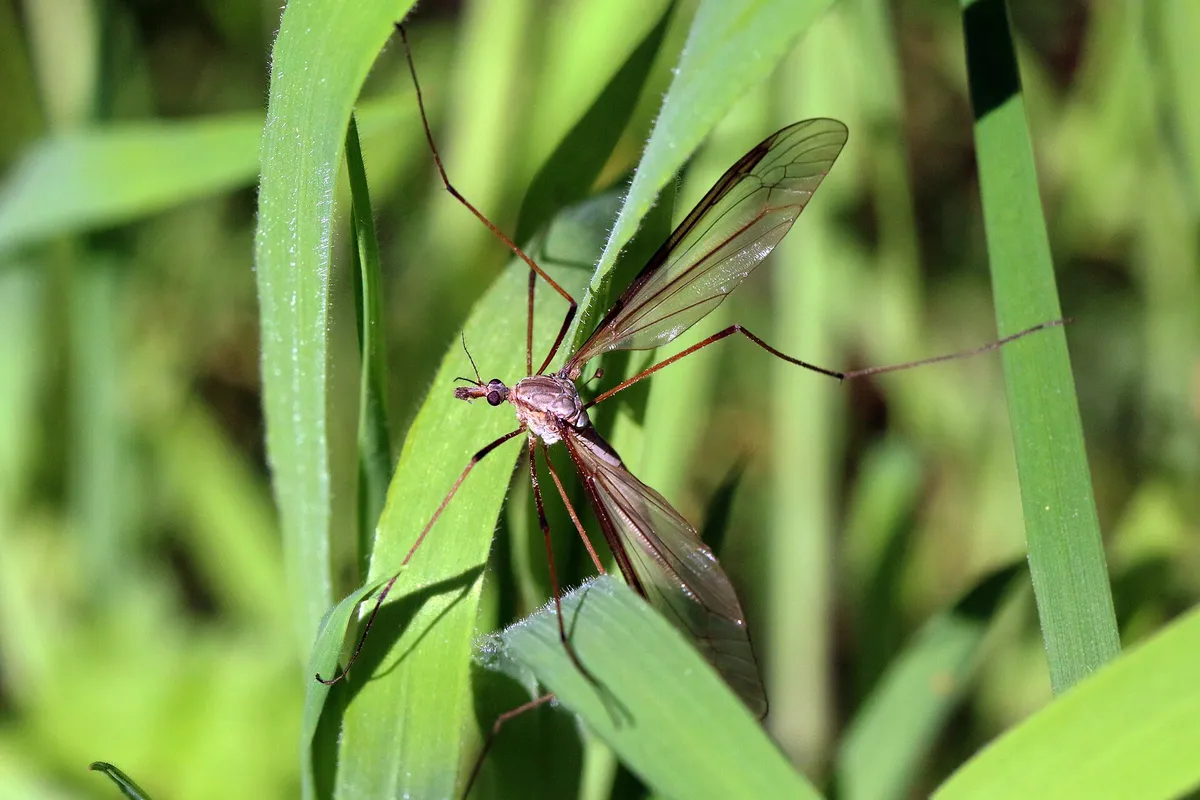
Among adults, the winter crane fly lives longest at up to three weeks, since cold slows its metabolism. The giant species live shortest, only 3 to 10 days, and the golden crane fly 5 to 10 days. On the full life cycle, the aquatic crane fly takes longest, up to two years, since its larvae grow slowly in cool water. Most others finish in about a year. Our cricket lifespan chart shows the same pattern.
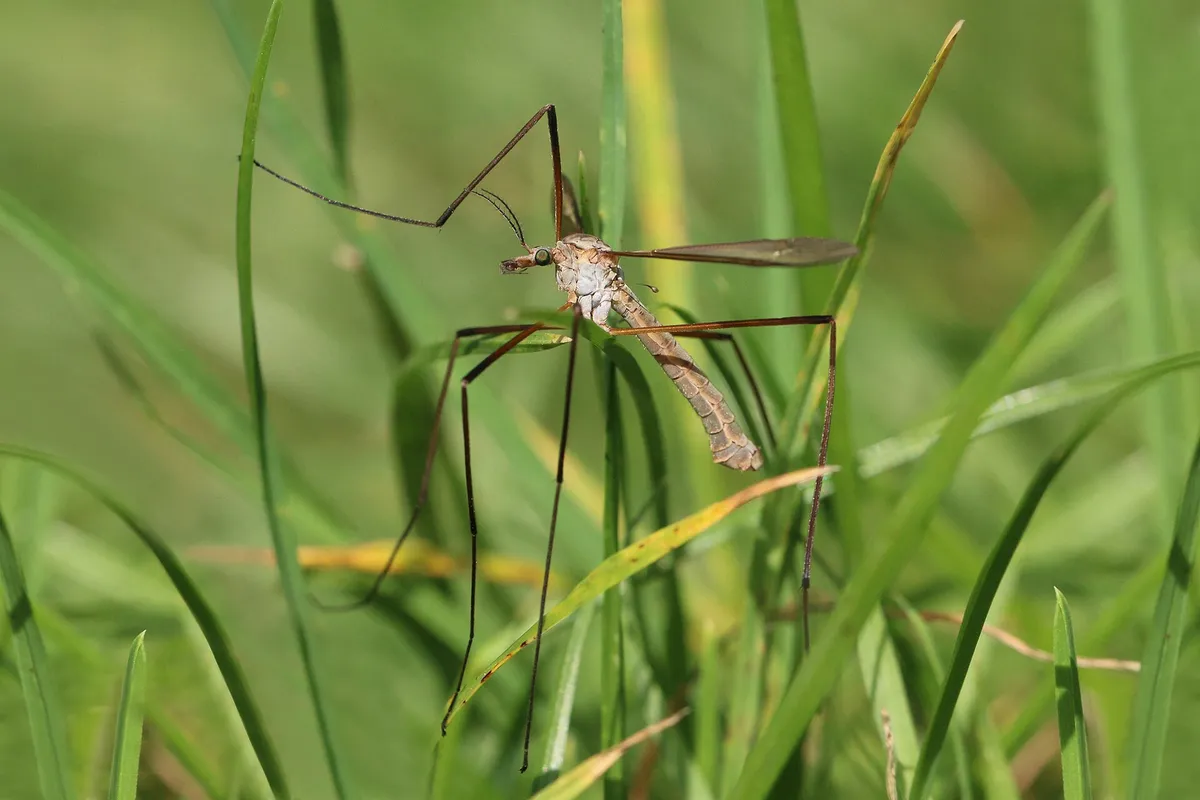
The Crane Fly Life Cycle, Stage by Stage
Crane flies go through complete metamorphosis: egg, larva, pupa, and adult, usually in about a year.
1. Egg: 1 to 2 weeks
Within days of emerging, the female mates and lays eggs in moist soil or shallow water, scattering them as she flies low over the ground. One female lays 200 to 300 eggs, hatching in one to two weeks if the soil stays damp. Dry soil kills many before they hatch, which is why numbers swing.
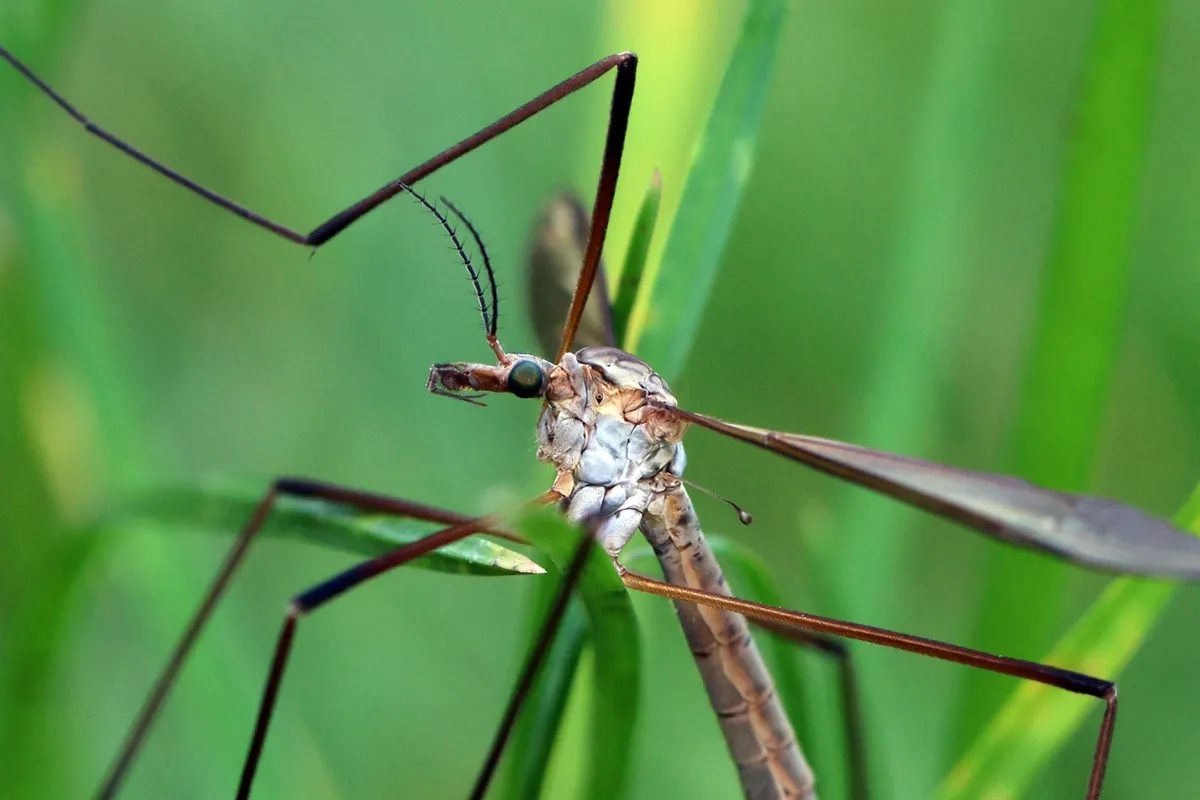
2. Larva: 8 to 11 months
The larva is the leatherjacket, named for its tough, grey-brown skin. Legless and plump, it grows to about 25 to 40 mm, feeding on grass roots, decaying plants, and organic matter through four moults over 8 to 11 months. This is the stage that matters for gardeners: large numbers chew turf from below, leaving brown, thinning patches.
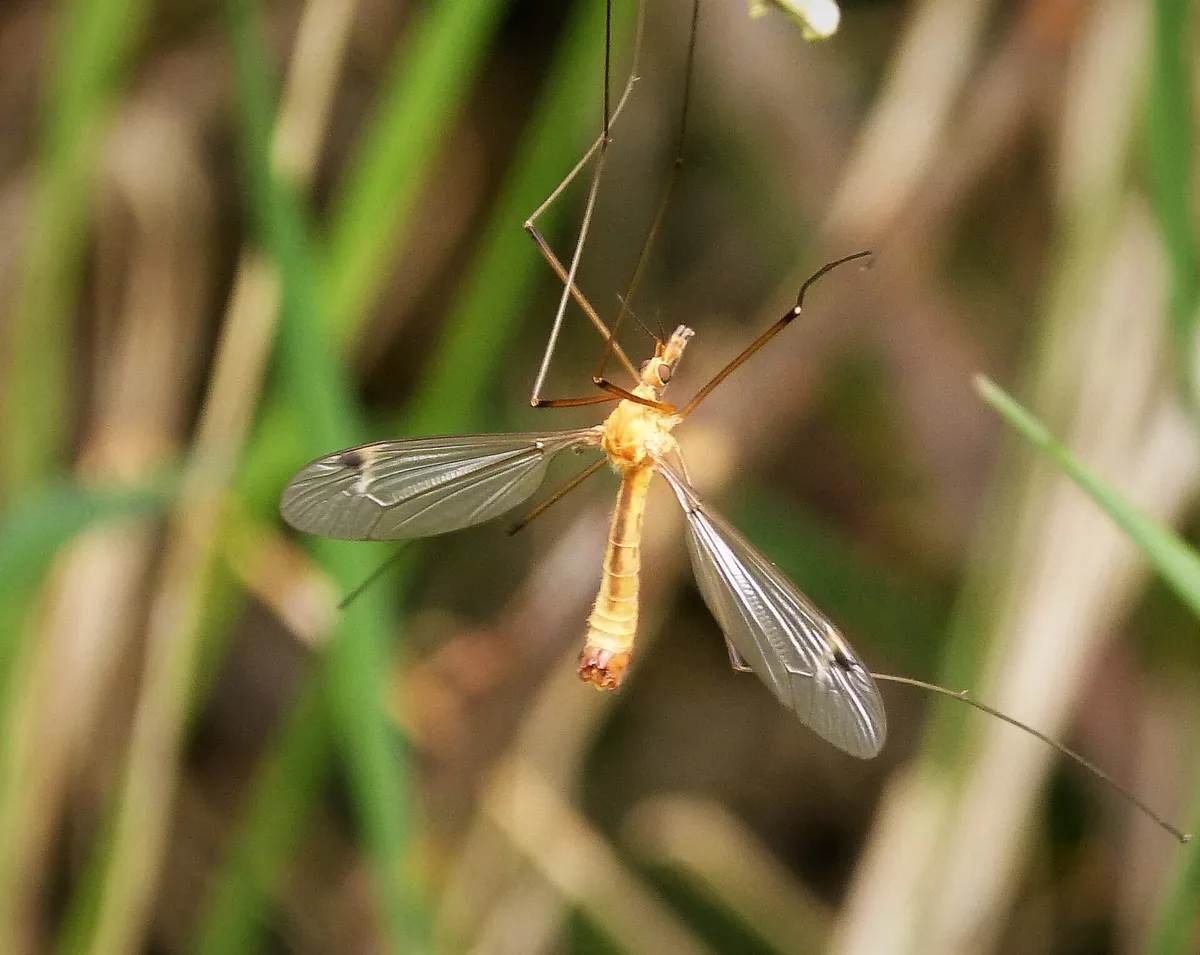
3. Pupa: 1 to 3 weeks
When fully grown, usually in mid to late summer, it pupates in the top few centimetres of soil. After one to three weeks, the pupa wriggles partway out and the adult splits the case and climbs out.
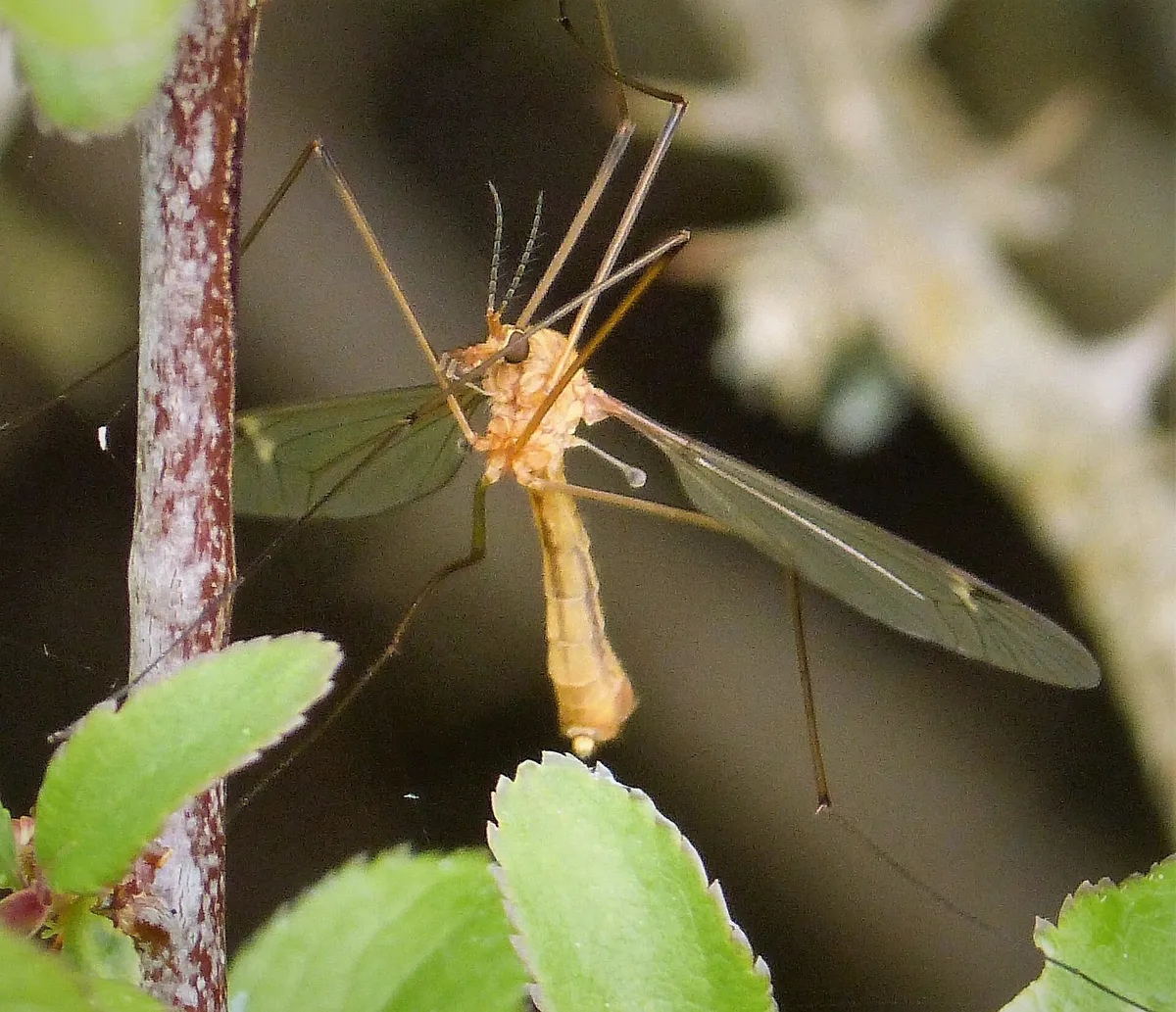
4. Adult: 3 to 15 days
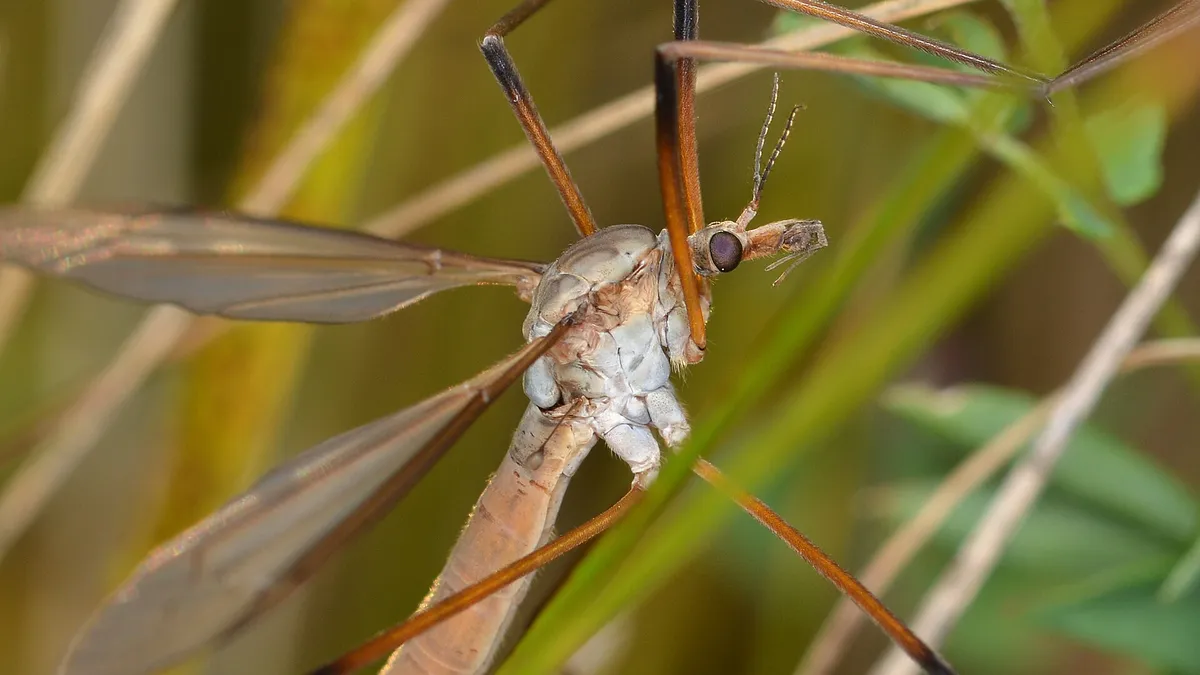
The adult emerges with soft wings and long, fragile legs that break off easily, which is why so many indoors are missing a leg or two. After a few hours its wings harden, and it flies at dusk to mate, males swarming as females fly in. The female lays her eggs over the next few days and dies.
What Affects How Long a Crane Fly Lives?
Most variation comes from the larval stage. The adult lives about the same length of time whatever happens, because it cannot feed properly, while the larva is at the mercy of its surroundings for a year.
- Temperature: warm soil speeds the larva along, while cool, damp ground stretches the cycle to two years. Cold also slows adults, which is why winter crane flies last longer.
- Moisture: leatherjackets need damp soil and die in drought, so wet years bring bigger emergences.
- Species: giant and aquatic species take up to two years, while lawn species finish in one.
- Predators: birds, frogs, beetles, and skunks eat larvae and adults in large numbers.
- Habitat: rich, moist turf supports more larvae than dry soil.
Adult feeding barely matters, since most adults eat too little for food to extend their lives, so target larvae. Compare our ladybug lifespan chart, where adults live longer because they keep feeding.
Do Crane Flies Bite?
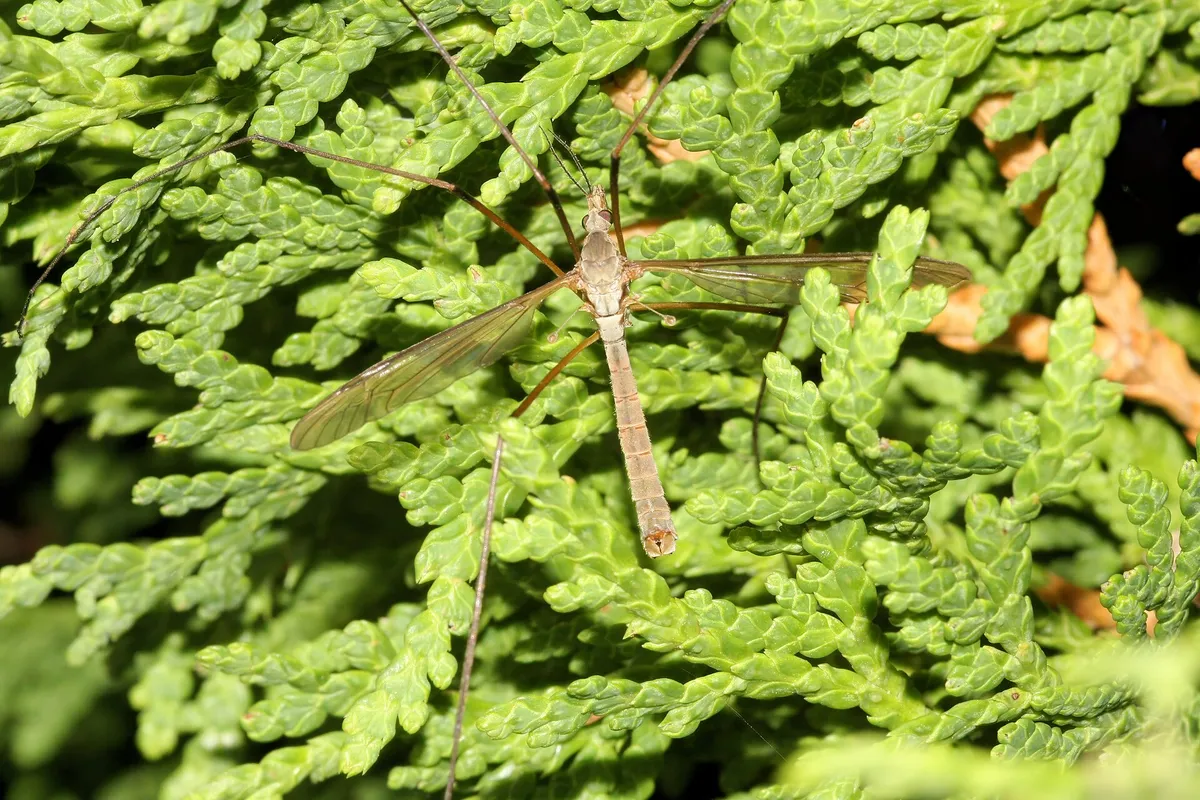
No, crane flies do not bite people or animals, and they cannot: they have no piercing mouthparts, no stinger, and no venom. The needle-like tip at the end of a female is her egg-laying organ, used to place eggs in the soil. The insect looks alarming at up to 65 mm wingspan, but it is harmless, and if one lands on your arm it will sit a moment and fly off.
The nickname mosquito hawk causes the confusion, but adults hunt nothing, eat no mosquitoes, and drink no blood.
Crane Fly vs Mosquito: How to Tell Them Apart
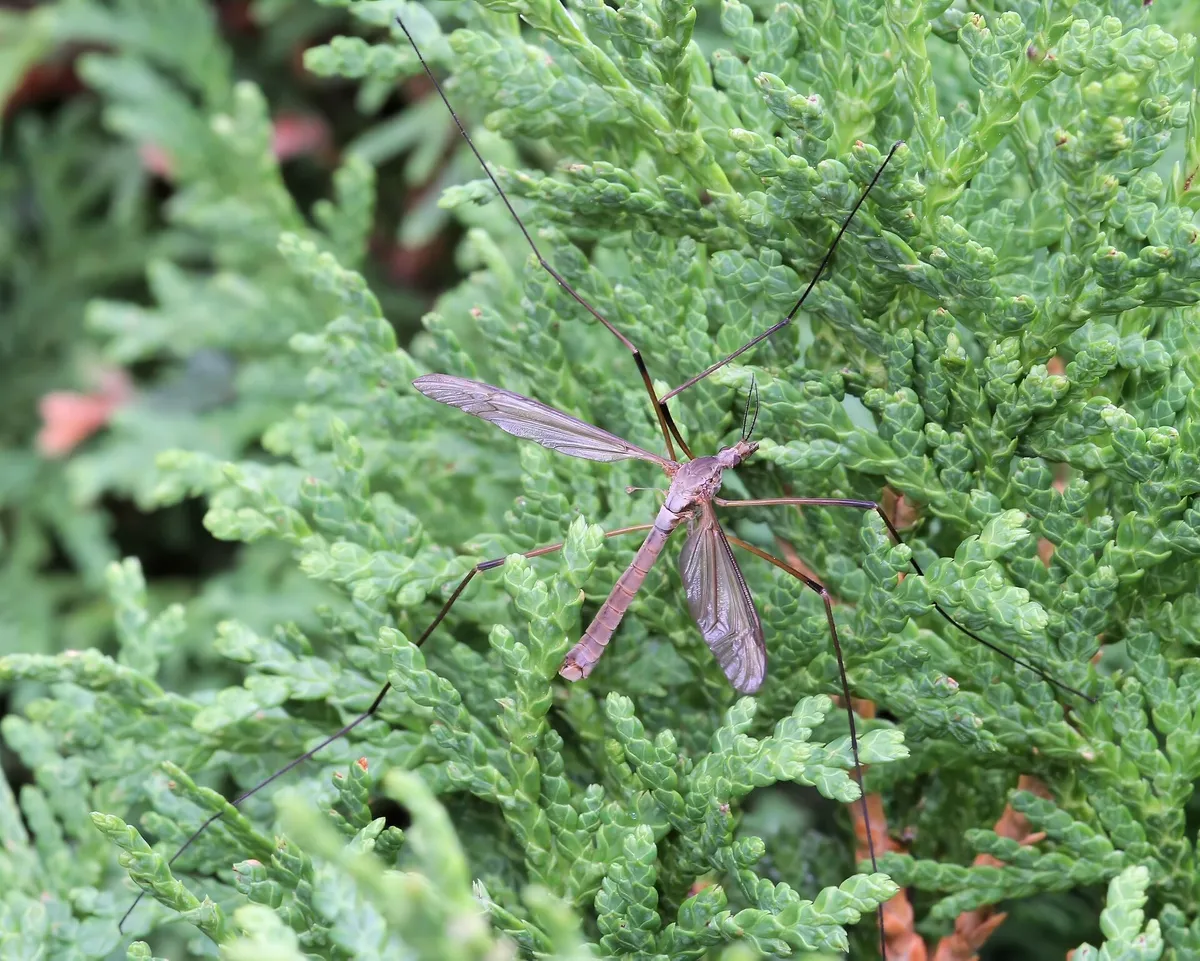
Crane flies and mosquitoes are both true flies, but easy to tell apart. Our fly identification chart covers other look-alikes side by side.
| Feature | Crane Fly | Mosquito |
|---|---|---|
| Size | 15 to 65 mm wingspan | 3 to 9 mm |
| Legs | Very long, fragile | Shorter and sturdier |
| Mouthparts | Short and blunt | Long proboscis |
| Bites humans | No | Yes, females bite |
| Flight | Slow and clumsy | Quick and agile |
| Adult lifespan | 3 to 15 days | 1 to 8 weeks |
| Larvae | Leatherjackets, soil | Wrigglers, water |
If a big, slow fly with trailing legs bumps into the window and never tries to bite, it is a crane fly. Mosquitoes are smaller, faster, and far more interested in you.
How to Reduce Crane Flies in Your Yard
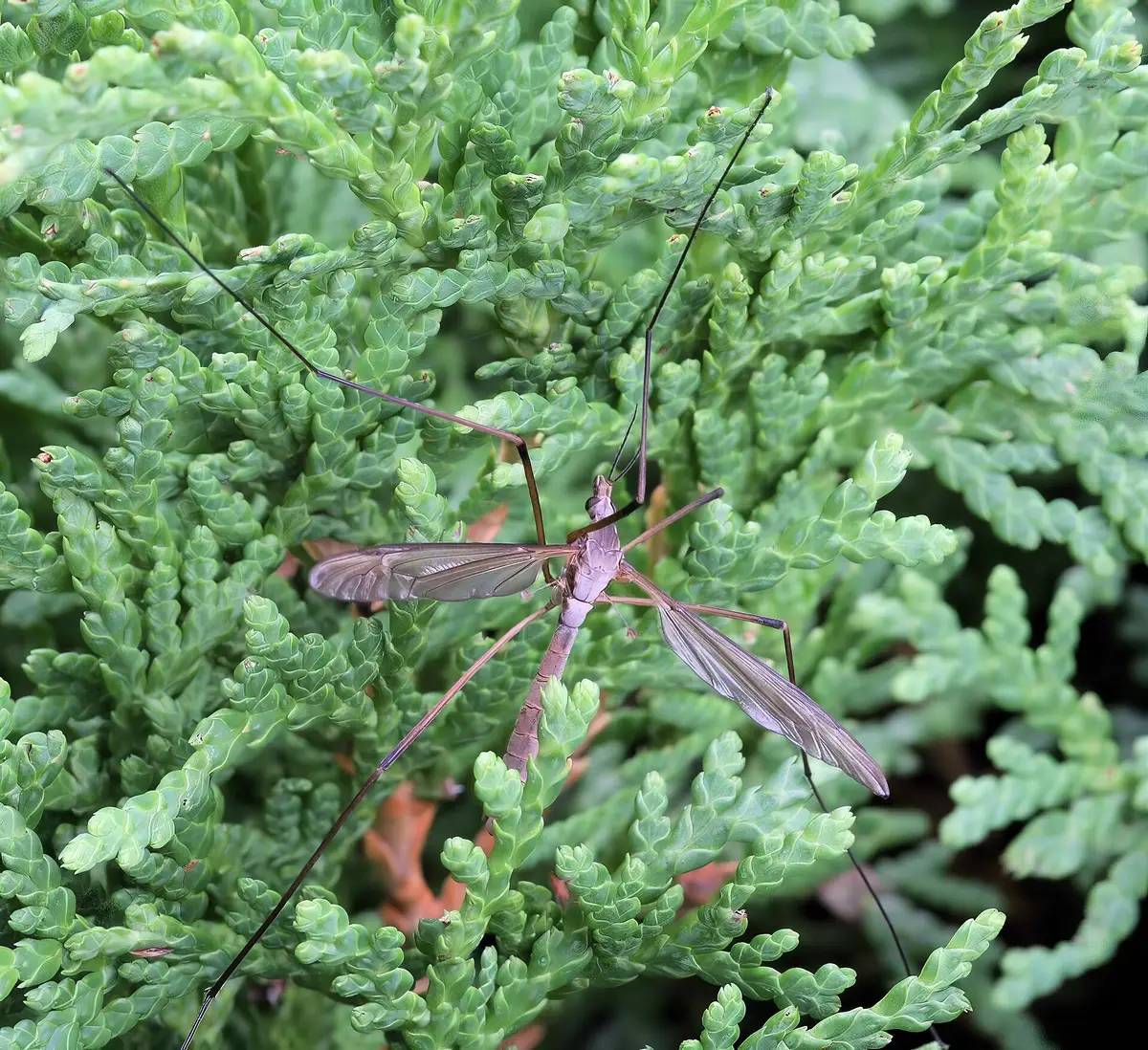
Crane flies are harmless, so many gardeners leave them alone. If leatherjackets are damaging your lawn, target the larvae: swatting flying crane flies does almost nothing, since females usually lay their eggs before you see them.
First check whether you have a problem: cut three sides of a 30 cm square of turf, peel it back, and count leatherjackets in the top 5 cm. More than 20 per square is where damage usually shows.
- Let the lawn dry between waterings: leatherjackets need damp soil, so deep, infrequent watering in late summer discourages egg laying.
- Aerate compacted soil: spiking or hollow-tine aeration in autumn improves drainage.
- Use nematodes: Steinernema feltiae nematodes, watered into damp soil in late summer, attack leatherjackets without chemicals.
- Encourage birds: starlings, crows, and rooks eat large numbers of leatherjackets.
- Overseed bare patches: thick turf recovers from light feeding far better than thin turf.
Avoid broad insecticide sprays: they kill far more than the target, including beetles that eat leatherjackets. Nematodes and good lawn care do the job with less damage.
Frequently Asked Questions
How long do crane flies live?
About 3 to 15 days as adults. The full life cycle takes about a year, up to two for giant and aquatic species.
Do crane flies bite?
No. Crane flies have no piercing mouthparts, so they cannot bite people or pets.
Do crane flies eat mosquitoes?
No. The nickname mosquito hawk is a myth: most adults barely eat at all, and their only job is to mate and lay eggs.
What is a leatherjacket?
The larva of a crane fly: a legless, grey-brown grub with tough skin that lives in soil, feeding on roots and rotting plants for 8 to 11 months.
A crane fly lives most of its life out of sight in the soil, and a few days in the air. That short adult life is enough, since each female lays hundreds of eggs. The next time one bounces off your window, you will know it is not a giant mosquito, just the final chapter of a year-long life underground.
Pingback: Gnat Lifespan Chart – Chart Identify
Pingback: Millipede Lifespan Chart – Chart Identify