

Finding a white, round egg in a tree hollow or an old barn can stop you in your tracks. Is it an owl egg, and which owl laid it? This owl egg identification chart covers 12 common US owls, with egg size, color, clutch size, incubation period, and nesting habitat for each one.
The real clues are size, clutch size, and nest location. A 56 mm egg on open tundra points to a snowy owl, while a 28 mm egg in a saguaro cactus hole points to an elf owl.
Owl Egg Identification Chart: 12 Common US Owls by Egg
All sizes below are approximate lengths in millimetres, with inches in brackets. Clutch size is the usual range for one nesting attempt.
| Owl Species | Egg Color | Egg Size (approx.) | Clutch Size | Incubation Period | Nesting Habitat |
|---|---|---|---|---|---|
| Barn Owl | White | 38-43 mm (1.5-1.7 in) | 4-7 | 29-34 days | Tree hollows, barns, and buildings |
| Great Horned Owl | Dull white | 53-56 mm (2.1-2.2 in) | 2-3 | 30-37 days | Abandoned nests, cliffs, and ledges |
| Snowy Owl | White | 51-57 mm (2.0-2.2 in) | 3-11 | 32-34 days | Ground scrape on open tundra |
| Barred Owl | White | 49-51 mm (1.9-2.0 in) | 2-4 | 28-33 days | Tree cavities and old nests |
| Eastern Screech Owl | White | 34-36 mm (1.3-1.4 in) | 3-5 | 26-30 days | Tree cavities and nest boxes |
| Western Screech Owl | White | 34-36 mm (1.3-1.4 in) | 3-5 | 26-30 days | Tree cavities and nest boxes |
| Burrowing Owl | White | 31-34 mm (1.2-1.3 in) | 6-12 | 28-30 days | Underground burrows |
| Long-eared Owl | White | 39-41 mm (1.5-1.6 in) | 4-8 | 25-30 days | Abandoned nests in dense trees |
| Short-eared Owl | White | 37-40 mm (1.5-1.6 in) | 4-7 | 24-28 days | Ground nest in open fields |
| Northern Saw-whet Owl | White | 30-33 mm (1.2-1.3 in) | 4-7 | 27-29 days | Tree cavities, often old woodpecker holes |
| Elf Owl | White | 27-29 mm (1.1 in) | 3-4 | 24 days | Tree cavities and saguaro cactus holes |
| Spotted Owl | White | 46-48 mm (1.8-1.9 in) | 2-3 | 28-32 days | Tree cavities and old nests in old forest |
Size alone rarely settles it, so combine size with clutch size and nest location.
What Owl Eggs Look Like
Owl eggs are almost perfectly round, closer to a ping pong ball than to the pointed oval of a chicken egg.

Color is the least helpful clue. Nearly every US owl lays plain white eggs, and no US owl lays blue, speckled, or spotted eggs. If the egg in front of you is blue or heavily speckled, it belongs to a different bird.
How to Identify an Owl Egg in 5 Steps
Step 1: Measure the length. Use a ruler or a coin for scale and take a photo. Length matters more than width, because owl eggs are close to round.
Step 2: Count the eggs. A clutch of 2 or 3 large eggs suggests a great horned or spotted owl. A clutch of 6 to 12 small eggs points toward a burrowing owl. Count without touching the eggs.
Step 3: Note the nest. Is it in a tree cavity, an old hawk nest, a barn, a burrow, or a scrape on open ground? The nest rules out more species than any other single clue.
Step 4: Look and listen for the parents. Owls are most active at dusk and dawn, so the call you hear is often the fastest way to confirm the species. Our owl identification chart can help you match the bird itself.
Step 5: Check the season and region. Snowy owls nest on Arctic tundra, elf owls only in the desert Southwest, and spotted owls only in old forests of the West.
Large Owl Eggs: Great Horned, Snowy, and Barred Owls
The great horned owl, snowy owl, and barred owl lay the largest US owl eggs, all around 50 mm long, so the nest and clutch tell them apart.
The great horned owl lays 2 or 3 dull white eggs, usually in an abandoned hawk or crow nest high in a tree, or on a cliff ledge. It nests earlier in the year than most owls.

The snowy owl is the only one of the three that nests on the ground. The female scrapes a shallow hollow on open tundra and lays 3 to 11 white eggs.

The barred owl lays 2 to 4 white eggs in a tree cavity or an old nest, and it prefers mature forest near water.

Medium Owl Eggs: Barn, Long-eared, and Short-eared Owls
Three owls in the middle of the chart lay eggs of about 38 to 41 mm, and again the nest separates them.
The barn owl lays 4 to 7 white eggs, often in a barn, a church tower, a nest box, or a hollow tree. It is the only owl here that commonly nests inside buildings, so it is the likely answer for an egg in a barn loft. It lays its eggs over several days, so the chicks hatch at different sizes. See our guide to the types of owls found across the United States.

The long-eared owl lays 4 to 8 white eggs in an abandoned crow or magpie nest hidden in dense trees.
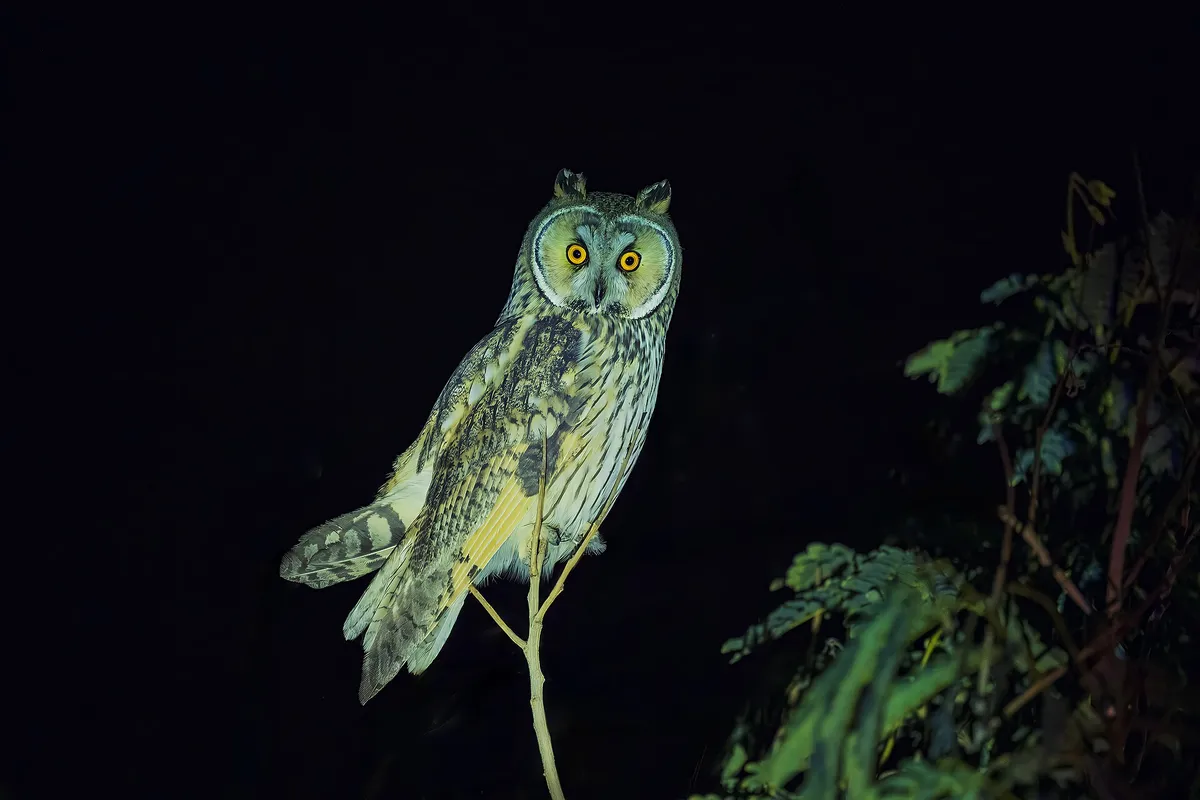
The short-eared owl is the ground nester of the three. It lays 4 to 7 white eggs in a shallow scrape hidden in grass in an open field or marsh. Unlike most owls, it often hunts in daylight.

Small Owl Eggs: Screech Owls, Saw-whet, Burrowing, and Elf Owls
Several small species overlap in size, so clutch size and habitat matter most here.
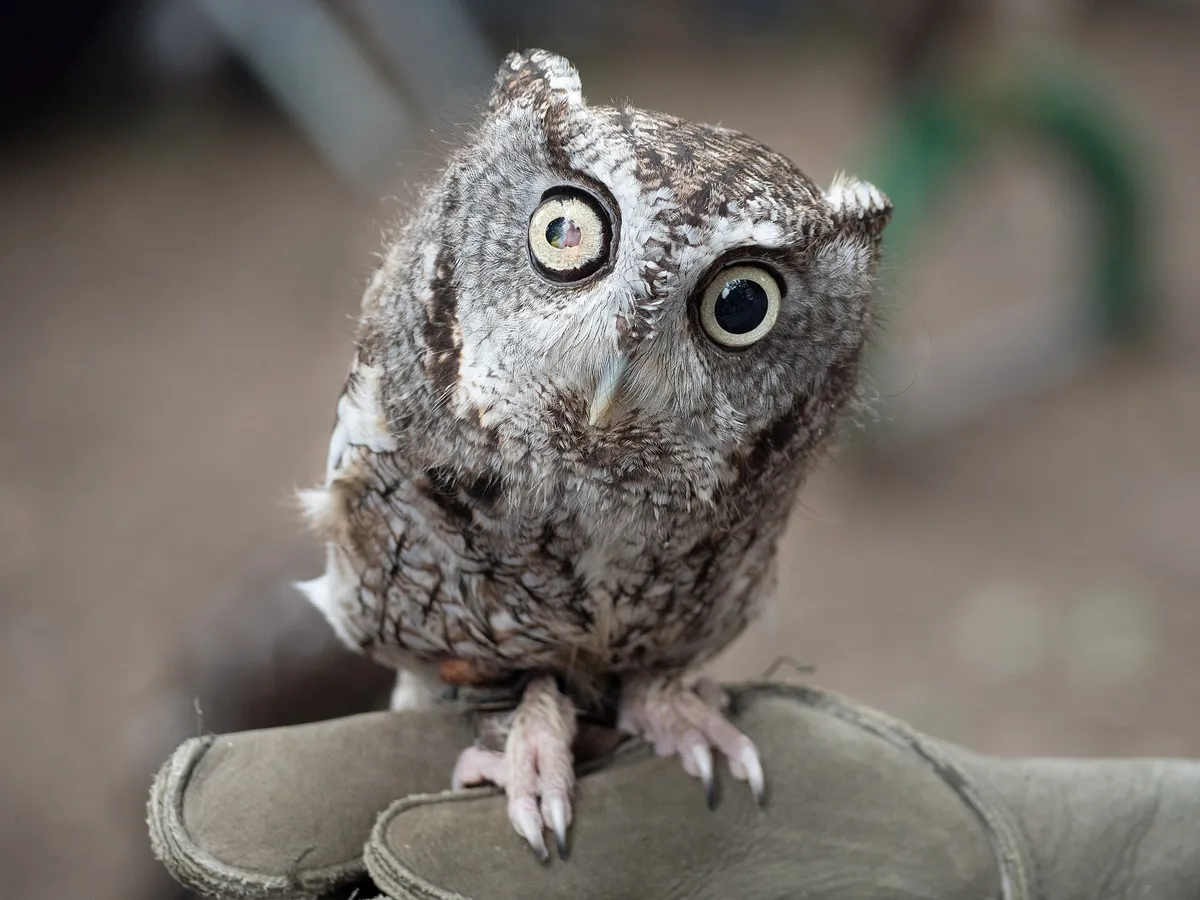
The eastern and western screech owls lay almost identical eggs: white, about 35 mm long, in clutches of 3 to 5, in a tree cavity or nest box. You cannot tell the two apart from the egg alone. Use range instead: eastern in the East, western in the West.
The burrowing owl is the easiest small owl egg to identify, because no other US owl nests underground. It lays 6 to 12 white eggs in a burrow in open grassland or desert.

The northern saw-whet owl lays 4 to 7 white eggs, about 32 mm long, in a tree cavity, often an old woodpecker hole in northern forest.

The elf owl lays the smallest eggs on this list, about 28 mm long, in clutches of 3 or 4. It nests in old woodpecker holes in trees and in saguaro cactus in the desert Southwest.

Spotted Owl Eggs and Where to Find Them
The spotted owl lays 2 or 3 white eggs, about 47 mm long, in a tree cavity or an old nest in old-growth forest in the West. Incubation lasts 28 to 32 days. Spotted owl eggs are easy to confuse with barred owl eggs. The difference is habitat: spotted owls need old forest, while barred owls are far more flexible.

Owl Eggs vs Other Bird Eggs
Before you settle on an owl, rule out the birds that lay similar looking eggs. A round white egg in a tree cavity could belong to a wood duck, a kestrel, or a screech owl. See our bird egg identification chart for the full comparison.
Songbird eggs are usually smaller, colored, or speckled, so a plain white egg over 30 mm is rarely a songbird egg. One common mix-up is the bluebird: eastern bluebirds lay pale blue eggs in nest boxes, so if the eggs in the nest box are blue, check our blue bird egg identification chart instead.
What to Do If You Find an Owl Egg
All owls in the United States are protected by federal law, and their eggs are protected too. Do not pick up an egg, move a nest, or keep an egg you find.
If the egg is in a nest and the parents are nearby, leave it alone. A short absence from the nest is normal. If the egg is on the ground, cold, and clearly abandoned, or if you find an injured owl, call a licensed wildlife rehabilitator in your state.
Frequently Asked Questions
What color are owl eggs?
Owl eggs are white or dull white. Some look slightly creamy, and old eggs can stain brown from the nest, but no US owl lays blue, speckled, or spotted eggs.
How big is an owl egg?
Elf owl eggs are about 28 mm long, screech owl and saw-whet eggs about 32 to 35 mm, barn owl eggs about 40 mm, and great horned and snowy owl eggs about 56 mm.
How many eggs do owls lay?
Most US owls lay 2 to 7 eggs. Great horned and spotted owls lay only 2 or 3, while burrowing owls lay 6 to 12 and snowy owls lay 3 to 11 depending on food supply.
How long does it take for owl eggs to hatch?
Incubation lasts about 24 to 37 days depending on the species. Elf owls hatch in about 24 days, screech owls in 26 to 30 days, and great horned owls in 30 to 37 days.
Do owls build their own nests?
Most owls do not build nests. They use old nests built by hawks, crows, or magpies, or they lay eggs in tree cavities, burrows, barns, or a scrape on the ground.
Conclusion
Identifying an owl egg comes down to three things: how long the egg is, how many eggs are in the clutch, and where the nest sits. Start with the chart at the top of this page, measure the egg, count the clutch, and note the nest.
Owl eggs are a quiet sign that wild birds are raising young close by, so enjoy the discovery and keep your distance.

