

Not every shark gives birth to live young. About 40 percent of shark species lay eggs, each one inside a tough, leathery case that beachcombers call a mermaid’s purse. This shark egg identification chart covers 12 species, so you can match the case in your hand to the shark that laid it.
What Is a Shark Egg Case (And Why Is It Called a Mermaid’s Purse?)
A shark egg case is a horny capsule secreted around the egg in the female’s oviduct. Inside, the pup grows on a yolk sac. The nickname comes from the shape: rectangular cases with curled tendrils look like small handbags.

Only a minority of sharks lay eggs. The egg layers are mostly bottom dwellers: horn sharks, catsharks, and bamboo sharks. Great whites, tiger sharks, and makos give birth to live pups instead.
Shark Egg Identification Chart: 12 Species by Egg Case
All sizes and times below are approximate: water temperature changes how fast a pup develops.
| Species | Egg Case Shape | Egg Case Size (approx.) | Color | Incubation Time (approx.) | Where the Egg Case Is Found |
|---|---|---|---|---|---|
| Horn shark (Heterodontus francisci) | Spiral corkscrew | 10 to 13 cm long | Dark brown | 6 to 9 months | Wedged into rocky crevices on reefs, eastern Pacific |
| Port Jackson shark (Heterodontus portusjacksoni) | Spiral with ridges | About 15 cm long | Dark brown | 10 to 12 months | Shallow rocky reefs, southern Australia |
| Swell shark (Cephaloscyllium ventriosum) | Oblong | 8 to 10 cm long | Brown to greenish brown | 9 to 12 months | Kelp forests and rocky reefs, eastern Pacific |
| Small-spotted catshark (Scyliorhinus canicula) | Rectangular | About 6 cm long | Pale brown to yellowish | 5 to 11 months | Attached to seaweed and rocks, northeast Atlantic |
| Chain catshark (Scyliorhinus retifer) | Rectangular | 5 to 6 cm long | Amber brown | About 8 months | Deep reefs and canyons, western Atlantic |
| Cloudy catshark (Scyliorhinus torazame) | Rectangular | About 6 cm long | Brown with dark spots | 7 to 8 months | Rocky bottoms, northwest Pacific |
| Nursehound (Scyliorhinus stellaris) | Rectangular | 10 to 13 cm long | Pale brown with dark spots | 9 to 12 months | Rocky reefs, northeast Atlantic and Mediterranean |
| Whitespotted bamboo shark (Chiloscyllium plagiosum) | Rectangular | 10 to 13 cm long | Pale brown | 3 to 4 months | Coral reefs, Indo-Pacific |
| Brownbanded bamboo shark (Chiloscyllium punctatum) | Rectangular | 12 to 15 cm long | Pale brown | 3 to 4 months | Shallow reefs and tide pools, Indo-Pacific |
| Zebra shark (Stegostoma tigrinum) | Oblong purse | About 17 cm long | Dark brown to purple | 4 to 6 months | Sandy reef bottoms, Indo-Pacific |
| Epaulette shark (Hemiscyllium ocellatum) | Rectangular | About 10 cm long | Brown | 3 to 4 months | Shallow coral reefs, northern Australia and New Guinea |
| Pyjama shark (Poroderma africanum) | Rectangular | 9 to 10 cm long | Dark brown | 5 to 6 months | Kelp and rocky reefs, South Africa |
Size is your fastest clue. A case longer than 15 cm is almost certainly a zebra shark. A spiral case can only be a horn shark or a Port Jackson shark, and the Port Jackson case is the bigger of the two. Small rectangular cases under 7 cm point to the catshark family.
How to Read the Chart: Shape, Size, Color, and Where It Was Found
Start with shape. Spirals belong to the horn shark family, rectangular cases with tendrils belong to catsharks and bamboo sharks, and oblong cases belong to swell sharks and zebra sharks. Long curly tendrils mean the case was anchored to seaweed or rock.
Next, measure it. Size is fairly fixed within a species, so a 6 cm case and a 13 cm case are different sharks even when they look alike. Color is a weaker clue: fresh cases are pale and darken as they harden, and surf-worn cases fade. Location often settles it: a spiral case on a California beach is a horn shark case, since Port Jackson sharks live only around southern Australia.

Spiral Egg Cases: Horn Shark and Port Jackson Shark
The spiral case is the most distinctive shape in this chart. The female lays a soft case, picks it up in her mouth, and wedges it into a rock crevice, where it hardens into a corkscrew.
Horn shark cases are about 10 to 13 cm long and dark brown like kelp, so they blend into the reef. The pup takes 6 to 9 months to hatch. Port Jackson shark cases are bigger, about 15 cm long, with strong ridges along the spiral, and the pup takes 10 to 12 months, a long incubation.

Rectangular Egg Cases: Catsharks, Bamboo Sharks, and the Epaulette Shark
Rectangular cases are the most common shape. Each case is a flat, leathery pouch with a tendril at each corner, which the female wraps around seaweed or rock.
The small-spotted catshark is the classic example: a case only about 6 cm long, pale brown, found all around the northeast Atlantic, often tangled in seaweed after storms. The nursehound is its much bigger cousin, with a case twice the length. The chain catshark and cloudy catshark sit in between. Location separates them: chain catsharks live in the western Atlantic, cloudy catsharks in the northwest Pacific.
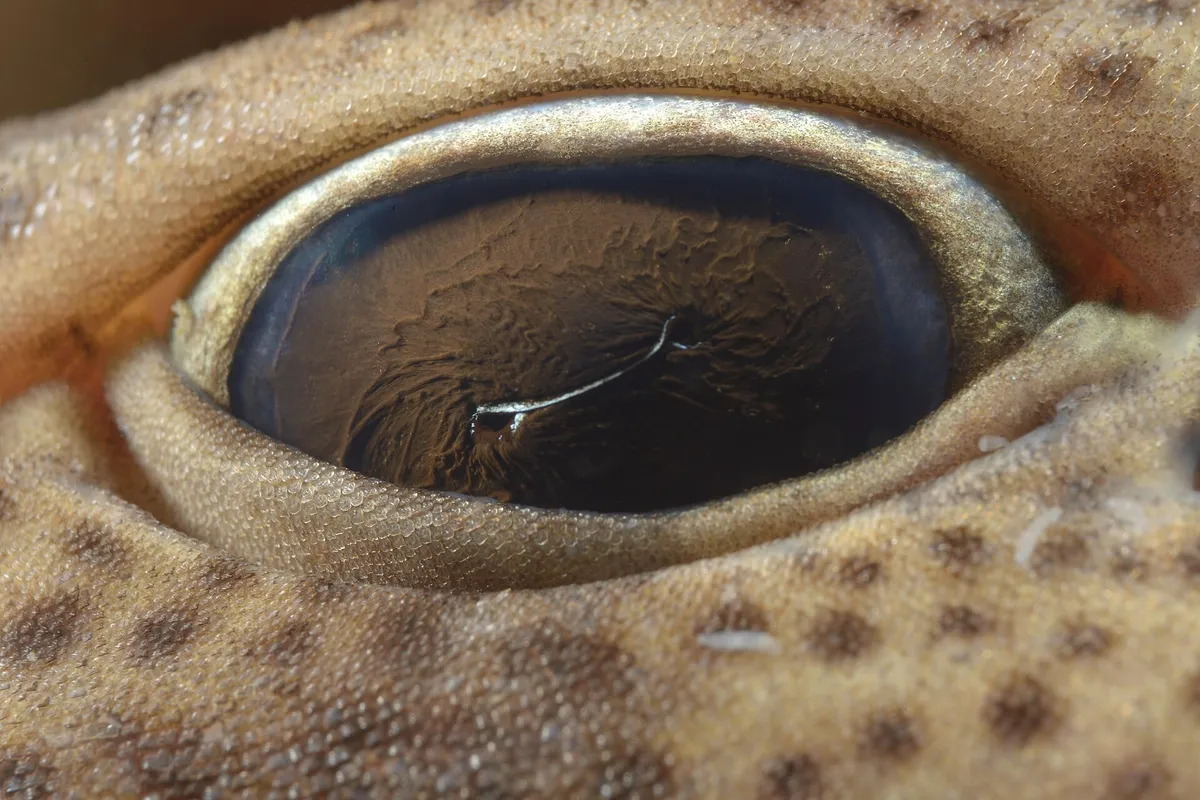
Bamboo sharks lay some of the biggest rectangular cases: 10 to 13 cm for the whitespotted bamboo shark and 12 to 15 cm for the brownbanded bamboo shark. Yet both hatch in only 3 to 4 months, much faster than the catsharks, because warm reef water speeds development up.

The epaulette shark, famous for walking on its fins across reef flats at low tide, lays a rectangular case about 10 cm long that also hatches in 3 to 4 months. The pyjama shark of South Africa lays a similar case, 9 to 10 cm, dark brown, with a 5 to 6 month incubation.

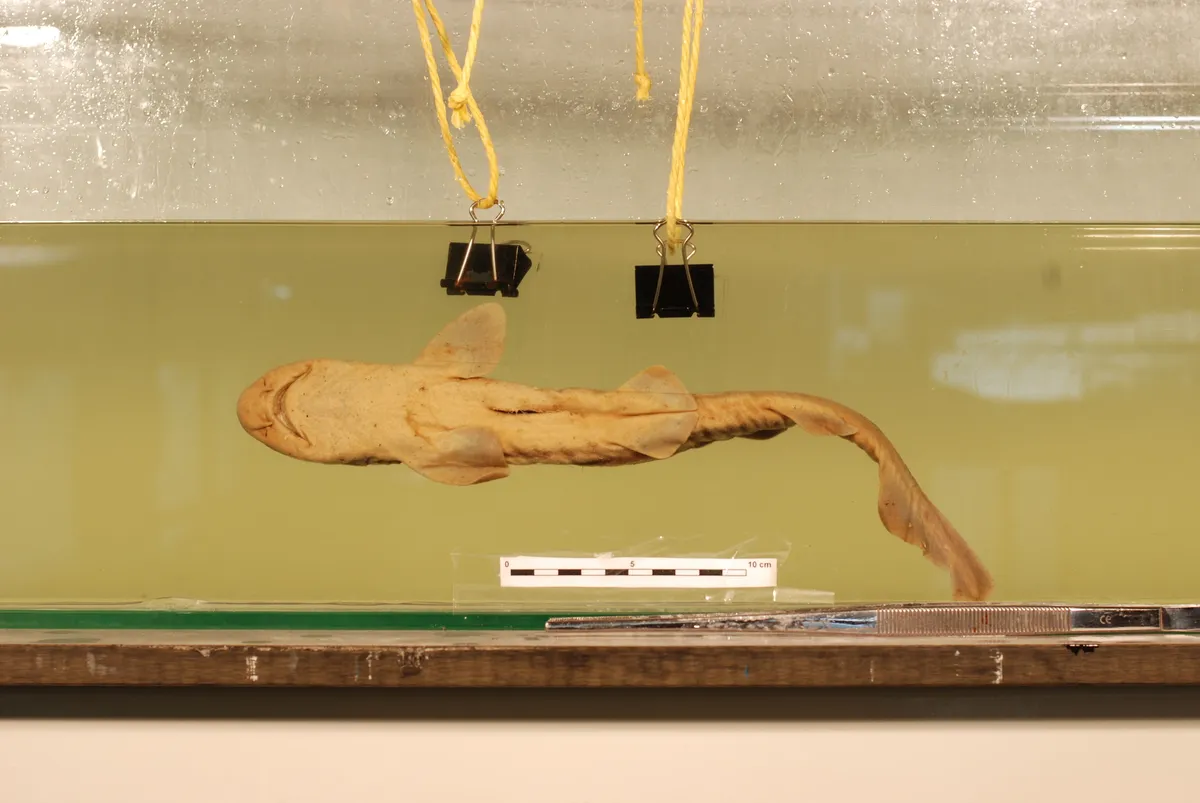
Oblong Egg Cases: Swell Shark and Zebra Shark
Oblong cases are smooth and wider in the middle, with small tendrils rather than long curly ones. The swell shark case is 8 to 10 cm long and brown to greenish brown, laid in kelp forests off the eastern Pacific. Its eggs take 9 to 12 months to hatch, a long wait for a small case.

The zebra shark case is the giant of this chart. At about 17 cm long, dark brown to purple, with fine hair-like fibers along the sides, it is hard to mistake for anything else. Pups hatch after 4 to 6 months at 20 to 36 cm long.
The Mermaid’s Purse in History
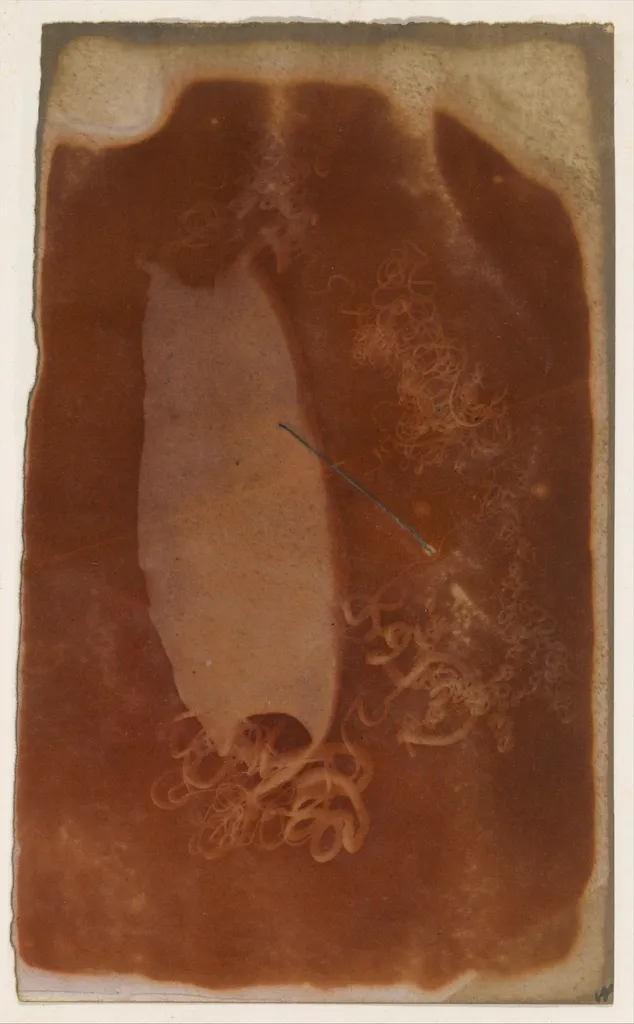
People have picked up shark egg cases for far longer than they have understood them: early naturalists photographed them as curiosities, and beachcombers kept them as lucky charms. The tendrils, ridges, and shape are the shark’s signature.
The same approach works for other eggs: our bird egg identification chart covers 20 common species, and our dinosaur egg identification chart compares 12 fossil eggs.
Shark Egg Case or Skate Egg Case? How to Tell Them Apart
This is the most common mix-up in shark egg identification. Skates lay rectangular cases too. The difference is in the corners: skate cases have stiff, pointed horns and feel flat and papery, while shark cases have flexible tendrils and feel thicker and more leathery. Tendrils mean shark, stiff horns mean skate.
Sharks That Do Not Lay Eggs (Do Not Be Fooled)
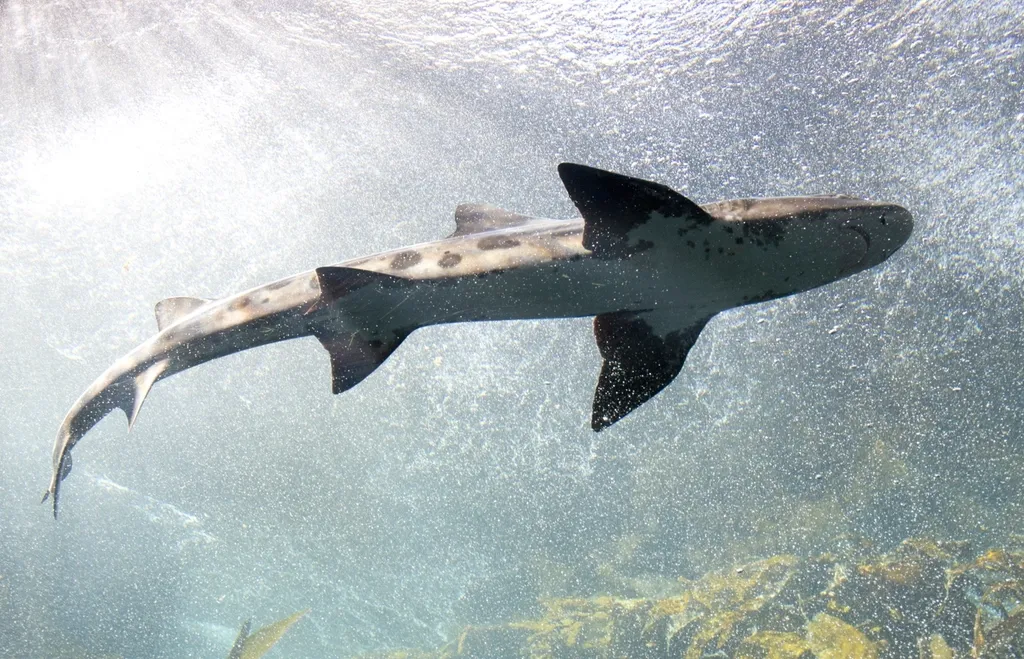
Some guides list nurse sharks and wobbegongs as egg layers. They are not: both give birth to live pups, so any case attributed to them belongs to another species. Leopard sharks and blind sharks do not lay eggs either.
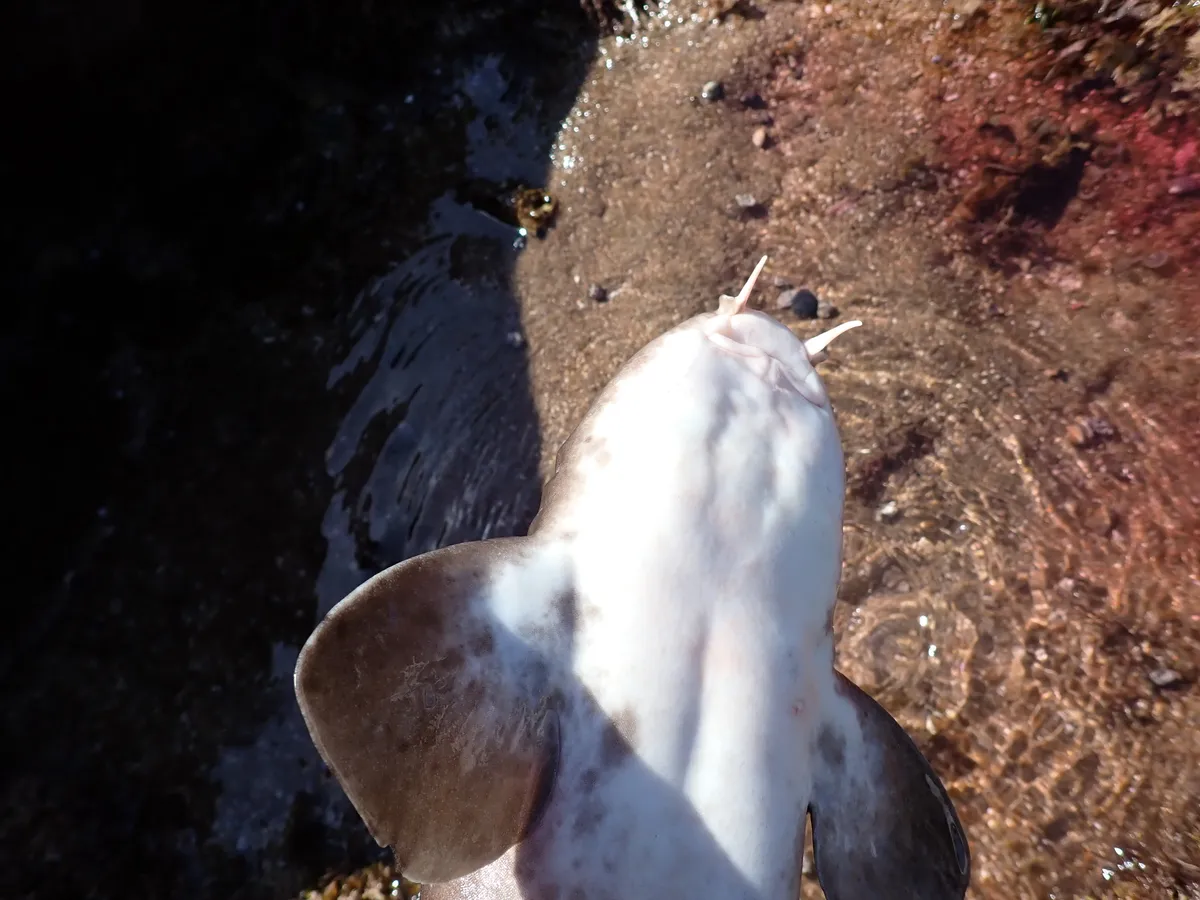
If a guide tells you a nurse shark laid the case in your hand, the guide is wrong: the case probably came from a catshark or a bamboo shark instead. Stick to the 12 confirmed egg layers in the table above. For the full family picture, see our types of sharks guide, which covers 20 species.
Found a Shark Egg Case on the Beach? What to Do Next
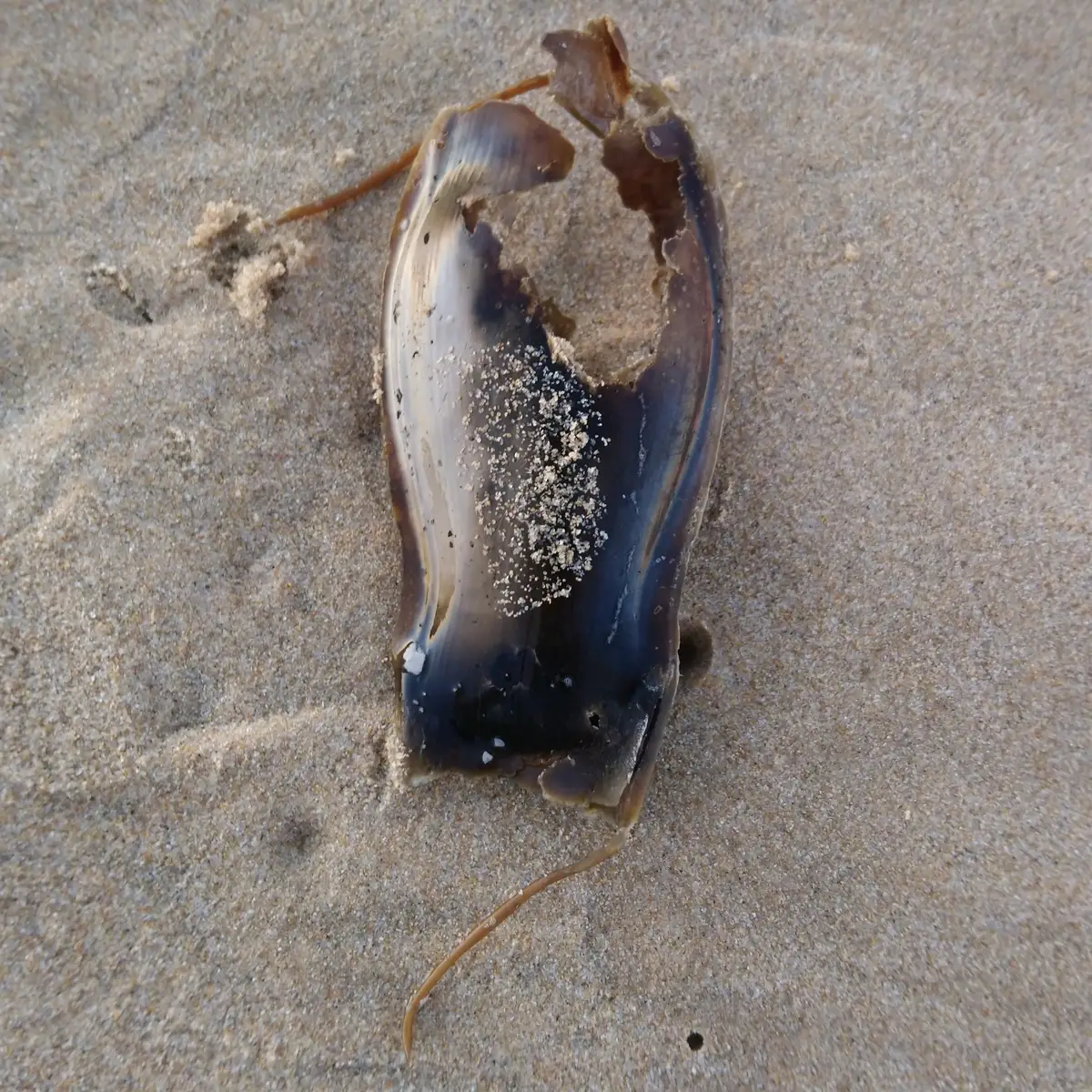
First, check whether anything is still inside. Hold the case gently up to the light: a live case is heavy and may show a moving shadow, while an empty case is light and dry, often with a slit where the pup pushed out.
If the case is alive and still in the water, leave it where it is. Moving it can break its tendrils, and a case out of water dries fast. If it has washed up above the tide line and is still alive, place it gently back in a rock pool or shallow water. Never pry a live case open. Empty cases are fine to collect, rinse, and dry in the shade.
Frequently Asked Questions
What is a shark egg case called?
A shark egg case is commonly called a mermaid’s purse. The name comes from the shape: rectangular cases with tendrils look like small handbags.
How long does it take for a shark egg to hatch?
It depends on the species. Bamboo and epaulette sharks hatch in about 3 to 4 months, Port Jackson sharks in 10 to 12.
Which sharks lay eggs?
About 40 percent of shark species lay eggs, mostly bottom dwellers: horn sharks, Port Jackson sharks, swell sharks, catsharks, bamboo sharks, zebra sharks, epaulette sharks, and pyjama sharks.
Can you tell a shark egg case from a skate egg case?
Yes. Shark cases have flexible tendrils and feel thick and leathery. Skate cases have short, stiff horns at the corners and feel flat and papery.
Is it safe to pick up a shark egg case on the beach?
An empty case is safe to pick up and keep. Leave a live case alone in the water, or place it gently back in a rock pool if it has washed up.
Conclusion
A shark egg case is a small thing with a lot to say. Shape points to the family, size to the species, and the beach finishes the match. Spiral cases are unmistakable, rectangular cases reward a careful look at size and color, and the giant zebra shark case is in a class of its own.
Take a ruler and the table above on your next beach walk, and the next mermaid’s purse you find will have a name. When the case is empty, keep it. When it is alive, put it back in the water.

