

Stand at the edge of a marsh at dawn and you might hear them before you see them: a rolling, trumpeting call carrying a mile across the water. Those are cranes, some of the tallest flying birds on Earth. There are 15 types of crane birds in the world, all in one family, Gruidae, from the tiny demoiselle of the Asian steppe to the sarus, the tallest flying bird alive. This guide puts every species in one chart with heights, wingspans, habitats and conservation status, then shows you how to tell them apart.
Cranes live on five continents, everywhere except South America and Antarctica. If you enjoy bird charts, our guide to the types of birds covers the wider families these wetland giants belong to.
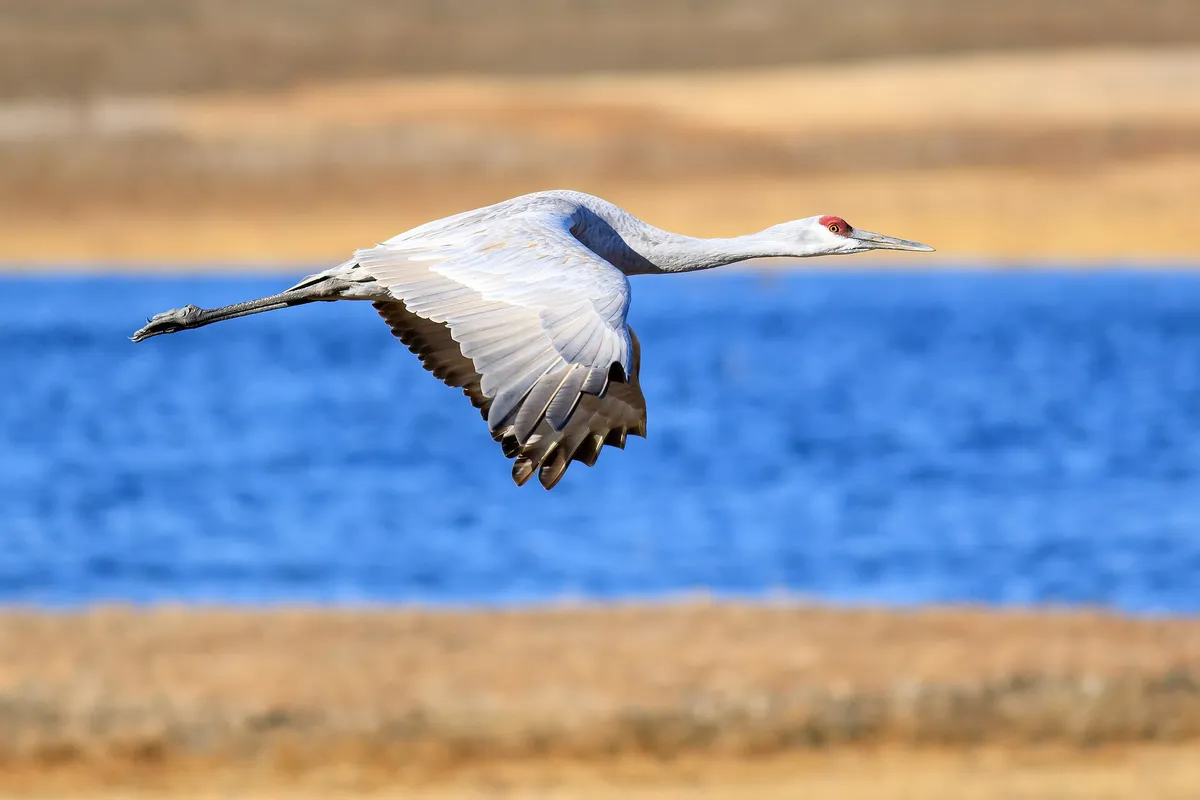
Types of Crane Birds: The Complete Chart
The table below is the quick reference for the whole article. Heights are standing heights for adults, wingspans are typical adult ranges, and statuses follow the IUCN Red List. Species are ordered from smallest to tallest.
| Crane species | Scientific name | Height | Wingspan | Where it lives | IUCN status |
|---|---|---|---|---|---|
| Demoiselle crane | Grus virgo | 85 to 100 cm | 155 to 180 cm | Central Asia, winters in India and Africa | Least Concern |
| Hooded crane | Grus monacha | 91 to 100 cm | 160 to 180 cm | East Asia | Vulnerable |
| Grey crowned crane | Balearica regulorum | 100 to 109 cm | 180 to 200 cm | Eastern and southern Africa | Endangered |
| Black crowned crane | Balearica pavonina | 100 to 105 cm | 180 to 200 cm | West and East Africa | Vulnerable |
| Sandhill crane | Antigone canadensis | 100 to 120 cm | 160 to 200 cm | North America and northeast Siberia | Least Concern |
| Common crane | Grus grus | 100 to 130 cm | 180 to 240 cm | Europe and northern Asia | Least Concern |
| Blue crane | Grus paradisea | 110 to 120 cm | 180 to 200 cm | South Africa | Vulnerable |
| Brolga | Antigone rubicunda | 110 to 140 cm | 170 to 240 cm | Australia and New Guinea | Least Concern |
| White-naped crane | Antigone vipio | 112 to 125 cm | 200 to 210 cm | East Asia | Vulnerable |
| Siberian crane | Leucogeranus leucogeranus | 115 to 125 cm | 210 to 230 cm | Arctic Russia, winters in China, Iran and India | Critically Endangered |
| Black-necked crane | Grus nigricollis | 115 to 139 cm | 180 to 200 cm | Tibetan Plateau and Himalayan valleys | Near Threatened |
| Whooping crane | Grus americana | 132 to 152 cm | 200 to 230 cm | North America | Endangered |
| Red-crowned crane | Grus japonensis | 150 to 158 cm | 200 to 250 cm | East Asia | Endangered |
| Wattled crane | Grus carunculata | 150 to 175 cm | 230 to 260 cm | Sub-Saharan African wetlands | Vulnerable |
| Sarus crane | Antigone antigone | 152 to 176 cm | 220 to 280 cm | South and Southeast Asia, northern Australia | Vulnerable |
Two patterns stand out. The most threatened cranes are the big wetland specialists of Asia and Africa. The healthiest populations belong to adaptable species, like the sandhill and common crane, that feed in farm fields as well as marshes.
Crane, Heron or Stork? How to Tell Them Apart
Beginners mix cranes up with herons and storks, and the silhouette is similar: long legs, long neck, big wings. Three field marks separate them fast. Cranes fly with their necks stretched straight out, while herons fold theirs back into an S shape. Cranes also feed on land far more, striding through grass picking up grain, insects and small animals, instead of standing statue-still at the water edge. Finally, listen. A crane’s windpipe loops inside its breastbone like a brass instrument, which is why a sandhill or whooping crane can be heard a mile away. Herons croak. Cranes trumpet.
Within the cranes themselves, look at the head. Crowned cranes carry a stiff spray of golden feathers, and several species show bare red skin on the face or crown. The two crowned cranes are also the only cranes that regularly roost in trees, thanks to a long hind toe that grips a branch.
North America’s Cranes: Sandhill and Whooping
North America has just two species, at opposite ends of the conservation story. The sandhill crane is the most numerous crane on Earth, with a population well over half a million. Every spring, hundreds of thousands gather on Nebraska’s Platte River, fuelling up on waste corn before scattering to breeding grounds from Alaska to Siberia.
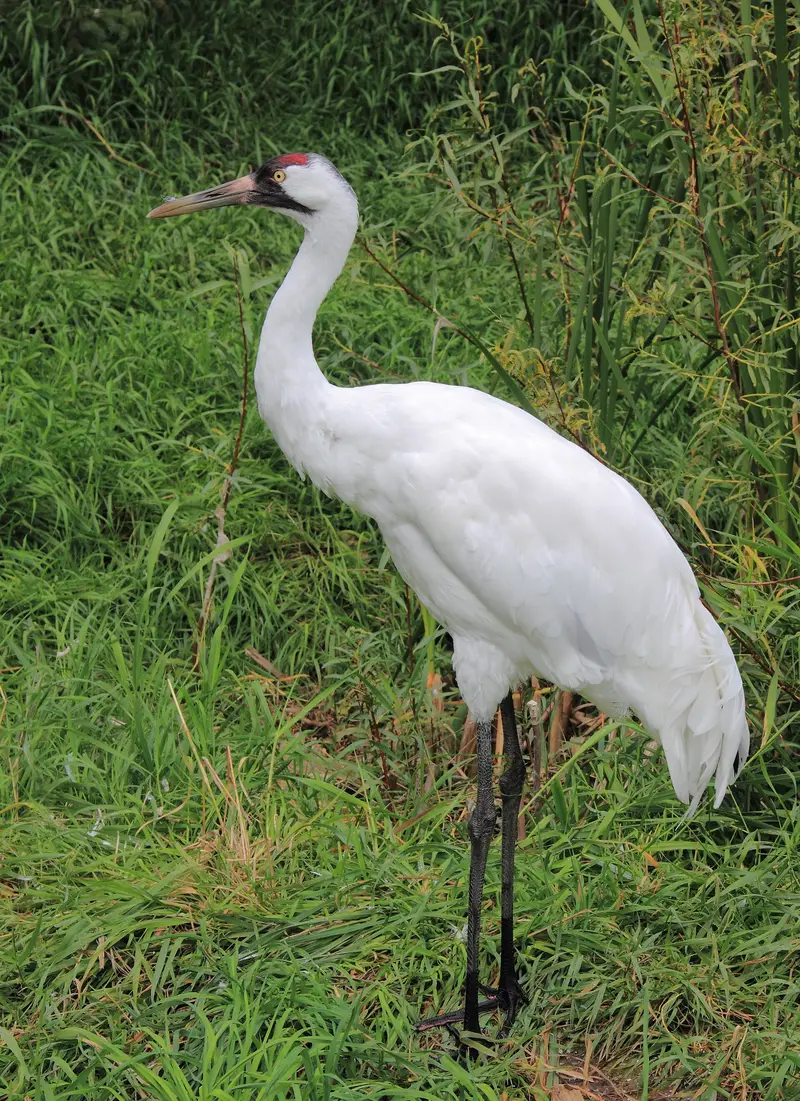
The whooping crane is the comeback story. Hunting and wetland loss cut the wild flock to about 21 birds in the 1940s. Captive breeding, protected migration corridors and reintroduced flocks have lifted the total past 800, but every individual still counts. At up to 152 cm it is the tallest bird in North America, snow white with black wingtips and a red crown. Our dove identification chart shows the other end of the size scale.
Africa’s Cranes: Crowned, Blue and Wattled
Africa holds four species, and two wear the family’s most famous ornament. The grey crowned crane and black crowned crane both carry a halo of stiff golden bristles, with cheek patches of white and red. The grey crowned is Uganda’s national bird and appears on its flag, yet it is Endangered because its marshes are drained and its chicks are taken for the pet trade.
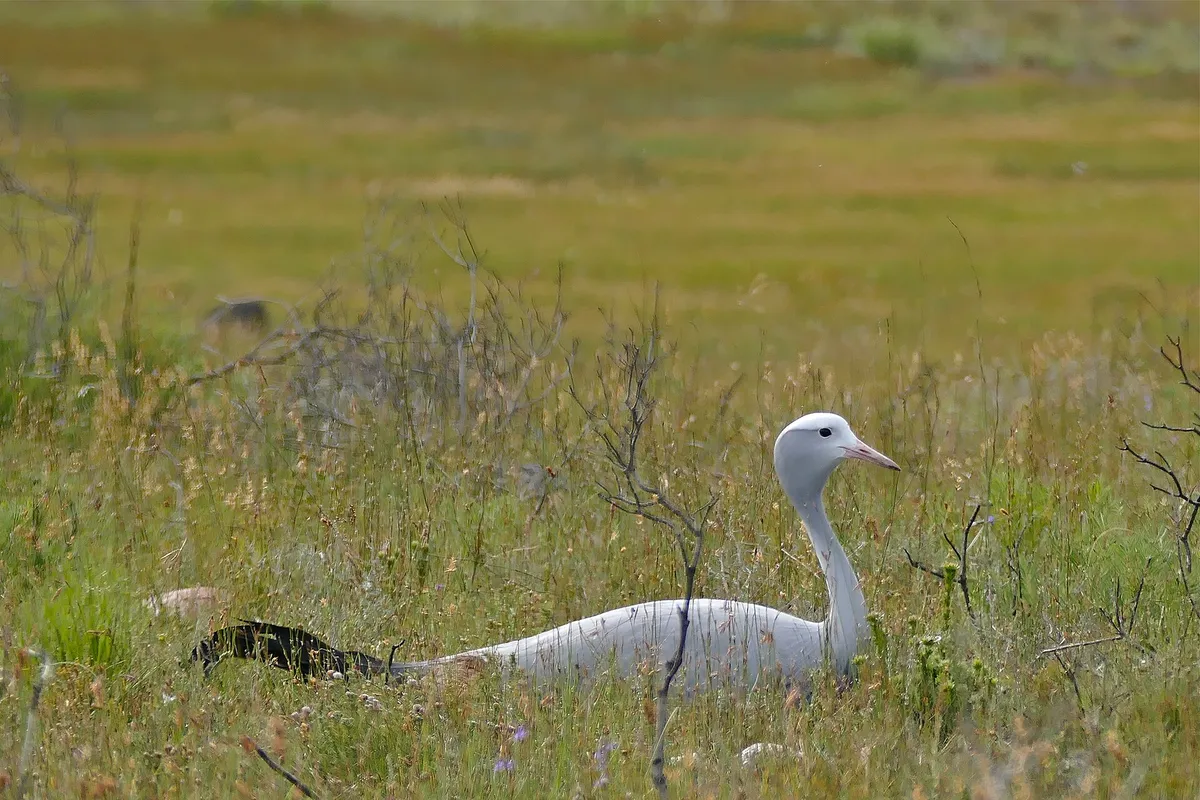
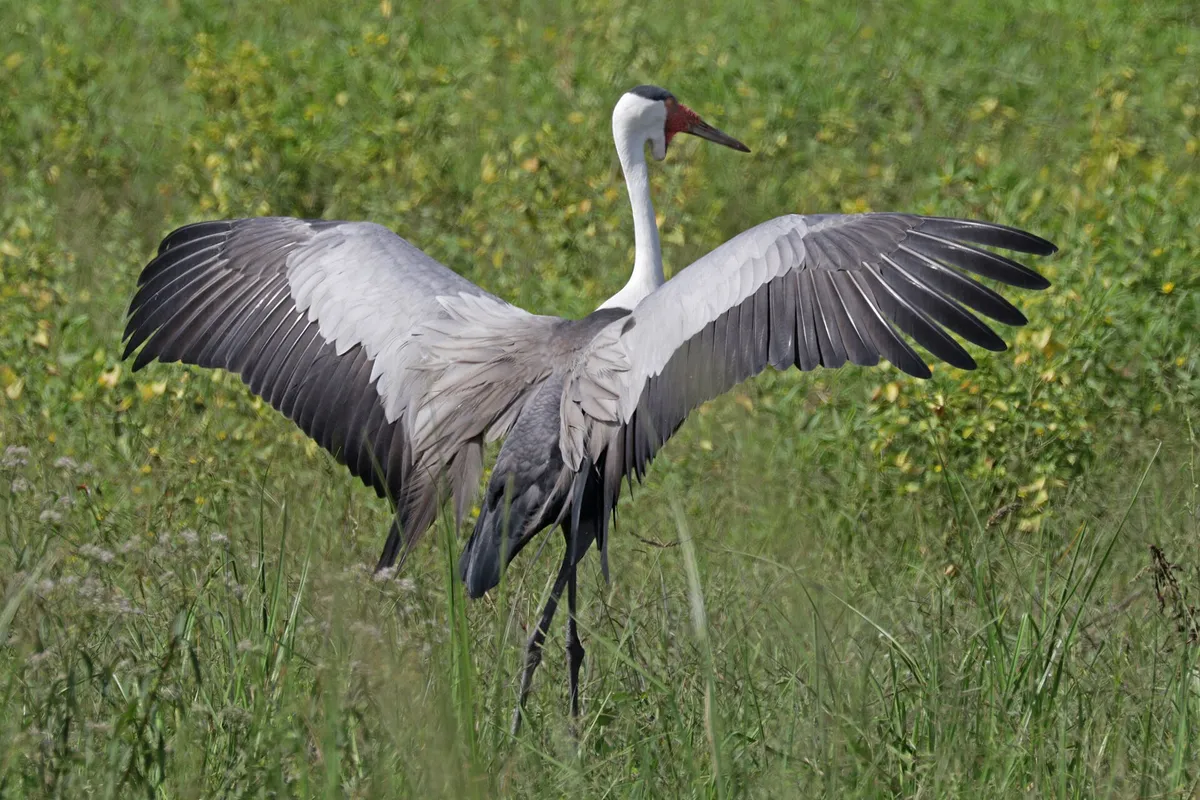
The blue crane, South Africa’s national bird, is barely blue at all: a soft blue-grey bird with long wing feathers that sweep the ground like a train, and it prefers dry grassland over deep marsh. The wattled crane goes the other way. It is the largest crane in Africa and the most tied to water, breeding in vast floodplains like Zambia’s Kafue Flats, where it feeds on the tubers of water lilies. The red wattles hanging from its chin give it its name.
Asia’s Cranes: The Rare Heart of the Family
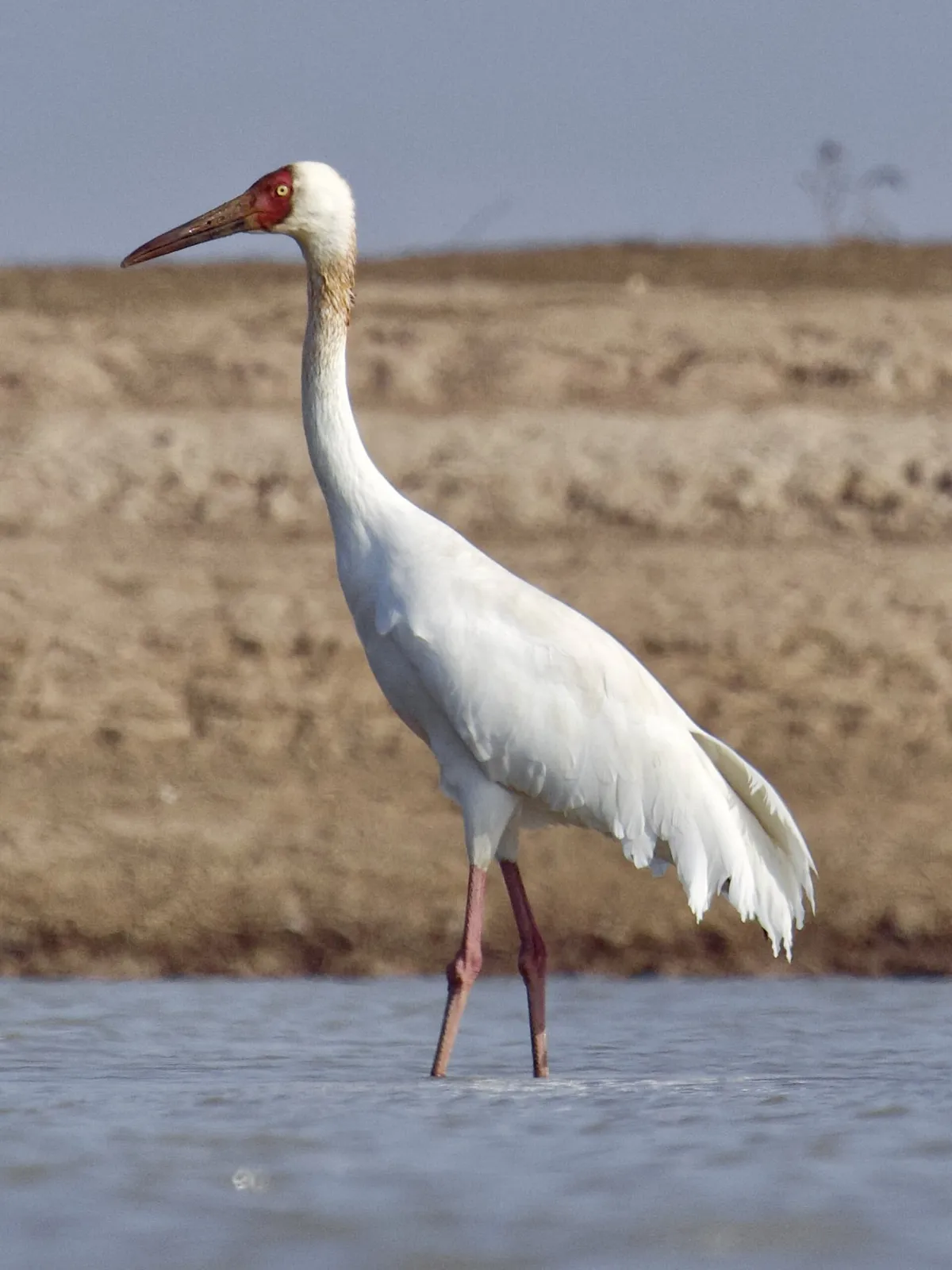
Asia is where crane diversity and crane trouble both peak. Eight species breed or winter there, and the rarest crane of all is Asian: the Siberian crane, pure white with a crimson face and black wingtips. Around 3,500 to 4,000 survive, and nearly the whole eastern population winters at one lake, Poyang in China, so a single drought year there is a crisis.
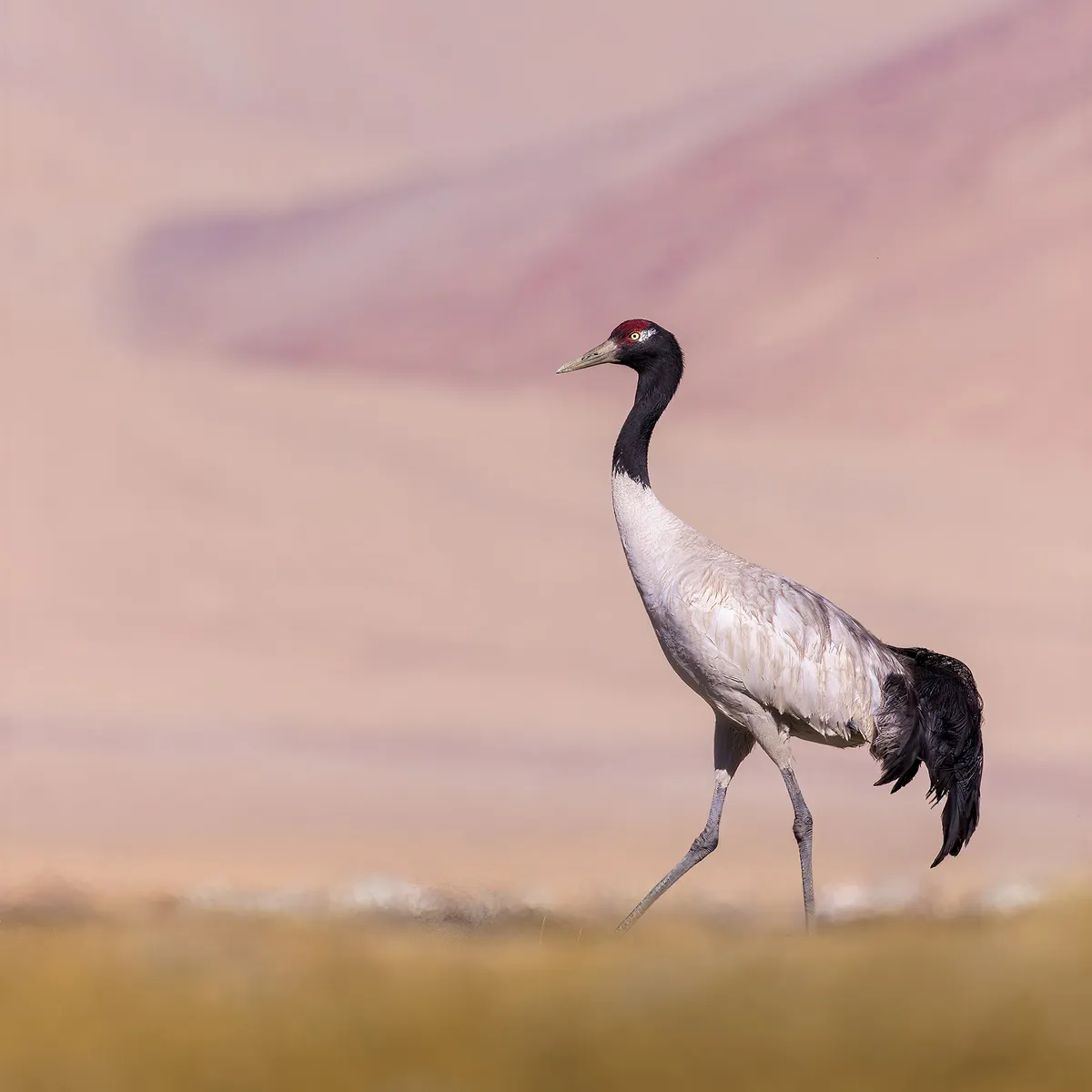
The white-naped crane pairs a slate-grey body with a white stripe from the eye down the neck, and huge numbers stage at the Demilitarized Zone between the Koreas, an accidental sanctuary. The black-necked crane is the high-altitude specialist, breeding on boggy meadows of the Tibetan Plateau above 3,000 metres and wintering in Himalayan valleys.

Then there is the red-crowned crane, the dancer of Hokkaido and a symbol of luck and long life across East Asia. Its snow-white body, black neck and crimson crown make it one of the most recognisable birds in the world, and its duetting pairs, calling in unison with heads thrown back, are the image most people picture when they think of cranes.

Europe and Australia: Common Crane and Brolga
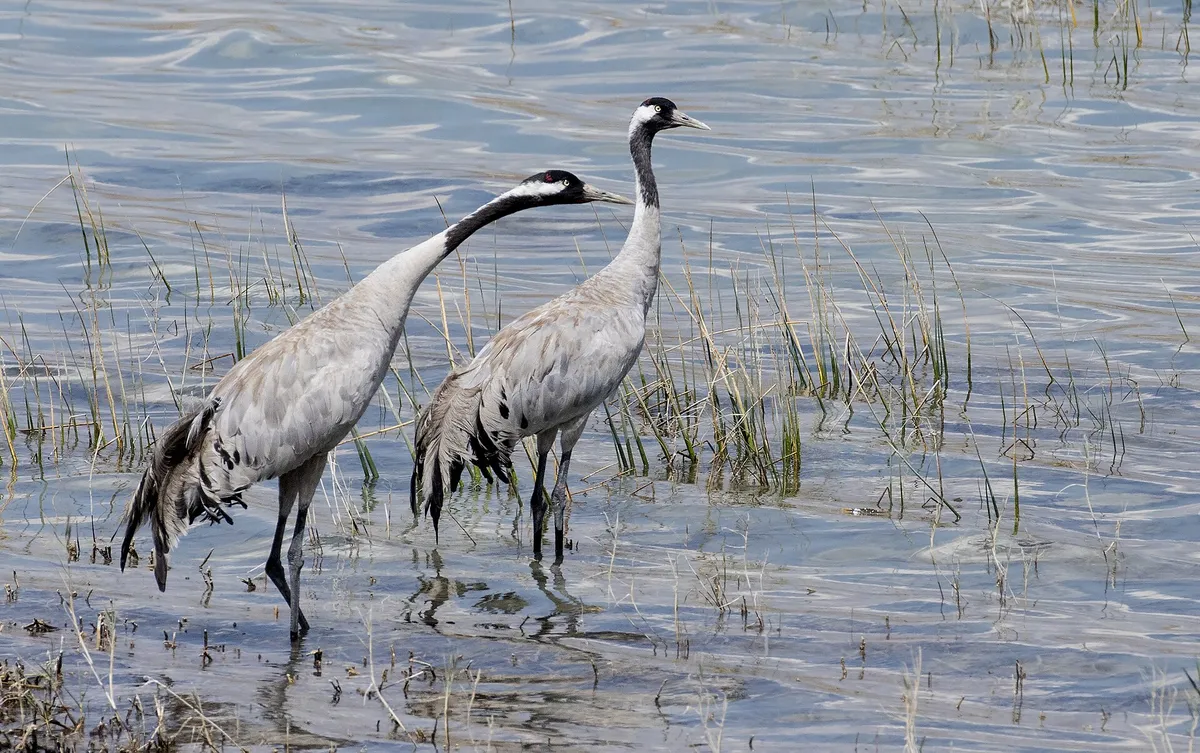
The common crane is the Old World’s success story. Pushed out of Britain centuries ago, it has recovered strongly, and small numbers now breed in England again after a gap of about 400 years. Its bugling flocks riding autumn thermals south from Scandinavia are a fixture of European skies.
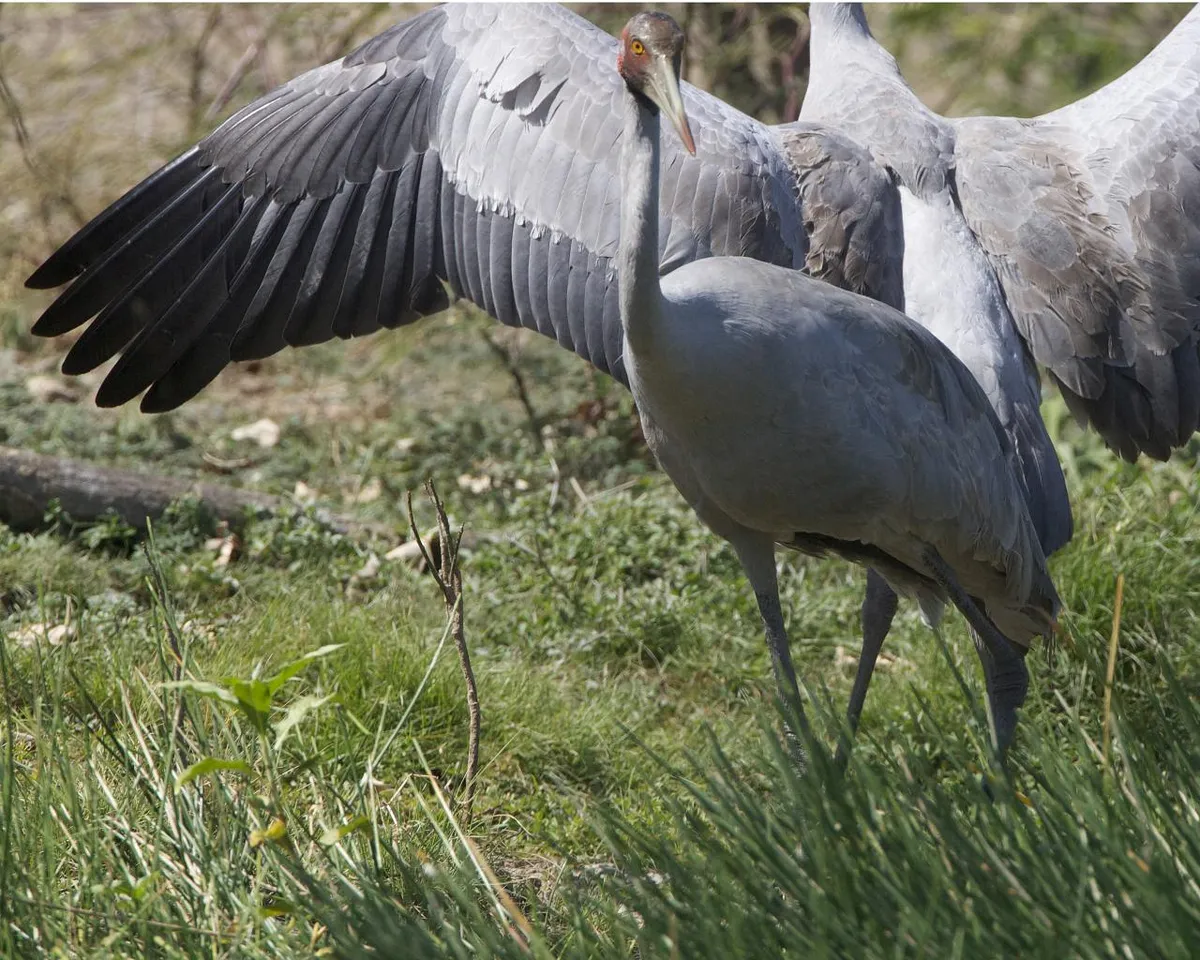
Australia’s brolga fills the same niche in the tropics: a tall silver-grey crane of northern floodplains, famous for an exuberant dance of leaping, bowing and stick tossing that features in Aboriginal Dreaming stories. Australia also hosts a small sarus crane population in Queensland.
The Record Holders: Tallest, Smallest, Loudest Lives
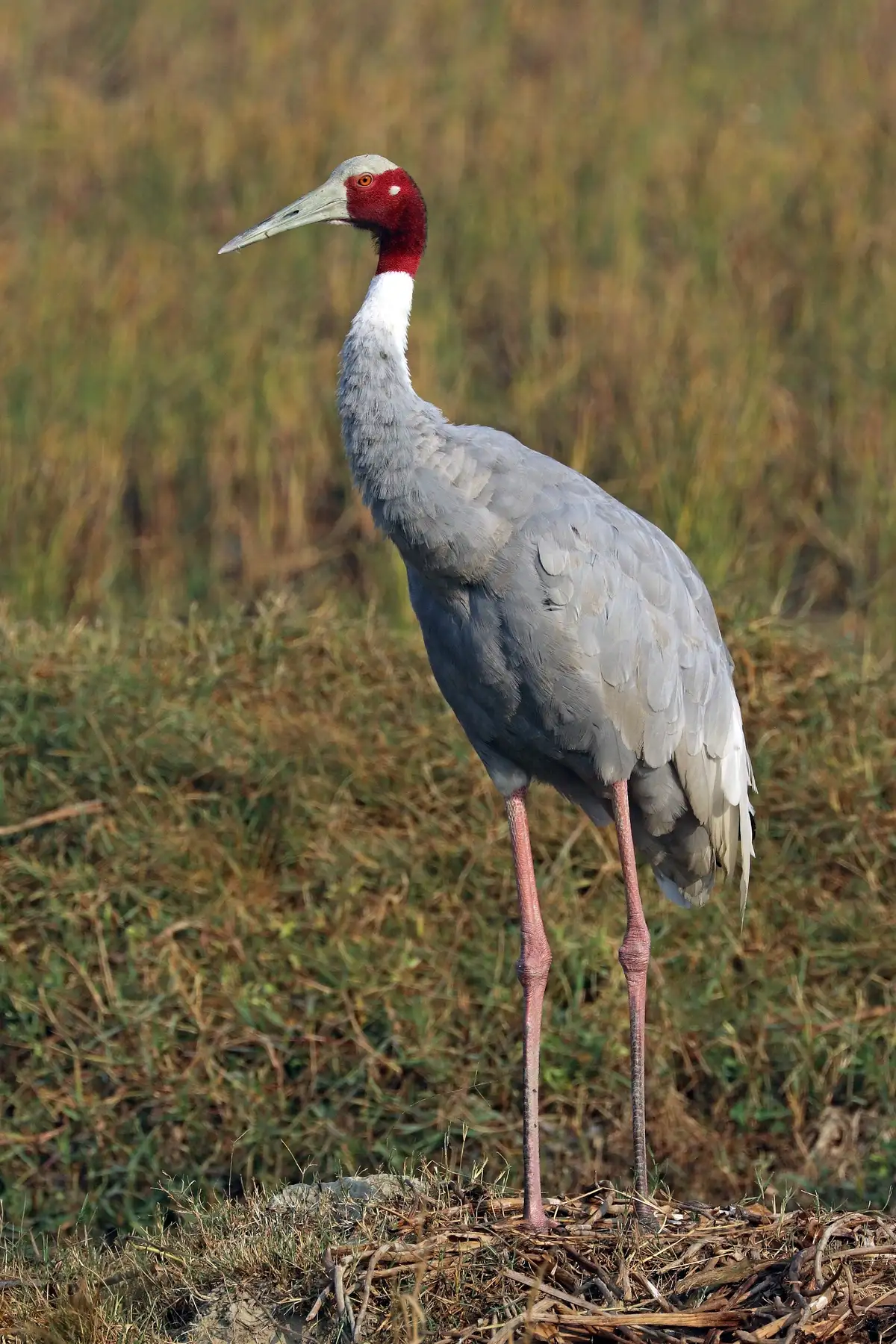
For sheer presence nothing beats the sarus crane. Males can reach 176 cm, eye to eye with a tall person, making it the tallest flying bird in the world. Sarus pairs mate for life, and in India a widowed bird’s grieving calls are part of folklore. They nest in shallow marshes during the monsoon, on huge reed platforms.
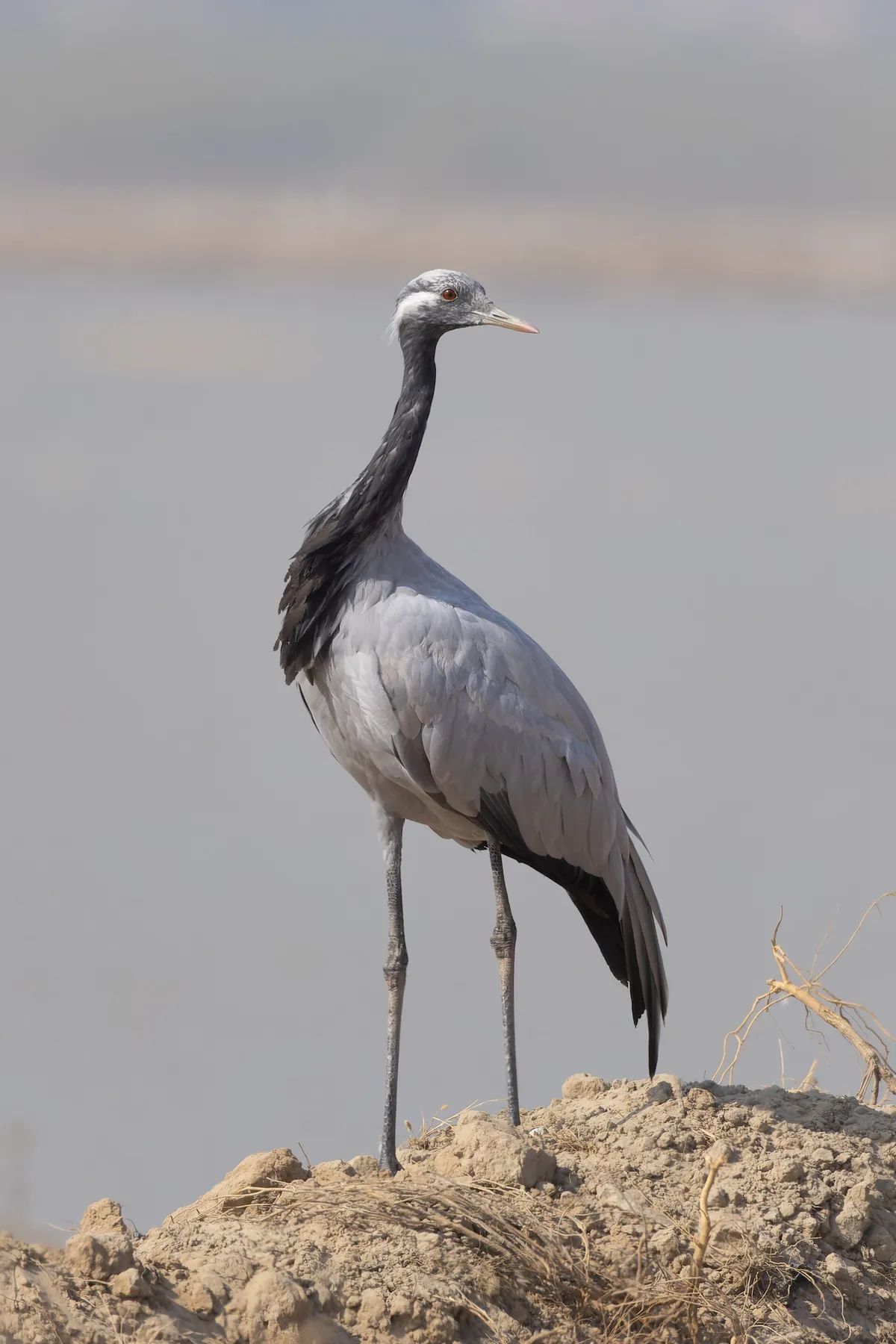
The demoiselle crane is the opposite extreme: under a metre tall and barely 2 to 3 kg, the smallest crane of all. Do not let the size fool you. Demoiselles cross the Himalayas on migration, over passes higher than 7,000 metres where the air holds a third of the oxygen at sea level. Villages in Rajasthan famously feed wintering flocks by the thousand.
How Cranes Live: Dance, Diet and Lifespan
Cranes are famous for dancing, and it is not just courtship. Pairs leap, bow, flap and toss sticks at every age, strengthening a bond that usually lasts for life. Their diet is equally flexible: grain, seeds and tubers, plus insects, frogs, crabs and snakes, taken with a dagger bill while walking rather than waiting. Chicks follow their parents within a day of hatching.
Longevity matches their slow pace. Wild cranes commonly live 20 to 30 years, and captive birds have passed 40. They raise only one or two chicks a year, so populations recover slowly, which is why the whooping crane’s climb back has taken eight decades. Compare these heights with the species in our types of gazelle chart.
Conservation: Why 10 of 15 Species Need Help
Ten of the fifteen species are Near Threatened or worse, and the cause is almost always the same: wetlands lost to dams, farming and cities, plus power lines on migration routes and, in a few regions, hunting. The fixes are known: protect staging wetlands, mark power lines so birds can see them, and guard the crane’s cultural status, which in Bhutan, India and Japan turns villages into protectors.
Frequently Asked Questions
How many types of crane birds are there?
There are 15 living species of crane, all in the family Gruidae. They fall into four genera: Grus, Antigone, Balearica (the two crowned cranes) and Leucogeranus (the Siberian crane).
What is the tallest crane bird?
The sarus crane is the tallest, reaching up to 176 cm, which also makes it the tallest flying bird in the world. The wattled crane of Africa is second at up to about 175 cm.
What is the rarest crane bird?
The Siberian crane is Critically Endangered, and the whooping crane is the rarest by numbers, with only around 800 birds after falling to about 21 wild birds in the 1940s.
Do cranes mate for life?
Yes, most cranes form lifelong pair bonds. Pairs defend a territory together, call in unison and reinforce the bond with dancing all year, not only in the breeding season.
How can you tell a crane from a heron in flight?
Look at the neck. A crane flies with its neck straight out, while a heron folds its neck back into a tight S shape. Cranes also call loudly in flight.
Conclusion
Fifteen species, five continents, one unmistakable silhouette. The types of crane birds range from the metre-high demoiselle crossing the Himalayas to the towering sarus of Indian marshes, and the chart above gives you the size, home and status of every one. Learn the straight-neck flight profile and that trumpet call, and you will start finding cranes wherever a wetland survives.

