

Types of stink bugs range from the bright green shield sitting on your tomato plant to the mottled brown invader that crowds onto sunny windows every fall. All of them belong to the family Pentatomidae, a group of more than 4,700 species found on every continent except Antarctica, and all share the broad shield shape that gives them their other name, shield bugs. This guide puts the 20 types people ask about most into one chart, with real sizes, identification marks, ranges, and an honest label for each one: crop pest, garden helper, or harmless visitor.
The stink is real, and it is the whole point. Glands on the underside of the body release a sharp chemical spray, often compared to cilantro or burnt rubber, when the bug is grabbed, crushed, or badly frightened. Birds and spiders learn the lesson fast and leave shield bugs alone after one taste. For you, the practical takeaway is simple: never crush one indoors, because the smell can soak into fabric and linger for days.
What Makes a Stink Bug a Stink Bug
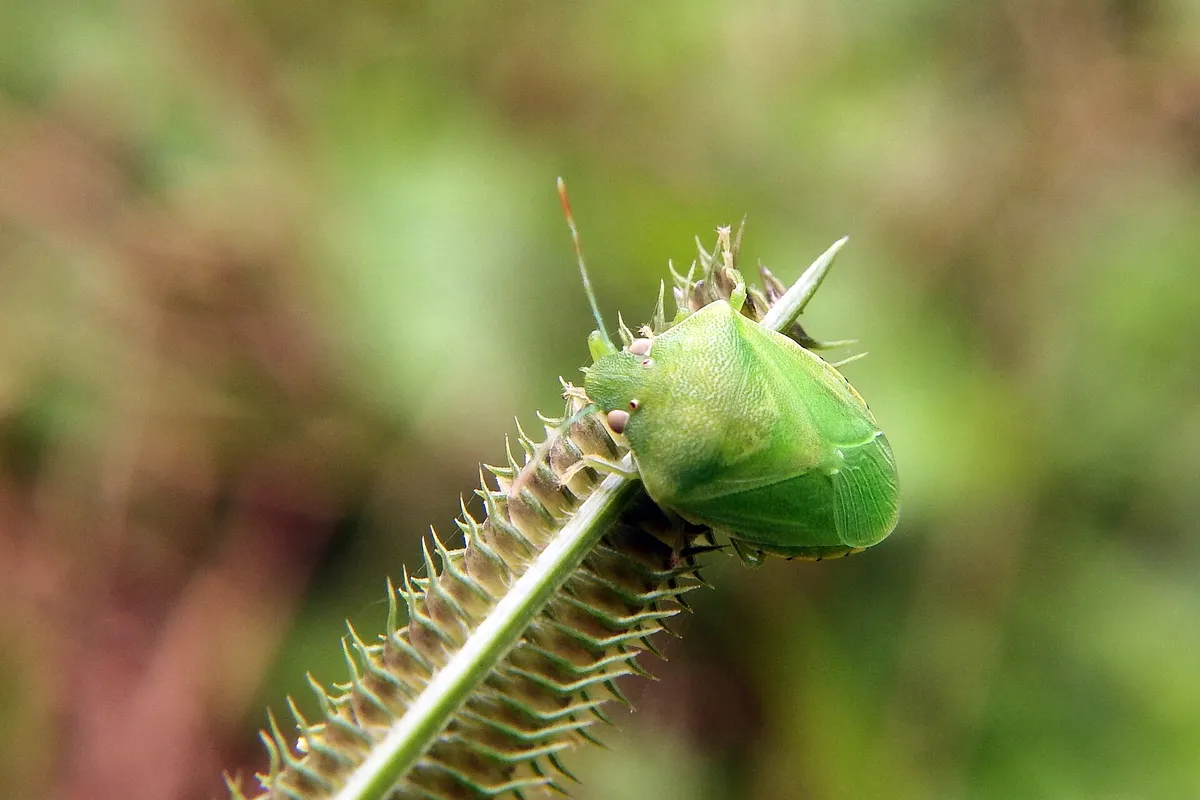
Three features separate a true stink bug from every look-alike. First, the body is a neat shield, wider at the shoulders and tapering to a rounded point. Second, a large triangular plate called the scutellum covers the center of the back, reaching at least a third of the way down the abdomen. Third, the mouth is a slender beak, folded back under the body between the legs, built for piercing and sucking rather than chewing.
That beak tells you what the bug eats. Plant feeders carry a thin, straight beak for tapping into fruit, seeds, and stems. The predatory species, the soldier bugs, carry a noticeably thick, curved beak, more like a dagger, for stabbing caterpillars and beetle larvae. Flip a stink bug over (gently, with a stick, outdoors) and the beak is the fastest clue to whether it is a pest or a helper. Young stink bugs, the nymphs, are rounder than adults and often wear bold red, orange, or white patterns that fade as they mature.
Types of Stink Bugs: 20 Species, Sizes and Habitats
The chart below covers the 20 types people search for and meet most often, from the famous house invader to tiny predators most gardeners never notice. Sizes are typical adult body lengths. The last column matters most: several stink bugs are serious farm pests, a handful are among the best free pest control a garden can get, and the rest do little harm either way.
| Species | Scientific Name | Typical Size | How to Identify | Range | Pest or Beneficial |
|---|---|---|---|---|---|
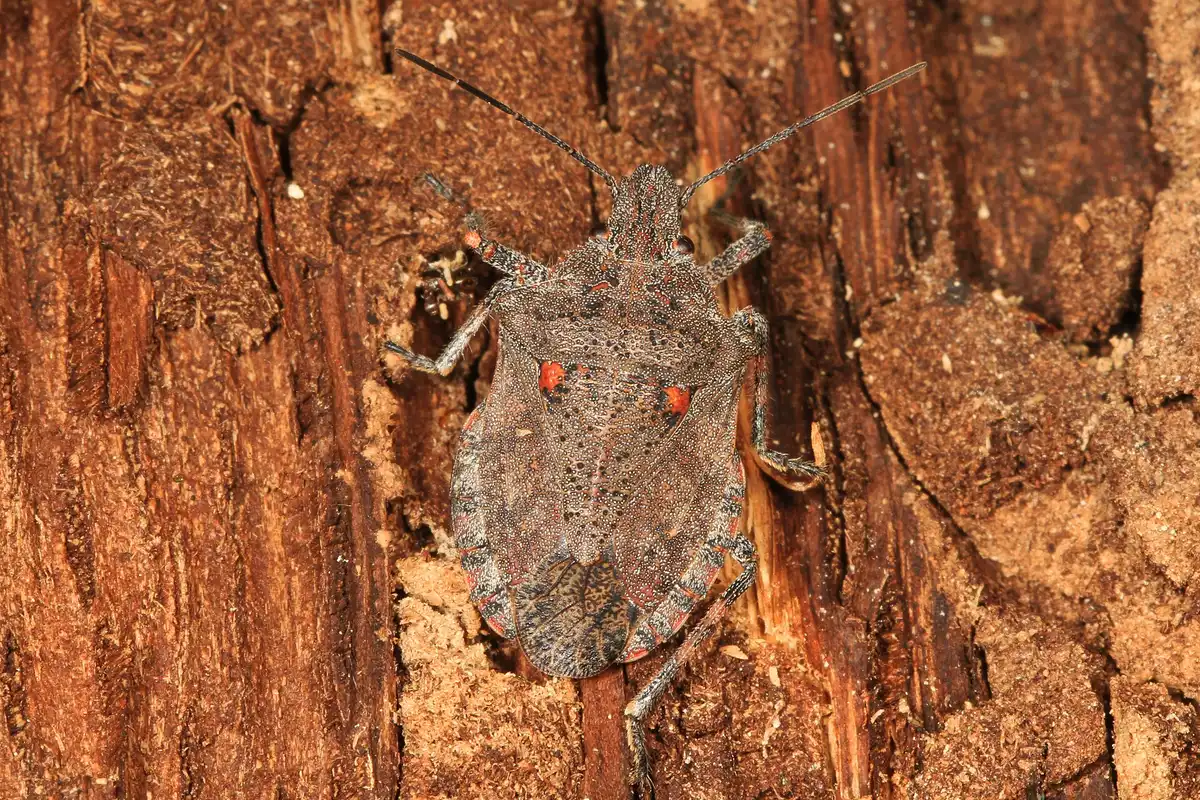
| Brown marmorated stink bug | Halyomorpha halys | 14 to 17 mm | Mottled brown shield, white bands on the antennae, striped edge on the abdomen | Native to East Asia, now across North America and Europe | Pest of fruit and crops, invades homes in fall |
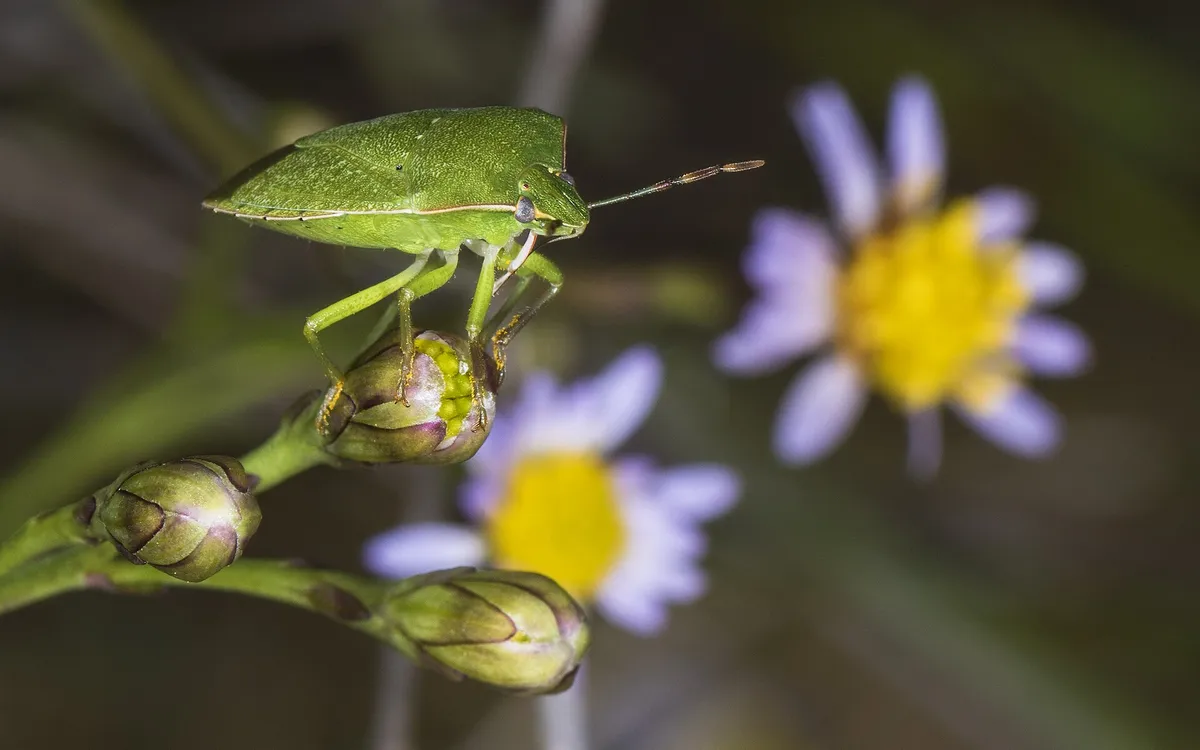
| Green stink bug | Chinavia hilaris | 13 to 18 mm | Bright green shield with a thin yellow to orange line around the edge | North America | Pest of fruit, vegetables and seeds |
| Southern green stink bug | Nezara viridula | 12 to 15 mm | Bright green, tiny black dots in a row at the base of the scutellum | Warm regions worldwide | Major pest of beans, soy and many crops |
| Brown stink bug | Euschistus servus | 10 to 13 mm | Dull mottled brown shield with rounded shoulders | North and Central America | Pest of soybeans, corn and fruit |
| Dusky stink bug | Euschistus tristigmus | 9 to 13 mm | Dark brown, three pale spots along the base of the scutellum | Eastern and central North America | Orchard and field pest |
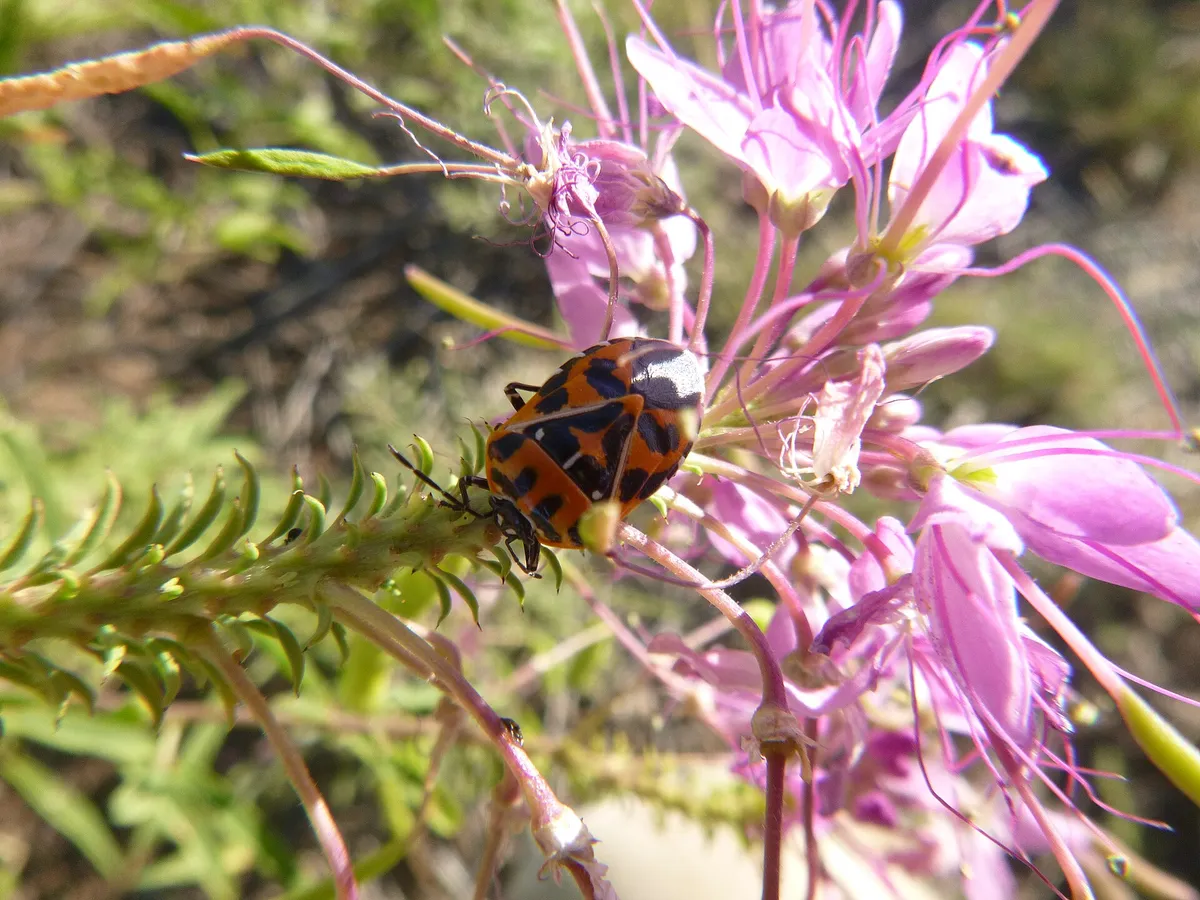
| Harlequin bug | Murgantia histrionica | 7 to 11 mm | Bold orange and black pattern with white marks, hard to miss | North and Central America | Pest of cabbage, broccoli and other crucifers |
| Rice stink bug | Oebalus pugnax | 8 to 13 mm | Long, narrow, straw brown body with small forward-pointing shoulder spines | The Americas | Pest of rice and grain crops |
| Red-shouldered stink bug | Thyanta pallidovirens | 9 to 14 mm | Green body with a reddish band across the shoulders | North America | Mild pest of fruit and seeds |
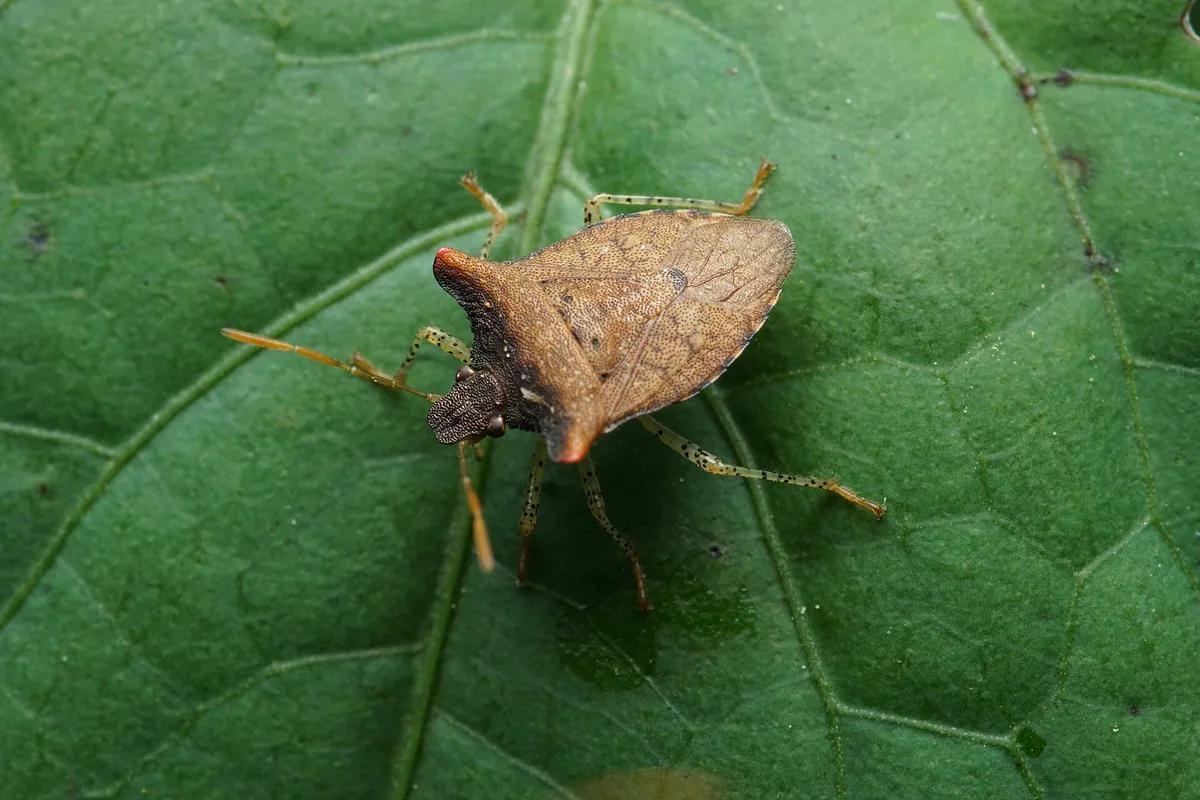
| Rough stink bug | Brochymena quadripustulata | 13 to 18 mm | Rough, bark-like gray brown shield with jagged edges | North America | Mostly harmless tree feeder, occasional home visitor |
| Say’s stink bug | Chlorochroa sayi | 12 to 15 mm | Green shield with an orange edge and an orange tip on the scutellum | Western North America | Pest of wheat and other cereals |
| Twice-stabbed stink bug | Cosmopepla lintneriana | 6 to 7 mm | Very small, black with a red-orange band and two spots across the back | North America | Minor pest of mint and garden flowers |
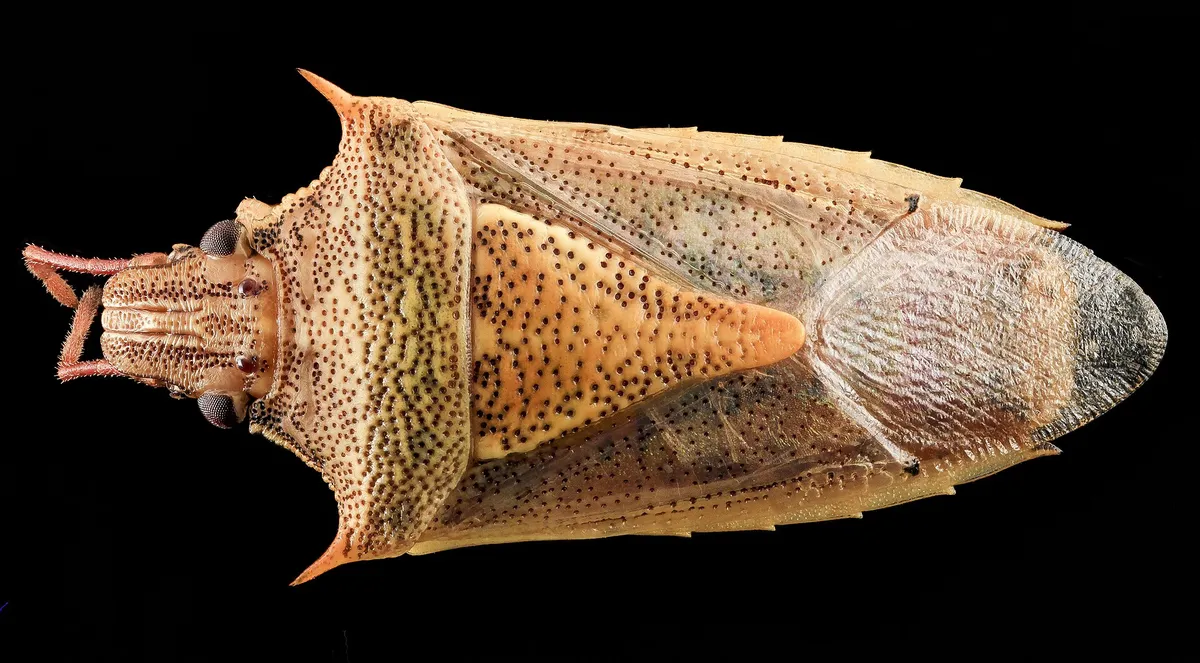
| Spined soldier bug | Podisus maculiventris | 8 to 13 mm | Mottled brown with sharp spines on the shoulders and a thick beak | North America | Beneficial predator of caterpillars and beetle larvae |
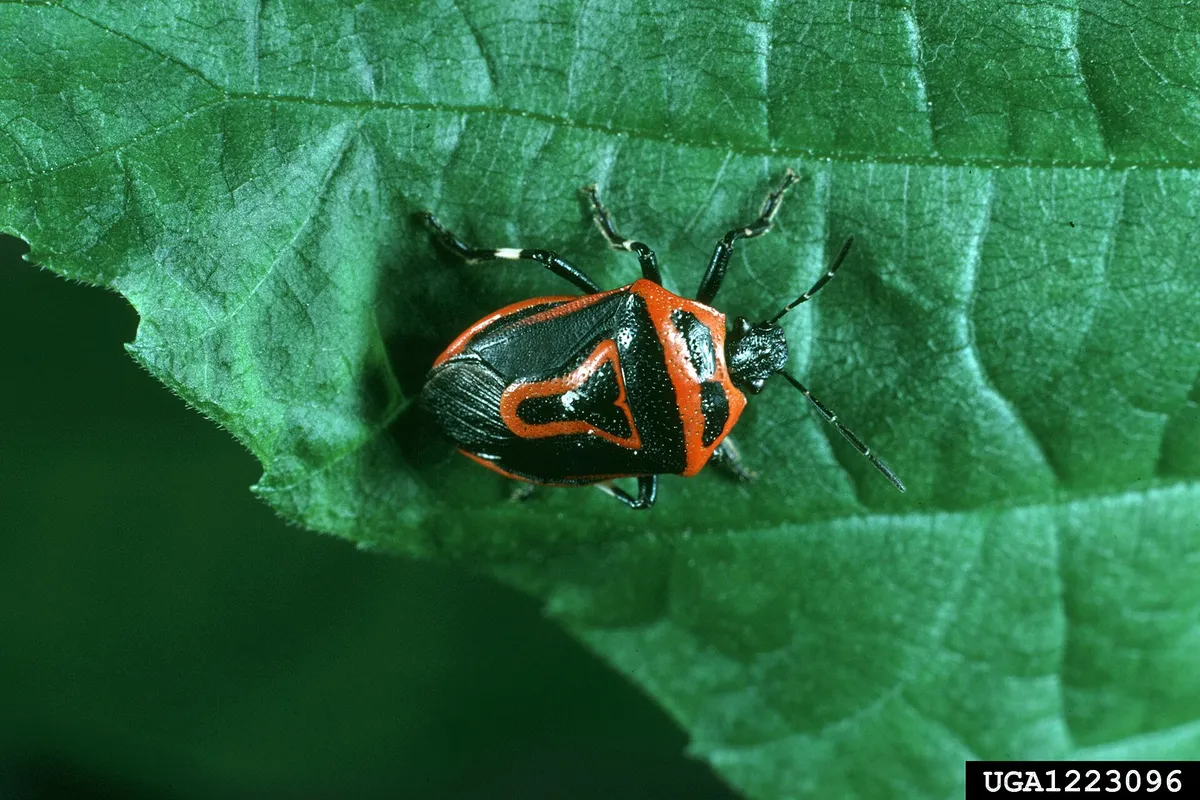
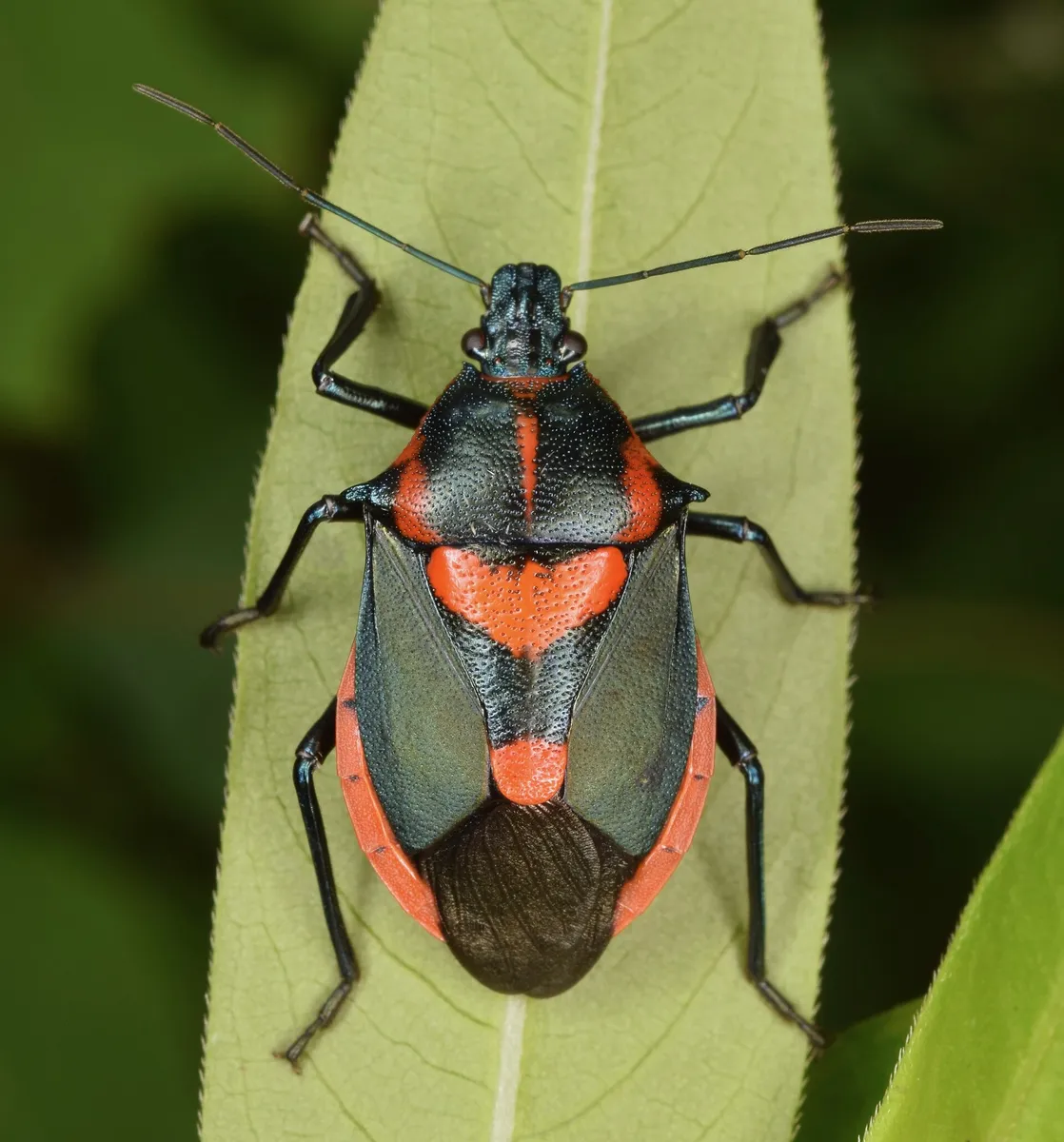
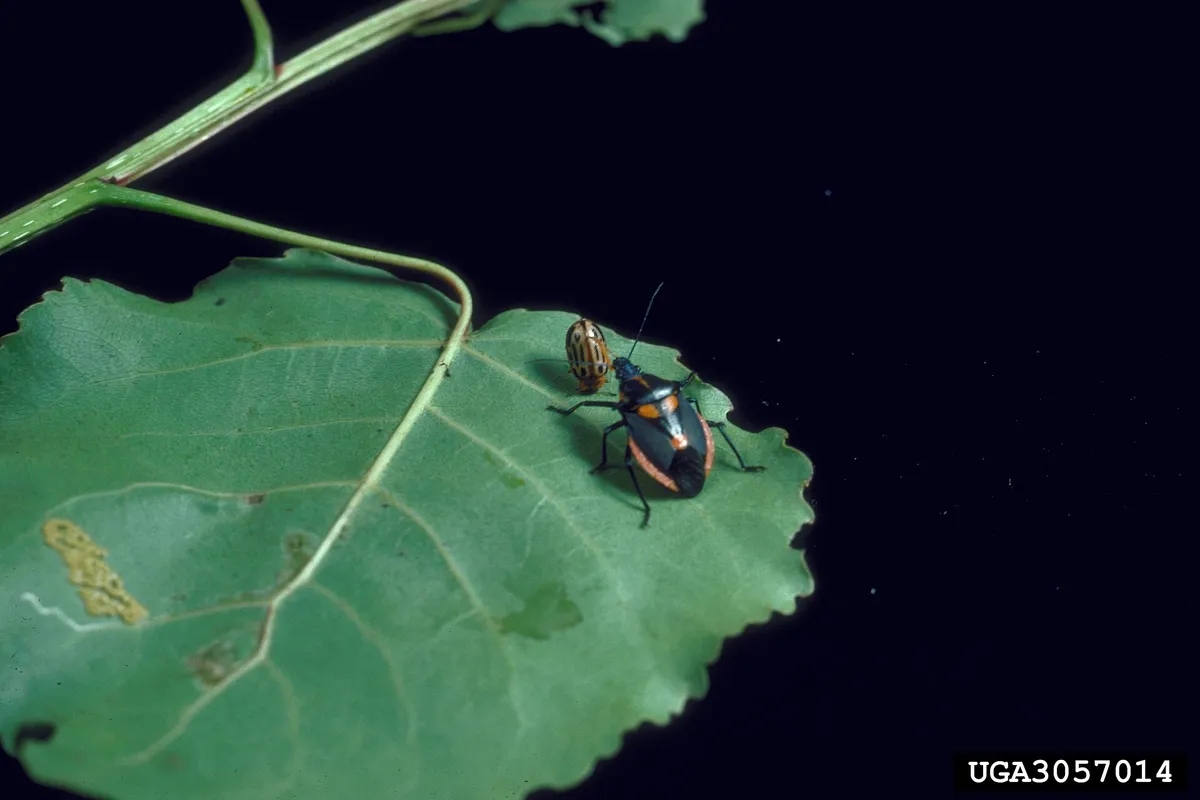
| Two-spotted stink bug | Perillus bioculatus | 8 to 11 mm | Black and orange-red, two black spots on the pronotum behind the head | North America | Beneficial predator, famous enemy of the Colorado potato beetle |
| Florida predatory stink bug | Euthyrhynchus floridanus | 13 to 17 mm | Large, dark blue-black shield with orange to red spots | Southeastern United States | Beneficial predator of caterpillars and other stink bugs |
| Anchor stink bug | Stiretrus anchorago | 7 to 10 mm | Small, black with an orange to cream anchor-shaped pattern, colors vary | Eastern North America | Beneficial predator of beetle larvae |
| Blue shield bug | Zicrona caerulea | 6 to 8 mm | Very small, smooth metallic blue-green shield | Europe, Asia and North America | Beneficial predator of leaf beetle larvae |
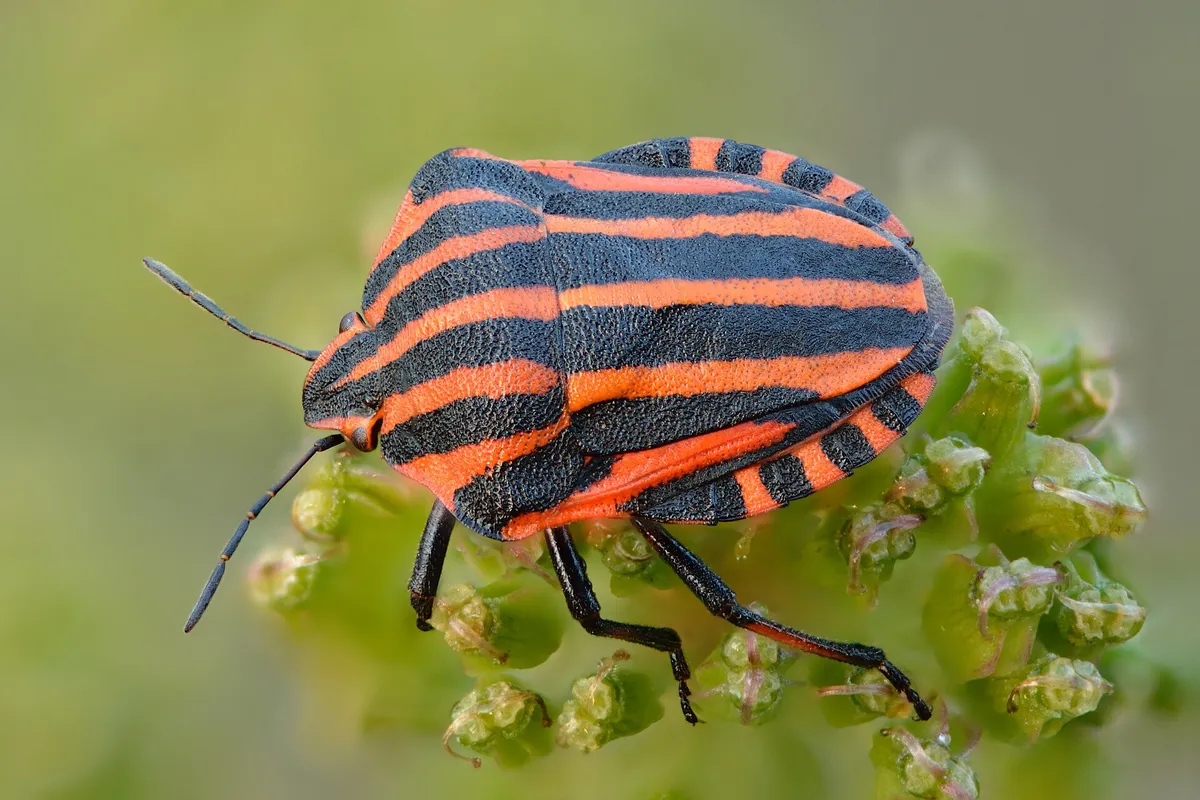
| Italian striped bug | Graphosoma italicum | 8 to 11 mm | Bright red with bold black stripes running lengthwise | Europe and western Asia | Plant feeder on carrot family plants, minor garden species |
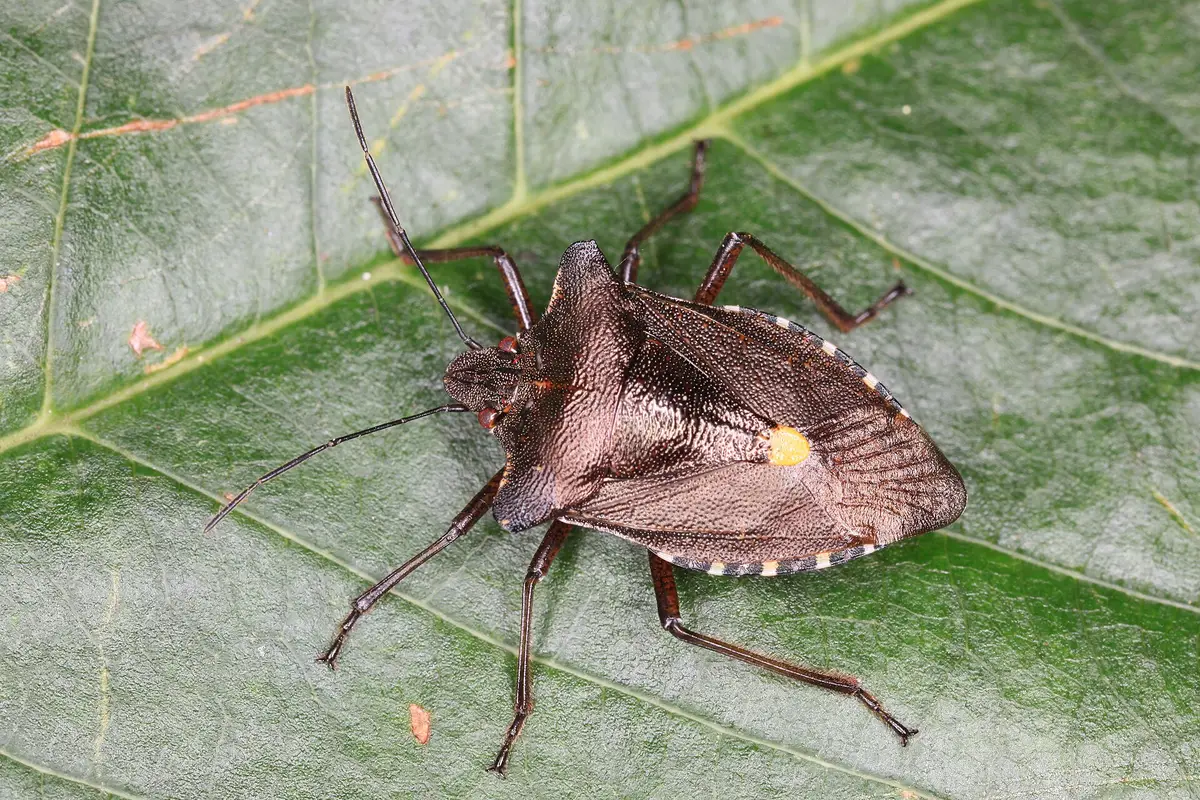
| Forest bug | Pentatoma rufipes | 11 to 14 mm | Bronze brown shield, pointed shoulders, bright red legs | Europe | Mild orchard pest, also called the red-legged shield bug |
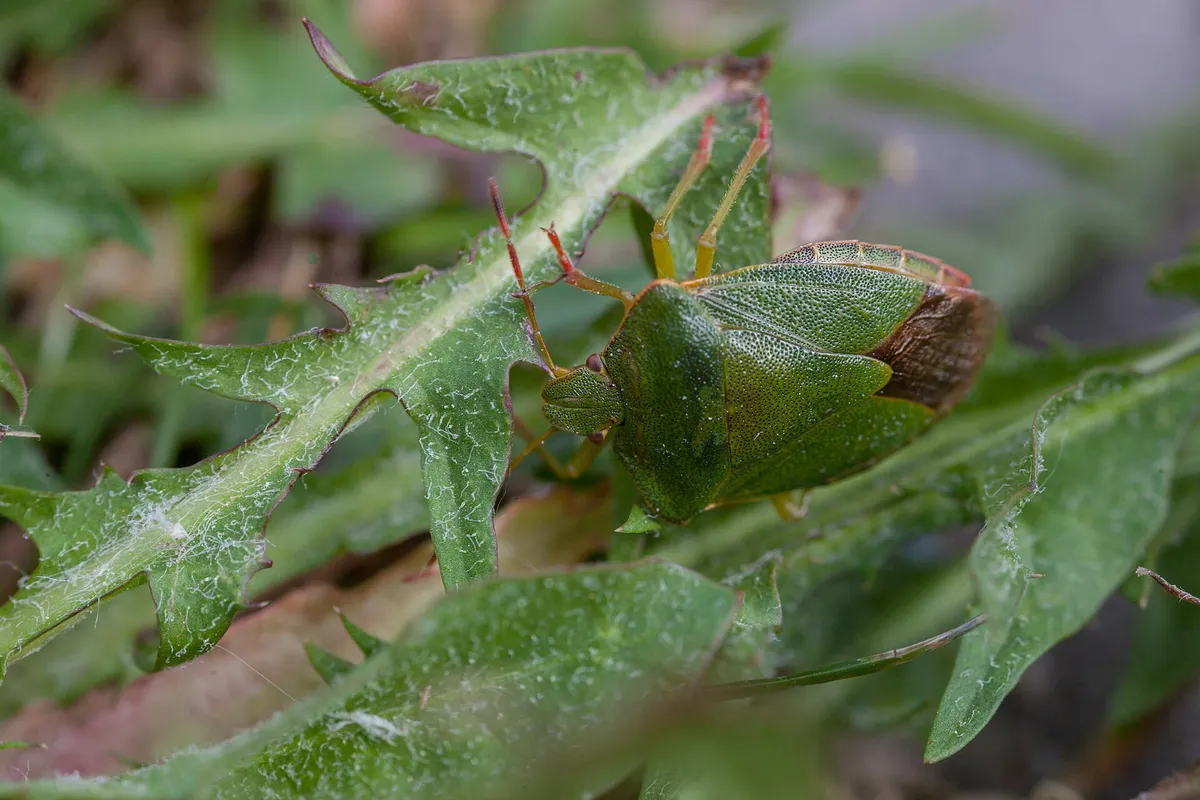
| Green shield bug | Palomena prasina | 12 to 14 mm | Bright green in summer, slowly turning olive brown for winter | Europe and Asia | Minor garden pest of beans, hazel and soft fruit |
| Sloe bug | Dolycoris baccarum | 10 to 13 mm | Purple-brown shield covered in fine hairs, checkered edge on the abdomen | Europe and Asia | Minor pest of fruit and berries, also called the hairy shield bug |
The Plant Feeders That Damage Crops and Gardens
Most stink bugs eat plants, and a few of them cost farmers serious money. The brown marmorated stink bug is the headline act. It arrived in North America from East Asia in the 1990s, spread to most states and much of Europe, and damages apples, peaches, corn, soybeans, and garden vegetables by piercing fruit and leaving corky, dimpled spots. In fall it adds a second career as a house invader, gathering on warm walls by the hundred.
The green trio causes the most identification confusion. The green stink bug and the southern green stink bug look nearly identical at a glance, but the southern green carries a row of tiny black dots at the base of its scutellum and is the bigger crop threat worldwide, attacking well over a hundred plant species. Say’s stink bug joins the same color family in the West, marked by its orange rim, and is mainly a pest of wheat. Among the browns, Euschistus servus and the dusky stink bug work soybeans, corn, and orchards, while the rice stink bug, much narrower than the rest, slips into rice and grain heads and feeds on the developing kernels.
A few plant feeders are at least easy to spot. The harlequin bug wears full orange and black warning colors and concentrates on the cabbage family, sometimes skeletonizing a plant. The twice-stabbed stink bug is tiny, black and red, and mostly bothers mint and echinacea. Europe has its own set: the green shield bug and the hairy sloe bug nibble beans and berries, the forest bug works orchards, and the red-and-black striped Italian bug sticks to cow parsley, fennel, and other carrot relatives in sunny places. The rough stink bug is the exception in this group: it lives on trees, eats a little of everything including the odd insect, and mainly shows up in houses by accident.
The Helpful Predators: Soldier Bugs
Not every shield on your plants is an enemy. The subfamily Asopinae hunts other insects, and learning to recognize its members will save you from killing your own pest control. The spined soldier bug is the best known: mottled brown, sharp shoulder spines, and a thick beak it uses to pin caterpillars and drain them. Growers value it so much that it is reared commercially and sold for release in gardens and greenhouses.
The two-spotted stink bug is the specialist of the family. Its black and red armor advertises its favorite prey, the larvae of the Colorado potato beetle, one of the most destructive garden pests in North America. The Florida predatory stink bug, big and blue-black with orange spots, tackles fall armyworms and even other stink bugs in the Southeast. The little anchor stink bug hunts beetle larvae in the East, and the metallic blue shield bug does the same job on leaf beetles across three continents. If a shield bug has a thick, curved beak and bold colors or spines, check it against our beneficial insects chart before you reach for the spray.
Stink Bugs in the House
Only one type on this chart regularly moves indoors: the brown marmorated stink bug. As nights cool, adults gather on sun-warmed walls, then slip through gaps around windows, vents, and siding to sleep through winter in wall voids and attics. They do not bite, breed indoors, or damage the house. They are simply hundreds of smelly guests who wander into living rooms on warm winter days.
Handle them without the smell. Tip each bug into a jar of soapy water, or vacuum them with a stocking over the hose end so the vacuum does not take on the odor. Never squash one on a curtain or carpet. Before next fall, seal the cracks around window frames and utility lines, since prevention beats eviction. If your fall visitor is glossy, fast, and long rather than shield-shaped, it is probably not a stink bug at all: compare it with the species in our guide to types of cockroaches. The other big plant-sucking insects people often lump in with stink bugs on summer plants are covered in our types of cicadas chart, and if the creature under your stones has far too many legs to count, see types of centipedes instead.
European Shield Bugs Worth Knowing
Readers in Europe meet a slightly different cast, and three of them appear in the chart above. The green shield bug is the classic garden shield bug of European summers, bright green until it fades toward brown for its winter rest in leaf litter. The forest bug, bronze with red legs, feeds on oak, hazel, and orchard fruit. The sloe bug adds fine hairs and a purple-brown tint and is a regular on blackthorn and berry canes. All three are mild feeders rather than disasters, and their bright cousins, the Italian striped bug especially, are handsome enough that many gardeners leave them alone on purpose.
Frequently Asked Questions About Types of Stink Bugs
How many types of stink bugs are there?
Scientists have described more than 4,700 species in the stink bug family Pentatomidae, and around 250 of them live in North America. Most are plant feeders, a smaller group hunts other insects, and only a few dozen species are common enough, or pesky enough, for most people to meet.
Do stink bugs bite people?
No. Stink bugs do not bite, sting, or spread disease. A large one handled carelessly might poke the skin with its beak, which feels like a mild pinprick, but they are not aggressive and would much rather spray and walk away. Their real weapon is the smell, not a bite.
Why do stink bugs come into houses in the fall?
The brown marmorated stink bug is looking for a winter shelter, not food or people. It spends the cold months asleep in dry, protected spots, and a wall void or attic works as well as the bark crevice it would use in the wild. It gathers on sunny walls in September and October, then slips inside through small gaps.
Which stink bug is the worst pest?
For homes and fruit growers, the brown marmorated stink bug is the worst, because it damages so many crops and invades buildings in huge numbers. For field crops worldwide, the southern green stink bug is at least as damaging, feeding on more than a hundred plant species including soybeans, cotton, and citrus.
Are any stink bugs good for the garden?
Yes. The predatory soldier bugs, especially the spined soldier bug and the two-spotted stink bug, eat caterpillars, beetle larvae, and other plant-eating stink bugs. The spined soldier bug is even sold commercially as a biological control. Learn their thick beaks and shoulder spines so you can leave them on patrol.
How do I get rid of stink bugs without the smell?
Do not crush them. Drop indoor bugs into a jar of water with a little dish soap, which kills them quietly and traps the odor, or vacuum them through a stocking stretched over the hose so they never reach the machine. Outdoors, knock plant feeders into soapy water early in the morning, and seal cracks around windows and doors before fall to stop the next invasion.
Conclusion
Stink bugs look like one bug until you line them up side by side. Then the family splits into clear camps: mottled invaders that dimple your apples, green shields that drain your beans, bold orange hunters that eat the pests you actually hate, and quiet European shields that do little harm at all. Learn the beak, the shoulders, and the scutellum spots from the chart above, and the next shield-shaped visitor in your garden will take about ten seconds to name. That name tells you the only thing that really matters: protect it, tolerate it, or show it the door, without the smell.

