
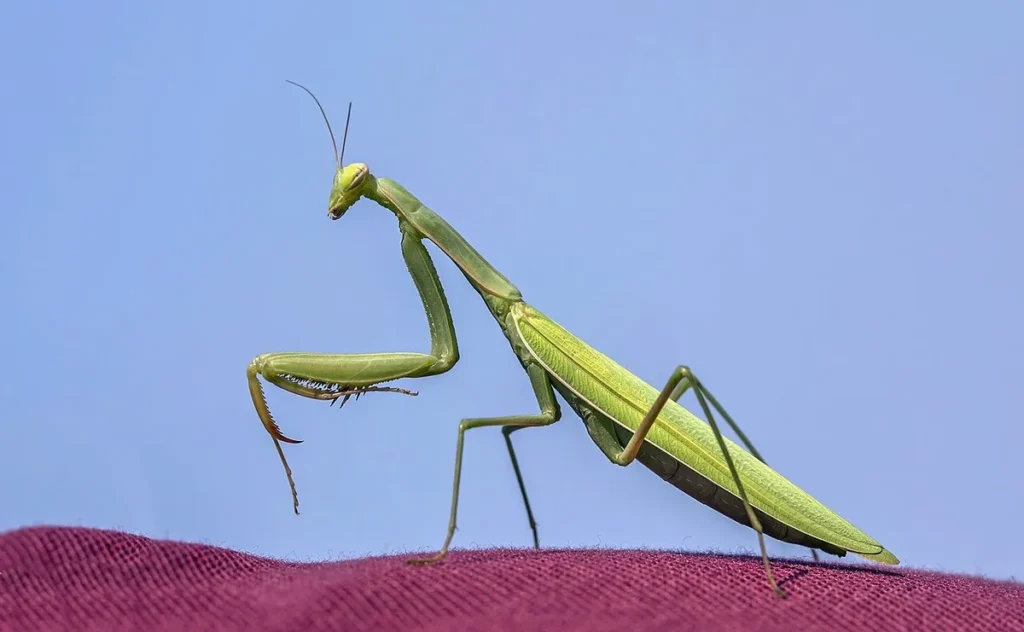
Types of mantises range from tiny bark dwellers under 3 centimeters long to giants past 13 centimeters. More than 2,400 species have been described worldwide, yet only a few dozen turn up regularly in gardens and the pet trade. This guide covers 20 of those species with real sizes, ranges, and habitats, plus the field marks that set each one apart.
A mantis is easy to recognize once you know what to look for. The triangular head swivels almost all the way around, and the front legs fold like a pocketknife, lined with spines for gripping prey. No grasshopper or stick insect hunts this way.
What Makes a Mantis a Mantis
All mantises belong to the order Mantodea. They share the same body plan and the same hunting style: sit still, stay hidden, and strike only when prey wanders within reach. A mantis can wait for hours on a single stem, and its strike takes a fraction of a second. The folded-arm pose that gives the praying mantis its name is simply the resting position of those hunting legs.
Mantises eat live prey only. Small species take flies, aphids, and moths, while the largest grab bees, large moths, and even small lizards. They have no venom and no sting, and they are harmless to people. A large one can deliver a sharp pinch with its spined forelegs, but that is the worst it can do.
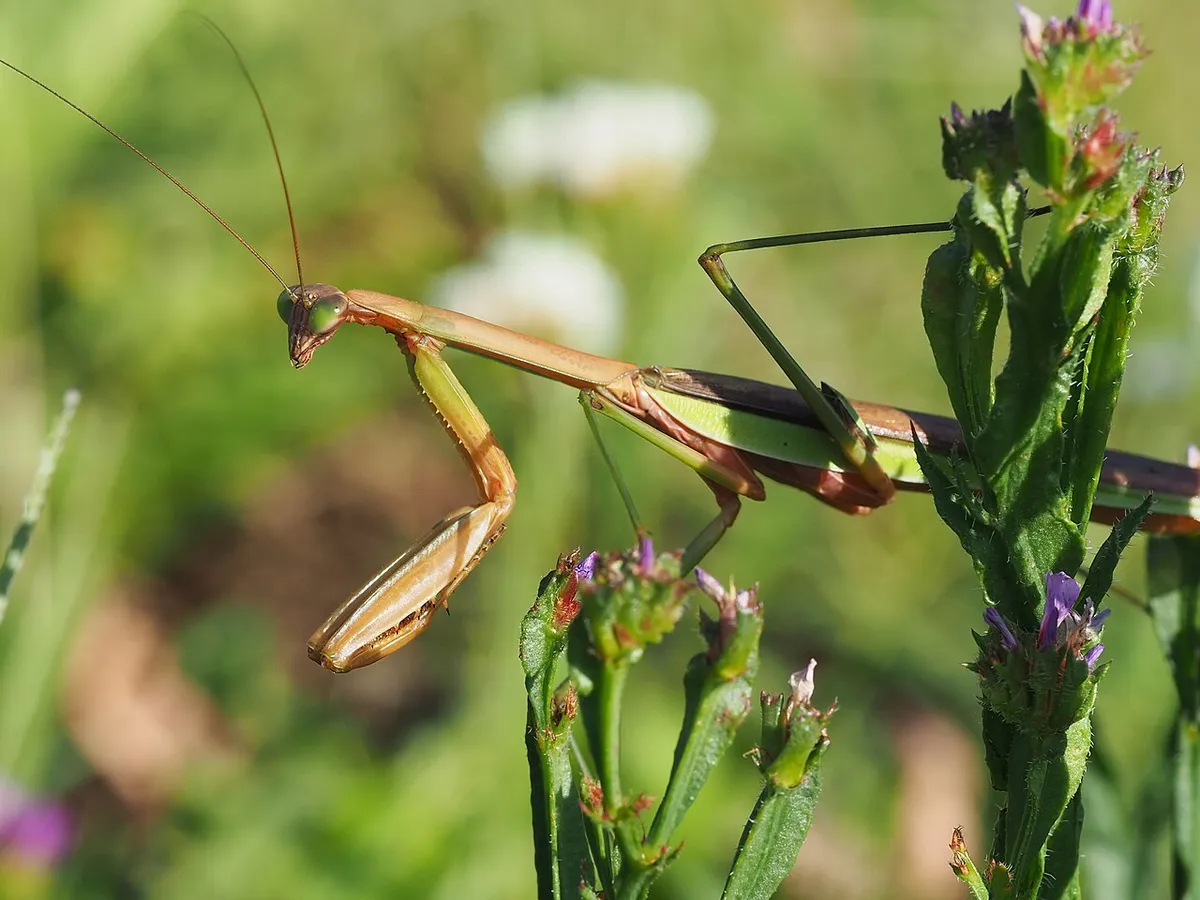
Types of Mantises: 20 Species, Sizes and Habitats
The chart below lists the 20 mantis species people are most likely to meet or keep. Sizes are adult female lengths, since females are usually much larger than males. Ranges describe where each species is native, plus well-established introduced populations.
| Species | Scientific name | Adult size | Range and habitat | Distinguishing fact |
|---|---|---|---|---|
| European mantis | Mantis religiosa | 6 to 8 cm | Europe, Asia, and Africa; introduced to North America; meadows and gardens | Dark bull’s-eye spot inside each foreleg |
| Chinese mantis | Tenodera sinensis | 9 to 11 cm | East Asia; introduced to the US and Canada; gardens and fields | Largest mantis living wild in North America |
| Carolina mantis | Stagmomantis carolina | 5 to 7 cm | Southern and central US; gardens, shrubs, and tall grass | The common native mantis of the southern United States |
| Orchid mantis | Hymenopus coronatus | 5 to 6 cm (females) | Southeast Asia; rainforest flowers | Petal-shaped legs mimic an orchid bloom and lure pollinators |
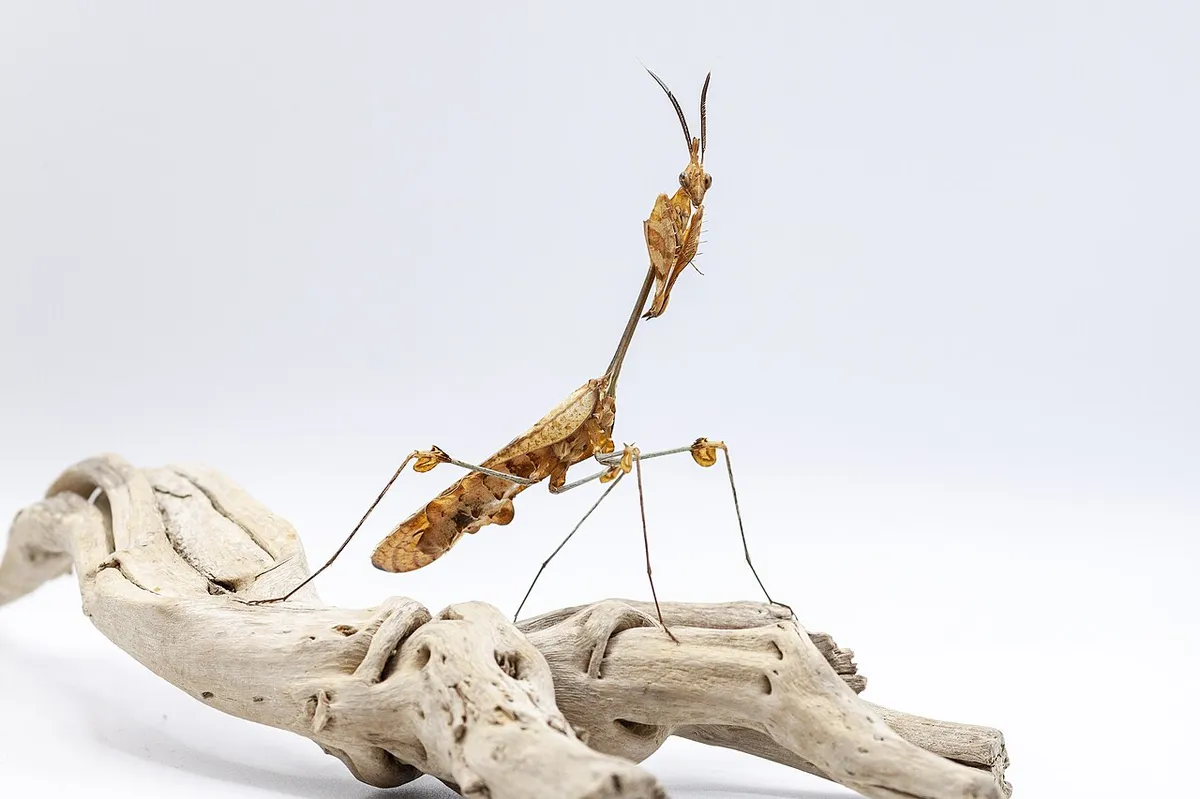
| Ghost mantis | Phyllocrania paradoxa | 4 to 5 cm | Africa and Madagascar; dry leaves and shrubs | Dead-leaf body with a leaf-like crest on the head |
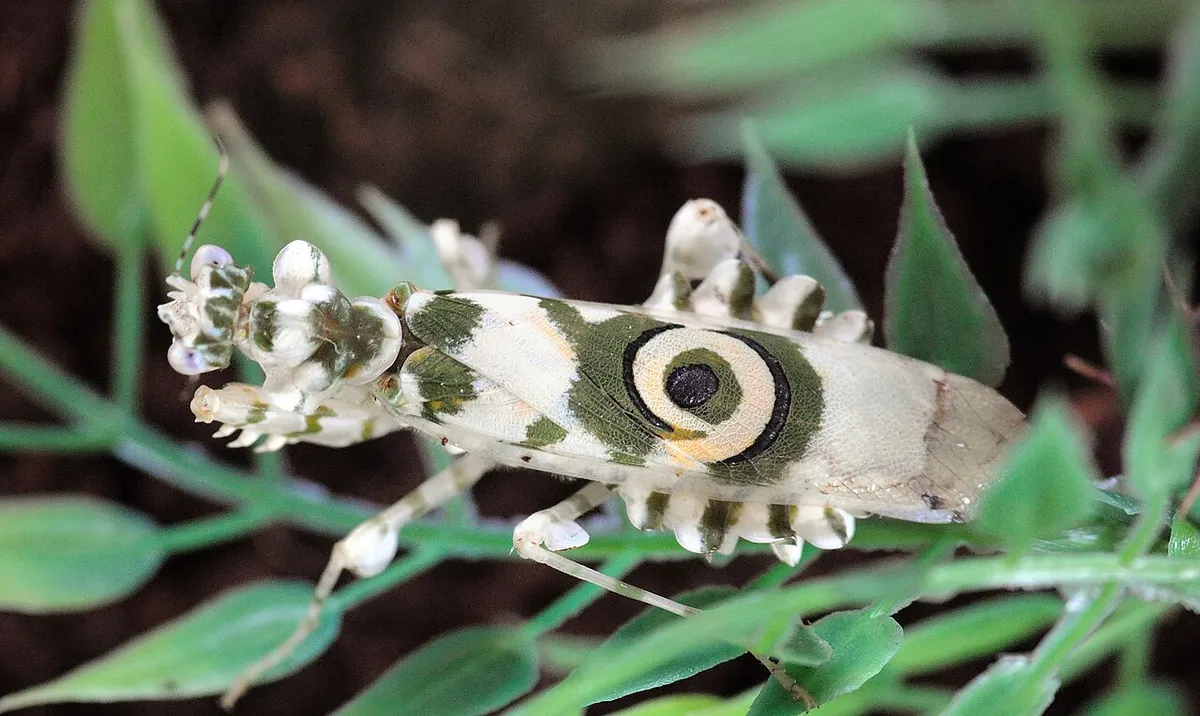
| Spiny flower mantis | Pseudocreobotra wahlbergii | 3 to 4 cm | Sub-Saharan Africa; flowering shrubs | Spiral eye-spots on the wings flash in a threat display |
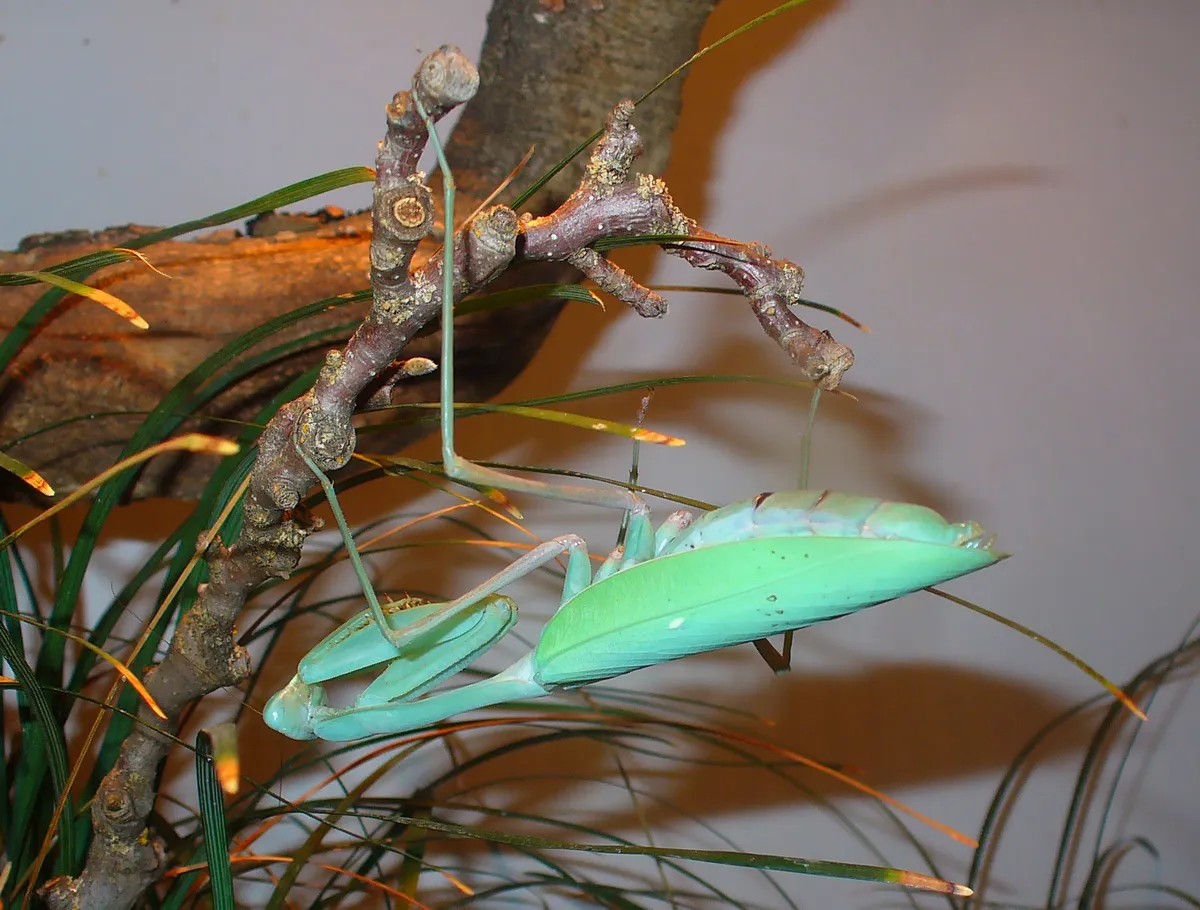
| Giant Asian mantis | Hierodula membranacea | 8 to 10 cm | Tropical Asia; forests and gardens | Bulky green build; one of the most popular pet mantises |
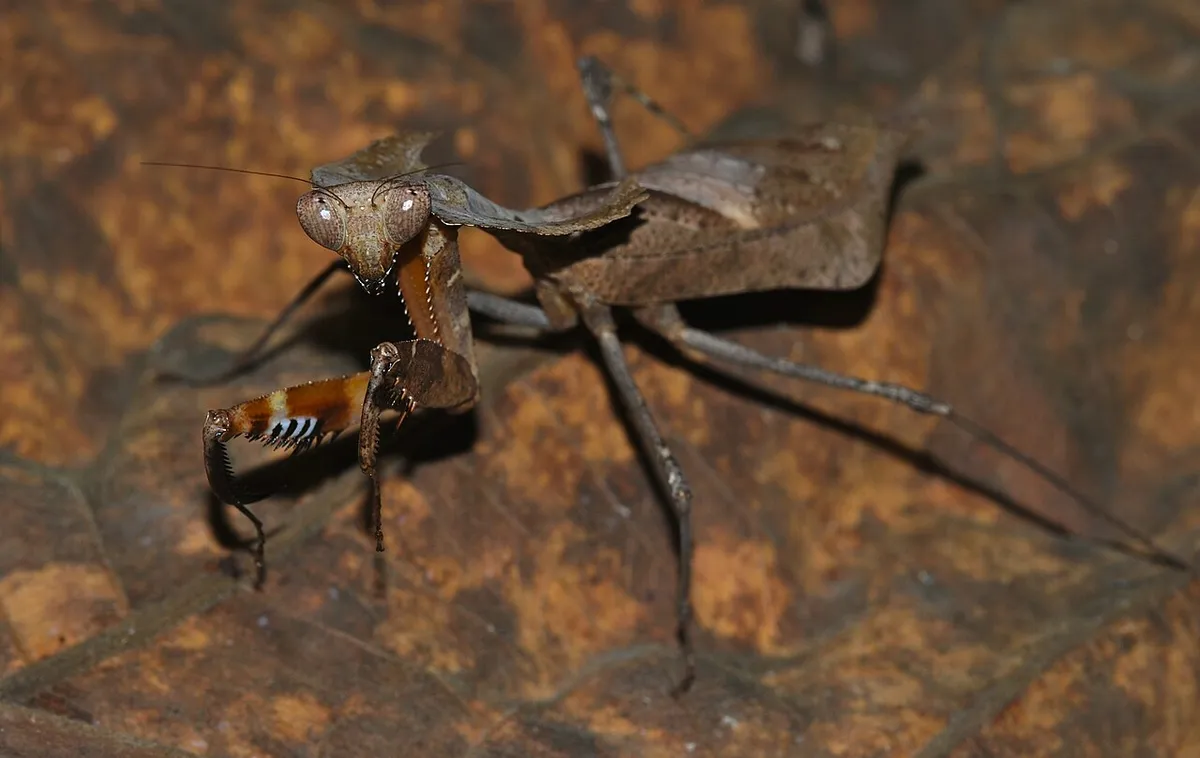
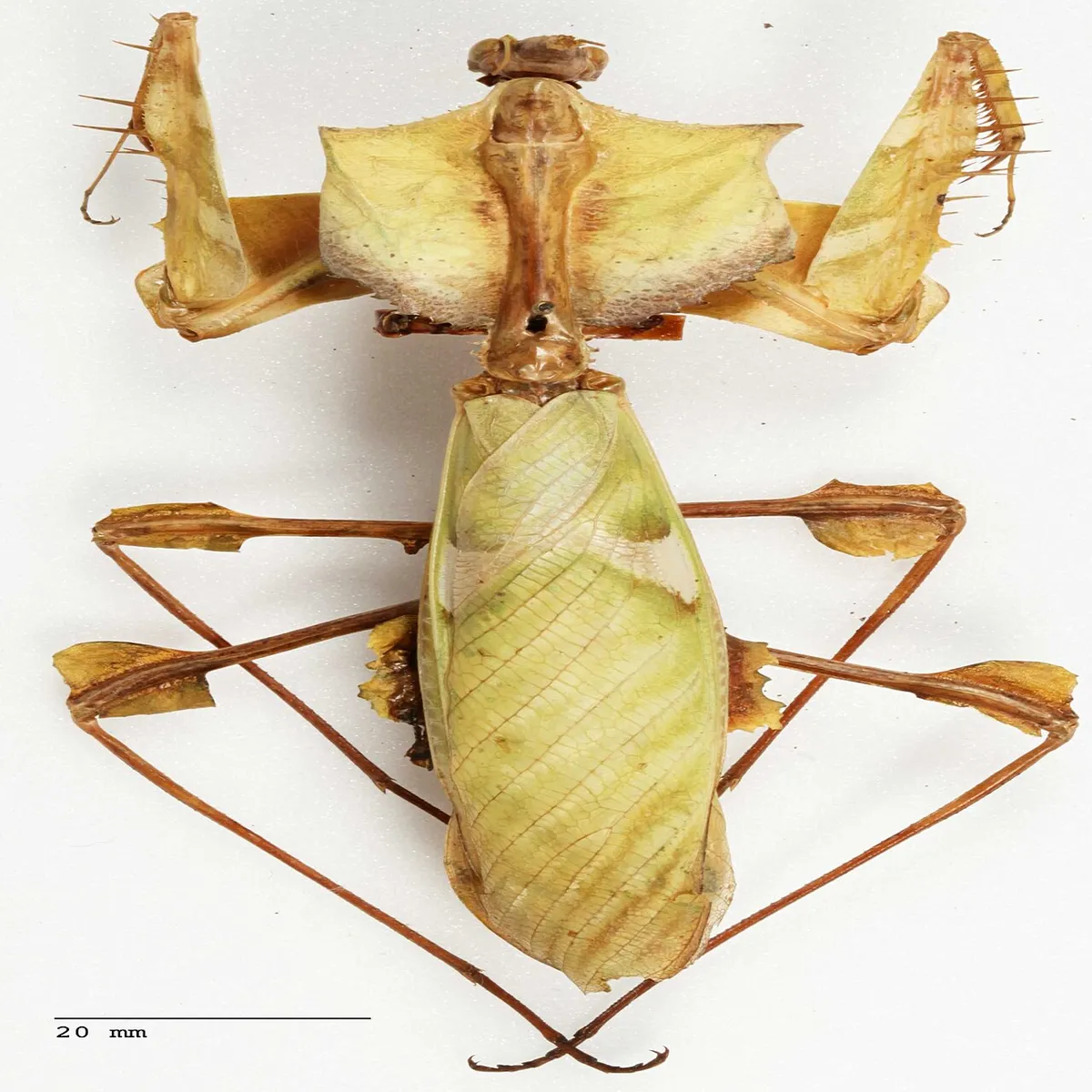
| Dead leaf mantis | Deroplatys desiccata | 7 to 9 cm | Southeast Asia; forest floor leaf litter | Flattened, mottled body vanishes against dead leaves |
| Devil’s flower mantis | Idolomantis diabolica | 11 to 13 cm | East Africa; flowering shrubs | Largest flower-mimicking mantis in the world |
| Conehead mantis | Empusa pennata | 6 to 8 cm | Mediterranean Europe; dry grassland and scrub | Cone-shaped crest on top of the head |
| Violin mantis | Gongylus gongylodes | 8 to 10 cm | India and Sri Lanka; dry scrub and bushes | Slender body with leaf-like lobes on the legs; sways like a leaf in the wind |
| Springbok mantis | Miomantis caffra | 4 to 5 cm | Southern Africa; invasive in New Zealand; gardens | Bright green females; a well-known invasive species in New Zealand |
| Mediterranean mantis | Iris oratoria | 5 to 7 cm | Mediterranean region; introduced to the southwestern US; dry grassland | Bright eye-spot on each hindwing, shown in display |
| Arizona mantis | Stagmomantis limbata | 6 to 8 cm | Southwestern US; desert shrubs and gardens | Bordered wings and a broad range across the US Southwest |
| Texas unicorn mantis | Phyllovates chlorophaea | 6 to 8 cm | Southern US to South America; shrubs and trees | Two-part horn on the head, unique among mantises |
| Brunner’s stick mantis | Brunneria borealis | 8 to 10 cm | Southern US; tall grass and shrubs | Entirely female species; reproduces without males |
| Cryptic mantis | Acanthops falcata | 4 to 5 cm | South America; dead leaves in the forest understory | Curls its body into a dead-leaf shape when resting |
| Bark mantis | Liturgusa species | 2 to 3 cm | Central and South America; tree trunks | Flat, fast runner that hunts on vertical bark |
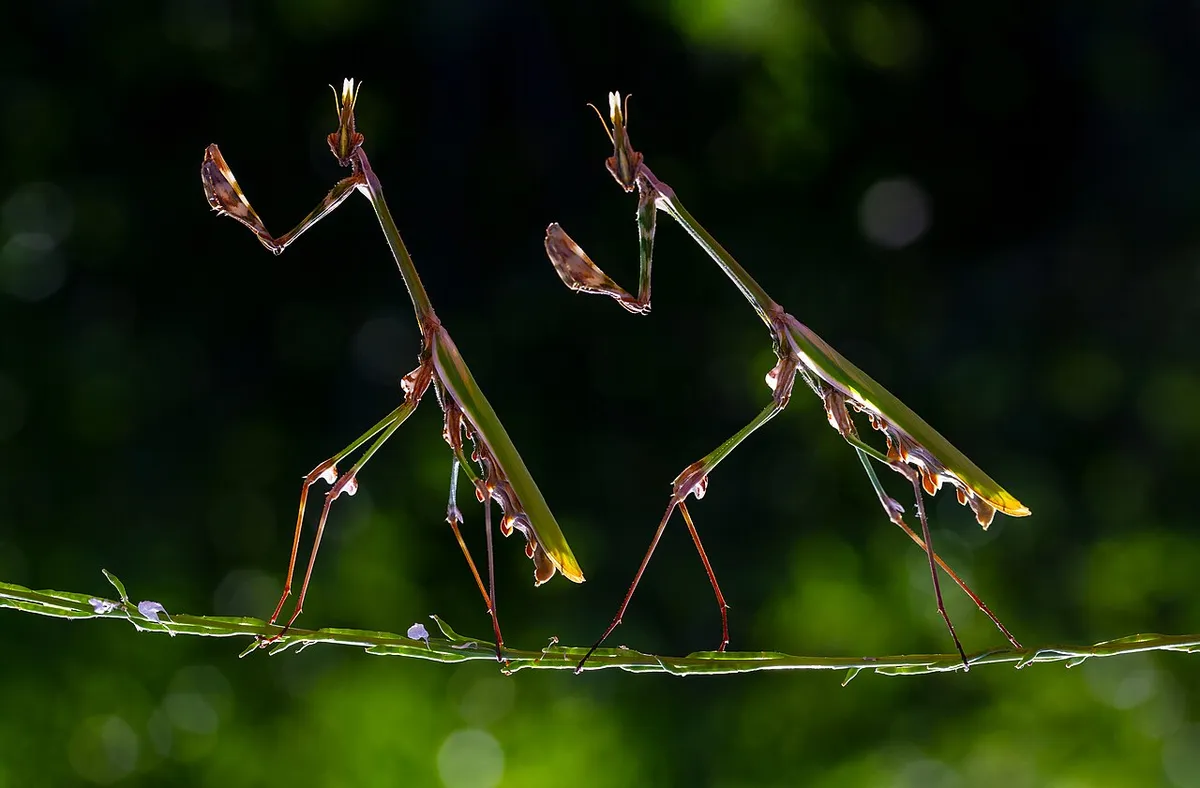
| Boxer mantis | Otomantis species | 2 to 3 cm | East Africa; shrubs and grasses | Raises its forelegs in a boxing pose when threatened |
| African mantis | Sphodromantis viridis | 7 to 9 cm | Africa and the Middle East; gardens and scrub | Hardy beginner pet; tolerates a wide range of conditions |
These 20 cover the species you are most likely to encounter. If yours is not an exact match, the sections below will narrow it down.
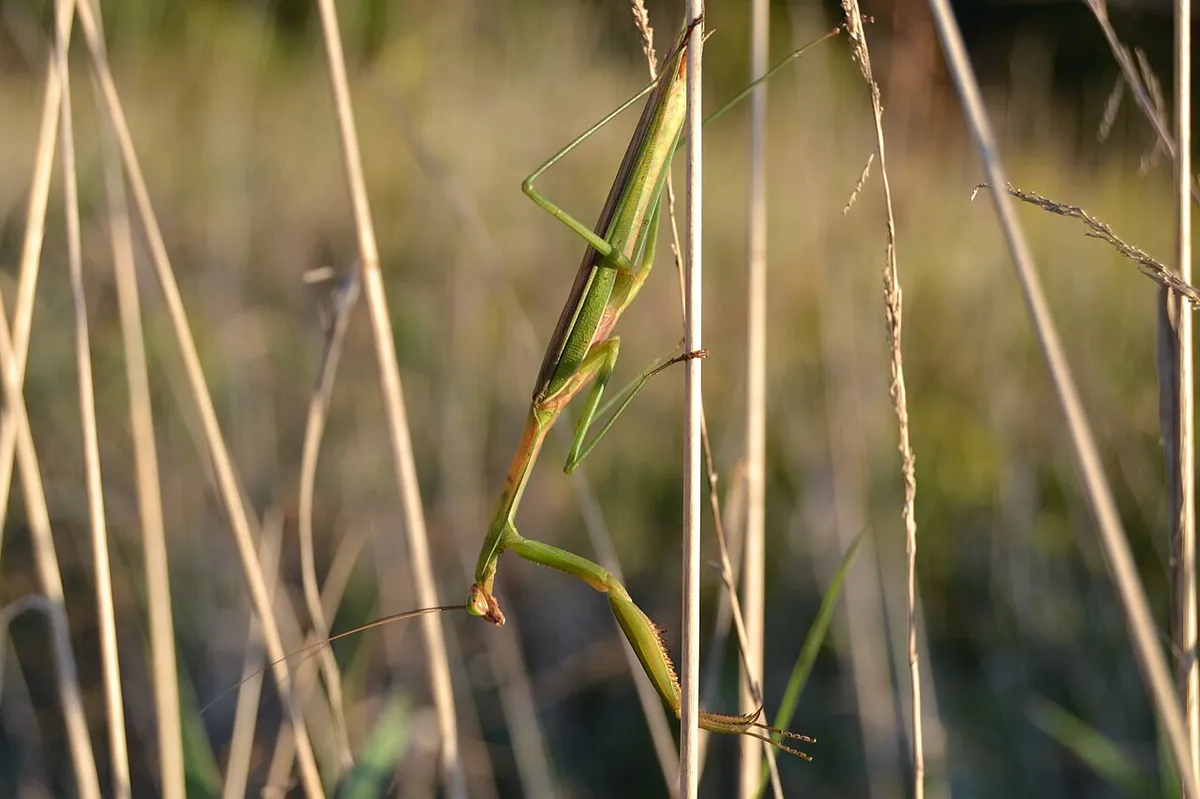
The Largest Types of Mantises
Size is the first thing most people ask about, and the honest answer starts with sex: females are usually much larger than males, so the biggest individual of any species is almost always female. The devil’s flower mantis tops the flower mimics at up to 13 centimeters, and the Chinese mantis is the biggest species most North Americans will ever see outdoors, reaching about 11 centimeters.
The giant Asian mantis and the African mantis are close behind and far bulkier in build. If you spot a mantis longer than your thumb in the United States, it is almost certainly an introduced Chinese or European mantis, since no native US mantis reaches that size.

The Smallest Types of Mantises
At the other end of the scale, bark mantises and boxer mantises stay tiny, with adults around 2 to 3 centimeters. Their small size is part of the disguise: flat against bark or tucked into grass, they are nearly invisible. Small species also mature faster and need less food, which makes several of them practical for first-time keepers with limited space.
Do not judge a mantis by size alone, though. A 3 centimeter spiny flower mantis, eye-spots flashing, is a far more dramatic hunter than many species three times its size.

Flower, Leaf, Stick, and Bark Mimics
Camouflage is how mantises make a living, and the four classic disguises each suit a different hunting ground. Flower mimics like the orchid mantis sit on blooms and wait for pollinators. Leaf mimics like the ghost mantis hang among foliage or litter. Stick mimics like Brunner’s stick mantis sway gently in grass, and bark mimics like Liturgusa flatten themselves to tree trunks and chase prey on foot.
Knowing the disguise narrows identification fast. A mantis on a flower in Southeast Asia belongs to a very different suspect list from one flattened on bark in Brazil.
Types of Mantises by Region
North America. The Carolina mantis is the widespread native, joined in the Southwest by the Arizona mantis and in the South by the Texas unicorn mantis and Brunner’s stick mantis. The introduced Chinese and European mantises are now common across much of the continent.
Europe. Only a handful of natives live here, led by the European mantis and the conehead mantis in the warm Mediterranean south, both favoring dry grassland and scrub.
Africa. Africa holds the greatest variety for keepers: the ghost mantis, the spiny flower mantis, the devil’s flower mantis, the African mantis, and the boxer mantis all come from here, and Madagascar hosts the ghost mantis and relatives found nowhere else.
Asia. Tropical Asia holds the orchid mantis, the giant Asian mantis, the dead leaf mantis, and the violin mantis, most of them in rainforest or monsoon scrub.
South America. Dead-leaf Acanthops species, bark mantises, and the southern range of the Texas unicorn mantis round out the Americas, most favoring warm forest understory.
How to Identify a Mantis in Your Garden
Start with the front legs: spined and folded means mantis, full stop. Then check the head, which is triangular and turns far further than any grasshopper can manage. Note the posture too: mantises wait and ambush rather than hopping away.
Finally, match the disguise to the habitat using the table above, and look for an egg case. Females lay a foamy case called an ootheca, glued to stems and walls, and finding one confirms a breeding population nearby.
Are Mantises Good for the Garden?
Yes, with one honest caveat. Mantises eat aphids, flies, moths, and other garden pests without chemicals. They are generalists, though, so they also eat bees, butterflies, and other beneficial insects, including other mantises. Think of them as one part of a healthy garden, not a pest control product.
Avoid buying egg cases in bulk and releasing them. Crowded hatchlings mostly eat each other, and the survivors may be non-native species. A garden with shrubs, tall grass, and a few undisturbed corners will attract wild mantises on its own. Their prey includes common insects like crickets and cockroaches, which is one reason they settle wherever insect life is plentiful.

Mantis vs Look-Alike Insects
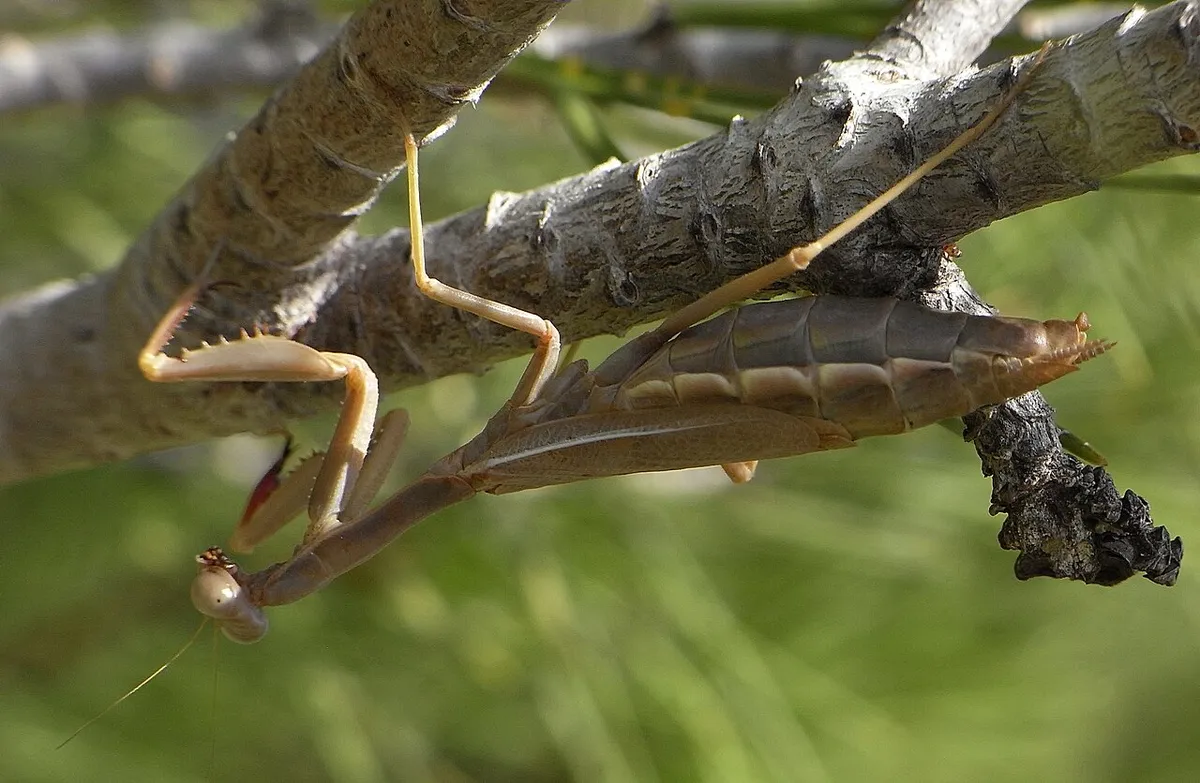
People often mix mantises up with other long-bodied insects. The fastest way to be sure is to look at the front legs and the way the animal feeds. Mantises are the only common insects here that hold prey in spiked, folding arms. A stick insect has plain walking legs and eats leaves. A grasshopper has big jumping hind legs and eats plants. An assassin bug folds its front legs too, but it has a narrow head with a long curved beak.
Frequently Asked Questions
How many types of praying mantis are there?
More than 2,400 species exist worldwide, in roughly 30 families. Only a few dozen are common in gardens or the pet trade, and this chart covers the 20 you are most likely to meet.
What is the largest type of mantis?
The devil’s flower mantis reaches about 13 centimeters, and the Chinese mantis reaches about 11 centimeters, making them the two largest species most people encounter.
What is the smallest type of mantis?
Some bark and boxer mantises measure just 2 to 3 centimeters as adults.
Is the orchid mantis a real species?
Yes. Hymenopus coronatus is a real Southeast Asian species whose petal-shaped legs mimic a flower to lure the pollinators it hunts.
Are mantises dangerous to humans?
No. They have no venom or sting. A large one can pinch with its spined forelegs, but it cannot seriously hurt a person.
How can I tell a mantis from a stick insect?
A mantis has spined, grasping front legs and hunts live prey. A stick insect has plain walking legs and eats leaves.
Conclusion
From the tiny bark mantis to the 13 centimeter devil’s flower mantis, this chart shows how one hunting design has adapted to flowers, leaves, sticks, and bark on every warm continent. Use the size, range, and field marks in the table to identify the mantis you found.

