
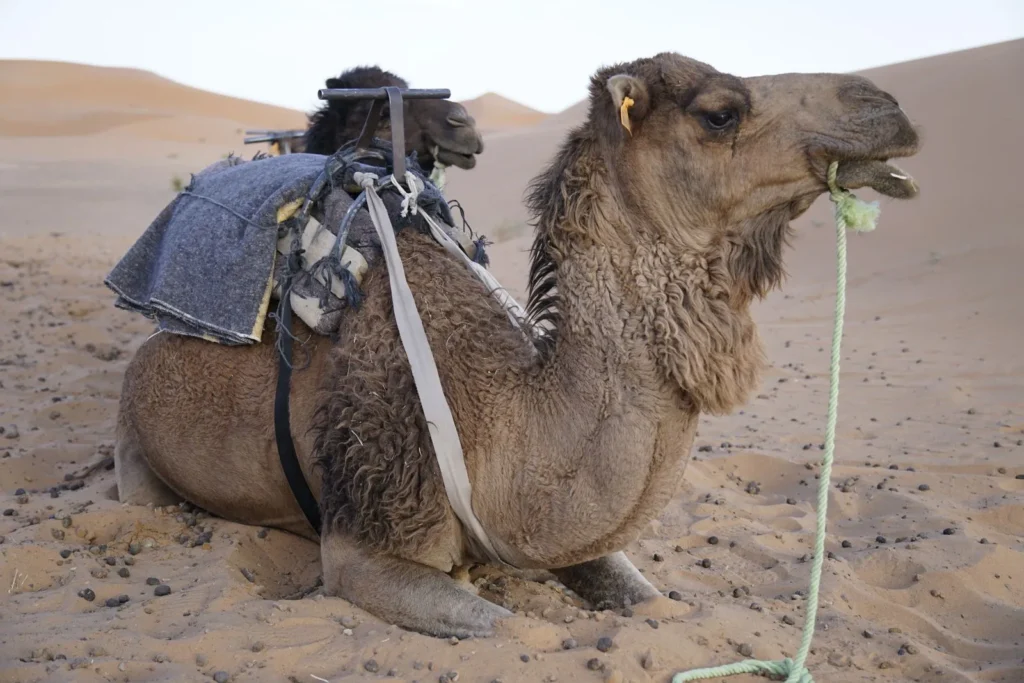
Ask most people to picture a camel and they describe one animal: a tall, sandy creature with a hump, crossing a hot desert. The real picture is more interesting. There are three living types of camels, and they could hardly differ more. One rules the hottest deserts on Earth, one shrugs off Siberian winters, and one is so rare that fewer than a thousand are left alive.
This guide puts every type of camel side by side in one chart, with sizes, weights, habitats, lifespans and populations, then walks through each species, the powerful herder’s hybrid, and how camels relate to llamas and alpacas.
The 3 Types of Camels at a Glance
All three species belong to the genus Camelus in the family Camelidae. The dromedary has one hump, while the Bactrian camel and the wild camel have two. Dromedaries make up roughly nine of every ten camels alive today.
| Common Name | Scientific Name | Humps | Height at Humps | Weight | Where It Lives | Population | Lifespan | Status |
|---|---|---|---|---|---|---|---|---|
| Dromedary Camel | Camelus dromedarius | 1 | 1.8 to 2.1 m (6 to 7 ft) | 400 to 600 kg | Middle East, North and East Africa, South Asia; feral in Australia | Over 30 million | 40 to 50 years | Domesticated |
| Bactrian Camel | Camelus bactrianus | 2 | Up to 2.3 m (7.5 ft) | 450 to 1,000 kg | Central Asia: Mongolia, China, Kazakhstan | About 2 million | Up to 50 years | Domesticated |
| Wild Camel | Camelus ferus | 2 | 1.9 to 2.1 m (6.2 to 7 ft) | 400 to 650 kg | Gobi Desert, China and Mongolia | Fewer than 1,000 | About 30 to 40 years | Critically Endangered |
| Camel Hybrid (Tülü) | C. dromedarius x C. bactrianus | 1 (with a dip in the middle) | Up to 2.3 m (7.5 ft) | Up to 1,100 kg | Bred in Turkey, Kazakhstan, Iran | Bred on demand | 40 to 50 years | Crossbreed, not a species |
One name you may meet online is the “dwarf camel.” It is not a fourth species, just a small camel bred down in size and kept as a novelty or pet. There is a fuller answer in the questions at the end of this guide.
What All Types of Camels Have in Common
Whatever the species, a camel is built around one problem: surviving where water and food cannot be counted on. The famous hump is a fat store, not a water tank. A well fed camel’s hump stands plump and upright; as the fat burns, it shrinks and leans to one side. That reserve lets a camel cross days of empty country between meals.

A camel can lose close to a third of its body water and keep walking, a loss that would kill most mammals. Its body temperature drifts up and down by several degrees across the day, so it sweats far less. Its red blood cells are oval rather than round, which keeps blood flowing even when it thickens, and when water finally appears, a thirsty camel can drink over 100 liters in ten minutes.
The outside is just as practical. Two broad toes on a soft, leathery pad spread the camel’s weight so it walks on sand instead of sinking into it. A split upper lip works like a pair of fingers for stripping leaves from thorny shrubs. Two rows of long eyelashes, bushy eyebrows and nostrils that pinch shut keep blowing sand out. And like the giraffe, a camel walks by moving both legs on the same side together, a swaying gait called pacing (see our guide to the types of giraffes).

Camel calves are born without humps and can stand and follow their mother within hours. They nurse for a year or more, staying close while they grow.
1. Dromedary Camel: The One-Humped Camel
The dromedary (Camelus dromedarius) is the camel of postcards and desert films: one hump, long legs, and a body tuned for heat. It is also by far the most numerous type of camel, with well over 30 million animals kept across Africa and Asia for milk, meat, wool and transport.

A dromedary stands 1.8 to 2.1 meters at the hump and weighs 400 to 600 kg. Everything about it suits hot, dry country: a thin summer coat, long legs that lift its body above the hot ground layer, and a willingness to graze salty, thorny scrub that other livestock refuse.
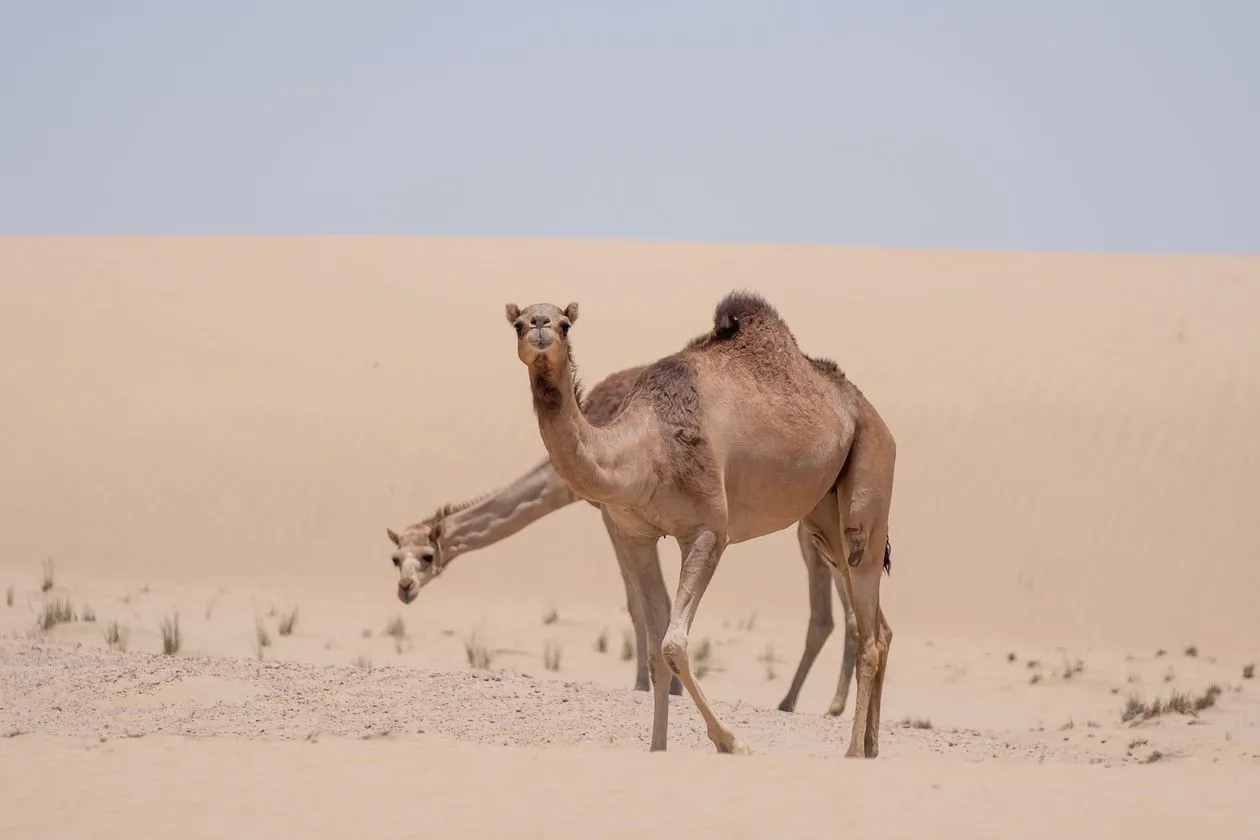
People domesticated the dromedary in Arabia roughly 3,000 to 4,000 years ago, and the wild dromedary has been extinct for around 2,000 years, so every dromedary alive today descends from domestic stock. That includes Australia’s famous feral herd: camels shipped there in the 1800s as pack animals were released or escaped, and their descendants now number in the hundreds of thousands in the outback, the largest wild living camel population in the world.

2. Bactrian Camel: The Two-Humped Camel
The Bactrian camel (Camelus bactrianus) is the dromedary’s cold weather counterpart. It carries two humps, a stockier build, and a thick, shaggy winter coat that sheds in great sheets each spring. Its home is the steppes and cold deserts of Central Asia, mainly Mongolia and China, where winter temperatures can fall below minus 40 degrees Celsius.
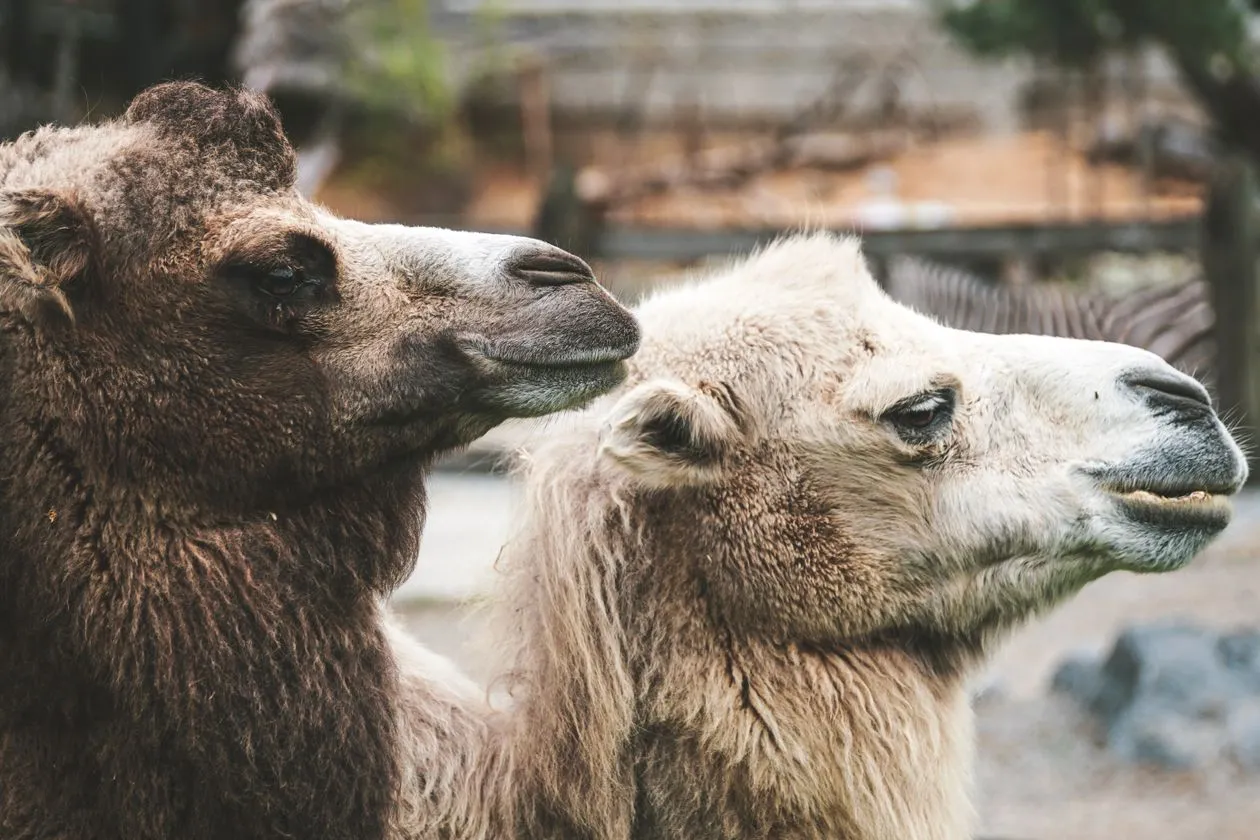
It stands up to 2.3 meters at the top of its humps and heavy males can reach 1,000 kg, making it the largest of the types of camels. Around 2 million domestic Bactrians are kept today, and Mongolia alone holds close to half a million.

Bactrian camels were domesticated on the Central Asian steppes around 4,000 to 6,000 years ago, earlier than the dromedary. The name comes from Bactria, an ancient Central Asian region. They carried Silk Road goods between China and the West, and their soft undercoat wool is still collected for clothing and felt.
3. Wild Camel: The Rarest of All Types of Camels
The wild camel (Camelus ferus) looks like a Bactrian at first glance, and for years scientists assumed it was just a feral escapee. Genetic studies settled the question: it is a separate species that split from the Bactrian’s ancestors well over a million years ago, long before domestication.
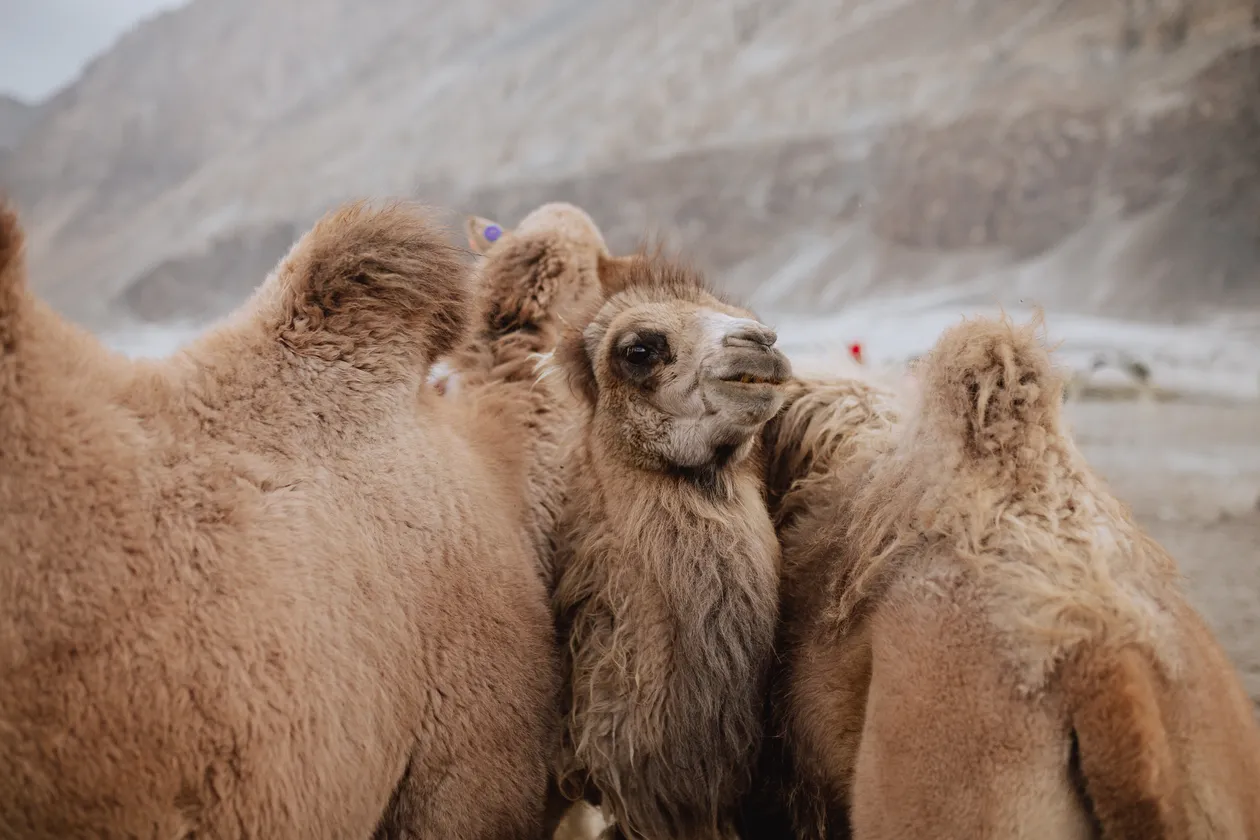
Fewer than 1,000 wild camels survive, in four pockets of the Gobi Desert: the Great Gobi A Strictly Protected Area in Mongolia and the Lop Nur and Gashun Gobi regions of China. They live in small groups and wander enormous distances between water sources.
Their toughness is extreme even by camel standards. Wild camels drink from salty springs that no domestic camel will touch, endure summers above 40 degrees and winters far below freezing, and survive in country with almost no rain. The IUCN has listed the species as Critically Endangered since 2002. Habitat loss, hunting and mining shrink its tiny range, and mating with stray domestic camels dilutes the wild gene pool. The Wild Camel Protection Foundation, founded in 1997, runs breeding and protection work in both countries.
The Camel Hybrid: Stronger Than Both Parents
Dromedaries and Bactrian camels can breed together, and unusually for a species cross, the offspring are fertile, because both parents have the same number of chromosomes.
The first generation hybrid is called a tülü in Turkish and bukht in Kazakh. It usually carries one long hump with a shallow dip in the middle, and it grows bigger and stronger than either parent, sometimes topping 1,100 kg. Herders in Turkey, Kazakhstan and Iran have bred them for centuries as heavy pack animals; in Turkey the big males are also raised for camel wrestling.


Types of Camels vs Llamas and Alpacas
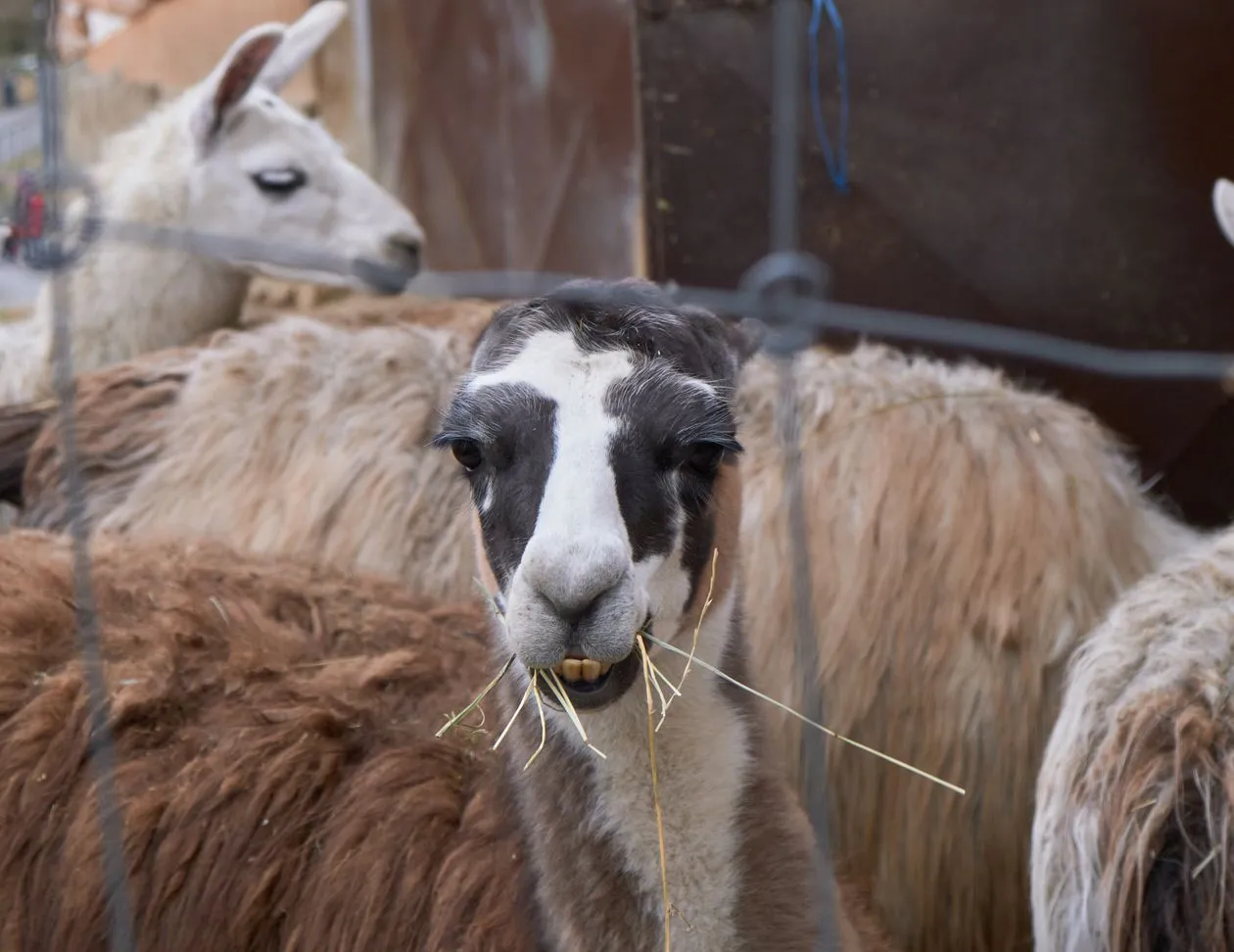
Camels, llamas and alpacas are all members of the camel family, Camelidae. The family began in North America, and its members split by geography: the true camels crossed into Asia and Africa, while their cousins spread south to become the four South American camelids: the llama, alpaca, guanaco and vicuña.
| Feature | True Camels (Old World) | Llamas and Alpacas (New World) |
|---|---|---|
| Hump | Yes, one or two | None |
| Native range | Asia, Middle East, North Africa | Andes, South America |
| Typical weight | 400 to 1,000 kg | Llama about 120 kg; alpaca about 60 kg |
| Main uses | Transport, milk, meat, wool | Wool, light pack work, guarding herds |
| Wild relatives | Wild camel | Guanaco and vicuña |
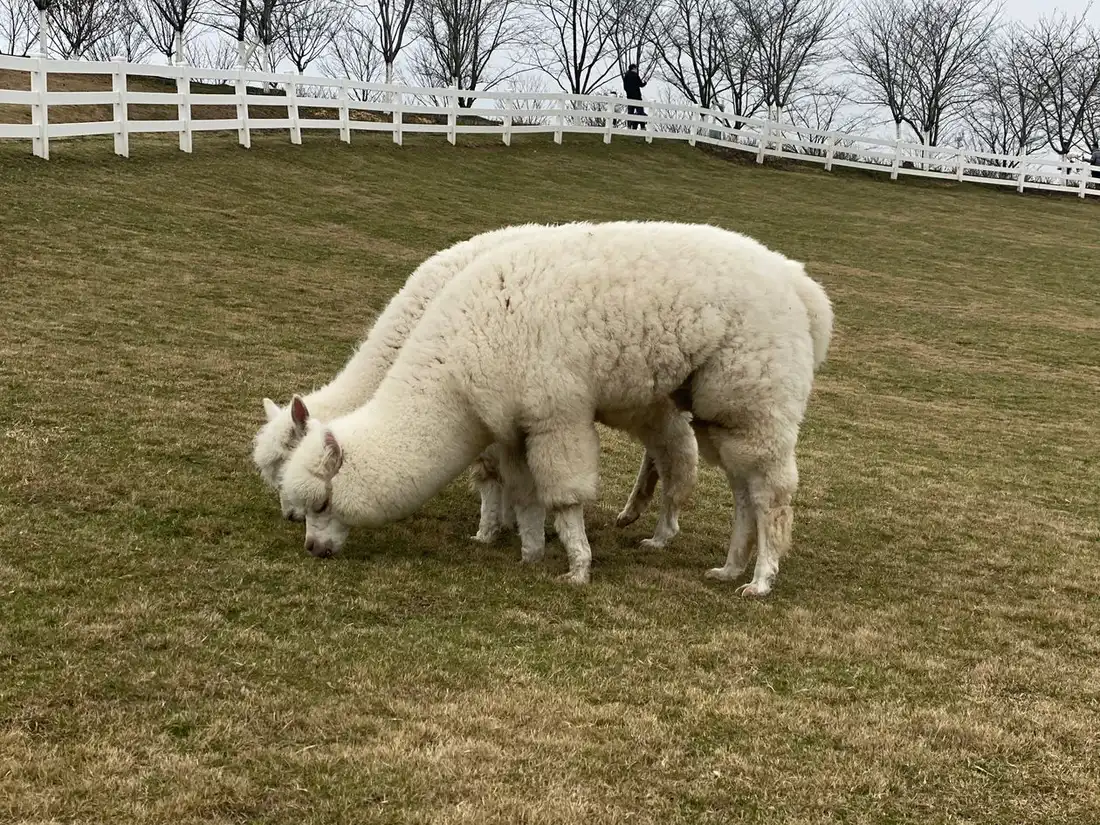
The quickest tell is the hump: if it has one, it is a true camel. The South American branch is far smaller, and alpacas are bred almost entirely for fiber.
Are Camels Endangered?
Two of the three types of camels are in no danger at all: dromedaries and domestic Bactrians number in the millions and are farmed on several continents. The wild camel is the exception, one of the rarest large mammals on Earth. Protecting its last Gobi refuges, and keeping domestic herds from mixing with it, are the steps conservationists say matter most.
Frequently Asked Questions
How many types of camels are there?
There are three living camel species: the dromedary, the Bactrian camel and the wild camel. A fertile hybrid of the dromedary and Bactrian also exists, but it is a crossbreed, not a fourth species.
What is the difference between a dromedary and a Bactrian camel?
The dromedary has one hump, longer legs and a thin coat for hot deserts in Africa and the Middle East. The Bactrian camel has two humps, a stockier build and a thick coat for the cold steppes of Central Asia. A memory trick: turn the first letter on its side and a D shows one hump, while a B shows two.
Which type of camel is the biggest?
The Bactrian camel is the largest living species, reaching up to 2.3 meters at the humps and as much as 1,000 kg. A dromedary and Bactrian hybrid can match that weight.
Do camels store water in their humps?
No. The hump stores fat, which the camel burns for energy when food is scarce. Its water saving comes from other tricks: tolerating big swings in body temperature and losing up to a third of its body water without harm.
Is a dwarf camel a real species?
No. A dwarf camel is a small, selectively bred domestic camel kept as a novelty or pet, not a separate type of camel.
How long do camels live?
Domestic camels commonly live 40 to 50 years. Wild camels in the Gobi have a harder life and usually reach about 30 to 40 years.
Conclusion
The three types of camels split one body plan three ways: the dromedary built for heat, the Bactrian built for cold, and the wild camel holding on in the harshest desert of all. Learn the humps and you can name any camel at a glance: one hump for the dromedary, two for the Bactrian and its wild cousin.
For more chart style animal guides, see our charts on the types of whales and the types of sharks.

