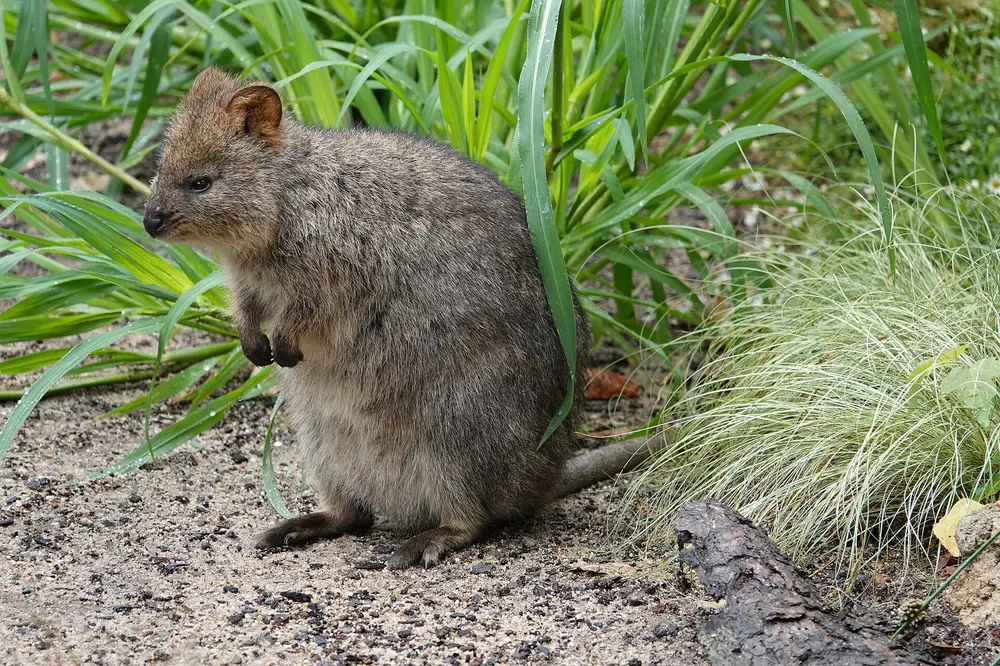
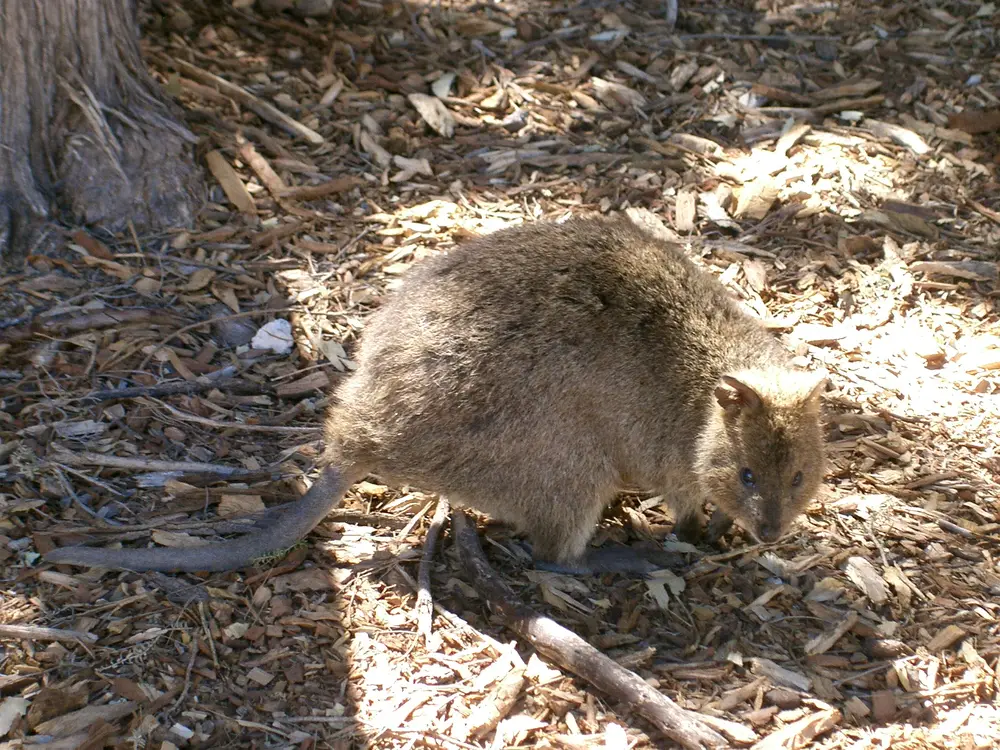
A quokka looks like it is smiling at the camera, and that famous grin has made it one of the most photographed animals in Australia. This quokka lifespan chart gives the numbers behind the smile: how long quokkas live in the wild and in captivity, which populations live longest, and what cuts their lives short. The short answer is about 10 years in the wild and up to 14 years in captivity.
Quokkas are small wallabies, about the size of a house cat, and they live only in the far southwest of Western Australia, on predator free islands and in mainland forests where foxes, cats, and bushfire keep most animals from reaching old age.
Quokka Lifespan Chart: Wild vs Captive by Population
The quokka, Setonix brachyurus, is the only species in its genus. Adults measure 40 to 54 cm long, with a tail of 25 to 30 cm, and weigh 2.5 to 5 kg.
| Population | Region | Wild Lifespan | Captivity Lifespan | Adult Size | Habitat |
|---|---|---|---|---|---|
| Quokka (general) | Southwestern Australia | About 8 to 10 years | Up to 13 to 14 years | 40-54 cm, 2.5-5 kg | Dense scrub, forest, swamps |
| Rottnest Island | Rottnest Island, WA | About 8 to 12 years | Up to 14 years | 40-54 cm, 2.5-5 kg | Coastal scrub and woodland |
| Bald Island | Bald Island, near Albany | About 8 to 12 years | Up to 14 years | 40-54 cm, 2.5-5 kg | Island scrub, no predators |
| Mainland | Mainland Western Australia | About 5 to 8 years | Up to 14 years | 40-54 cm, 2.5-5 kg | Jarrah forest, dense thickets |
The pattern is plain. A mainland quokka is the same animal as a Rottnest quokka, with the same size, diet, and breeding rate. What changes is the neighbourhood: island quokkas live without foxes, while mainland quokkas share their forest with foxes, feral cats, and dogs.

Which Quokkas Live the Longest?
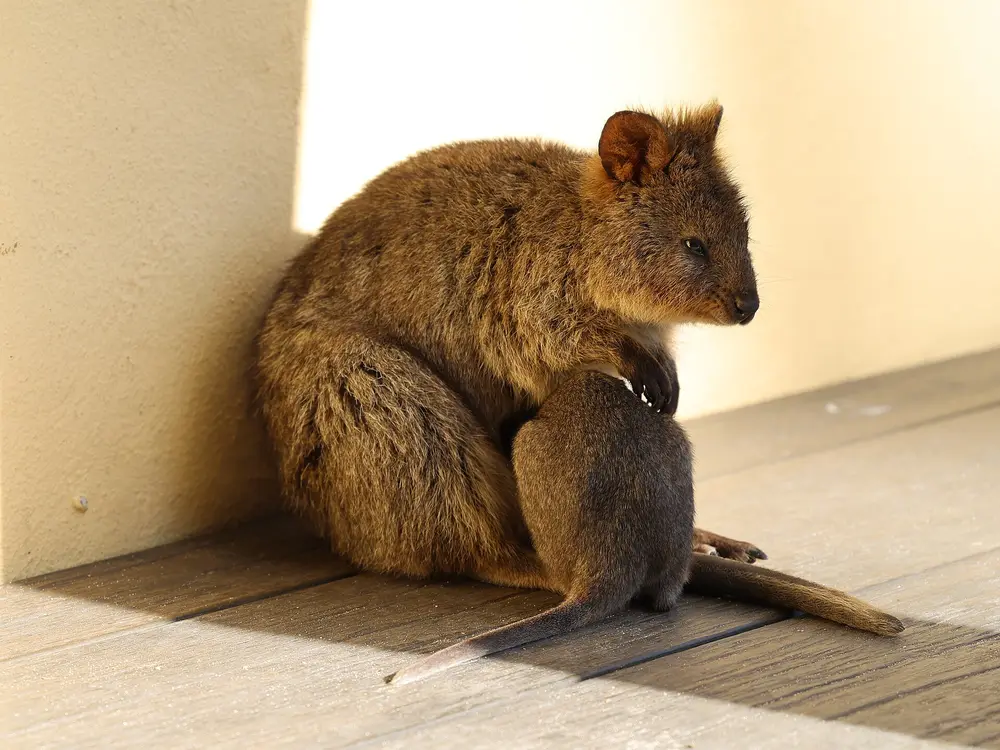
The island populations take the top spots. Rottnest Island is fox free, and snakes are the only predator a quokka must dodge there. Bald Island, near Albany, has no land predators at all. Both groups push toward 10 to 12 years in the wild.
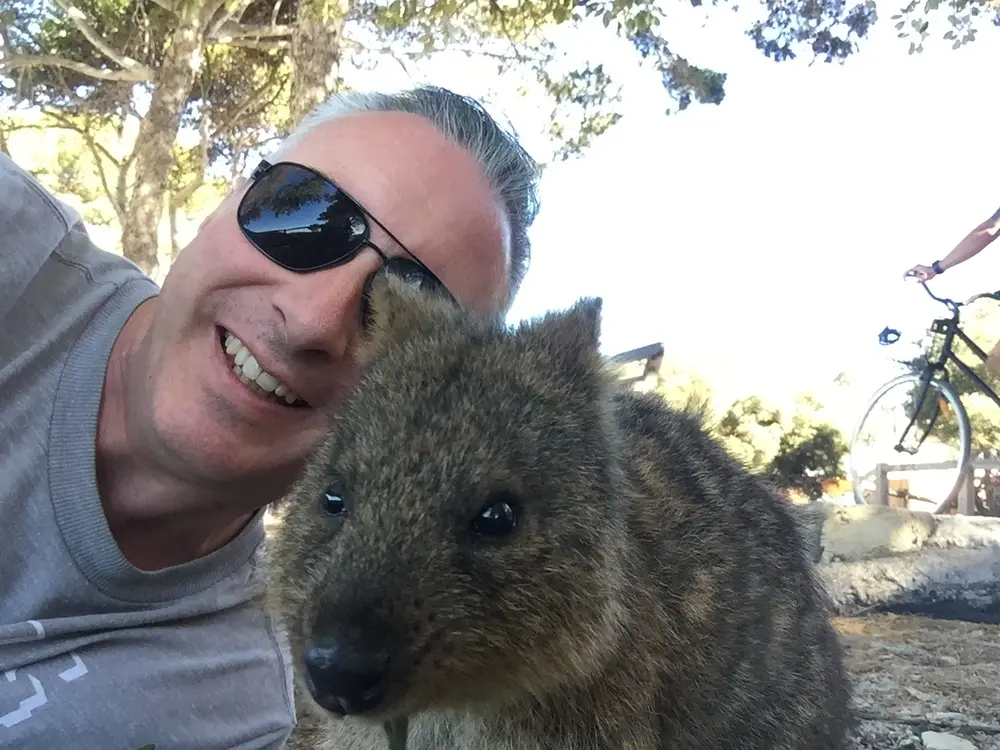
Rottnest holds the largest quokka population anywhere, an estimated 10,000 animals, and it is where most people meet a quokka. The island’s quokkas are famously bold around visitors. Feeding and touching them is illegal, and rangers can fine visitors who do it.
Mainland quokkas have the hardest time. Red foxes spread across the southwest by the 1930s, and with feral cats and dogs they turned the forests into risky ground. Many mainland animals die young, before they can breed. Clearing has cut the mainland range by more than half since European settlement, and one bushfire can wipe out a local group: the 2015 Northcliffe fire killed an estimated 90 percent of one group of about 500 animals.

Quokka Life Stages: From Joey to Old Age
A quokka’s life runs on a fast clock compared with a kangaroo or a koala. Females can breed from about one year of age, and a female raises only one joey at a time.
| Life Stage | Approx. Age | What Happens |
|---|---|---|
| Joey in the pouch | 0 to 6 months | Born after about 27 days, the joey crawls to the pouch and stays there. |
| Joey at foot | 6 to 8 months | Leaves the pouch but keeps suckling and stays close to its mother. |
| Juvenile | 8 months to 1 year | Becomes independent. The riskiest time of life. |
| Young adult | 1 to 3 years | Reaches breeding age. Females usually raise a first joey at one year old. |
| Prime adult | 3 to 8 years | Breeds each year, one joey at a time. |
| Old adult | 8 to 14 years | Teeth wear down and movement slows. |
One quirk helps them recover from bad luck. A female can hold a second embryo in a paused state, a trick called embryonic diapause. If the joey in her pouch is lost, the paused embryo can develop and take its place, so she can raise a replacement joey in the same season. It is a useful backup, but one joey a year is still a slow rate of recovery.


Wild vs Captivity: Do Quokkas Live Longer in Zoos?
Yes, clearly. In captivity a quokka gets steady food, veterinary care, and no predators, drought, or bushfire. The captive maximum sits close to 14 years, while the wild average is about 10.
Zoos also remove the stress of the lean season. Quokkas store fat in their tails for dry times, and they get moisture from the leaves they eat, so they can go long periods without drinking. Wild quokkas on Rottnest, though, live almost as long as captive ones, around 10 to 12 years, because the island already gives them the safety a zoo provides.
What Shortens a Quokka’s Life
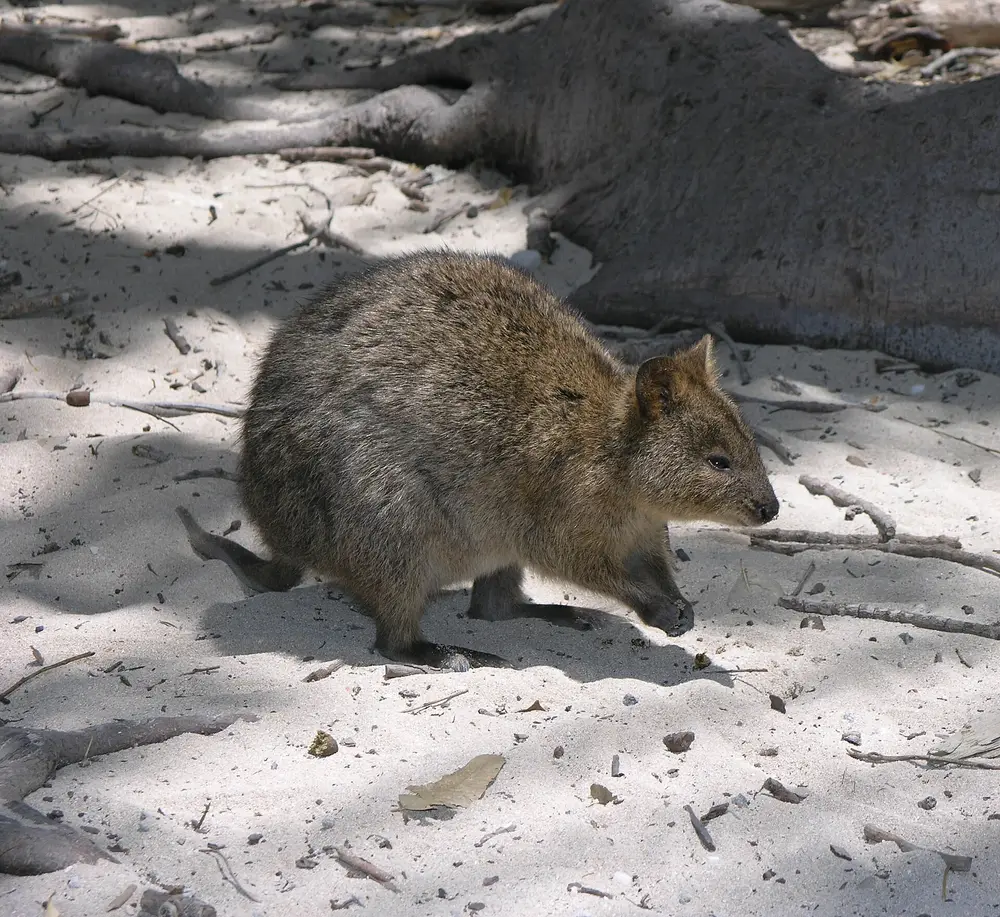
Predators do the most damage on the mainland. Foxes are the leading cause of early death, and feral cats and dogs take juveniles and adults alike. On Rottnest, foxes are absent and snakes are the main threat. A quokka’s main defence is dense ground cover, and when that cover is cleared or burned away, the animal is exposed.
Food and water come next. Quokkas need fresh water and green growth, and they store fat in their tails for lean seasons. A dry year raises stress and competition, and that shortens lives. Quokkas feed mostly at night and rest in the shade during the day, but a long drought still hits hard.
Disease is a quieter threat. Stressed, crowded populations get sick more often, and tourist feeding is linked to poor health in island animals. Human food dehydrates quokkas and harms their teeth and gut. Road strikes, dog attacks, and rough handling add further losses near towns and on busy parts of Rottnest. Keep a step back, and never offer food.
How the Quokka Lifespan Compares to Other Marsupials
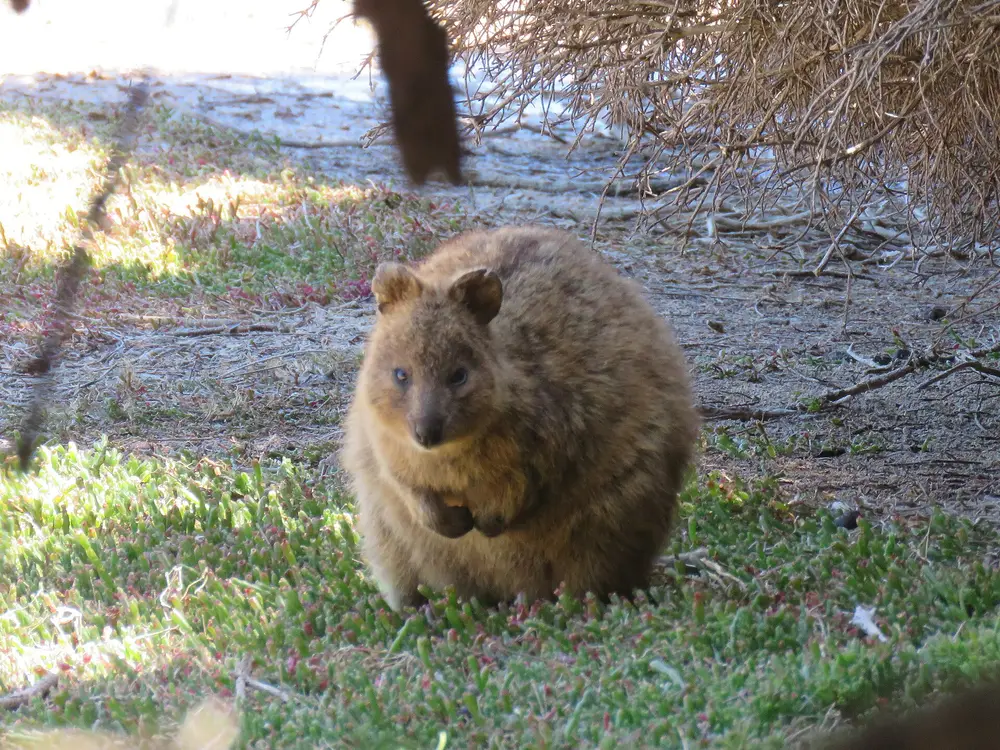
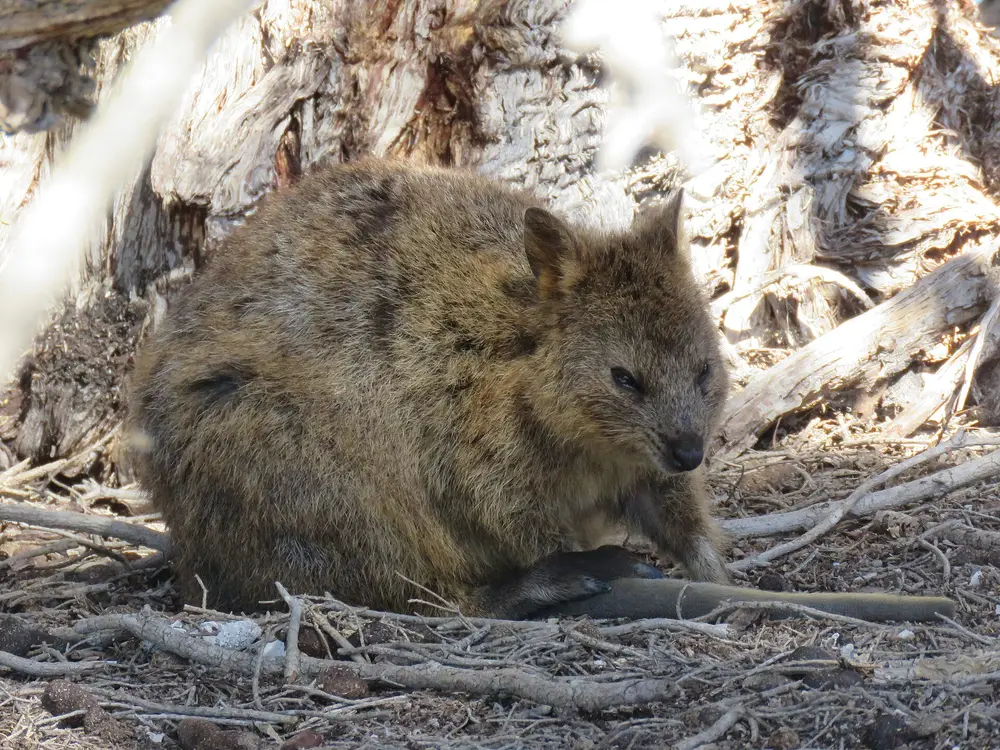
A quokka’s 10 year wild span is normal for a small wallaby, but it falls well short of its larger cousins. Kangaroos are big and face few predators, so they can more than double it.
| Animal | Typical Wild Lifespan | Typical Captive Lifespan | Notes |
|---|---|---|---|
| Quokka | About 8 to 10 years | Up to 14 years | Small wallaby, only species in genus |
| Tammar wallaby | Under 10 years | About 10 to 14 years | Close relative of similar size |
| Red-necked wallaby | About 9 years | About 12 to 15 years | Common, larger wallaby |
| Red kangaroo | Up to about 23 years | Up to about 25 years | Largest living marsupial |
| Koala | About 12 to 15 years | 15 years and over | Tree dwelling marsupial |
| Common wombat | About 15 years | Up to about 26 years | Burrowing marsupial |
| Domestic cat | About 12 to 18 years | Up to about 20 years | Similar size, not a marsupial |
The cat row earns its place. A quokka is about the size of a house cat, yet it lives less: a well cared for indoor cat can reach its late teens, while a wild quokka is lucky to reach 10. Our cat lifespan chart breaks that down by breed. Body size alone does not set how long an animal lives: predators, breeding rate, and habitat do most of the work. For the wider picture, see our animals with the longest lifespan chart and our types of rabbits guide.

Record Holders: The Oldest Quokkas
Quokkas have no celebrity elder the way some dog breeds do. The highest verified age is close to 13.8 years, recorded in captivity. That fits the up to 14 years that zoos and recovery reports cite as the species maximum.
In the wild, few quokkas reach that ceiling. Most meet a predator, a drought, or a fire first.

Quokka Lifespan Myths
The most common myth is that quokkas live 20 years or more. There is no basis for it. The wild average is about 10 years, the island upper end is about 12, and the captive ceiling is about 14. Any figure past 15 comes from confusing quokkas with larger wallabies or kangaroos.
Another myth is that quokkas are safe because they are famous. Fame has not protected them. They are listed as Vulnerable on the IUCN Red List and under Australia’s EPBC Act, and the mainland population is still shrinking. The selfies help awareness, but the real protection is predator control and habitat.
Frequently Asked Questions
How long do quokkas live?
Most quokkas live about 8 to 10 years in the wild and up to 14 years in captivity. Island quokkas reach 10 to 12 years; mainland quokkas average only 5 to 8.
Do quokkas live longer on Rottnest Island than on the mainland?
Yes. Rottnest Island is fox free, so island quokkas dodge the predators that shorten mainland lives, and often reach 10 to 12 years.
What is the oldest recorded quokka?
The highest verified age is close to 13.8 years, recorded in captivity. Wild quokkas rarely get near that figure because of predators, drought, and fire.
Can you keep a quokka as a pet?
No. Quokkas are a protected, vulnerable species. Keeping, touching, or feeding them is illegal, with fines on Rottnest Island for visitors who break the rules.
Are quokkas endangered?
Quokkas are listed as Vulnerable on the IUCN Red List and under Australia’s EPBC Act. They are at risk, but not yet classed as endangered.
Why do mainland quokkas have shorter lifespans?
Introduced foxes and feral cats, plus habitat loss and bushfire, push many mainland quokkas to die young. Slow breeding, one joey a year, then makes recovery hard.
Conclusion
The quokka lifespan chart tells a simple story with a split in the middle. Quokkas live about 10 years in the wild and up to 14 years in captivity, with the oldest verified quokka reaching almost 14. The split is where they live: island quokkas reach 10 to 12 years, mainland quokkas only 5 to 8.
That gap is not about biology. It is about foxes, fire, and habitat, and all three can be managed. Predator control, careful fire management, and protected scrub give mainland quokkas a real chance to live out the years in this chart. For visitors, the job is simpler: watch from a step back, and leave the animal wild.