A macaw lifespan chart tells a story no other pet chart can. A dog lives about 13 years and a cat about 17, but a healthy macaw can share 50 years of your life, and the biggest species can pass 70. That is a companion who may outlive your mortgage. Before you bring one home, you need the real numbers.
This macaw lifespan chart covers 16 species, from the tiny red-shouldered macaw to the giant hyacinth, with average and maximum years in captivity, wild numbers for comparison, and the life stages every macaw passes through.

Macaw Lifespan Chart: 16 Species Compared
The figures below are for birds kept in good conditions, with a proper diet, space to fly, and regular vet care. Maximums are documented records, not promises.
| Macaw Species | Scientific Name | Average (Captive) | Maximum (Captive) | Size |
|---|---|---|---|---|
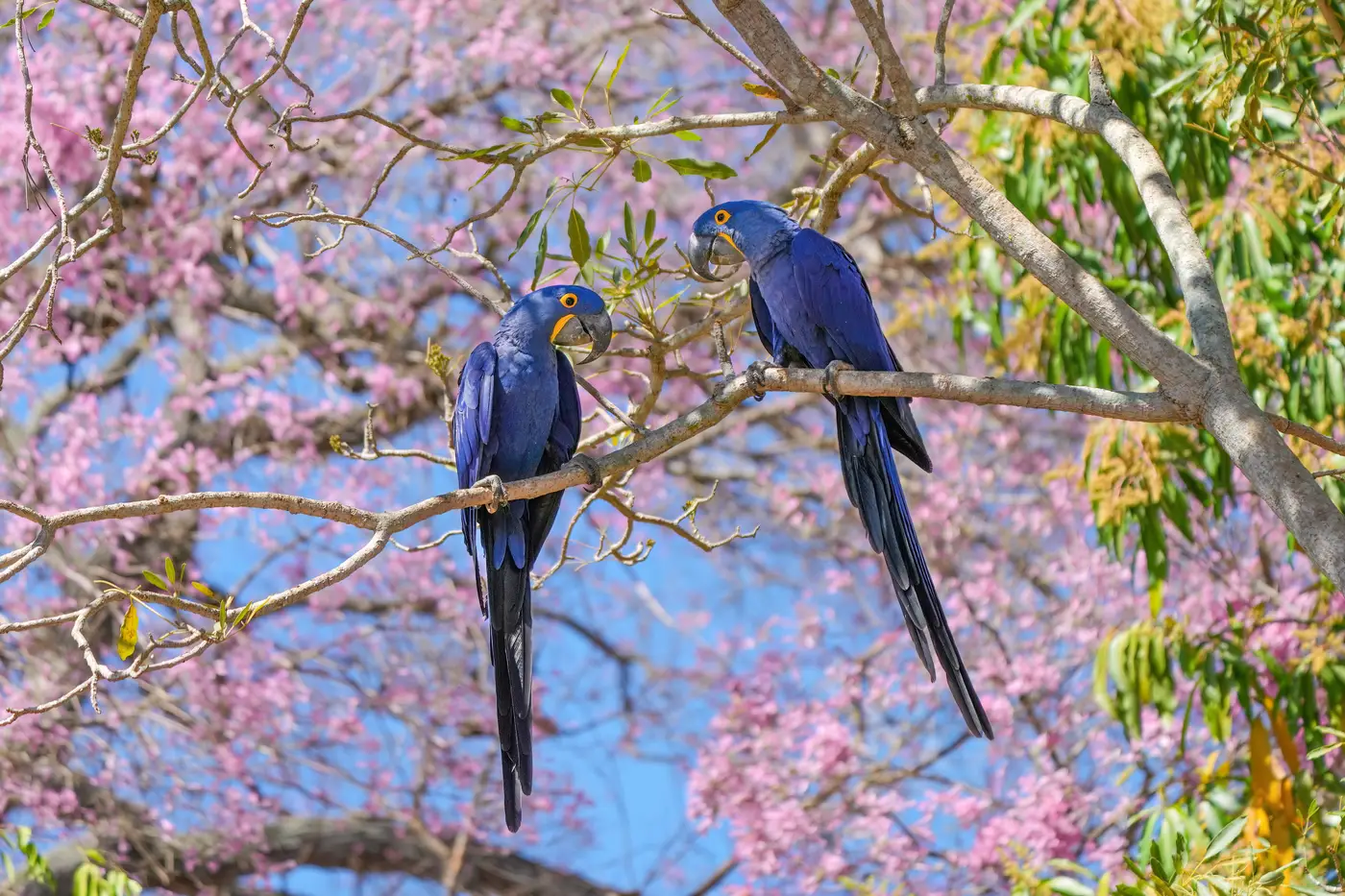
| Hyacinth Macaw | Anodorhynchus hyacinthinus | 50-60 years | 70+ years | Giant |
| Blue-and-yellow Macaw | Ara ararauna | 50-60 years | 80 years | Large |
| Green-winged Macaw | Ara chloropterus | 50-60 years | 80 years | Large |
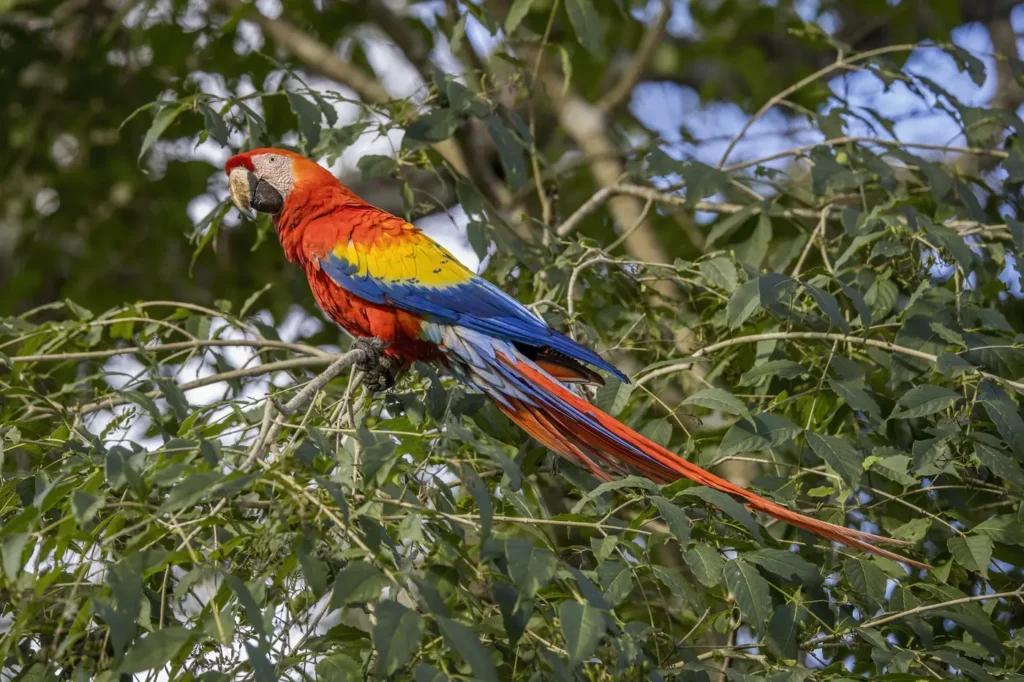
| Scarlet Macaw | Ara macao | 40-50 years | 75 years | Large |
| Military Macaw | Ara militaris | 50-60 years | 70 years | Large |
| Great Green Macaw | Ara ambiguus | 50-60 years | 70+ years | Large |
| Blue-throated Macaw | Ara glaucogularis | 40-50 years | 70 years | Large |
| Lear’s Macaw | Anodorhynchus leari | 30-50 years | 60 years | Large |
| Red-fronted Macaw | Ara rubrogenys | 40-50 years | 60 years | Medium |
| Severe Macaw | Ara severus | 30-40 years | 60 years | Medium |
| Blue-winged Macaw | Primolius maracana | 30-40 years | 50 years | Mini |
| Yellow-collared Macaw | Primolius auricollis | 25-35 years | 50 years | Mini |
| Blue-headed Macaw | Primolius couloni | 30-40 years | 50 years | Mini |
| Red-shouldered Macaw (Hahn’s) | Diopsittaca nobilis | 25-30 years | 50 years | Mini |
| Red-bellied Macaw | Orthopsittaca manilatus | 25-35 years | 40 years | Medium |
| Spix’s Macaw | Cyanopsitta spixii | 25-30 years (est.) | 40 years (est.) | Small |
One pattern runs through the whole table: bigger macaws live longer. The giant hyacinth and the large Ara species clear 50 years without trouble, while the mini macaws top out near 50. Diet, housing, and vet care move a bird several years in either direction.
Wild vs Captive: The Gap Is Bigger Than You Think
Macaws almost always live longer in captivity than in the wild. A safe home removes hawks, snakes, and hungry seasons, and adds steady food and a vet. The gap is large, often 15 to 25 years for the same species.
| Macaw Species | Average in the Wild | Average in Captivity |
|---|---|---|
| Blue-and-yellow Macaw | 30-35 years | 50-60 years |
| Scarlet Macaw | about 40 years | 40-50 years |
| Hyacinth Macaw | about 50 years | 50-60 years |
| Green-winged Macaw | 30-50 years | 50-60 years |
| Military Macaw | not well recorded | 50-60 years |
| Red-shouldered (Hahn’s) Macaw | about 30 years | 25-30 years |
Wild numbers are estimates, not exact counts, because researchers track wild macaws by bands and nest records rather than birth certificates. The pattern is still clear. The long lives you read about belong to pet and zoo birds.

The Longest Living Macaws
If maximum years are your guide, three species stand apart. The blue-and-yellow and green-winged macaws both hold records near 80 years in captivity, the highest of any macaw. The scarlet macaw follows with records around 75. The hyacinth, despite its giant size, tops out a little lower, near 70.
These records come from zoo birds and long kept pets with documented histories. Treat the maximums as the ceiling of what is possible with excellent care, not as the number to expect.
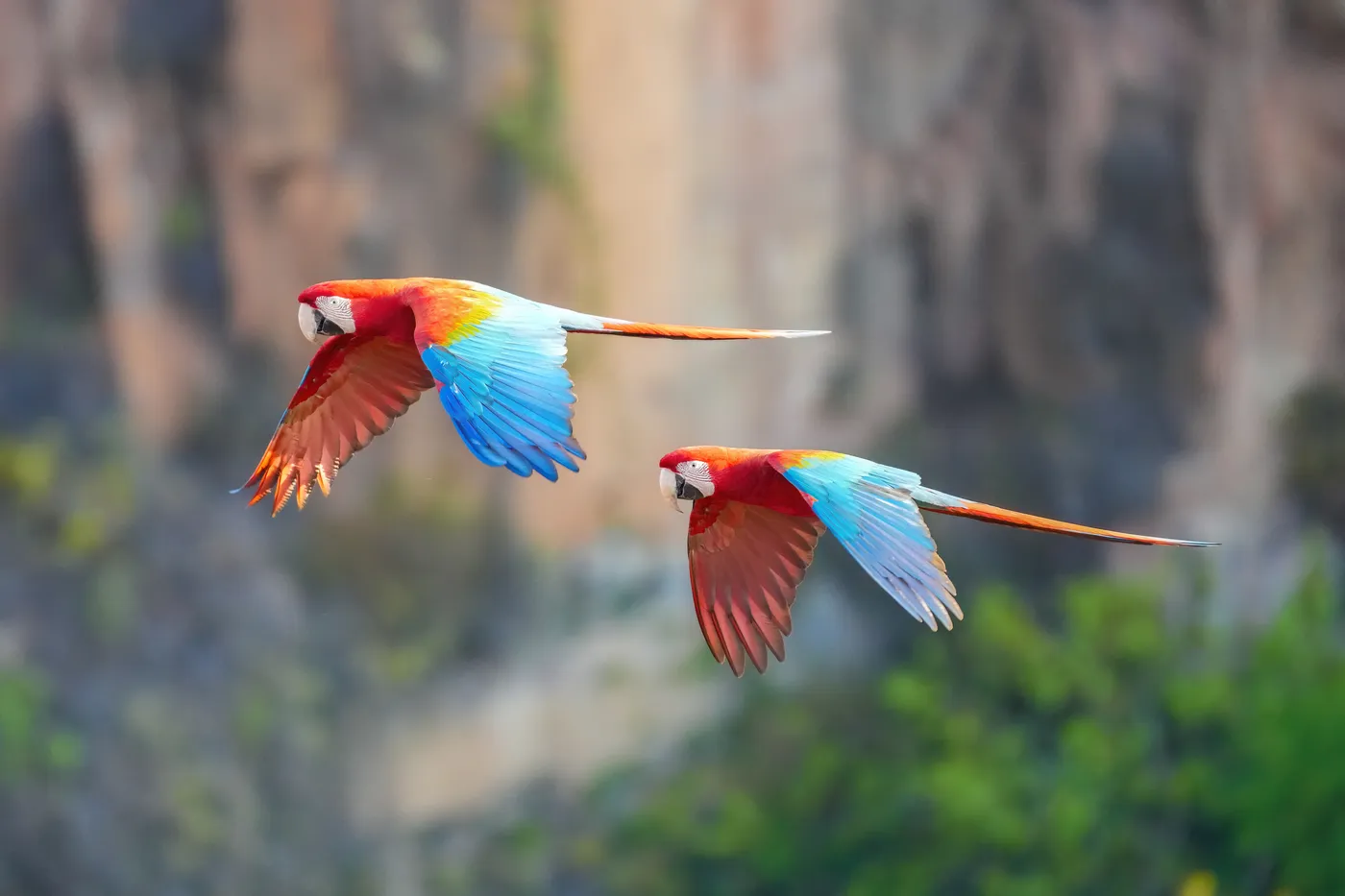

Macaw Life Stages: From Chick to Senior
A macaw moves through clear stages, and each one needs different care. A 25 year old hyacinth is middle aged, while a 25 year old Hahn’s macaw is already a senior.
| Life Stage | Age | What Happens |
|---|---|---|
| Chick | 0-3 months | Hatches blind and bare. Fully dependent on parents or a hand feeder. |
| Fledgling | 3-6 months | Feathers grow in. The bird learns to fly and starts to feed itself. |
| Juvenile | 6 months-2 years | Weaned and independent. Playful and curious, not yet able to breed. |
| Young adult | 2-4 years | Reaches sexual maturity. Large species can take 3 to 6 years. Pairs begin to form. |
| Adult | 4-30 years | The long prime stretch. The bird breeds, bonds with a mate, and settles into routine. |
| Senior | 30+ years | Slows down. Needs softer food, extra warmth, and more frequent vet checks. |
Large macaws stay in their prime for decades. That is why rescue centers are full of macaws in their prime: owners planned for a pet, not for a 50 year relationship. Our types of birds guide shows how macaws sit among other bird species.

What Makes a Macaw Live Longer
Genetics set the ceiling. Care decides whether a macaw reaches it. Six factors do most of the work, and the first two matter more than the rest combined.
Diet. Feed mostly formulated pellets, with fresh vegetables every day and some fruit. Seeds and nuts should be about 10 percent of the diet, not the base. An all seed diet is the fastest way to shorten a macaw’s life: it causes fatty liver disease and vitamin A deficiency, the two most common killers of pet parrots. Hyacinths are the exception, they need more fat, so a few extra nuts are correct for them.
Space and flight. A large macaw needs a cage at least 3 feet wide, 2 feet deep, and 4 feet tall, plus several hours of out of cage time every day. A cramped bird gets stressed, unfit, and bored, and stress shortens life directly. If the bird cannot spread its wings fully inside the cage, the cage is too small.
Vet care. An avian vet should see your macaw once a year, with blood work every year or two after age 20. Birds hide illness until it is advanced, so a yearly checkup catches problems while they are still fixable.
Mental stimulation. Macaws are as smart as a small child and as social as a dog. Boredom leads to feather plucking and stress, which cut life short. Rotate toys weekly, teach simple tricks, and give the bird several hours of company a day.
Clean air. Fumes from overheated nonstick pans can kill a bird in minutes. Avoid them, along with cigarette smoke, scented candles, air fresheners, and aerosol sprays. A macaw’s lungs are far more sensitive than yours.
Sleep and weight. Macaws need 10 to 12 hours of dark, quiet sleep a night. Weigh your macaw weekly on a kitchen scale: a bird losing weight is sick even if it still looks fine. Large macaws should hold roughly 900 to 1,200 grams, mini macaws about 150 to 300 grams.
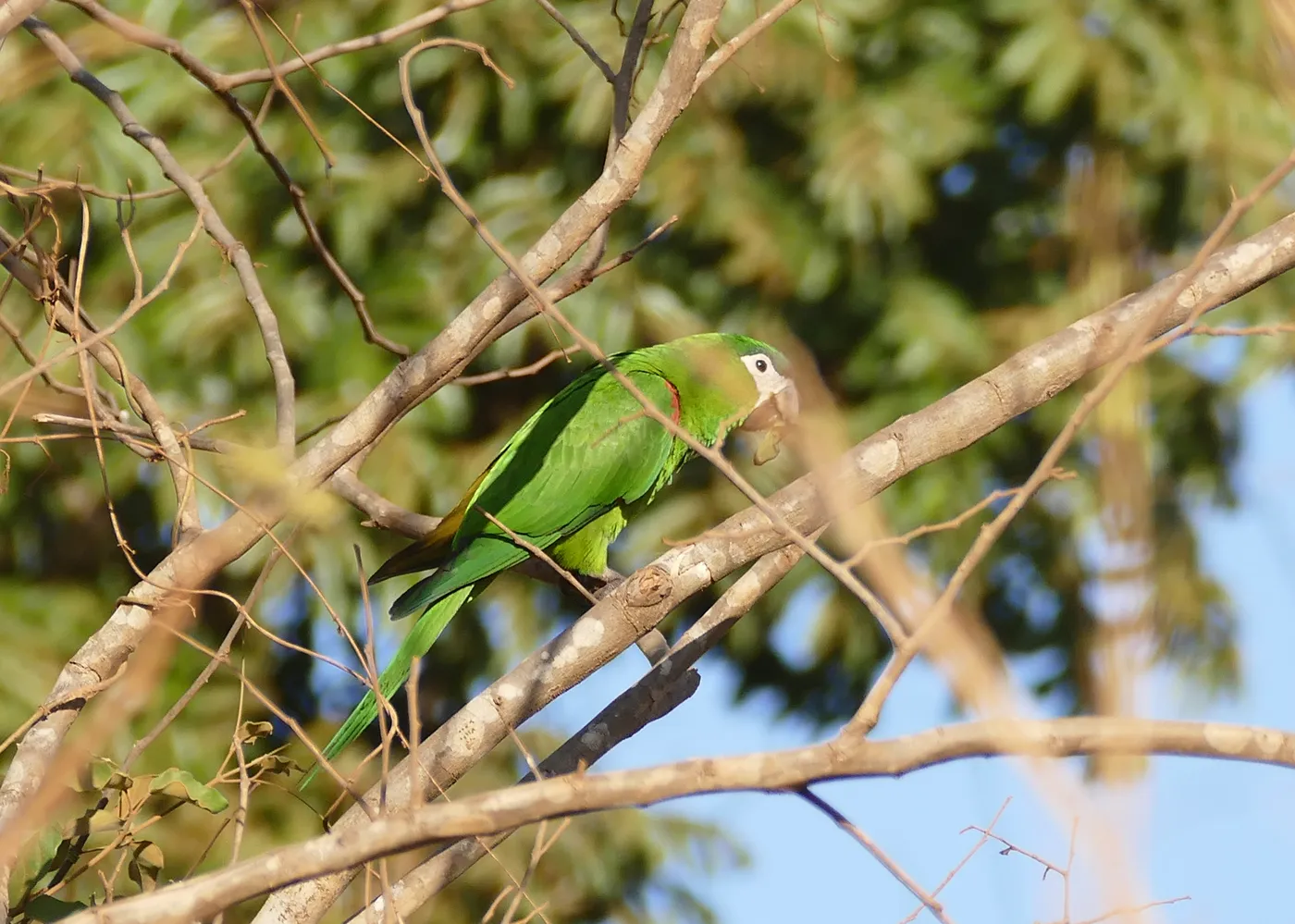

How Old Is Your Macaw?
Rescue macaws often arrive with no hatch date. Young birds have dark eyes that lighten with age: a blue-and-yellow macaw’s eyes shift from dark brown to pale yellow or white by age 3 or 4. Older birds move more slowly and may develop cataracts, a cloudy look in the eye, after 40.
None of these signs gives an exact year, so ask the seller or rescue for paperwork: a hatch certificate, a closed leg band with a year code, or vet records. A bird sold as a baby with a faded leg band and pale eyes is probably older than claimed.
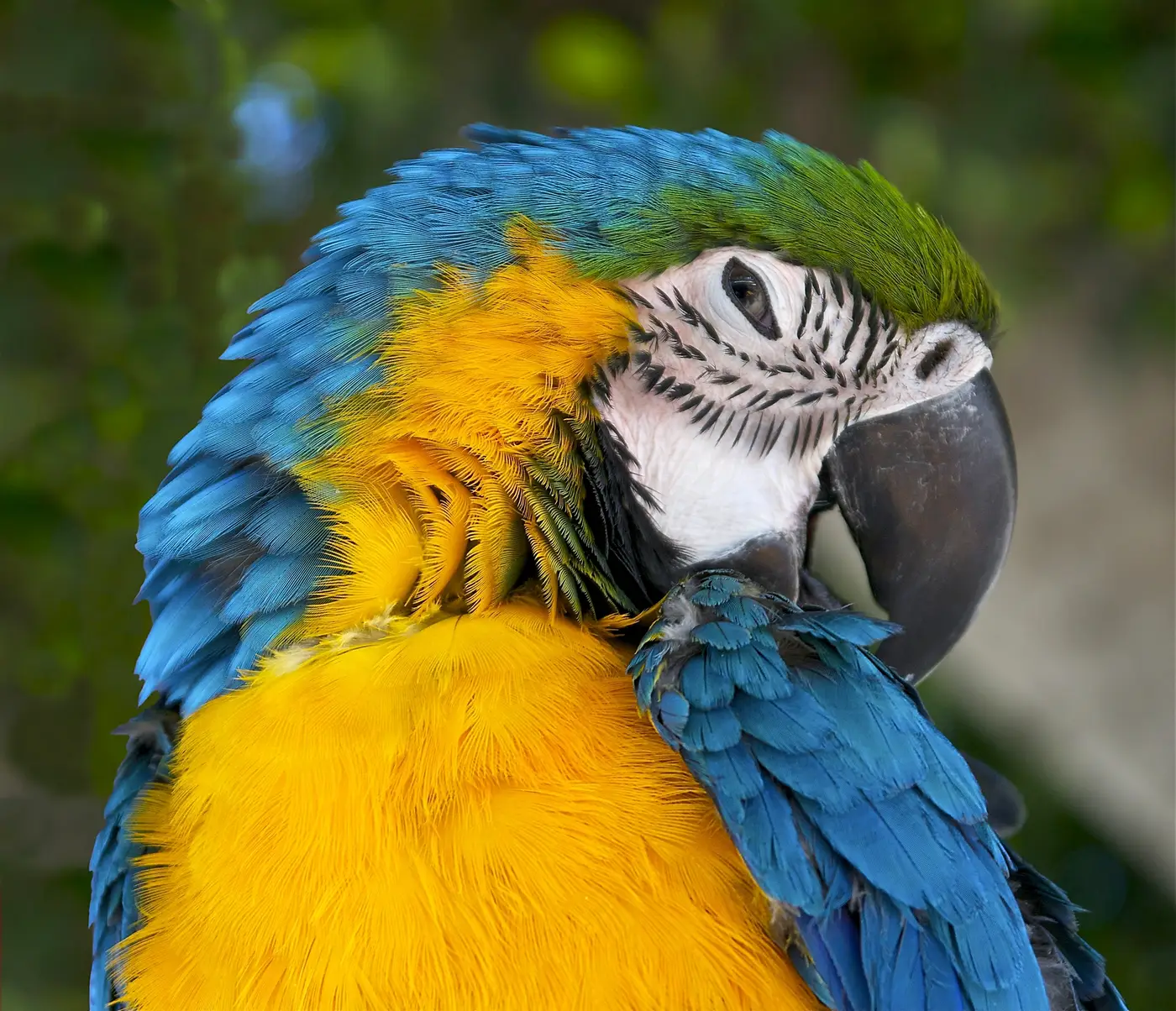

Before You Buy: A Macaw Is a 50 Year Promise
Read the chart once more before you decide. The cheapest macaw costs about 1,000 to 2,000 dollars, a hyacinth can cost 15,000 or more, and the real cost is the decades: roughly 100 to 200 dollars a month for food, toys, and vet care, every month, for 50 years. That is 60,000 to 120,000 dollars over a bird’s life, before the cage.
Then there is the will. A macaw that outlives you needs a named person who will take it, and that person needs to agree before you buy, not after. Most surrendered macaws arrive between ages 15 and 25, when the original owner ages, moves, or has children. If you cannot name the bird’s next home, you are not ready. Short lived pets have their own charm: our butterfly lifespan chart shows species measured in weeks, while the ladybug lifespan chart and the beetle lifespan chart cover insects that live about a year.

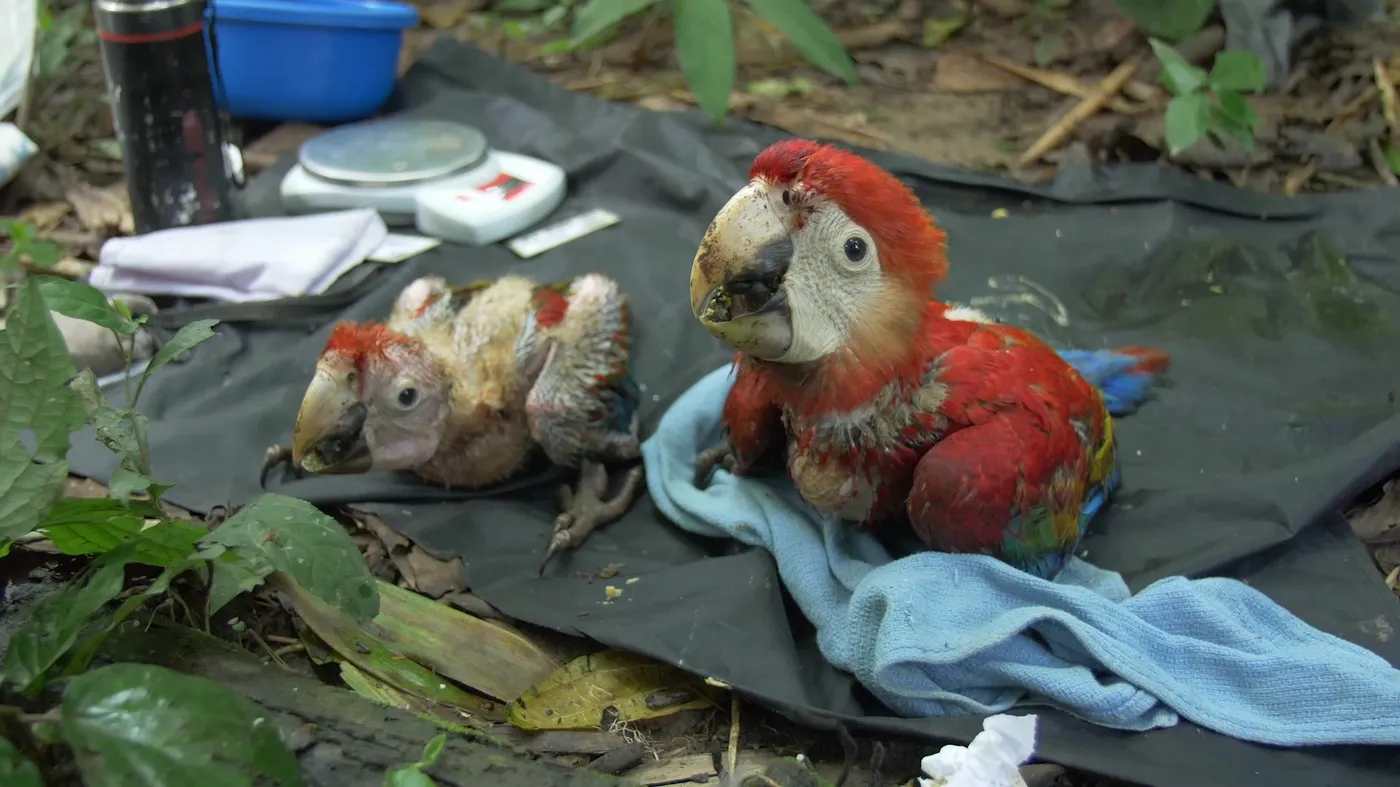
Frequently Asked Questions
How long do macaws live as pets?
Most pet macaws live 40 to 60 years with good care. Large species like the hyacinth, blue-and-yellow, and green-winged commonly pass 60, and records reach about 80. Mini macaws live shorter lives, around 25 to 40 years.
What is the longest living macaw?
The blue-and-yellow and green-winged macaws hold the longest records, near 80 years in captivity. The hyacinth is often called the longest lived, but its records sit closer to 70, while the scarlet reaches about 75.
Do macaws live longer in the wild or in captivity?
In captivity. A safe home with vet care and a steady diet adds 15 to 25 years. A blue-and-yellow macaw averages 30 to 35 years in the wild and 50 to 60 years in a good home.
Which macaw has the shortest lifespan?
The mini macaws: the red-shouldered (Hahn’s), yellow-collared, and blue-winged macaws average 25 to 40 years. That is still a very long commitment for a pet bird.
How can I help my macaw live longer?
Feed a pellet based diet with fresh vegetables, give a large cage plus daily flight time, book yearly avian vet visits, and keep the air free of smoke and nonstick fumes.
Conclusion
The macaw lifespan chart comes down to one number: decades. The big species give you 50 to 60 years, the small ones 25 to 40, and every one of them asks for the same deal in return: good food, space to fly, a vet who knows birds, and company every day. If you can sign up for that, a macaw will share most of your adult life.