
A cluster of tiny yellow ovals under a leaf, a foamy brown case glued to a twig, a dark raft floating on a birdbath. All three are insect eggs, and each one tells you which insect left it there. This insect egg identification chart compares 20 common species by size, shape, color, and laying spot, so you can name what you found.
Most insect eggs are smaller than a grain of rice. A US dime is about 18 mm across, and most eggs here measure under 2 mm.
Insect Egg Identification Chart: 20 Common Species
Use size first, then shape and color, then where the eggs were laid.
| Insect | Egg Size | Shape | Color | Where Laid | Hatch Time |
|---|---|---|---|---|---|
| Monarch butterfly | 1.2 mm | Round, ribbed | Cream to pale yellow | Singly under milkweed leaves | 3 to 5 days |
| Cabbage white butterfly | 1.0 mm | Bullet shaped, ribbed | Pale yellow | Singly on cabbage and brassica leaves | 4 to 8 days |
| Luna moth | 1.5 mm | Round | Pale green | Small groups on walnut and hickory leaves | 7 to 10 days |
| Gypsy moth | 1.0 mm | Round | Pale yellow | Masses of 100 to 1,000 on bark, covered in buff hairs | Overwinter, hatch in spring |
| Ladybug | 1.0 to 1.5 mm | Oval, elongated | Yellow to orange | Clusters of 10 to 50 on leaves near aphids | 3 to 7 days |
| Colorado potato beetle | 1.5 mm | Oval | Yellow to orange | Clusters of 10 to 30 under potato leaves | 4 to 9 days |
| Green lacewing | 0.7 mm | Oval on a hair thin stalk | Pale green | Singly on stalks under leaves | 3 to 5 days |
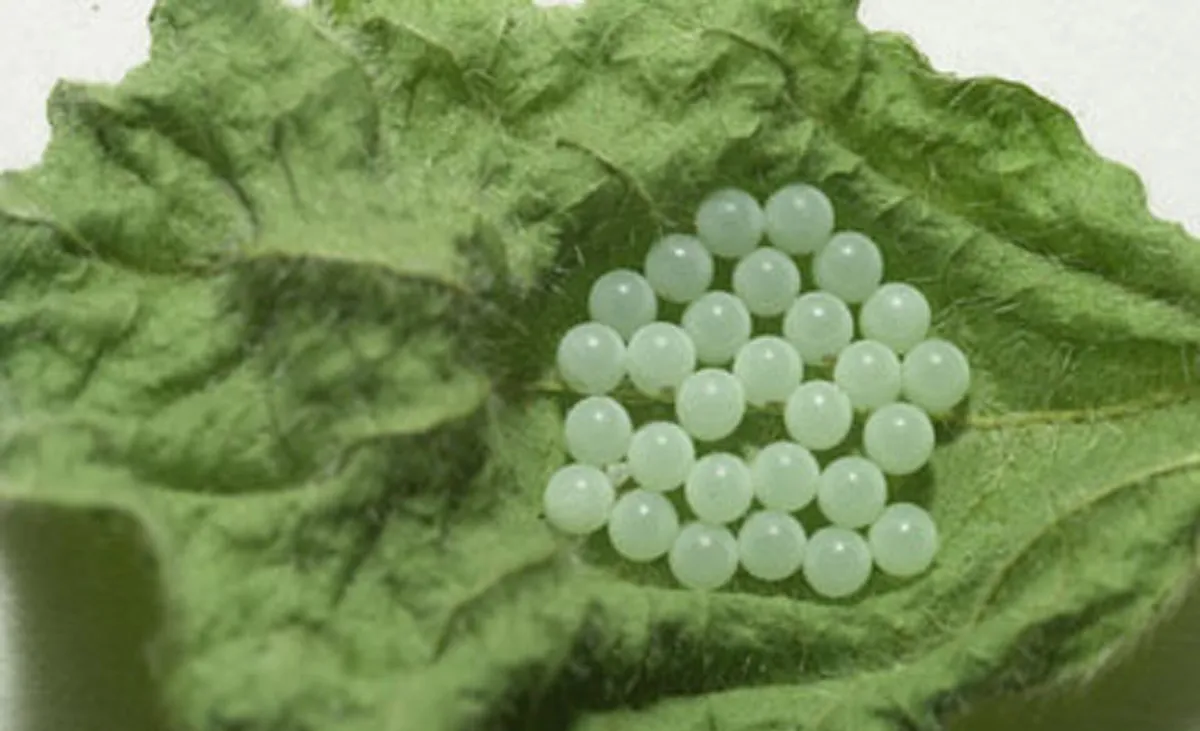
| Brown marmorated stink bug | 1.4 mm | Barrel shaped | Pale green to white | Clusters of 28 in neat rows under leaves | 4 to 5 days |
| Housefly | 1.2 mm | Cylindrical | White | Clusters of 75 to 150 on manure and rotting matter | About 24 hours |
| Honeybee | 1.5 mm | Oval | White | Singly, standing upright in wax comb cells | 3 days |
| Field grasshopper | 4 to 5 mm, pods up to 5 cm | Elongated | Brown to tan | Pods buried in soil | Overwinter, hatch in spring |
| House cricket | 2.5 mm | Elongated, banana shaped | White to yellow | In damp soil | 7 to 14 days |
| Red ant | 0.5 mm | Oval | White to cream | In the nest, tended by workers | 7 to 10 days |
| Carpenter ant | 0.5 to 1.0 mm | Oval | White to cream | In wood galleries | 2 to 4 weeks |
| Mosquito (Culex) | 0.5 mm each, rafts of 100 to 400 | Tiny cylinders in a floating raft | Dark brown to black | Floating on still water | 1 to 3 days |
| American cockroach | Ootheca 8 to 10 mm | Bean shaped capsule | Reddish brown | Hidden in cracks and crevices | 30 to 45 days |
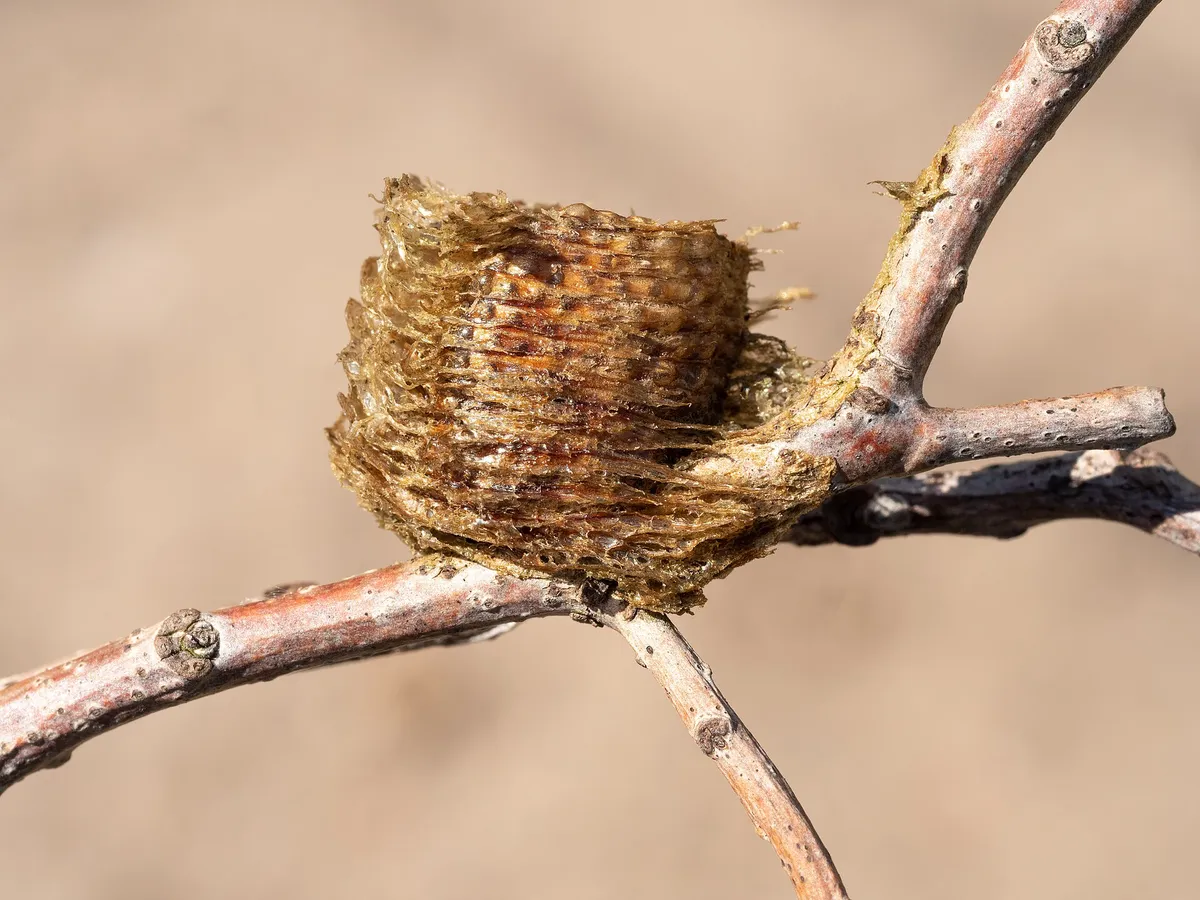
| Praying mantis | Ootheca 20 to 40 mm | Foamy, ridged case | Tan to brown | Glued to twigs, stems and fences | Overwinter, hatch in spring |
| Bed bug | 1.0 mm | Elongated oval | Pearly white | In mattress seams and cracks | 6 to 10 days |
| Termite | 1.0 mm | Oval | White, translucent | Deep inside wood or soil colonies | 1 to 2 weeks |
| Aphid | 0.5 mm | Oval | Shiny black | On bark and buds in fall | Overwinter, hatch in spring |
If the egg you found is bigger than a pea, it is probably not an insect egg at all. Compare it with our bird egg identification chart and our snake egg identification chart.
How to Identify Insect Eggs in 4 Steps
Step 1: Measure. Most insect eggs fall between 0.5 and 2 mm. A foamy case over 20 mm is a mantis ootheca, and a smooth reddish capsule of 8 to 10 mm is a cockroach case.
Step 2: Look at the shape. Round ribbed eggs belong to butterflies. Barrel shaped eggs in tight rows belong to stink bugs. Eggs on hair thin stalks belong to lacewings.
Step 3: Note the color, and check again tomorrow. Monarch eggs turn from cream to pale yellow, then darken at the tip before hatching. Stink bug eggs turn from pale green to dark as the nymphs develop.
Step 4: Record where they were laid. Eggs under milkweed leaves are monarchs, and eggs under potato leaves are Colorado potato beetles. Eggs floating on still water are mosquito rafts.
Butterfly and Moth Eggs
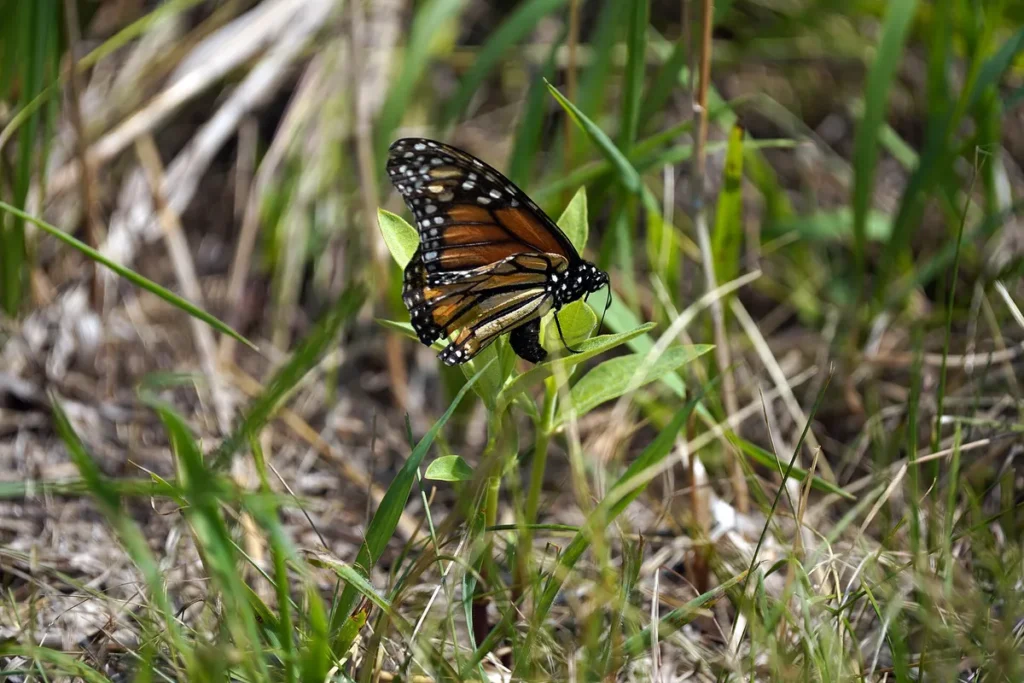
Butterfly eggs are the easiest to identify, because the females are picky. A monarch lays one egg at a time, almost always on the underside of a milkweed leaf. The egg is about 1.2 mm tall, round with fine ribs, and cream colored when fresh. It hatches in 3 to 5 days. To confirm the adult, see our butterfly identification chart.
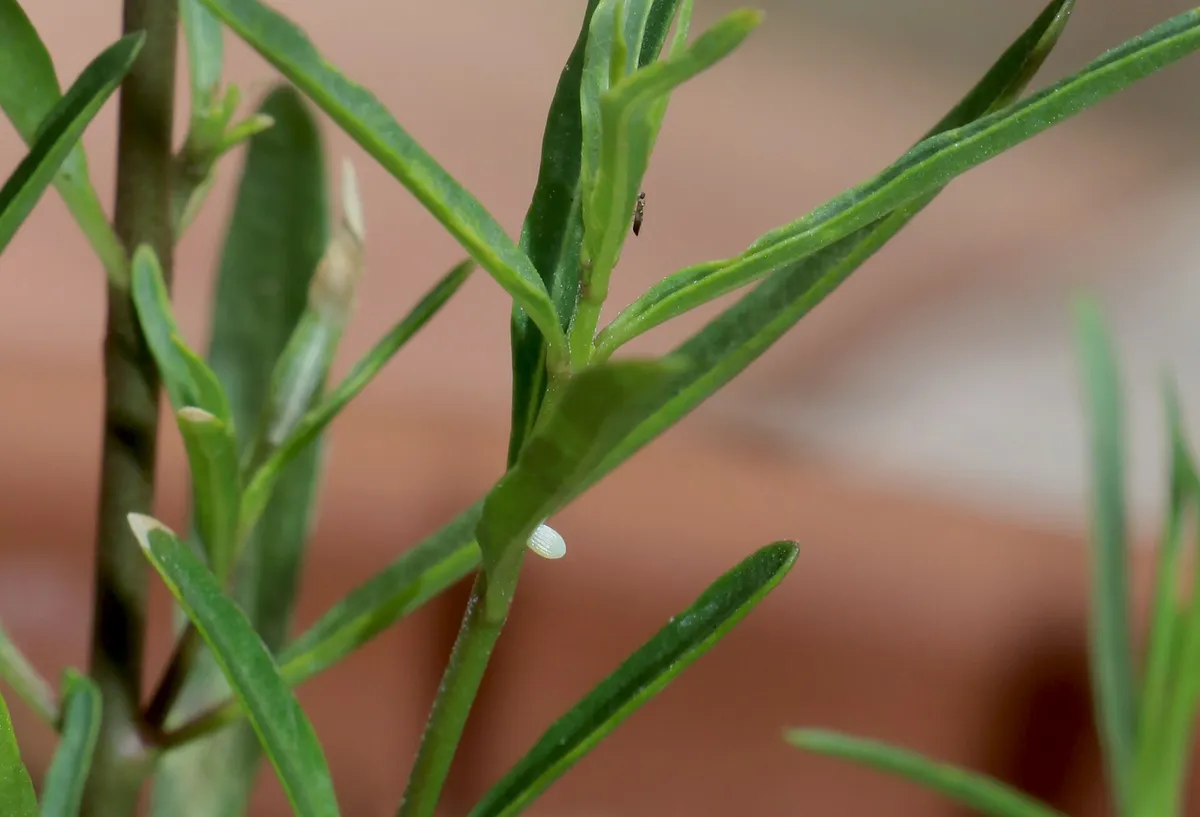
Cabbage white butterflies lay similar single eggs on cabbage, kale, and broccoli. Luna moth eggs are pale green and laid in small groups on walnut and hickory leaves. Gypsy moths lay a mass of 100 to 1,000 eggs on tree bark, covered with buff hairs, and it hatches in spring.

Beetle and Beneficial Insect Eggs
Ladybug eggs are bright yellow to orange ovals in upright clusters of 10 to 50, usually right next to an aphid colony. The larvae hatch in 3 to 7 days and eat aphids from their first hour. Leave them alone.
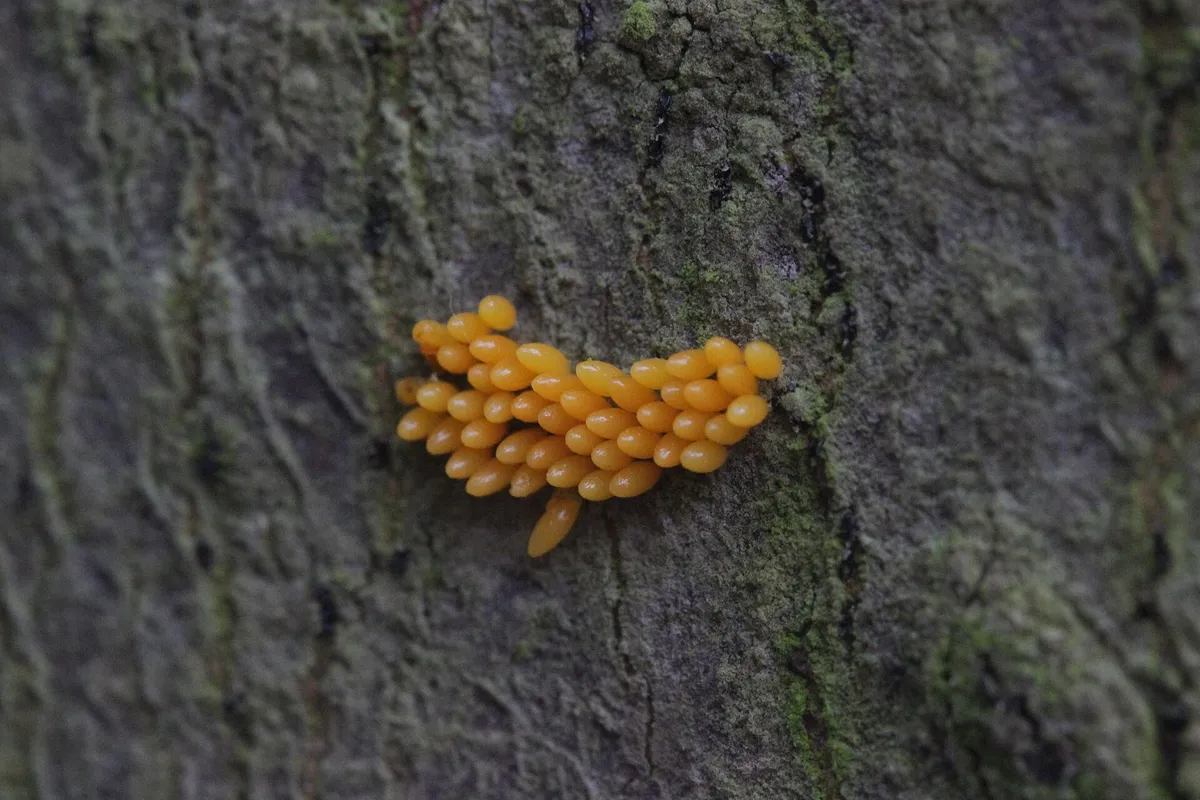
Colorado potato beetle eggs look similar, but they sit under potato, tomato, or eggplant leaves. On a potato leaf, yellow eggs are almost always the beetle, so gardeners remove them. On a rose or milkweed leaf near aphids, they are almost always ladybugs, so gardeners protect them.
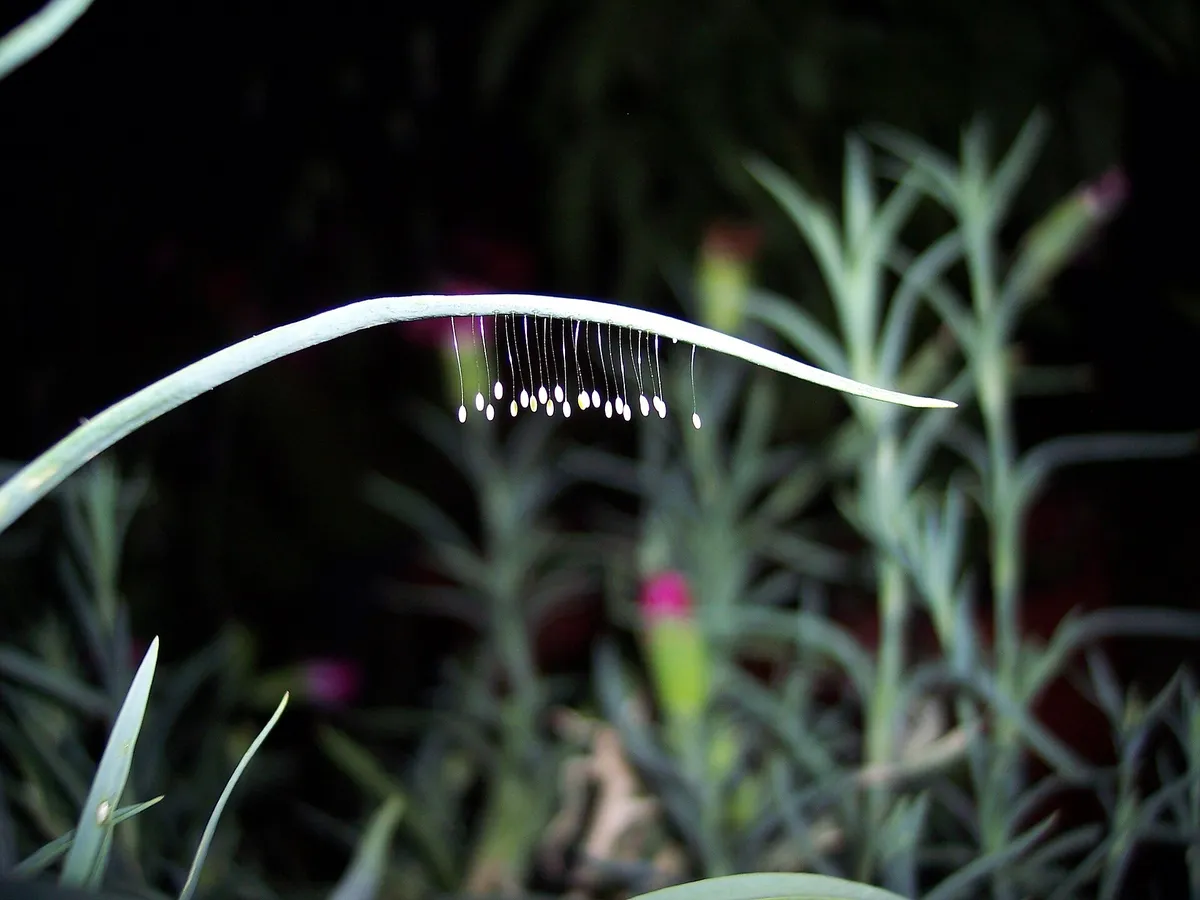
Green lacewing eggs are impossible to confuse with anything else: each tiny pale green egg sits on a hair thin silk stalk about a centimeter long, like a bead on a pin. The stalk keeps sibling larvae from eating each other when they hatch. See our beneficial insects chart for 20 garden helpers.
Stink Bug Eggs: The Barrel Shaped Cluster
Brown marmorated stink bugs lay 28 pale green barrel shaped eggs in tight rows on the underside of a leaf, each egg with a tiny lid. They hatch in 4 to 5 days. If you grow tomatoes, beans, or fruit, check leaf undersides weekly in summer and remove these clusters before they hatch.
Oothecae: the Egg Cases of Mantises and Cockroaches
A praying mantis makes her ootheca by whipping a frothy liquid around 100 to 200 eggs, then gluing the case to a twig, stem, or fence. It dries tan and ridged, about 20 to 40 mm long, and survives the winter outdoors. In spring, up to 200 tiny mantises pour out at once. Leave it where it is.
Cockroach oothecae are smaller, smoother, and darker: a reddish brown bean shaped capsule about 8 to 10 mm long, with a seam along one edge. An American cockroach case holds about 16 eggs and hatches in 30 to 45 days. Seal it in a bag and throw it away: each case adds 16 roaches to your house.

Ants, Bees and Wasps: Eggs You Rarely See
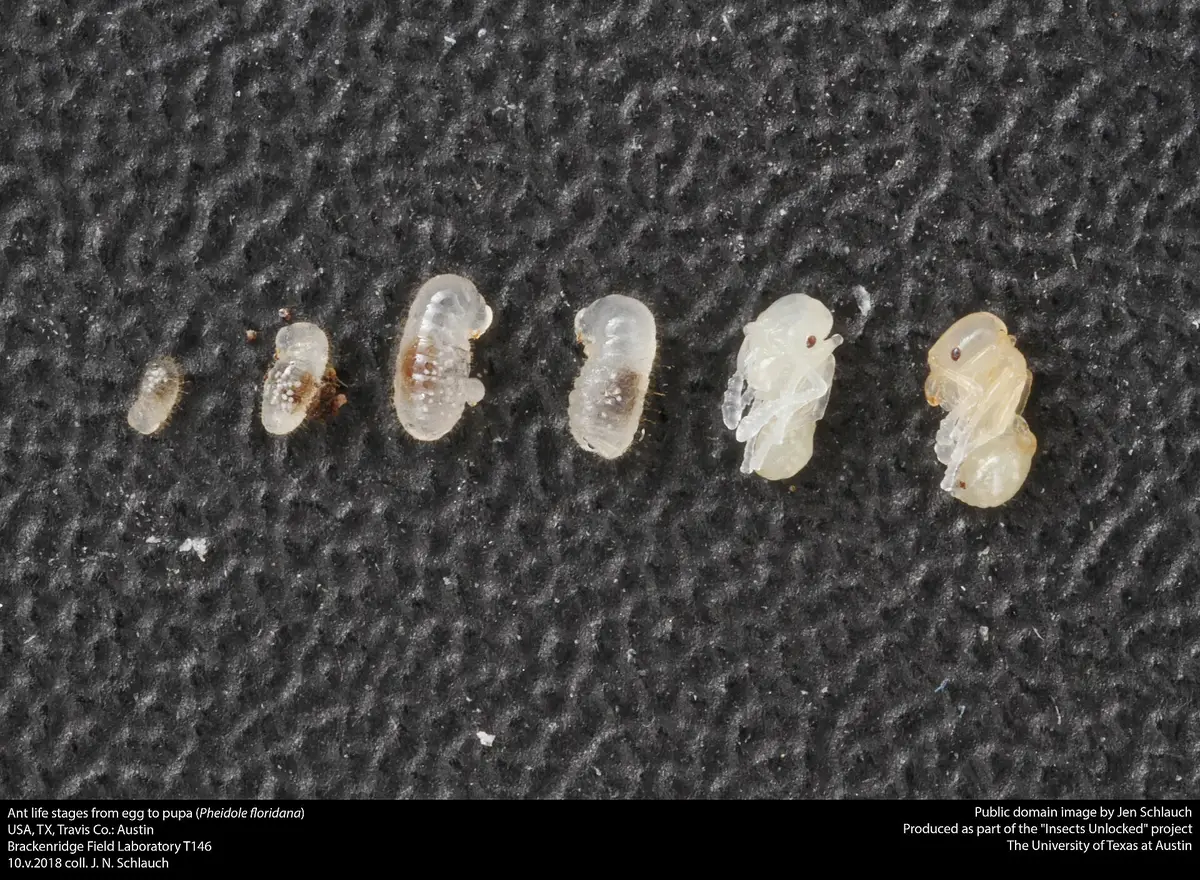
Ant eggs are tiny white ovals, about 0.5 mm long, and you will almost never see them in the open. They stay deep inside the nest, carried and licked clean by worker ants. What people call ant eggs are usually the bigger white pupae, which look like grains of rice.
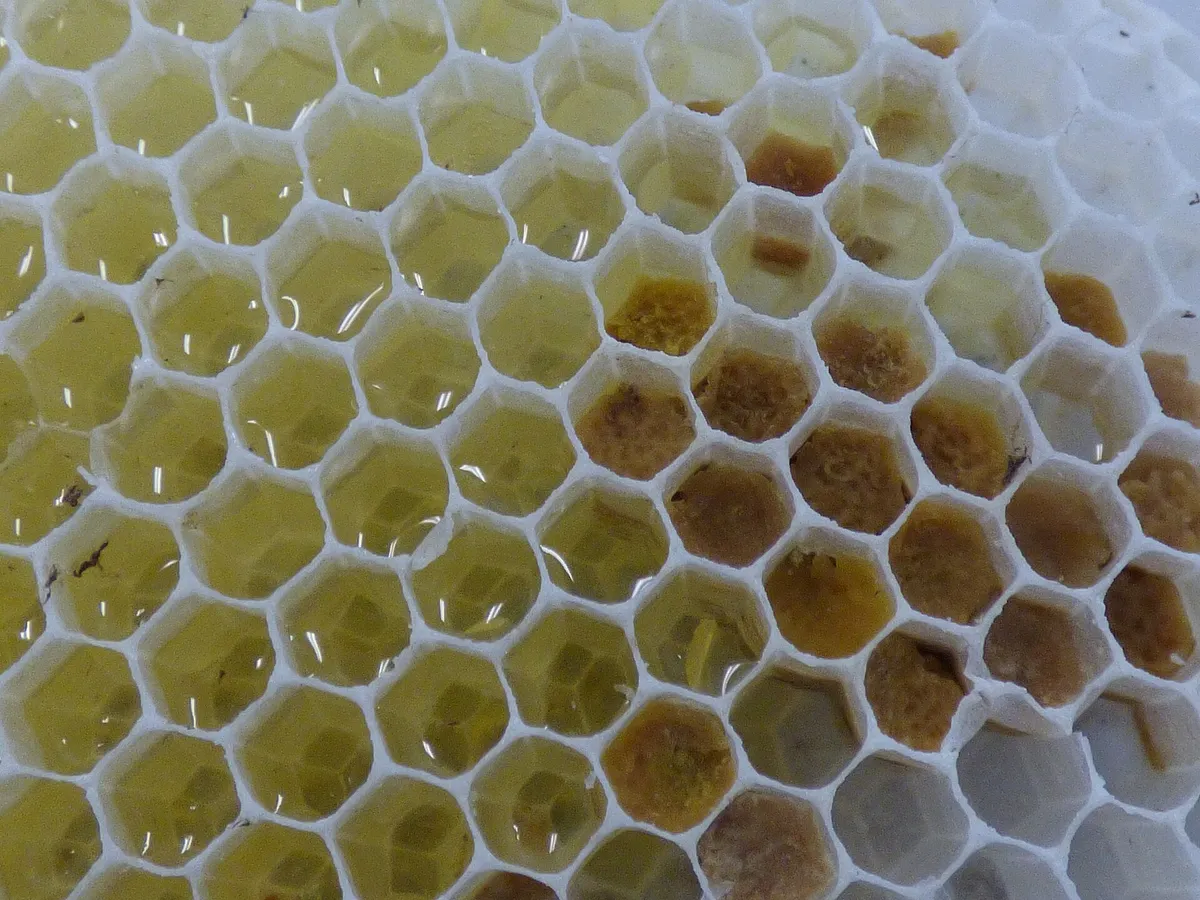
Honeybee eggs are just as hidden. The queen lays one egg per wax cell, standing upright at the bottom, and it hatches in 3 days. Paper wasps work the same way, one white egg per paper cell, hatching in 5 to 8 days.
Indoor Pests: Bed Bugs, Termites and Cockroaches
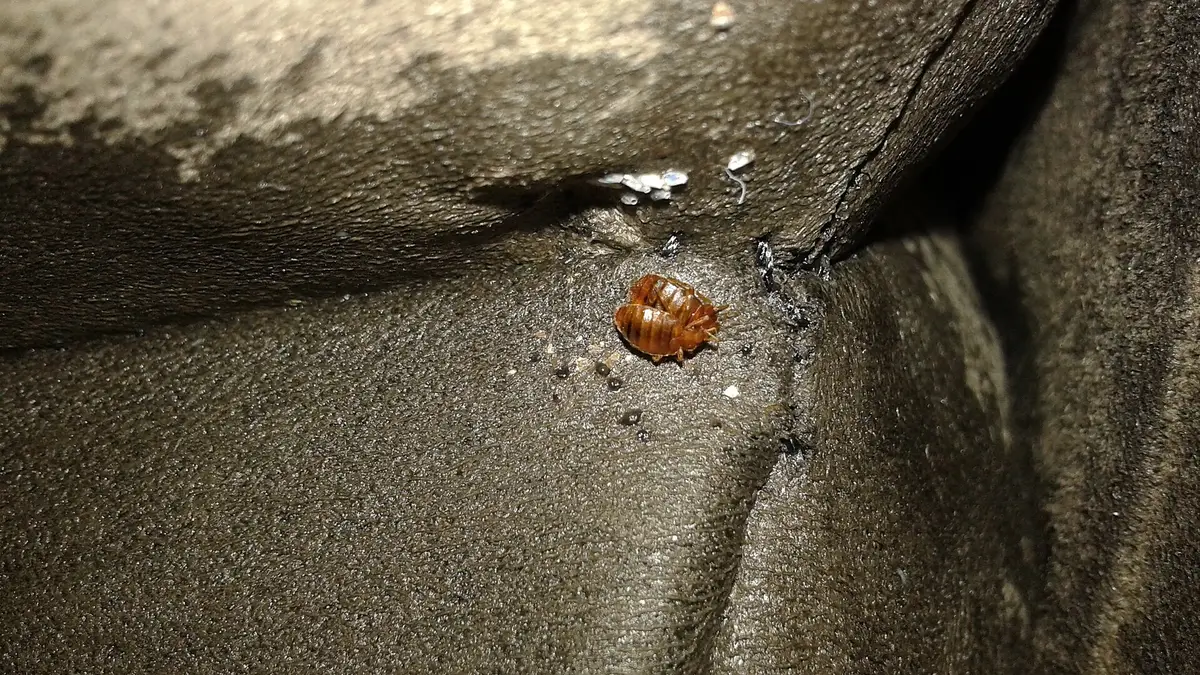
Bed bug eggs are pearly white, about 1 mm long, and shaped like tiny grains of rice. Females glue them into mattress seams and bed frame cracks, a few each day, and they hatch in 6 to 10 days. If you find white rice shaped eggs along a mattress seam, take a photo, bag the bedding, and call a pest professional. Do not move infested furniture to another room: the eggs travel with it.
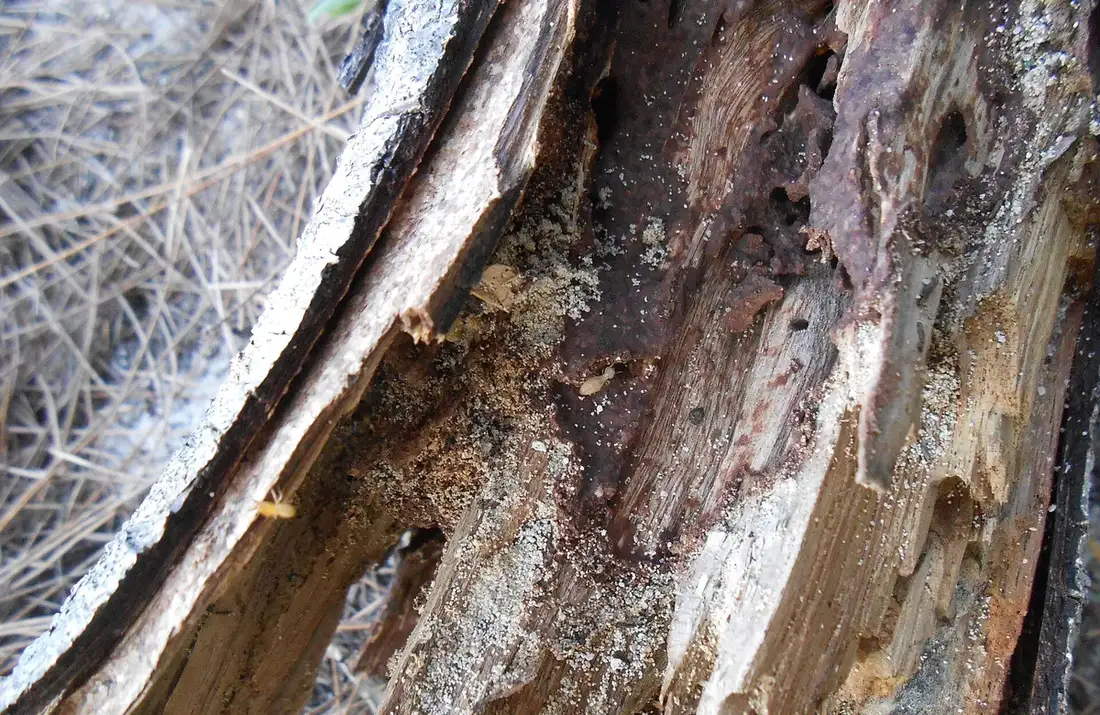
Termite eggs are the hardest on this list to find, because they never leave the colony. They are white, translucent ovals about 1 mm long, tended by workers deep inside wood or soil. Watch for mud tubes, hollow wood, and tiny pellets. The photo below shows termite damaged wood.
Aphids, Mosquitoes and Other Tiny Eggs
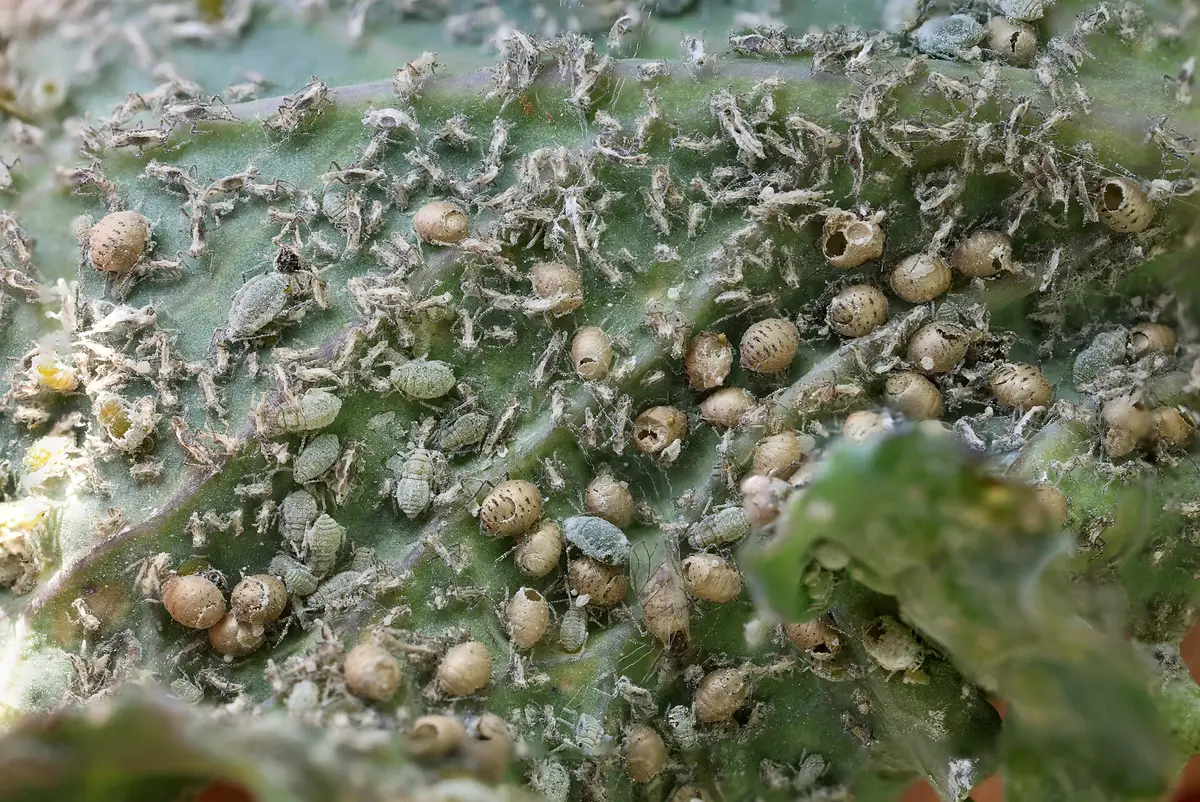
Most of the year, aphids do not lay eggs at all: females give birth to live young all summer. In fall, they switch to laying tiny shiny black eggs, about 0.5 mm across, on bark and buds. Those eggs survive freezing weather and hatch in spring.
A female Culex mosquito lays 100 to 400 eggs at once, glued into a dark raft that floats on still water. The raft looks like a speck of soot, about 3 to 4 mm long, and it hatches in 1 to 3 days. Tip the water out weekly.
What to Do When You Find Insect Eggs
Identify before you act. Ladybug eggs, lacewing eggs, and mantis oothecae are allies: leave them alone and your garden will have fewer aphids and caterpillars.
Remove the real pests. Stink bug clusters, Colorado potato beetle eggs, gypsy moth egg masses, and mosquito rafts can be scraped off or drowned in soapy water. Wear gloves for gypsy moth masses, because the hairs irritate skin.
Treat indoor finds seriously. Bed bug eggs, cockroach cases, and eggs in stored food mean the adults are nearby. Clean the area, vacuum seams and cracks, seal food in airtight containers, and call a professional for bed bugs and termites.
Frequently Asked Questions
How can I tell insect eggs from something else?
Size is the fastest test. Insect eggs are almost always under 2 mm, except for oothecae and grasshopper pods.
What are the tiny white eggs on my plant leaves?
The most common answer is whitefly eggs, laid in neat circles on leaf undersides, or moth eggs scattered loosely across the leaf. Whiteflies flutter up in a cloud when you touch the plant.
Are insect eggs dangerous to touch?
Most are not, but wear gloves anyway. Gypsy moth egg masses carry irritating hairs, and eggs laid by roaches and flies can carry bacteria. Wash your hands after handling any eggs.
How long do insect eggs take to hatch?
It ranges from about 24 hours for houseflies to a full winter for mantis oothecae and gypsy moth masses. Most garden eggs hatch in 3 to 10 days in warm weather.
Conclusion
Insect eggs look like nothing much: specks, dots, and foam on leaves, bark, and walls. A single ribbed egg under a milkweed leaf is a monarch. A barrel shaped cluster in neat rows is a stink bug. A foamy case on a fence is a mantis waiting for spring. Measure first, then check the chart.

