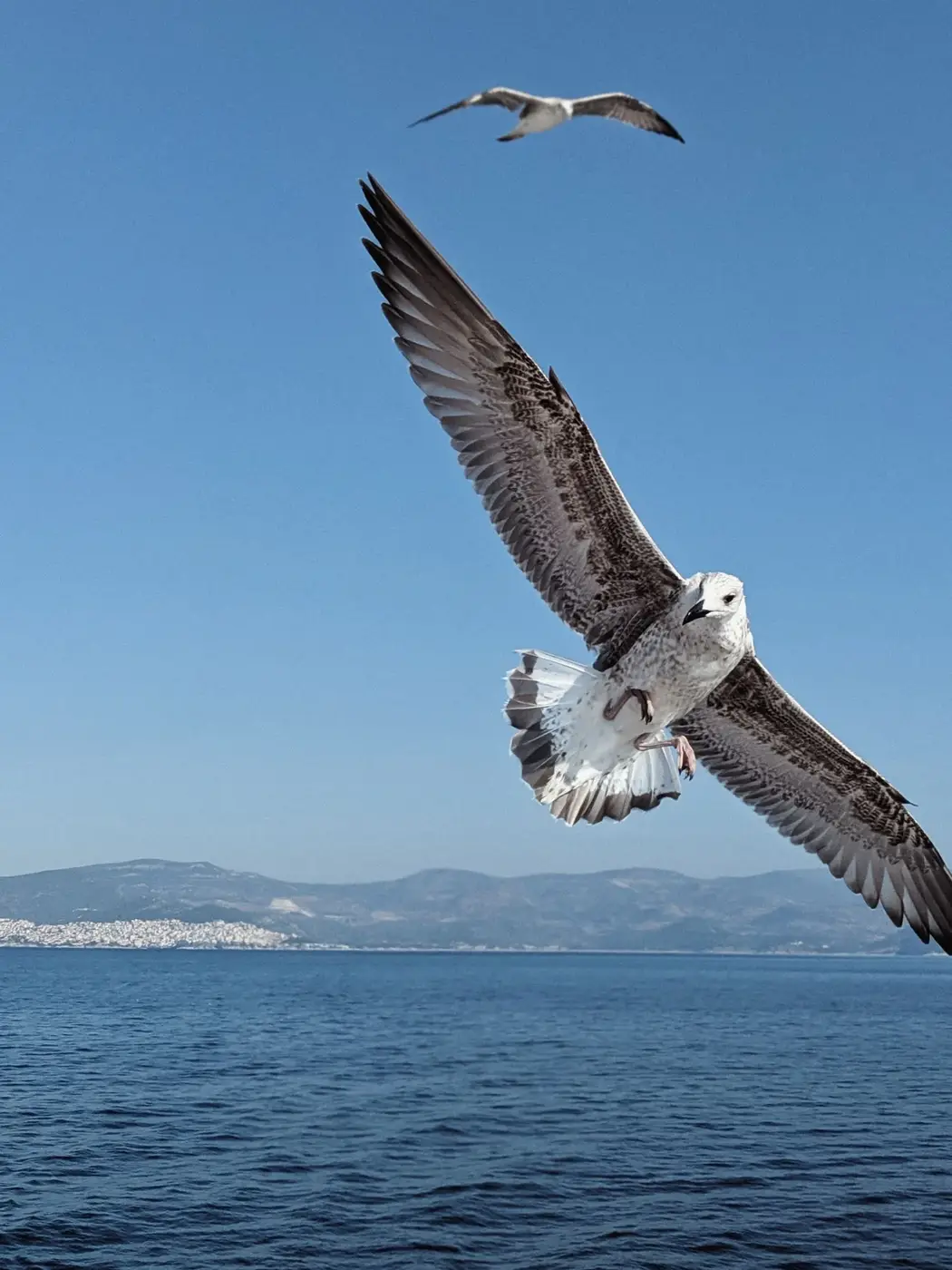
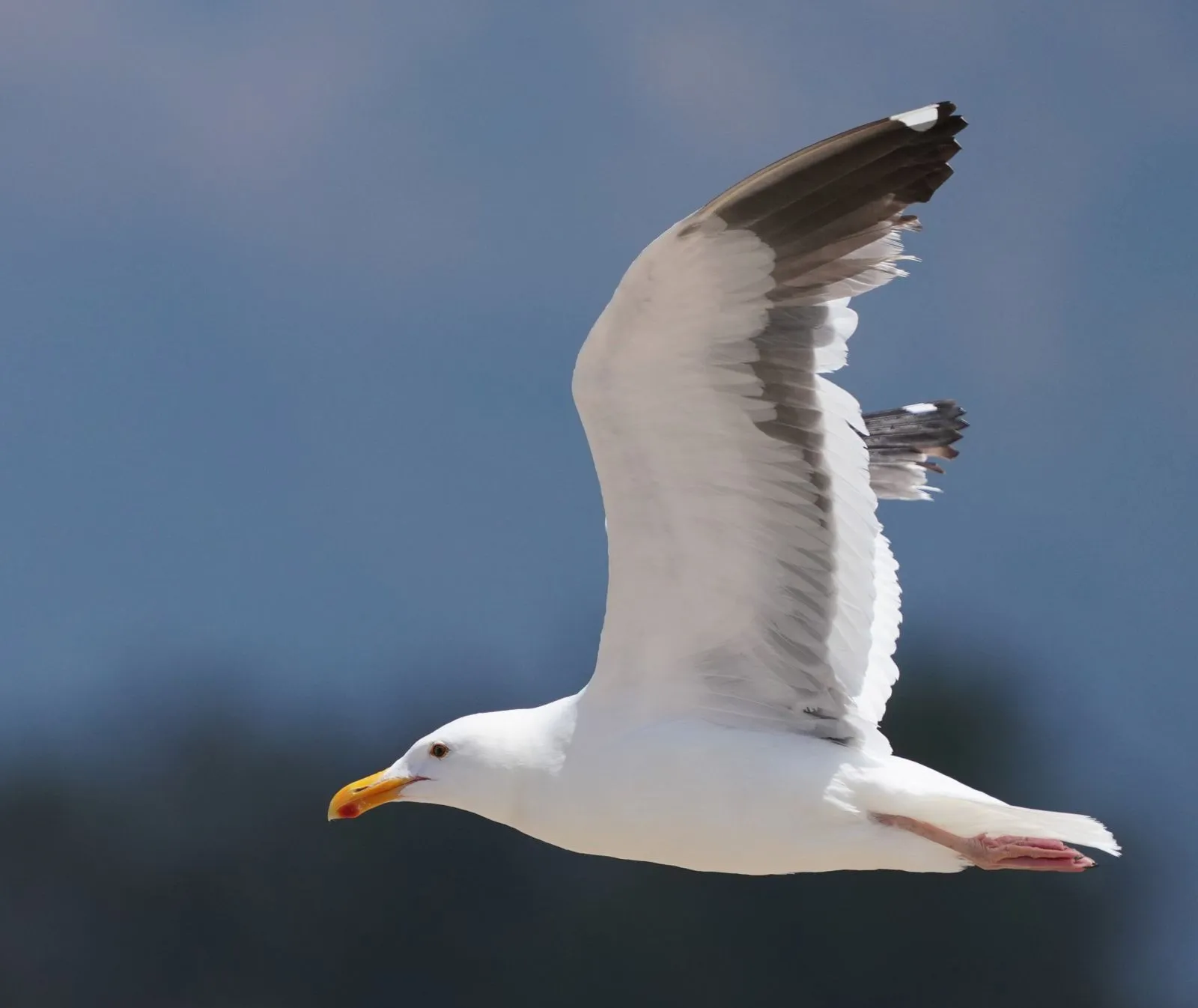
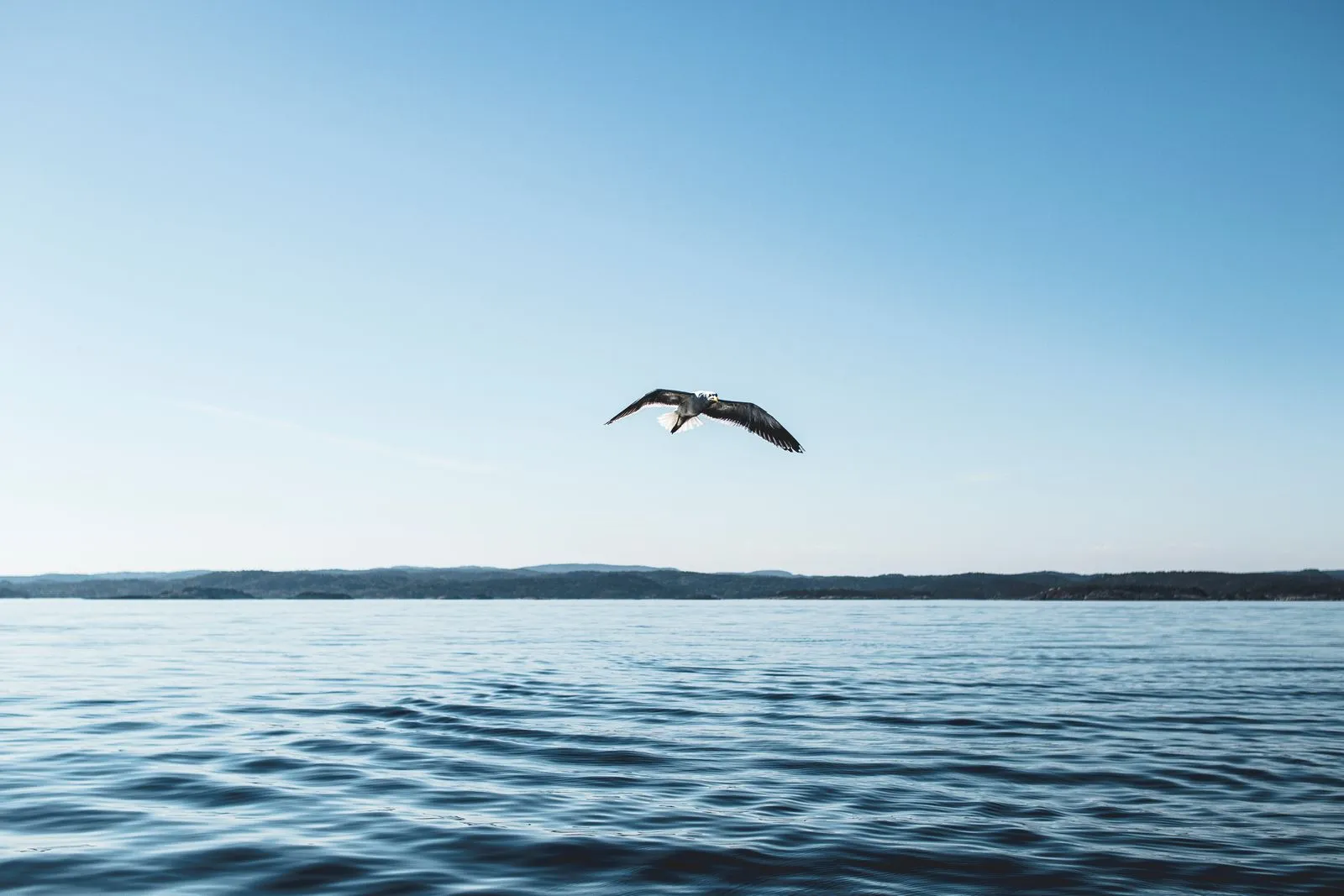
This gull identification chart helps you name the gull in front of you, whether it is standing on a beach boardwalk, circling a parking lot, or gliding over the surf. Gulls frustrate beginners for a good reason: their plumage changes for years, and many species look alike at a glance. The fix is a simple order of checks. Look at size first, then the bill, then the legs, then the wingtips, and finally habitat and season. Work through those five marks and most gulls in the United States fall into place.
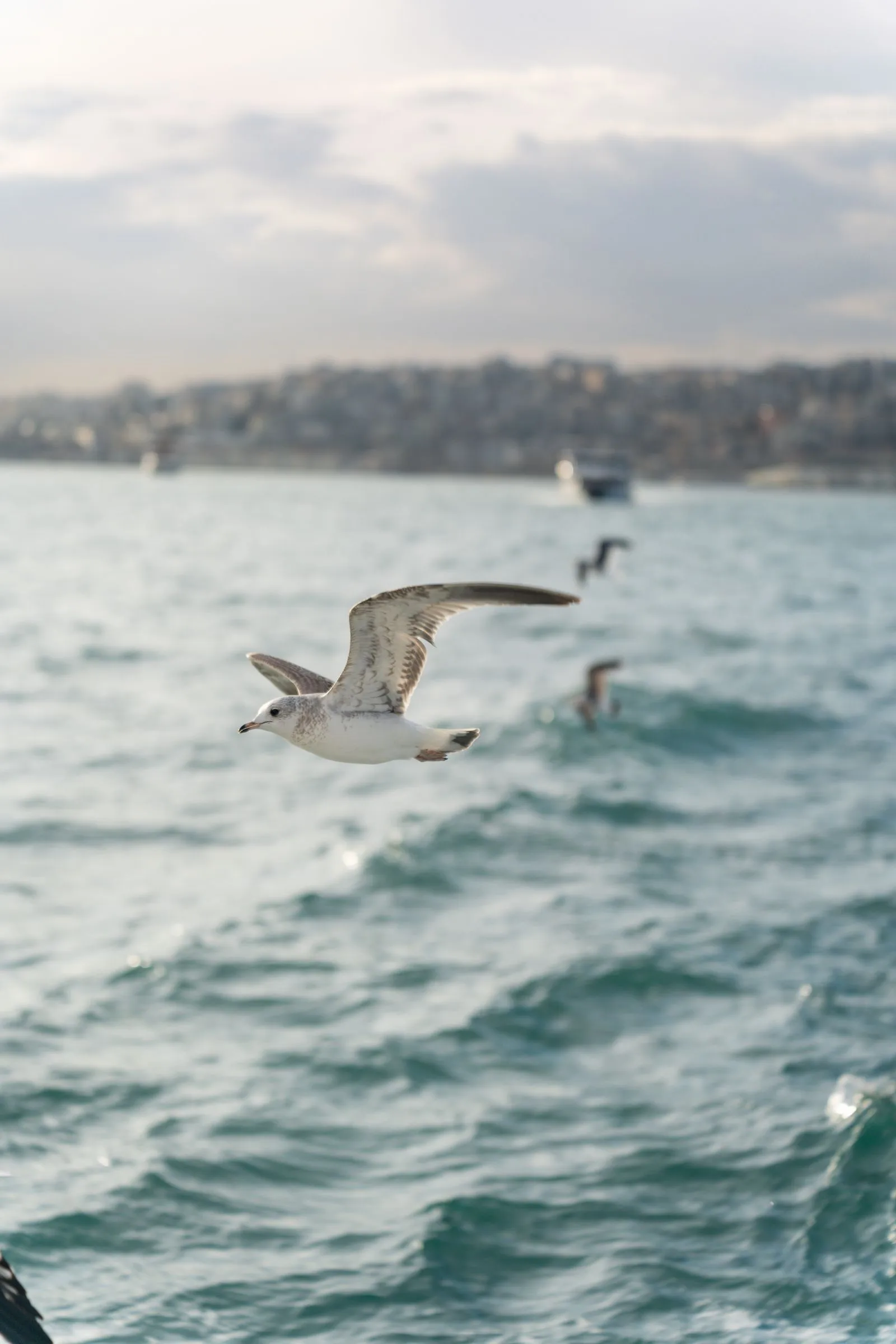
How to Identify a Gull in 5 Steps
1. Size. Compare the bird to a gull you already know. A Great Black-backed Gull is huge, close to the size of a small goose. A Bonaparte’s Gull is barely bigger than a robin with wings. Size alone rules out half the list.
2. Bill. Note the color, the thickness, and any mark near the tip. An adult Herring Gull has a yellow bill with a red spot on the lower mandible. A Ring-billed Gull has a yellow bill with a clean black ring. A Laughing Gull in summer has a dark red bill and a black hood.
3. Legs. Leg color is one of the fastest clues. Herring Gulls have pink legs, Ring-billed Gulls have yellow-green legs, and Lesser Black-backed Gulls have yellow legs. Black-legged Kittiwakes, as the name promises, have black legs.
4. Wingtips. Look at the black on the wingtips and the white spots inside it, called mirrors. Great Black-backed Gulls show mostly black wingtips with a small white spot. Iceland Gulls show pale gray wingtips with almost no black. That single difference separates two birds that confuse many watchers.
5. Habitat and season. Some gulls are coastal year round, some flood inland in winter, and some only pass through during migration. A gull on a Great Lakes beach in January is far more likely to be a Herring or Ring-billed Gull than a Laughing Gull, which winters farther south.
Gull Identification Chart: 20 Common US Gulls
Use this table as your first stop. Find the row that matches size, bill, and legs, then read the species section below for the finer points.
| Species | Length | Bill | Legs | Key marks | Where in the US |
|---|---|---|---|---|---|
| Herring Gull | 55 to 66 cm | Yellow with red spot | Pink | Gray back, black wingtips with white mirrors, pale eye | Coasts and Great Lakes, widespread |
| Ring-billed Gull | 43 to 48 cm | Yellow with black ring | Yellow-green | Smaller and neater than Herring, pale eye, clean gray back | Nationwide, very common inland |
| California Gull | 46 to 55 cm | Yellow with black and red spots | Yellow-green | Between Herring and Ring-billed in size, dark eye | West, winters along Pacific coast |
| Western Gull | 53 to 66 cm | Yellow with red spot, heavy | Pink | Dark gray back, lives almost only on Pacific coast | Pacific coast, year round |
| Glaucous-winged Gull | 61 to 69 cm | Yellow with red spot | Pink | Gray wingtips, not black, large and heavy | Pacific Northwest and Alaska |
| Great Black-backed Gull | 64 to 78 cm | Yellow with red spot, very heavy | Pink | Black back, largest gull in the US | Atlantic coast and Great Lakes |
| Lesser Black-backed Gull | 52 to 64 cm | Yellow with red spot | Yellow | Dark gray to black back, slimmer than Great Black-backed | Atlantic coast, winters in the Southeast |
| Laughing Gull | 39 to 46 cm | Dark red, drooping | Dark | Black hood in summer, white crescents above and below the eye, laughing call | Atlantic and Gulf coasts |
| Franklin’s Gull | 32 to 36 cm | Dark red, short | Dark red | Black hood, white eye crescents, small and neat, often inland | Interior and Great Plains, migrates through the central US |
| Bonaparte’s Gull | 28 to 31 cm | Black, thin | Orange-red | Small, black hood in summer, white triangle on the forewing in flight | Nationwide on migration, coasts in winter |
| Iceland Gull | 46 to 56 cm | Yellow-green with dark mark | Pink | Very pale, wingtips pale gray with no black | Northeast and Great Lakes in winter |
| Glaucous Gull | 62 to 70 cm | Yellow with dark tip in young birds | Pink | Huge, very pale, wingtips white to pale gray | Arctic and northern coasts in winter |
| Thayer’s Gull | 53 to 59 cm | Yellow-green with red spot | Pink | Pale gray back, dark wingtips with large white mirrors, gentle face | Pacific coast in winter, rare inland |
| Black-legged Kittiwake | 37 to 41 cm | Yellow, short | Black | Black wingtips with no white mirrors, M pattern across the wings in flight | North Atlantic and North Pacific coasts |
| Sabine’s Gull | 27 to 32 cm | Black with yellow tip | Dark | Small, forked tail, bold black, white, and gray wing pattern | Arctic breeder, migrates along both coasts |
| Heermann’s Gull | 46 to 53 cm | Red with black tip | Dark | Gray body, white head in summer, the only US gull that is gray all over | Pacific coast |
| Short-billed Gull | 40 to 44 cm | Yellow-green, short | Yellow-green | Small white-headed gull, gentle face, formerly called Mew Gull in North America | Pacific Northwest and Alaska |
| Yellow-footed Gull | 56 to 61 cm | Yellow, heavy | Yellow | Dark gray back, yellow legs, mostly in the Gulf of California region | Southwest, rare in southern California and Arizona |
| Kelp Gull | 55 to 63 cm | Yellow with red spot | Yellow-green | Black back, white head, similar to Lesser Black-backed but heavier | Gulf Coast, rare but increasing |
| Little Gull | 25 to 28 cm | Black, short | Dark red | Tiny, black hood in summer, dark underwings in flight | Northeast and Great Lakes, rare migrant |
Large White-Headed Gulls
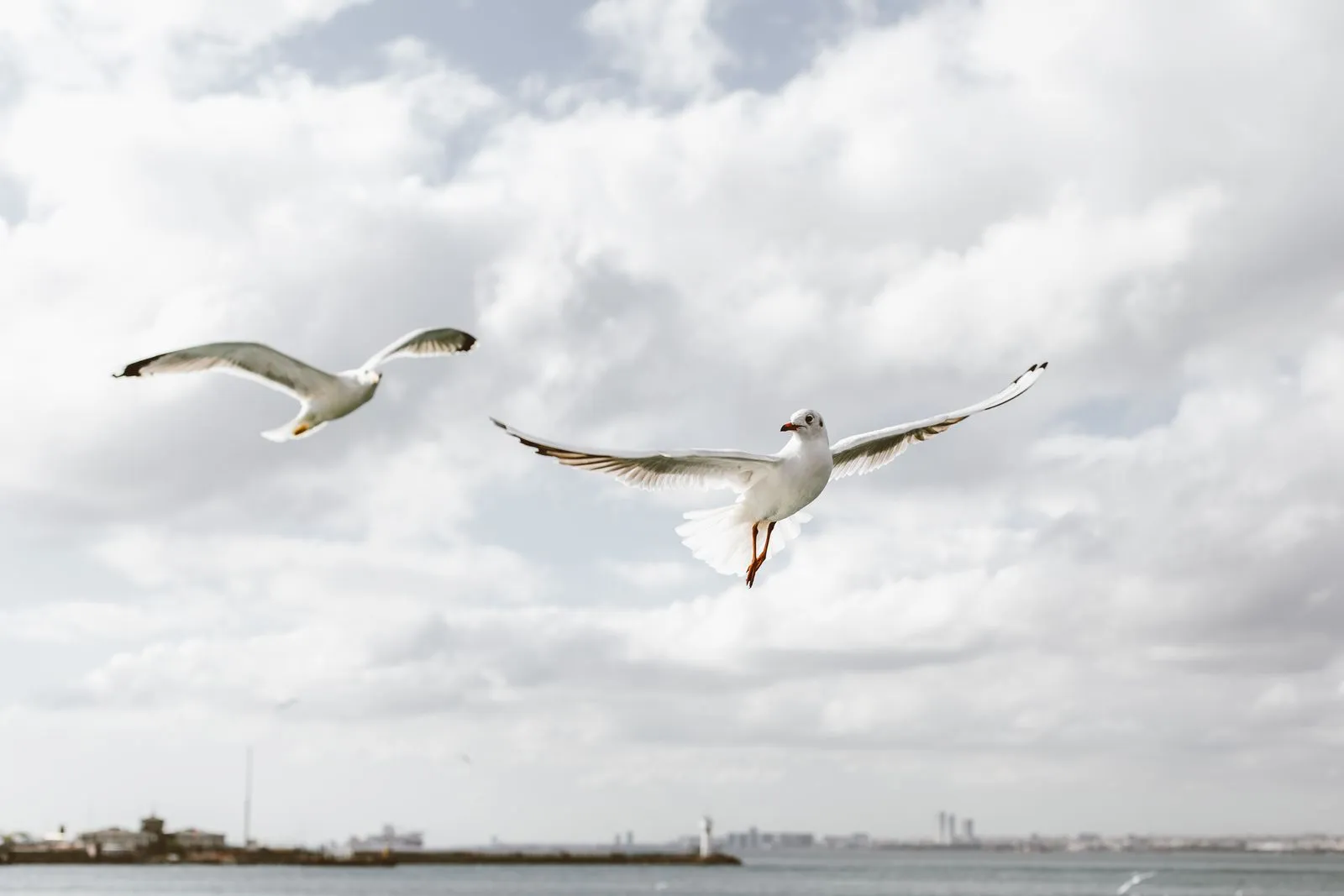
The big gulls cause most of the confusion, because adults share the same basic pattern: white head, gray back, and black or gray wingtips. Start with back shade and leg color. Herring Gulls have a medium gray back and pink legs. Great Black-backed Gulls have a truly black back and are visibly larger than every gull around them. Lesser Black-backed Gulls sit between the two in back shade, but their yellow legs give them away.
On the Pacific coast, add Western and Glaucous-winged Gulls to the mix. Western Gulls have a darker gray back than Herring Gulls and a heavier bill, and they rarely leave the Pacific coast. Glaucous-winged Gulls are large and pale, with gray wingtips instead of black, which makes them look washed out next to a Western Gull. Hybrids between Western and Glaucous-winged Gulls are common in the Pacific Northwest, so do not worry if one bird seems to sit exactly between the two descriptions.
Medium and Small Gulls
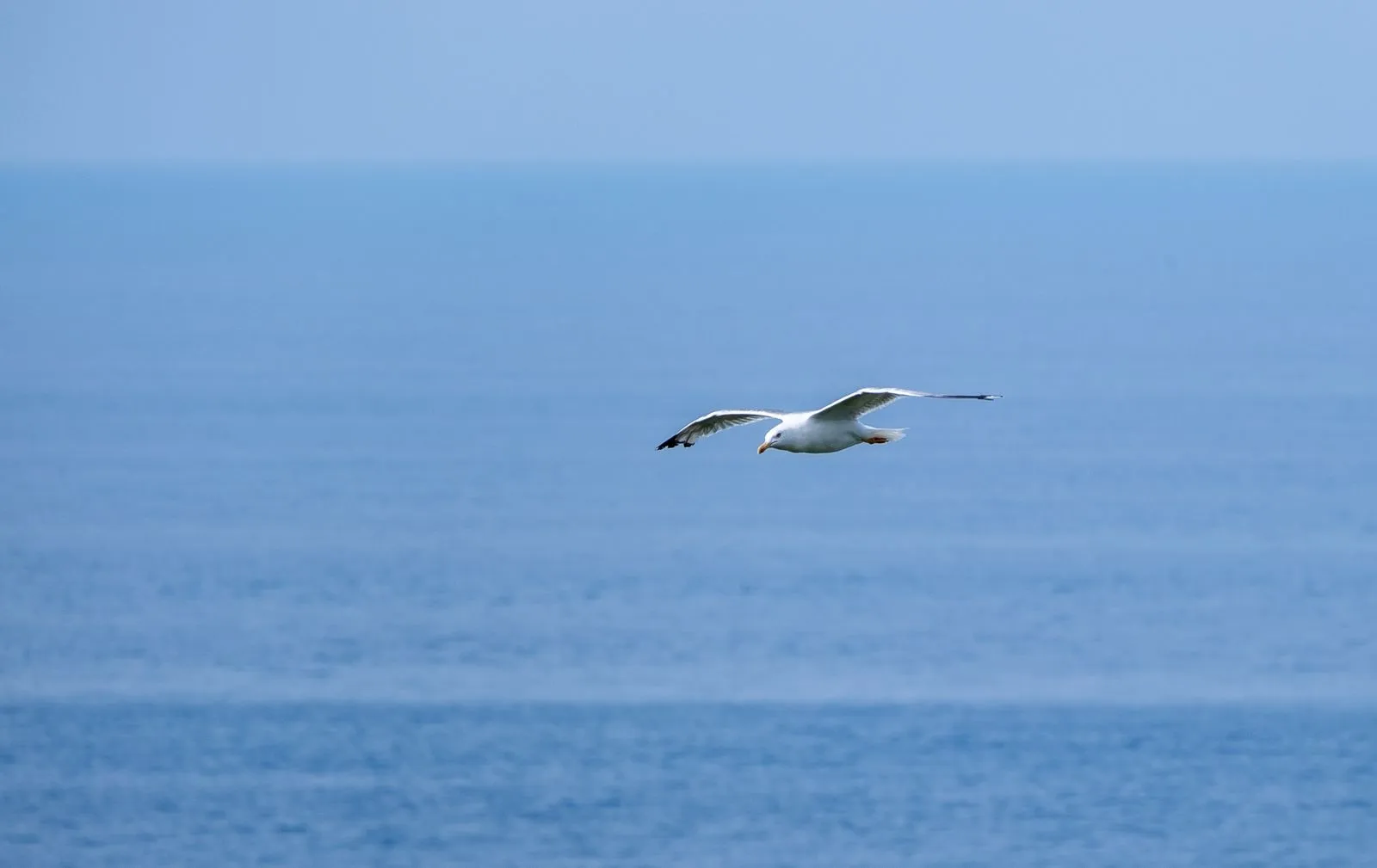
Ring-billed Gulls are the default gull for much of inland America. If you see a medium gull in a parking lot in Kansas or on a reservoir in Ohio, start with Ring-billed and prove yourself wrong. Their clean black bill ring, yellow-green legs, and pale eye are consistent in adults.
California Gulls look like a slightly larger Ring-billed Gull with a dark eye and a bill that carries both a black mark and a red spot. Short-billed Gulls are smaller and gentler faced, with a short yellow-green bill. In summer, Laughing and Franklin’s Gulls wear black hoods, but Laughing Gulls are larger, longer billed, and coastal, while Franklin’s Gulls are smaller, shorter billed, and often found in fields and prairie wetlands during migration.
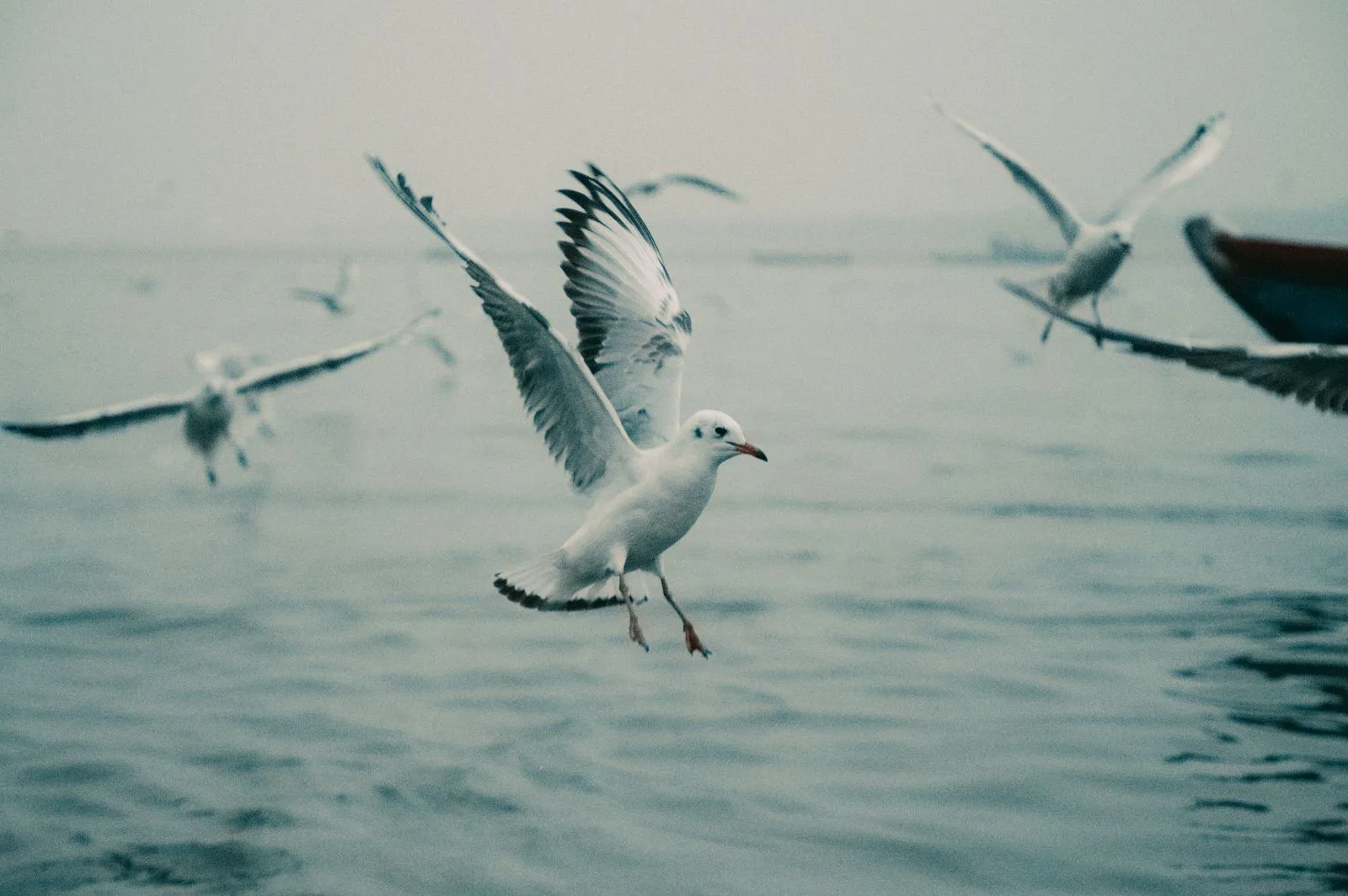
The smallest gulls reward a closer look. Bonaparte’s Gulls have a thin black bill and a white triangle on the leading edge of the wing in flight. Little Gulls are even smaller, with dark underwings that look almost black from below. Sabine’s Gulls, seen mostly on migration, show a striking forked tail and a bold three-color wing pattern that no other small gull matches.
Juvenile Gulls: Why Brown Gulls Are the Hardest
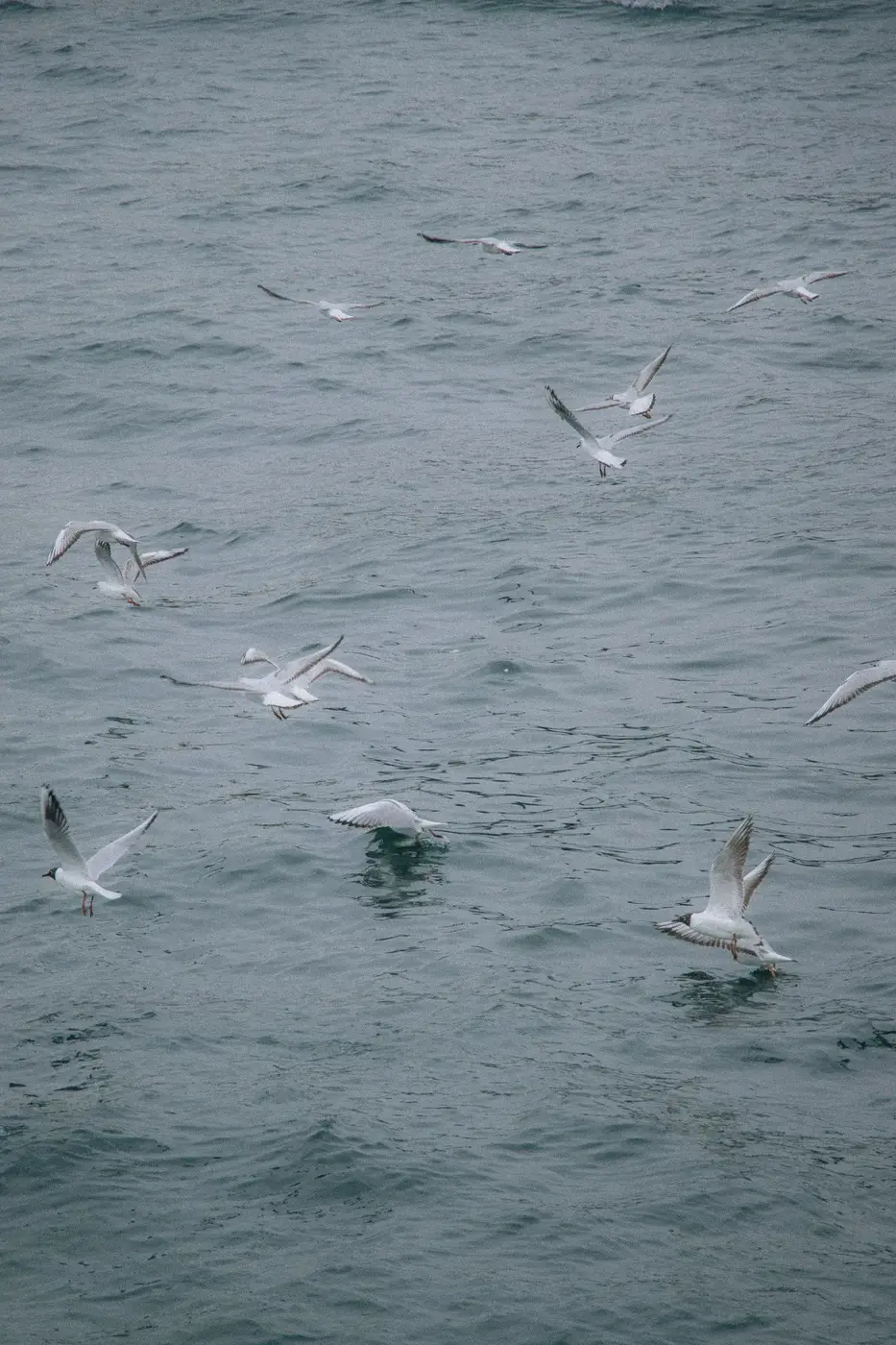
Most gulls take two to four years to reach adult plumage, and during that time they are mostly brown, mottled, or patchy. A first-year Herring Gull is almost entirely brown with a dark bill and pink legs. A first-year Ring-billed Gull is browner and smaller, with a dark bill and pinkish legs that turn yellow-green with age. This is why experienced birders check structure and size before plumage on young birds: a big, heavy-billed brown gull is not going to turn into a Bonaparte’s Gull.
| Age | What to expect | Best clues |
|---|---|---|
| First year | Mostly brown and mottled, dark bill | Size, bill shape, leg color, wingtip shade |
| Second year | Gray back feathers appear, bill starts to lighten | Mix of brown and gray, bill pattern emerging |
| Third year | Near adult, some brown left in wings and tail | Adult-like head and back, messy wingtips |
| Adult | Clean white head, gray or black back, full bill color | Bill, legs, and wingtips all match the chart |
Season matters too. In winter, many adult gulls develop gray streaking on the head and neck, and some bills gain a dark mark near the tip. Do not let a streaky winter head push you toward a different species. Check the bill and legs first, since those change less.
Confusing Pairs, Solved
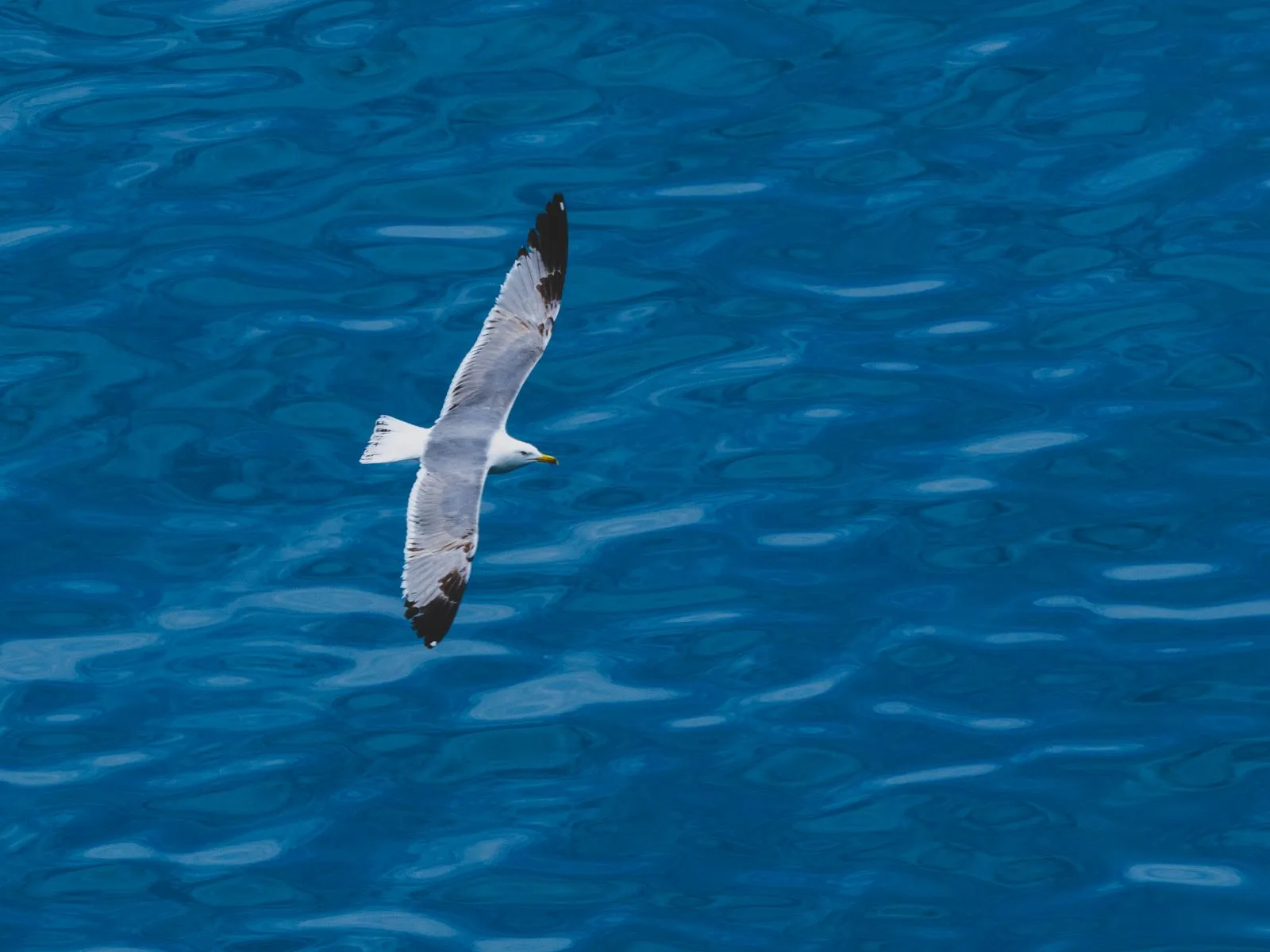
Herring Gull vs Ring-billed Gull. Herring is larger and heavier billed, with pink legs and a red spot on the bill. Ring-billed is smaller and neater, with yellow-green legs and a black ring around the bill. If the bird looks delicate next to other gulls, it is probably Ring-billed.
Western Gull vs Glaucous-winged Gull. Western has black wingtips and a darker gray back. Glaucous-winged has gray wingtips and a paler, washed-out look. In the Pacific Northwest, expect hybrids that mix these traits.
Iceland Gull vs Glaucous Gull. Both are pale with little or no black in the wingtips. Glaucous is much larger and heavier billed, almost Herring Gull sized or bigger. Iceland is smaller, rounder headed, and gentler billed. Size is the deciding factor here.
Laughing Gull vs Franklin’s Gull. Laughing is larger with a longer, drooping bill and a coastal range. Franklin’s is smaller with a short bill and a habit of feeding in fields and prairie wetlands. In flight, Franklin’s shows more white in the wingtips.
Where and When to See Gulls in the US
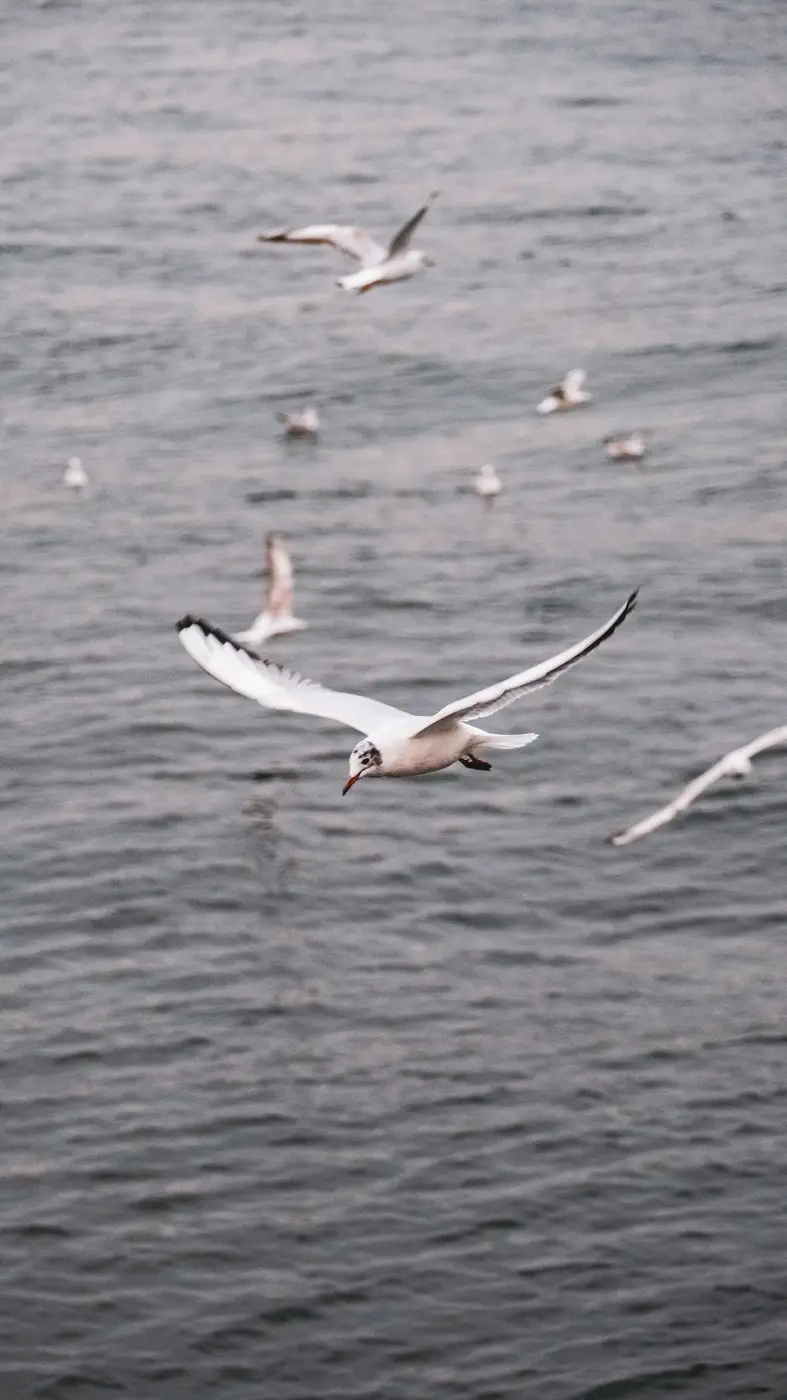
Coasts hold the most species year round, but do not ignore inland water. Ring-billed, Herring, California, and Franklin’s Gulls all use lakes, reservoirs, rivers, and farm fields, especially in winter. Landfills, parking lots, and plowed fields attract gulls because food is easy there, which is why a gull in a shopping center lot is normal, not lost.
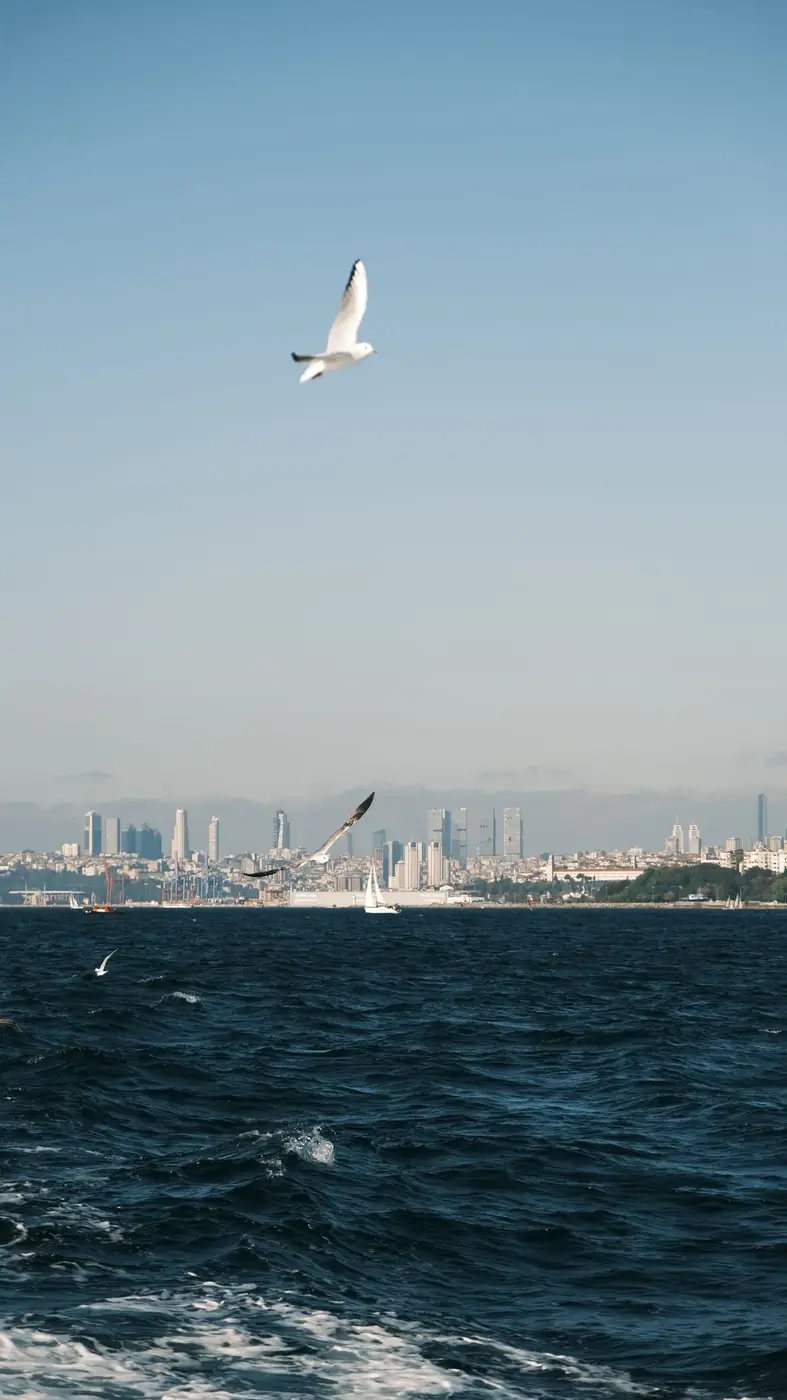
Winter is the best season for gull watching in the northern US, because Arctic and northern breeders move south and mix with resident birds. The Great Lakes, the Northeast coast, and the Pacific Northwest all gain extra species from November through March. Summer is best for breeding plumage and for coastal species like Laughing and Heermann’s Gulls in their core ranges.
Quick Field Checklist
- How big is it compared to nearby gulls or to a crow?
- What color is the bill, and is there a spot, ring, or dark tip?
- What color are the legs: pink, yellow, yellow-green, dark, or black?
- Are the wingtips black, gray, or white, and how much white is in them?
- Is the head clean white, streaked, or hooded?
- Where are you: coast, lake, field, or parking lot, and what month is it?
If you can answer four of those six questions, you can usually narrow the bird to one or two species in the chart above. A photo helps even more, because wingtip pattern and bill detail are easier to study at home than in a flying bird.
Frequently Asked Questions
Are seagulls and gulls the same thing?
Yes. Seagull is the everyday name for gulls, but no gull species is officially called a seagull. Birders just say gull, and many gulls live far from the sea.
How long does it take a gull to get adult plumage?
Most large gulls take three to four years, while small gulls take two years. Until then, expect brown, mottled, or patchy plumage that changes every year.
What is the most common gull in the US?
Ring-billed Gulls are the most widespread and abundant across much of the country, followed by Herring Gulls on coasts and the Great Lakes. If you are inland, Ring-billed is the best first guess.
Can you identify a gull by its legs alone?
Legs help a lot, but they are rarely enough on their own. Pink legs point to Herring, Western, or Glaucous-winged, while yellow legs point to Lesser Black-backed or Yellow-footed. Always combine legs with bill and size.
Why do gulls gather in parking lots?
Parking lots are warm, flat, and open, with easy food from people and nearby restaurants. Gulls rest, bathe in puddles, and watch for scraps there, just as they do on beaches.
Conclusion
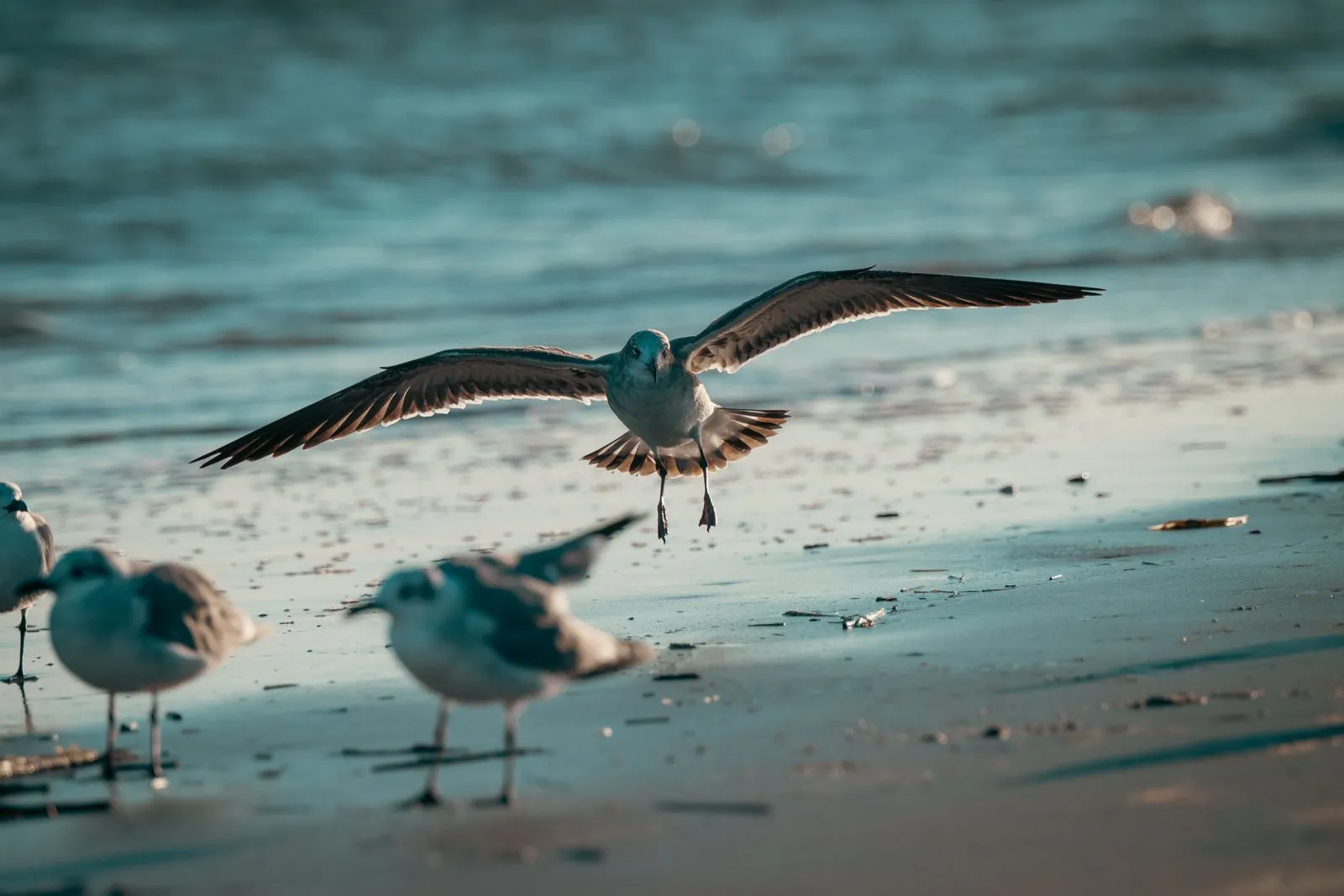
Gull identification gets easier the moment you stop trying to match a whole bird at once. Size, bill, legs, wingtips, and place will carry you through most identifications, and the chart above gives you a reference to check in the field. Start with the common species in your area, learn their adult patterns cold, and then tackle juveniles and rarities one at a time. For more practice with similar birds, compare this guide with our dove identification chart, our duck identification chart, and our hummingbird identification chart, and take the checklist with you next time you visit the coast.