

An elephant calf born this year could still be walking the savanna in 2095. That is the simplest way to read the elephant lifespan chart below: these animals measure their lives in human-scale decades, not the handful of years most mammals get. A healthy wild elephant reaches 60 to 70 years, and the oldest females, the matriarchs, carry decades of memory the whole herd depends on.
Here is the twist: for most animals, a zoo adds years, but for elephants the old data says the opposite. Wild elephants lived far longer than zoo-born ones, sometimes by decades. Below: every species side by side, the study behind the gap, why elephants live so long, and what modern sanctuaries are changing.

Elephant Lifespan Chart: Every Species and Subspecies
Three living species exist, two African and one Asian, the latter split into four subspecies. Lifespan barely changes between them; size, habitat, and danger do.
| Elephant type | Wild lifespan | Captive lifespan | Typical size | Status |
|---|---|---|---|---|
| African bush elephant (Loxodonta africana) | 60 to 70 years | 17 to 40 years | Up to 3.4 m, up to 6,000 kg | Endangered |
| African forest elephant (Loxodonta cyclotis) | 60 to 65 years | 17 to 40 years | Up to 2.5 m, 2,700 to 4,000 kg | Critically Endangered |
| Asian elephant (Elephas maximus) | 55 to 70 years | 19 to 45 years | Up to 3 m, up to 5,000 kg | Endangered |
| Indian elephant (E. m. indicus) | 55 to 70 years | 19 to 45 years | Most numerous Asian subspecies | Endangered |
| Sri Lankan elephant (E. m. maximus) | 55 to 70 years | 19 to 45 years | Largest Asian subspecies | Endangered |
| Sumatran elephant (E. m. sumatranus) | About 55 to 60 years | 19 to 45 years | Smaller, island adapted | Critically Endangered |
| Bornean elephant (E. m. borneensis) | About 55 to 60 years | 19 to 45 years | Smallest Asian subspecies | Endangered |
Captive ranges are wide because they cover older zoos with poor results and modern facilities that do much better. The medians below tell the sharper story. For the full breakdown of each type, see our types of elephants chart.

The Wild Versus Captive Gap: What the 2008 Science Study Found
The key evidence is a 2008 Science study covering more than 4,500 elephants in wild populations, timber camps, and zoos. It used median lifespan, the age by which half a group had died, so a few very old animals could not flatter it.
| Population studied | Median lifespan | Setting |
|---|---|---|
| Wild African females, Amboseli, Kenya | 56 years | Wild population |
| Zoo-born African females | 17 years | Historical zoo records |
| Working Asian elephants, Myanmar timber camps | About 42 years | Outdoor working camps |
| Zoo-born Asian females | 19 years | Historical zoo records |
A wild African female in Amboseli lived to a median of 56 years; a zoo-born African female reached just 17. Working Asian elephants in Myanmar timber camps lived to about 42, while zoo-born females managed only 19. The gap is roughly threefold for African elephants.
The cause is straightforward. Elephants evolved to walk many miles a day, eat varied browse, and live in tight family groups. A traditional zoo gave them almost none of that: limited movement brought obesity and painful foot disease, and separation from family added chronic stress. The animals looked safe behind a fence, but their bodies paid for decades of confinement.
African Versus Asian Elephants: Same Long Life, Different Lives
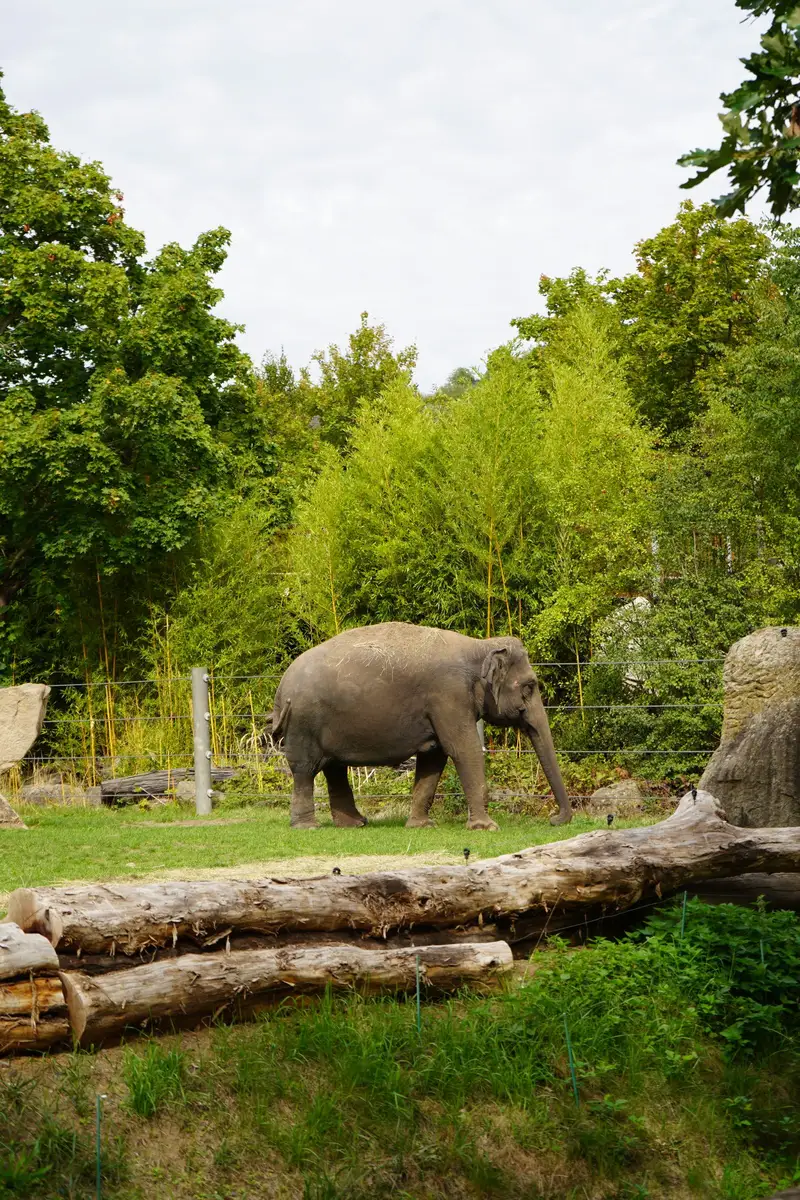
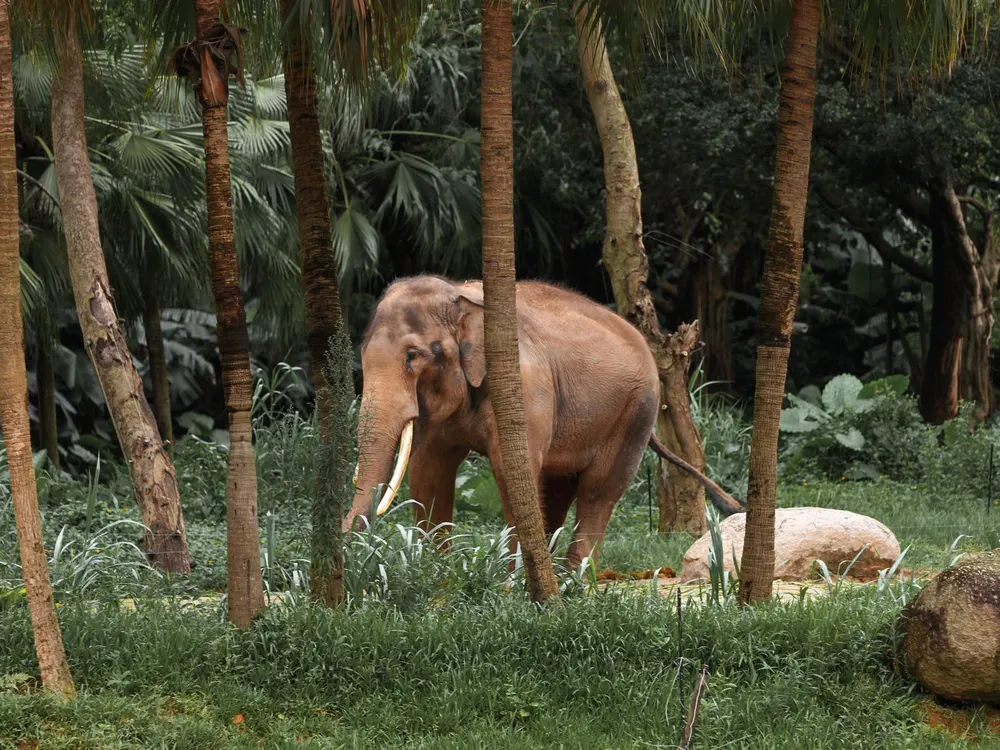
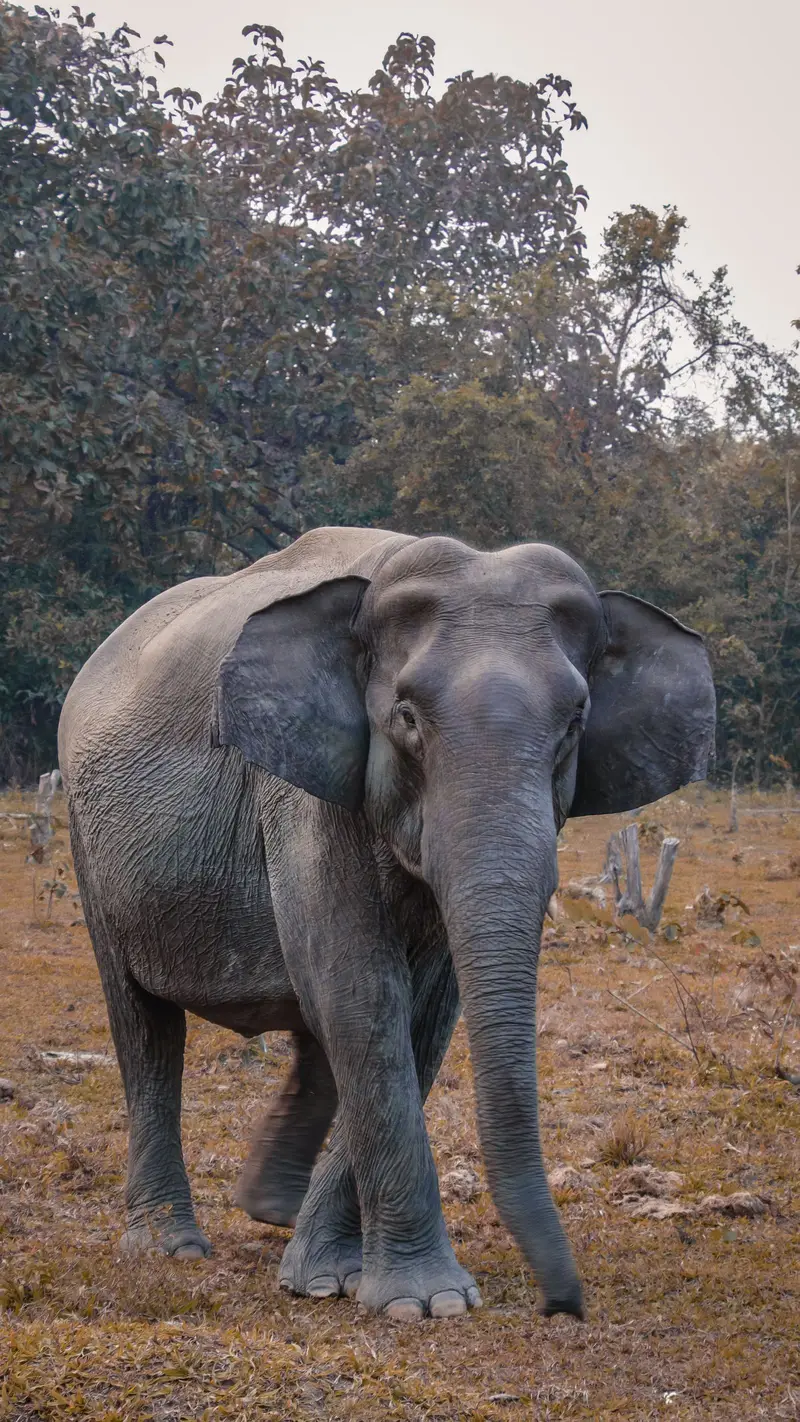
African and Asian elephants split millions of years ago, and you can tell them apart at a glance. African elephants are larger, with big ears shaped a little like the African continent, and tusks on both sexes. Asian elephants are smaller, with rounded ears, a domed head with two bumps, and tusks mainly on males.
On lifespan, the two lines barely differ: both can reach their late sixties, among the longest lives of any land animal. The real differences are ecological. Bush elephants roam savanna in large herds, forest elephants live in smaller groups deep in Central African rainforest, and Asian elephants live in forests and grasslands across South and Southeast Asia, often close to people, which brings conflicts over crops and space.
Why Elephants Live So Long
Big animals usually outlive small ones, but size alone does not explain it. Four factors work together.
First, cancer defense. With far more cells than a person, an elephant should get cancer far more often. It does not, because elephants carry around 20 copies of the TP53 tumor suppressor gene, while humans carry one. TP53 helps damaged cells die before they turn cancerous.
Second, slow life history. Pregnancy lasts about 22 months, the longest of any land mammal, calves nurse for years, and females usually first calve at 12 to 14. Nature only invests that much time in animals it expects to live a long time.
Third, almost no predators: lions may take a calf, but they do not take on a healthy adult. Fourth, the teeth, which cut both ways. An elephant grows six sets of molars, each sliding forward as the last wears down. When the sixth set wears out, usually in the animal’s sixties, it can no longer chew enough to survive. For most wild elephants, worn teeth end a long life, not disease or predators.
An Elephant’s Life, Stage by Stage
An elephant grows up slowly: dependent early years, a long prime, and old years that still carry weight in the herd.
| Life stage | Age | What happens |
|---|---|---|
| Calf | 0 to 2 years | Nurses, stays close to the mother, guarded by the family |
| Juvenile | 3 to 12 years | Learns feeding, social behavior, and routes from elders |
| Young adult | 13 to 20 years | Females may have a first calf; young males leave the birth family |
| Prime adult | 20 to 45 years | Peak breeding years; females raise calves, bulls compete for mates |
| Elder | 45 to 70+ years | Oldest females lead as matriarchs; worn molars limit feeding |
The matriarch role matters most here. The oldest female usually leads, and her memory is a survival tool: during droughts, matriarchs have led herds to water sources unseen for decades, and herds with older matriarchs raise more calves in hard years. A long life is a resource the whole family draws on.


The Oldest Elephant on Record: Lin Wang at 86
The oldest documented elephant was Lin Wang, an Asian bull who died at Taipei Zoo in 2003 at an estimated 86. He hauled supplies through Burma during World War II, then retired in Taiwan as a beloved public figure, and Guinness World Records still lists him as the oldest elephant in captivity. Claims of 88 or past 100 were never verified, since elephants born long ago carry no birth records. The realistic ceiling is the low seventies.

What Cuts an Elephant’s Life Short
If old age and worn teeth are the natural end, several threats cut lives short first. Poaching is the most notorious: African elephants were hammered for ivory for decades, and forest elephants lost huge numbers, a major reason that species is now Critically Endangered. Asian elephants face poaching for ivory, skin, and meat, plus capture for tourism and labor.
Drought is the second great killer. An adult can drink 100 to 200 liters of water a day, so a dry year hits hard, and calves suffer first. Habitat loss is the slow threat underneath: farms, roads, and towns squeeze herds into smaller patches, block migration routes, and push crop raiding into retaliation. In captivity, the killers differ: obesity and foot disease from hard surfaces and too little movement, plus the stress of isolation.

How to Tell an Elephant’s Age
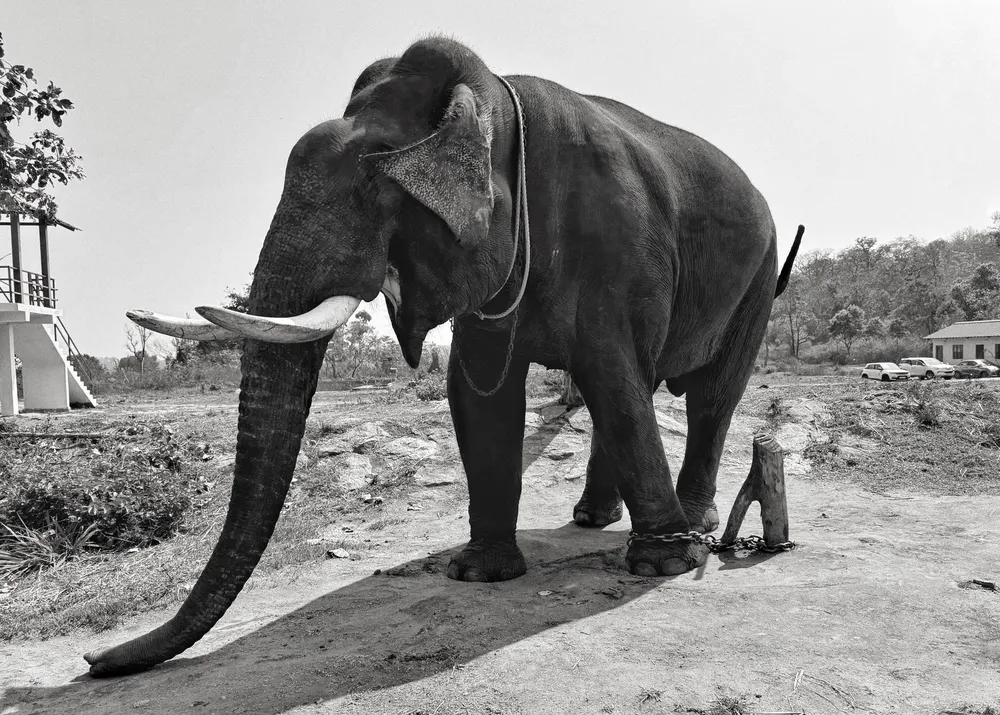
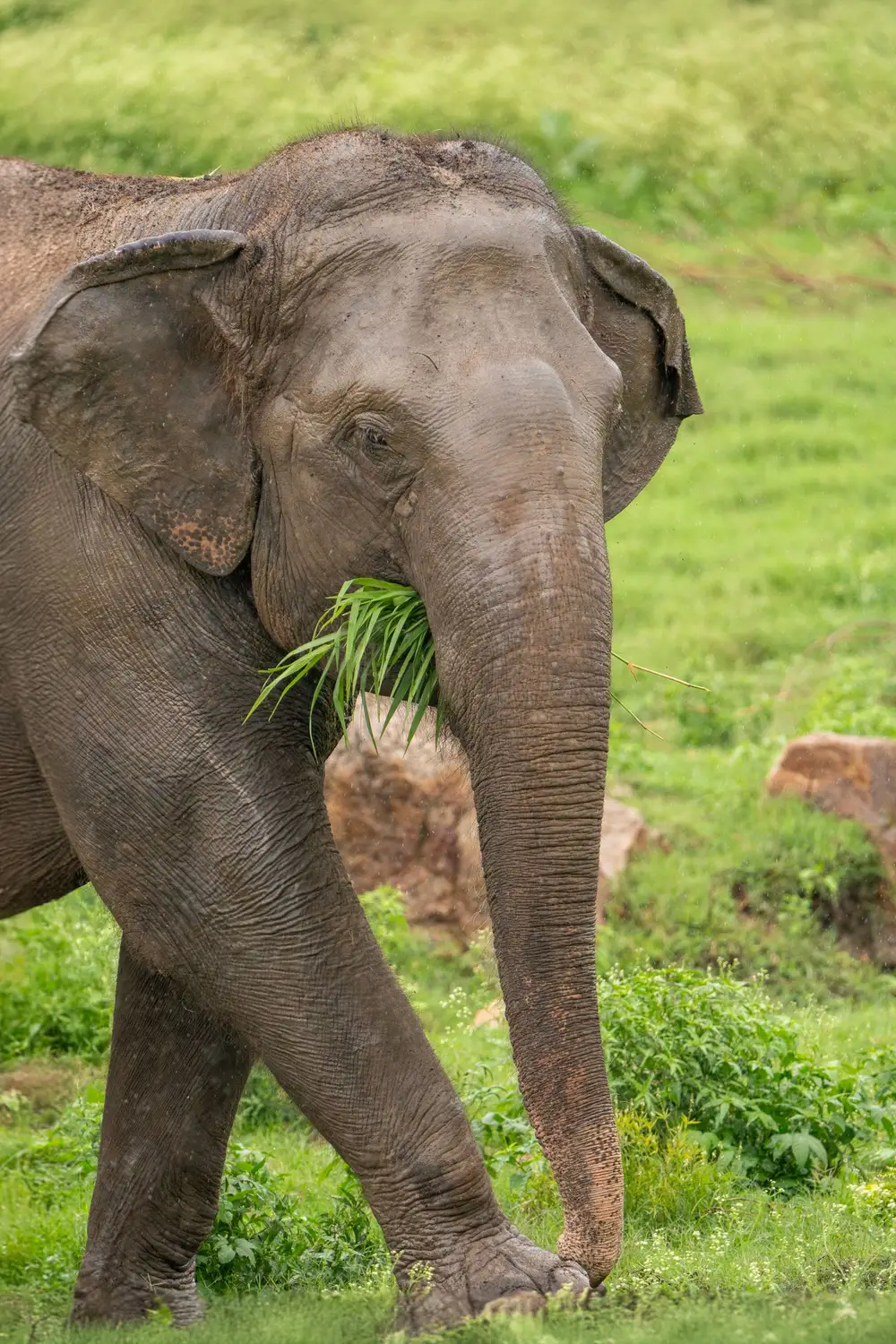
Older elephants have a sunken, hollowed back and deeply wrinkled skin that hangs looser around the legs and belly. Their ears show tears and notches collected over decades, and very long, thick tusks usually mean an older animal, though broken tusks can mislead. The most reliable sign is the teeth: each molar set is larger than the last, and the set in wear gives a good age estimate. For calves, size relative to the mother is the guide.
What Modern Sanctuaries and Better Zoos Are Changing
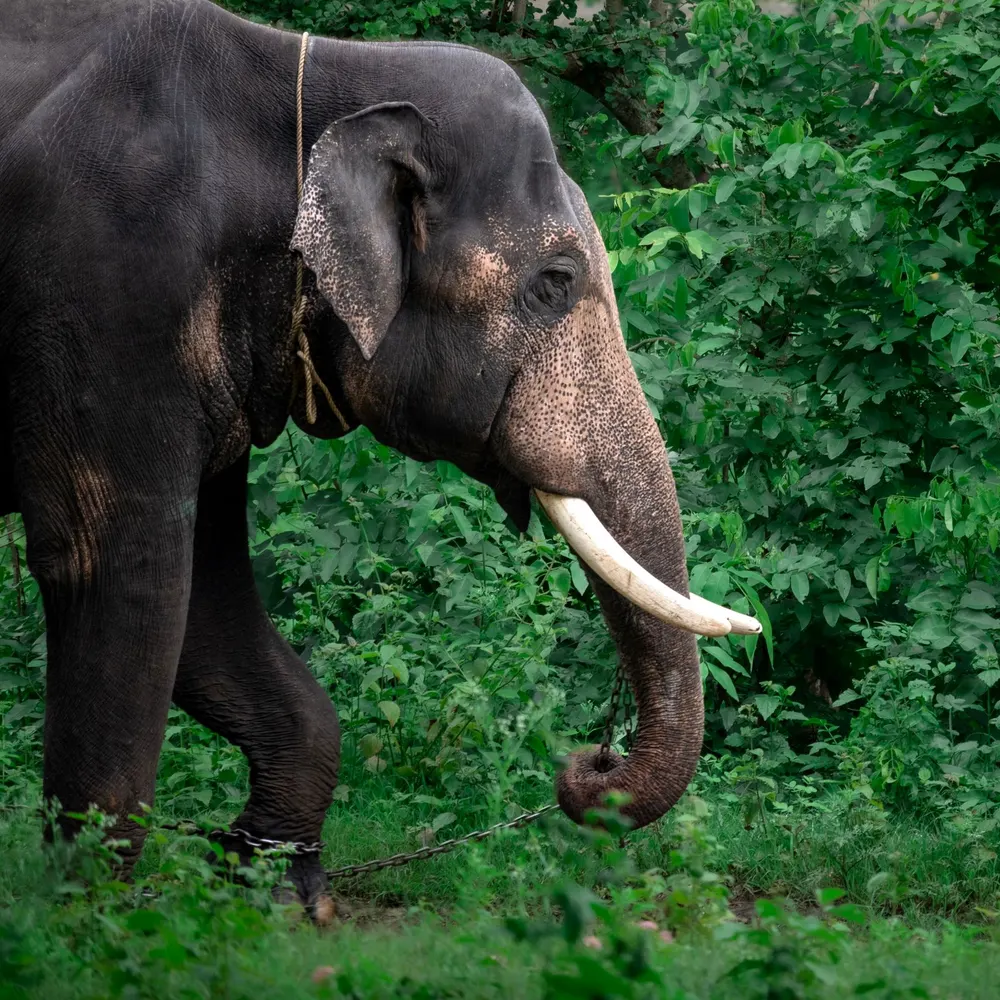
The grim old zoo medians do not describe the best facilities today. Modern sanctuaries give animals acres to roam instead of concrete yards, soft natural ground instead of hard floors, varied browse, and, crucially, companionship. The best zoos have followed the same path: larger habitats, walking programs, foot care on soft substrates, and diets managed against obesity. Some now report elephants living into their forties and beyond, far above the old medians of 17 to 19. The gap with the wild has not fully closed, but the direction is clear. For wild elephants, the equivalent progress is protection: anti-poaching patrols, habitat corridors, and community programs that reduce conflict with farmers.
Frequently Asked Questions
How long do elephants live in the wild?
Wild elephants usually live 55 to 70 years: bush elephants 60 to 70, Asian elephants 55 to 70, and forest elephants around 60 to 65.
Do elephants live longer in the wild or in captivity?
In the wild, by a wide margin historically. The 2008 Science study found wild African females at a median of 56 years against 17 for zoo-born females, and Myanmar working Asian elephants at about 42 against 19 for zoo-born females. Modern sanctuaries are improving, but the wild still leads.
Which elephant species lives the longest?
Lifespan is similar across species, with no clear winner. The oldest on record, Lin Wang, an Asian elephant, reached an estimated 86 in Taipei.
How can you tell how old an elephant is?
Look for a sunken back, deeply wrinkled loose skin, torn ears, and long thick tusks. The most reliable method is checking which of the six molar sets is in wear.
Why do elephants live so long?
Large size, slow life history, no adult predators, and around 20 copies of the TP53 anti-cancer gene all help. A 22 month pregnancy and first calving at 12 to 14 years show how stretched their timeline is.
Conclusion
The elephant lifespan chart is both impressive and sobering. These animals are built to live 60 to 70 years, protected by remarkable cancer defenses and a slow life history, guided by matriarchs whose memory keeps herds alive. Yet those years are easily lost: to poaching, drought, and shrinking habitat in the wild, and to confinement, obesity, and foot disease in old-style captivity.
Both sides of the gap are fixable. Wild populations show what elephants can do with space, water, and safety, and modern sanctuaries show captivity improving when it copies those conditions. Give elephants space to move, family to live with, and time to grow old, and the decades take care of themselves.
More lifespan charts on this site cover the same wild versus captive question: the snake lifespan chart, the lion lifespan chart, and the capybara lifespan chart.
Pingback: Raccoon Lifespan Chart: How Long Raccoons Live – Chart Identify