
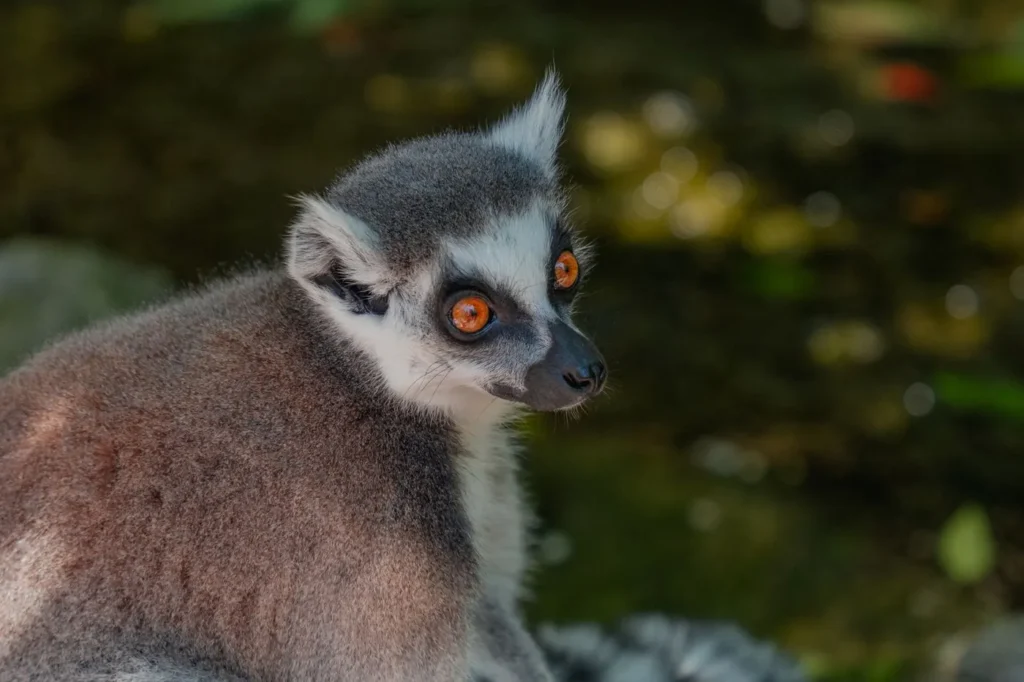
When most people hear the phrase “types of lemurs,” exactly one animal pops into mind: the ring-tailed lemur, tail striped like a barber pole, sitting upright in the morning sun. That single species gets all the fame, but it is only one of more than 100 lemur species, and every wild one lives on the same island: Madagascar. You will not find a wild lemur anywhere else on Earth, which is exactly why this family of primates turned out so strange and so varied.
Lemurs split from the ancestors of monkeys and apes roughly 60 million years ago, then carried on evolving in total isolation after their ancestors rafted to Madagascar. The result is a lineup that runs from the singing indri, as big as a human toddler, down to a mouse lemur light enough to sit in a teaspoon. This guide covers 20 of the most important types of lemurs: how to tell the lookalikes apart, where each one lives, what they eat, and why so many are in trouble.
20 Types of Lemurs: The Complete Species Chart
The chart below is the quick reference: scientific name, average total length (body plus tail), current wild range and habitat, and the one fact that makes each species memorable.
| Species | Avg Length (body + tail) | Range / Habitat | Key Fact |
|---|---|---|---|
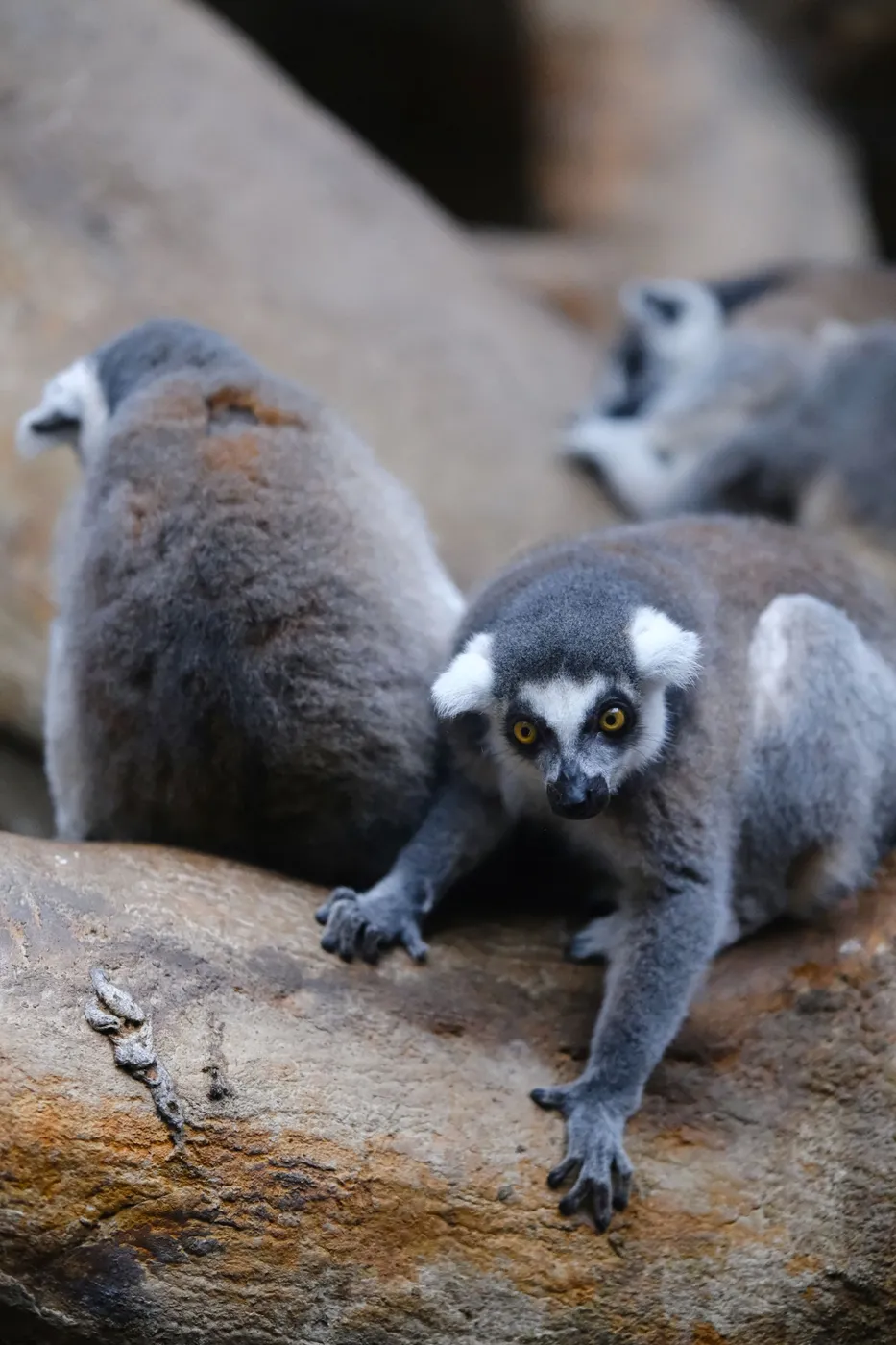
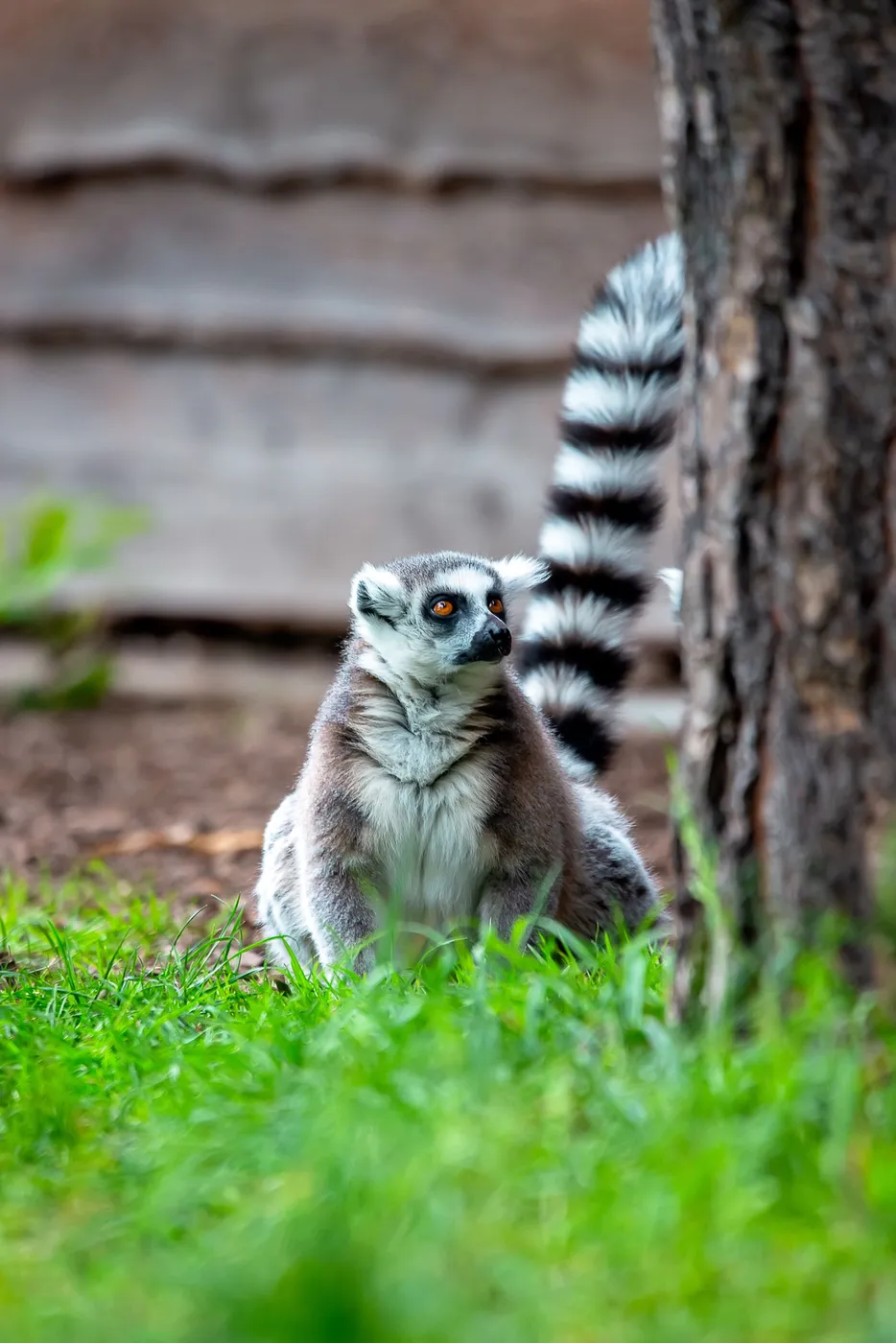
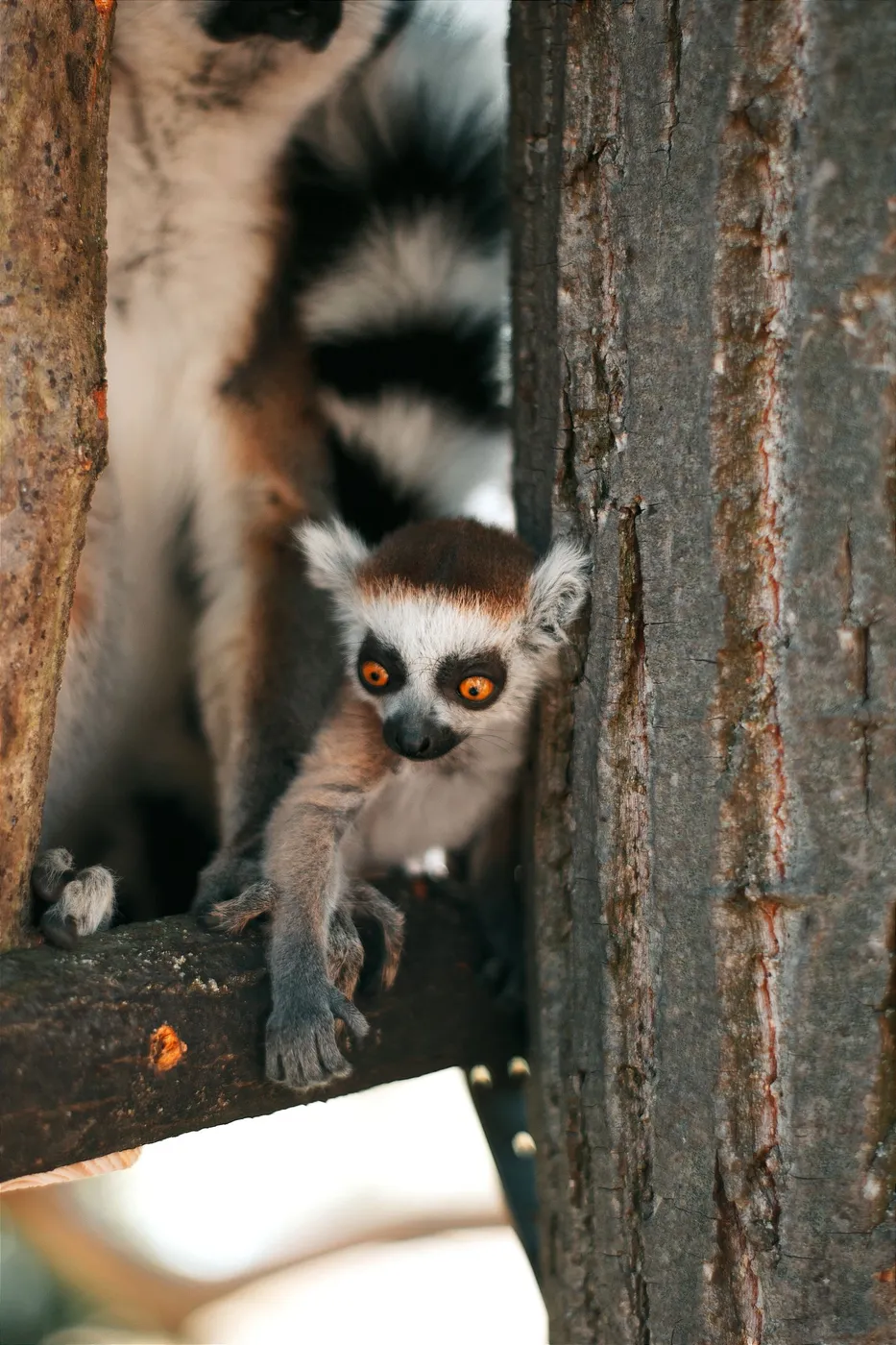
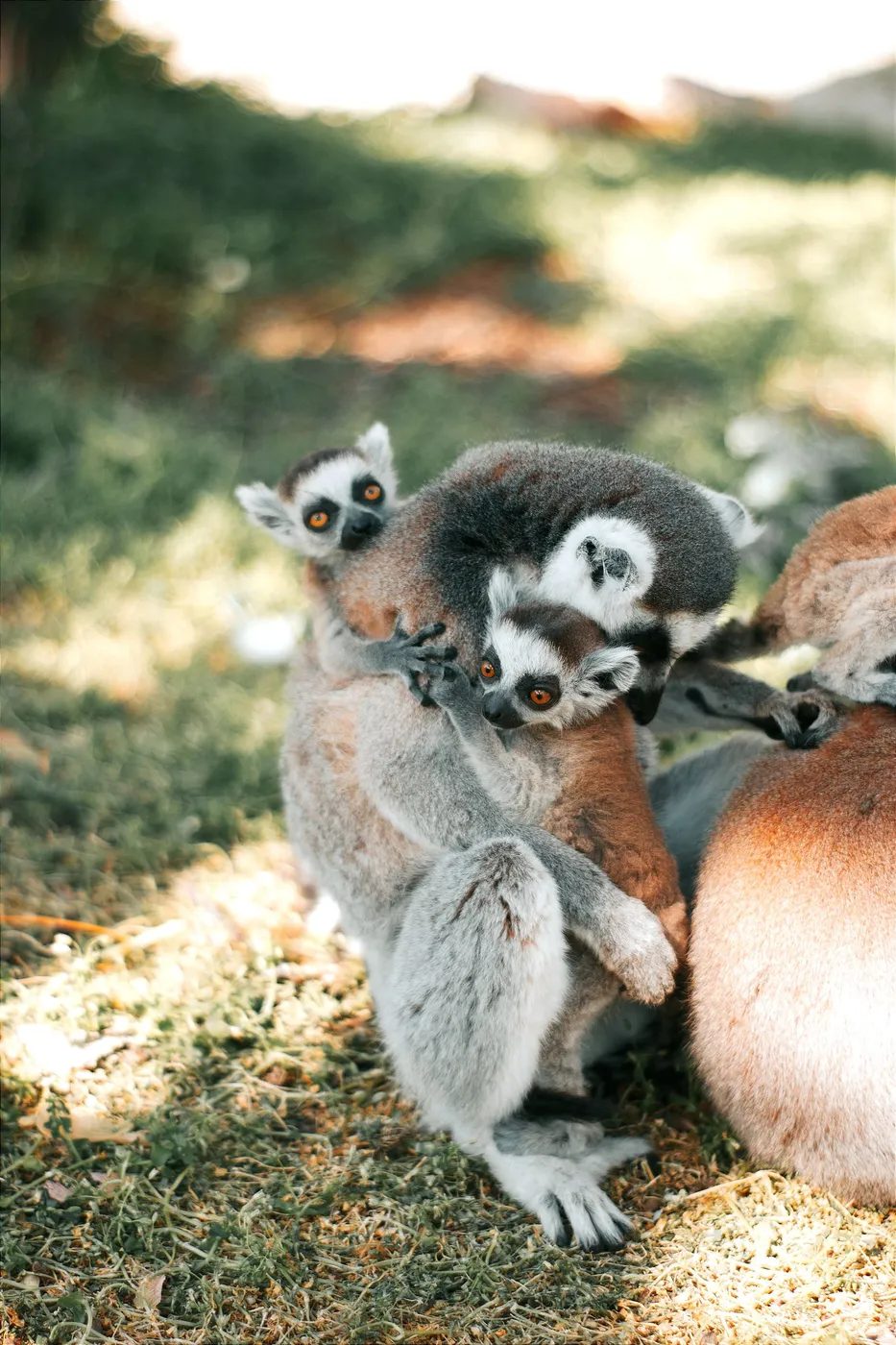
| Ring-tailed lemur (Lemur catta) | 85-110 cm | Southern Madagascar: spiny and gallery forests | Lives in troops of up to 30 where females rule; sunbathes sitting upright |
| Indri (Indri indri) | 64-77 cm, nearly tailless | Eastern rainforests | Largest living lemur (6-9.5 kg); mated pairs sing duets heard 2 km away |
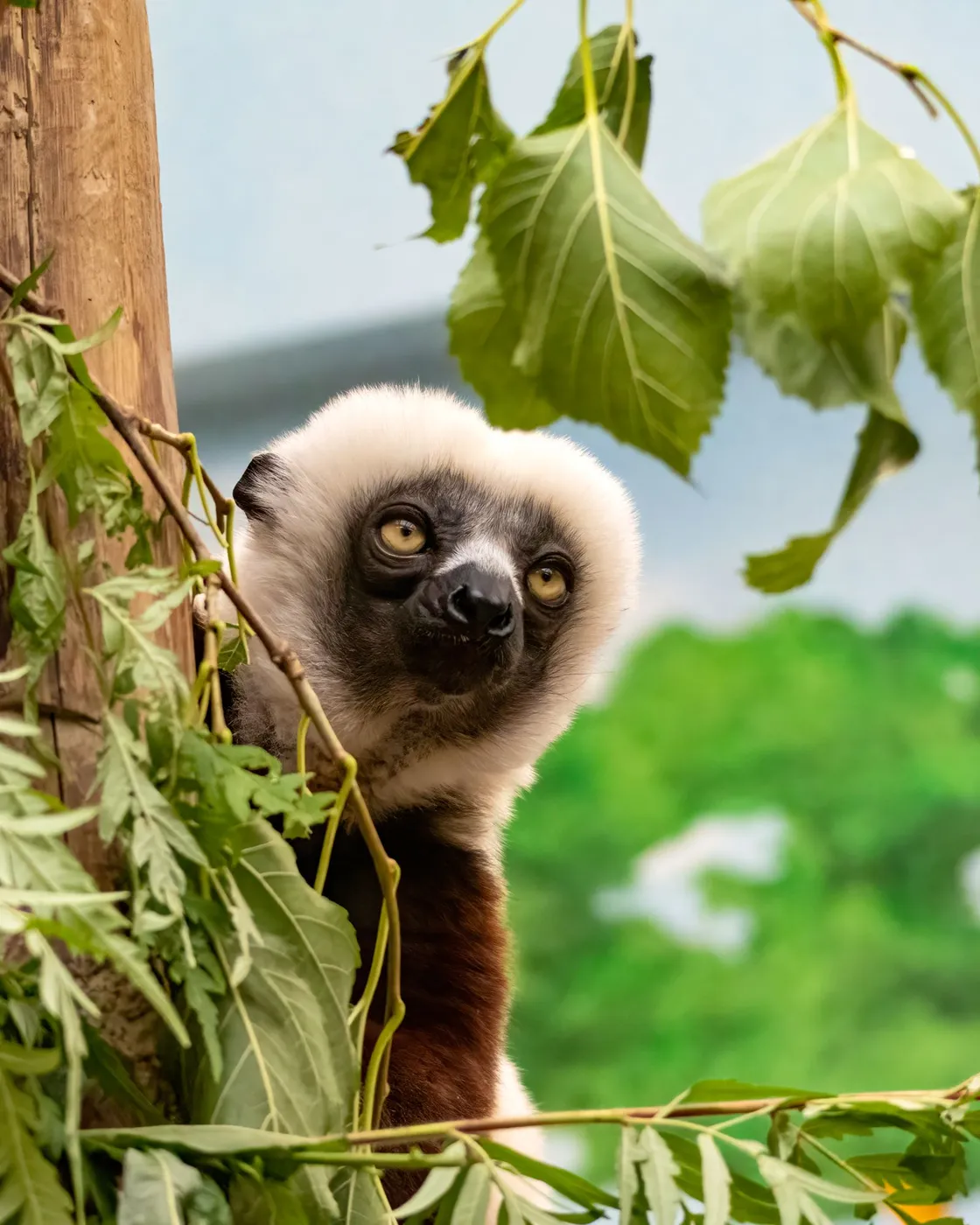
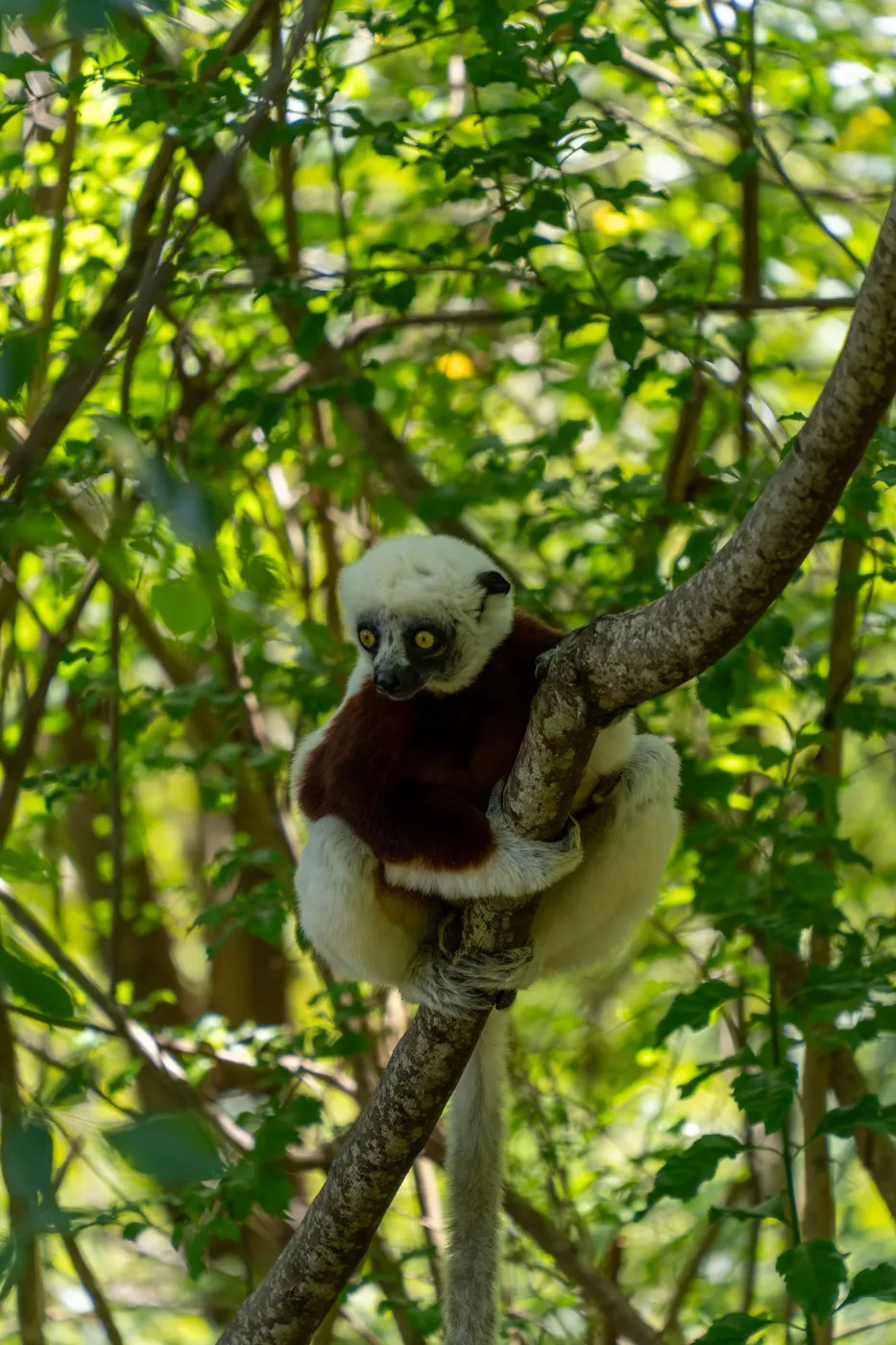
| Coquerel’s sifaka (Propithecus coquereli) | 92-110 cm | Northwestern dry forests | Crosses open ground in sideways hops, the famous “sifaka dance” |
| Verreaux’s sifaka (Propithecus verreauxi) | 100-110 cm | Southern spiny forests | Leaps up to 10 meters between vertical tree trunks |
| Diademed sifaka (Propithecus diadema) | 94-105 cm | Eastern rainforests | One of the heaviest lemurs at up to 8 kg; critically endangered |
| Milne-Edwards’ sifaka (Propithecus edwardsi) | 94-120 cm | Southeastern rainforests | Dark chocolate coat with a pale cream saddle across its back |
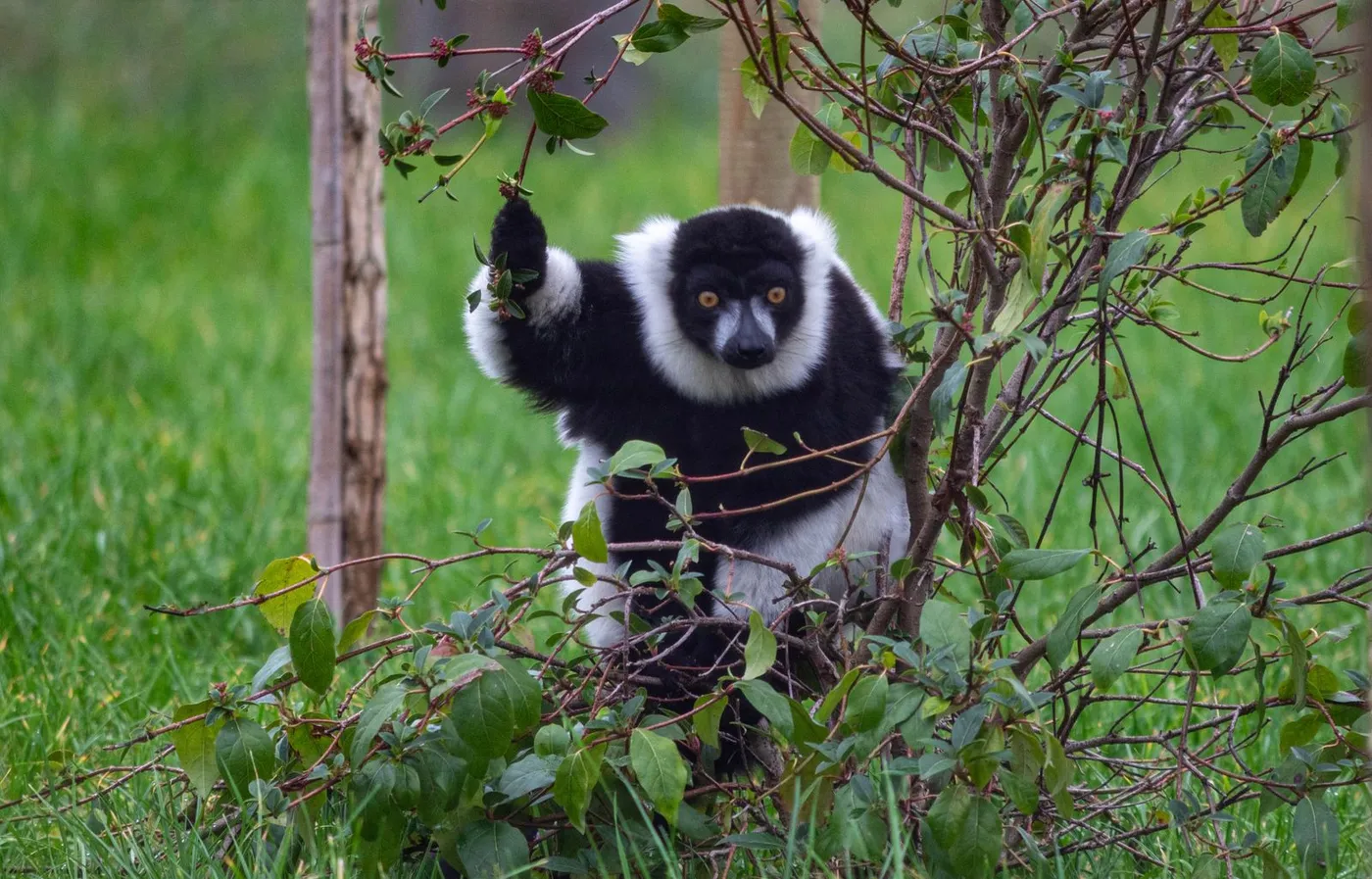
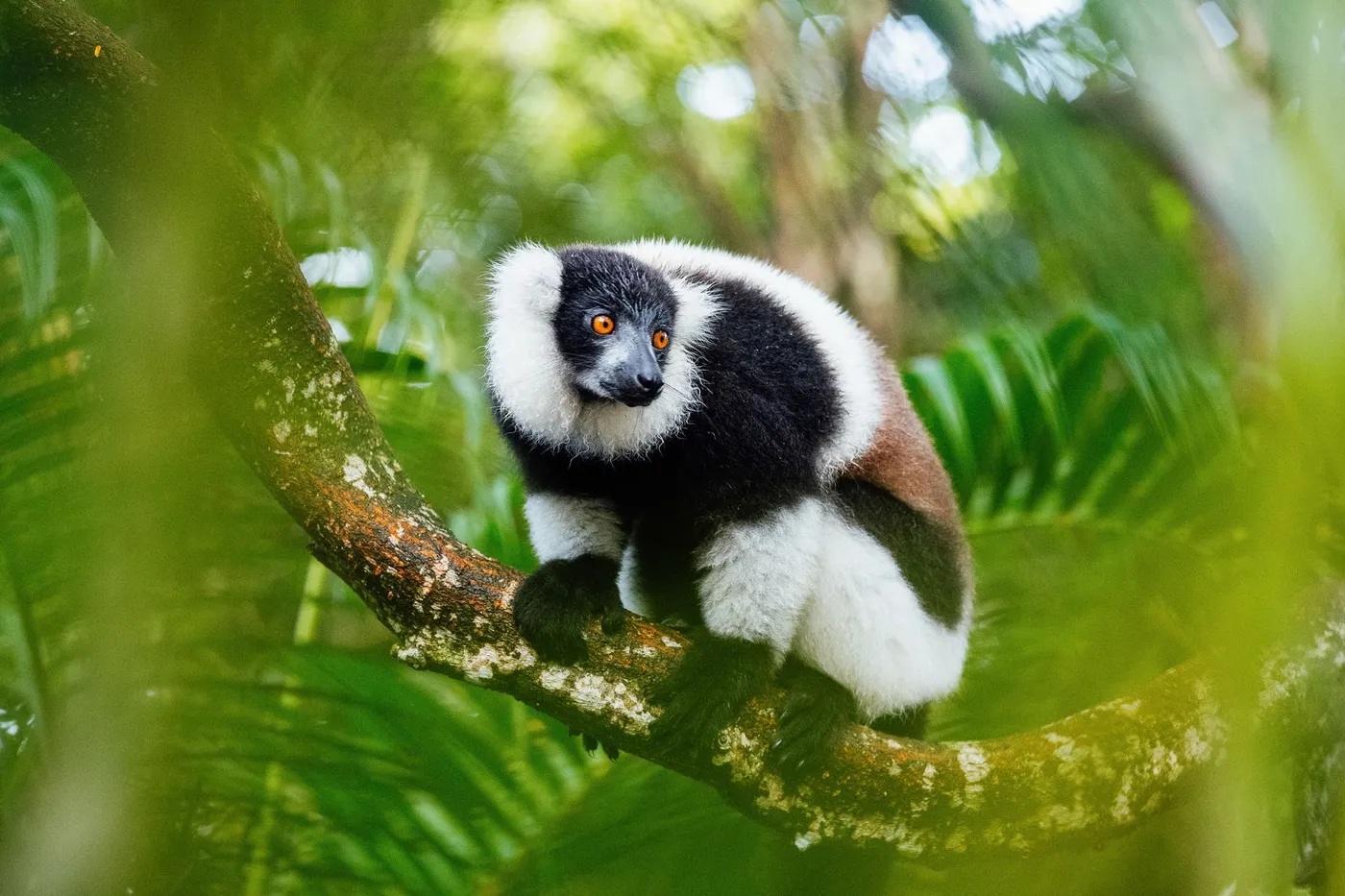
| Black-and-white ruffed lemur (Varecia variegata) | 111-125 cm | Eastern rainforests | Pollinates the traveler’s palm; its roaring chorus carries for kilometers |
| Red ruffed lemur (Varecia rubra) | 113-125 cm | Masoala Peninsula only | Deep rust-red coat; builds leaf nests and carries babies in its mouth |
| Aye-aye (Daubentonia madagascariensis) | 88-103 cm | Forests island-wide | Taps dead wood with a thin middle finger, then fishes out grubs |
| Gray mouse lemur (Microcebus murinus) | 25-29 cm | Western and southern dry forests | Stores fat in its tail to survive the lean dry season |
| Madame Berthe’s mouse lemur (Microcebus berthae) | About 22 cm | Menabe forests, west coast | The world’s smallest primate at roughly 30 grams |
| Fat-tailed dwarf lemur (Cheirogaleus medius) | 37-50 cm | Western and southern dry forests | The only primate that truly hibernates, sleeping up to 7 months |
| Greater bamboo lemur (Prolemur simus) | 85-108 cm | Eastern rainforests | Eats giant bamboo laced with cyanide that would kill most animals |
| Alaotra gentle lemur (Hapalemur alaotrensis) | 76-80 cm | Lake Alaotra reed beds | The only primate in the world that lives in a wetland |
| Common brown lemur (Eulemur fulvus) | 93-110 cm | Northwestern dry forests | Active by day and by night; bold enough to raid crops and villages |
| Red-fronted brown lemur (Eulemur rufifrons) | 85-103 cm | Southern and southwestern dry forests | Males and females sing loud paired duets to defend their territory |
| Blue-eyed black lemur (Eulemur flavifrons) | 90-110 cm | Sahamalaza Peninsula, northwest | Males are jet black and females warm tan, but both have blue eyes |
| Crowned lemur (Eulemur coronatus) | 78-85 cm | Northern dry forests | Sports a bright orange crown; travels in small noisy groups |
| Mongoose lemur (Eulemur mongoz) | 80-95 cm | Northwest Madagascar and the Comoros islands | The only lemur found in the wild outside Madagascar |
| Northern sportive lemur (Lepilemur septentrionalis) | 53-55 cm | Far northern dry forests | Perhaps 50 left in the wild, making it the rarest of all lemurs |
One caution: “range” means where each species survives right now, not where it used to be, and almost every entry has shrunk.
Lookalike Guide: Telling Similar Types of Lemurs Apart
Plenty of lemurs look alike at first glance. Here is how to sort out the common mix-ups.
Ring-tailed lemur vs. crowned lemur. Only the ring-tail has the black-and-white banded tail, and it spends real time on the ground. The crowned lemur has an orange cap on its head, a plain tail, and almost never comes down from the trees.
The ruffed lemurs. Black-and-white versus red is the easy split. Both are bigger and louder than they look in photos, with dog-like snouts and huge voices. The similar black lemur of the northwest is smaller and quieter, and only its close relative, the blue-eyed black lemur, has blue eyes.
The sifakas. These are the long-legged leapers: white bodies with maroon or chocolate patches. Coquerel’s (northwest, dry forest) has maroon arms and chest; Verreaux’s (south, spiny forest) is mostly white with a dark crown; the diademed (east, rainforest) wears a white crown on a gray body. Where you saw it is half the identification.
Mouse lemur vs. dwarf lemur. Both fit in a hand, but mouse lemurs have big bare ears and stay active all year, while dwarf lemurs are rounder, shorter-eared, and vanish into hibernation for months. For scale against their larger cousins, see our types of apes guide.

Where Types of Lemurs Live: Habitats Across Madagascar
Madagascar is an island bigger than California, and its lemurs divide it up the way tenants divide an apartment building. The rainy east holds the indri, the ruffed lemurs, and the big forest sifakas. The dry west belongs to Coquerel’s sifaka, the mongoose lemur, Madame Berthe’s mouse lemur, and the hibernating dwarf lemurs. The strange spiny forest of the south, full of thorny octopus trees, is ring-tailed lemur and Verreaux’s sifaka country.
The far north holds the crowned lemur and the northern sportive lemur, while the Alaotra gentle lemur claims the papyrus reed beds around Lake Alaotra, a habitat no other primate wanted. The mongoose lemur breaks the biggest rule by also living on the Comoros islands, likely ferried there by people centuries ago.
Lemurs evolved with almost no large predators. Their main hunter is the fossa, a cat-sized carnivore found only on Madagascar. Our types of wild cats guide rounds up the mainland big cats that lemurs never had to evolve against, which partly explains why so many lemurs are bold, noisy, and active in daylight.

What Types of Lemurs Eat
Most lemurs are fruit and leaf eaters, but the specialists are where it gets interesting. Ring-tailed lemurs are the generalists: fruit, leaves, bark, sap, and famously tamarind pods, which they crack open with their teeth. Ruffed lemurs gorge on fruit and nectar, and in the process pollinate the traveler’s palm.
The bamboo lemurs are the daredevils. The greater bamboo lemur eats almost nothing but giant bamboo, which is laced with enough cyanide to kill most mammals, and somehow thrives on it. The aye-aye went the other way entirely: it is an insect hunter that taps dead wood, listens for hollow tunnels, then hooks out grubs, filling the woodpecker niche on an island that has no woodpeckers. At the tiny end, mouse lemurs mix insects, fruit, gum, and nectar, while sportive lemurs are strict leaf eaters with an oversized gut for digesting tough foliage.
Day Shift and Night Shift: Diurnal vs Nocturnal Types of Lemurs
Few primate families split their hours like lemurs do: some own the daylight, some own the night, and a handful work both shifts, a pattern scientists call cathemeral.
| Active By Day | Active At Night | Active Day and Night |
|---|---|---|
| Ring-tailed lemur, indri, all sifakas, ruffed lemurs | Aye-aye, mouse lemurs, dwarf lemurs, sportive lemurs, woolly lemurs, fork-marked lemurs | Common brown lemur, red-fronted brown lemur, mongoose lemur |
The night crew has the classic gear for it: huge eyes with a reflective layer, big mobile ears, and a strong sense of smell. The day crew leans on color vision and loud voices instead. The cathemeral species in the middle are the oddballs, and researchers think they switch schedules with the seasons and the moon.
Conservation: Why So Many Types of Lemurs Are Endangered
Lemurs are the most endangered group of mammals on the planet. Around 95 percent of species are now listed as threatened, and the causes are almost entirely human: slash-and-burn farming, charcoal production, illegal logging, hunting, and the illegal pet trade. The ring-tailed lemur, the poster species, is now listed as endangered after steep declines.
Some species face extra bad luck. The aye-aye is killed on sight in parts of Madagascar because local superstition calls it a bad omen, and the indri has never survived a year in captivity, so zoos cannot serve as a backup population.
It is not all bleak. Community-managed reserves like Andasibe-Mantadia protect the indri’s singing forests, Berenty shields ring-tailed troops in the south, and captive breeding has brought the black-and-white ruffed lemur back from the edge more than once. What lemurs need most is simple and hard at the same time: standing forest.

Types of Lemurs FAQs
How many types of lemurs are there?
More than 100 species are currently recognized, grouped into five families, and new ones are still being described from remote forests. The count keeps creeping upward as genetic studies split lookalike populations.
Are lemurs monkeys?
No. Lemurs are primates but not monkeys. They belong to an older branch called the strepsirrhines, the wet-nosed primates, which split from the ancestors of monkeys and apes about 60 million years ago. For the other branch of the family tree, see our types of apes guide.
What is the largest type of lemur?
The indri, at 6 to 9.5 kilograms with a body over 60 centimeters long and almost no tail. It is also the loudest, with territorial songs that roll through the rainforest for kilometers.
What is the smallest type of lemur?
Madame Berthe’s mouse lemur, weighing about 30 grams, which also makes it the smallest primate in the world.
Can you keep a lemur as a pet?
You should not. Most species are endangered and protected by law, they need complex social groups and specialized diets, and the pet trade pushes wild populations down. Admire them at accredited conservation centers instead.
Conclusion
From the striped tail everyone knows to the finger-tapping aye-aye and the hibernating dwarf lemur, the types of lemurs pack more variety into one island than most primate families manage across whole continents. That variety is also their vulnerability: with nearly every species tied to Madagascar’s shrinking forests, the whole family rises or falls together.


Pingback: Types of Monkeys: 25 Species, Sizes, Habitats and Identification Guide – Chart Identify