
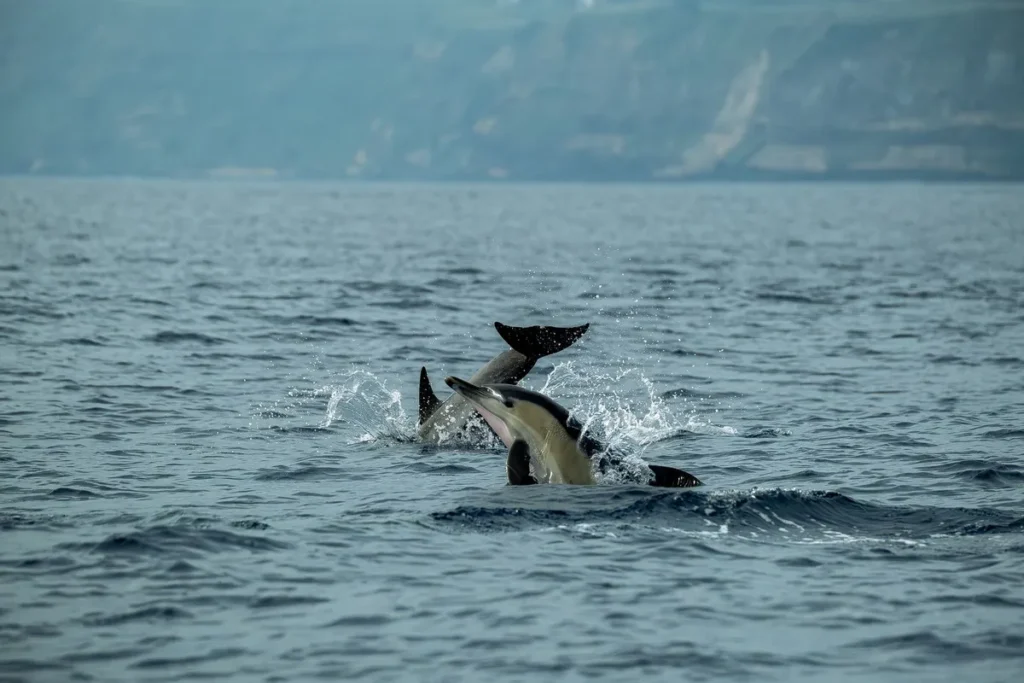
Most people picture one animal when they hear the word dolphin: grey, smiling, leaping beside a boat. That animal is usually the bottlenose dolphin. But the types of dolphins out there go far beyond that single image. Scientists recognize about 40 species in the dolphin group, from the 9-meter killer whale down to a New Zealand dolphin shorter than a tall child. This guide covers every major type of dolphin, with a full 20-species comparison chart showing sizes, ranges, and the one fact that makes each species memorable.
What Counts as a Dolphin?
Here is the surprise: the killer whale is the largest member of the dolphin family. Pilot whales, false killer whales, and pygmy killer whales are dolphins too. The word “whale” in their names describes their size, not their family. All of them belong to Delphinidae, the oceanic dolphin family, which holds roughly 38 species.
River dolphins are a separate branch of the family tree. They sit in their own families, evolved apart from the ocean species, and look nothing like them: long thin beaks, tiny eyes, flexible necks. Any honest survey of dolphin types has to include them, because some of the most endangered dolphins on Earth live in rivers.
Two famous near-misses are worth clearing up now. Porpoises look like small dolphins but belong to a different family entirely (see the dolphin vs porpoise table below). Belugas and narwhals are also not dolphins; they form their own family, the Monodontidae.
The Major Groups: Every Type of Dolphin Explained
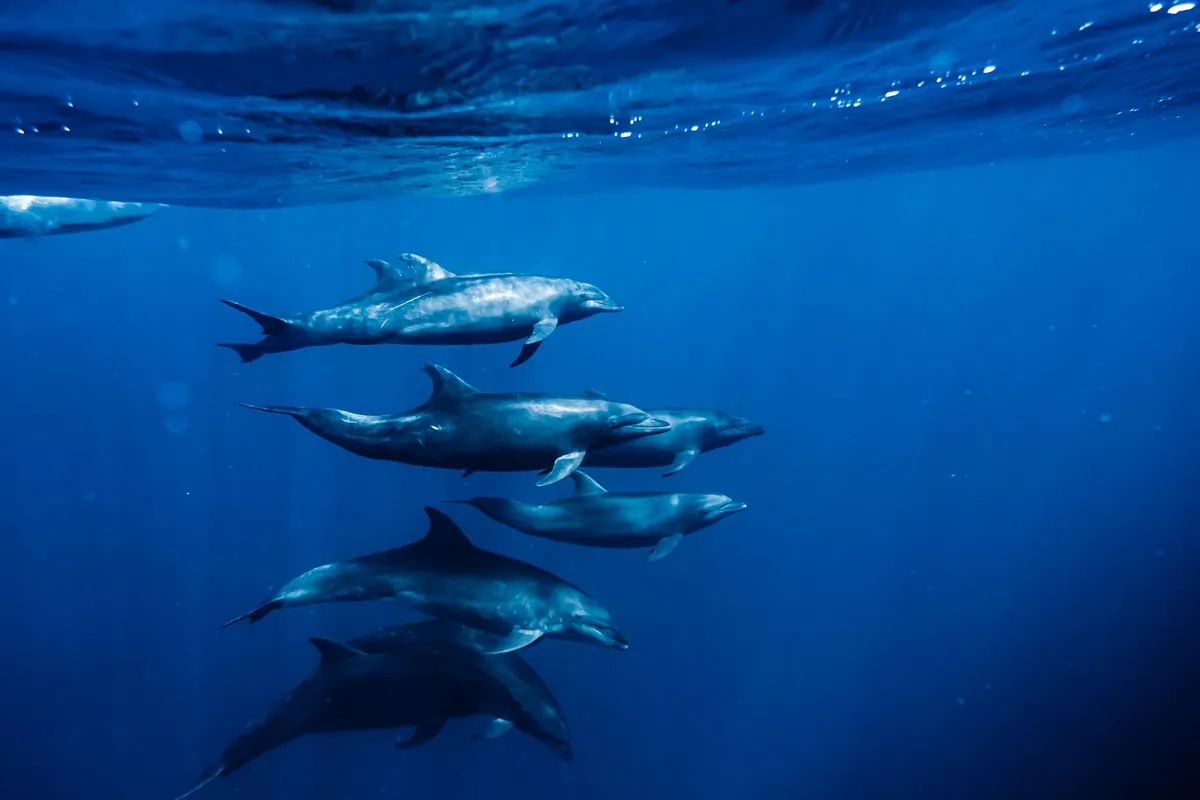
Oceanic dolphins are the classic group and by far the largest. Bottlenose, common, spinner, spotted, striped, and white-sided dolphins all live here, in warm and temperate seas around the globe. Most are fast, social, and travel in pods that can number in the hundreds.
Blackfish is the old whalers’ term for the big dolphins: orcas, pilot whales, false killer whales, and melon-headed whales. They hunt larger prey, live in tight family groups, and include the only dolphin species most people call a whale.
River dolphins are the freshwater specialists of the Amazon, Ganges, Indus, and (formerly) Yangtze rivers, plus coastal oddballs like the Irrawaddy dolphin and the franciscana. They navigate murky water almost entirely by echolocation, and nearly all of them are in trouble.
Types of Dolphins Chart: 20 Species Compared
This is the quick-reference heart of the guide. Lengths are typical adult averages.
| Species | Avg Length | Range / Habitat | Key Fact |
|---|---|---|---|
| Killer whale (orca) | 6-8 m (males) | All oceans, coast to open sea | Actually a dolphin, and the largest one; hunts in lifelong family pods |
| Short-finned pilot whale | 5-7 m | Tropical and subtropical oceans | Deep diver that chases squid hundreds of meters down |
| False killer whale | 4.3-6 m | Tropical and subtropical oceans | Shares hunting grounds with orcas; among the most social dolphins |
| Risso’s dolphin | 3-3.8 m | Temperate and tropical waters worldwide | Adults turn almost white from scars left by squid and other Risso’s |
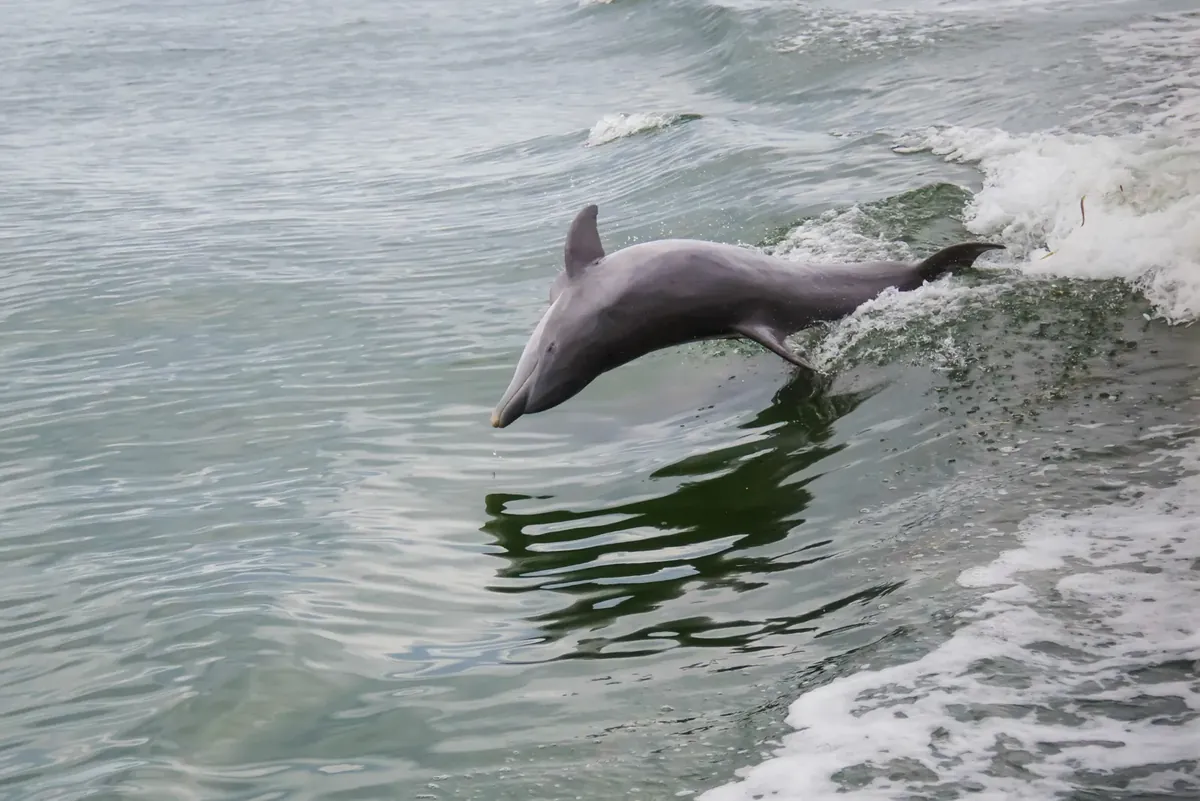
| Bottlenose dolphin | 2.5-3.5 m | Tropical and temperate coasts worldwide | In Shark Bay, Australia, some use sea sponges as foraging tools |
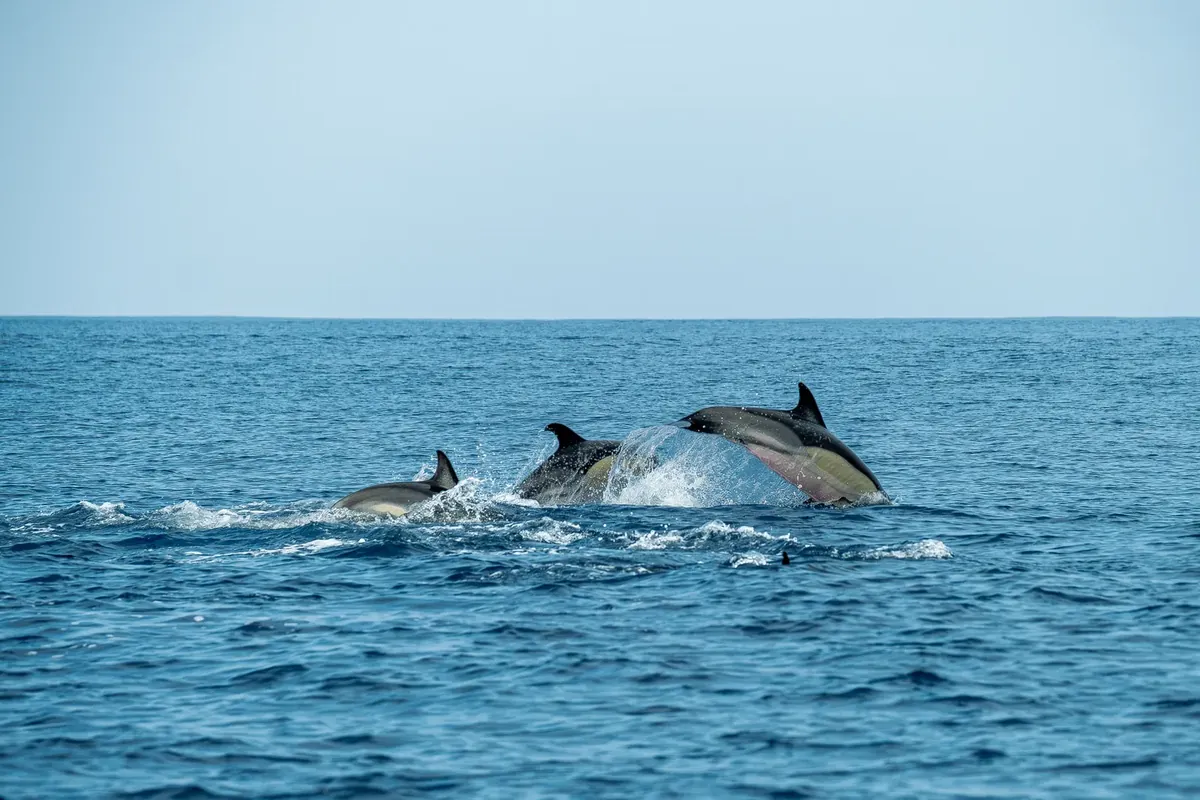
| Short-beaked common dolphin | ~2.1 m | Warm temperate oceans worldwide | Among the fastest dolphins, bursting to about 60 km/h |
| Long-beaked common dolphin | ~2.4 m | Warm coastal waters worldwide | Often travels in mixed pods with its short-beaked cousin |
| Spinner dolphin | ~2 m | Tropical oceans worldwide | Can spin up to 7 times in a single leap |
| Atlantic spotted dolphin | ~2.3 m | Warm Atlantic waters | Calves are born spotless and gain spots as they age |
| Pantropical spotted dolphin | ~2 m | Tropical oceans worldwide | Forms super-pods that can number in the thousands |
| Striped dolphin | ~2.4 m | Warm temperate and tropical waters | Bold flank stripes make it one of the easiest to identify |
| Dusky dolphin | ~2.1 m | Southern Hemisphere coastal waters | One of the most acrobatic small dolphins |
| Pacific white-sided dolphin | ~2.5 m | North Pacific | Rides bow waves in big, energetic groups |
| Atlantic white-sided dolphin | ~2.8 m | North Atlantic | Yellowish flank patches behind the dorsal fin |
| Commerson’s dolphin | ~1.5 m | Cold coasts of southern South America | Black-and-white “panda dolphin” of chilly southern waters |
| Hector’s dolphin | 1.2-1.6 m | New Zealand coastal waters | The smallest dolphin species; rounded dorsal fin like a Mickey Mouse ear |
| Amazon river dolphin (boto) | ~2.5 m | Amazon and Orinoco river basins | Turns pink with age and excitement; listed as Endangered |
| Ganges river dolphin | ~2.5 m | Ganges and Brahmaputra rivers | Nearly blind; hunts by echolocation alone; Endangered |
| Irrawaddy dolphin | ~2.3 m | Southeast Asian rivers and coasts | Rounded head with no beak; spits water to herd fish; Endangered |
| Franciscana (La Plata dolphin) | ~1.8 m | Coastal South America | Has the longest beak relative to body size of any dolphin; Vulnerable |
Dolphin vs Porpoise: Telling Them Apart
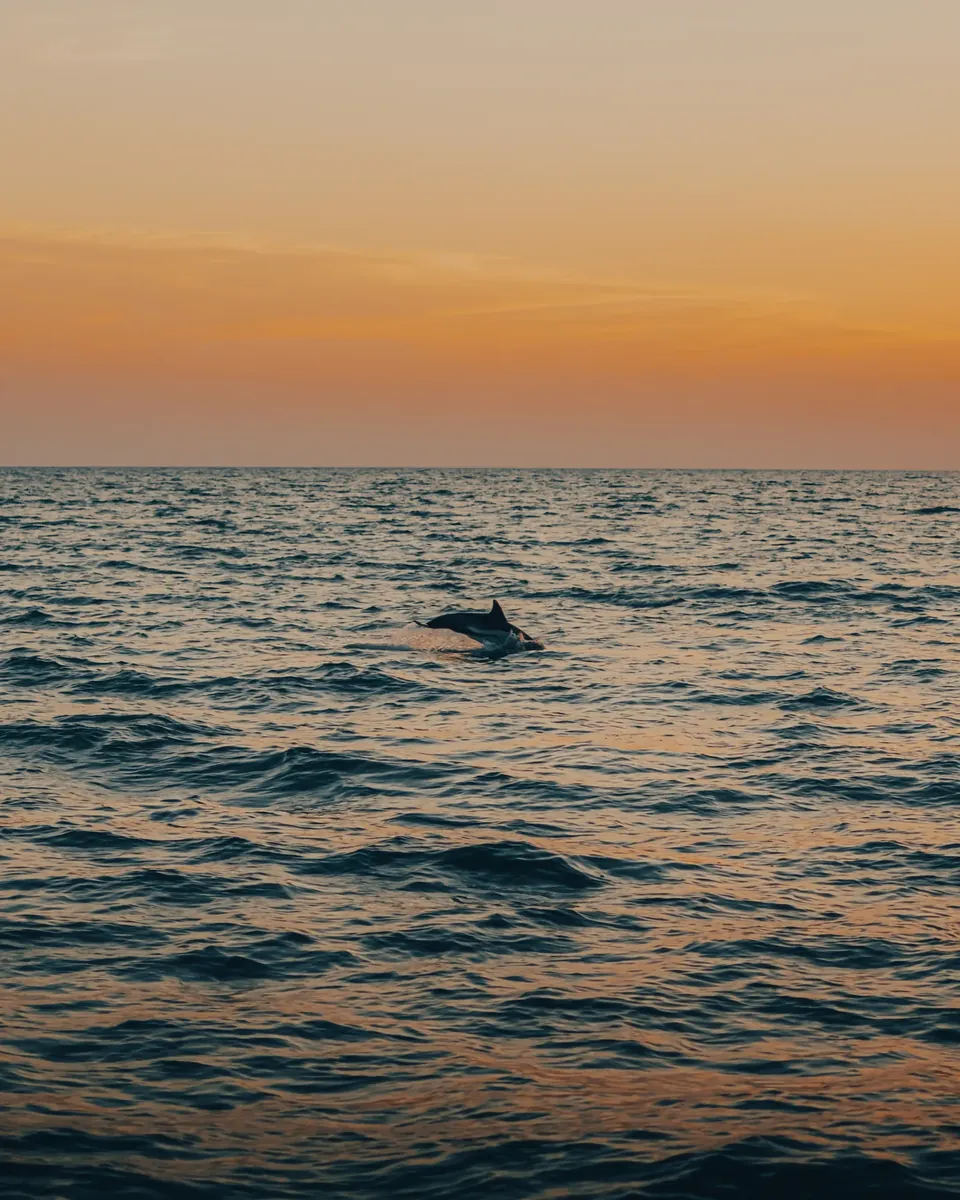
On the water, four details settle it in seconds.
| Feature | Dolphin | Porpoise |
|---|---|---|
| Teeth | Cone-shaped | Spade-shaped |
| Face | Long, pointed beak | Short, blunt, no beak |
| Dorsal fin | Curved and hooked | Triangular |
| Behavior | Chatty, leaps, bow-rides | Shy, quiet, rarely leaps |
The most famous porpoise is also the rarest marine mammal on Earth: the vaquita, a porpoise (not a dolphin) with fewer than 20 individuals left in Mexico’s Gulf of California.
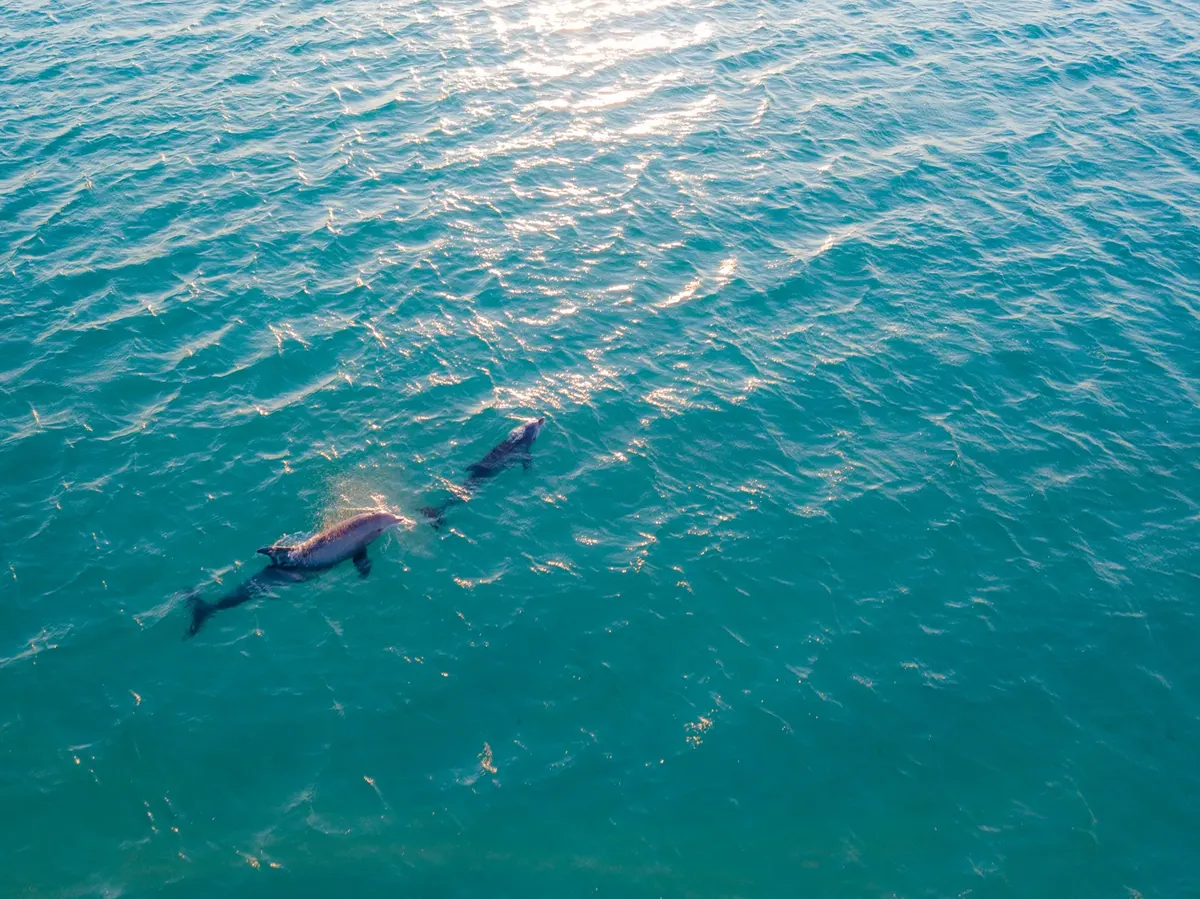
River Dolphins and Their Conservation Status
Almost every river dolphin is in serious trouble: dams that fragment populations, accidental drowning in fishing nets, and pollution.
The Amazon river dolphin is listed as Endangered. Hydroelectric dams block its migrations, and mercury from illegal gold mining poisons its food chain. The Ganges river dolphin is Endangered too, with barrages carving its range into disconnected stretches. Its close relative, the Indus river dolphin, survives in just a few fragments of Pakistan’s Indus River, also Endangered.
The worst case already happened. The Yangtze river dolphin, or baiji, was declared functionally extinct after a 2006 survey found none. It may be the first cetacean humans ever drove to extinction, lost to ship strikes, bycatch, and dam construction. The franciscana, a coastal species of South America, is Vulnerable, killed mainly as bycatch in gillnets.
The Smartest Species
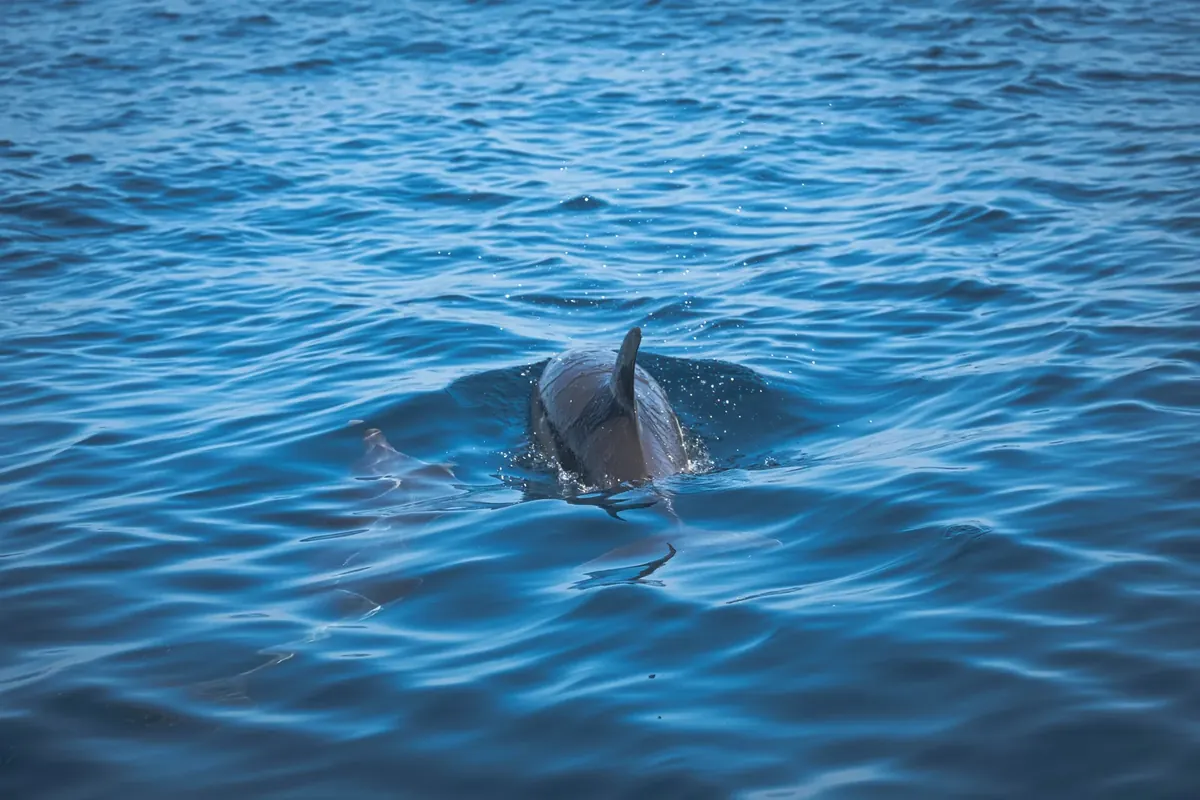
Bottlenose dolphins are the most studied for good reason. Each one develops a signature whistle that works like a name. In Western Australia’s Shark Bay, some bottlenose dolphins carry sea sponges on their beaks to protect themselves while probing the seafloor, a tool-use tradition passed from mother to daughter. They also recognize themselves in mirrors, a test very few animals pass.
Orcas may be smarter still, just differently. Each pod runs its own culture: distinct dialects, distinct hunting techniques, distinct food preferences, all taught to the young. Some Antarctic pods create waves to wash seals off ice floes. Off Patagonia, one population intentionally beaches itself to snatch sea lions, a skill calves spend years learning. Orcas around Antarctica even hunt penguins (see our types of penguins chart for the species sharing those waters), timing their attacks to the birds’ breeding season.
The Largest and the Fastest
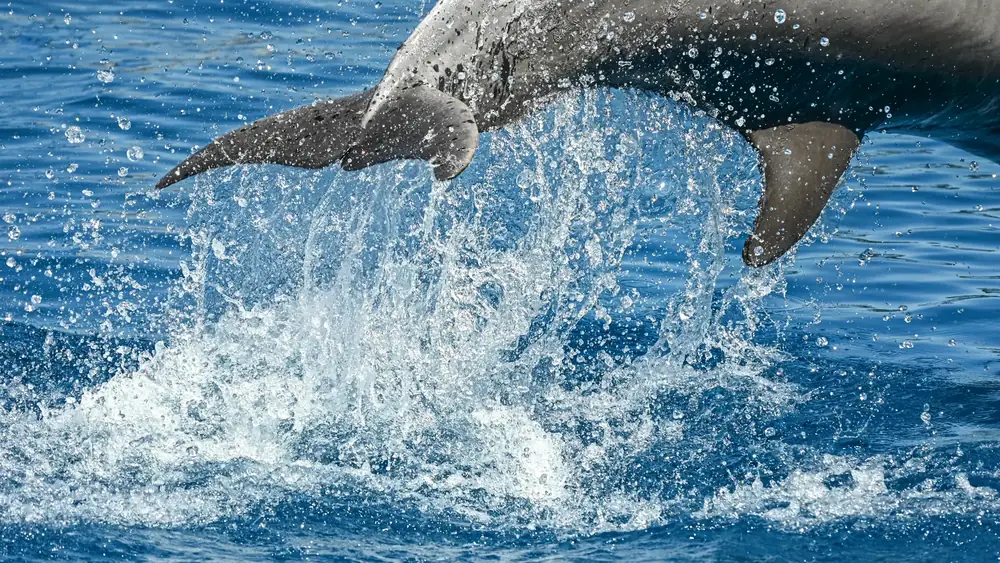
The largest dolphin needs no contest. Male orcas typically reach 6 to 8 meters and weigh more than 6 tonnes; the largest male ever recorded measured 9.8 meters and weighed over 10 tonnes. The runner-up is the pilot whale, whose males push past 6.5 meters. For scale, a newborn orca calf is already about 2.4 meters long, roughly the full length of an adult spinner dolphin.
Speed belongs to the smaller species. The short-beaked common dolphin is widely considered the fastest dolphin, hitting around 60 km/h in short bursts while chasing tuna and squid, while orcas sprint to about 56 km/h. At full speed a pod of commons seems to boil the water: they porpoise in and out of the surface because leaping through air costs less energy than pushing through water.

Rare and Endangered Species
The rarest marine dolphin in the world is the Maui dolphin, a subspecies of Hector’s dolphin found only off New Zealand’s North Island. Fewer than 100 remain (about 57 to 75 animals over one year old in the last full estimate), and accidental capture in fishing nets is the main killer. Its South Island relative, the Hector’s dolphin proper, numbers around 15,000 and is considered nationally vulnerable.
West Africa’s Atlantic humpback dolphin is Critically Endangered, squeezed by bycatch and habitat loss. Off Taiwan, the Taiwanese humpback dolphin subspecies may number under 100. These are the species conservationists worry could follow the baiji: small, coastal, and sharing crowded water with humans.
Spotting Dolphins in US Waters
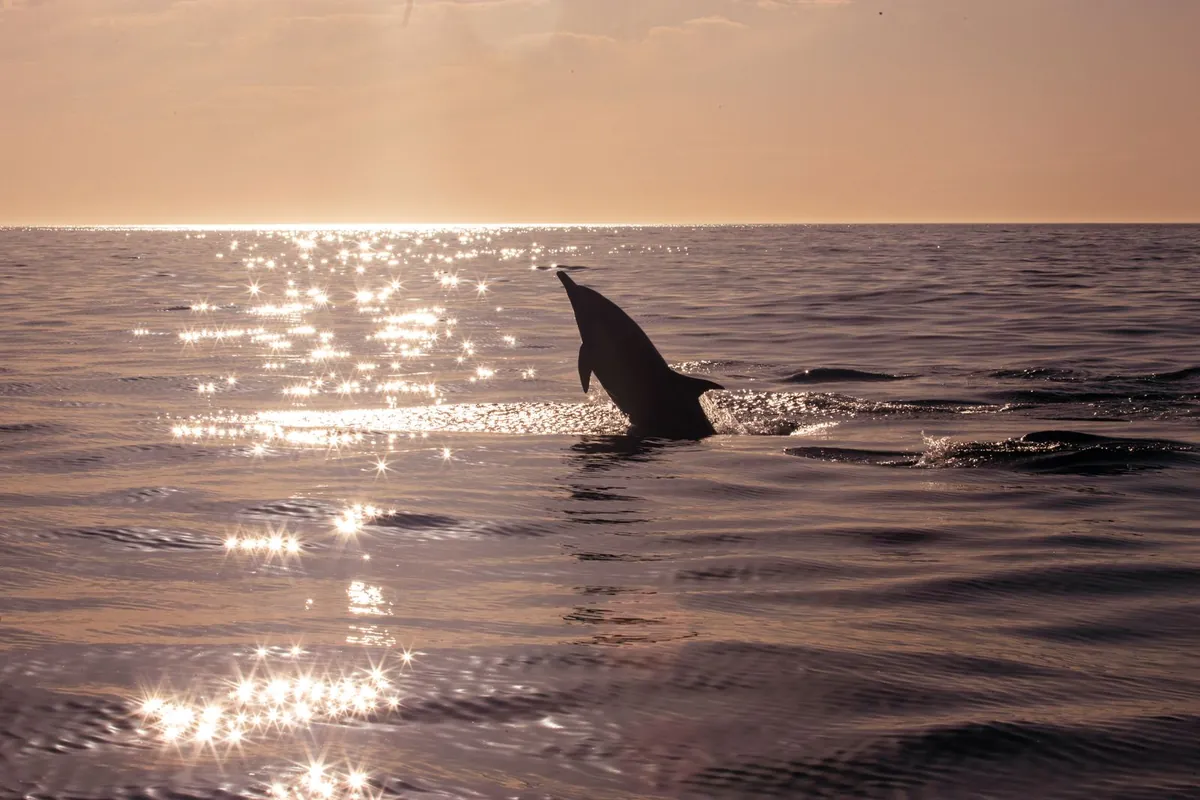
You do not need to leave the United States to see a half-dozen species. In Hawaii, spinner dolphins rest in sheltered bays like Kealakekua by day after feeding offshore at night; morning boat tours are the reliable window. Off California, short-beaked common dolphins travel in pods that can top a thousand animals, often visible from shore at Dana Point and Monterey. Florida and the Gulf Coast belong to the bottlenose dolphin, which cruises bays, inlets, and the Intracoastal Waterway, the same shallow habitats covered in our types of sea turtles guide.
Three tips raise your odds anywhere. Go at dawn when the water is calm. Bring polarized sunglasses to cut surface glare and reveal bodies just under the surface. And watch the birds: diving gulls and pelicans mark the same bait balls dolphins are feeding on.
Frequently Asked Questions
Is a killer whale really a dolphin?
Yes. Despite the name, the orca belongs to Delphinidae, the oceanic dolphin family, and is its largest member. “Killer whale” comes from an older phrase, “whale killer,” describing pods seen hunting other whales.
What is the smallest dolphin in the world?
Hector’s dolphin of New Zealand, at 1.2 to 1.6 meters long. Its subspecies, the Maui dolphin, is both the smallest and the rarest marine dolphin, with fewer than 100 individuals left.
How many types of dolphins are there?
About 40 living species are counted as dolphins: roughly 38 oceanic dolphins plus the river dolphin species. New genetic work occasionally splits or merges species, so the exact number shifts.
Are river dolphins really pink?
The Amazon river dolphin genuinely flushes pink, and the color deepens with age and excitement. Scientists think extra blood vessels near the skin surface cause it, possibly linked to sparring among males.
What is the easiest way to tell a dolphin from a porpoise?
Look at the face and the back. Dolphins have long pointed beaks and curved dorsal fins; porpoises have blunt faces with no beak and triangular dorsal fins.
Conclusion
The dolphin family is far bigger and stranger than the bottlenose image suggests. It holds the ocean’s largest predator and its smallest acrobat, pink river specialists that hunt blind, and orcas that teach their young. Use the 20-species chart above as your quick reference, and the next time a fin breaks the surface, you will have a much better guess at whose it is. If you enjoy animal size charts, our types of deer guide compares land mammals the same way.


Pingback: Types of Apes: All Living Species, Sizes, Habitats and Facts – Chart Identify
Pingback: Types of Sharks: 20 Species, Sizes, Habitats and Facts – Chart Identify
Pingback: Types of Whales: 21 Species, Sizes, Habitats and Facts – Chart Identify
Pingback: Types of Otters: All 13 Species, Sizes and Habitats – Chart Identify