Some cats look like walking clouds of fur, while others seem to have barely any coat at all. A cat hair length chart is the quickest way to tell where your cat sits on that scale, and what it means for grooming, shedding, and everyday care. A Persian with four inch fur and a Siamese with a coat under an inch live very different grooming lives, even though both are healthy, happy cats.
This guide gives you a full chart of 20 breeds with real hair length measurements in inches, plus grooming needs for each one. You will also learn how hair length is measured, what makes a kitten grow into a long coat, and how often each coat type needs brushing. If you are still deciding which breed fits your home, the largest domestic cat breeds guide and the cat breed identifier chart pair well with this one.
How Cat Hair Length Is Measured
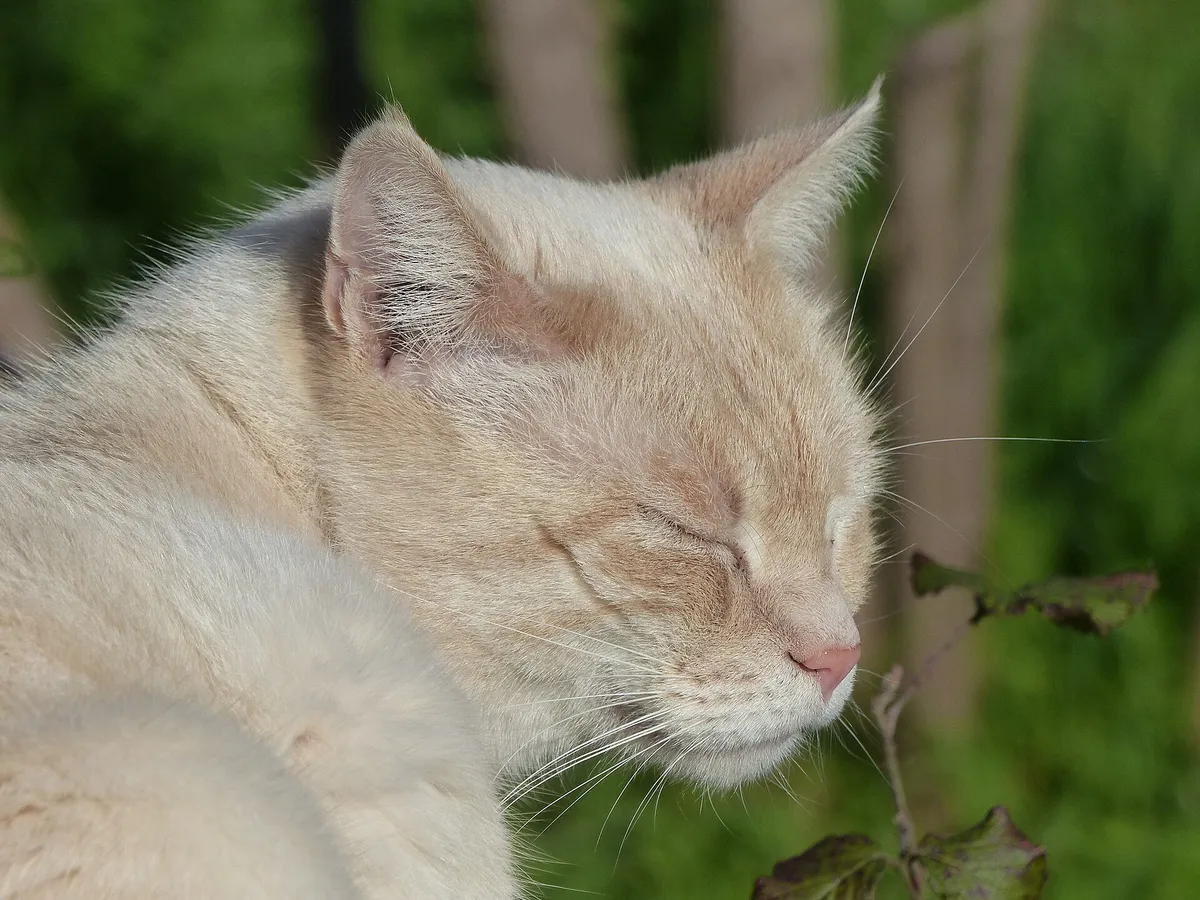
Cat hair length is usually measured from the skin to the tip of the longest guard hairs on the back, in inches. Guard hairs are the stiff outer hairs that give a coat its shape, and they sit on top of two shorter layers: the soft down hairs that trap warmth, and the slightly longer awn hairs in between.
Most breeders and vets sort coats into four groups. Short coats run under 1 inch. Medium coats run about 1.5 to 3 inches. Long coats run 3 to 5 inches or more. Hairless breeds, like the Sphynx, carry only a fine peach fuzz that measures close to zero. Knowing which group your cat falls into tells you almost everything about the grooming routine you will need.
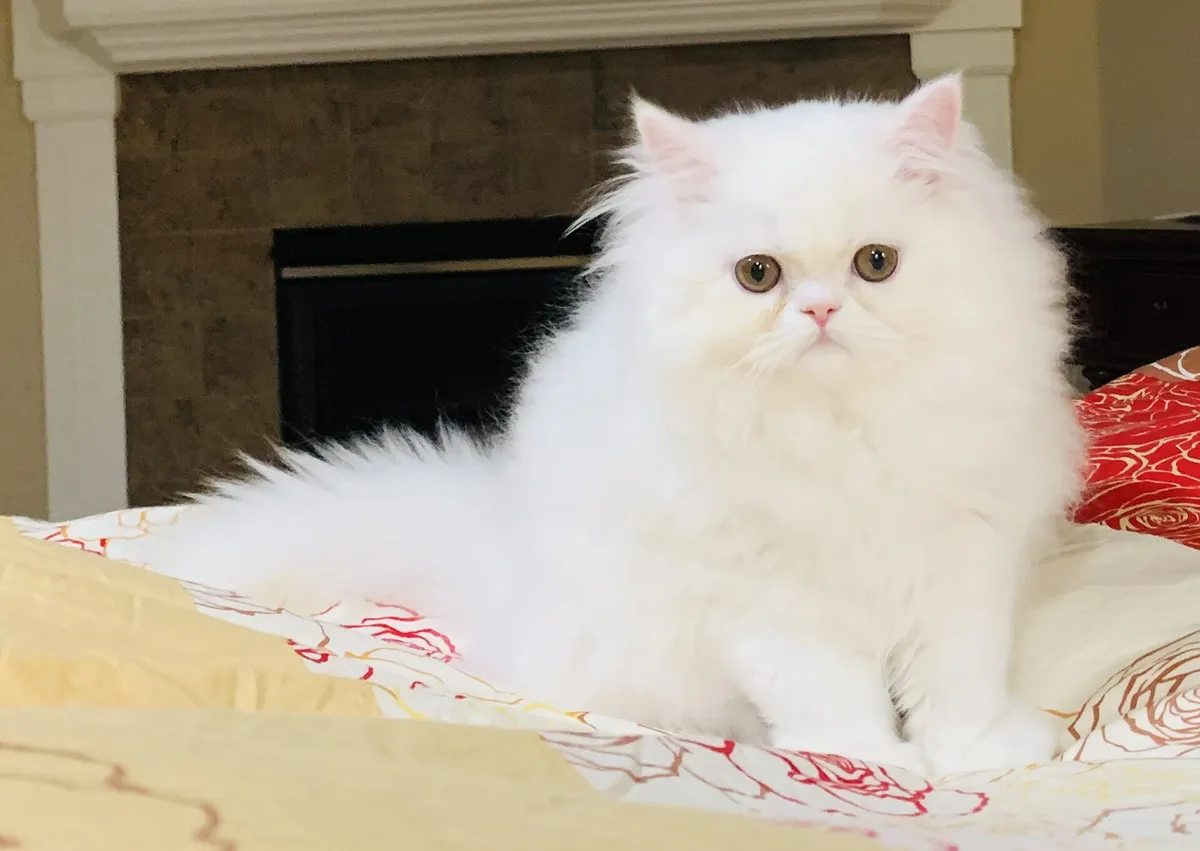
Cat Hair Length Chart: 20 Breeds Compared
Start with your breed in the table, then check the grooming column. Brushing frequency is the honest cost of a long coat, and it is the number most new owners underestimate.
| Breed | Coat Group | Hair Length (inches) | Grooming Needs |
|---|---|---|---|
| Siamese | Short | 0.5 | Brush once a week, sheds lightly |
| American Shorthair | Short | 1 | Brush once a week, heavier shed in spring |
| British Shorthair | Short | 1 | Brush once or twice a week, dense undercoat |
| Bengal | Short | 0.75 | Brush once a week, very low matting risk |
| Russian Blue | Short | 1 | Brush twice a week, thick double coat |
| Burmese | Short | 0.75 | Brush once a week, silky coat stays tidy |
| Abyssinian | Short | 0.75 | Brush once a week, minimal shedding |
| Scottish Fold | Short | 1 | Brush once or twice a week, dense fur |
| Cornish Rex | Short | 0.5 | Brush gently once a week, wavy coat, fragile hairs |
| Ragdoll | Medium | 2 to 3 | Brush twice a week, check armpits for mats |
| Birman | Medium | 2 to 3 | Brush twice a week, silky coat, low matting |
| Turkish Angora | Medium | 2 to 3 | Brush twice a week, fine coat tangles easily |
| Siberian | Medium | 2 to 3 | Brush two or three times a week, thick triple coat |
| American Curl | Medium | 2 | Brush twice a week, silky coat, few mats |
| Somali | Medium | 2 | Brush twice a week, bushy tail needs attention |
| Persian | Long | 4 to 5 | Brush daily, high matting risk, eye cleaning too |
| Maine Coon | Long | 3 to 4 | Brush three times a week, check belly and britches |
| Norwegian Forest Cat | Long | 3 to 4 | Brush three times a week, heavy seasonal shed |
| Himalayan | Long | 4 to 5 | Brush daily, long coat mats fast, face needs wiping |
| Sphynx | Hairless | 0 (peach fuzz) | No brushing, weekly bath to remove skin oils |
Short-Haired Cats: Under 1 Inch
Short-haired cats are the low maintenance end of the chart, and it shows in the numbers. Most of their guard hairs measure between half an inch and one inch, lying close to the body in a smooth, sleek layer. A Siamese at 0.5 inches and a Bengal at 0.75 inches barely need a brush at all. One quick session a week removes loose hairs and keeps shedding down.
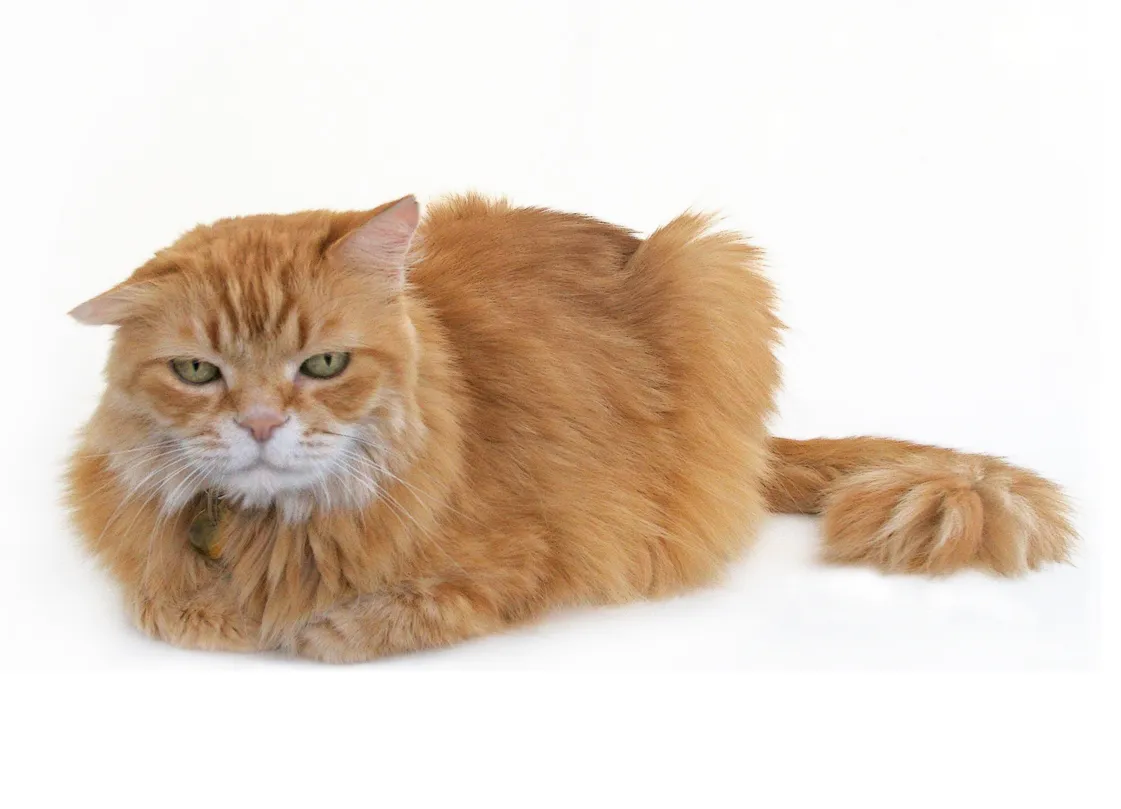
Do not mistake short for no shedding. The British Shorthair and Russian Blue both carry dense undercoats, and both shed more heavily in spring. A rubber grooming mitt or a soft bristle brush once or twice a week handles it. Short coats also dry fast after a bath and rarely mat, which is why they suit busy owners and first time cat keepers so well. The curly coated Cornish Rex is the odd one out here. Its wavy hairs are short but fragile, so brush gently and never pull.
Medium-Haired Cats: 1.5 to 3 Inches
Medium-haired cats sit in the sweet spot for many owners. Their coats measure about 2 to 3 inches, long enough to look plush, short enough to stay manageable. The Ragdoll is the classic example. Its silky coat looks high maintenance, but it has very little undercoat, so it mats far less than a Persian of similar length. Twice a week brushing is usually enough, with extra attention behind the ears and under the front legs, where mats start first.
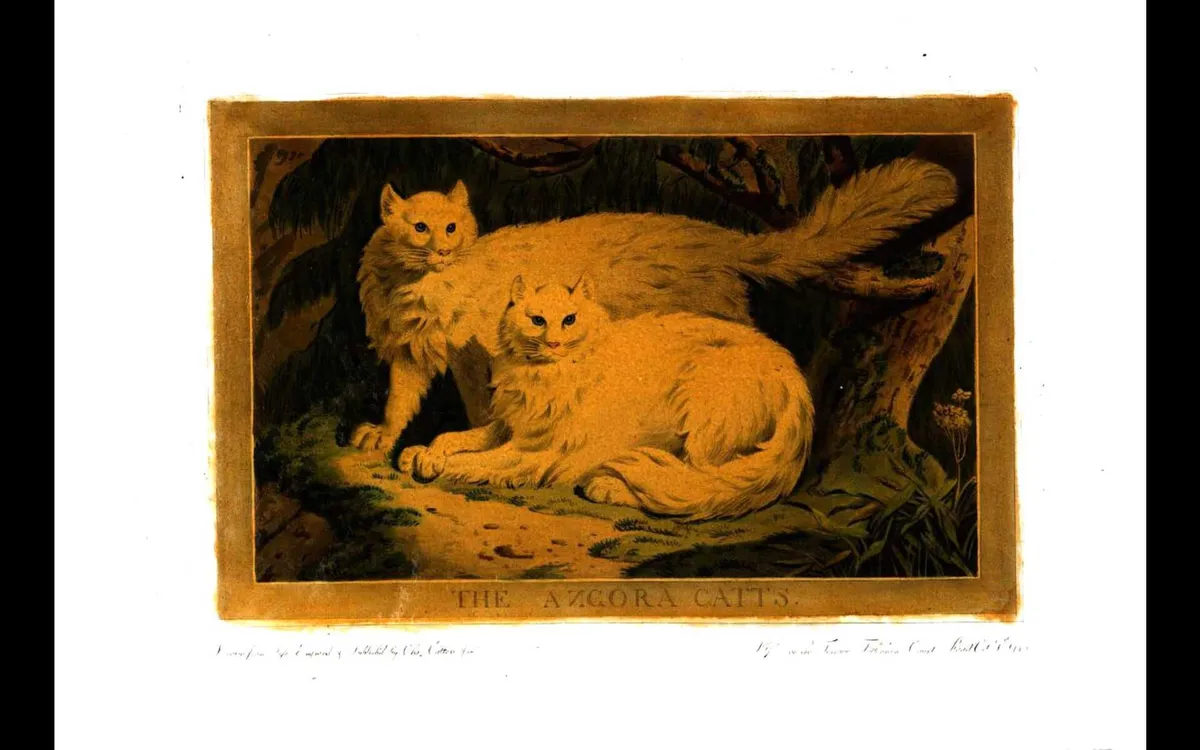
The Birman and Turkish Angora are close cousins in coat type, both silky and fine, both around 2 to 3 inches. Fine hair tangles more easily than coarse hair, so a steel comb works better than a brush for these breeds. The Siberian is the exception in this group. Its triple layered coat is built for cold winters, so it needs brushing two or three times a week, and a lot more during the spring shed.
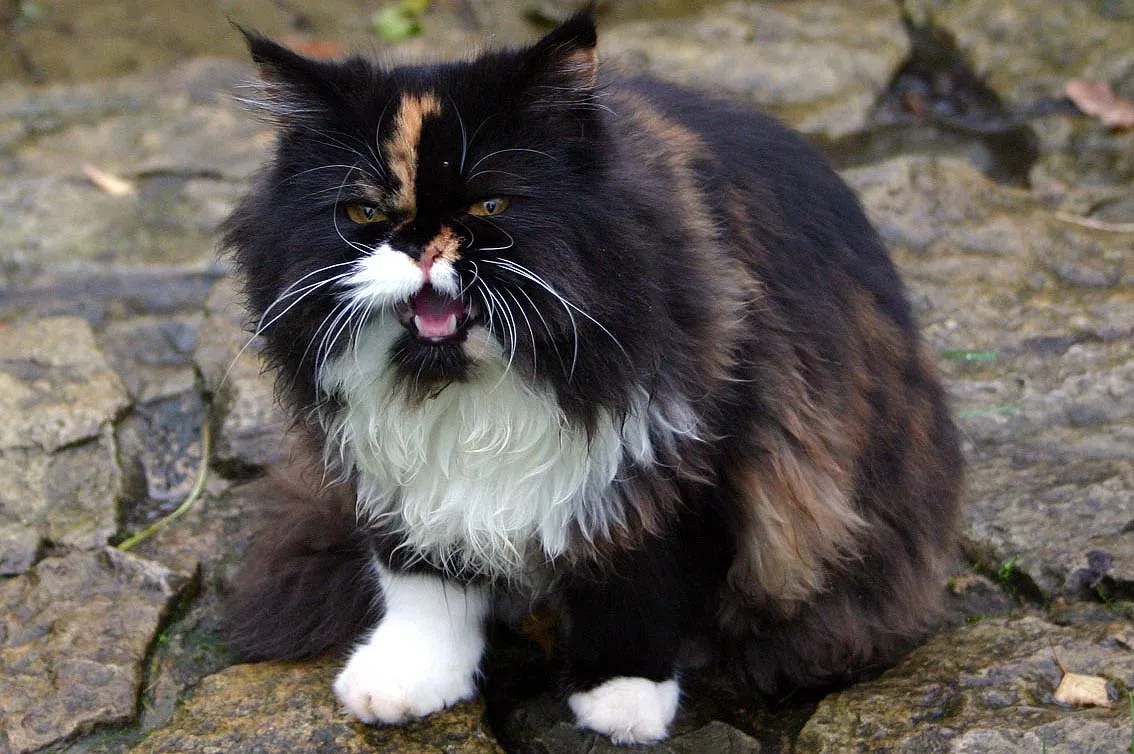
Long-Haired Cats: 3 to 5 Inches
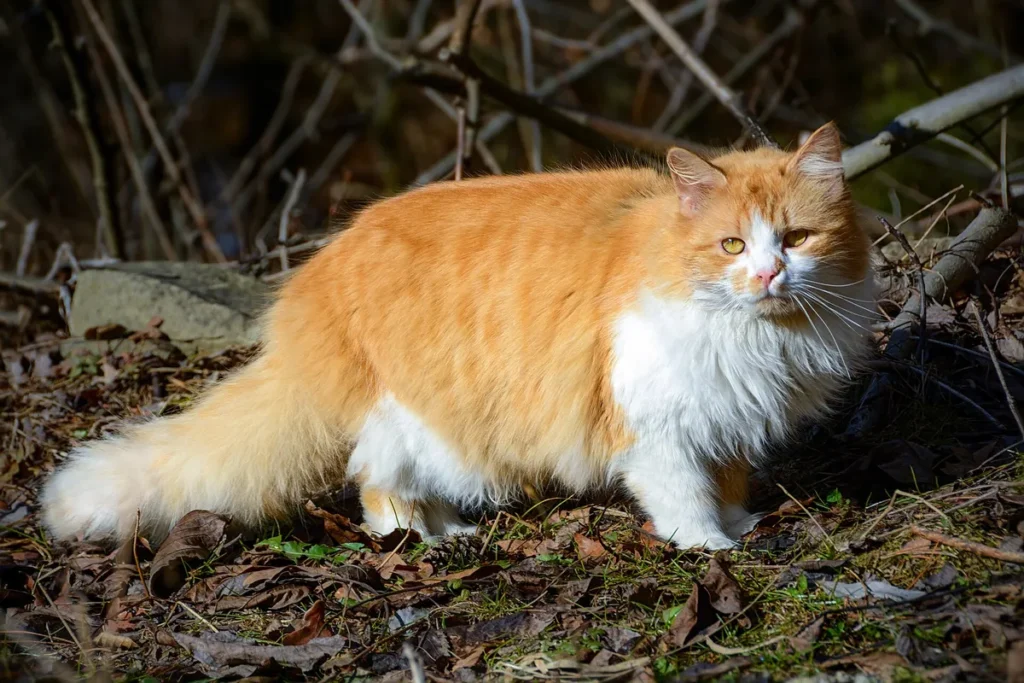
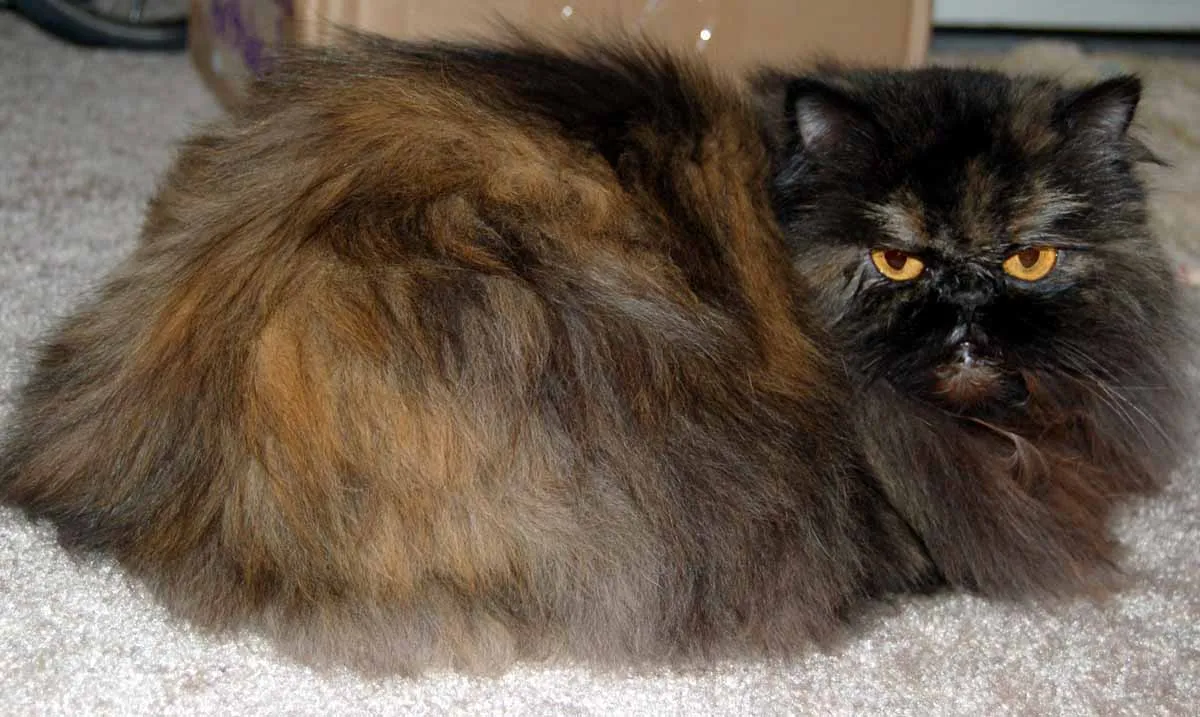
Long-haired cats are the showpieces of the cat world, and the chart makes the trade clear. A Persian measures 4 to 5 inches, the longest coat of any common breed, and it needs daily brushing to stay free of mats. Skip two days and you will find a knot behind an ear or under a leg. Skip a week and the knots can tighten into felted mats that pull at the skin.
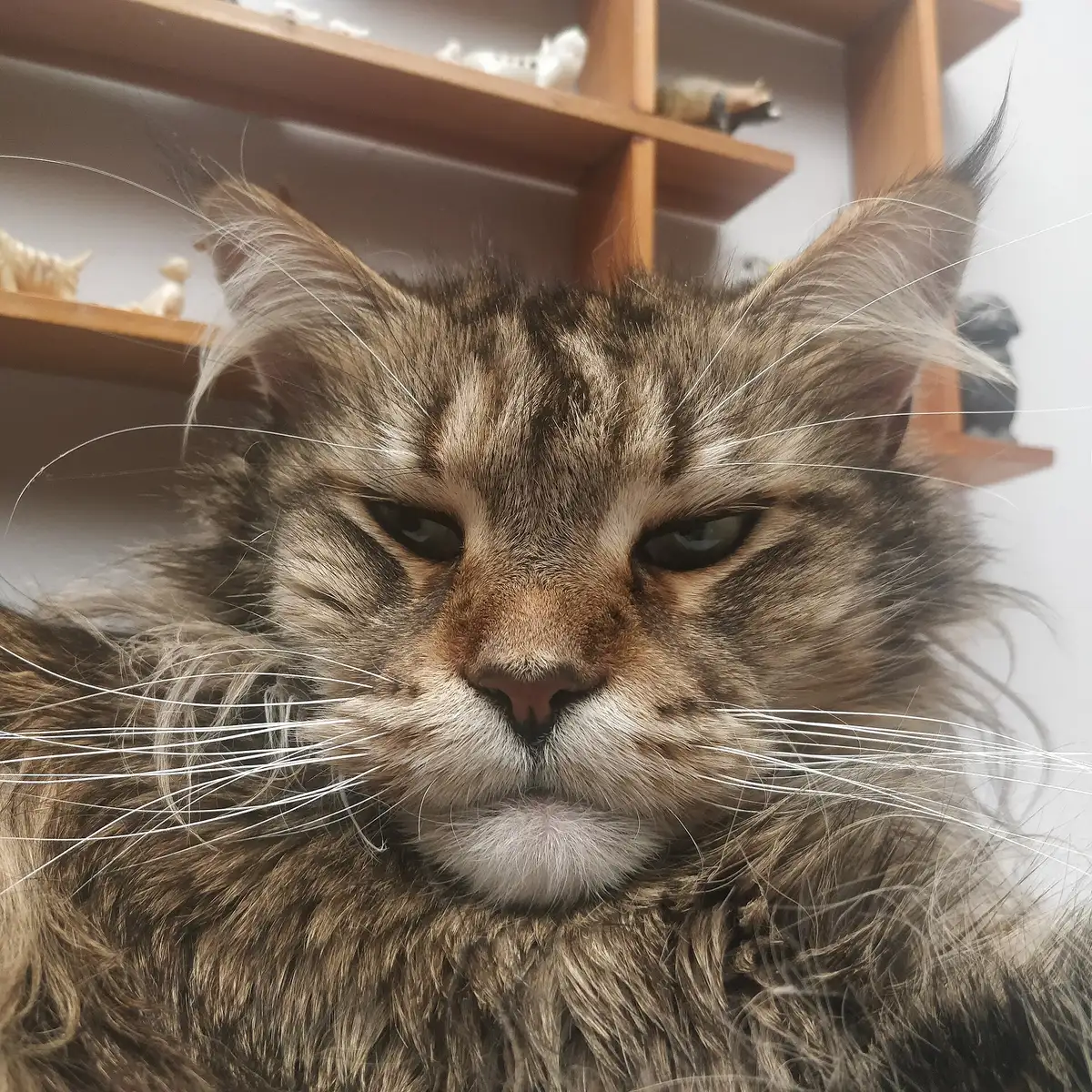
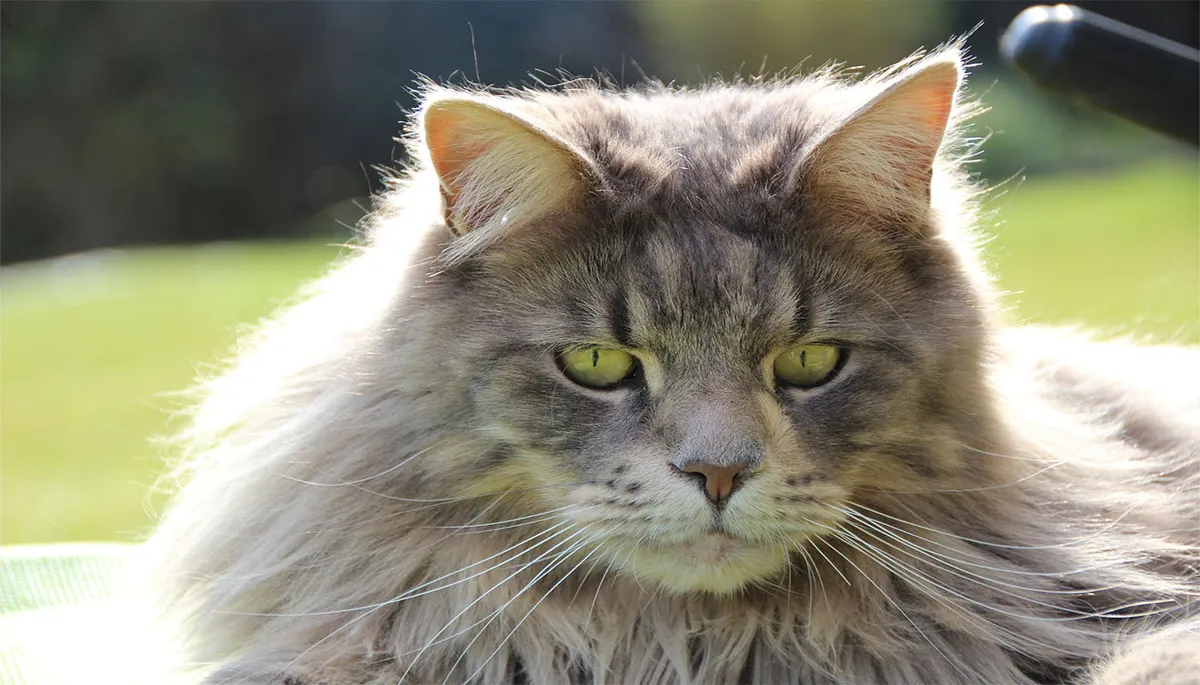
The Maine Coon is the gentler option in this group. Its coat runs 3 to 4 inches, shaggy rather than silky, with a thick ruff around the neck and long fur on the belly and back legs that breeders call britches. Three brushings a week keep it in good shape. The Norwegian Forest Cat is built the same way, with a water resistant outer coat and a woolly undercoat that thickens every winter.
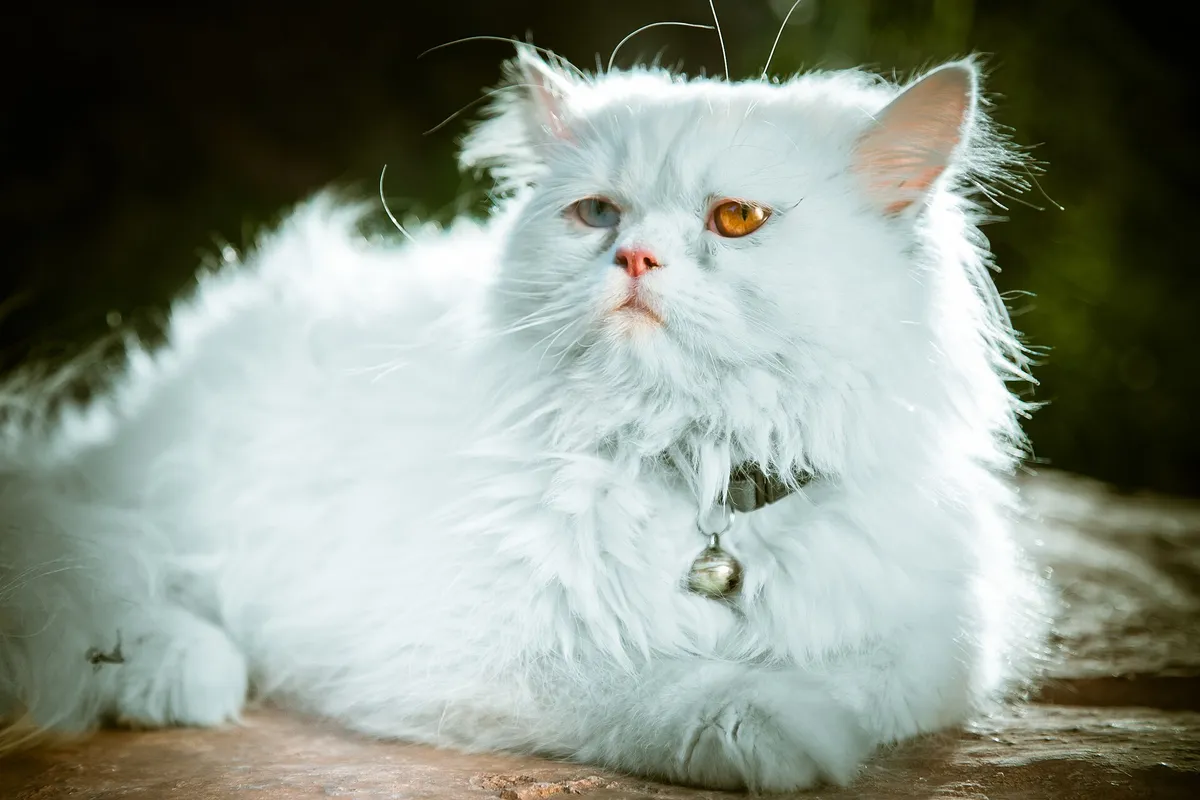
Himalayans share the Persian coat, and the Persian grooming routine, at 4 to 5 inches. They also need their faces wiped daily, since their flat faces make their eyes water onto the fur. If you love the look but not the daily work, the Maine Coon gives you most of the drama for about half the brushing.
Hairless Cats: The Sphynx Exception
The Sphynx sits at zero on the hair length chart, and it is the only breed here that needs no brushing at all. Its skin carries a fine peach fuzz that you feel more than see. No fur means no mats and almost no shedding, but it does not mean no grooming.
Most Sphynx owners bathe their cat once a week with a gentle cat shampoo, and wipe the ears and skin folds in between. They also get cold easily, so a warm sweater in winter is normal. The Sphynx proves the point of the whole chart: coat length decides the grooming job, and zero length swaps brushing for bathing.
What Determines How Long a Cat’s Fur Grows?
The main switch is a gene called fibroblast growth factor 5, or FGF5. Researchers have found at least four different recessive mutations in this gene that cause long hair in cats. A kitten needs two copies of a long hair variant, one from each parent, to grow a long coat. That is why two short-haired parents can produce a long-haired kitten if both carry the hidden variant.
Other genes fine tune the result. They decide whether the coat is silky or coarse, single or double layered, straight or curly, and how thick the undercoat grows. Diet, health, and climate play smaller roles, but neither change will turn a genetically short coat into a long one. The genes set the length, and care decides how good that length looks.
How to Tell How Long a Kitten’s Fur Will Be
Kittens are hard to read, and that frustrates a lot of new owners. The coat at eight weeks is not the coat at one year. Still, a few clues are reliable. First, look at the mother. Long-haired mothers usually produce long-haired kittens. Second, check the tail. A kitten with a noticeably fluffy tail at eight weeks is very likely to grow a longer coat than a littermate with a thin tail.
Third, look for tufts of fur between the toes, inside the ears, and around the paws. Long-haired kittens grow these early, and they are one of the best predictors you can check at home. Fourth, wait. By 10 to 12 weeks the coat starts to show its real character, and by six months you will know for sure.
Grooming by Hair Length: A Simple Routine
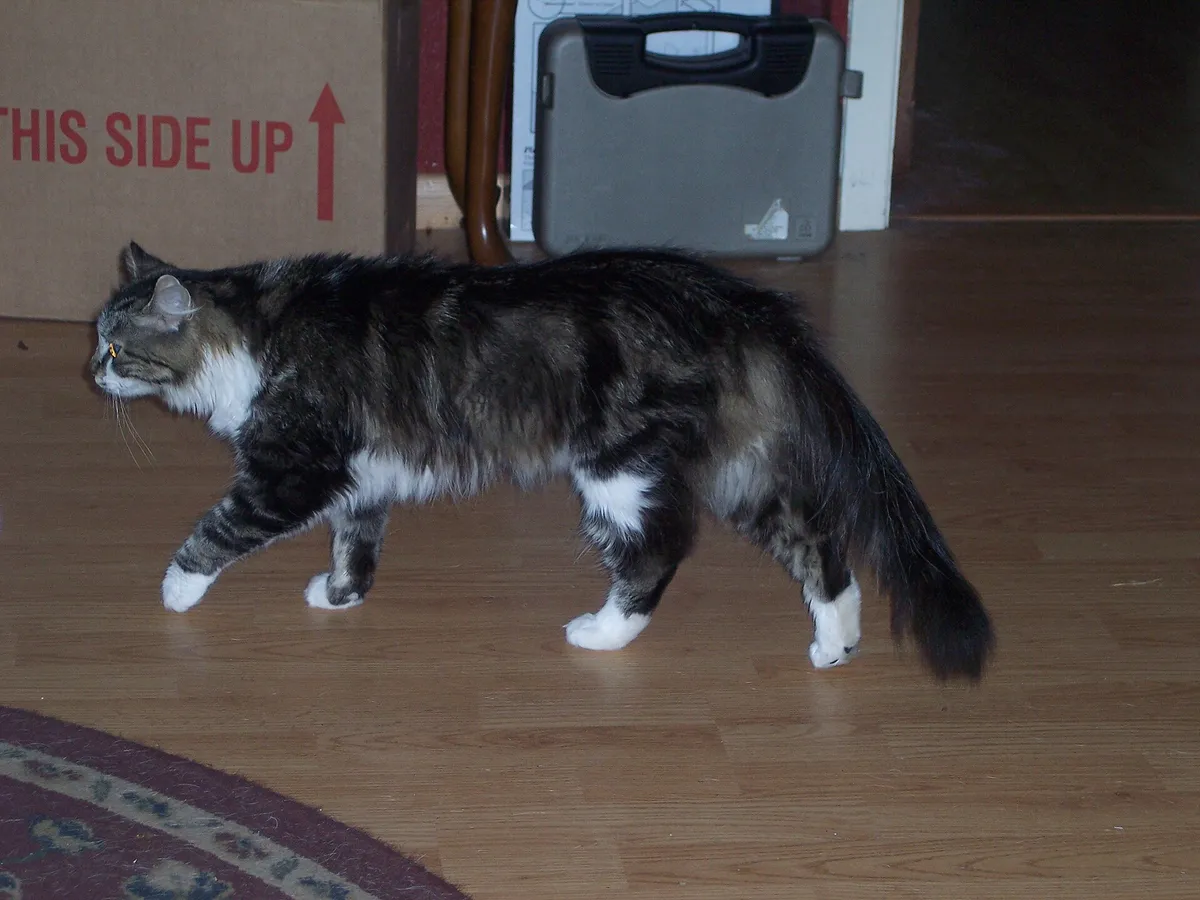
Match the routine to the coat, and grooming stays a five minute job instead of a wrestling match. Short coats need a weekly brush with a soft bristle brush or rubber mitt. Medium coats need a steel comb twice a week, worked through in sections from the skin outward, never dragged across the top of the coat where it misses the tangles underneath.
Long coats need the most structure. Brush daily with a wide tooth comb first, then finish with a slicker brush, and always check the armpits, behind the ears, and the belly, where mats hide. If you find a small tangle, work it apart with your fingers before it tightens. Never pull a mat out by force, and never cut one out with scissors close to the skin, since cat skin is thin and tears easily.
Start young, keep sessions short, reward with a treat, and stop before the cat gets annoyed. A cat that trusts the brush is a cat whose coat stays in good shape. For a wider picture of how coat and body fit together, the cat breed size chart shows height, weight, and lifespan for 20 popular breeds, and the cat lifespan chart covers how long each breed typically lives.
Frequently Asked Questions
What is the average cat hair length?
Most pet cats fall in the short to medium range, with guard hairs between 0.5 and 3 inches. The average mixed breed house cat measures about 1 to 2 inches on the back. True long coats of 4 to 5 inches belong mostly to purpose bred breeds like the Persian and Himalayan.
Which cat breed has the longest hair?
The Persian has the longest coat of any common breed, at 4 to 5 inches, tied with the Himalayan, which shares Persian ancestry. The Maine Coon and Norwegian Forest Cat follow at 3 to 4 inches, with a shaggier, more weatherproof coat.
Do long-haired cats shed more than short-haired cats?
They shed more visibly, because each hair is longer and easier to spot on furniture and clothes. Short-haired cats still shed, but their hairs are smaller and less noticeable. Regular brushing cuts shedding for every coat type.
How often should I brush a long-haired cat?
Persians and Himalayans need daily brushing. Maine Coons and Norwegian Forest Cats need brushing about three times a week. Daily is always safe, and it takes only five minutes once you and the cat get used to it.
Can a short-haired cat have long-haired kittens?
Yes, if both parents carry a recessive long hair variant of the FGF5 gene. The kittens need two copies to grow a long coat, so two carriers can produce long-haired kittens even though both parents look short-haired.
Conclusion
A cat hair length chart turns a vague question into a clear answer. Short coats under 1 inch need a weekly brush and little else. Medium coats at 2 to 3 inches need a comb twice a week. Long coats at 3 to 5 inches need real commitment, daily brushing for a Persian, three times a week for a Maine Coon. And the Sphynx trades brushing for a weekly bath. Pick the coat that fits the time you actually have, not the coat that looks best in a photo, and both you and the cat will be happier for it.