
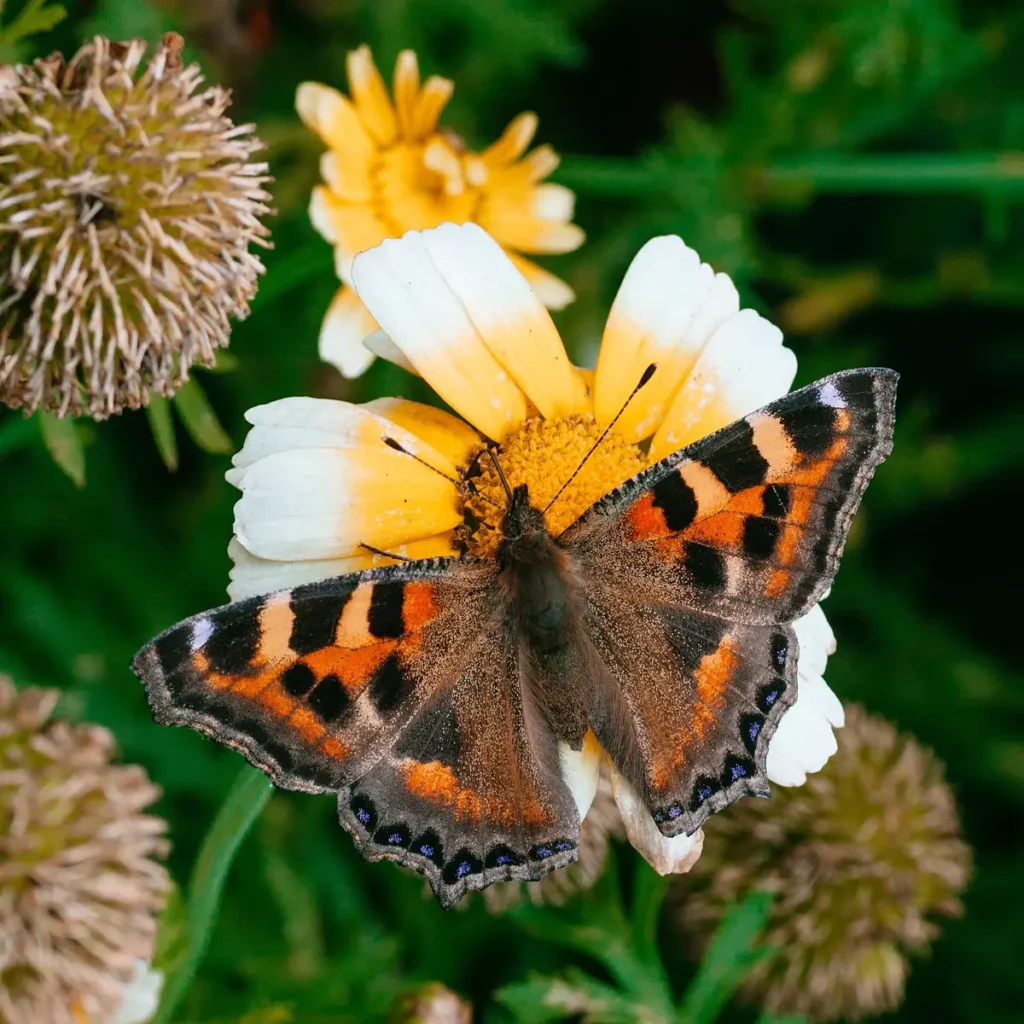
Walk through a British meadow in July and you will see them everywhere: orange wings flashing over the grass, a flash of blue low among the clover, a white butterfly drifting along a hedgerow. This British butterfly identification chart turns those quick glimpses into names you can trust. Britain has 59 resident butterfly species, plus a handful of regular migrants, and most of what you will ever see belongs to about two dozen familiar faces.
Colour gets you close, but size, shape, behaviour and season usually settle the question. A blue butterfly in May on chalk grassland is probably a Common Blue. A pale blue one fluttering high around a garden holly bush in April is more likely a Holly Blue. This guide gives you all five clues for each species.
How to Use This Chart
Start with the big table below. It lists 25 of the most commonly seen British butterflies with wingspan, colours and markings, favourite habitat and flight period. Once you have a shortlist of two or three candidates, read the species notes further down the page. Note the date and the place, since many species fly for only a few weeks each year. Watch how the butterfly flies, and look at the underside of its wings when it rests.
British Butterfly Identification Chart: 25 Species at a Glance
The table below covers the species most people meet in Britain, from garden regulars to grassland specialists. Wingspans are in centimetres, measured tip to tip with the wings open.
| Species | Wingspan | Main colours and markings | Habitat | Flight period |
|---|---|---|---|---|
| Small Tortoiseshell | 4.5–6.2 cm | Bright orange with black blotches, yellow patches and a blue border | Gardens, hedgerows, meadows | March to October |
| Red Admiral | 6.4–7.8 cm | Black wings with bold red bands and white spots | Gardens, woodland edges | April to November |
| Peacock | 6.3–7.5 cm | Deep red with four large blue and yellow eyespots | Gardens, parks, meadows | March to September |
| Painted Lady | 5.8–7.4 cm | Orange, black and white pattern, marbled brown underwing | Meadows, gardens, coasts | May to October |
| Comma | 4.5–5.6 cm | Ragged orange wings with dark spots, white comma mark underneath | Woodland edges, gardens | March to October |
| Common Blue | 2.9–3.6 cm | Vivid blue males, brown females with blue dusting and orange spots | Grassland, meadows, parks | May to September |
| Holly Blue | 2.6–3.4 cm | Pale silvery blue above, pale grey below with black dots | Gardens, parks, churchyards | April to September |
| Chalk Hill Blue | 3.4–4.2 cm | Sky blue males, brown females, chequered wing fringes | Chalk and limestone grassland | July to September |
| Adonis Blue | 3.2–3.8 cm | Deep turquoise blue with black borders, males brighter than females | Chalk and limestone downland | May to September |
| Silver-studded Blue | 2.8–3.6 cm | Blue with metallic silver studs on the underwing | Heathland, chalk grassland | June to August |
| Large Blue | 4.0–4.6 cm | Dusky blue with black spots, dark borders on the forewings | Warm limestone grassland | June to July |
| Small Copper | 2.8–3.6 cm | Shiny copper orange forewings with dark spots and brown borders | Heaths, meadows, chalk grassland | April to October |
| Large White | 5.8–6.8 cm | White with black tips on the forewings, larger than the Small White | Gardens, farmland, fields | April to September |
| Small White | 4.0–5.0 cm | White with small grey or black wingtips, weaker flight than Large White | Gardens, fields, parks | April to October |
| Green-veined White | 4.0–5.0 cm | White with grey green veins showing through the underwing | Meadows, hedgerows, damp grassland | April to September |
| Brimstone | 6.0–7.4 cm | Leaf shaped wings, lemon yellow males, pale green white females | Woodland edges, gardens, scrub | March to October |
| Clouded Yellow | 4.2–5.4 cm | Bright yellow orange with broad black borders | Fields, clover leys, coasts | May to October |
| Orange-tip | 4.0–4.8 cm | White wings, males with bright orange tips, mottled green underwing | Meadows, hedgerows, riverbanks | April to June |
| Meadow Brown | 4.0–5.5 cm | Brown with an orange patch and a single black eyespot on each forewing | Grassland, meadows, parks | June to September |
| Gatekeeper | 4.0–4.8 cm | Orange brown with two small eyespots, dark scent patch on males | Hedgerows, woodland edges, meadows | July to August |
| Ringlet | 4.2–5.2 cm | Dark chocolate brown with a row of small ringed eyespots underneath | Damp meadows, woodland rides | June to August |
| Speckled Wood | 4.0–5.0 cm | Dark brown with cream spots, dappled like sunlight through leaves | Woodland paths, shaded hedgerows | March to October |
| Marbled White | 4.6–5.6 cm | Black and white chequered wings, like a chessboard | Chalk grassland, flowery meadows | June to August |
| Small Heath | 3.0–3.6 cm | Dull orange brown, flies low and rests with wings closed | Grassland, heaths, moorland edges | May to September |
| Dark Green Fritillary | 6.3–7.2 cm | Bright orange with black spots, green washed underwings | Grassland, bracken slopes, coasts | June to August |
Orange and Brown Butterflies
Orange and brown species make up the biggest group on any summer walk, and they cause the most confusion. Look past the colour and check the spots, the wing edges and the flight. A Meadow Brown bobs low over grass and shows one small eyespot on each forewing. A Gatekeeper flies later in the season, sticks close to hedgerows, and carries two small eyespots with a white centre.
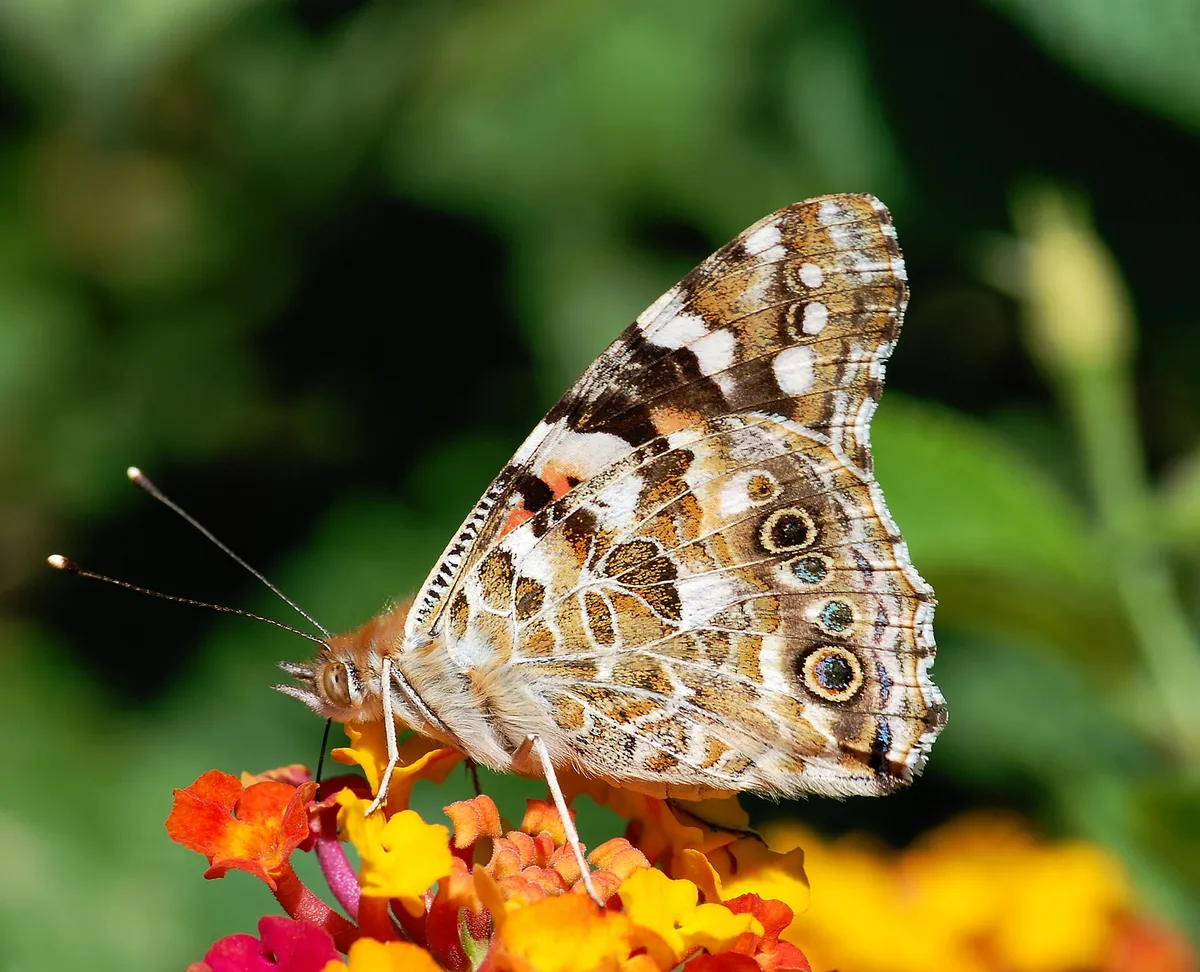
The Painted Lady is the great traveller of the group. It arrives from North Africa and southern Europe each spring, sometimes in huge numbers. Its upperside is a patchwork of orange, black and white, but the closed wing view, marbled brown with a row of small eyespots, is the mark to learn. To compare it with its close relatives, see our butterfly identification chart of 20 common species.
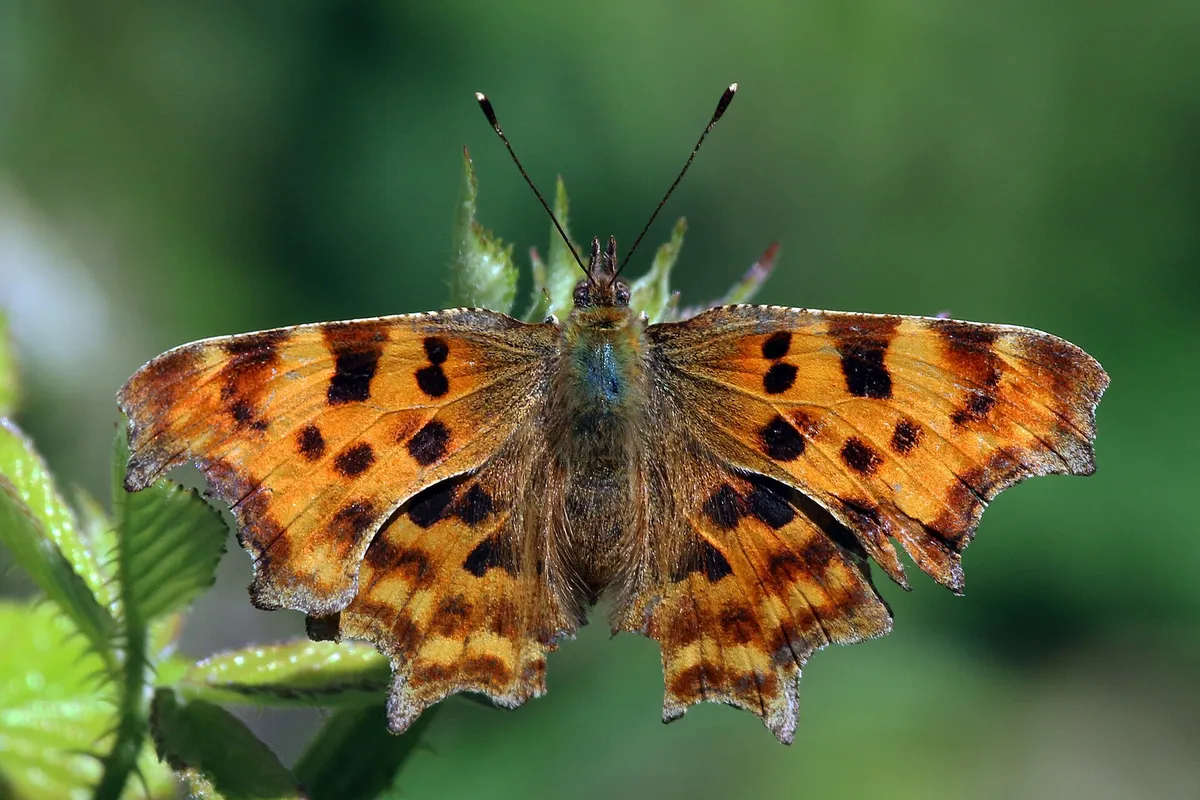
The Comma is the easiest orange butterfly to name with confidence, because no other British species has such deeply scalloped, ragged wing edges. When it rests with wings closed it looks like a dead leaf, brown and mottled, until a tiny white comma mark on the hindwing gives it away. Commas love rotting fruit and buddleia, and they fly from early spring to late autumn.
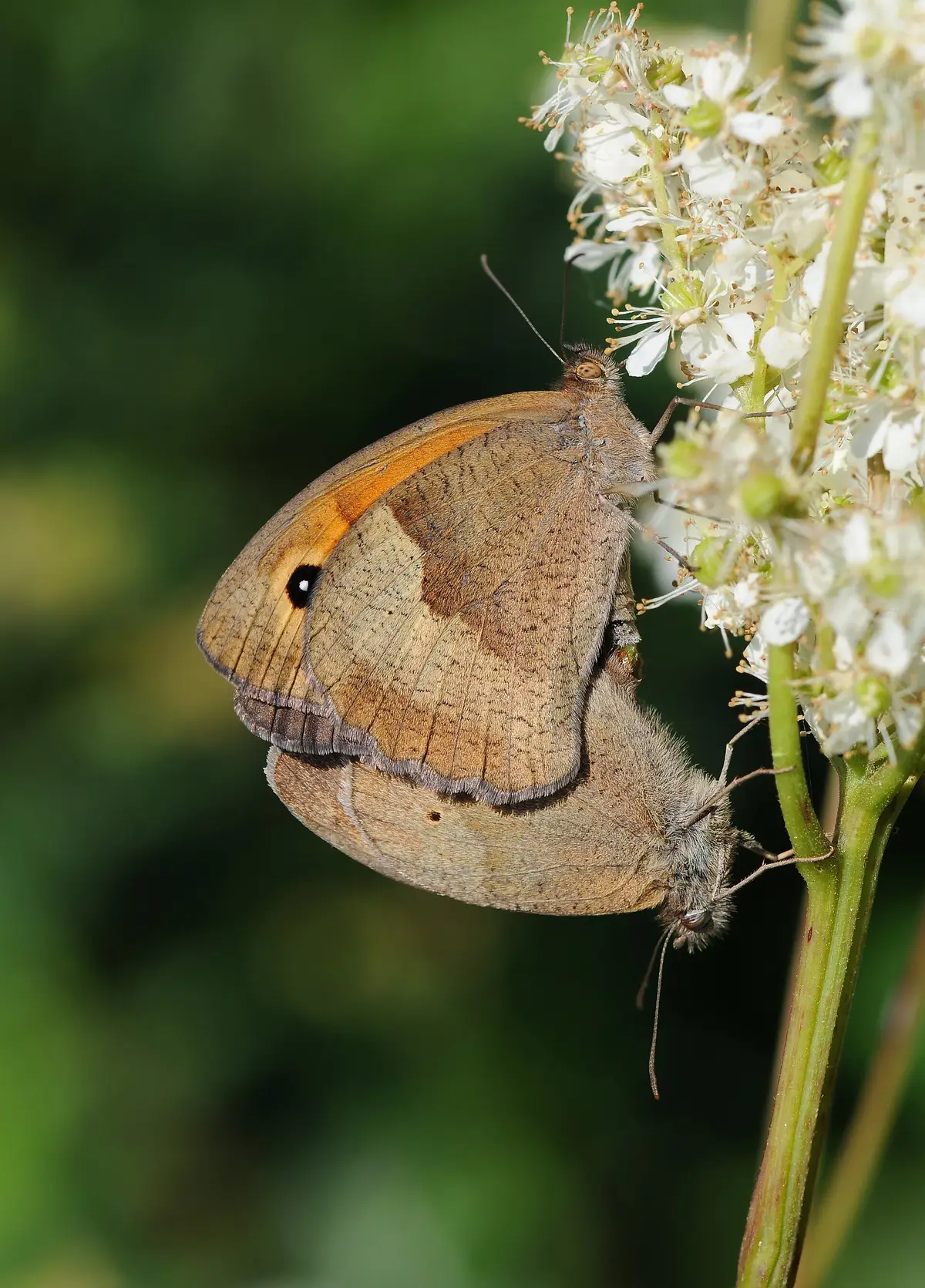
Meadow Browns deserve a closer look precisely because they are so common. On a warm July afternoon a single meadow can hold hundreds of them, and they are the butterfly most people see without ever naming. Their caterpillars feed on common grasses, which is why this species thrives almost anywhere there is uncut grass.
Blue Butterflies
Blue butterflies reward patience. The males are vivid, but they are small, fast and low flying, and the females are often brown, which catches beginners out. The Common Blue is the one you will meet most often. Males are a bright, clear blue with a white fringe, while females are brown with a dusting of blue near the body and a row of orange crescents along the wing edge.
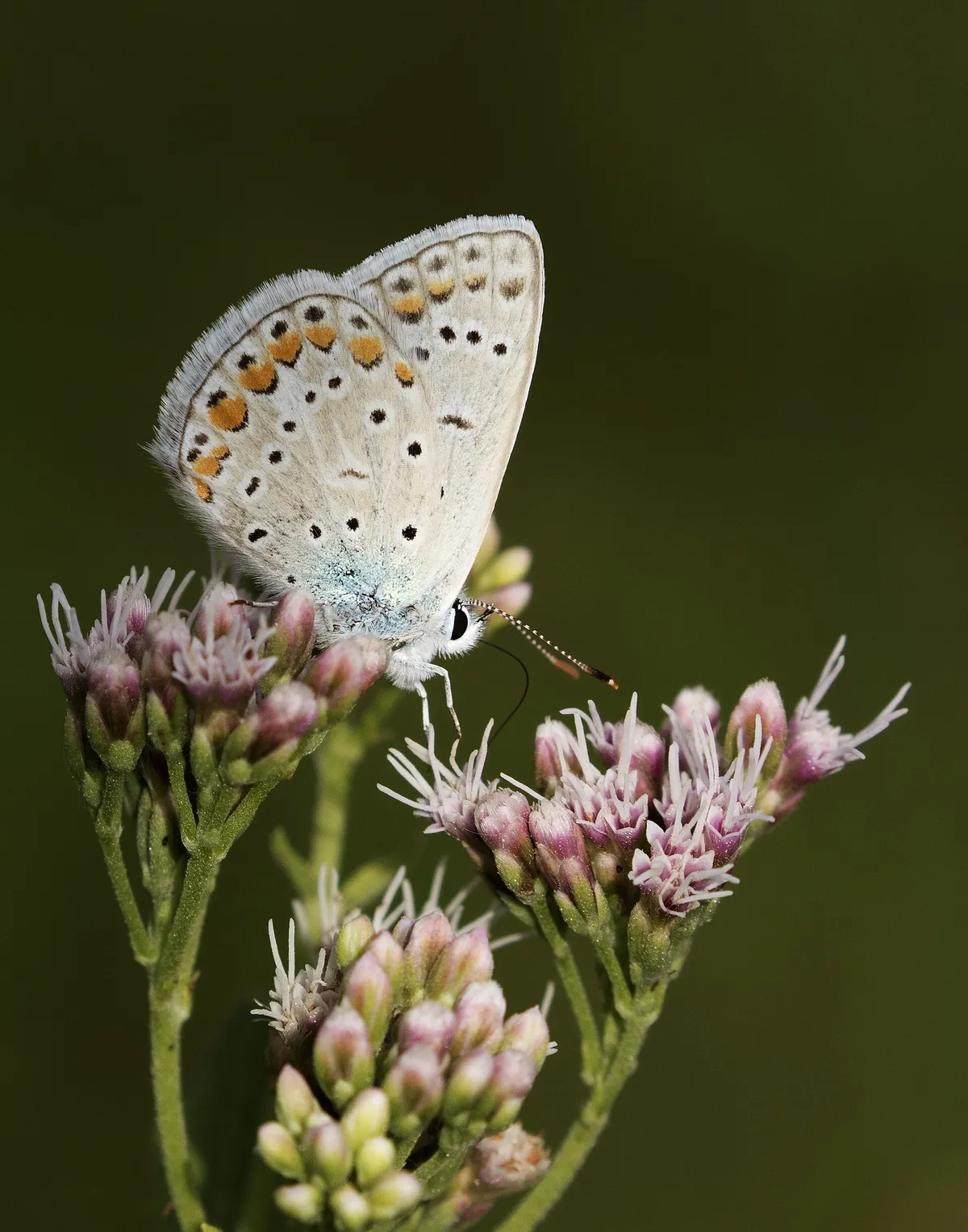
Where the Common Blue stays low, the Holly Blue flies high. It is a garden species through and through, fluttering around holly, ivy and garden shrubs, often well above head height. It is paler than the Common Blue, a silvery blue rather than a deep one, and its underwing is a very pale grey with small black dots.
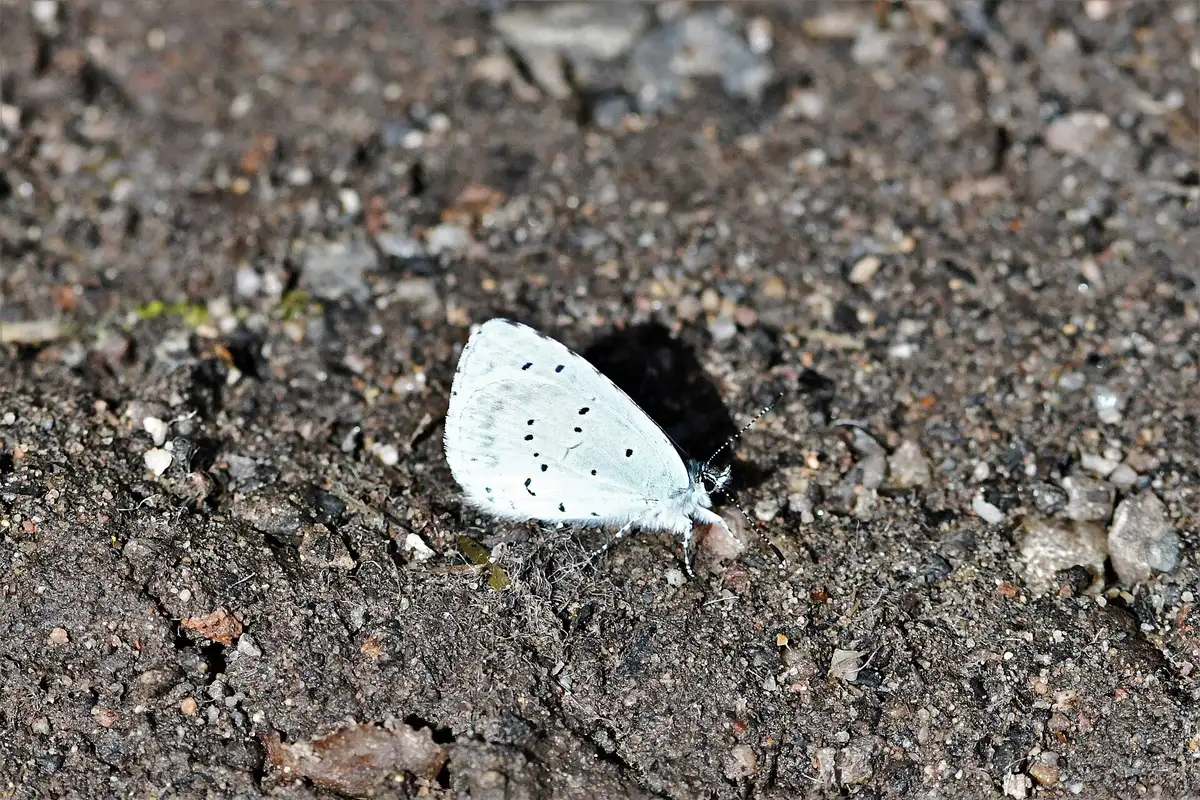
The chalk grassland blues are worth a special trip. The Chalk Hill Blue, Adonis Blue and Silver-studded Blue all live on warm, short turf over chalk or limestone, and on a good July day a single hillside can hold thousands of them. The Adonis is the brightest of the three, a deep turquoise with a black border, while the Chalk Hill Blue is a paler sky blue with chequered fringes. See our guide to the types of butterflies for the wider family.
White and Yellow Butterflies
White butterflies are the first many people learn, and they are also the easiest to mix up. The Large White and the Small White look almost identical in flight, so size is your best guide. The Large White spans up to nearly 7 cm, while the Small White is noticeably smaller and weaker. The Large White has a heavier black tip on the forewing. Both are known as cabbage whites, because their caterpillars feed on cabbages and other brassicas.
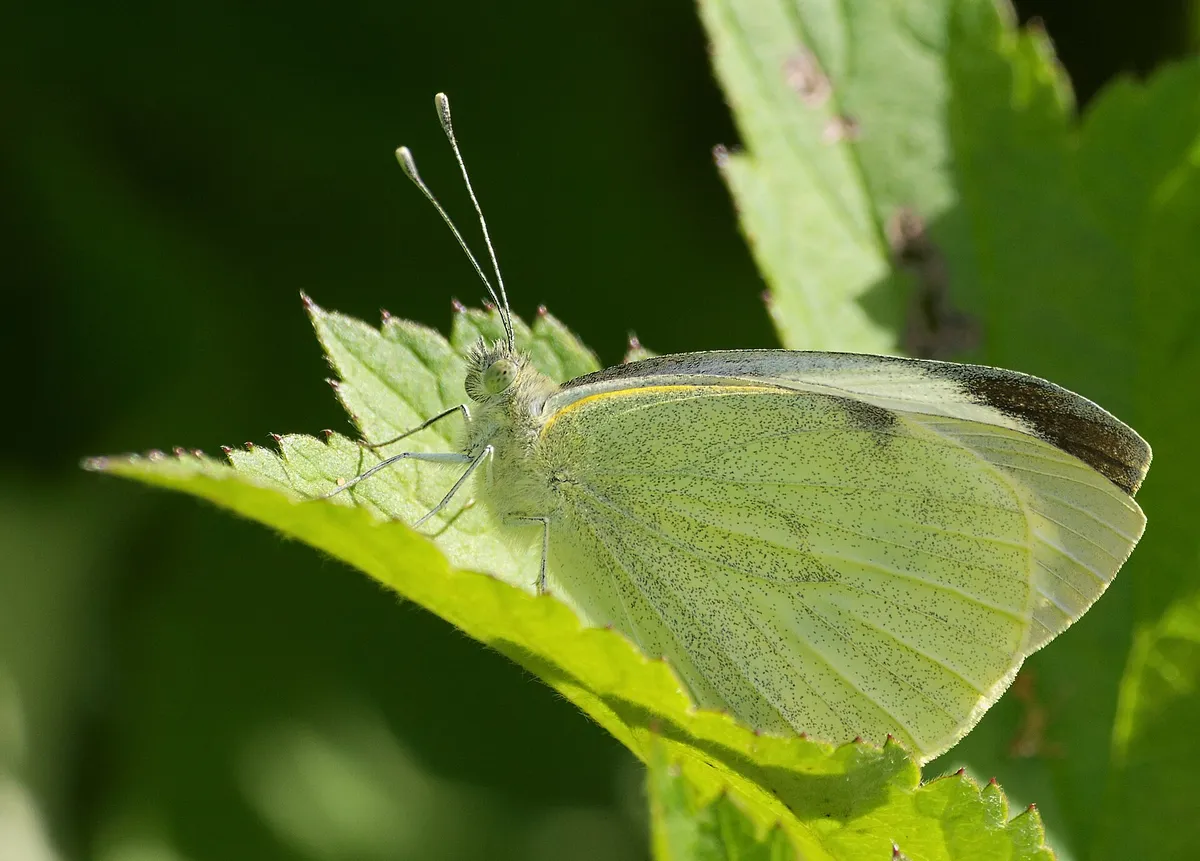
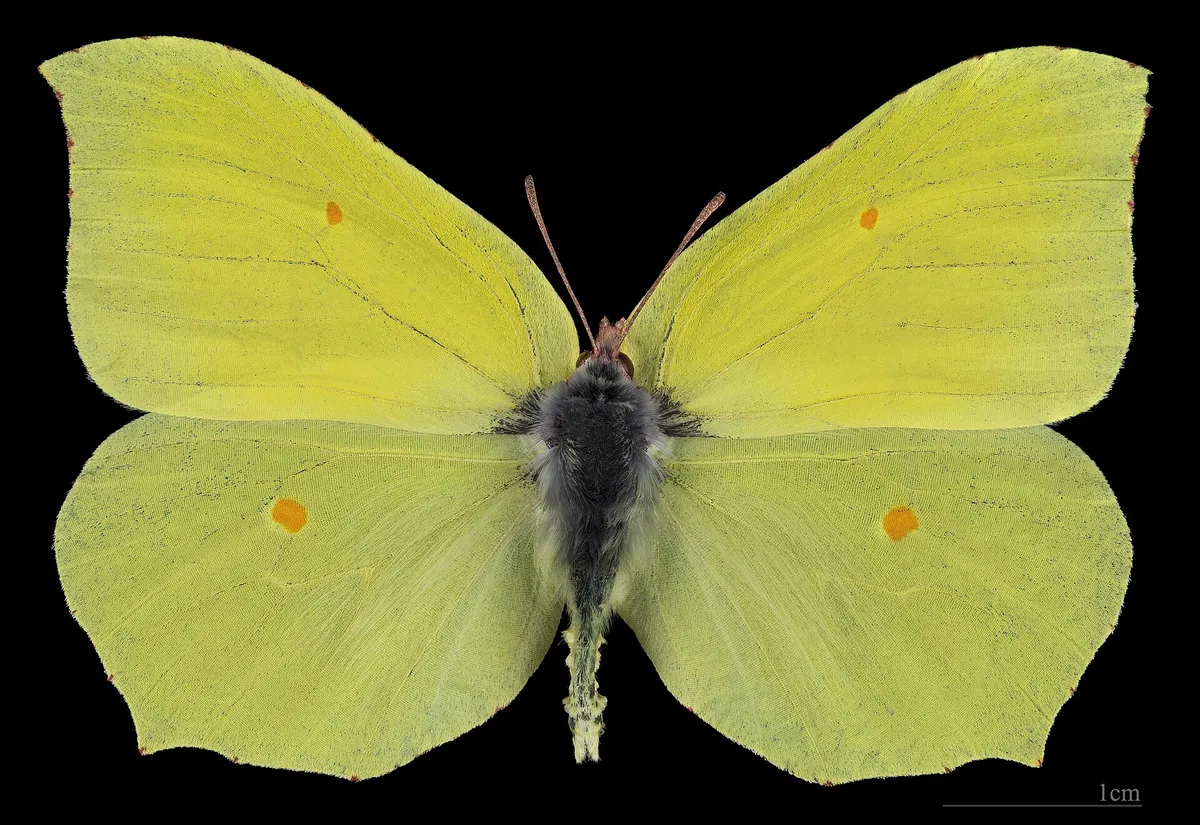
The Green-veined White is the quiet member of the family. It is smaller and daintier than the other whites, and its wings carry a faint grey green veining that shows best on the underside. The Brimstone, by contrast, is unmistakable. Its wings are shaped like leaves, pointed at the tip, and the male is a clear lemon yellow that stands out against spring hedgerows. Brimstones appear in March, and they live up to a full year, because they hibernate as adults through the winter.
Red and Black Butterflies
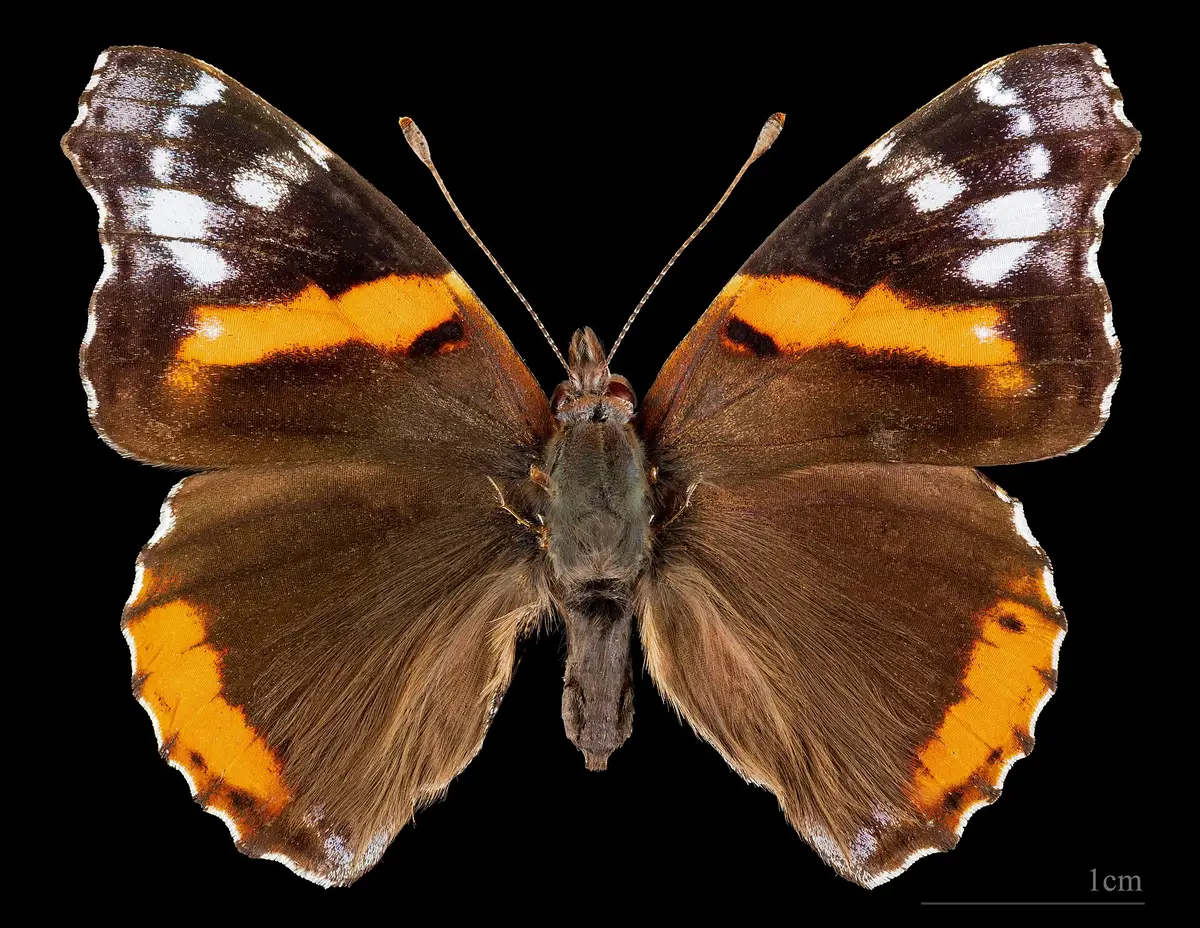
Three of Britain’s most loved butterflies share a red and black theme. The Red Admiral is black with bold red bands across both wings and white spots near the forewing tips. It is a strong, fast flyer that patrols gardens and woodland edges, and it is fond of rotting fruit, tree sap and buddleia. It arrives as a migrant each spring, but more now survive the British winter.
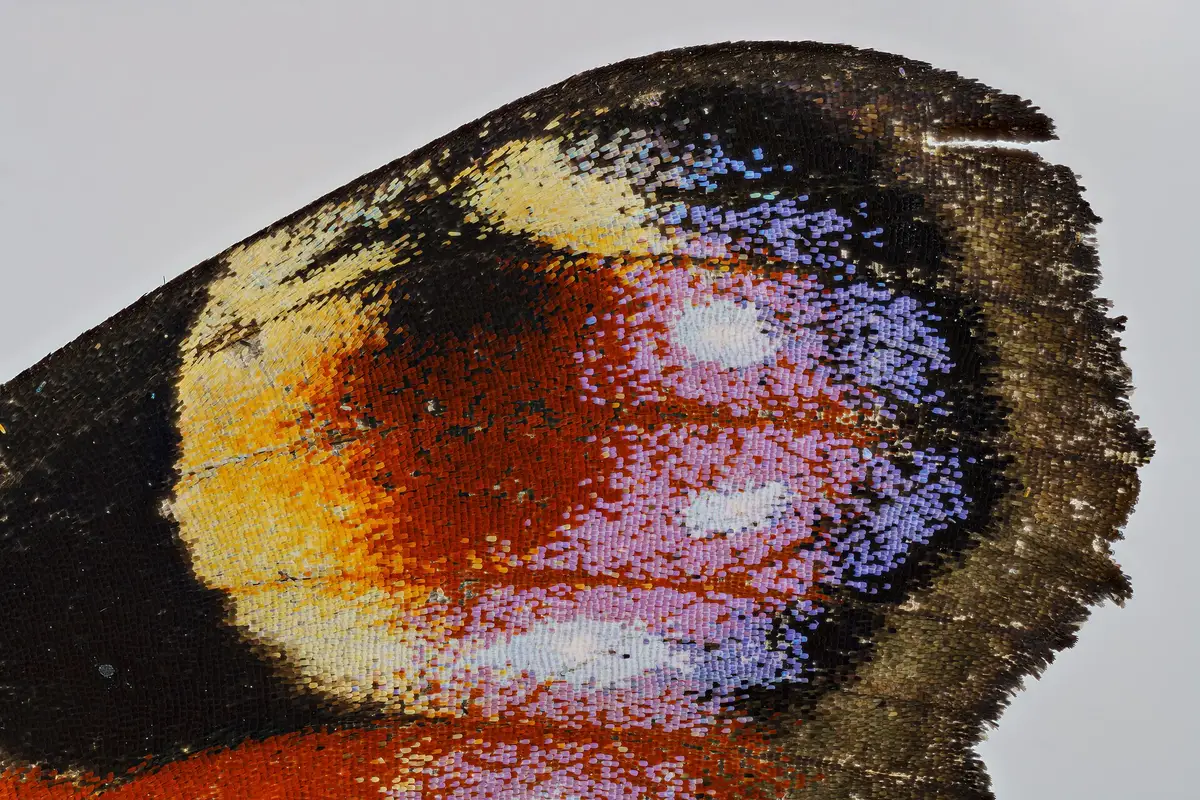
The Peacock is the showpiece. Its deep red wings carry four large eyespots, one on each wing, in blue, yellow and black, and when it opens its wings in the sun the effect is hard to miss. Those eyespots are a defence: a Peacock at rest will suddenly flash them open, which startles birds. Each spot is made of tiny overlapping scales in several colours, and under magnification the pattern looks almost jewelled.
The Small Tortoiseshell completes the trio. It is smaller than the Peacock, bright orange with black blotches and a row of blue crescents along the wing edge, and it is a true garden regular. It is also a species in trouble: its numbers have fallen sharply since the 1970s, probably because of a parasitic fly that attacks its caterpillars. If you see one, note the date and place, because records from ordinary garden watchers are exactly what conservationists need. Our butterfly lifespan chart compares 20 species side by side.
Small and Confusing Species
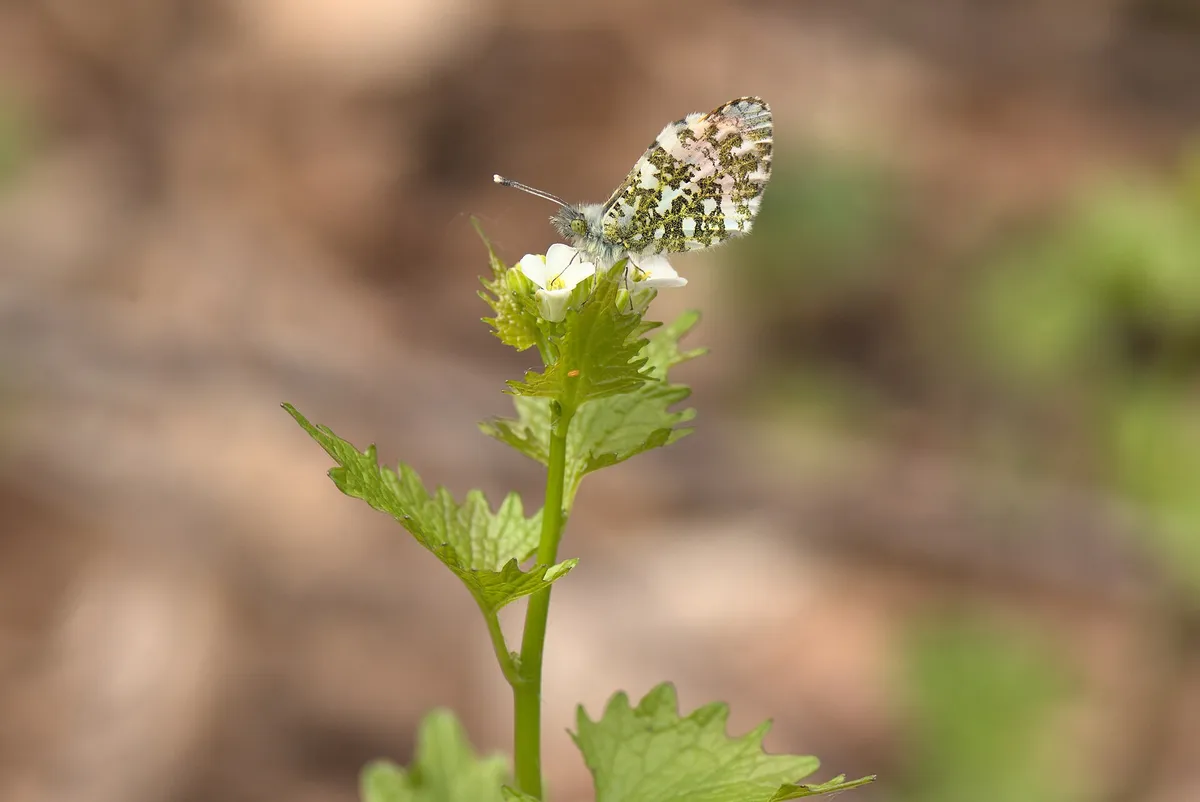
Some of the hardest identifications involve the smallest butterflies, where a few millimetres and one or two spots make all the difference. The Orange-tip is a spring favourite and a good example. The male has bright orange tips on white forewings, but the female has no orange at all, so she is often mistaken for a Small White. The giveaway is the underwing, shared by both sexes: a mottled pattern of green and white that looks like lichen. Orange-tips fly from April to June, and they are gone by midsummer.
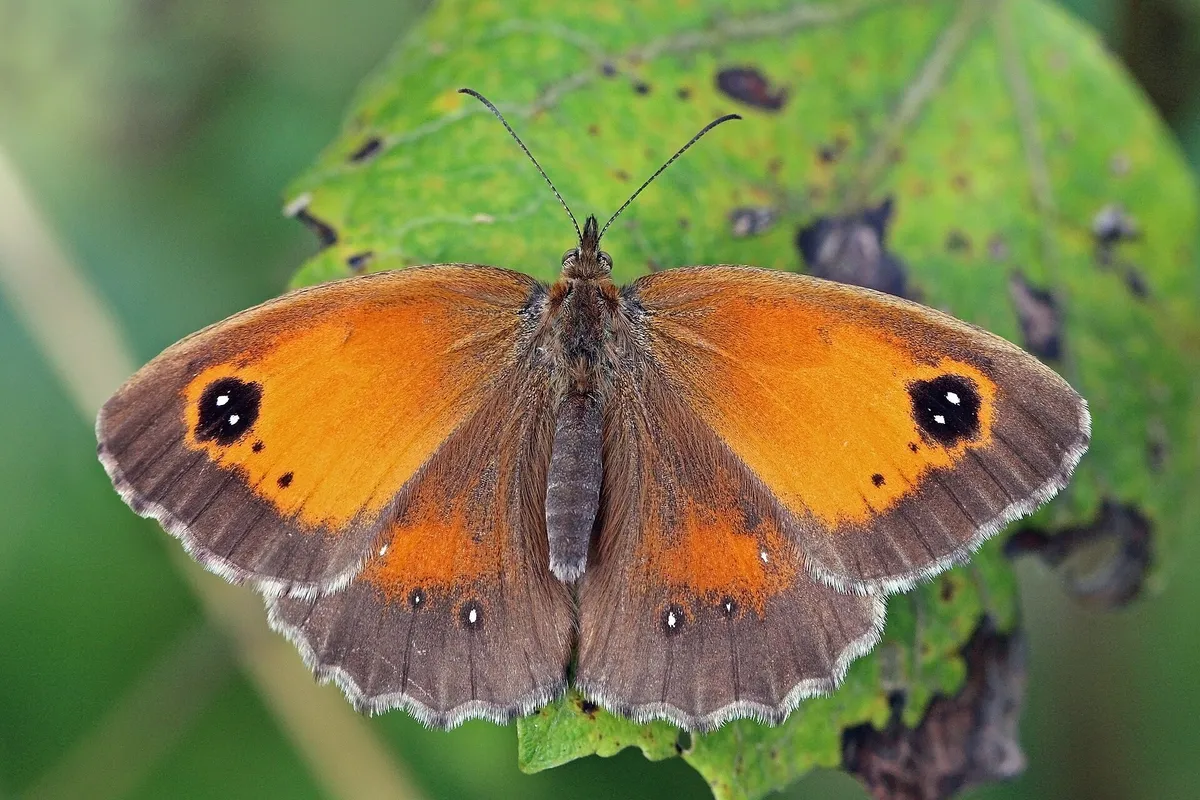
The Gatekeeper and the Meadow Brown are the classic confusing pair. Gatekeepers stay near hedgerows and fly mainly in July and August, while Meadow Browns range across open grassland and fly from June to September. The Gatekeeper has two small eyespots on each forewing, the Meadow Brown has one.
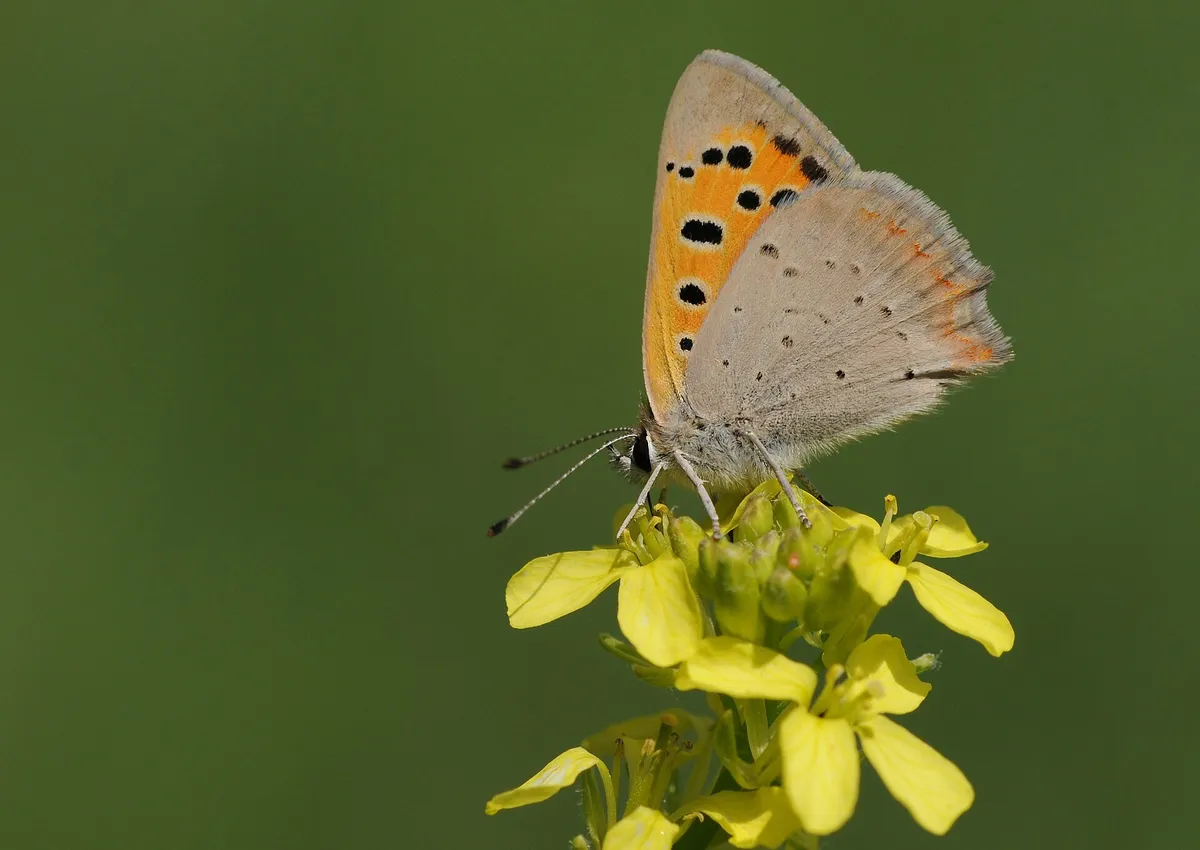
The Small Copper is easier than its size suggests. It is tiny, with a wingspan under 4 cm, but its forewings are a bright, shiny copper orange that catches the sun. It sits with its wings open on bare ground or low plants, which makes it one of the easiest small species to photograph.
Telling Lookalikes Apart
Five pairs cause most of the mistakes. Large White and Small White differ mainly in size and the weight of the black wingtip. Gatekeeper and Meadow Brown differ in eyespots, habitat and season. Common Blue and Holly Blue differ in colour, height of flight and underwing pattern. When two species still look alike, check the date. A blue butterfly in April is unlikely to be a Common Blue, which rarely appears before May.
When and Where to Look
May to September is the main butterfly season in Britain, with the peak in July and August. Spring belongs to the Brimstone, Orange-tip, Holly Blue and Peacock. Warm, calm mornings between 10am and 3pm are the best time to look. Gardens with buddleia, lavender and verbena attract admirals, peacocks and tortoiseshells. Our flying insect identification chart helps when your insect is not a butterfly at all.
Frequently Asked Questions
How many butterfly species are there in Britain?
Britain has 59 resident butterfly species, plus a few regular migrants such as the Painted Lady and the Red Admiral.
What is the best month to see butterflies?
July is usually the best month, with the most species on the wing at once, followed closely by August.
How can I tell a butterfly from a moth?
Most butterflies fly by day, rest with wings closed upright, and have thin antennae with clubbed tips. Most moths fly at night and rest with wings flat.
Conclusion
British butterfly identification is a skill that grows with every walk. Start with the table, learn the common species in your own garden first, and pay attention to size, season and habitat as much as colour. The more you look, the more you will see. Keep this chart handy, take your time, and enjoy the quiet pleasure of putting a name to a flash of wings.

