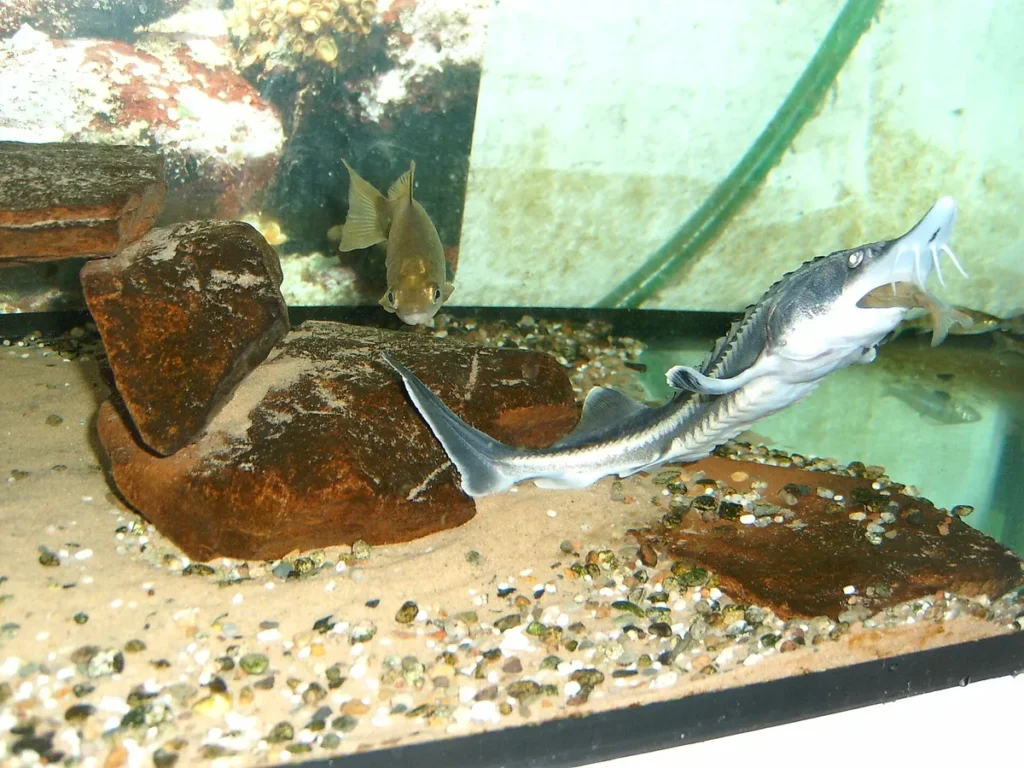
Some fish live for a season. Sturgeon live long enough to outlast the people who study them. This sturgeon lifespan chart brings together wild, captive and record ages for fifteen species, so you can see at a glance which ones reach a century and which barely reach thirty. A beluga can pass a hundred years, while a sterlet may be old at twenty-five.
Sturgeon are among the oldest fish still alive today, with a lineage going back more than 200 million years. Most species are now rare, and several are critically endangered. How long they live matters because it explains why their populations recover so slowly from overfishing.
Sturgeon Lifespan Chart: 15 Species Compared
The table below lists wild lifespan, captive lifespan and the maximum recorded age for fifteen species. Maximum ages usually come from counting growth rings on fin rays, a method similar to reading the rings of a tree.
| Species | Scientific Name | Wild Lifespan | Captive Lifespan | Max Recorded | Status / Note |
|---|---|---|---|---|---|
| Beluga sturgeon | Huso huso | 60-100 years | 50-80 years | ~118 years | Critically Endangered; largest sturgeon |
| White sturgeon | Acipenser transmontanus | 50-100 years | 40-70 years | ~110 years | Largest freshwater fish in North America |
| Lake sturgeon | Acipenser fulvescens | 50-80 years | 40-60 years | ~150 years (female) | Females live far longer than males |
| Atlantic sturgeon | Acipenser oxyrinchus | 40-60 years | 30-50 years | ~80 years | Slow to mature; coastal migrations |
| Siberian sturgeon | Acipenser baerii | 40-60 years | 30-50 years | ~60 years | Widely farmed for caviar |
| Russian sturgeon | Acipenser gueldenstaedtii | 40-60 years | 30-50 years | ~60 years | Critically Endangered in the wild |
| Green sturgeon | Acipenser medirostris | 50-70 years | 30-50 years | ~70 years | Long coastal migrations |
| Shortnose sturgeon | Acipenser brevirostrum | 30-60 years | 25-40 years | ~67 years | Smallest North American sturgeon |
| Sterlet | Acipenser ruthenus | 20-30 years | 20-30 years | ~30 years | Smallest sturgeon species |
| Adriatic sturgeon | Acipenser naccarii | 40-60 years | 30-50 years | ~60 years | Critically Endangered; Po River basin |
| Persian sturgeon | Acipenser persicus | 40-60 years | 30-50 years | ~60 years | Caspian Sea species |
| Shovelnose sturgeon | Scaphirhynchus platorynchus | 20-30 years | 15-25 years | ~30 years | Common in the Missouri River |
| Pallid sturgeon | Scaphirhynchus albus | 40-60 years | 30-40 years | ~60 years | Endangered; Missouri and Mississippi rivers |
| Chinese sturgeon | Acipenser sinensis | 30-40 years | 25-35 years | ~40 years | Critically Endangered; Yangtze River |
| Yangtze sturgeon | Acipenser dabryanus | 30-40 years | 20-30 years | ~40 years | Critically Endangered; Yangtze River |
Three patterns stand out. The biggest species live the longest, the smallest live the shortest, and females usually outlive males by a wide margin. Sturgeon lose most of their young in the first year, to predators, currents and falling water levels. Once a sturgeon grows too large for most predators, its chances improve dramatically.
The Longest-Lived Sturgeon Species
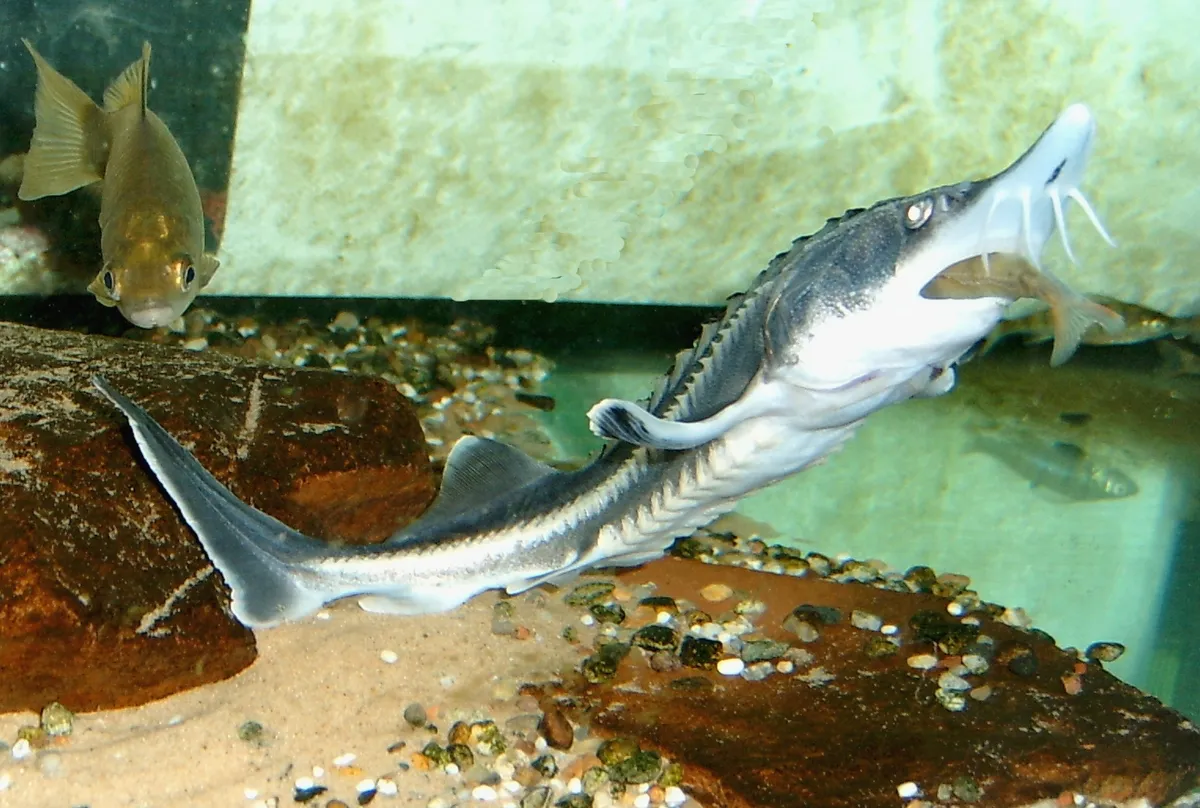
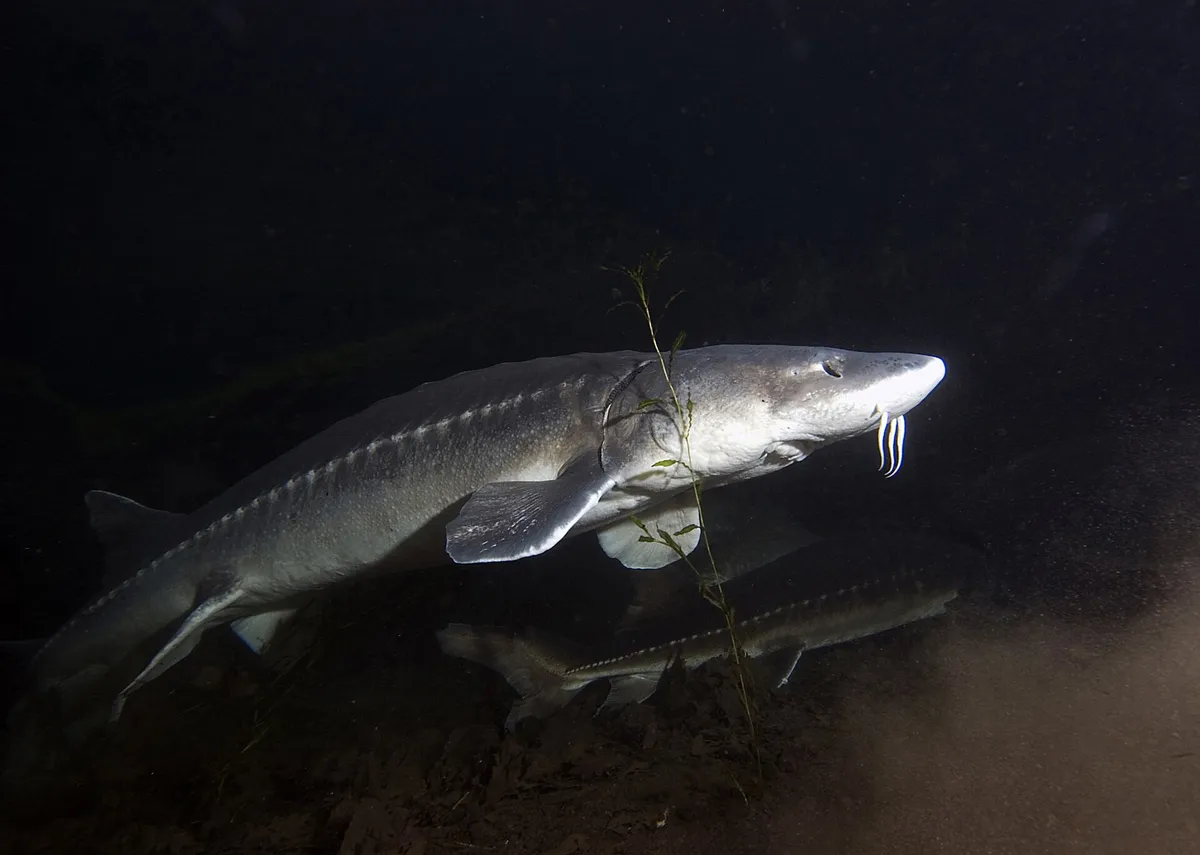
Three species stand apart: the beluga, the white sturgeon and the lake sturgeon. Each can pass a century under the right conditions. The beluga lives in the Caspian and Black Sea basins, the white sturgeon in western North America, and the lake sturgeon in the Great Lakes and their rivers.
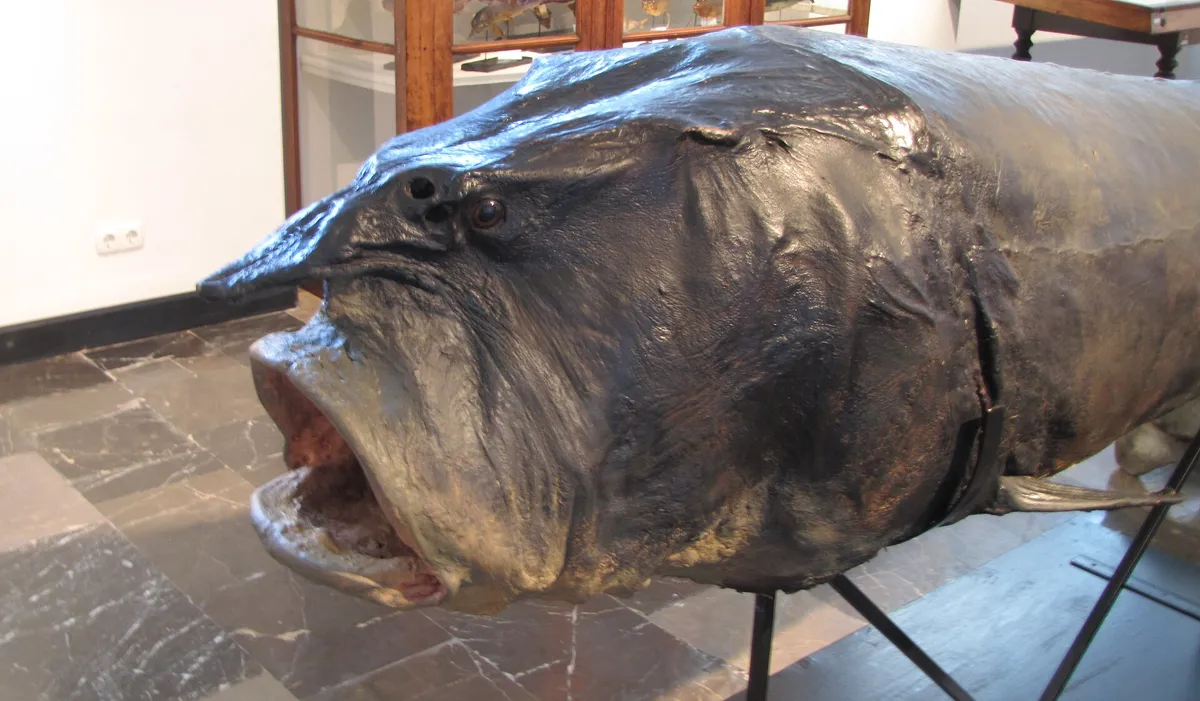
The beluga is the longest-lived sturgeon on record, at about 118 years, and also the largest. Beluga females do not spawn until they are eighteen to twenty years old, and they may only spawn every three to five years after that.
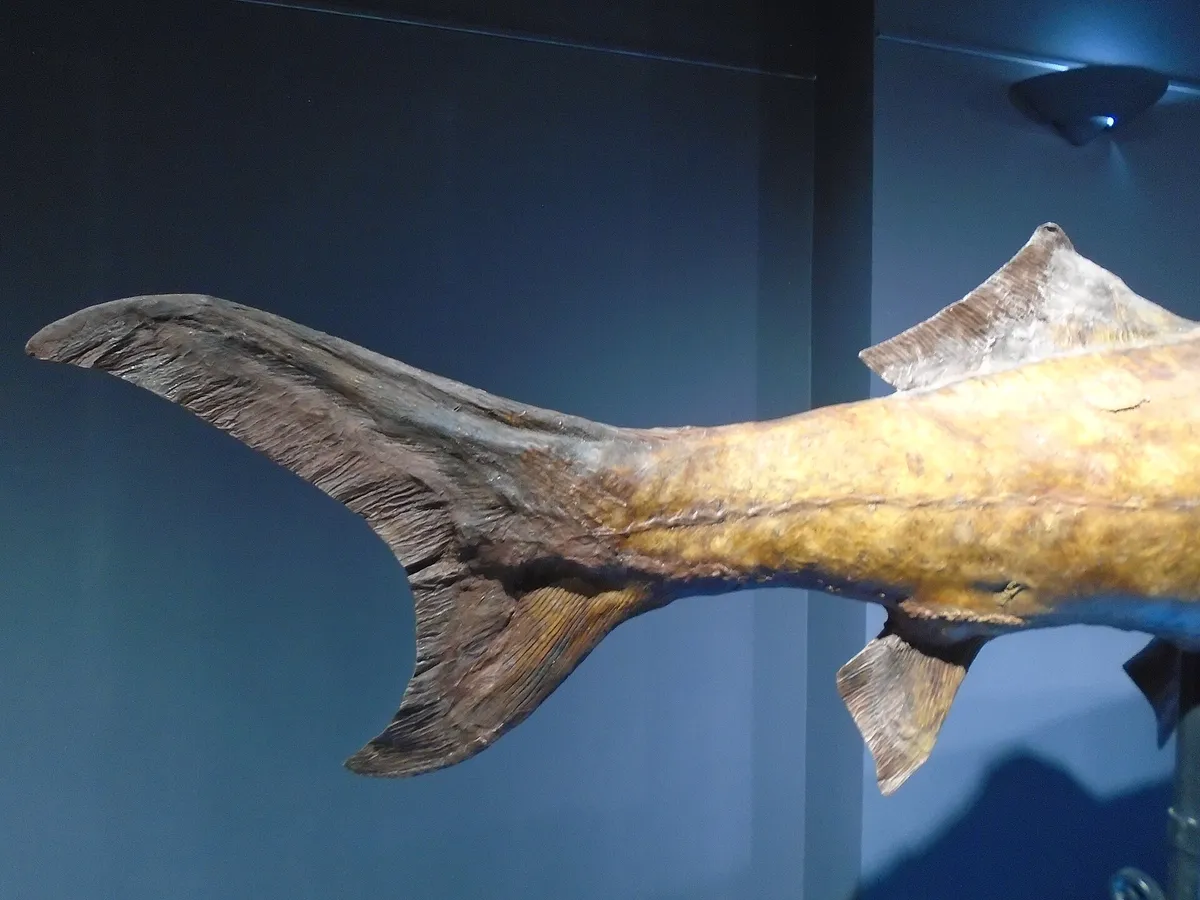
The white sturgeon comes close behind, at about 110 years. It is the largest freshwater fish in North America, and anglers on the Columbia and Fraser rivers still catch individuals over three metres long. White sturgeon take fifteen to twenty years to reach breeding age
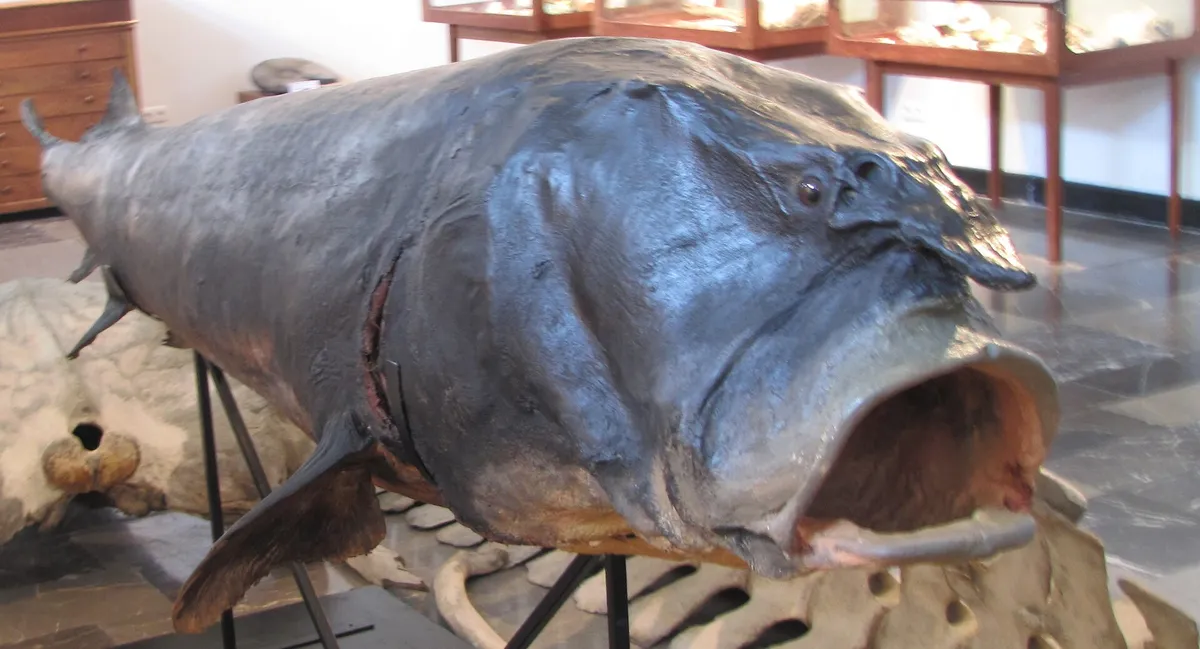
The lake sturgeon holds the most extraordinary record of all. In 2021, biologists working on the Detroit River in Michigan caught a female measuring about 2.1 metres long and weighing around 108 kilograms. The growth rings on her fin ray suggested she was about 100 years old, possibly older. Later estimates put the species maximum at about 150 years for females. She was probably born around the time of the First World War, and she had survived a century of pollution, dams and fishing in the Detroit River.
Why Do Sturgeon Live So Long?
Sturgeon live long lives for four connected reasons: large size, cold water, late maturity and a slow metabolism. Each reinforces the others. Sturgeon invest in survival rather than speed.
Size is the simplest factor. Larger animals usually live longer than smaller ones, and the same pattern holds inside the sturgeon family. A big body holds more reserves and is harder for predators to attack. Once a sturgeon reaches a metre or more, almost nothing in the river can eat it. Small species such as the sterlet never reach that safe size, and their lives are correspondingly shorter. The same rule appears elsewhere. A whale lifespan chart shows the same rule, as does a sloth lifespan chart.
Cold water helps as well. Most sturgeon live in cool rivers and northern seas, where low temperatures slow digestion, growth, heart rate and the rate at which cells wear out.
Late maturity is the third piece. A beluga female waits until she is nearly twenty, a white sturgeon until fifteen or twenty, and a lake sturgeon female until twenty or twenty-five. The survivors arrive at breeding age large, strong and full of eggs. A big female can produce hundreds of thousands of eggs in a single spawning.
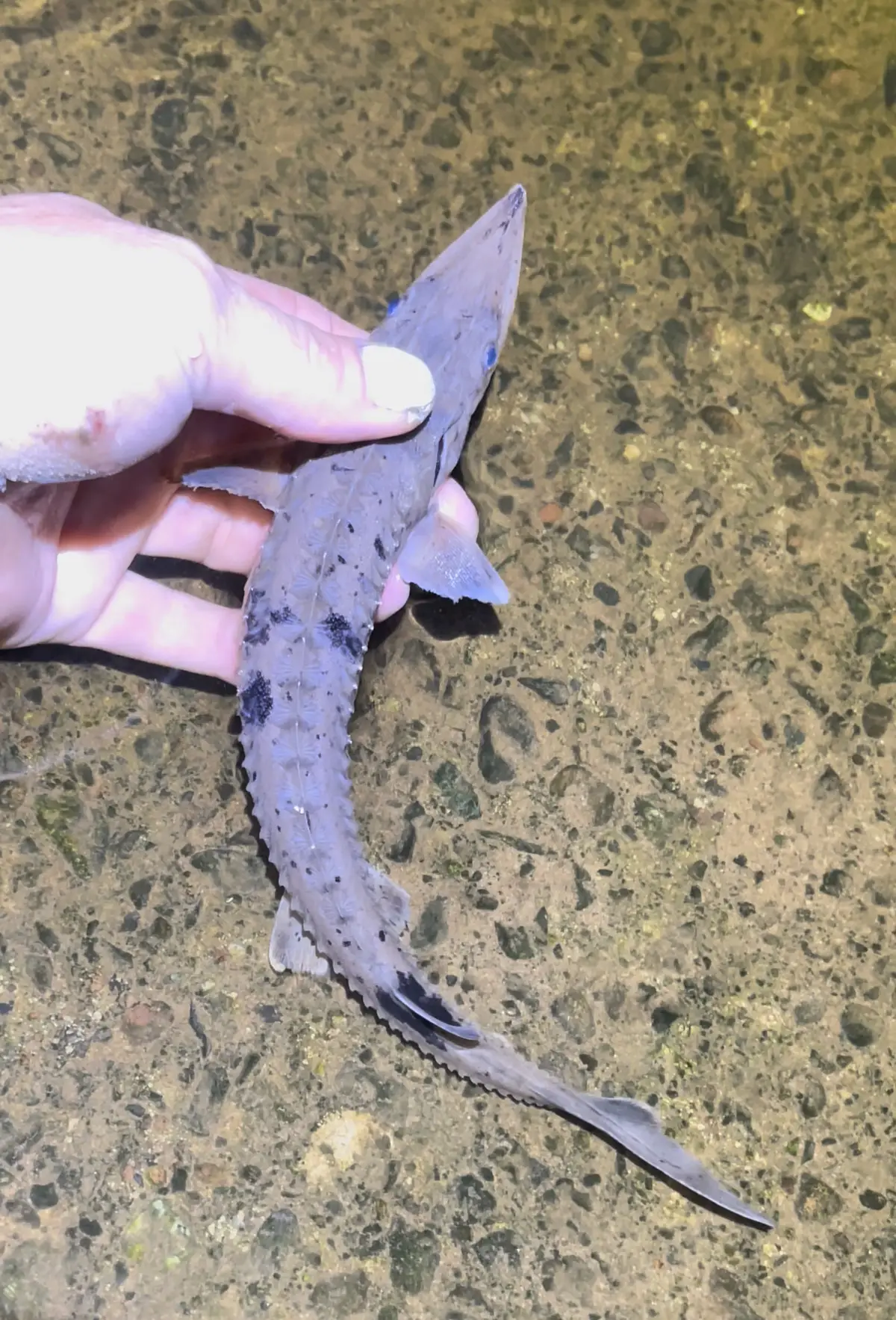
Finally, sturgeon have a slow metabolism and a body built for endurance. They are bottom feeders, cruising slowly along riverbeds and sucking up molluscs, crustaceans, worms and small fish. They do not chase prey at high speed or waste energy on constant movement. Their armoured scutes, rows of bony plates along the body, protect them without much effort, and they keep growing slowly throughout life.
Male vs Female Sturgeon Lifespan
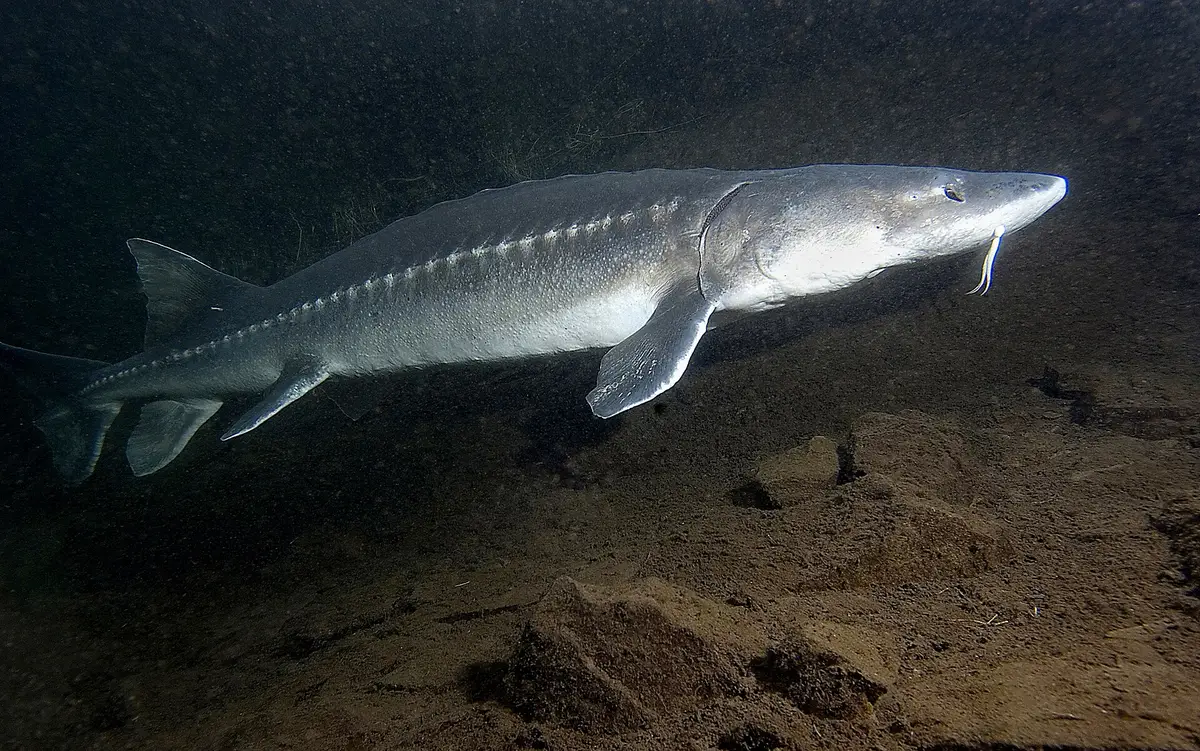
In almost every sturgeon species, females live longer than males, and in some the gap is enormous. The lake sturgeon is the clearest example. Males rarely live past 55 years, while females commonly reach 80 and the oldest known female reached about 150. Males mature earlier, breed more often, and die younger. Females mature later, breed less often, and live longer.
The reasons are practical. Males spend more energy on breeding and migrate to spawning grounds more often, sometimes every year or two, while females may wait three to five years between spawnings. Each migration is a journey upstream against the current, past dams, fishermen and predators. Females spend the years between spawnings feeding and growing in deeper, safer water. They also grow larger than males, and larger fish live longer. A single old female is extremely valuable to a population, since she may produce millions of eggs over her lifetime. That is why many fisheries now protect large fish and release the biggest individuals alive. The same link between female size and longevity appears in snakes and in a types of sharks comparison.
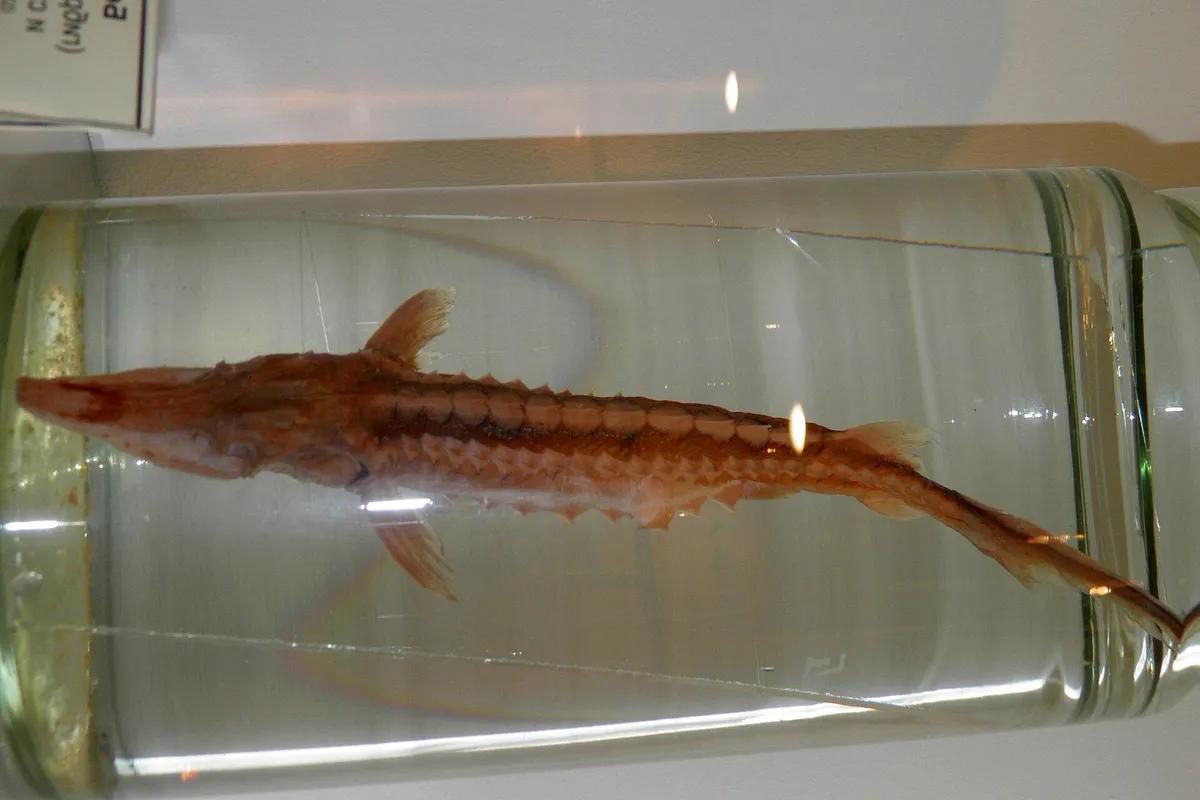
Conservation Status: Why Long Life Makes Recovery Slow
Almost every sturgeon species is in trouble. Of the twenty-seven sturgeon species in the world, most are listed as threatened, and several are critically endangered. The table below gives the IUCN Red List status for the species in this guide, along with the main threat each one faces.
| Species | IUCN Status | Main Threat |
|---|---|---|
| Beluga sturgeon | Critically Endangered | Illegal caviar fishing and dams |
| White sturgeon | Least Concern (some populations Endangered) | Dams and habitat loss |
| Lake sturgeon | Least Concern globally, threatened locally | Dams, pollution and historic overfishing |
| Atlantic sturgeon | Near Threatened / Endangered in the US | Overfishing, dams and ship strikes |
| Siberian sturgeon | Endangered | Overfishing and habitat loss |
| Russian sturgeon | Critically Endangered | Illegal caviar fishing and dams |
| Green sturgeon | Near Threatened | Dams and habitat loss |
| Shortnose sturgeon | Vulnerable | Dams and pollution |
| Sterlet | Endangered | Overfishing and habitat loss |
| Adriatic sturgeon | Critically Endangered | Dams and habitat loss |
| Persian sturgeon | Critically Endangered | Illegal caviar fishing and dams |
| Shovelnose sturgeon | Vulnerable | Habitat loss and caviar fishing |
| Pallid sturgeon | Endangered | Dams and river channelisation |
| Chinese sturgeon | Critically Endangered | Dams blocking spawning migration |
| Yangtze sturgeon | Critically Endangered | Dams and pollution |
Long life makes recovery slow in a very direct way. A sturgeon population cannot replace its adults quickly because each new adult takes fifteen to twenty-five years to grow up. If fishing removes most of the breeding females from a river, the young fish left behind will not be ready to spawn for another two decades.
The problem is worse because sturgeon breed in specific places. Most species migrate upstream to spawn on clean gravel beds in flowing water, and they return to the same stretches of river year after year. When a dam blocks that migration, the fish cannot reach their spawning grounds at all. The Gezhouba Dam on the Yangtze cut the Chinese sturgeon off from its spawning sites, and the population has collapsed since then.
There is some good news. Lake sturgeon in the Great Lakes were nearly wiped out by overfishing and pollution in the early twentieth century, yet careful management, hatchery releases and cleaner water have brought them back in several rivers. Recovery is slow, measured in decades, but it shows what patience can do.
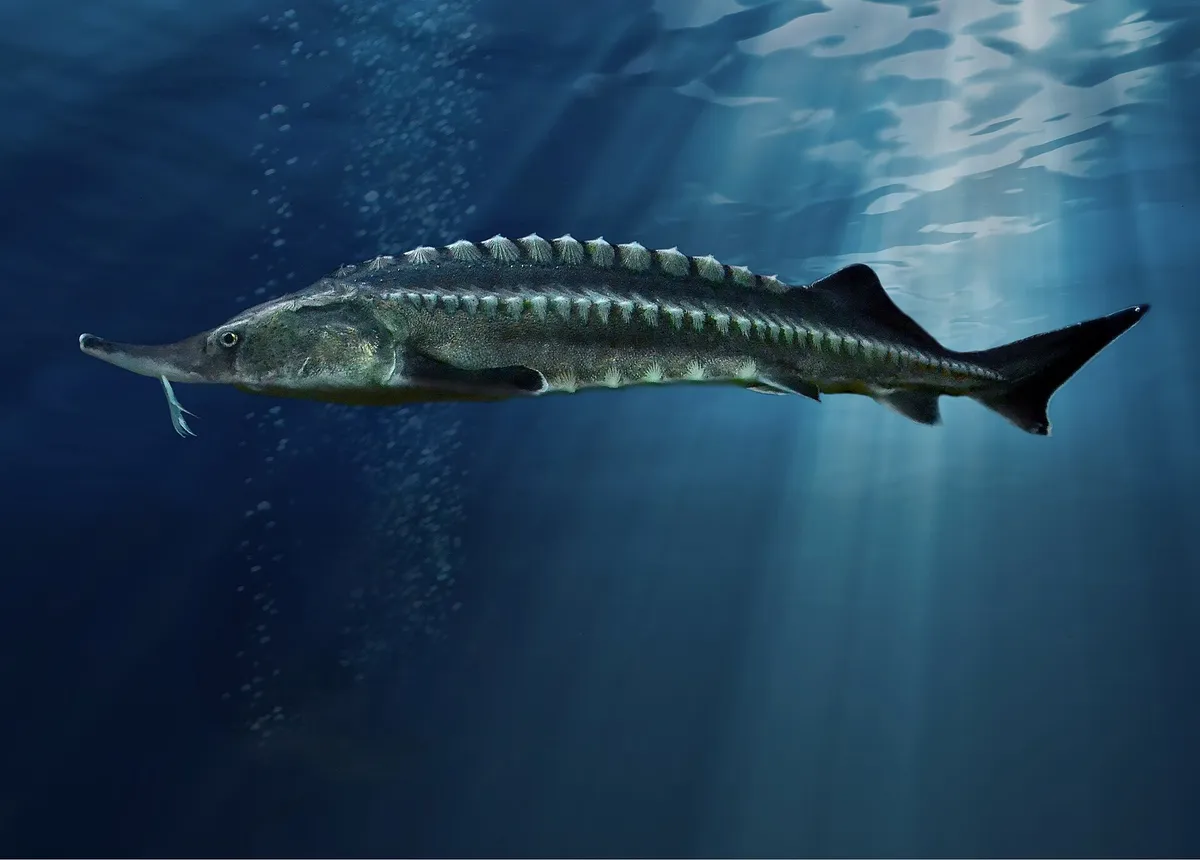
What Affects Sturgeon Lifespan?
Five factors decide how long an individual sturgeon actually lives: fishing, dams, water quality, food, and care in captivity. Genetics sets the upper limit, but these five decide whether a fish gets anywhere near it.
Fishing is the most direct factor. Sturgeon have been fished for meat and caviar for centuries, and the pressure has always fallen hardest on the largest and oldest fish, because they carry the most eggs and the most valuable caviar. Fishing is now banned or strictly limited in many countries, and caviar trade is controlled under CITES, but illegal fishing continues in the Caspian Sea basin.
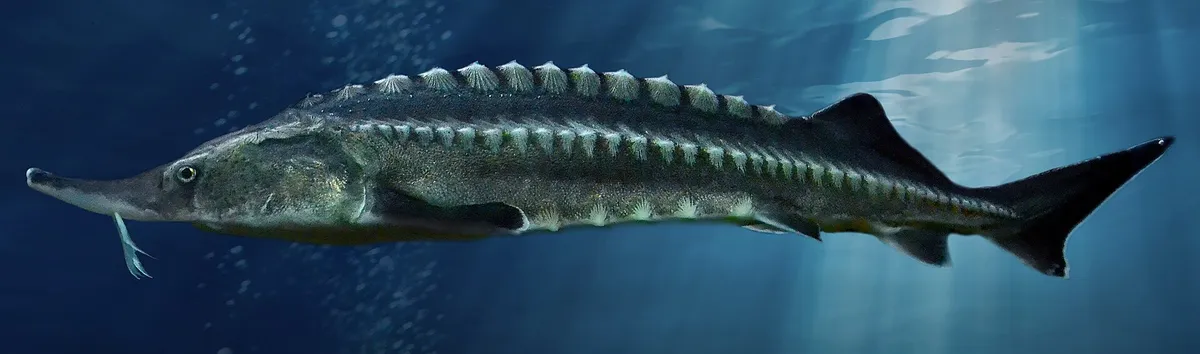
Dams are the second major factor, and in some rivers they matter even more than fishing. Sturgeon evolved to migrate, sometimes hundreds of kilometres, between feeding grounds and spawning grounds. A dam breaks that journey, and even a dam with a fish ladder may not help, because sturgeon are large, bottom-dwelling fish that do not use ladders designed for salmon.
Water quality works quietly. Sturgeon feed on the riverbed, where pollutants settle, and they live long enough to accumulate contaminants in their bodies over decades. Heavy metals, pesticides and industrial chemicals can damage their organs, reduce fertility and shorten life. Low oxygen, caused by warm water or nutrient pollution, stresses fish and makes them more vulnerable to disease.
Food supply matters in a simpler way. Sturgeon need a steady diet of molluscs, crustaceans, worms, insect larvae and small fish. Captive care also matters. Small species such as sterlet can do well in large, well filtered tanks with cool, oxygen-rich water. Large species need a huge tank, strong current and deep water to stay healthy, and very few aquariums can provide that.
Frequently Asked Questions
What is the average lifespan of a sturgeon?
Most sturgeon live between 30 and 60 years in the wild, while the large species such as beluga, white sturgeon and lake sturgeon commonly live 50 to 100 years. Small species such as sterlet and shovelnose sturgeon average 20 to 30 years.
What is the longest-lived sturgeon species?
The beluga holds the record for the longest confirmed lifespan, at about 118 years, but the lake sturgeon holds the highest estimated maximum, at about 150 years for a female. The white sturgeon is close behind at about 110 years.
Why do sturgeon live so long?
Sturgeon live long lives because they are large, live in cold water, mature late and have a slow metabolism. Their size protects them from predators, cold water slows the rate at which their bodies wear out, and their unhurried life history spreads breeding over many decades.
Do female sturgeon live longer than males?
Yes, in almost every species. Females grow larger, mature later and breed less often than males, which leaves them more time to feed and grow between spawnings. In lake sturgeon, males rarely pass 55 years, while females can reach 80 or more.
Are sturgeon endangered?
Most species are threatened. Beluga, Russian, Persian, Adriatic, Chinese and Yangtze sturgeon are all critically endangered, and several others are endangered or vulnerable. The main causes are overfishing for caviar, dams that block spawning migrations, habitat loss and pollution.
How long do sturgeon live in captivity?
It depends on the species and the quality of care. Small species such as sterlet often live 20 to 30 years in a good aquarium, similar to their wild lifespan. Large species usually live shorter lives in captivity, because they need very large tanks with flowing, cool, oxygen-rich water.
Conclusion
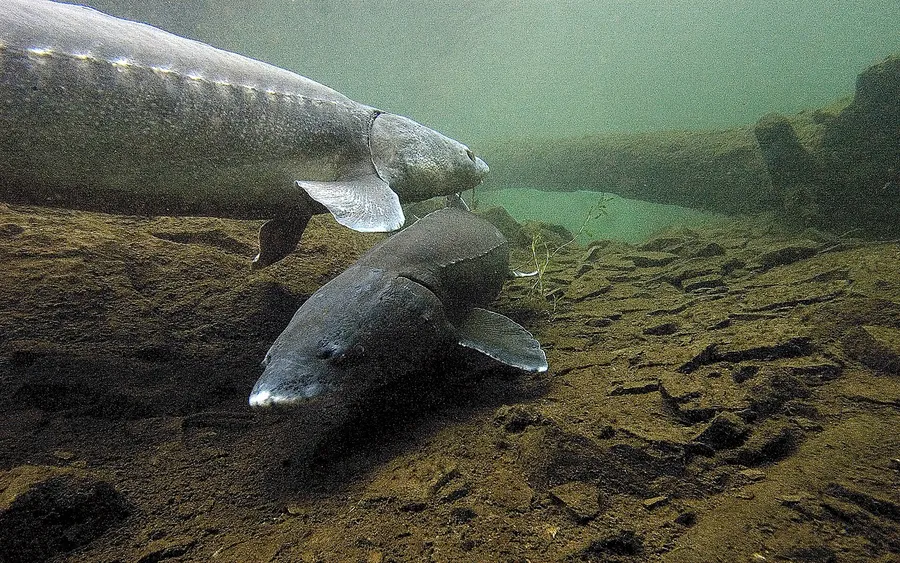
Sturgeon are a reminder that a long life is not an accident. It is the result of size, cold water, patience and a body built to last. The beluga can reach 118 years, the white sturgeon 110, and a lake sturgeon female perhaps 150. That longevity is also their weakness. If we give sturgeon clean water and room to migrate, these ancient fish can keep swimming for another hundred years.