A rhino can outlive most of the animals that share its grassland, and it can also die young for reasons that have nothing to do with old age. This rhino lifespan chart puts all five living species side by side, with wild and zoo lifespans, weights, habitats, and conservation status, so you can see how long each kind of rhino lives.
Most rhinos live 30 to 50 years, but the gap between species is wide. A white rhino in a well run zoo can pass 50, while a black rhino in a heavily poached area may not reach 30. The gap is about food, safety, teeth, and people, not mostly about biology. For a species by species size guide, see our types of rhinoceros chart.
Rhino Lifespan Chart: All Five Species Compared
There are five living rhino species. Two live in Africa, the white and the black rhino. Three live in Asia, the Indian, Javan, and Sumatran rhino. The table below lists the typical wild lifespan and the typical lifespan in human care for each one, plus weight and habitat.
| Species | Scientific Name | Wild Lifespan | In Human Care | Weight | Habitat |
|---|---|---|---|---|---|
| White rhino | Ceratotherium simum | 35 to 40 years | 40 to 50 years | 1,800 to 2,700 kg | Grasslands of southern and eastern Africa |
| Black rhino | Diceros bicornis | 30 to 40 years | 35 to 50 years | 800 to 1,400 kg | Savannas and woodlands of eastern and southern Africa |
| Indian rhino | Rhinoceros unicornis | 35 to 45 years | 40 to 50 years | 1,800 to 2,700 kg | Grasslands and riverine forest in India and Nepal |
| Javan rhino | Rhinoceros sondaicus | 30 to 40 years (estimate) | None in captivity | 900 to 2,300 kg | Rainforest of Ujung Kulon, Java |
| Sumatran rhino | Dicerorhinus sumatrensis | 30 to 40 years | 35 to 45 years | 500 to 1,000 kg | Rainforests of Sumatra and Borneo |
Two patterns jump out. First, the big grazers live longest: white and Indian rhinos are the heaviest species, and they sit at the top of the range. Second, every species lives a few years longer in human care than in the wild, except the Javan rhino, which has no captive population, so its numbers are field estimates.

Which Rhino Lives the Longest?
The white and Indian rhinos share the top of the chart. Both reach the mid 40s in the wild when poaching is low, and both regularly pass 45 in human care. The Indian rhino, also called the greater one-horned rhino, does especially well in protected parks such as Kaziranga in Assam, where steady food, water, and tight security let animals grow old. It is the largest Asian rhino.
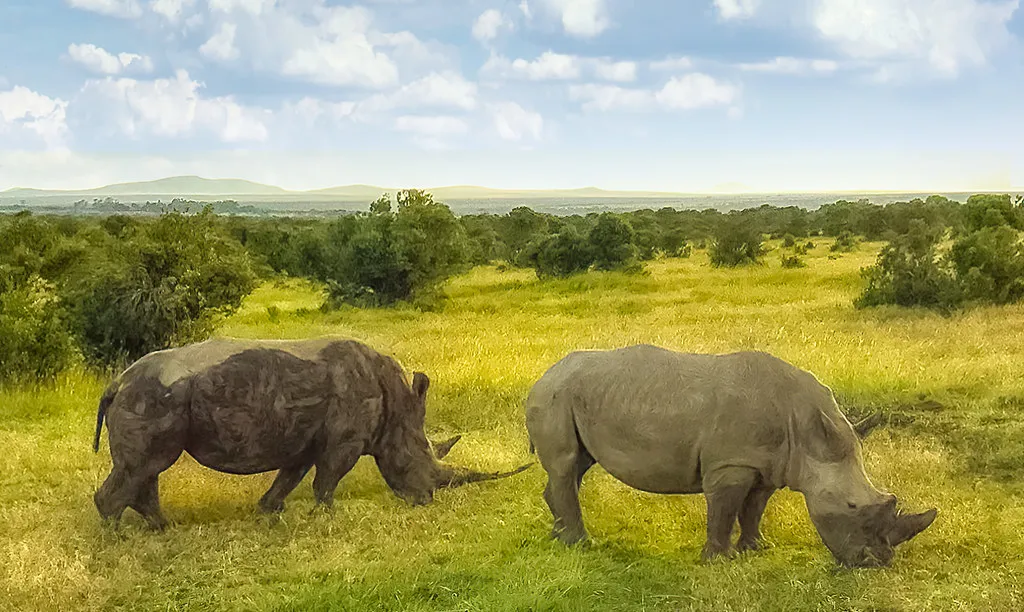
The white rhino has a different advantage: numbers and habitat. It grazes on open grassland, where food is plentiful, and it faces few natural predators as an adult. It is the only rhino species listed as Near Threatened rather than endangered, so more wild animals survive to old age.

Which Rhino Lives the Shortest?
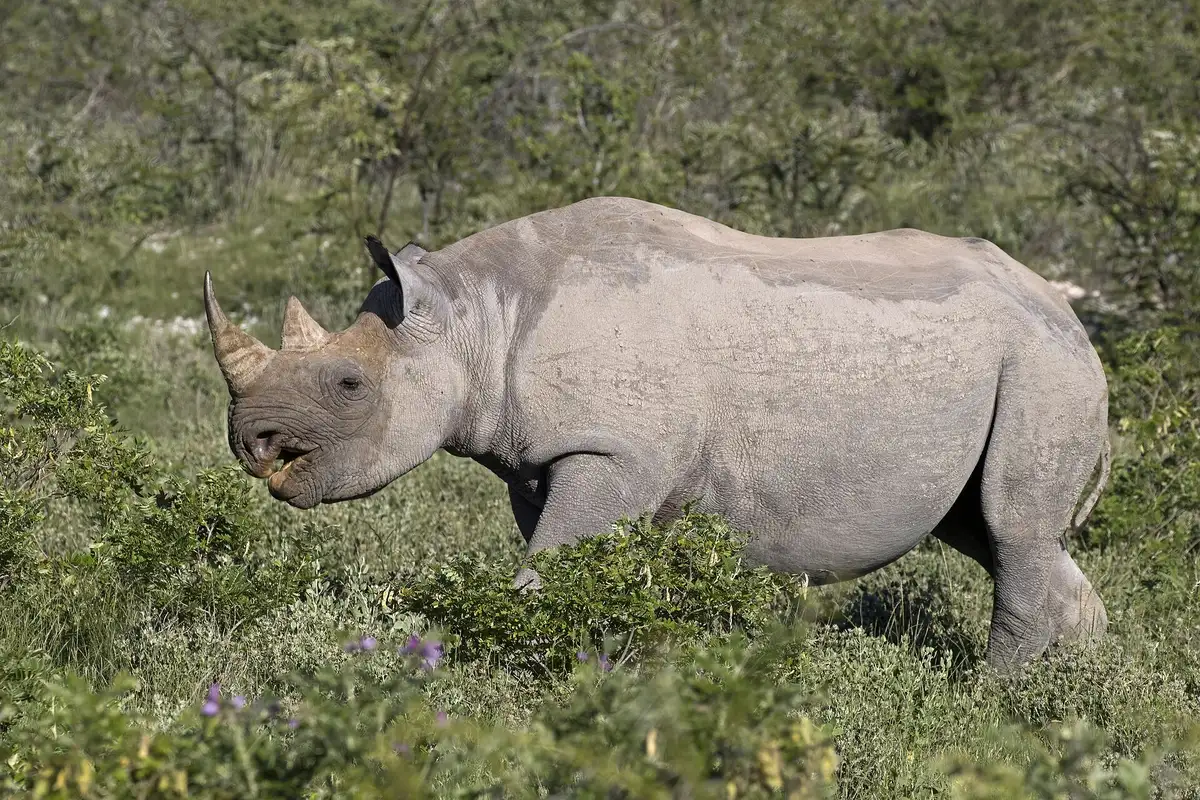
On paper, the black, Javan, and Sumatran rhinos sit lower on the chart. The reason is pressure, not biology. A black rhino is built much like a white rhino, and in a safe setting it can live close to 50. In the wild, heavy poaching pulls its average down into the low 30s, because poachers kill adults in their prime, long before old age.
The Javan rhino is the hardest species to pin down. No Javan rhinos live in captivity anywhere, so every figure is a field estimate from a tiny population of fewer than 80 animals, nearly all in one Indonesian park, Ujung Kulon.
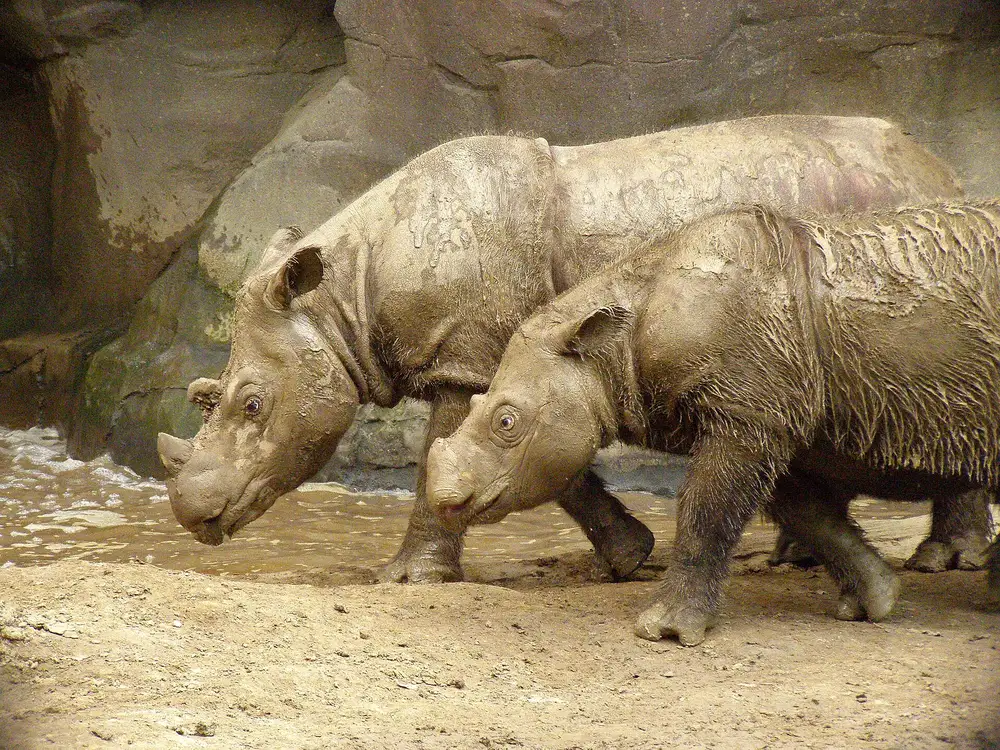
The Sumatran rhino is the smallest and hairiest of the five. Most lifespan numbers come from a handful of managed animals, because wild Sumatran rhinos are so rare and hard to track in dense rainforest. Fewer than 100 are thought to remain in the wild.
How Long Do Rhinos Live in the Wild vs in Zoos?
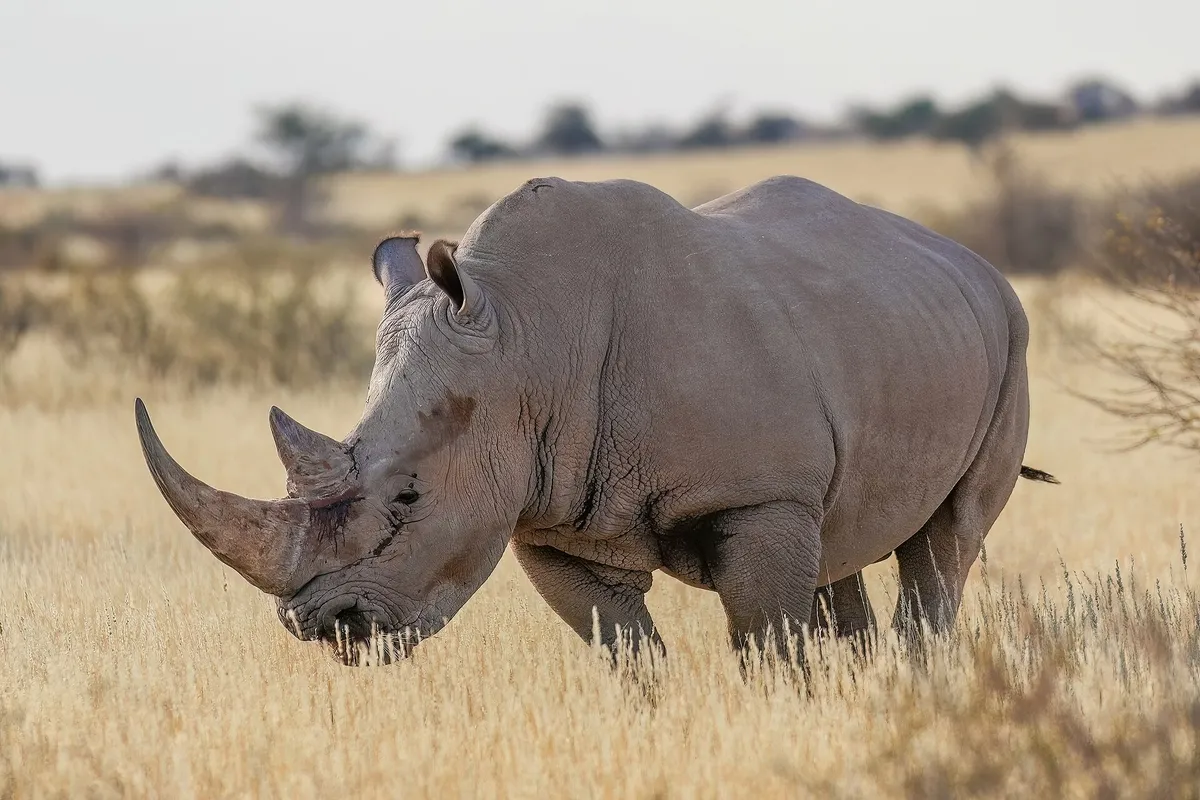
For most species, rhinos live a few years longer in human care than in the wild. The reasons are simple: steady food, clean water, treatment for injuries, and no poachers. A zoo rhino does not go hungry in a drought, and a vet can treat a wound that would kill a wild animal. Worn teeth are one of the main things that end an old rhino’s life, and captive animals get softer diets when their teeth wear down.
Rhino Life Stages: From Calf to Old Age
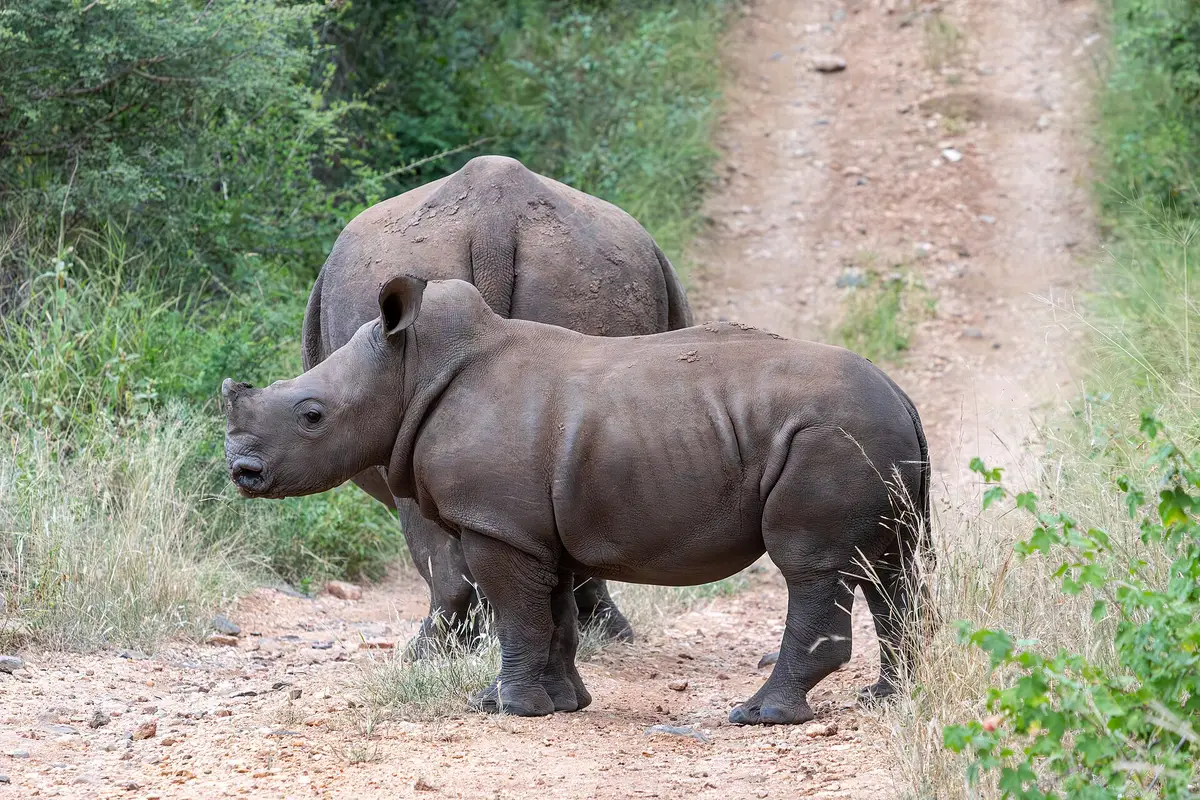
A rhino’s life is slow by mammal standards. Gestation lasts 15 to 16 months, one of the longest pregnancies of any land animal, and a single calf is born weighing 40 to 65 kg. The calf stays close to its mother for two to three years, and a female will not usually have her next calf until the first is independent. That slow pace means every adult lost to poaching takes years to replace.
| Life Stage | Age | What Happens |
|---|---|---|
| Calf | Birth to 2 years | Nurses, stays with mother, learns feeding and mud wallowing |
| Juvenile | 2 to 5 years | Weaned, independent, grows fast, horn still small |
| Young adult | 5 to 10 years | Reaches full size, females start breeding, males compete for territory |
| Prime adult | 10 to 30 years | Strongest years, most calves born, horn fully grown |
| Old age | 30 years and up | Teeth wear down, movement slows, needs softer food |

How Rhinos Compare With Other Large Mammals
Rhinos are long lived by mammal standards, but they are not the oldest giants. An elephant can live 20 years longer than a rhino, while a lion lives about half as long.
| Animal | Typical Wild Lifespan | In Human Care | Quick Note |
|---|---|---|---|
| Rhino (all species) | 30 to 45 years | 35 to 50 years | Varies by species |
| Elephant | 50 to 70 years | Up to 60 years or more | Longest lived land herbivore |
| Hippopotamus | 40 to 50 years | Up to 50 years or more | Close rival to the rhino |
| Giraffe | 20 to 25 years | Up to 28 years | Shorter life despite huge size |
| Lion | 10 to 15 years | Up to 20 to 25 years | Big cat, much shorter life |
| Tiger | 10 to 15 years | Up to 20 to 26 years | Big cat, much shorter life |
Next to an elephant, a rhino looks short lived: elephants often reach their 60s. Against a big cat, the picture flips, since most lions and tigers live only 10 to 15 years in the wild. For the full elephant numbers, see our elephant lifespan chart, and for the widest comparison, our animals with the longest lifespan chart ranks 20 record holders.
The Oldest Rhinos on Record
The oldest documented rhino was Fausta, a black rhino in Tanzania. She lived to about 57, spending most of her life free ranging in the Ngorongoro Crater and moving to a sanctuary only in her final years, well past the typical wild span for her species.

A southern white female named Sana reached about 55 in a French zoo, the oldest captive white rhino on record. These cases are exceptional, but they matter: take away poaching and habitat loss, and the ceiling rises well above the averages in the chart.
What Shortens a Rhino’s Life?
Two rhinos of the same species can live very different lives. Some reach their late 40s. Others die young. The difference comes down to a handful of factors that stack up.
- Poaching: the biggest threat. Demand for horn has caused steep declines, and it removes adults in their prime, long before old age.
- Habitat loss: farms, roads, and settlements break up the land rhinos need for food, water, and mates.
- Drought and food shortage: a dry season with no grass hits old rhinos and nursing mothers hardest.
- Worn teeth: the most common natural limit on old age. Once molars wear flat, a rhino cannot eat enough to stay healthy.
- Disease and injury: wounds from fights, infections, and parasites kill wild rhinos that a vet could have treated.
- Small gene pools: tiny populations like the Javan and Sumatran rhino risk inbreeding, which can weaken health over generations.

What Helps Rhinos Live Longer?
Rhinos are wild animals, so what extends their lives is conservation, not an owner’s care. Anti poaching patrols and protected reserves cut the biggest threat first. Captive breeding adds a safety net: sanctuaries in Indonesia have bred Sumatran rhino calves in recent years, and zoos run coordinated programs for black and Indian rhinos. Habitat protection matters just as much, and groups such as the International Rhino Foundation fund rangers and field work.
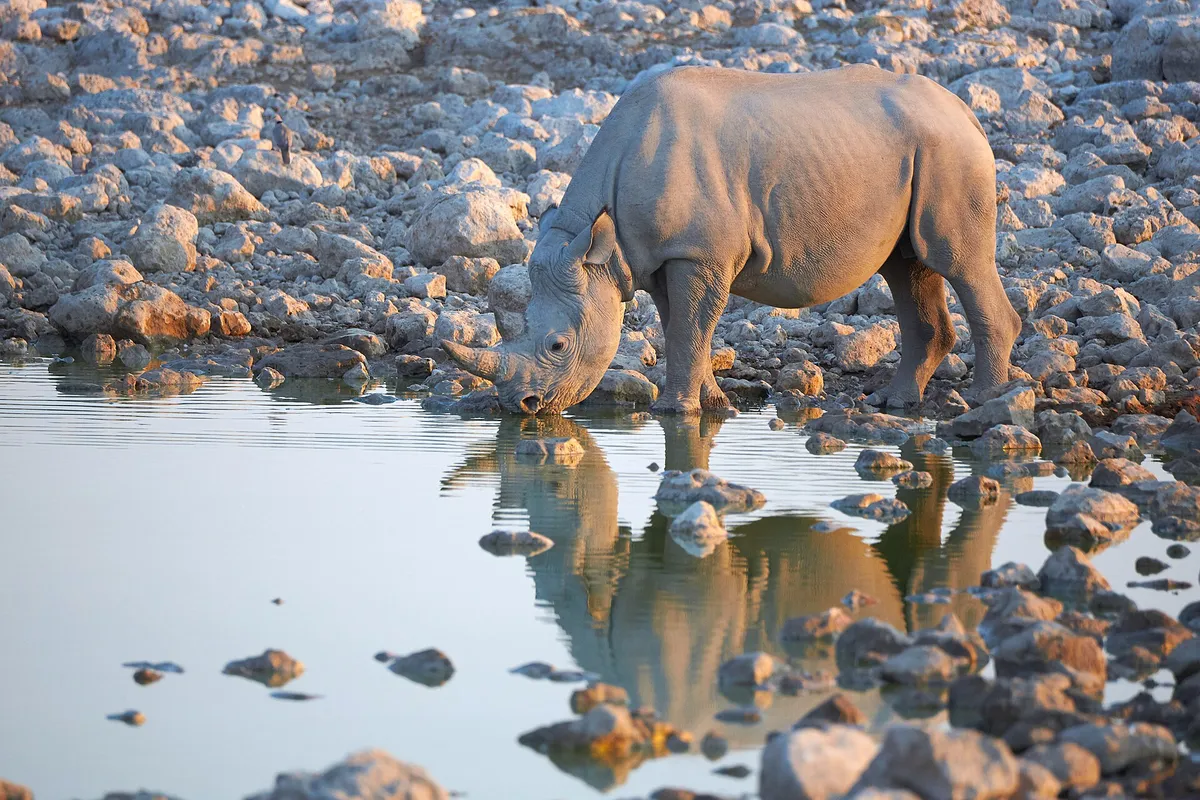
Water and mud help in a smaller, everyday way. Rhinos drink at waterholes and roll in mud to cool down and protect their skin from sun and insects, and parks that keep waterholes and wallows full through the dry season give their rhinos one more small advantage.

Frequently Asked Questions
How long do rhinos live on average?
Most rhinos live 30 to 50 years. White and Indian rhinos sit at the top of that range, while black, Javan, and Sumatran rhinos fall lower, mostly because of poaching and habitat loss rather than biology.
Which rhino species lives the longest?
The white and Indian rhinos tend to live longest. Both reach the mid 40s in the wild when poaching is low, and both can pass 45 years in human care.
Do rhinos live longer in captivity or in the wild?
For most species, rhinos live a few years longer in human care. Steady food and vet care remove some wild threats, and white rhinos in zoos have lived past 50. The Javan rhino has no captive population, so there is no zoo figure for that species.
What is the oldest rhino ever recorded?
Fausta, a black rhino in Tanzania, reached about 57 years, making her the oldest rhino on record. A white rhino named Sana lived to about 55 in a French zoo.
Why do black rhinos have shorter lifespans than white rhinos?
The gap is about pressure, not biology. Black rhinos are critically endangered and heavily poached, so fewer reach old age in the wild. In safe settings they have lived close to 50.
Are there any Javan rhinos in zoos?
No. There are no Javan rhinos in captivity anywhere, so every lifespan figure for the species is a field estimate.
Conclusion
A rhino lifespan chart is a map of five stories. The white and Indian rhinos show what the species can reach, 40 to 50 years, when food is steady and poaching is low. The black rhino shows how fast those years disappear when poachers take adults in their prime. The Javan and Sumatran rhinos show how little we still know, and how much depends on a few dozen animals in a single forest. The oldest rhinos on record, Fausta at about 57 and Sana at about 55, prove the ceiling is higher than the averages suggest.