

A bowhead whale swimming in the Arctic today could have been born before the American Civil War. Scientists have dated one bowhead at an estimated 211 years old, the oldest mammal ever measured. That is why this whale lifespan chart is worth a close look: no other group of mammals lives this long, and the shortest-lived whale here still outlasts almost every land animal of similar size.
Below you will find which whales live longest and shortest, why captivity shortens an orca’s life, and how scientists work out a whale’s age.
Whale Lifespan Chart: Wild vs Captive Years for 14 Species
Read the wild column first: that is how long these animals live in the ocean they evolved for. The captive column is mostly empty because most whales are far too large to keep in any tank. Only orcas, belugas, and a few small species have a captive record.
| Species | Scientific Name | Wild Lifespan | Captive Lifespan | Max Recorded | Length | Habitat |
|---|---|---|---|---|---|---|
| Bowhead whale | Balaena mysticetus | 100-200+ years | Not kept | 211 years | 14-18 m | Arctic and sub-Arctic seas |
| Blue whale | Balaenoptera musculus | 70-90 years | Not kept | 110 years | 24-30 m | All oceans |
| Fin whale | Balaenoptera physalus | 70-90 years | Not kept | 100 years | 20-27 m | All oceans |
| Sei whale | Balaenoptera borealis | 50-70 years | Not kept | 75 years | 12-16 m | Deep offshore waters |
| Humpback whale | Megaptera novaeangliae | 45-50 years | Not kept | 80 years | 12-16 m | Coastal waters worldwide |
| Gray whale | Eschrichtius robustus | 50-70 years | Not kept | 75 years | 12-15 m | North Pacific coasts |
| Sperm whale | Physeter macrocephalus | 60-70 years | Not kept | 80 years | 11-19 m | Deep oceans worldwide |
| Orca (killer whale) | Orcinus orca | 50-90 years | 20-40 years | 100 years | 6-9 m | All oceans, polar to tropical |
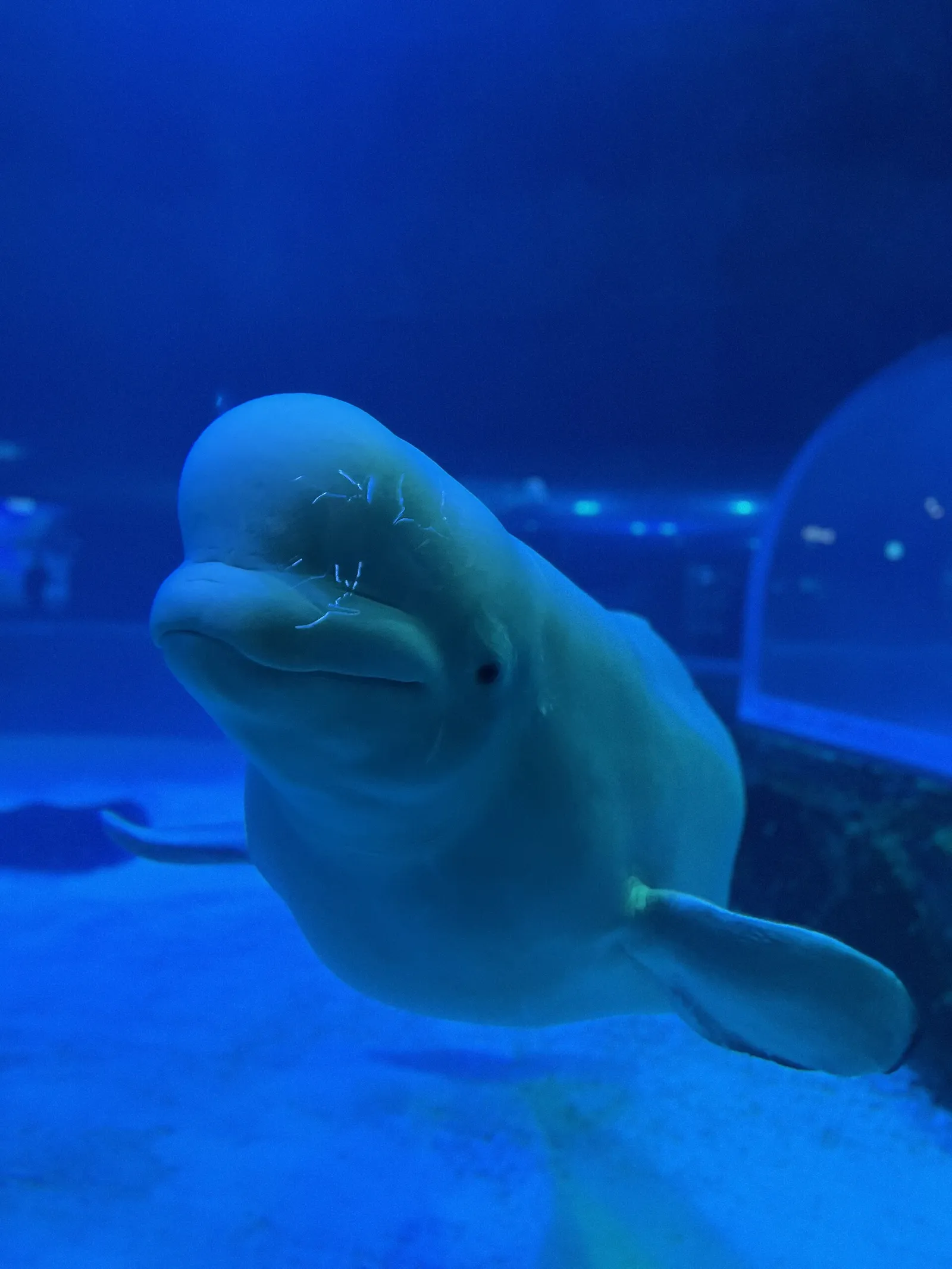
| Beluga whale | Delphinapterus leucas | 40-60+ years | 30-40 years | 70-80 years | 3-5 m | Arctic coasts and rivers |
| Narwhal | Monodon monoceros | 40-60 years | Rarely kept | 70 years | 4-5 m | Arctic waters |
| Pilot whale | Globicephala macrorhynchus | 45-60 years | 20-30 years | 65 years | 4-7 m | Deep tropical and temperate seas |
| Minke whale | Balaenoptera acutorostrata | 30-50 years | Not kept | 60 years | 7-10 m | All oceans |
| Cuvier’s beaked whale | Ziphius cavirostris | 40-60 years | Not kept | 65 years | 5-7 m | Deep offshore waters |
| North Atlantic right whale | Eubalaena glacialis | 50-70 years | Not kept | 70 years | 13-16 m | Northwest Atlantic |
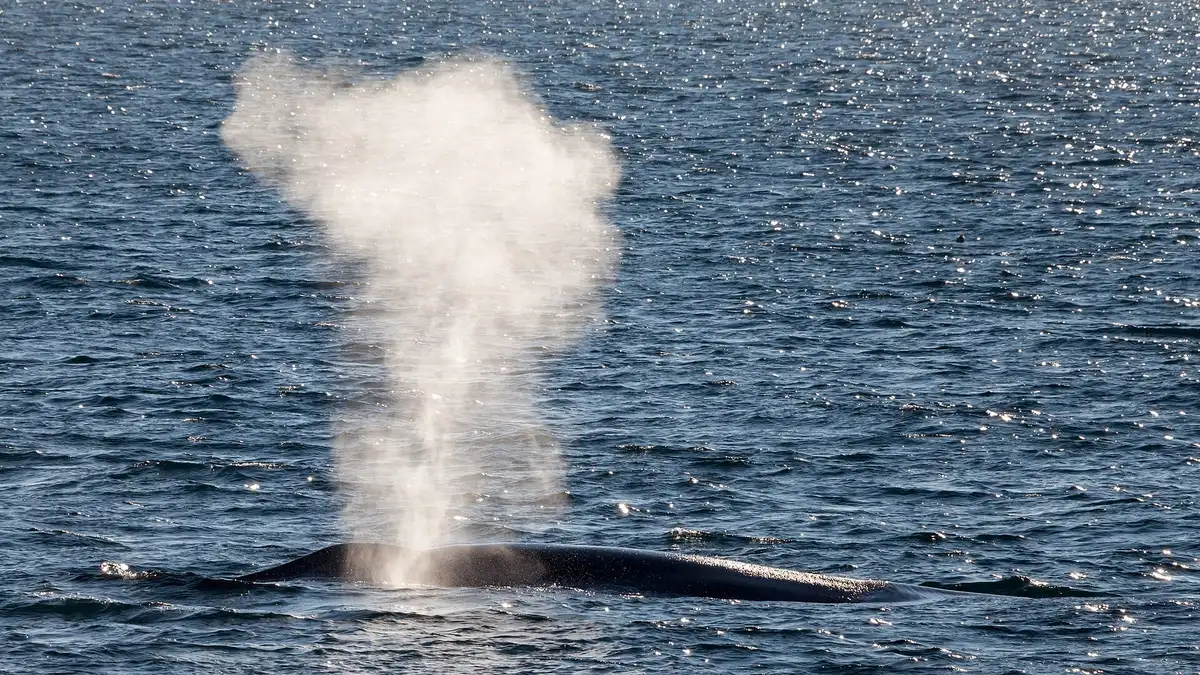
A blue whale’s blow can rise 9 metres into the air.
Which Whales Live the Longest?
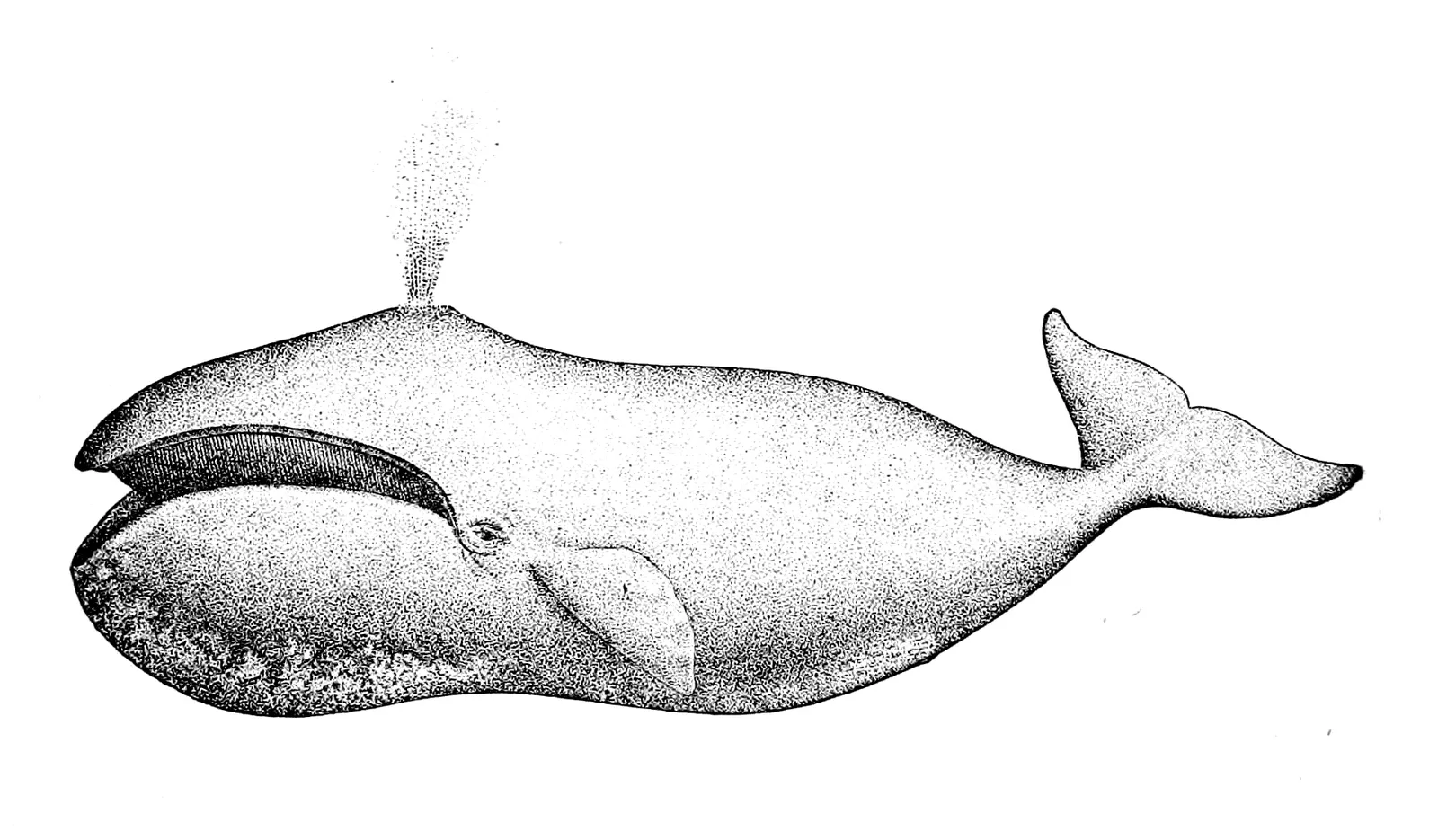
The bowhead whale is the clear champion, and it is not close. Bowheads regularly pass 100 years, and the oldest measured individual reached an estimated 211 years, making the bowhead the longest-lived mammal on the planet, ahead of every elephant, ape, and human who has ever lived.
Blue and fin whales come next at 70 to 90 years. Both are giants that grow slowly, taking a decade or more to reach full size. The sperm whale, the largest toothed predator on Earth, reaches 60 to 70 years on the same slow clock.
Female orcas deserve a mention: males average around 30 years in the wild, while females commonly live 50 to 60 and can reach 90 or even 100.
Which Whales Have the Shortest Lives?
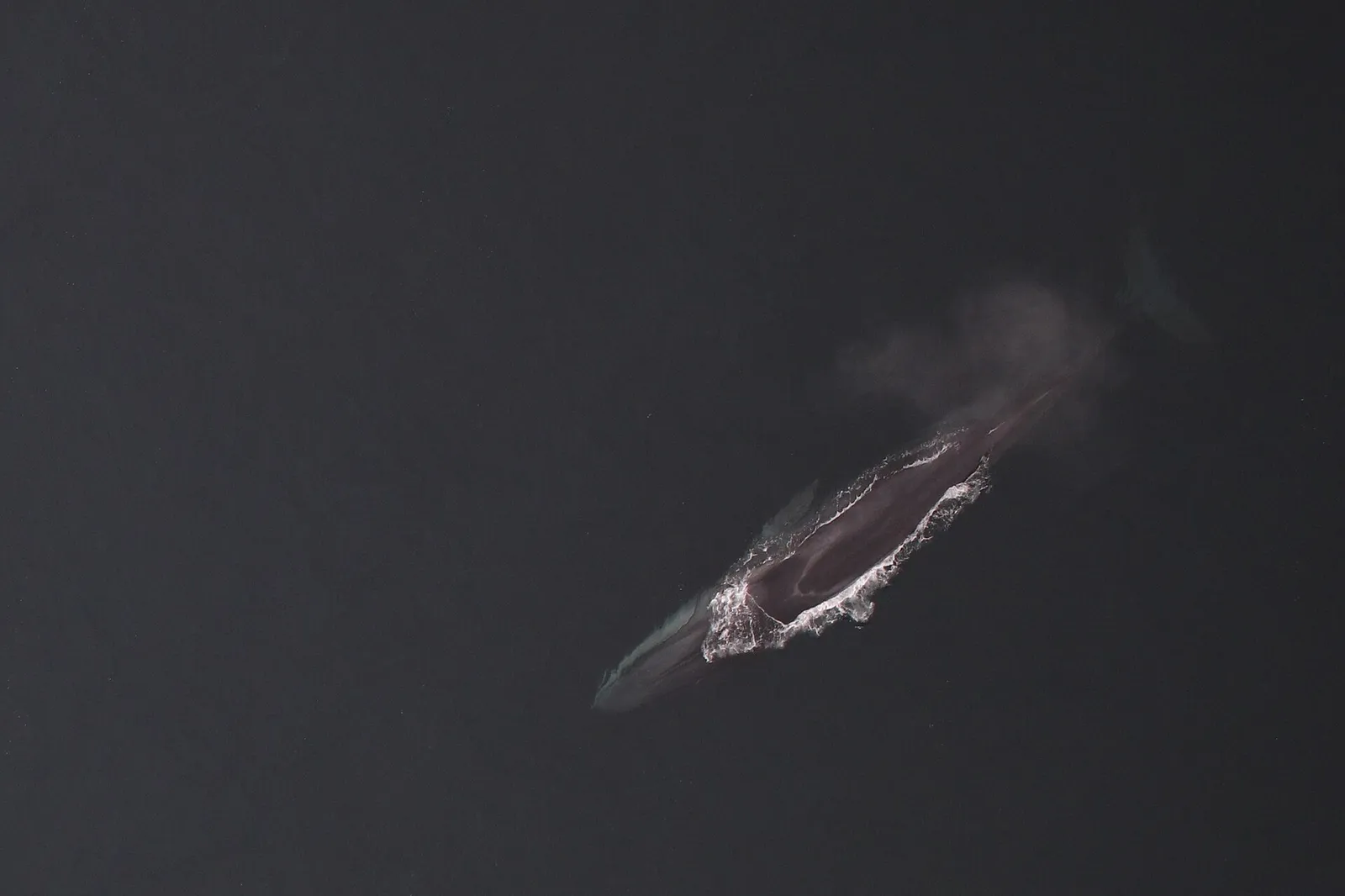
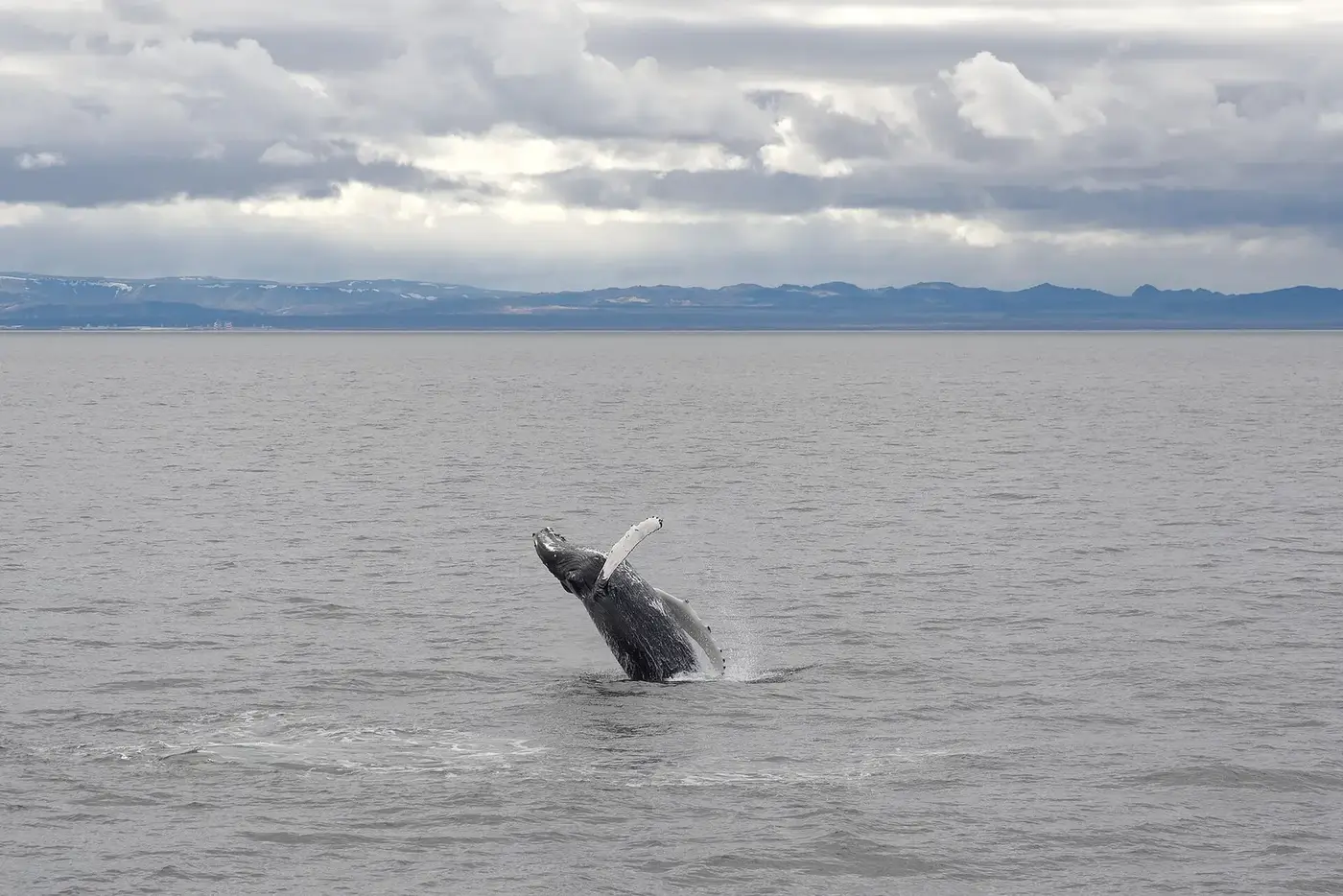
The minke whale sits at the bottom of this chart at 30 to 50 years, still a long life for a mammal. Minkes are the smallest baleen whales, at 7 to 10 metres, and their faster pace of life matches their smaller size. Humpbacks land just above them at 45 to 50 years, though a few individuals have been recorded near 80.
That “shortest” label needs context: a minke that lives 40 years has outlived a lion, a tiger, and a grizzly bear by a wide margin. See our types of whales guide for 21 species with sizes and habitats.
Baleen Whales, Toothed Whales, and Why an Orca Is a Dolphin
The 14 animals on this chart split into two groups. Baleen whales, including the bowhead, blue, fin, sei, humpback, gray, minke, and right whale, filter tiny prey such as krill through plates of baleen in their mouths. Toothed whales, including the sperm whale, beluga, narwhal, pilot whale, and beaked whale, hunt fish and squid with teeth.
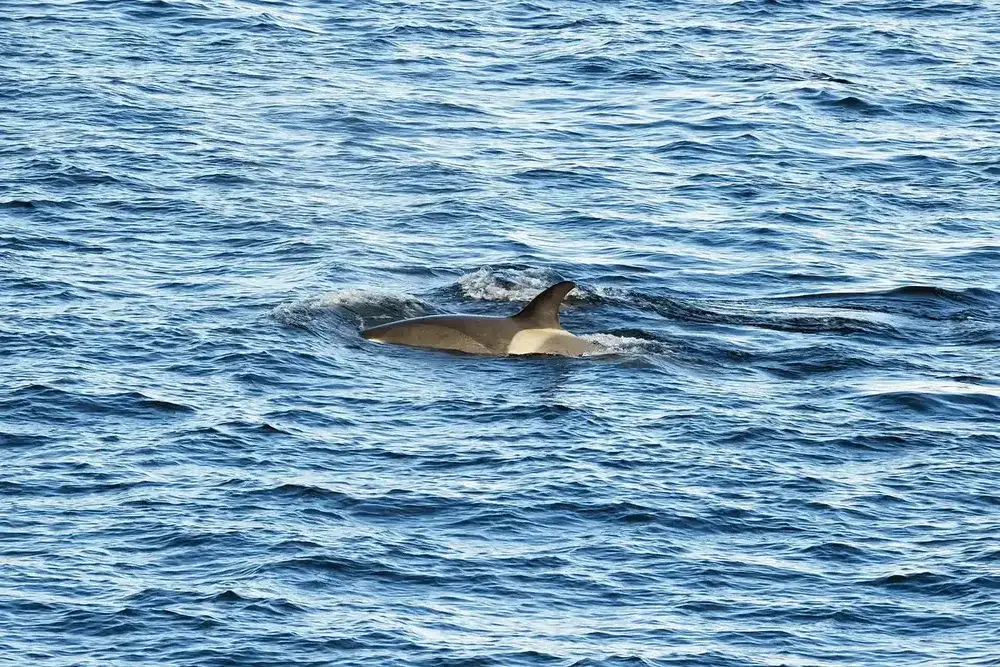
The orca is the odd one out. Despite the name killer whale, it is the largest member of the dolphin family, not a true whale at all. Belugas and narwhals sit in their own small family, the one with no dorsal fin. Our types of dolphins guide covers 20 species in the family.
Why Do Whales Live So Long?
Size: large animals tend to live longer than small ones, and whales are the largest animals ever to exist. A big body with a slow metabolism burns energy gently, and cells divide less often, giving cancer and age-related damage fewer chances to take hold.
Cold water: Arctic species such as the bowhead, beluga, and narwhal live in near-freezing seas, and cold slows metabolism further. The Greenland shark, which shares those waters, lives even longer, up to 400 years.
Few predators and slow life history: once a whale is fully grown, almost nothing can kill it, so most die of old age. Whales also take years to mature and give birth to a single calf at a time. A bowhead female may not have her first calf until she is 20.
Wild vs Captive: Why Captivity Shortens an Orca’s Life
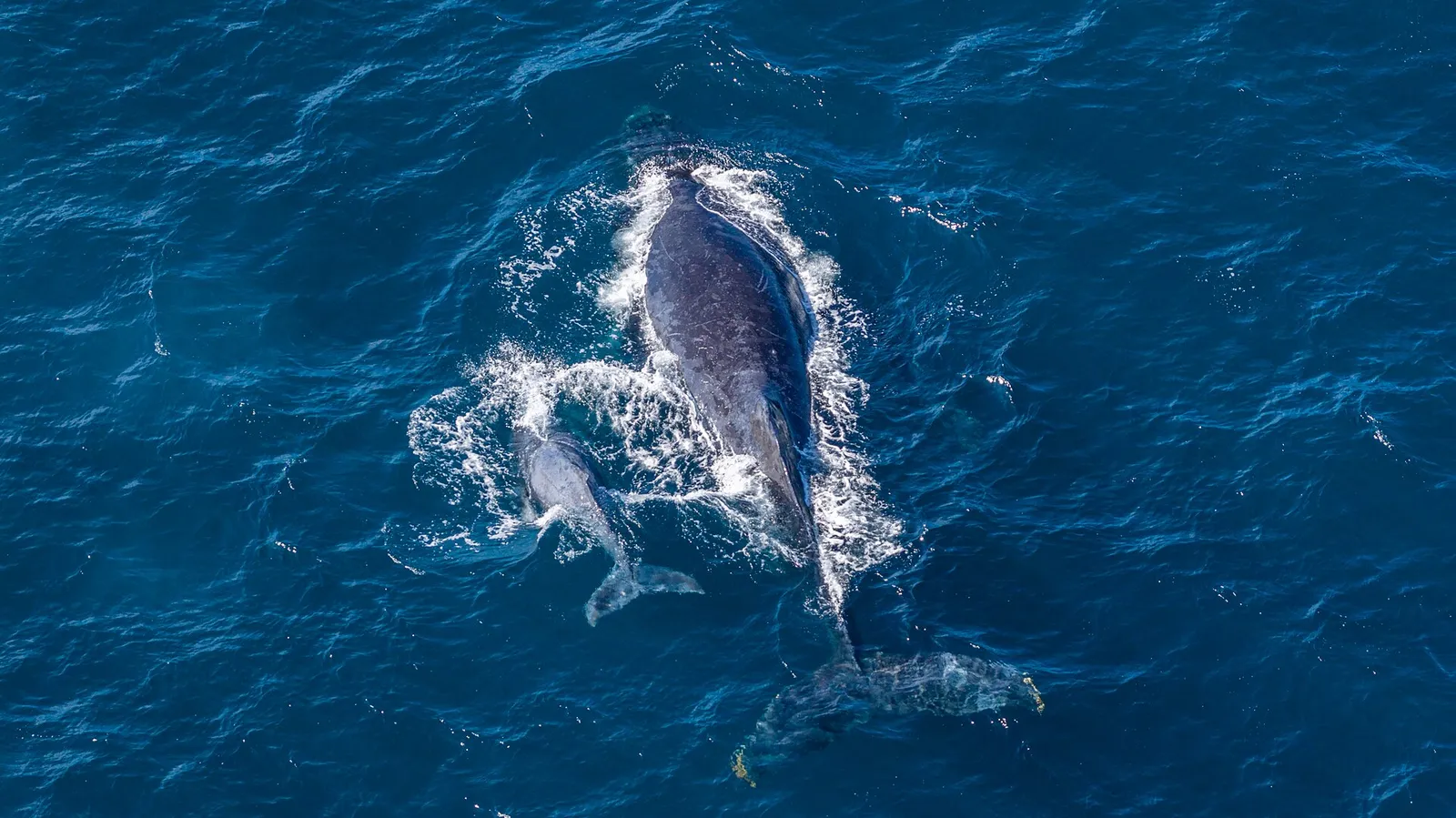
For most animals, captivity adds years. Whales break that rule, and the orca is the clearest case. Wild orcas live 50 to 90 years, with females at the top of that range. Captive orcas often live only 20 to 40 years.
Confinement, stress, and limited space take a real toll on an animal built to swim up to 100 miles a day. A tank, however large it looks to us, is a bathtub to an orca. Belugas show the same pattern in a milder form: 40 to 60 years or more in the wild against 30 to 40 in captivity. This is the opposite of a house pet, where safety usually means a longer life, as our cat lifespan chart shows. With whales, the ocean itself is the protection.
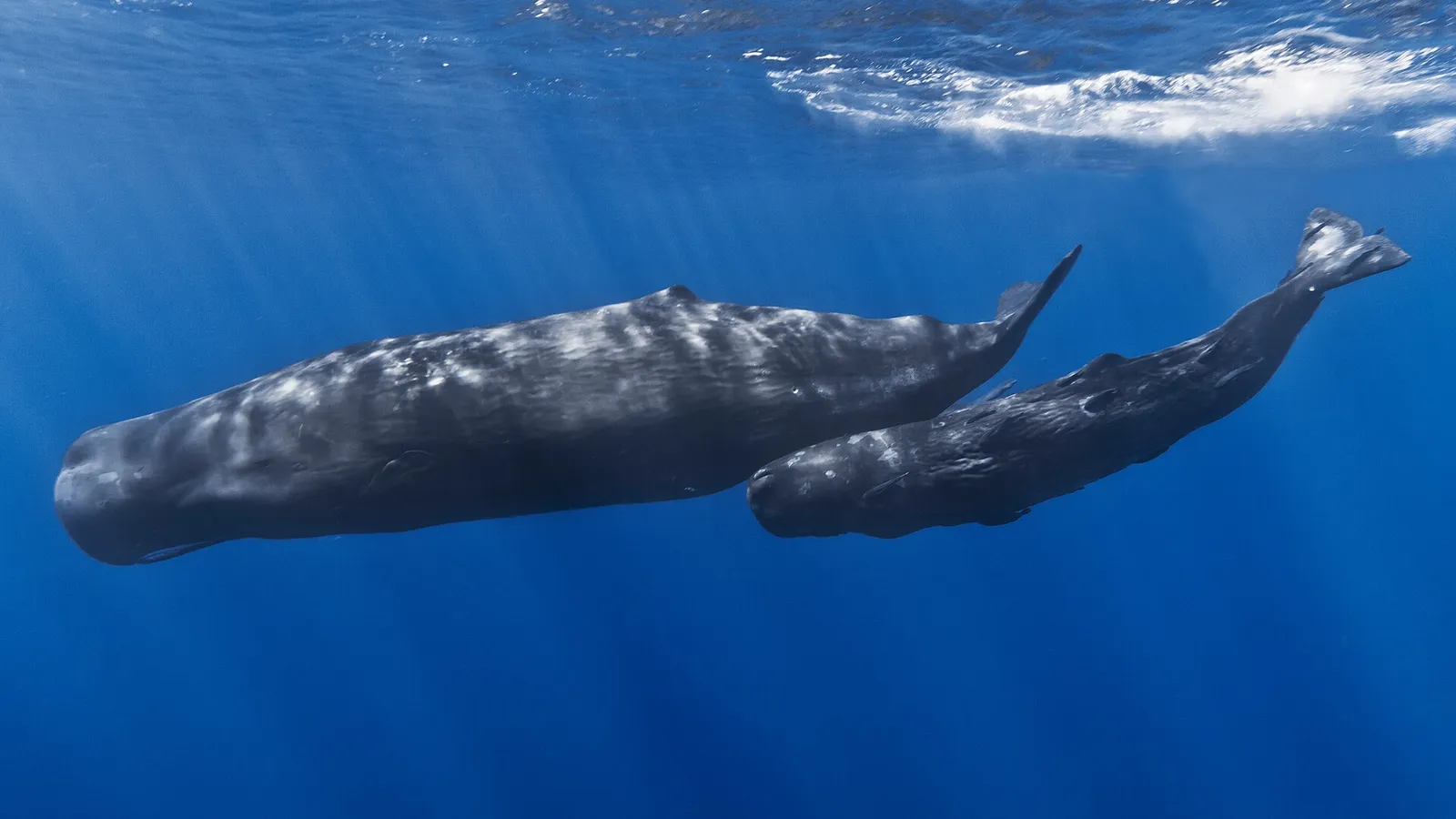
Sperm whale calves stay with their mothers for years. That long care is part of their slow life.
How Whale Lifespans Compare With Other Long-Lived Animals
Whales are longevity champions, but not the outright record holders. The table below places the bowhead next to the oldest animals known to science.
| Animal | Typical Lifespan | Max Recorded | Notes |
|---|---|---|---|
| Bowhead whale | 100-200 years | 211 years | Longest-lived mammal |
| Greenland shark | 270-390 years | 400+ years | Longest-lived vertebrate |
| Ocean quahog clam | 200-500 years | 507 years | Longest-lived animal known |
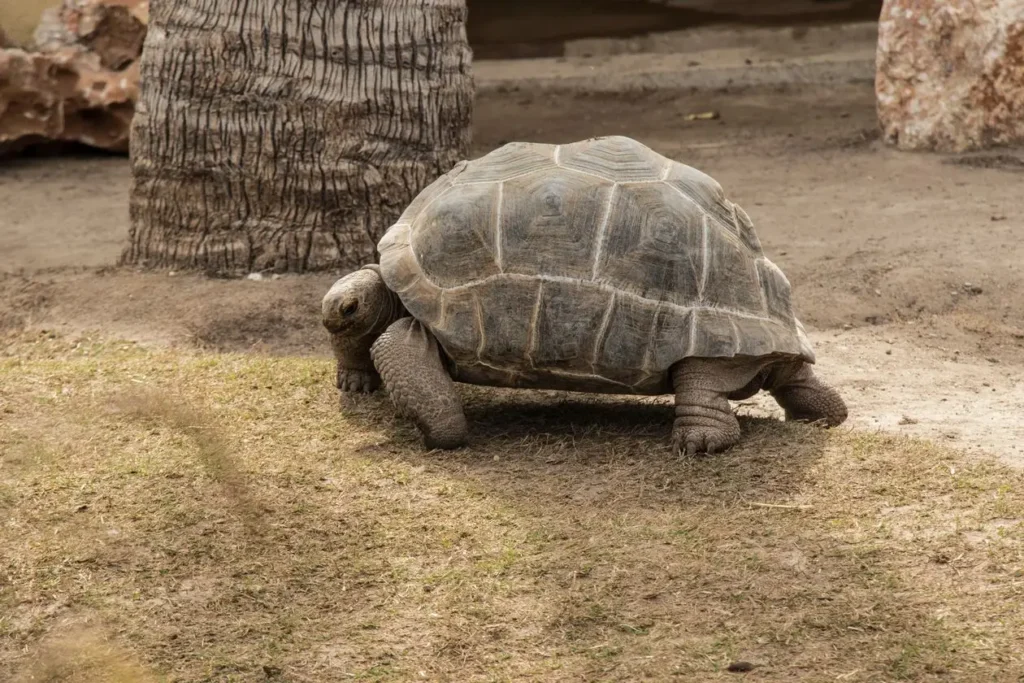
| Giant tortoise | 100-150 years | 190 years | Oldest known land animal |
| African elephant | 60-70 years | 86 years | Longest-lived land mammal |
| Human | 70-80 years | 122 years | Listed for scale |
The bowhead leads all mammals, yet the Greenland shark doubles it, living up to 400 years. Sea turtles also pass the century mark, as our sea turtle lifespan chart shows.
How Scientists Work Out a Whale’s Age
You cannot read a whale’s age from the outside. Scientists use three methods.
Eye lens dating: proteins in the lens of a whale’s eye change at a steady, measurable rate throughout life. By measuring those changes, researchers dated the oldest bowhead at 211 years, the most trusted method for very old whales.
Earwax layers: whales build up a plug of earwax over their lives, and it forms in layers like tree rings. Each layer records a slice of the animal’s life, including stress events and pollution exposure.
Growth layers in teeth and baleen: toothed whales lay down annual layers in their teeth, and baleen plates grow in a seasonal pattern too. These work well for younger animals but get harder to read in the very old.
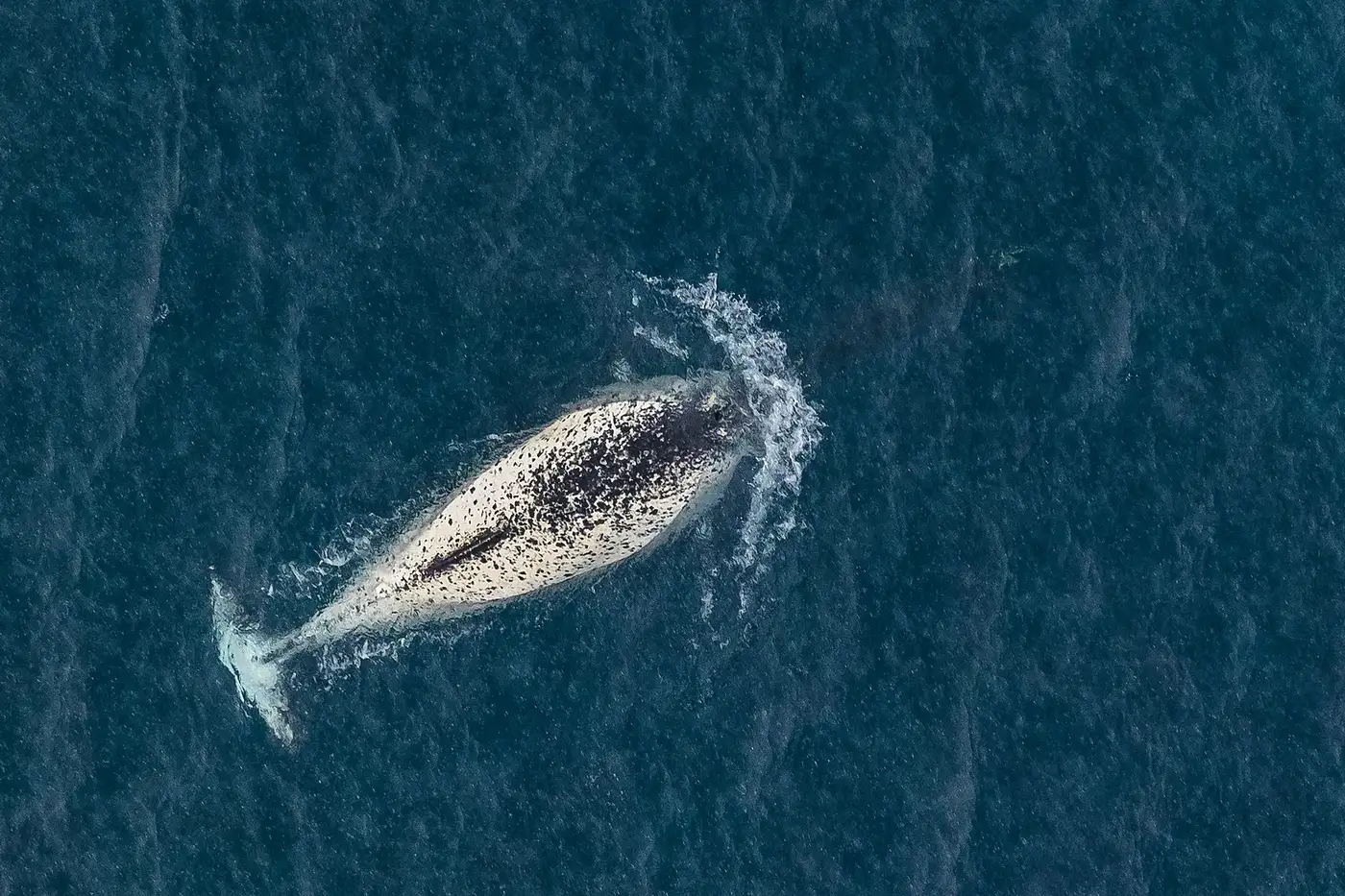
The Oldest Whale Ever Measured
The oldest whale ever measured was a bowhead estimated at 211 years, dated through proteins in its eye lens. The first clue was stranger: hunters found old stone and ivory harpoon points lodged in living whales, weapons not used in over a century.
A bowhead alive in the Arctic today may have been born around 1820. Scientists keep studying bowheads to learn how they pull this off. A whale that size has trillions of cells, so by the usual logic it should develop cancer often, yet it rarely does. Genetic work points to extra copies of DNA repair genes that guard the bowhead against the diseases that limit most long-lived animals.

What Cuts a Whale’s Life Short?
Old age is the natural end for most whales, but human activity cuts many lives short. Ship strikes kill whales in busy shipping lanes, and the North Atlantic right whale is the worst hit: with only around 350 left, collisions and fishing gear entanglement keep its numbers low.
Past whaling removed millions of whales, warming seas are shifting prey, and ocean noise makes it harder for whales to communicate and find food. None of these change the biology in the chart, but they decide how many whales actually live out the years it promises.

FAQs
How long do whales live?
Most whales live 30 to 90 years, longer than people, while the bowhead can pass 200 years.
What is the longest-living whale?
The bowhead whale, with one individual estimated at 211 years, the oldest mammal on record. Blue and fin whales follow at 70 to 90 years.
Do whales live longer in the wild or in captivity?
In the wild. Orcas live 50 to 90 years in the ocean but often only 20 to 40 in captivity.
Is an orca a whale or a dolphin?
An orca is the largest member of the dolphin family, even though it is commonly called a killer whale. It is a toothed whale, but its closest relatives are dolphins.
Why do whales live so long?
Large size, cold water, and a slow metabolism all slow their ageing, and few predators threaten adult whales. Slow growth, late maturity, and single calves complete the picture.
How do scientists know a whale’s age?
They estimate it from eye lens proteins, earwax layers, and growth rings in teeth or baleen.
Which whale has the shortest lifespan?
The minke whale, at about 30 to 50 years, still long for a mammal its size. Humpbacks are next at 45 to 50 years.

Conclusion
This whale lifespan chart shows a simple truth: in the ocean, big and slow wins. The bowhead passes 200 years, blue and fin whales reach 90, and even the shortest-lived whale here outlives most land mammals by decades.
Those long lives only happen in the wild. Captive orcas live half as long as wild ones, and ship strikes and fishing gear keep cutting wild lives short, especially for the North Atlantic right whale. A bowhead born in 1820 is still swimming today because the Arctic gave it the space and the cold it needed.
Pingback: Walrus Lifespan Chart: How Long Walruses Live – Chart Identify