
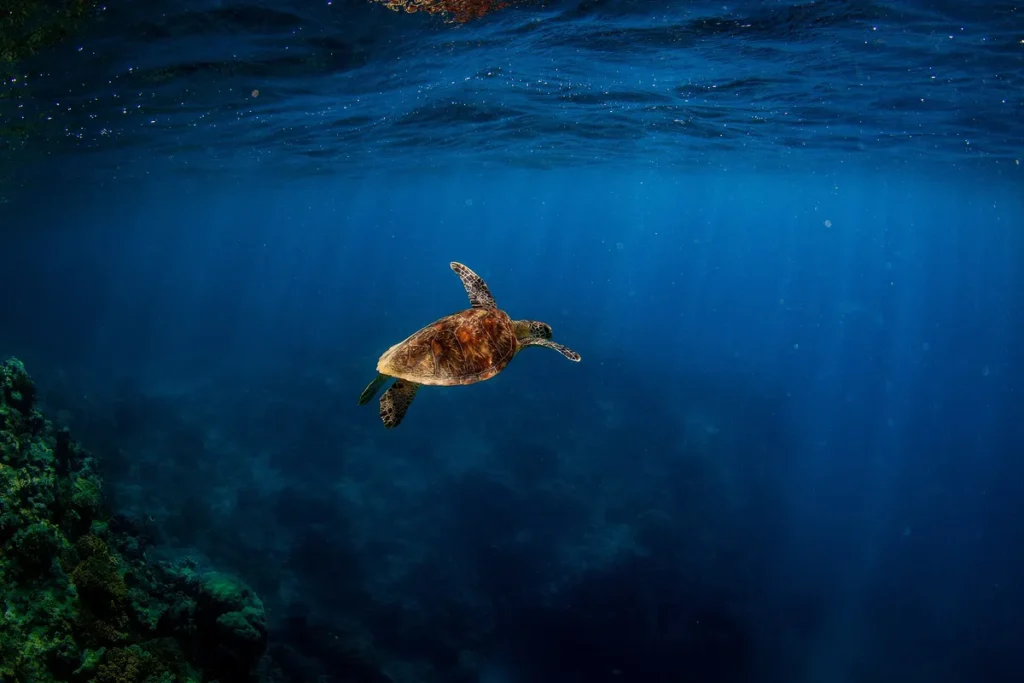
A green sea turtle gliding over a coral reef can be older than the person watching it. These animals take decades just to grow up, then keep going for decades more. This sea turtle lifespan chart lays out the numbers for all seven species, with one honest caveat: every figure is an estimate, because no scientist has ever followed one turtle from hatching to natural death.
Most sea turtles live 50 years or more in the wild, and the longest lived species can push past 80. But the range matters: a Kemp’s ridley and a green turtle do not play by the same rules.
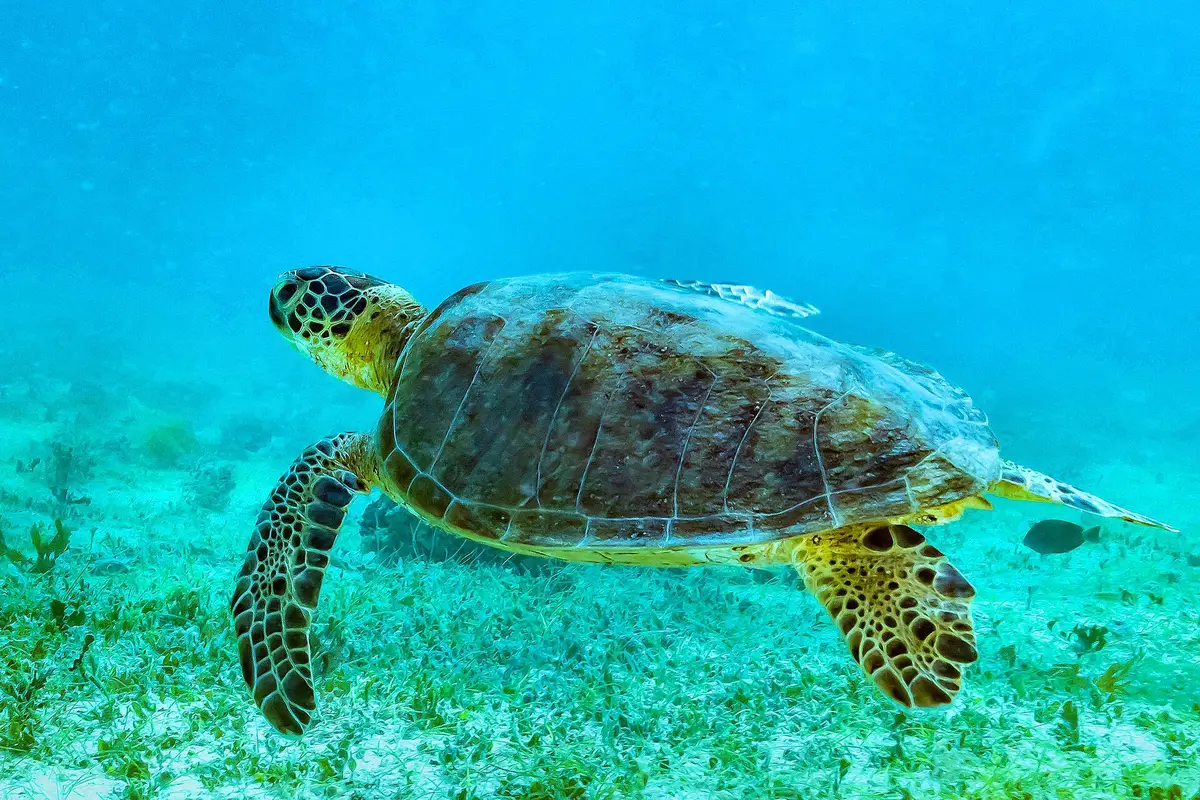
Sea Turtle Lifespan Chart: All 7 Species Compared
There are seven sea turtle species alive today. The table compares their estimated wild lifespan, possible maximum age, adult size, and conservation status, using figures from NOAA, the IUCN Red List, and long term tagging studies.
| Species | Scientific Name | Estimated Lifespan (Wild) | Possible Maximum | Adult Size | IUCN Status |
|---|---|---|---|---|---|
| Green sea turtle | Chelonia mydas | 60-80 years | 90+ years | Up to 1.5 m, 250 kg | Least Concern |
| Loggerhead sea turtle | Caretta caretta | 50-70 years | 80+ years | Up to 1.1 m, 200 kg | Vulnerable |
| Leatherback sea turtle | Dermochelys coriacea | 45-60 years | 70+ years | Up to 1.8 m, 700 kg | Vulnerable |
| Hawksbill sea turtle | Eretmochelys imbricata | 30-50 years | 60+ years | Up to 1 m, 80 kg | Critically Endangered |
| Olive ridley sea turtle | Lepidochelys olivacea | 40-50 years | 60+ years | Up to 0.8 m, 50 kg | Vulnerable |
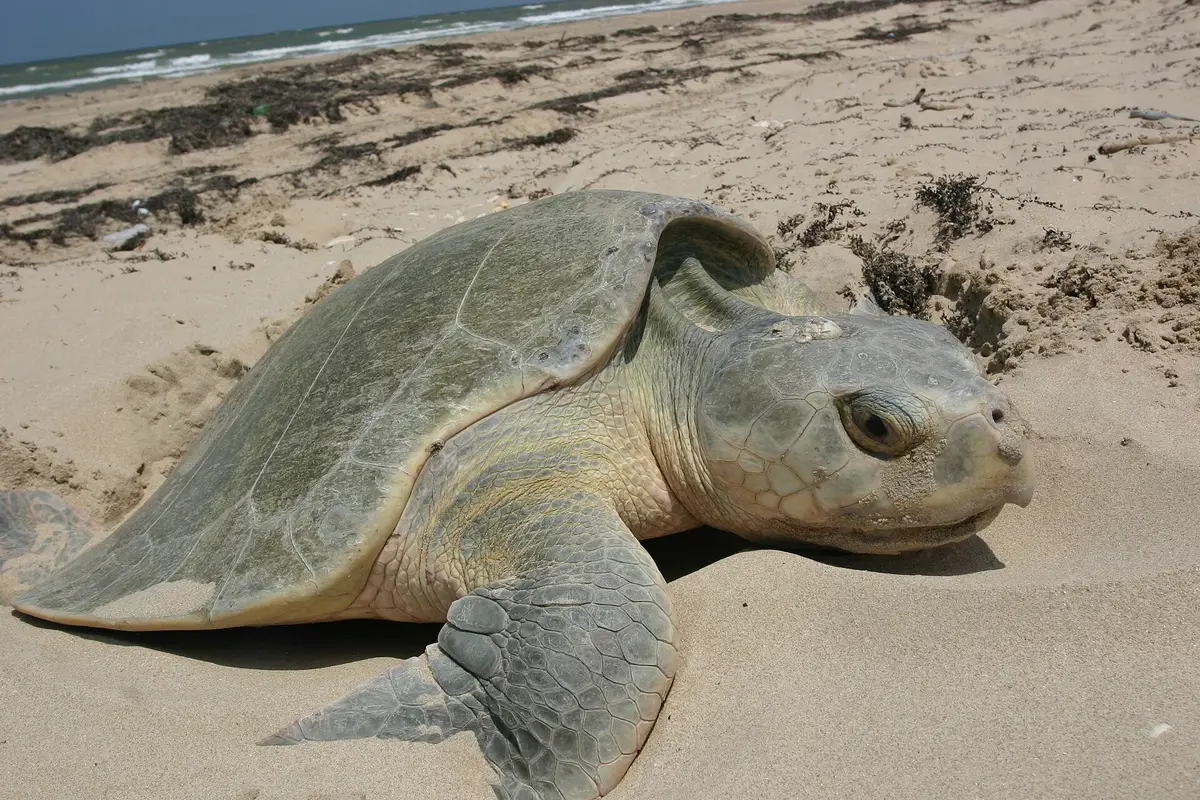
| Kemp’s ridley sea turtle | Lepidochelys kempii | 30-50 years | 50+ years | Up to 0.75 m, 45 kg | Critically Endangered |
| Flatback sea turtle | Natator depressus | 40-60 years | 60+ years | Up to 1 m, 90 kg | Data Deficient |
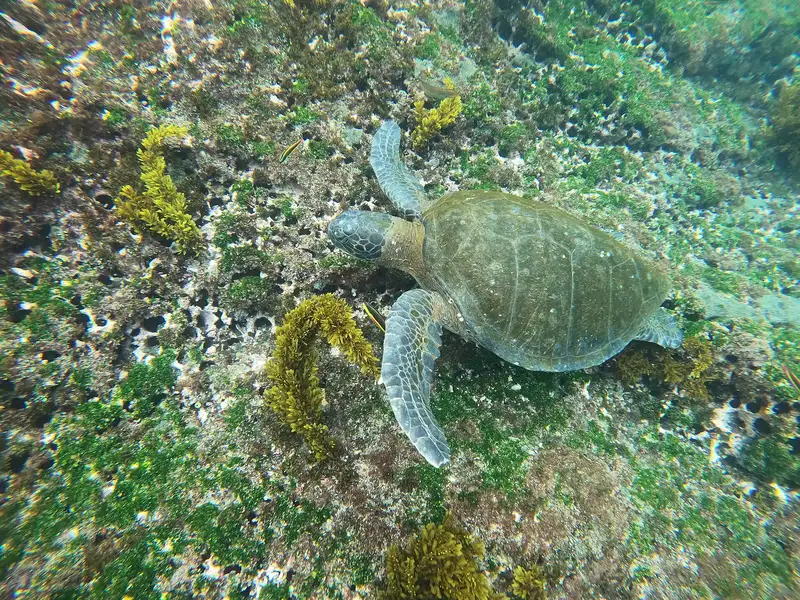
Which Sea Turtle Lives the Longest?
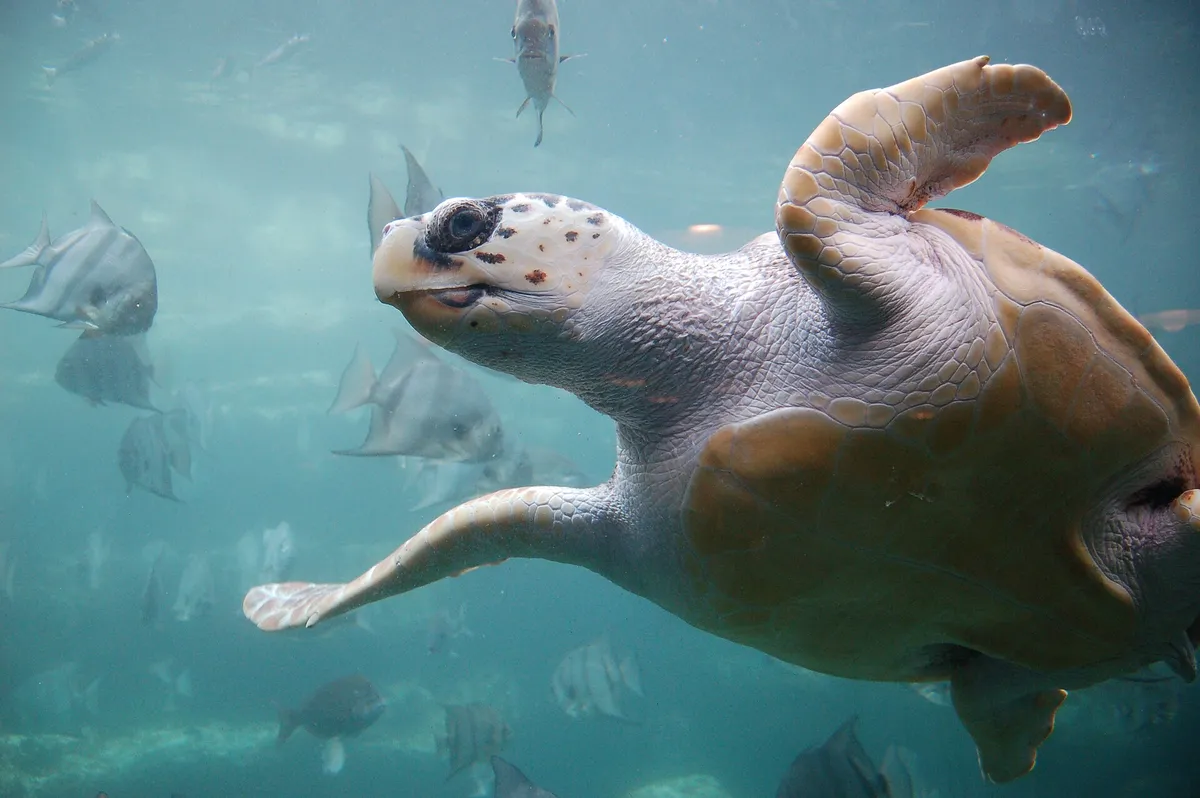
The green sea turtle is the usual answer, and the evidence backs it up. Estimates put green turtles at 60 to 80 years, with a possible ceiling near 90. Loggerheads run a close second at 50 to 70 years, with some individuals thought to pass 80.
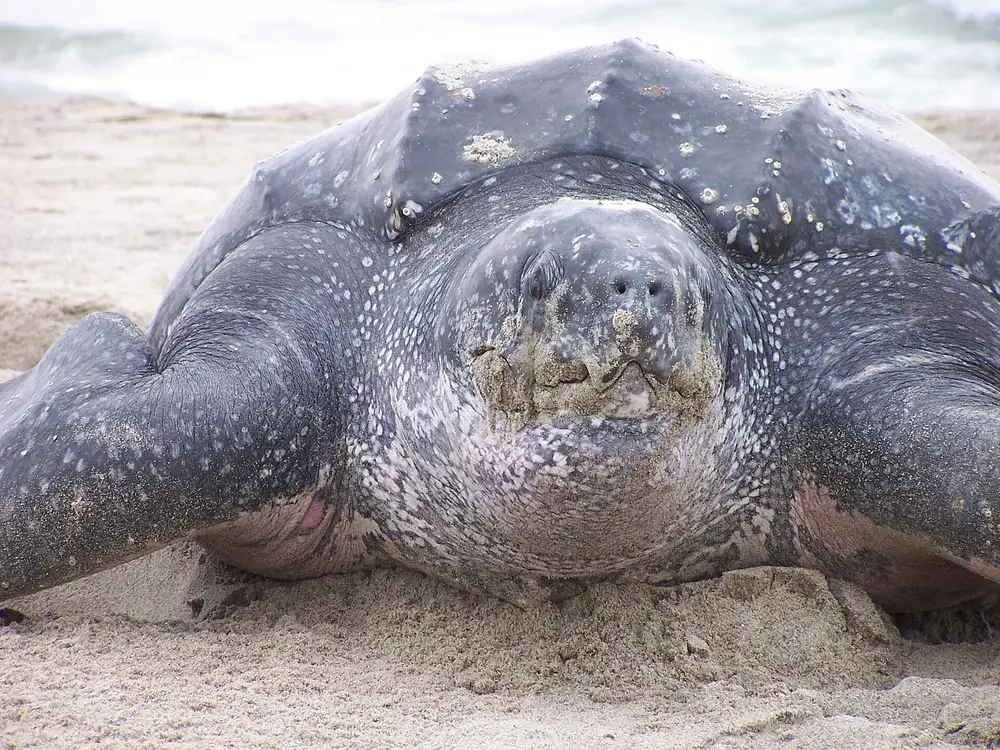
The leatherback breaks the pattern. It is the giant of the group, growing to 700 kg and nearly 2 meters long, yet estimates often land lower, around 45 to 60 years. The likely reason is pace: leatherbacks grow fast, migrate enormous distances, and dive past 1,000 meters for jellyfish. That high energy lifestyle may trade years for range. Our types of sea turtles guide covers all seven species in detail.
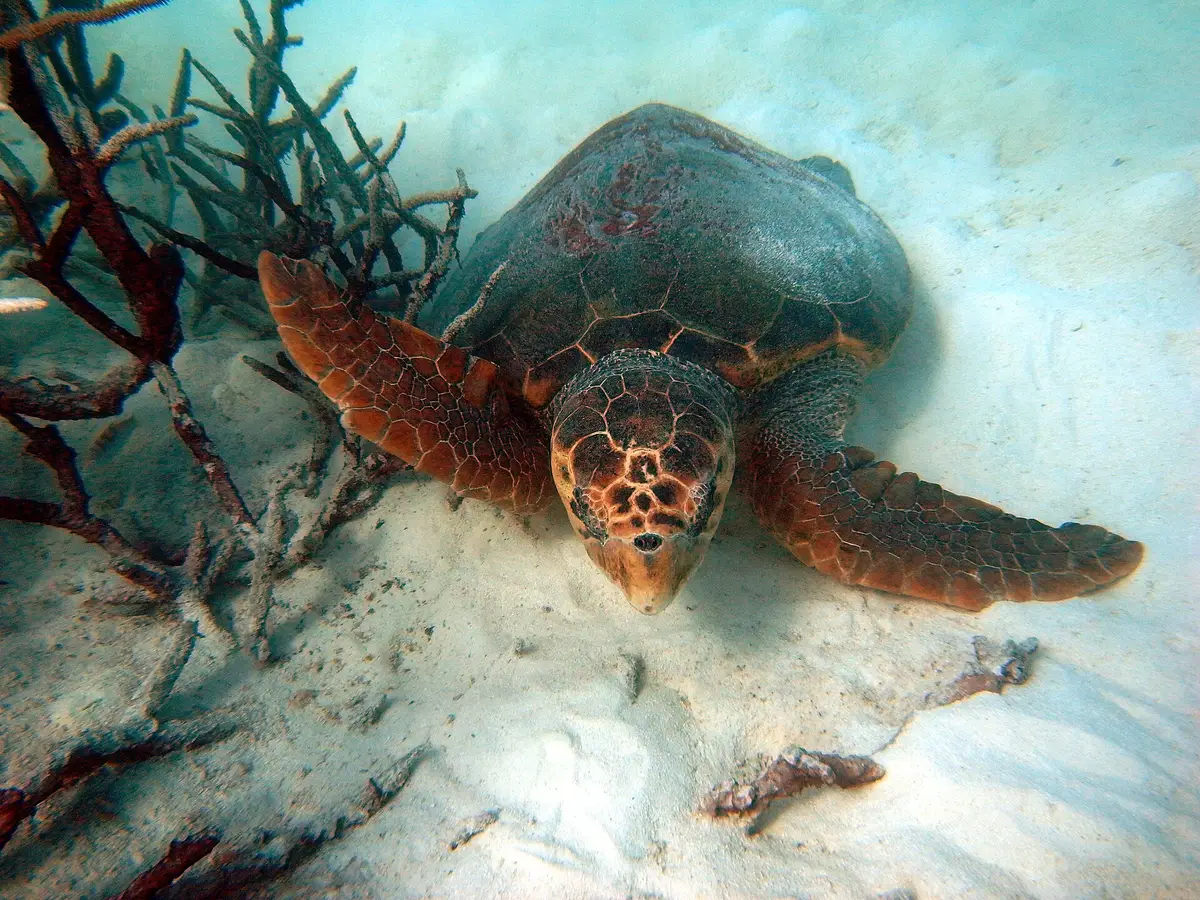
How Scientists Estimate a Sea Turtle’s Age
You cannot read a sea turtle’s age from its shell. There are no clear growth rings to count, and size only tells you whether a turtle is a hatchling, a juvenile, or an adult. A large female may still not be mature. So researchers piece the numbers together from several methods, and each one has limits.
Tagging is the oldest tool. Scientists tag a turtle’s flipper, record its size, and hope to meet the same turtle again years later. Some programs have run for decades, and recaptures show how slowly these animals grow: a turtle tagged as a juvenile in the 1990s may still be a subadult today.
Skeletochronology is the newer method. Researchers study growth rings in the humerus bone of turtles that died naturally or were found stranded, much like counting tree rings. Many figures in the chart above come from this method. Growth models fill in the rest, combining tagging data, bone studies, and nesting records. The honest summary is that the 50 to 100 year range NOAA quotes is the best supported figure we have.
Sea Turtle Life Stages: From Hatchling to Old Age
A sea turtle’s life is slow at both ends and dangerous in the first year. The stages below trace a green turtle from nest to old age.
| Life Stage | Approx. Age | What Happens |
|---|---|---|
| Egg and hatchling | 0-1 year | Hatchlings dig out and race to the sea. Birds, crabs, and fish take most of them. |
| Lost years juvenile | 1-10 years | Young turtles drift with ocean currents and floating seaweed, feeding near the surface. |
| Coastal juvenile | 10-15 years | Turtles move to coastal feeding grounds, seagrass beds or reefs, and grow faster. |
| Subadult | 15-25 years | Growth continues toward adult size. Still not breeding. Sharks are the main threat. |
| Adult | 20-50 years | Reaches maturity late, then breeds for decades. Females return to their birth beach to nest. |
| Old adult | 50-80+ years | Keeps nesting into old age. A few green turtles may pass 90 years. |
The brutal fact behind the chart is the hatchling survival rate: only about 1 in 1,000 hatchlings survives to adulthood. That is why every species on the list is protected. Once a turtle reaches adulthood, its odds improve sharply.


Wild vs Captivity: Do Sea Turtles Live Longer in Aquariums?
In captivity, a sea turtle gets steady food, veterinary care, and no predators or fishing nets. In theory that should add years. In practice, sea turtles are hard to keep well: they need huge tanks, the right water temperature, and a varied diet, and stress related illness is a real problem. Large aquariums have kept green turtles and loggerheads for 30 years or more, but very few captive turtles have lived long enough to test the wild estimates.
Wild turtles that survive to adulthood probably live as long as, or longer than, captive ones, because the ocean gives them the space and diet they evolved for. For perspective, see our animals with the longest lifespan chart, where sea turtles sit alongside whales, elephants, and tortoises.

What Shortens a Sea Turtle’s Life
Predators thin the numbers early. Birds and crabs grab hatchlings on the sand, fish take them in the shallows, and sharks and orcas hunt larger turtles. A turtle that survives its first decade has a real shot at a long life.
Human pressure does the most damage now, and it hits every age group. Fishing gear traps and drowns turtles, a problem called bycatch that kills hundreds of thousands of sea turtles a year. Plastic bags look like jellyfish to a leatherback, and a gut full of plastic can kill slowly. Poachers still take eggs, meat, and hawksbill shells for the tortoiseshell trade. Boat strikes injure turtles in busy coastal waters, and bright beach lights confuse hatchlings, which crawl toward streetlights instead of the sea. Climate change adds a quieter threat: sand temperature decides the sex of hatchlings, and warmer nests produce more females.
The good news is that protection works. The green turtle was moved from Endangered to Least Concern on the IUCN Red List in 2025 after decades of beach protection and fishing rules. Turtle excluder devices in shrimp nets, dark beach lighting, and protected nesting areas have all helped. A turtle that gets a safe beach and clean water has every chance of living out the long life in this chart.


Sea Turtle Lifespan Myths
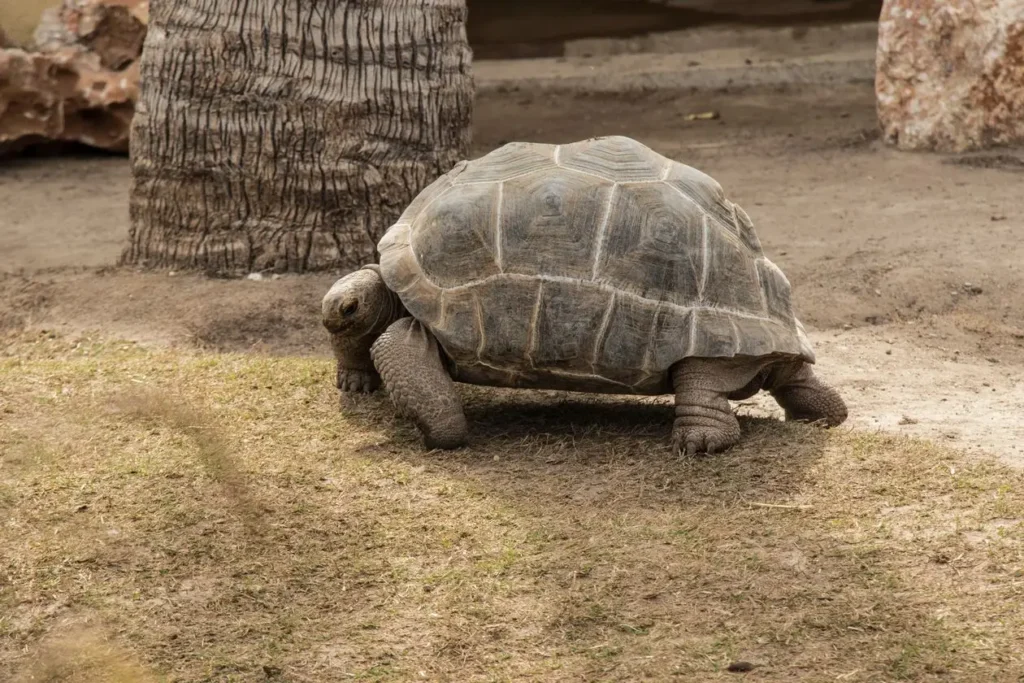
The most common myth is that sea turtles live 150 or even 500 years. There is no scientific basis for it. The 50 to 100 year range from NOAA is the supported estimate, and the oldest ages in the chart above are the realistic ceilings. The 500 year idea seems to come from confusing sea turtles with giant tortoises on land, which really can pass 100 years, and even 188 years in the oldest documented case. Our all turtle species chart compares the two.
Another myth is that a turtle’s shell shows its age in rings. It does not: the scutes wear smooth with age, and no reliable ring count exists for living turtles. The bone ring method works only on turtles that have died. A third myth is that all seven species live about the same length of time. They do not: a Kemp’s ridley at 30 to 50 years and a green turtle at 60 to 80 years have very different life histories.

Frequently Asked Questions
How long do sea turtles live on average?
Most sea turtles live 50 years or more in the wild. The natural range is estimated at 50 to 100 years, though no turtle has ever been followed from hatching to natural death.
Which sea turtle species lives the longest?
The green sea turtle is the usual answer, with estimates of 60 to 80 years and a possible ceiling near 90. Loggerheads are a close second at 50 to 70 years.
Can sea turtles live 100 years?
Possibly, but it is not proven. Some green turtles and leatherbacks may reach 100 years, but no confirmed 100 year old wild sea turtle has been documented. The realistic ceiling is 80 to 90 years.
How old is the oldest sea turtle ever recorded?
There is no verified record of one turtle’s exact age from birth to death. Modelling studies estimate average lifespans of about 90 years for leatherbacks and 63 years for loggerheads, but these are population estimates, not individual birthdays.
Do sea turtles live longer in captivity?
Not clearly. Captivity removes predators and fishing nets, but sea turtles are hard to keep healthy in tanks, and few captive turtles have lived long enough to beat the wild estimates.
At what age do sea turtles start breeding?
Late. Most species mature between 20 and 50 years of age, then breed for decades. Females usually return to their birth beach to lay eggs.
Conclusion
The sea turtle lifespan chart tells a simple story with a complicated footnote. The simple story is that these animals live a long time: 30 to 50 years for the shortest lived species, 60 to 80 for the green turtle, and possibly past 90 for the luckiest few. The footnote is that every number is an estimate, built from tagging, bone rings, and growth models.
What is certain is that a sea turtle’s life is a marathon that starts with terrible odds: one hatchling in a thousand reaches adulthood, and the ones that do can outlive the people who study them. Protecting nesting beaches, cutting bycatch, and keeping plastic out of the sea decide whether these numbers hold for the next generation.
Pingback: Walrus Lifespan Chart: How Long Walruses Live – Chart Identify