
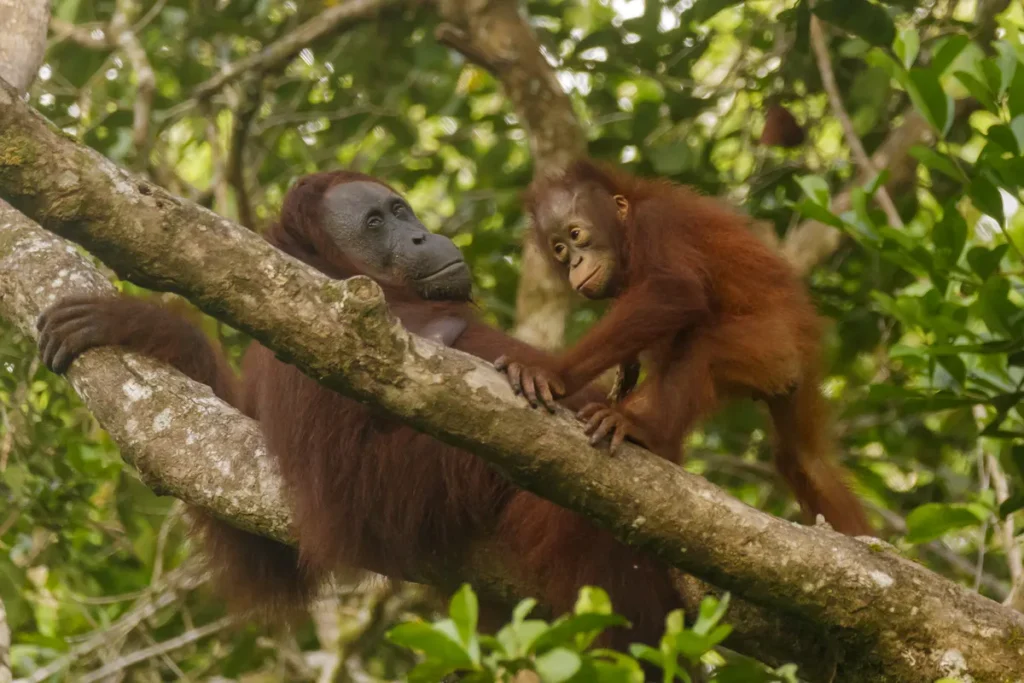
Ask ten people how many types of orangutans there are, and most will say two. For a long time, that was the accepted answer. Then, in 2017, genetic research confirmed a third species, and the old two-species list went out of date. Today, scientists recognize three types of orangutans, all of them great apes, all of them found only in Southeast Asia, and all of them listed as Critically Endangered.
This guide gives you the full, up to date picture: each species, its size, its home, and what sets it apart. A comparison table pulls the key facts together in one place.
Types of Orangutans at a Glance
All three species belong to the genus Pongo. They share the same famous traits: shaggy reddish brown hair, very long arms, and a life spent mostly high in the trees. But thousands of years of separation on different islands, and in different forests, shaped each one differently. The Bornean orangutan lives on Borneo. The Sumatran and Tapanuli orangutans both live on Sumatra, but in separate regions, and they rarely, if ever, meet in the wild.
Size is one of the clearest differences. Bornean orangutans are the stockiest of the three. Sumatran orangutans are slimmer, with longer, paler hair. Tapanuli orangutans, the most recently recognized species, are smaller on average and live in just one small forest area. Their story is also the most urgent, because fewer than 1,000 of them are thought to remain.

1. Bornean Orangutan (Pongo pygmaeus)
The Bornean orangutan is the most numerous of the three species, but that does not mean it is safe. Roughly 104,000 Bornean orangutans remain in the wild, spread across the island of Borneo in both Malaysian and Indonesian territory. Their numbers have fallen sharply in recent decades, which is why the species is listed as Critically Endangered.
Look for a broad face, a stocky build, and dark reddish brown hair that is often coarser than the hair of the Sumatran species. Adult males are much larger than females and can develop large cheek pads, called flanges, along with a throat sac used for long calls that carry through the forest. These flanged males may weigh around 75 kg (165 lb), while females usually weigh about 37 kg (82 lb).
Bornean orangutans live in lowland rainforest, including peat swamp forest, and spend most of their lives in the canopy. Fruit makes up most of their diet, especially wild figs and durian in season, along with leaves, bark, and insects. Like all orangutans, they use tools, for example sticks to reach insects and leaves as shelter from rain.
The main threats are logging, land clearance, forest fires, and conflict when orangutans wander into farms. Conservation work focuses on protecting connected forest and rehabilitating orphaned or displaced animals.

2. Sumatran Orangutan (Pongo abelii)
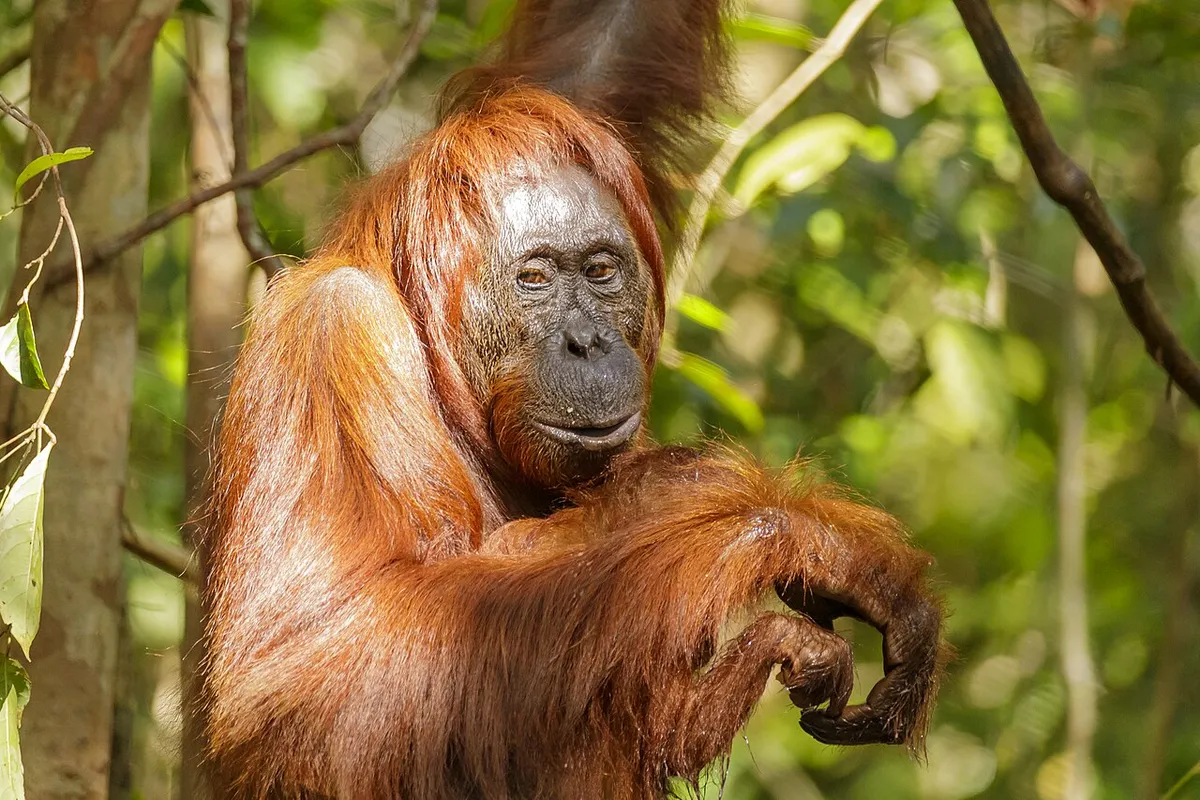
The Sumatran orangutan lives only in the north of Sumatra, Indonesia, mainly in the forests around Lake Toba and the Leuser Ecosystem. About 14,000 individuals are estimated to remain, far fewer than the Bornean species, and the population is still declining. It is also listed as Critically Endangered.
Compared with its Bornean cousin, the Sumatran orangutan is slimmer and more lightly built, with longer, finer, paler reddish hair. Its face is narrower, and adult males tend to have longer cheek pads that grow outward rather than sitting flat against the head. Males typically weigh around 70 kg (154 lb) and females around 35 kg (77 lb), though wild weights vary with age and food supply.
Sumatran orangutans are the most tree bound of the three species, spending almost all of their time in the canopy and rarely coming to the ground, partly because tigers share their forests. They are also a little more social than Bornean orangutans: mothers and young stay together for years, and adults are more often seen feeding in the same fruiting tree, though they never form large troops.
Their diet centers on fruit, plus leaves, flowers, bark, and insects, and in some areas they use tools more often than Bornean orangutans, for example sticks to extract seeds or honey. The biggest threat is deforestation for palm oil and other farming, which breaks their habitat into isolated patches too small for a healthy population.
3. Tapanuli Orangutan (Pongo tapanuliensis)
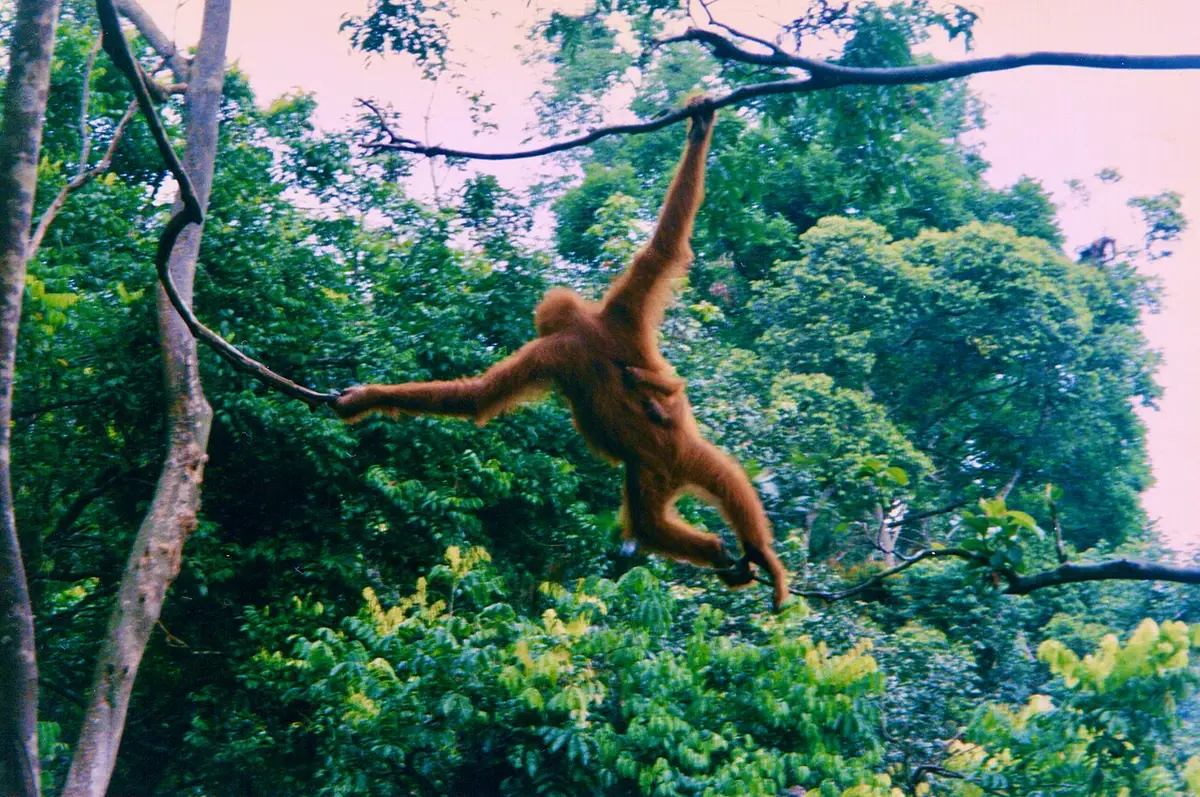
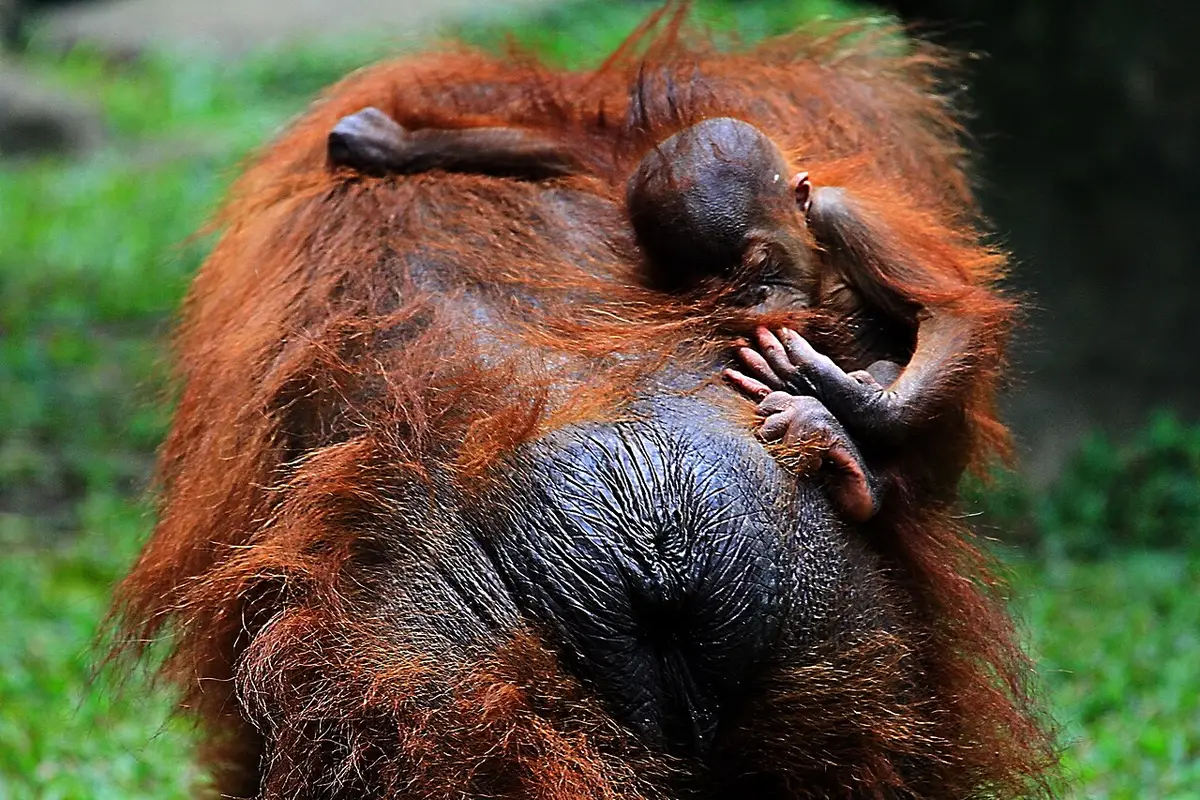
The Tapanuli orangutan is the rarest great ape on Earth, and the newest species on this list. Scientists had long suspected that the orangutans south of Lake Toba in Sumatra were different, but it was only in 2017 that genetic, skull, and behavioral evidence confirmed them as a separate species. The entire wild population, estimated at fewer than 800 individuals, lives in one area: the Batang Toru forest in North Sumatra.
Tapanuli orangutans are smaller on average than the other two species, with males weighing roughly 70 kg (154 lb) or less and females around 35 kg (77 lb), though researchers are still learning exact ranges from such a small population. Their hair is thicker and frizzier than the Sumatran species, their skull shape is distinct, and their long calls sound different from those of both other species. Those differences, plus a long history of genetic isolation, are what justified naming them separately.
Because their range is so tiny, a single threat can put the whole species at risk. The proposed Batang Toru hydropower dam, roads, mining, and farming all cut into the same small forest, and if it is split, small groups become isolated and breeding drops. Protecting the full Batang Toru forest is therefore the top priority.


Types of Orangutans Comparison Table
Population figures are widely cited estimates from conservation assessments, and they change as new surveys are completed, so treat them as the best current picture rather than an exact head count.
| Species | Scientific Name | Where It Lives | Adult Male Size | Adult Female Size | Wild Population (approx.) | Conservation Status |
|---|---|---|---|---|---|---|
| Bornean orangutan | Pongo pygmaeus | Borneo (Malaysia and Indonesia) | About 1.4 m tall, about 75 kg | About 1.2 m tall, about 37 kg | About 104,000 | Critically Endangered |
| Sumatran orangutan | Pongo abelii | Northern Sumatra, Indonesia | About 1.4 m tall, about 70 kg | About 1.1 m tall, about 35 kg | About 14,000 | Critically Endangered |
| Tapanuli orangutan | Pongo tapanuliensis | Batang Toru, North Sumatra | About 1.4 m tall, about 70 kg or less | About 1.1 m tall, about 35 kg | Fewer than 800 | Critically Endangered |
How to Tell the Three Species Apart
In practice, location is the fastest clue. An orangutan seen in the wild on Borneo is a Bornean orangutan. One in northern Sumatra is Sumatran, unless it is in the Batang Toru area south of Lake Toba, in which case it is Tapanuli. That simple rule works because the three species do not overlap in the wild.
Appearance gives extra hints. Bornean orangutans look broader and stockier, with darker, coarser hair. Sumatran orangutans look slimmer, with longer, paler hair and a narrower face. Tapanuli orangutans have thick, frizzy hair and a distinct skull shape, though that is hard to spot without close study.


Male vs Female Orangutans
Within each species, males and females look strikingly different. Adult males are roughly twice the weight of females. Many adult males develop flanges, the large cheek pads that make their faces look much wider, plus a throat sac for long calls. Females never develop flanges, and they do most of the parenting.
Not every adult male becomes flanged. Some stay unflanged well into adulthood and can still breed, usually quietly, without the long calls and displays of flanged males. This two track male system is unusual among great apes.
Reproduction is very slow, which is a major reason recovery takes so long. A female gives birth to a single infant only once every 7 to 9 years, and that infant stays dependent on her for 6 to 8 years.


Orangutans vs Other Great Apes
Orangutans are the only great apes native to Asia. Gorillas, chimpanzees, and bonobos all live in Africa, while humans are the one great ape found worldwide. Orangutans are also the most arboreal great apes, spending most of their lives in trees, and the most solitary, which fits a life where fruit trees are scattered and feeding in a group would mean competing for the same meal.
For a wider comparison of ape species, see our guide to types of apes, and for their closest large cousins, our chart of types of gorillas. Readers who enjoy animal size comparisons may also like our types of giraffes guide.
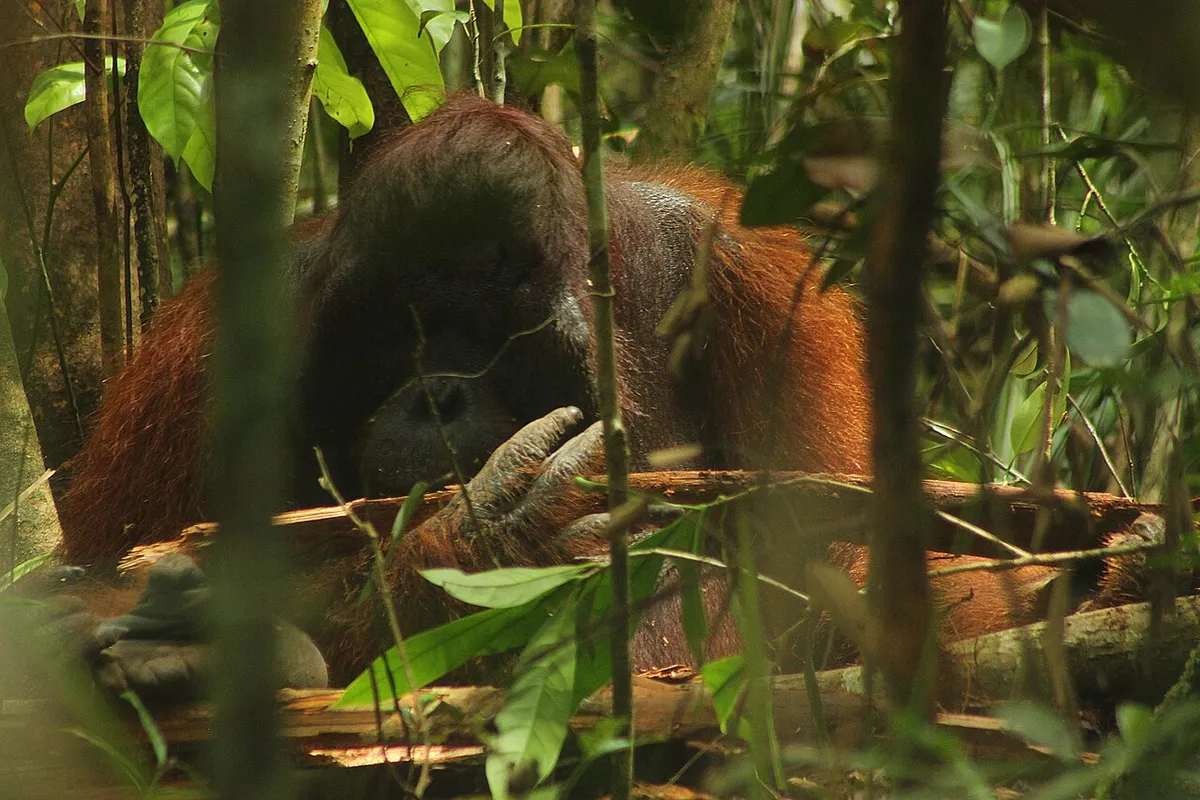
Why All Three Species Are Critically Endangered
All three types of orangutans share the same IUCN Red List category: Critically Endangered, the highest risk level before extinction in the wild. That rating reflects both small and falling populations and ongoing habitat loss. The threats differ in detail, but the pattern is the same: forest cleared for farming and plantations, illegal logging, fires, roads that split habitat, and the illegal pet trade, which often starts with a mother being killed so her infant can be taken.
What helps is similar across all three: protecting large, connected forests, stopping illegal clearance, rehabilitating rescued orangutans, and supporting local communities so keeping the forest standing pays better than clearing it. For the Tapanuli orangutan, the margin is thinnest of all, because its whole population fits inside a single forest block.
Frequently Asked Questions
How many types of orangutans are there?
There are three recognized species: Bornean, Sumatran, and Tapanuli. The Tapanuli species was confirmed as separate only in 2017, which is why older sources still list just two.
Which orangutan species is the rarest?
The Tapanuli orangutan is the rarest, with fewer than 800 individuals remaining in the wild, all in the Batang Toru forest of North Sumatra.
Are all orangutans endangered?
Yes. All three species are listed as Critically Endangered on the IUCN Red List, meaning they face an extremely high risk of extinction in the wild.
Where do orangutans live?
Orangutans live only on the islands of Borneo and Sumatra in Southeast Asia. They are found nowhere else in the wild.
What is the difference between Bornean and Sumatran orangutans?
Bornean orangutans are stockier with broader faces and darker, coarser hair, and they live on Borneo. Sumatran orangutans are slimmer with longer, paler hair, spend more time in trees, and live in northern Sumatra.
Conclusion
The answer to how many types of orangutans there are is now three, not two, and each one matters. The Bornean orangutan is the largest population but still falling fast. The Sumatran orangutan is slimmer, more arboreal, and squeezed into northern Sumatra. The Tapanuli orangutan is the rarest great ape on Earth, holding on in a single forest. Knowing which is which is a good start. Protecting the forests they all depend on is what will decide whether this list stays at three.

