
Open a bag of rice that has sat in the cupboard too long and you may find it moving. Tiny dark beetles with long snouts crawl between the grains, and most people call them all the same thing. In fact, types of weevils number close to 97,000 described species, one of the largest groups of animals on Earth. Almost all share one giveaway feature: a long snout, called a rostrum, with tiny mouthparts at the tip and elbowed antennae that fold back along it.
That snout is the fastest way to tell a true weevil from other small beetles. If the insect in your flour has no snout at all, it is probably a bean weevil, which is really a seed beetle, not a weevil. True weevils belong mostly to the family Curculionidae and live almost everywhere plants grow: grain stores, cotton fields, palm crowns, pine plantations, garden beds, and oak woods. Some are only 2 mm long, while the red palm weevil can reach 40 mm. This guide covers 20 common and important species, with sizes, hosts, habitats, and pest status.
Types of Weevils: 20 Species Chart
Use this chart first: find the host plant, then check size and pest status.
| Weevil | Scientific name | Adult size | Host plant or food | Habitat | Pest status |
|---|---|---|---|---|---|
| Boll weevil | Anthonomus grandis | About 6 mm | Cotton buds and bolls | Southern US, Mexico | Major crop pest |
| Rice weevil | Sitophilus oryzae | 3 to 4.6 mm | Rice, wheat, maize, stored grain | Warm stores worldwide | Major grain pest |
| Granary weevil | Sitophilus granarius | 3 to 5 mm | Stored wheat and grain | Temperate stores worldwide | Major grain pest |
| Maize weevil | Sitophilus zeamais | 2.3 to 4.9 mm | Corn and cereals | Warm regions worldwide | Major grain pest |
| Black vine weevil | Otiorhynchus sulcatus | About 10 mm | Ornamentals, strawberries, yews | Europe, North America | Major garden pest |
| Citrus root weevil | Diaprepes abbreviatus | 10 to 19 mm | Citrus and more than 270 plants | Caribbean, Florida, Texas, California | Major crop pest |
| Sweet potato weevil | Cylas formicarius | About 6 mm | Sweet potato vines and tubers | Tropics, subtropics | Major crop pest |
| Large pine weevil | Hylobius abietis | 8 to 14 mm | Conifer seedlings | Europe and northern Asia | Major forestry pest |
| Banana weevil | Cosmopolites sordidus | 10 to 15 mm | Banana corms | Banana regions worldwide | Major crop pest |
| Red palm weevil | Rhynchophorus ferrugineus | 25 to 40 mm | Palm trunks and crowns | Tropical Asia, Middle East, Mediterranean | Major palm pest |
| Acorn weevil | Curculio glandium | 4 to 8 mm | Oak acorns | Europe, North America | Minor pest |
| Alfalfa weevil | Hypera postica | 4.5 to 5.5 mm | Alfalfa and clover | North America, Europe, Asia | Major forage pest |
| Clover leaf weevil | Hypera punctata | 7 to 9 mm | Clover and alfalfa | North America, Europe | Moderate crop pest |
| Pea leaf weevil | Sitona lineatus | 4 to 5.5 mm | Peas, beans, vetches | Europe, North America | Moderate crop pest |
| White pine weevil | Pissodes strobi | 4 to 6.5 mm | White pine and spruce leaders | North America | Major forestry pest |
| Strawberry root weevil | Otiorhynchus ovatus | 5 to 6 mm | Strawberries, ornamentals | North America, Europe | Garden pest |
| Hazelnut weevil | Curculio nucum | 6 to 9 mm | Hazelnuts | Europe, parts of Asia | Minor nut pest |
| Pepper weevil | Anthonomus eugenii | 3 to 4 mm | Peppers and eggplant | Southern US, Mexico | Major pepper pest |
| Plum curculio | Conotrachelus nenuphar | 4 to 6 mm | Apples, plums, peaches, cherries | Eastern North America | Major fruit pest |
| Vegetable weevil | Listroderes costirostris | 8 to 10 mm | Vegetables, carrots | Southern US, Australia | Moderate garden pest |
Stored Grain Weevils
Three species cause most pantry trouble, and they look frustratingly alike. The rice weevil (Sitophilus oryzae) is dark reddish brown, 3 to 4.6 mm long, with four faint pale spots on its wing covers, and it flies. A female can lay 300 to 400 eggs over four to five months, one per kernel, so larvae develop hidden inside the grain.
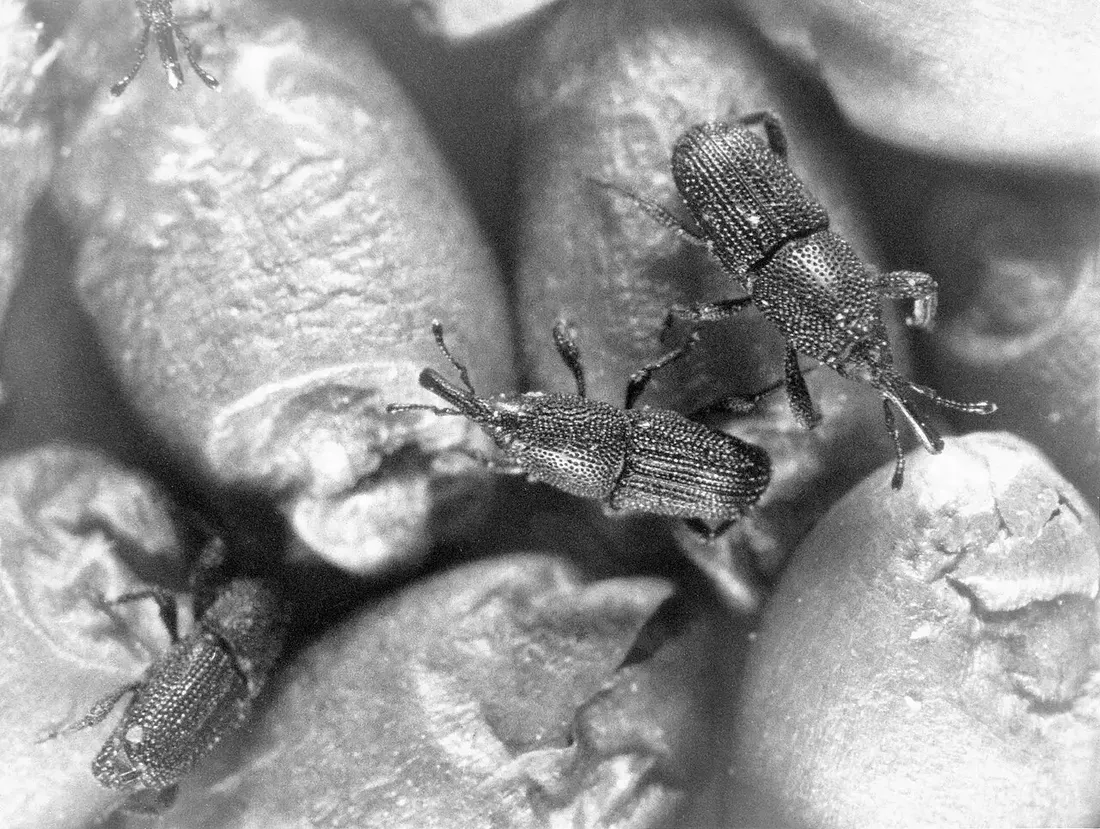
The granary weevil (Sitophilus granarius) is the odd one out: 3 to 5 mm, dark brown to black, with no spots, and wing covers fused shut, so it cannot fly. It prefers cool, temperate stores and can live well over a year. The maize weevil (Sitophilus zeamais) is close to the rice weevil but usually shows clearer spots and a slightly larger body, and it flies well. Corn is its favorite, though it will also take pasta and cereals.

Crop and Garden Weevils
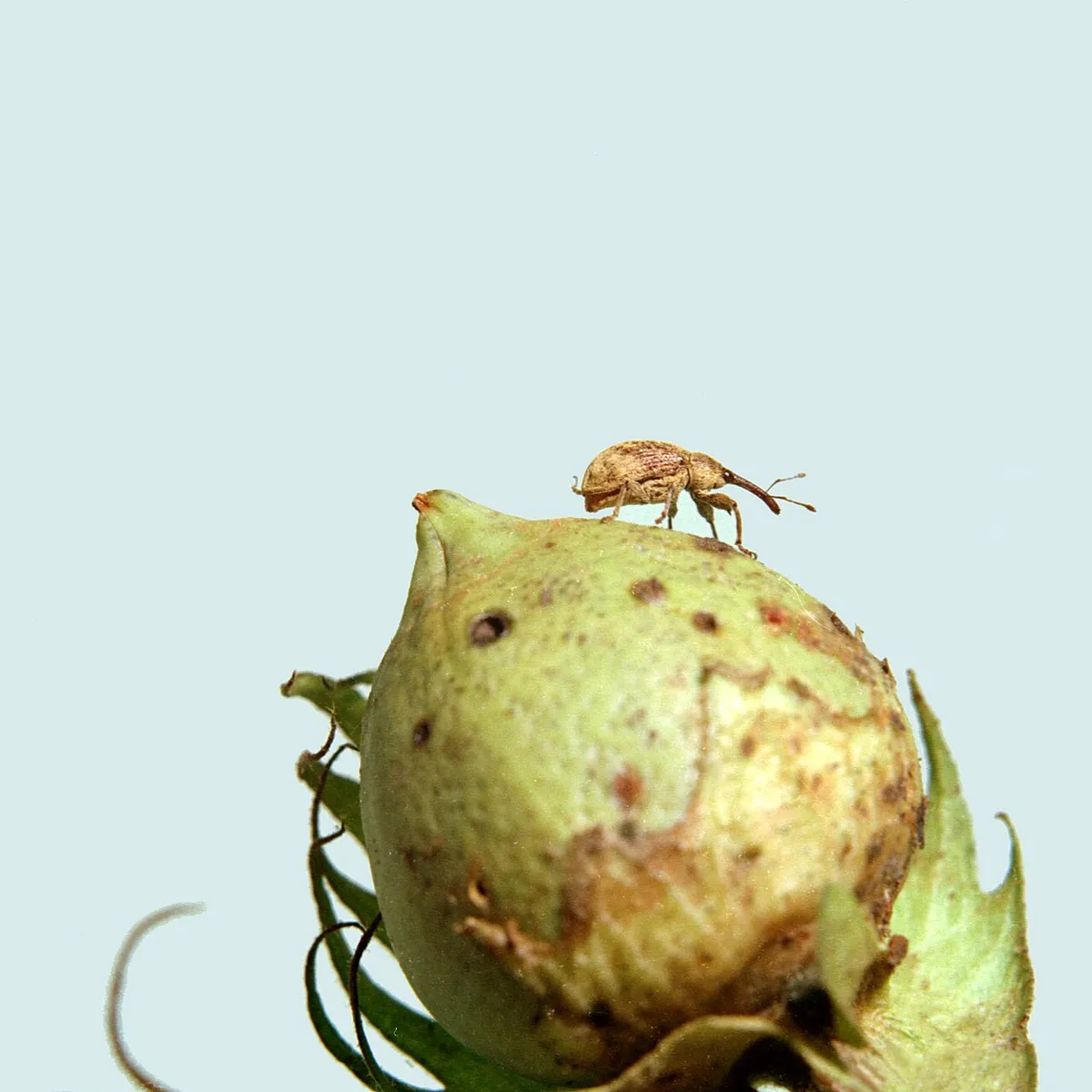
The boll weevil (Anthonomus grandis) is the most famous weevil in America. At about 6 mm, with a snout nearly half its body length, it feeds on cotton buds and bolls and lays eggs inside them. It crossed from Mexico in the 1890s and cost growers billions of dollars. An eradication program begun in 1978 has since cleared it from more than 99 percent of US cotton land.
In the vegetable garden, the pepper weevil (Anthonomus eugenii) is a serious pest of peppers and eggplant in the southern US, Mexico, and Central America, despite being only 3 to 4 mm long. Adults feed on buds and young fruit, and larvae develop inside, causing buds and small fruit to drop. The pea leaf weevil (Sitona lineatus) is easier to spot by its damage: adults chew neat U-shaped notches in pea and bean leaves, while larvae feed on root nodules underground.
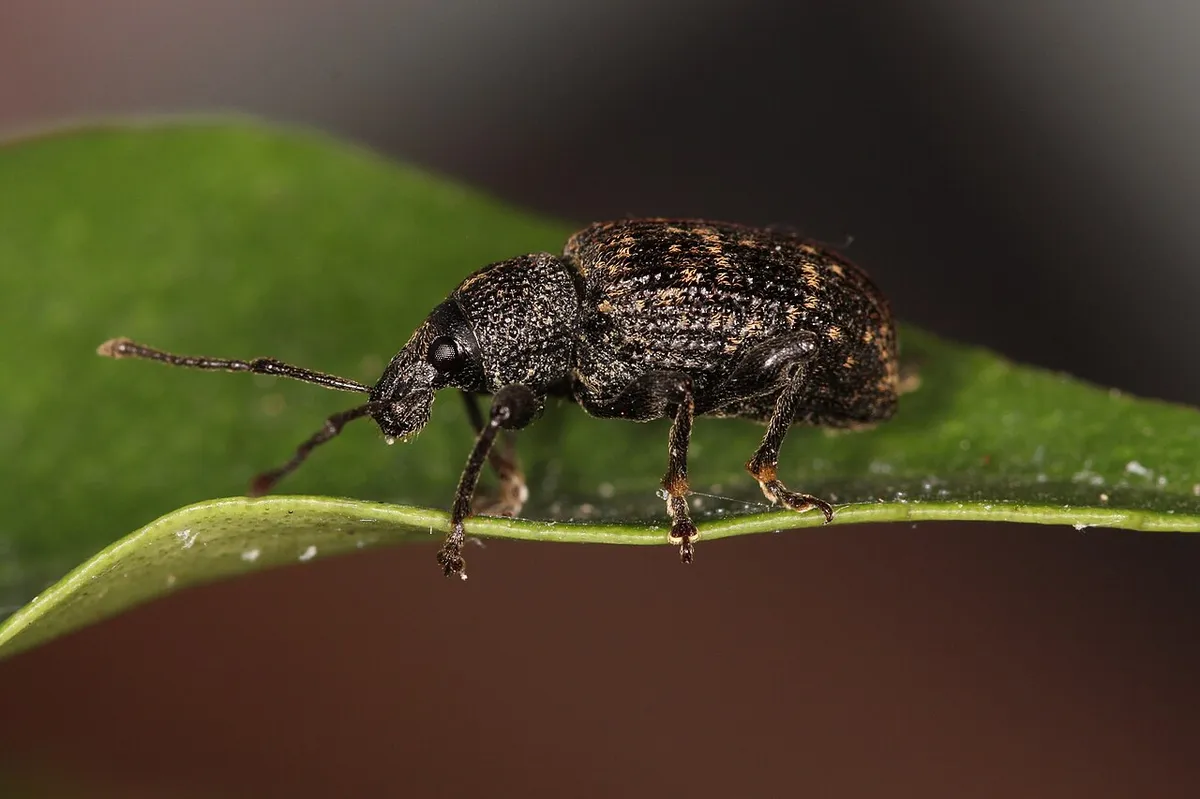
Gardeners know the black vine weevil (Otiorhynchus sulcatus) well. It is about 10 mm, matte black, with a short, broad snout, and it cannot fly. In North America almost all are female and breed without mating, so populations build fast. Adults notch leaf edges on yews, rhododendrons, and strawberries at night, while larvae chew roots in pots and beds. Many gardeners control them with beneficial nematodes watered into the soil.
Tree, Fruit, and Palm Weevils
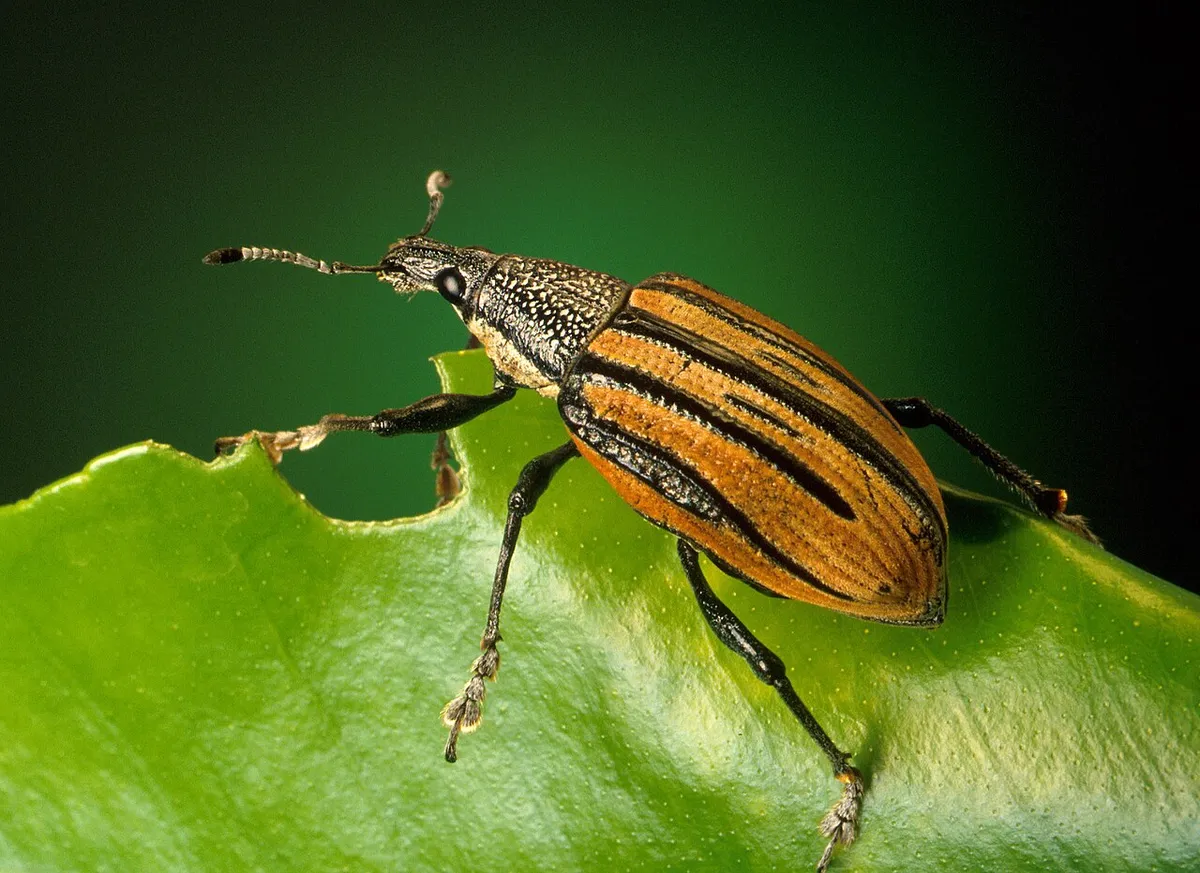
Some of the largest weevils attack trees. The citrus root weevil (Diaprepes abbreviatus) is 10 to 19 mm long and strikingly variable in color, from gray to yellow, orange, and black. Native to the Caribbean, it reached Florida in 1964 and later Texas and California. Larvae are the real threat: they feed on roots for 9 to 18 months and can girdle the taproot, killing the tree.
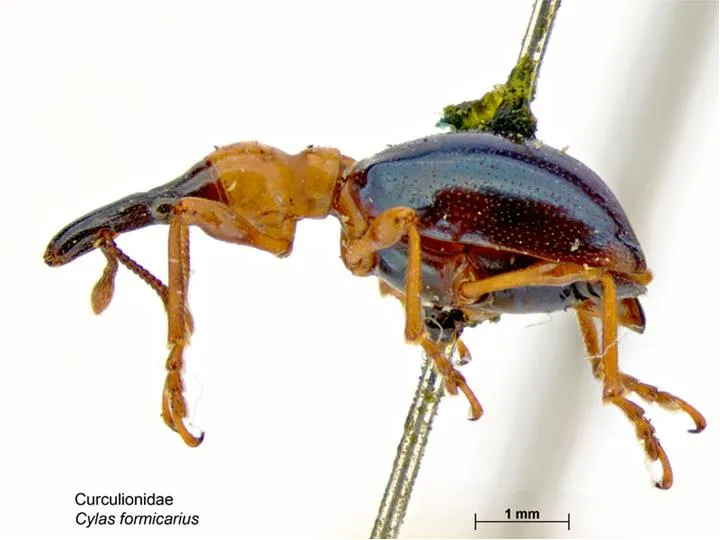
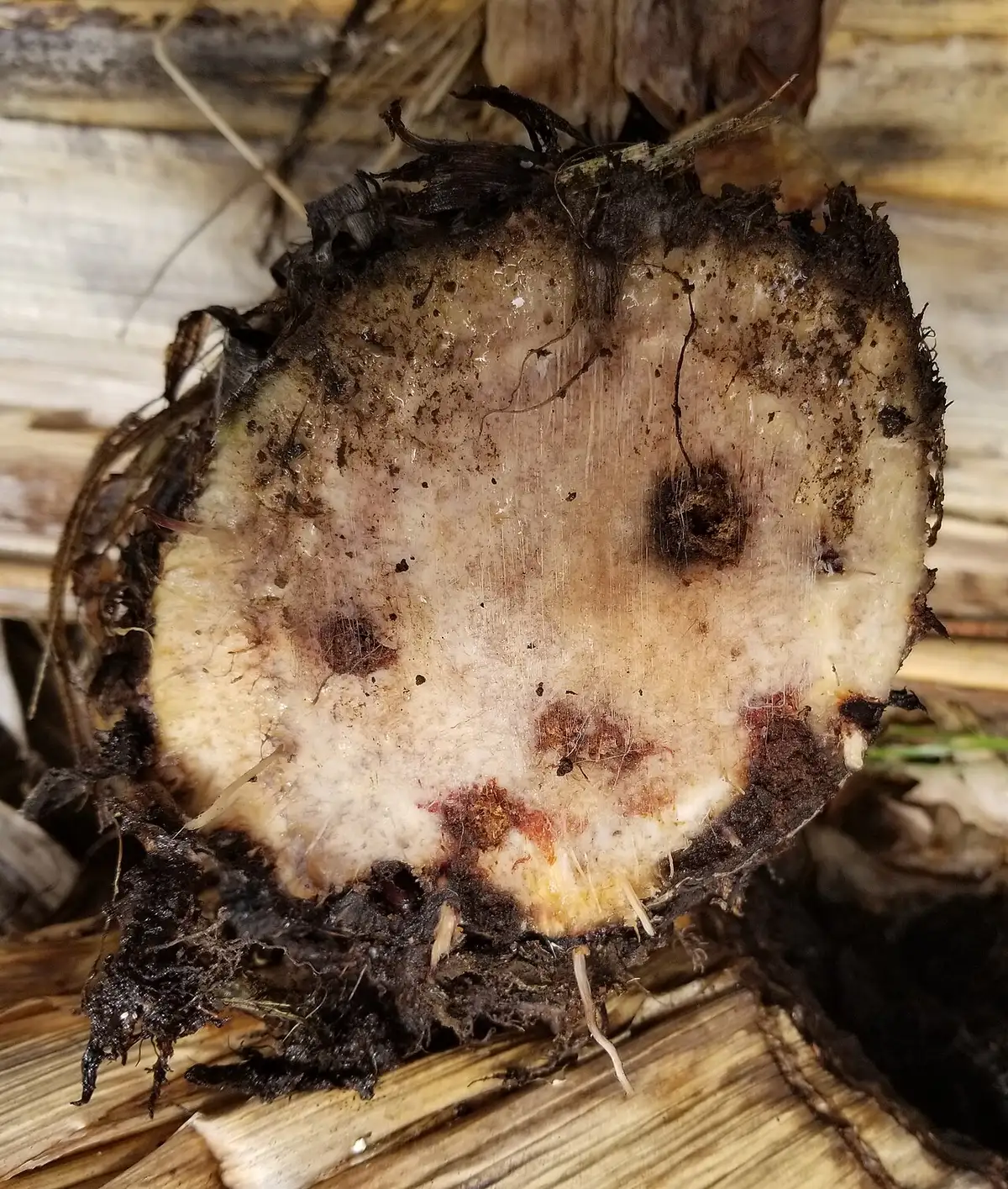
The sweet potato weevil (Cylas formicarius) is slender and ant-like, about 6 mm, with a red thorax and a dark blue body, and it is considered the worst pest of sweet potato worldwide. Larvae tunnel through vines and tubers, and the plant turns bitter, ruining the harvest. The banana weevil (Cosmopolites sordidus) is a dull black insect 10 to 15 mm long whose larvae bore into the corm, the thick underground stem, weakening the plant and cutting yield.
In forestry, the large pine weevil (Hylobius abietis) is dark brown with yellow scale patches, 8 to 14 mm long, and it is the worst pest of conifer plantations in Europe. Adults strip bark from young seedlings near the base, killing them. The white pine weevil (Pissodes strobi) attacks the leading shoot of white pine and spruce. The plum curculio (Conotrachelus nenuphar), at 4 to 6 mm, cuts a crescent-shaped slit in apples, plums, peaches, and cherries and lays an egg beneath it.

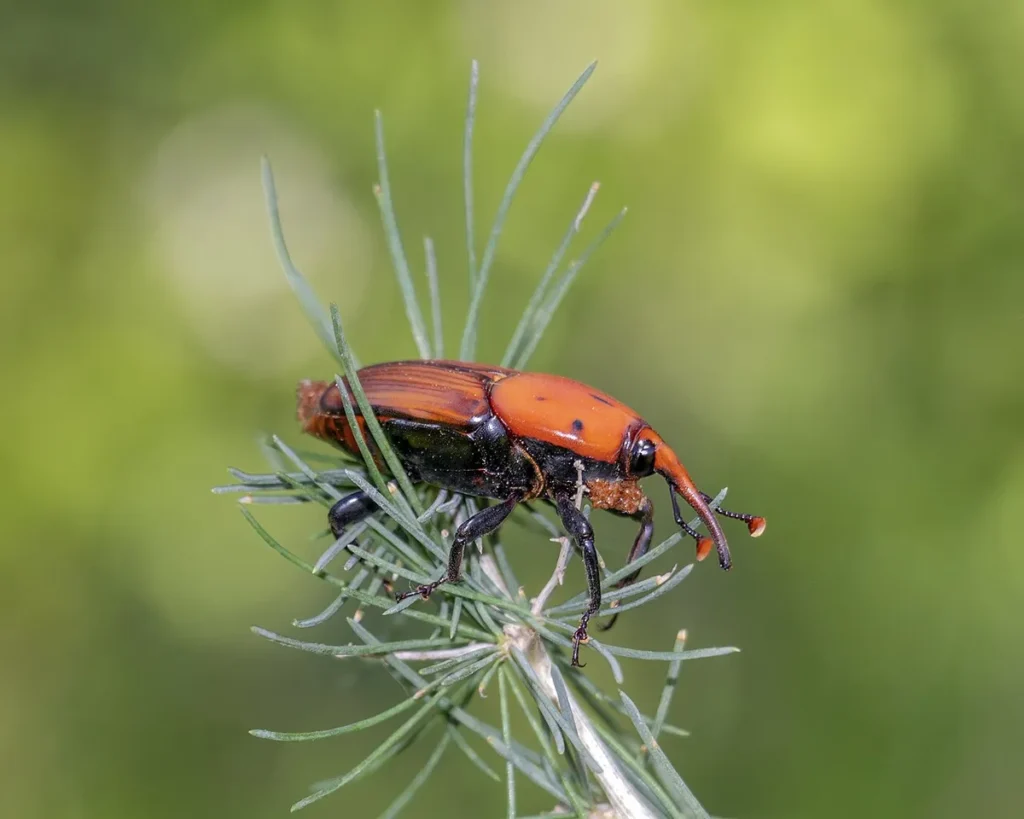
The red palm weevil (Rhynchophorus ferrugineus) is in a league of its own. At 25 to 40 mm, rusty red-orange with black marks, it is one of the largest weevils alive and is widely called the most destructive palm pest on Earth. It spread from Asia to the Mediterranean and California. Larvae tunnel up to a meter inside the trunk and kill the palm from the inside, often before anyone notices.
Harmless Weevils
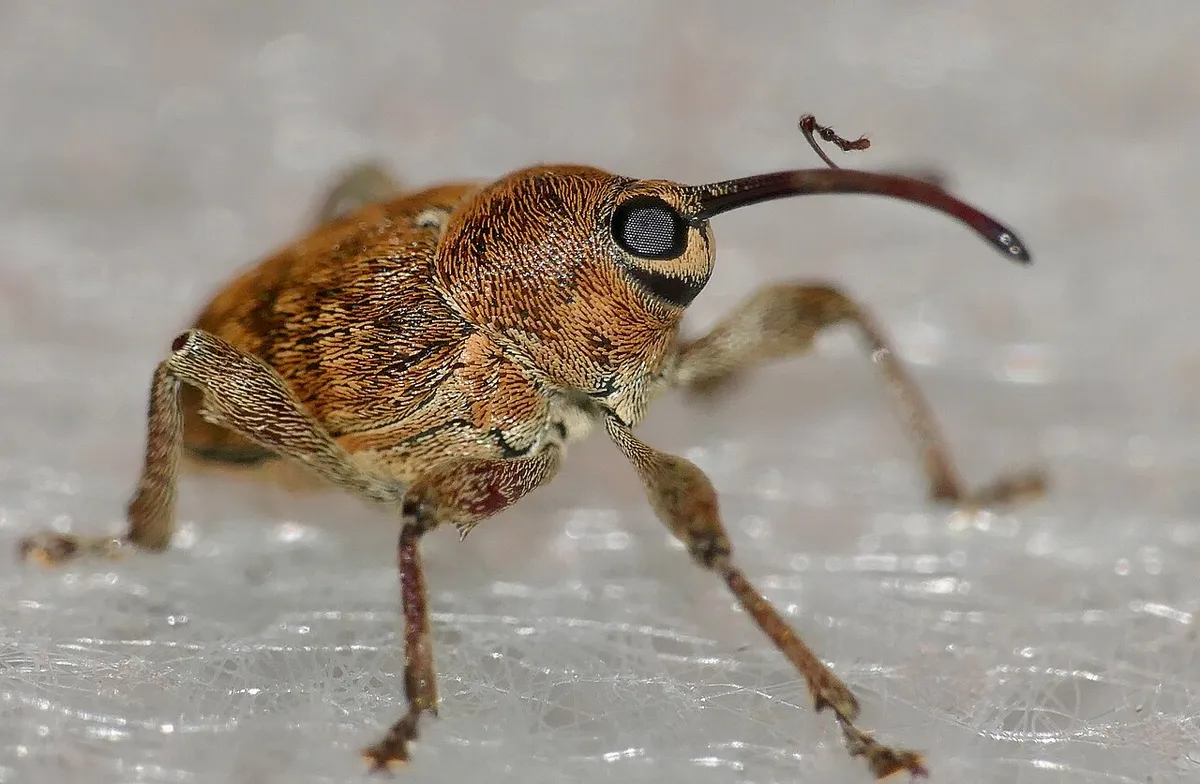
Not every weevil is a pest. The acorn weevil (Curculio glandium) uses its extraordinarily long, thin snout to drill into an acorn and lay a single egg, and its larvae develop inside the nut. It is normal oak woodland life. The hazelnut weevil (Curculio nucum) works the same way on hazelnuts.
Then there is the giraffe weevil (Trachelophorus giraffa) of Madagascar, a spectacular red and black insect that does not attack crops or stored food at all. Most of the weevil family’s 97,000 species live quietly on wild plants. If you are sorting out other small insects too, the beetle identification chart will help place weevils among their beetle relatives, and the types of grasshoppers guide covers another group often found in the same fields and gardens.

How to Identify a Weevil
Start with the snout: a long, curved snout with elbowed antennae means a true weevil and rules out most look-alikes. Next, note where you found it and what it was eating. A snouted beetle in rice or flour is almost certainly a Sitophilus grain weevil, and one notching strawberry leaves at night, with root damage below, points to a vine weevil. Size helps too: grain weevils are under 5 mm, most garden weevils are 5 to 15 mm, and palm weevils are far larger.

Color helps too: four pale spots suggest a rice or maize weevil, a matte black flightless weevil near ornamentals is likely a black vine weevil, and a large colorful weevil on Florida citrus is very likely a citrus root weevil. For other household pests, see the types of cockroaches guide and the ant identification chart.

Frequently Asked Questions
What is the most common weevil in the house?
The rice weevil and the granary weevil. Both turn up in stored rice, flour, pasta, and whole grain.
Are bean weevils true weevils?
No. The bean weevil is a seed beetle in the family Chrysomelidae. It has no long snout, so it sits in a different group of beetles entirely.
Can weevils fly?
Some can. Rice and maize weevils fly and are drawn to light. The granary weevil and the black vine weevil cannot, because their wing covers are fused shut or their wings are absent.
Do weevils bite or harm people?
No. Weevils do not bite people or pets and carry no disease to humans. Their damage is limited to crops, trees, and stored food.
How do I get rid of weevils in my pantry?
Throw out infested food, vacuum the shelves, and wipe cracks where flour collects. Freeze new grain for three to four days to kill hidden eggs before you store it.
What is the most destructive weevil?
Two stand out. The boll weevil cost US cotton growers billions over the last century. The red palm weevil is now the worst palm pest in the world.
Conclusion
Once you know the snout, weevils stop being one mystery bug and become a readable group. Match the host plant, check the size, and note whether it flies, and you can usually name it from this chart. Keep grain sealed, check garden plants at night, and watch palms and citrus for early signs of trouble.

